Kentucky
Fewer doctors-in-training are applying to Kentucky programs, according to a new study


The study found that U.S. medical students were less likely to put in an application in states with abortion bans in place, including in Kentucky. The Commonwealth’s near-total abortion ban only allows exceptions if the mother is in imminent risk of death or permanent injury.
Dr. Atul Grover is the executive director for the Association of American Medical Schools Research and Action Institute. Through his research, Grover found that 15% fewer U.S. medical students applied to residency programs in Kentucky during the last academic year compared to the 2022-23 school year — that’s 1,050 fewer applicants across specialties.
In programs for obstetricians and gynecologists, there was an even sharper 23% decline, Grover said.
“We do see these trends across specialties though,” Grover said. “People get a little jittery around the idea that the state government is going to come in and tell you what is not appropriate care for a patient when you know otherwise.”
Grover noted that medical students overall applied to fewer schools, meaning students got pickier in where they applied. That accounts for some of the decrease in applications across states, but the remaining deficit, he said, is cause for concern — particularly to states with abortion bans.
“Health care shortages, across specialties, across a lot of states, are already being felt by patients,” Grover said. “If I think about Kentucky, Alabama, Mississippi, these are states that already have trouble attracting and recruiting, retaining physicians.”
Kentucky hospitals are already dealing with an “acute shortage” of health care workers, with nearly 13,000 job vacancies in hospitals at the end of 2022, according to the The Kentucky Hospital Association.
Grover said medical residency application numbers are one of the fastest ways to measure where doctors are moving or interested in moving. Other metrics are harder and take longer to track. Residents, the researcher said, have a tendency to stay in the state where they train.
Grover said lawmakers should understand the full implications of abortion bans, especially in a state that already suffers from several physician shortages, including in women and reproductive health fields. According to data from the U.S. Health Resources and Services Administration, more than half of Kentucky’s 120 counties don’t have a single OB/GYN specialist — whether an MD or an OD — in 2022-23.
Louisville Pediatrician Dr. Michelle Elisburg said she suspected the abortion ban would keep young doctors from training in or choosing to practice in Kentucky. Elisburg was part of a group of doctors called Kentucky Physicians for Reproductive Freedom who urged Frankfort lawmakers to end the state’s abortion bans earlier this year.
Elisburg said the bans keep students from receiving all the training they need to provide abortion care or require them travel out of state to get it.
“If there’s such a ban, that restricts the kind of training that people are able to do,” Elisburg said. “They’re not going to want to come to a state where they can’t be completely trained in all the techniques in their field.”
She also noted that many doctors entering residency are in their mid to late 20s, and may be considering having children themselves. The bans may keep those women or their partners from considering moving to the state either.
“You wouldn’t come if you’re a young woman and know that if something happens to you, you might die because they aren’t gonna let you get the health care you need,” Elisburg said. “That’s where you are going to lose the doctors.”
Blair Wooten, who attended University of Louisville medical school, said the state’s abortion ban was one of the reasons she decided to leave the state. She ended up going to a program in Ohio for the last year.
“[Abortion medical training] is paramount to me,” Wooten said. “It’s something I want to be in my practice.”
Wooten is now in the process of moving to Indiana for a different residency program, a state which has its own abortion ban. She said she’s apprehensive about returning to a place where she won’t be able to give or potentially receive medical care that she believes to be appropriate.
But her program gives students the opportunity to receive abortion training in a Detroit-based program, which eased some of her fears — and clinics in Ohio are just a few hours drive away.
“Even though I’ll be in a hostile place, I’ll be near places that have more open access to abortion so that people with fewer resources can still access that,” Wooten said.
Wooten said she’s not sure if she’d consider setting up a practice in a state without abortion access. She said the inability to immediately provide the care she believes is necessary would be painful, but she also wants to provide services in health care deserts.
“Family planning is something I want to be a big part of my practice, so I usually say, ‘No,’” Wooten said. “But I’m also keenly aware that people need resources in every place, especially places that are maybe a little more hostile. And they need providers who care and can help them even with limited resources.”
State government and politics reporting is supported in part by the Corporation for Public Broadcasting.


LEXINGTON, Ky. (WKYT) – Recent heavy rainfall has left soil across the state completely soaked, contributing to localized flooding in some areas.
When rain falls, some water soaks into the ground through a process called percolation.
Soil can only hold a limited amount of water. Once the small air spaces within the soil fill with water, the ground becomes saturated and additional rainfall has nowhere to go.
Soil type plays a role in how quickly water drains.
Much of Kentucky has clay-heavy soil, which is made up of very small, flat particles packed tightly together.
That composition makes it harder for water to move through. In clay soil, water may drain at a rate of only 0.02 to 0.17 inches per hour.
When rainfall comes down faster than the ground can absorb it and water cannot drain into a stream or storm drain quickly enough, it begins to build up.
That buildup is what leads to localized flooding.
Copyright 2026 WKYT. All rights reserved.

BOWLING GREEN, Ky. (WBKO) – Cyclosporiasis is a microscopic parasite that can contaminate food and water — is making people sick across several states, including Kentucky.
Dr. Patricia Tellez-Watson said, the illness is caused by Cyclospora cayetanensis and spreads when someone ingests contaminated food or water. “It is an intestinal infection caused by this water-borne, food-borne microscopic parasite,” she said.
Symptoms can include diarrhea, nausea and vomiting.
Tellez-Watson said, cases are often sporadic, but outbreaks can happen — especially during hot, wet months, when the parasite can survive in the environment long enough to become infectious.
Health experts recommend taking extra precautions with food and water. Washing hands and thoroughly rinsing produce before eating or cooking can reduce risk.
Watson also urged people to be cautious with fresh produce, particularly pre-packaged items, and to consider using bottled water.
Officials have confirmed cases in Bowling Green, though it’s unclear how many.
Copyright 2026 WBKO. All rights reserved.


What will Moeller’s Matt Ponatoski bring to Kentucky football, baseball?
Hear what Moeller senior had to say about signing to play football and baseball at the University of Kentucky.
Dual-sport star and Moeller alum Matt Ponatoski’s final decision still awaits, but signs are pointing towards Lexington, KY.
After committing to the University of Kentucky as both a quarterback and pitcher, Ponatoski was selected in the 18th round (No. 542 overall) of the 2026 MLB Draft by the hometown Cincinnati Reds. While Ponatoski was ranked No. 208 on the MLB’s draft board and expected to be selected higher, doubts around whether he intended to go pro this year caused his stock to fall.
Ponatoksi has until the MLB’s signing deadline on July 27 to make a final decision, but the Moeller product has seemingly signaled his intention to stick with the University of Kentucky. He enrolled at the University of Kentucky on Wednesday, July 15, per a Kentucky Sports Radio report, indicating he will join the Wildcats football team in the fall.
The Man of Moeller was just the third player in the history of the Gatorade Player of the Year award to win for two different sports in the same season. Doing so in his junior year, he joined Pro Football Hall of Fame receiver Randy Moss and National Baseball Hall of Fame catcher Joe Mauer.
For Wildcats football, Ponatoski would come in as a four-star quarterback prospect and helped give new head coach Will Stein a top-25 recruiting class in the nation. He threw just one interception in his senior season for the Moeller Crusaders, completing 66% of his passes for 2,395 yards and 28 touchdowns.
For Kentucky baseball, Ponatoski would join up with fellow freshman and former Louisville Trinity pitcher Grayson Willoughby, who won Kentucky Mr. Baseball and withdrew his name from the draft. Willoughby, a top-rated pitching prospect, felt MLB teams were attempting to low-ball him and thus chose to stick with the Wildcats. Ponatoski is fresh from a season leading Moeller to the state championship game, recording a 1.37 ERA on the year.
-

 Technology3 minutes ago
Apple AirDrop, Android Quick Share flaws put phones at risk
-
 Business9 minutes ago
Netflix reports higher profits as investors worry about growth
-
 Entertainment15 minutes ago
Kris Jenner’s mom, beloved matriarch Mary Jo ‘MJ’ Shannon, dies at 91
-
 Politics27 minutes ago
Trump repeats debunked claims about voting vulnerabilities in prime-time speech
-
 Science33 minutes ago
Bass administration quietly replaced chief heat officer a month ago
-
 Sports39 minutes ago
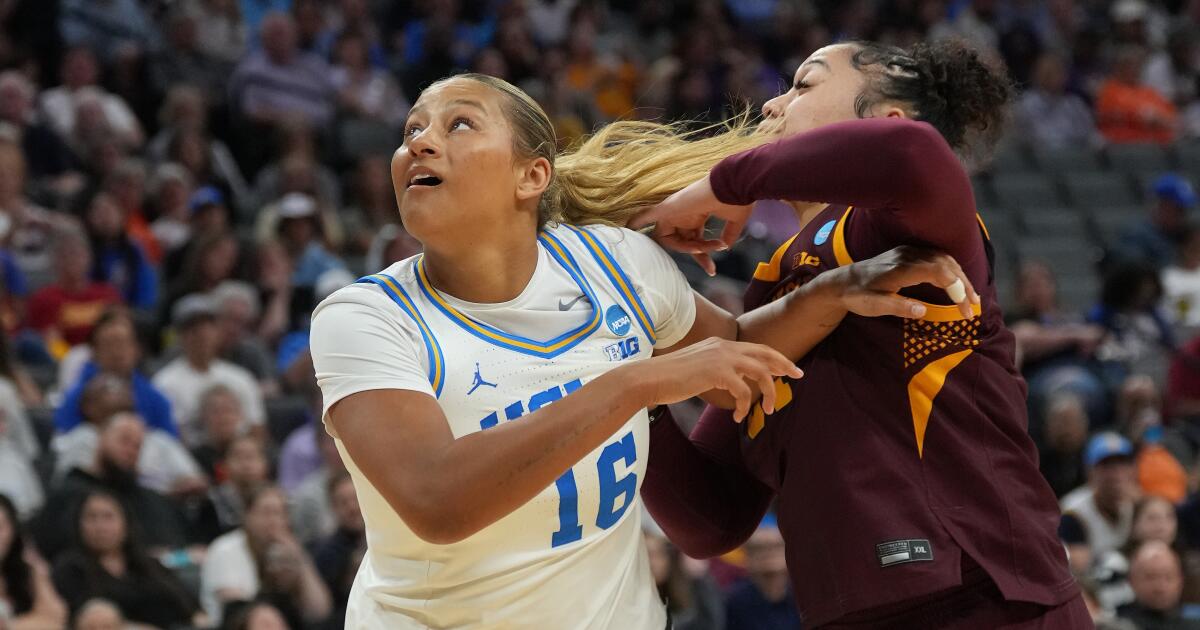
UCLA women embrace new players, tougher standards in bid to repeat as champs
-

 World51 minutes ago
China rebukes UK over nationalisation of British Steel
-
 News1 hour ago
Flood sirens blare in South Central Texas as rivers reach perilous heights

