Georgia
Why Georgia’s ruling party is pushing for the foreign agent law—and how the West should respond


On May 14, the Georgian parliament passed a controversial “foreign agent” law during its third and final hearing. The legislation would require organizations receiving more than 20 percent of their funding from other countries to register as “organizations serving the interests of a foreign power.” The bill has prompted fierce backlash from critics who argue that it is intended to crack down on opposition to the ruling party and align Georgia closer to Russia and away from the West. President Salome Zurabishvili plans on vetoing the bill, but the parliament can override her veto. Large, ongoing protests in Tbilisi have revealed how unpopular this foreign agent legislation is. So, why is the ruling Georgian Dream party still pushing it forward? And how should the West respond if the bill passes into law?
Electoral advantage
Georgian Dream stands to benefit from the adoption of the foreign agent law ahead of parliamentary elections in October. Civil society in Georgia has historically exerted a significant influence on the country’s politics. For example, it played a pivotal role in the 2012 elections by contributing to voter education and election monitoring.
However, the main vulnerability that Georgian nongovernmental organizations (NGOs) and civil society organizations face is financial reliance on international donors. Civil society organizations in Georgia receive more than 90 percent of funding from foreign sources, according to a 2020 report. Targeting their funding streams right before the elections seems to be a logical step for a ruling party that intends to eliminate influential and potentially opposing voices before the elections.
But many argue that Georgian Dream could win the October parliamentary elections without this legislation. After all, the ruling party is ahead in the polls and there have been reports that Georgian Dream has been leveraging administrative power to influence the elections. Extreme divisions have made it almost impossible for the Georgian opposition parties to form a coalition that could counter Georgian Dream. If anything, by introducing the foreign agent bill, Georgian Dream has united the opposition as well as the broader population in defense of Georgia’s European future.
Why, then, did Georgian Dream decide to move forward with this unpopular bill, knowing all too well it would trigger protests and antigovernment narratives just a few months before the elections?
Ivanishvili’s influence
Bidzina Ivanishvili, the richest man in Georgia and the founder and honorary chairman of Georgian Dream, could be key to understanding why the party took this self-destructive step. He exerts exceptional influence on the government’s decisions and actions.
Ivanishvili delivered a speech on April 29, during which he defined NGOs as agents nurtured by a global force that, in his telling, is responsible for getting Georgia and Ukraine into wars with Russia. He believes that the introduction of the foreign agent law ahead of the elections was necessary because NGOs were trying to change electoral laws, acting in the interest of the “global party of war,” which, he believes, intends to engineer a revolution in Georgia.
The combination of Ivanishvili’s views and a ruling party that executes his every decision with no questions asked is putting the Georgian people’s safety and future at risk. A sensible and nuanced Western response is needed to support the Georgian people.
The regional trend
The adoption of the Russian-style foreign agent law seems to be a regional trend, not just a Georgian phenomenon. Hungary, Kyrgyzstan, and Georgia all started actively pushing for foreign agent laws in 2023. Hungary implemented foreign agent legislation in December 2023, and Kyrgyzstan adopted its own in April 2024.
Three states in Eastern Europe and Eurasia pushing to adopt Russian-style foreign agent laws almost at the same time might not be a coincidence. It is possible Russia is inspiring or even pressuring the ruling parties. After all, Moscow’s influence in these countries would likely increase if the NGOs and civil society organizations in these countries were to lose funding from international donors.
Kremlin spokesperson Dmitry Peskov has defended Georgian Dream’s reintroduction of the foreign agent law and stated that it is in Moscow’s interests that the situation in Georgia is “stable and predictable.” Russian President Vladimir Putin has also reaffirmed ties with Hungary’s nationalist Prime Minister Viktor Orbán and claimed that Russian-Kyrgyz relations are developing in all directions.
The European Union (EU) has already launched legal action against Hungary in response to the introduction of this law. But Georgia and Kyrgyzstan are not EU member states, and so the same legal route is not available.
What the West should and should not do
It is crucial for the international community—especially the EU, the United States, and the United Kingdom—to support the will of the Georgian people. This means aiding Georgia’s pro-European president in her challenge to the ruling party’s actions. It also means seeking accountability for the ruling class that defies the will of its people and is impeding Georgia’s Euro-Atlantic integration, a goal that is written into Georgia’s constitution.
The EU should reconsider measures that could harm the Georgian population, such as the potential suspension of current visa-free travel. It would not help the situation to punish the wider Georgian population for the ruling party’s actions.
The international community and donors must continue their support for civil society organizations in Georgia, especially in the lead-up to the October elections. Despite the legal ramifications of the new bill and the anticipated crackdown on the civil society sector, sustaining funding streams is crucial for bolstering civil society’s monitoring capacity. This is vital for ensuring transparent and fair electoral processes in October and providing Georgia with an opportunity for another peaceful transition of power.
The many EU and Georgian flags carried through the streets of Tbilisi in recent weeks make clear where most Georgians’ view their future. The West must do what it can to help keep them headed in that direction.
Maia Nikoladze is the assistant director at the Economic Statecraft Initiative within the Atlantic Council’s GeoEconomics Center. Follow her at @Mai_Nikoladze.
Ana Lejava is a policy associate at the Georgetown Institute for Women, Peace and Security and a former Young Ambassador of Georgia to the United States. Follow her at @AnaLejava.
Further reading

Mon, Apr 19, 2021
Fighting for the hearts and minds of Sakartvelo: The Georgian information environment during the 2020 parliamentary election
Report
By
Eto Buziashvili, Givi Gigitashvili, Sopo Gelava, Graham Brookie, Andy Carvin, Iain Robertson, Zarine Kharazian
A technical analysis of how various online actors, both foreign and domestic, attempted to manipulate public opinion and influence the recent Georgian parliamentary election results.
Image: Demonstrators hold a rally to protest against a bill on “foreign agents”, near Georgian Parliament building, in Tbilisi, Georgia, May 13, 2024. REUTERS/Irakli Gedenidze



Georgia passes anonymous ‘baby box’ bill
Georgia lawmakers have approved House Bill 350, a life-saving measure allowing anonymous infant surrender through secure, monitored safety boxes at fire and police stations.
ATLANTA – A new bill headed to Gov. Brian Kemp’s desk aims to provide Georgians with a safe way to surrender an infant through the installation of “baby safe haven boxes.” The legislation, which passed both the House and Senate last week, serves as an extension of Georgia’s current Safe Haven law.
What we know:
Under existing state law, a mother can surrender a child up to 30 days after birth at a fire department, police station, or hospital without facing prosecution. The new bill would expand these options by allowing for the installation of medical-grade safety boxes at these locations.
The boxes are designed to be installed on the exterior of hospitals, fire stations, or police stations. According to the legislation, these units will be equipped with security cameras to record anyone accessing the box. Once a child is placed inside, an automated system will trigger a 911 call to alert emergency responders. The infant is then transported to a hospital before being placed into the custody of the Department of Family and Children Services.
Local governments will not be responsible for the cost of the units. Instead, individual communities must fundraise if they wish to install a safety box in their area.
What they’re saying:
Advocates like Brittany Almon, who worked with legislators to support the bill, say the mission is deeply personal. Almon became an adoptive mother in 2022 to a boy who was surrendered under the state’s current Safe Haven Law.
“In 2022, I became an adoptive mom to a little boy who was surrendered under our current safe haven law. His biological mother did a face-to-face surrender,” Almon said. “He was a healthy baby boy and whatever her circumstances were, she knew that she couldn’t give him the life he deserved, and she knew there was somebody out there that could.”
Almon explained that the boxes provide a specialized environment for the infant while offering support to the parent.
“Inside the box, there’s a medical-grade bassinet that she will place her baby in. There’s actually also some resources that will fall out to her in an orange bag,” Almon said. “Once that door is shut, there’s a 30-second delay let her, the person, walk away. And from there, an alarm goes off, and that alarm will alert fire station or hospital staff that a newborn is in the box.”
Once the alarm sounds and the child is recovered, Almon noted that “then from there that baby is placed into the Department of Family and Children Services’ custody.”
While the use of surrender boxes has sparked debate, Almon argued that increasing available options is the priority.
“The more resources offer someone, the better it can be to help someone navigate the situation they’re in,” Almon said. “We can always judge people for what they do, and why do it, because we don’t know their circumstances.”
You can read more about Almon’s efforts here.
The Source: The information in this story was gathered from the text of the Georgia legislation, an interview with advocate Brittany Almon, and official records from the Georgia General Assembly.

For a long time it seemed the Atlanta Falcons were purposefully avoiding drafting prospects from Georgia for some reason. There are signs that’s changing with the new front office regime, though. Last month Kirby Smart commented on how his program is developing a relationship with the Falcons.
That’s a good sign for Atlanta’s defensive front-seven, because that group needs all the help they can get and it’s where the Bulldogs have thrived the most in recent years. Jalon Walker is helping to reinvigorate their pass rush, and more help could be on the way soon.
In a new five-round mock draft from NFL.com, the Falcons hit up that local resource again and take Georgia defensive tackle Christen Miller at No. 48 overall.
At the combine Miller checked in at 6-foot-4, 321 pounds with 33″ arms and 10″ hands. Here’s the highlight reel.
Like most nose tackle prospects, Miller’s college production (four sacks, 11.5 TFL) doesn’t exactly jump off the page.
However, the scouting report on Miller mentions both upper and lower body power in addition to good balance. Those traits should make him a solid nose tackle at the next level.
If the Falcons do end up drafting Miller, he should project to be starting up front in Week 1.

A Delta flight was delayed after a massive alligator plopped itself on the taxiway of a Georgia airport, according to reports.
Recently unearthed air traffic control audio captured the unusual moment the Delta pilot noticed the lazing gator at the Savannah-Hilton Head International Airport on the evening of March 20, WDSU reported.
“There’s a six-foot gator sitting on his two legs,” the pilot said over the radio.
“Six foot?” the tower controller asked, to which the pilot replied, “Yeah. He’s about six foot.”
“He just laid down,” the pilot added.

Airport crew responded and safely removed the alligator to the airport, then relocated it outside the airport grounds, the outlet reported.
No one was injured during the incident, authorities added. It’s unclear how the alligator managed to wander into the airport unchecked.
Flight operations resumed shortly after the reptile was removed, the outlet said.

Gemini is making it faster for distressed users to reach mental health resources

CENTCOM commander directed strike against an IRGC headquarters in underground facility: sources

Ilhan Omar calls Trump an ‘unhinged lunatic,’ urges booting him out of office

Drinking habits of parents may be more contagious than they think: ‘Greater risk’

Michigan holds off UConn to capture first men’s basketball national title since 1989

Florida High School Football Rankings: Top 25 teams – Oct. 21

How old is Bo Nix? What to know about Oregon quarterback ahead of 2024 NFL Draft

Cleary's 21 help Le Moyne down Central Connecticut State 69-64 in OT

99th annual Pony Swim held in Virginia

Indiana Members Credit Union announced as new anchor tenant at Bottleworks District
Ilhan Omar calls Trump an ‘unhinged lunatic,’ urges booting him out of office
Between Budapest and Brussels: Péter Magyar’s political tightrope
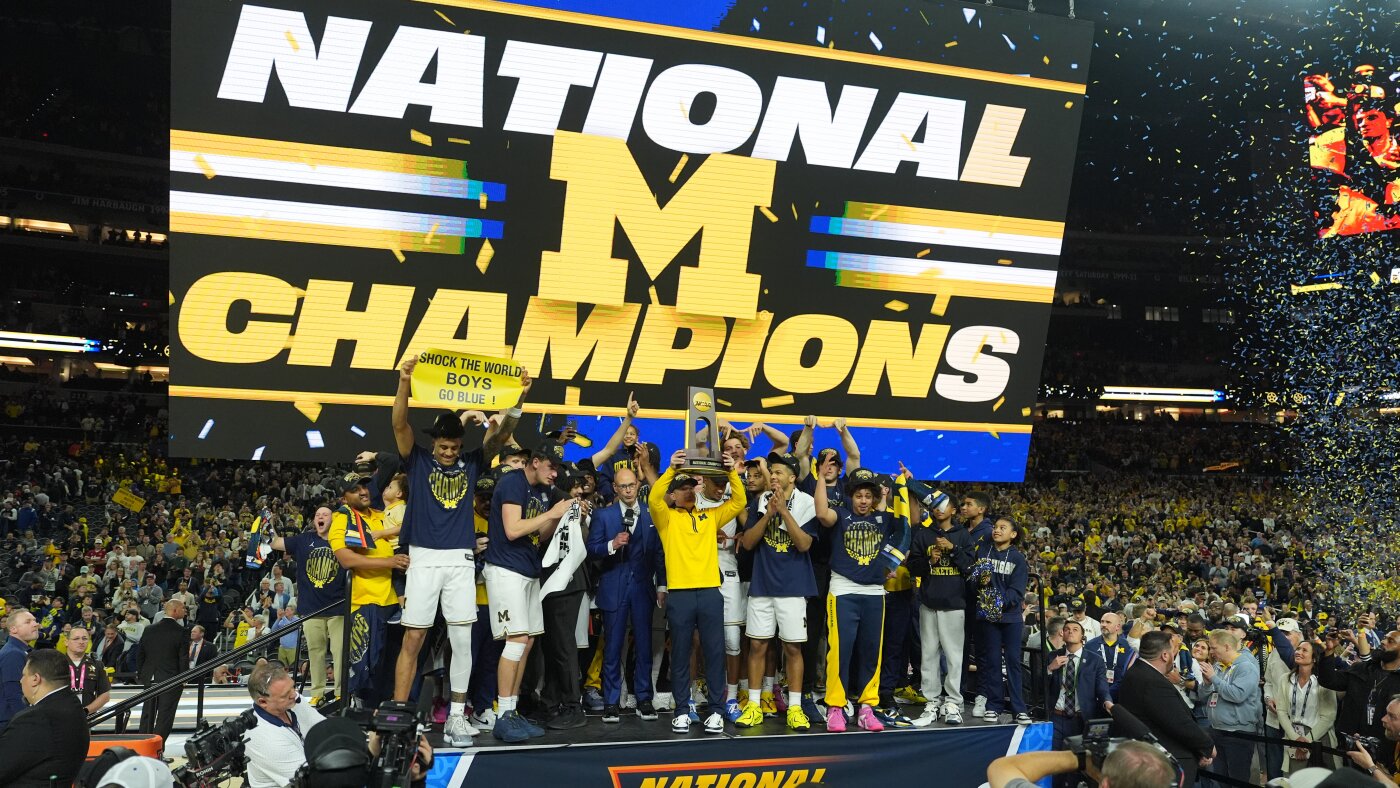
Michigan muscles its way to program’s 2nd NCAA basketball title, beating UConn

Map: Minor Earthquake Strikes Near San Diego

Trump claims he’d win as the president of Venezuela — just needs to ‘quickly’ learn Spanish
-

 Atlanta, GA2 days ago
1 teenage girl killed, another injured in shooting at Piedmont Park, police say
-

 South-Carolina1 week ago
South Carolina vs TCU predictions for Elite Eight game in March Madness
-

 Movie Reviews5 days ago
Vaazha 2 first half review: Hashir anchors a lively, chaos-filled teen tale
-

 Vermont1 week ago
Skier dies after fall at Sugarbush Resort
-

 Politics1 week ago
Trump’s Ballroom Design Has Barely Been Scrutinized
-

 Politics1 week ago
JD Vance says he was ‘obsessed’ with UFOs, believes aliens are actually ‘demons’
-
 Entertainment5 days ago
Inside Ye’s first comeback show at SoFi Stadium
-

 Atlanta, GA1 week ago
Fetishist ‘No Kings’ protester in mask drags ‘Trump’ and ‘JD Vance’ behind her wheelchair