Georgia
Georgia schools chief, state lawmakers at odds over proposed performance rating system


(Georgia Recorder) — It’s not just students who bring home report cards. Since 2012, the College and Career Readiness Performance Index has offered a measure of the performance of schools and districts on a number of factors. Parents can use the scores to decide where to make their homes, and school leaders sift through the data to decide what areas to focus on.
For the past few years, the school report cards have been a little different, and one state lawmaker says it’s time to change back.
In 2020 and 2021, the U.S. Department of Education waived assessment requirements because of pandemic closures. In 2022, the feds approved a temporary modification to change CCRPI, including removing the overall score, because of data gaps caused by the pandemic, and that change was made permanent last year.
The report still lists 0-100 grades for the same five categories – content mastery, progress, closing gaps, readiness, and, for high schools, graduation rate – but since 2022, it has not included an overall 0-100 score.
In the past, each of the categories was given a different weight, so calculating a composite score that is comparable with previous years is slightly more complicated than just adding up the categories or averaging them.
In December, State Superintendent Richard Woods said the change would be a good one for Georgia students.
“I have long said that the CCRPI’s 100-point single score vastly oversimplified the complicated factors that influence school quality,” he said. “With this change, the CCRPI is more like the ‘report card’ it was always intended to be – encouraging schools, families, and communities to dig into the data and both celebrate achievements and address issues that tended to be obscured by the single score.”
Rep. Scott Hilton, a Peachtree Corners Republican, disagrees. His House Bill 1186 aims to require the Governor’s Office of Student Achievement to calculate a single score for districts and schools and the state Department of Education and local school districts to publish them on their websites. The bill passed the House Education subcommittee on Thursday and has until this Thursday’s Crossover Day to pass the full Education committee and the full House to have a smooth path to becoming law.
“Imagine going into a restaurant and not seeing a health score, instead seeing four or five different metrics, then you’ve got to decide, ‘Well, the dishes are dirty, but the food’s good.’ You don’t have time to weigh that,” he said. “You want to know, is it A, B, or C? So House Bill 1186 says you’ve got to go to a single score.”
Hilton said the bill doesn’t specify how education leaders should weigh each factor to come up with the single score, but he said it should be consistent so parents and administrators can compare different schools and districts as well as track their progress over time.
“I’m going to let the experts and the grownups in the room get together and decide what the best calculation is. My only ask is that that calculation is one number, and that calculation is consistent year over year,” he said.
Scores were previously published by the Governor’s Office of Student Achievement. In an email, Executive Director Joy Hawkins said GOSA supports single scores. The Department of Education did not respond to emailed requests for comment.
Last year’s single scores are available, albeit unofficially. The Georgia Public Policy Foundation, a right-leaning think tank, calculated and published scores for schools, grade clusters, and districts on its website. President and CEO Kyle Wingfield said the calculations were done with the same formula used in 2018 and 2019, the most recent years with complete data, to make the scores comparable.
“Real transparency means information that’s clear and meaningful, not requiring the public to be experts themselves to know what their government is doing,” Wingfield said.
The foundation’s report shows overall declining scores for Georgia elementary, middle, and high schools between 2019 and 2023 – down 5%, 8%, and 6.8%, respectively, though Wingfield said looking at individual districts and schools shows that some have demonstrated impressive growth.
“And frankly, I would say that’s one of the things that gets lost when you muddle this sort of message is you’re not celebrating the folks that are achieving really highly either,” he said.




Bottom of the 5th
Top of the 5th
Coleman Lewis came into the game and hit a one out home run to push Georgia Tech’s lead to 15-0 and after Rogers struck out swinging, Baker hit his second home run of the night to make it 16-0. Burress then walked and Brosius entered the game in place of Lackey and he walked to put two runners on. A pair of wild pitches advanced the runners and scored Burress to make it 17-0 and then Cal got the final out,
Bottom of the 4th
McKee gives up two singles, but no runs. GT leads 14-0 heading to the 5th
Top of the 4th
A solo home run from Baker made it 13-0 in favor of Georgia Tech and then after a pair of walks, a sac fly from Hernandez made it 14-0. Schmidt flew out to end the inning, but the lead has grown by two runs.
Bottom of the 3rd
Scoreless 1-2-3 inning for McKee. GT leads 12-0 heading to the 4th
Top of the 3rd
Burress got things started with a leadoff single and then a walk from Lackey put two runners on with no outs. A 2-RBI triple from Advincula pushed the lead to 11-0 and then after a walk from Hernandez, Schmidt drove in Advincula to make it 12-0. Yellow Jackets did not add any more and they lead 12-0 heading to the bottom of the 3rd
Bottom of the 2nd
McKee walks one and gives up a single, but keeps Cal off the board. GT leads 9-0 heading to the 3rd
Top of the 2nd
Scoreless 1-2-3 inning for GT. Yellow Jackets lead 9-0 heading to the bottom of the 2nd
Bottom of the 1st
Scoreless 1-2-3 inning for McKee. GT leads 9-0 heading to the 2nd
Top of the 1st
Burress got a leadoff walk and then Lackey doubled to put runners on second and third with no outs. A 2-RBI double from Advincula gave Georgia Tech an early 2-0 lead. Advincula advanced to third on a wild pitch and after Hernandez walked, Schmidt drove in Advincula with a sac fly to make it 3-0.
Zuckerman then singled to put runners on the corners and that led to an RBI double from Kerce to make it 4-0 with just one out. A throwing error scored Zuckerman and put Kerce on third and Daniel on first. That was it for the Golden Bears starting pitcher and they made a change.
The change did not produce immediate results. An RBI single from Baker made it 6-0 and after Burress struck out swinging, another error scored Daniel to make it 7-0 and then Advincula came up with another big hit, with an RBI double pushing the lead to 8-0. Hernandez walked in his second at bat of the inning and then Schmidt drew a bases loaded walk to make it 9-0. Then, Cal made another pitching change for the Golden Bears. Zuckerman struck out swinging, but it was a huge inning for GT
Pregame
RHP Tate McKee (4-0) is on the mound today and here is how Georgia Tech is going to be lining up:
1. CF Drew Burress
2. C Vahn Lackey
3. 2B Jarren Advincula
4. RF Alex Hernandez
5. 1B Kent Schmidt
6. 3B Ryan Zuckerman
7. SS Carson Kerce
8. LF Caleb Daniel
9. DH Will Baker
The No. 3 ranked Yellow Jackets enter the weekend series at Cal with a 23-5 (9-3 ACC) record, the best 28-game record since 2010.
Tech has won 23 games with five or fewer losses for only the 11th time in the program’s 131 seasons: 2010, 2008, 2003, 2002, 1997, 1994, 1992, 1990, 1971 and 1906 Head coach James Ramsey is tied with his predecessor, Danny Hall, for the best record by any first-year GT head coach through the first 28 games of their tenure.
Jarren Advincula is making his return to the Bay Area after playing each of the first two seasons of his college career at Cal. The junior enters the weekend leading the ACC in hits (47) and in the midst of a 12-game hitting streak. Should he collect a hit in all three games this weekend, he would match his career long hitting streak.
This will be the just the second weekend series between Georgia Tech and Cal and the 7th, 8th and 9th meetings overall. GT leads the all-time series 4-2 after winning all four games against the Golden Bears last season – a 3-0 series sweep in Atlanta and a 10-3 victory in the ACC Tournament quarterfinals in which the Yellow Jackets set an ACC Tournament record with seven home runs.
The Jackets went 3-0 in the state of California last season when they became the first college baseball team from east of the Mississippi River to sweep Stanford, at Stanford in a three-game series.

It’s a big week for Georgia basketball and the Millender family.
Two days after point guard Smurf Millender announced he was returning to the Bulldogs, his brother Kemauri committed to Georgia, he told the Athletic on April 2.
Kemauri Millender is a 6-foot-guard who averaged 9.5 points and 1.9 assists as a redshirt sophomore at New Mexico Junior College where he started 34 games. He shot 32.4% from 3-point range, making 46,for a team that went 27-7.
Kemauri Millender was a top 100 honorable mention selection by JucoRecruiting.com and All-Region V.
He averaged 16.1 points and 3.3 assists in the 2024-2025 season at Hill College in Hillsboro, Texas.
Smurf Millender was third on the Bulldogs in scoring this past season at 12.0 points per game and led the team with 4.1 assists per game. He started down the stretch after coming off the bench earlier in the season.
Smurf and Kemauri played together at Clear Brook High in the Houston area.

SAVANNAH, Ga. (WSAV) — Three Republican candidates and one write-in candidate in Georgia’s U.S. senate race made a stop in Coastal Georgia on Wednesday, campaigning to Georgia voters ahead of the primary.
The Chatham Area Republican Women hosted a luncheon featuring U.S. Reps. Buddy Carter (R-1) Mike Collins (R-10), along with Brigadier General Jonathan McColumn and write-in candidate Rev. Dr. Christina Clements.
Rep. Buddy Carter
Carter opened the event by highlighting his record in Congress, pointing to his role in passing The Working Families Tax Cut Act and efforts to lower healthcare and prescription drugs costs.
“I will never embarrass you,” said Carter. “I haven’t embarrassed you in the 26 years I’ve been in public service.”
He also addressed the partial government shutdown, emphasizing national security concerns.
“Right now, more than ever, I would submit to you that we need funding for Department of Homeland Security,” said Carter. “We’re involved in a conflict in Iran right now. Our terror alert is up.”
Rep. Mike Collins
Collin’s focused on infrastructure improvements across the Coastal Empire, including funding tied to Georgia’s ports.
“That port hadn’t been dredged fully since 2015,” said Collins. “Then I came up here to Savannah, and it wasn’t three weeks later that the Army Corps changed their mind. And we got 35 million for Brunswick Port, and we got the money to study the widening of the Savannah port. That’s how you deliver for the state of Georgia.”
He also highlighted his support for the Laken Riley Act, opposition to defunding the police and plans to support veterans if elected.
“Our veterans out there need help,” said Collins. “We’ve got homeless vets living under bridges. And here we have an administration that will hold and transport, feed and housing these illegals.”
Christina Clement
Clement, President of Black USA and President of the State of Loc Nation Global Public Benefit Corporation, centered her remarks on economic stability, promoting what she called the “Black Dollar Initiative.”
“We should at least have the basics,” said Clements. “This was a summary of what the majority of citizens who felt unrepresented shared with me while listening to their concerns.”
Jonathan McColumn
McColumn pushed his military leadership experience, emphasizing the importance of that experience for Georgia.
“Fort Stewart, Army Airfield, who’s going to negotiate for them because you don’t have anyone right now in the senate who understands this. We need someone who understands the infrastructure, the priorities, the missions.”
He tied that experience to his stance on federal leadership and the ongoing shutdown.
“If we had an executive leader that was a senator today, the Homeland Security would have been funded,” said McColumn. “When you haven’t led anything or you haven’t been responsible for anybody, then you can’t understand that. When you make $187,000 a year, people working for TSA making approximately $50,000 a year, you can’t see that you’re harming those people. That’s a failure of leadership.”
The Georgia Primary race is set for May 19, when voters decide who will face incumbent Senator Jon Ossoff (D-Ga.) in the general election.

How Israel Is Taking Control of Southern Lebanon

Video: Trump Struck Iran. Now Farmers Are Paying the Price.

Video: President Trump Fires Pam Bondi as Attorney General

Video: Skilled Foreign Workers Think About Leaving the U.S.
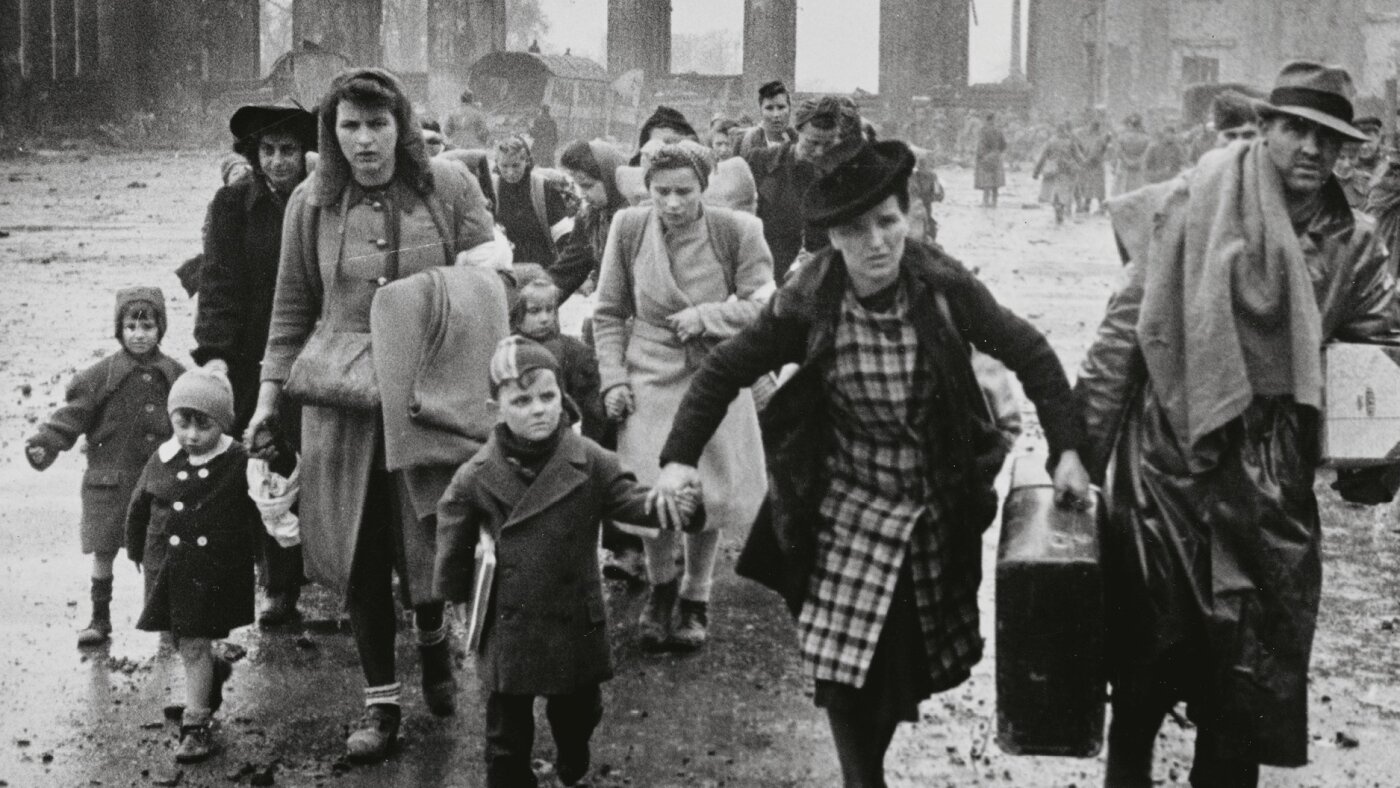
‘Stay Alive,’ about daily life in Nazi Berlin, shows how easy it is to just go along

Florida High School Football Rankings: Top 25 teams – Oct. 21

How old is Bo Nix? What to know about Oregon quarterback ahead of 2024 NFL Draft

Cleary's 21 help Le Moyne down Central Connecticut State 69-64 in OT

99th annual Pony Swim held in Virginia

Indiana Members Credit Union announced as new anchor tenant at Bottleworks District
Video: Trump Struck Iran. Now Farmers Are Paying the Price.

What B-52 bombers bring to Iran fight — and what it means for the war now

Podcast: Hungary elects: what is at stake and who is likely to win?

ICE detention deaths are on a record pace. One Texas facility bears the brunt

GOP rails against ‘s— sandwich’ deal as all eyes turn to House to end DHS shutdown
-

 South-Carolina5 days ago
South Carolina vs TCU predictions for Elite Eight game in March Madness
-

 Culture1 week ago
Wil Wheaton Discusses ‘Stand By Me’ and Narrating ‘The Body’ Audiobook
-

 Miami, FL1 week ago
Jannik Sinner’s Girlfriend Laila Hasanovic Stuns in Ab-Revealing Post Amid Miami Open
-

 Culture1 week ago
What Happens When We Die? This Wallace Stevens Poem Has Thoughts.
-

 Minneapolis, MN1 week ago
Boy who shielded classmate during school shooting receives Medal of Honor
-

 Vermont5 days ago
Skier dies after fall at Sugarbush Resort
-

 Education1 week ago
Video: Transgender Athletes Barred From Women’s Olympic Events
-

 Politics5 days ago
Trump’s Ballroom Design Has Barely Been Scrutinized