South
Four California family members found murdered; 17-year-old among 3 neighbors arrested in mystery case
Four members of the same family were found dead at two adjacent houses earlier this week and a 17-year-old neighbor has been charged with four counts of homicide in a case that has shocked a quiet neighborhood in Reedley, California, according to police.
The startling case, described by police as a “complex puzzle,” came to light when police found the bodies of Billy Bonds, 81, and Guadalupe Bonds, 44, in their home on South Church Avenue on Saturday morning, the Reedley Police Department said in a Facebook post. The detached single-story house is on the 1100 block of South Church Avenue, which is about 25 miles southeast of Fresno.
Upon arrival, officers encountered an empty gun safe and said they believed that various rifles and pistols had been removed.
CALIFORNIA SUSPECT ARMED WITH ‘ASSAULT RIFLE,’ BODY ARMOR KILLED AFTER OPENING FIRE ON DEPUTIES
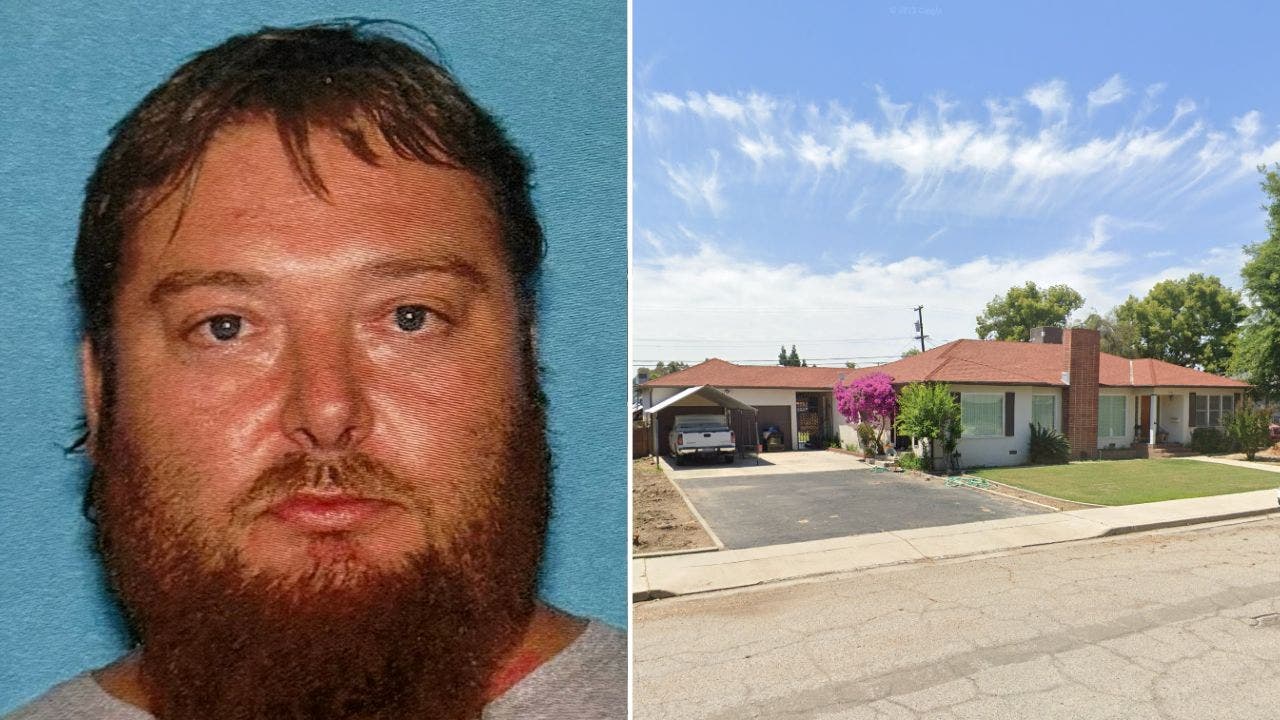
Matthew Bonds, left, was found dead earlier this week. His three family members were discovered in the above house, right. (Reedley Police and Google Maps)
While searching the premises, police came across the body of a third person, 61-year-old Darrell Bonds, who was Billy Bonds’ son. The Los Angeles Times reported that Darrell Bonds was found in a shallow grave.
After police made the grisly discoveries, they put out an appeal for Matthew Bonds, 43, the husband of Guadalupe Bonds, and reported him as an at-risk missing person.
During the investigation, police executed three search warrants, which included searching an adjacent house where they arrested the 17-year-old boy. They also arrested Brynn Curtis, 34, and Rafael Gonzalez, 21, on charges of accessory after the fact.
The two adjacent houses where the bodies were discovered. (Google Maps)
FLORIDA CRIME TRENDING DOWN WHILE CALIFORNIA SKYROCKETS EXPLAINED BY ONE KEY DIFFERENCE: EXPERT
It was during that search that police then discovered in a detached garage the body of Matthew Bonds, who had visual signs of trauma, according to local reports. Matthew Bonds is the son of Darrell and the grandson of Billy.
“In my 30 years, this is one of the most heinous crimes I have ever been involved in,” Reedley Police Chief Joe Garza said at a news conference Wednesday, according to the Los Angeles Times.
Garza said police were still trying to piece together exactly what happened and that the investigation is ongoing.
“My belief is that the 17-year-old did not do this on his own,” he said, according to the Los Angeles Times.
Curtis and Gonzalez were released on bond Wednesday, while the 17-year-old suspect remained held without bond.
Fox 26 reported that Curtis and Gonzalez are in a relationship, and that the 17-year-old arrested is Curtis’ son.
A 17-year-old boy has been charged with four counts of homicide after four members of the same family were found dead at two adjacent houses in Reedley, California. (Google Maps)
CLICK HERE TO GET THE FOX NEWS APP
“I just wish I had my family back, I miss them so much,” Cheryl Moseley, Billy’s niece, told ABC. “They were great people, and they’re totally going to be missed very, very much. It’s just awful that they go like this. It’s not fair.”
The Reedley Police Department said it is actively pursuing all leads in this case.
“We continue to investigate this case with the highest level of dedication and urgency,” the police department wrote on Facebook.
“The recent arrests in connection with these homicides represent significant progress, yet our work is far from over.”
A map pinpoints the 1100 block of South Church Avenue, which is about 25 miles southeast of Fresno. Four victims were found killed in the neighborhood. (Google Maps)

Alabama
Husband, 19, fatally shot wife, 24, himself at Alabama hospital moments after welcoming their first child
A husband fatally shot his wife before turning the gun on himself at an Alabama hospital just moments after they welcomed their first child on Sunday.
Kynath Terry Jr., 19, gunned down 24-year-old Precious Johnson before fatally shooting himself inside the Baptist Health Brookwood Hospital around 9:30 p.m. Sunday night, WTVM 13 reported.
Johnson delivered a healthy baby just before she was murdered. It’s not immediately clear if the baby was present during the shooting, but police said that Terry and Johnson were the only ones injured.
Terry’s mother told the outlet that the couple were having some marital issues leading up to Johnson’s due date, but nothing that made her fear her son would become violent.
She told the outlet that Terry completed Army National Guard training before tying the knot with Johnson.
She noted that Johnson didn’t want Terry’s side of the family at the hospital for her child’s birth, but it’s unclear if anyone from the mother-to-be’s own family was there.
The hospital was plunged into a lockdown “out of an abundance of caution” while police investigated reports of a shooting. It wasn’t lifted until hours later when they determined there was “no active threat to patients, team members or the public,” the outlet reported.
The Homewood Police Department described the tragedy as “an apparent murder-suicide and is domestic in nature.”
Danne Howard, the president of the Alabama Hospital Association, told the outlet that the chilling attack “was an isolated incident” unlike anything she’d encountered during her three decades working in the state.
Howard said, in the wake of the tragedy, the Baptist Health Brookwood Hospital would undergo a security overhaul implementing “lessons learned” from a mandated after-action report.
Just three months ago, in a town six miles outside of Homewood, a beloved sports reporter was fatally shot by her husband before taking his own life. Their 3-year-old son, who was unharmed, led his grandfather to his parents’ bodies.
Arkansas
Arkansas Library Board approves funding for public libraries after initially declining to do so | Arkansas Democrat Gazette
Ella McCarthy
Ella McCarthy covers state politics and the state Supreme Court. Before joining the Arkansas Democrat-Gazette, she covered Austin City Hall for the Austin American-Statesman, and before that, held a fellowship with ABC News in Washington, D.C., where she covered national politics. A graduate of the Missouri School of Journalism, her work has been recognized by the Hearst Foundation, the Missouri Press Association and LION Publishers in the LION local journalism awards. She contributed to the Statesman’s coverage of a two-city shooting rampage that won a national Edward R. Murrow Award for breaking news coverage.
Delaware
Delaware eyes $25.3 million infusion to affordable child care. But to what end?
Is Your Child Ready to Stay Home Alone? Summer Safety Guide
As summer vacation approaches, many parents wonder if their children are ready to stay home alone. Here are some recommendations to help you decide.
Delaware child care has been a fixture of this budget season.
Gov. Matt Meyer pitched some $50 million toward early education in his proposed budget for next fiscal year. It included an $11.3 million federal grant to bolster systems, $8 million to pilot statewide hubs – and the largest piece in $25.3 million to boost Purchase of Care, or state-subsidized child care.
That line item proved a major talking point during a public health budget hearing in Legislative Hall on Monday, March 2, while connecting to broader visions for early childhood reform.
As it turns out, Delaware’s subsidized child care program in particular was already due to shoulder federal requirement changes dating back to the Biden administration. And those changes, effective April 1, could cost the state about $25 million to keep up.
That morning, lawmakers were briefed by the Delaware Department of Health and Social Services for more than three hours, before well over 50 public comments stretched late into the afternoon. Topics ranged from at-home care and centers supporting Delawareans with disabilities, to the ongoing strain of child care.
New Health Secretary Christen Linke Young said the Trump administration might drop these coming changes to pay providers based on child enrollment, before they’re effective.
And for Delaware, she would agree with that call.
Boosting Delaware child care, one way or the other
Purchase of Care is one program helping lower-income Delaware families – or those making below 200% of the federal poverty level, as of yet – afford care at various child care outfits across the state. Delaware pays those providers directly, around the end of the month, based on how many days these children attended.
Federal requirements could force states to change that.
Delaware would have to pay providers at the top of the month, based on their overall student enrollment, regardless of attendance. Young told lawmakers that would cost around $25 million each year, if requirements are not rescinded by the Trump administration.
It would mean more money for providers, she said, though also harsher policy needed around attendance expectations.
“If the federal government does change the rules, we need that full amount to shift to enrollment,” she said, addressing the Joint Finance Committee dais. “If not, our intention is to use it for increased eligibility.”
In other words, the administration hopes to invest about $25 million into this bucket either way. However, the health secretary said paying based on enrollment isn’t her recommendation.
Young told lawmakers the administration would rather see that amount infused into the program to expand eligibility to 250% of the federal poverty level. So, picture a family of three making roughly $80,000 would make the cut. No changes were proposed to co-payments or special education tiers.
This was met with mixed reviews.
“I’m sure some folks are going to have something to say about that,” cautioned Sen. Trey Paradee, committee chair.
For her part, Jamie Schneider was already editing her remarks in real time.
“Comments today suggested providers want to keep attendance-based payments instead of moving to enrollment-based payments,” said the interim executive director for Delaware Association for the Education of Young Children, representing some 900 early care providers. “That is inaccurate and I hope it’s a misunderstanding.”
Schneider welcomed the enrollment model, with “clear rules” to hold both providers and parents responsible. She and a handful of other speakers still also reinforced the necessity in bolstering the Purchase of Care program, from accessibility to reimbursement rates.
Some lawmakers hesitated on shifting away from enrollment boon for providers, while others pushed for attention on the benefits cliff. Meanwhile, child care became an economic discussion.
Is Delaware child care everyone’s business?
Some lawmakers did not care for this price tag, either way.
“So, there’s $25 million that will be saved because of this non-change, and you’re going to expand the program?” Sen. Dave Lawson posed to Young, while expressing concern for taxpayer dollars.
The secretary quickly turned to economic impact.
“Child care is expensive,” she said, in a portion of her remarks. “It is keeping people out of the workforce. It is posing an enormous burden on families and keeping them from making choices that they want to make, to participate in the economy, or to drive change.”
The Rodel Foundation released survey data in fall 2025 that would buttress these claims. The nonprofit is focused on public education and policy, with early childhood education as one pillar. At a glance:
- About 92% of Delaware employers surveyed said child care challenges are hurting their employees, while some 76% reported such problems directly impact their business operations.
- About 1 in 4 caregivers said they considered leaving Delaware because of child care challenges.
- 1 in 3 employers cited productivity declines, lost hours or services and staff turnover.
- 2 in 3 have seen their employees miss work, reduce hours or report absences at least monthly.
- For parents, 1 in 3 reported turning down a job or promotion, cut hours or left work to meet child care demands.
“The cliff is real for me,” Sen. Eric Buckson said. “It disincentivizes individuals to climb out, and I’ve seen it work against folks.”
Purchase of Care’s “graduated phase out” level – often referred to as the “benefits cliff,” when eligibility runs up – would remain at 300%, according to DHSS budget documents and hearing remarks. It was unclear Monday if it would be solidified in more years to come.
There is a long runway ahead.
Untangling a bigger picture for Delaware child care
Sometimes Lt. Gov. Kyle Evans Gay describes the state of Delaware’s early childhood education system as the backside of an average desk. Tangled wires trace down the wall, with various colors and knots headed toward different outlets.
She’s been tapped to help straighten it up.
Named chair to the Interagency Resource Management Committee last year, Gay has overseen several Delaware departments as they centralize on early education. Those are state departments like Health and Social Services, Education, Services for Children, Youth and their Families and more.
The cross-agency group – with cabinet secretaries, agency leadership, lawmakers and the Delaware Early Childhood Council – landed a $11.3 million preschool development grant. Gay sees this next year ahead as setting the stage.
“That will go to projects in each of the agencies, as well as projects in my office,” the lieutenant governor said.
“And truly, with that money, we are building that investable system so that we can have information, including data about how to better serve Delawareans. We’re going to be building local infrastructure so that we can make sure that providers, educators, parents, have resources at their local levels.”
The former state senator and longtime advocate on child care issues sees a north star of early education as a universal, public good.
“But that’s an incredibly large project,” she said. “And it’s a big change from how we traditionally think about birth through 5.”
From exploring finance models to connecting public and private partners, this could be one step in that direction.
DDOE’s Office of Child Care Licensing has also been working to digitize electronic record systems to elevate the office’s public database, while tracking compliance and investigating complaints across Delaware’s licensed providers. A combined $2.4 million was pledged to make it happen, in the last two years, and it’s highly anticipated, Gay said.
The “Delaware Early Childhood Care & Education Alliance,” or likely hubs to the north and south, may also land an $8 million infusion to work across area providers and assist the state in expanding child care access, as outlined in the governor’s proposed budget.
A budget hearing on public education should bring more on that, Tuesday, March 3.
Got another education tip? Contact Kelly Powers at kepowers@usatodayco.com.
-
World5 days agoExclusive: DeepSeek withholds latest AI model from US chipmakers including Nvidia, sources say
-
Massachusetts6 days agoMother and daughter injured in Taunton house explosion
-
Denver, CO5 days ago10 acres charred, 5 injured in Thornton grass fire, evacuation orders lifted
-
Louisiana1 week agoWildfire near Gum Swamp Road in Livingston Parish now under control; more than 200 acres burned
-
Technology1 week agoYouTube TV billing scam emails are hitting inboxes
-
Politics1 week agoOpenAI didn’t contact police despite employees flagging mass shooter’s concerning chatbot interactions: REPORT
-
Technology1 week agoStellantis is in a crisis of its own making
-
Oregon4 days ago2026 OSAA Oregon Wrestling State Championship Results And Brackets – FloWrestling