Florida
Florida’s “Communism Task Force” Is Absurd Red-Baiting


Florida has one of the worst literacy rates in the United States. A full 23.7 percent of Floridians have low literacy skills, the eighth worst state in the country.
You might think that would top the list of concerns of legislators trying to figure out how to improve the education system in the Sunshine State. You certainly wouldn’t think that they would spend their time and resources worrying about Florida schoolchildren becoming communists. This is a state, after all, where ultraconservative governor Ron DeSantis would probably win again if he were allowed to run for a third term. Former president Donald Trump won Florida in 2016 and 2020 and he’ll probably win the state again in 2024. Even in comparatively liberal Miami-Dade County — which went for Hillary Clinton in 2016 and Biden in 2020 — there are large and vocal communities of ferociously anti-communist émigrés from countries like Cuba, Venezuela, and Nicaragua. Surely Florida is among the states where a sudden outbreak of Marxism-Leninism is the least likely.
And yet, a bill advancing through the Florida state legislature would create a “Communism Task Force” in the state’s department of education to ensure that students were being taught about a long list of subjects starting with “history of Communism in the United States and domestic Communist movements, including their histories and tactics,” “atrocities committed in foreign countries under the guidance of Communism,” and the “philosophy and lineages of Communist thought.”
The original wording included a reference to “cultural Marxism” as part of the “philosophy and lineages of Communist thought.” This is a poorly defined right-wing bugbear, often associated with conspiracy theories about the Frankfurt School and the idea that insidious commies are engaged in a “long march through the institutions” of Western societies. In practice, it’s mostly a way of nonsensically associating “wokeness” (i.e., mainstream liberal identity politics) with Marxism (a very specific way of understanding and critiquing economic inequality). Even in Ron DeSantis’s Florida, though, quite so openly inserting right-wing culture-war talking points in public school curricula seems to be a bridge too far. The bill was amended to remove the phrase.
The bill includes instructions that lessons on these mandated topics are to be “age appropriate and developmentally appropriate” — so kindergartners won’t be hearing about Joseph Stalin’s purges. But even with this caveat, it’s overwhelmingly clear that the goal is propaganda rather than genuine education about twentieth-century history.
For example, as Julie Meadows-Keefe of the group Florida Moms for Accurate Education points out, the bill doesn’t require that students be taught about “the McCarthy era in the United States of America.” That’s a good point. Given that it does require that the “history and tactics” of “domestic Communist movements” be taught, one would think that the disturbing retreat from the First Amendment that took place as a response to those movements would be a relevant part of the history. An even bigger omission is that there’s no requirement that Florida schools teach their students about “atrocities committed in foreign countries” in the name of anti-communism. That’s not a short list. Adolf Hitler’s seizure of absolute power in Germany, for example, was justified by fear of communist revolution after the Reichstag was (allegedly) burned down by a Dutch communist. A famous quote from German pastor Martin Niemöller, prominently displayed in the US Holocaust Museum, starts with the lines:
First they came for the Communists
And I did not speak out
Because I was not a Communist
Nor were anti-communist atrocities restricted to foreign enemies like the Nazis. During the Cold War, the United States supported large-scale anti-communist massacres by military dictators like Chile’s Augusto Pinochet and Indonesia’s Suharto. In justifying the coup that overthrew democratically elected socialist Salvador Allende and installed Pinochet in power, US Secretary of State Henry Kissinger infamously said that he didn’t see “why we need to stand by and watch a country go communist due to the irresponsibility of its people.” Decades later, the Regan administration supported Contra death squads in Nicaragua for similar reasons. And of course the United States directly killed millions of peasants in Korea and Vietnam in the name of stopping communism.
To be clear, the crimes committed by authoritarian governments in the Soviet Union and its allies were very real. But if the goal were to give Floridian students a grasp of history, legislators would want them to be taught about atrocities on both sides of the Cold War instead of presenting them with only one side of the ledger. Defending the Florida bill in the conservative magazine National Review, Noah Rothman assails any call for a balanced look at the whole picture as “solipsistic relativism.”
That’s a strange thing to say. To be a solipsist is to not acknowledge the existence of the rest of the world. To be a relativist is to refuse to apply a consistent set of standards, instead insisting that each society be judged by its own standards. The idea that we should acknowledge anti-communist crimes as well as communist ones, rather than highlighting the latter and brushing the former under the rug, is precisely the opposite of either solipsism or relativism. It’s a request for applying consistent standards to things done all over the world by either our government or its enemies.
The Communism Task Force appears to be a one-sided propaganda machine, not an effort to teach the entirety of the history of the clash between communist and anti-communist forces in the twentieth century. Accordingly, we shouldn’t expect its offerings on the “philosophy and lineages of Communist thought” to have genuine educational value. Are Florida students actually going to be exposed to the writings of Karl Marx, whose philosophy was (often quite hypocritically) claimed by communist governments? As for lineages, are high school social studies students going to be reading, say, Marxist philosopher G. A. Cohen’s short and accessible book Why Not Socialism? as well as some writings by Cohen’s critics?
In all likelihood, the answer is no. Again: the goal isn’t to educate Florida students and give them the critical thinking skills that can help them come to their own conclusions about the world around them. It’s to make sure they come to one dimensionally anti-communist conclusions.
The interesting question is why GOP legislators are so concerned about disparaging communism. The Berlin Wall fell thirty-five years ago. The Soviet Union was dissolved before some of the teachers in Florida public schools were born. Even a great many Western Marxists were always fiercely critical of the authoritarianism of the USSR and similar regimes. And at this point, outside of some of the more bizarre corners of left-wing Twitter, it’s hard to find anyone who defends the record of that system. Why the rush to make sure students are pumped full of propaganda about how bad it was?
In 1980, thirty-five years after the end of World War II, high school students were certainly learning about the Holocaust as an important chapter in the history of the twentieth century, but no one was passing bills mandating that every school in Florida learn about the “philosophy of fascist thought” or study the tactics of American pro-Hitler isolationists like Charles Lindbergh or the German American Bund. No one would have thought to bother with that — presumably because fascism had, for all intents and purposes, been defeated.
But the fear of communism has shown a remarkable inability to die away in the decades since capitalism’s victory in the Cold War. Nor is this just an eccentricity of the Florida GOP. The Right in general is always trying to tar their enemies with “socialism,” “cultural Marxism,” and the like. In 2008, for example, no one in American politics but one then–deeply obscure Vermont congressman called themselves a socialist — but Democratic candidate Barack Obama was still being accused of supporting policies that “sounded a lot like socialism” by his Republican rival John McCain. That was Barack Obama, whose campaign was swimming in Wall Street money and who’d go on to oversee eight years of steady growth in income inequality.
I’m not normally a big advocate of applying psychoanalysis to politics, but I can’t help wondering if on some level the Right keeps telling on themselves with its endless red-baiting. Even in Obama, they see a possible socialist. Even in DeSantis’s Florida, they’re worried schoolchildren might not be sufficiently inoculated against the “philosophy and lineages of Communist thought.” Perhaps they’re paranoid about signs of a renewed dissatisfaction with capitalism because they know that many things about capitalism breed profound dissatisfaction, and that resisting it will always hold some appeal.
Ours is a system that produces staggering inequalities in wealth and power. Workers at Amazon warehouses pee in bottles to avoid falling behind on their quotas while their boss has his own spaceship. Some people live off stock ownership, doing no productive labor of their own, and others balance multiple gig-economy jobs and have to start GoFundMes to pay for life-saving medications.
Even in times and places where strong labor unions and big welfare states have sanded off some of the system’s sharpest edges, wealthy business owners have better lives and far more power than the ordinary people whose day-in, day-out labor makes their businesses function. Inequality this stark is bound to create curiosity, sooner or later, about anti-capitalist ideas.
The particular combination of one-party states with a clunky model of top-down economic planning that rose in the USSR, and fell there and almost everywhere else several decades later, was a product of extremely specific historical circumstances. Communism of that order is not likely to return. But that doesn’t mean capitalism will stop breeding discontent, which, when politicized, will indeed in many cases earn the name “socialism.”
The desire for a more equal society is persistent and powerful. It’s going to take a lot more to suppress those dreams than a bit more propaganda in the public schools.



TAMPA, Fla. (CBS12) — Florida police thought they were responding to a home intruder, but instead they were met with a huge gator.
The Tampa Police Department said a little after 3 a.m. on March 29, officers responded to a residence only to find that an alligator had broken into the home and let itself in for a swim in the homes pool.
See also: Treasure Coast hospitals see more e-bike injuries amid increased accidents
Body camera video shows officers walking up to the home, when all of a sudden there is a loud bang followed by a hissing sound.
BE THE FIRST TO COMMENT
With help from an alligator trapper, the alligator was safely removed.

Stuart ranked No. 2 for best coastal small town in the United States.
Stuart ranked No. 2 in the USA TODAY 10BEST Readers’ Choice Awards for best coastal small town.
The Treasure Coast city has been recognized as one of the best coastal small towns in the USA TODAY 10BEST Readers’ Choice Awards for several years. Stuart was ranked No. 2 in 2023, No. 1 in 2024 and No. 2 in 2025.
Stuart was praised for its access to the St. Lucie River; its parks, such as Flagler and Shepard; its museums, such as Stuart Heritage Museum and Road to Victory Military Museum and its restaurant-lined downtown.
Florida secured two spots on the top 10 list, with Stuart at No. 2 and Cedar Key at No. 10.
These rankings are determined by a panel of industry experts, invited weekly by USA Today 10BEST, who nominate their favorite points of interest and attractions across different areas. 10BEST editors then vet the nominations before selecting a final set of nominees to be presented to the voting public for four weeks.
Best coastal small towns in the United States
These are the top 10 best coastal small towns in the United States, according to the USA TODAY 10BEST Readers’ Choice Awards:
- 1. Pismo Beach, California
- 2. Stuart, Florida
- 3. Morro Bay, California
- 4. Avalon, California
- 5. Castine, Maine
- 6. Cape May, New Jersey
- 7. Gulf Shores, Alabama
- 8. Beaufort, North Carolina
- 9. Carmel-by-the-Sea, California
- 10. Cedar Key, Florida
Olivia Franklin is TCPalm’s trending reporter. You can contact her at olivia.franklin@tcpalm.com, 317-627-8048 or follow her on X @Livvvvv_5.

The Florida Lottery offers several draw games for those hoping to win one of the available jackpots.
Here’s a look at the winning numbers for games played on Tuesday, April 7, 2026.
Winning Mega Millions numbers from April 7 drawing
05-15-22-33-37, Mega Ball: 02
Check Mega Millions payouts and previous drawings here.
Winning Fantasy 5 numbers from April 7 drawing
Midday: 06-20-26-27-33
Check Fantasy 5 payouts and previous drawings here.
Winning Cash Pop numbers from April 7 drawing
Morning: 09
Matinee: 15
Afternoon: 04
Evening: 15
Check Cash Pop payouts and previous drawings here.

Powerball, Mega Millions jackpots: What to know in case you win
Here’s what to know in case you win the Powerball or Mega Millions jackpot.
Just the FAQs, USA TODAY
Winning Pick 2 numbers from April 7 drawing
Midday: 2-8, FB: 9
Evening: 8-2, FB: 8
Check Pick 2 payouts and previous drawings here.
Winning Pick 3 numbers from April 7 drawing
Midday: 5-2-2, FB: 9
Evening: 3-7-5, FB: 8
Check Pick 3 payouts and previous drawings here.
Winning Pick 4 numbers from April 7 drawing
Midday: 8-7-2-5, FB: 9
Evening: 6-6-2-6, FB: 8
Check Pick 4 payouts and previous drawings here.
Winning Pick 5 numbers from April 7 drawing
Midday: 7-1-7-3-0, FB: 9
Evening: 6-3-2-2-7, FB: 8
Check Pick 5 payouts and previous drawings here.
Where can you buy Florida Lottery tickets?
Tickets can be purchased in person at any authorized retailer throughout Florida, including gas stations, convenience stores and grocery stores. To find a retailer near you, go to Find Florida Lottery Retailers.
Feeling lucky? Explore the latest lottery news & results
Are you a winner? Here’s how to claim your prize
- Prizes of $599 or less: Claim at any authorized Florida Lottery retailer or Florida Lottery district office.
- Prizes for $600 to $1 million: Must be claimed in person at any Florida Lottery district office for games that do not offer an annual payment option.
- Prizes greater than $1 million and all prizes with an annual payment option: Must be claimed at Florida Lottery headquarters, except Mega Millions and Powerball prizes, which can be claimed at any Florida Lottery district office.
You also can claim your winnings by mail if the prize is $250,000 or less. Mail your ticket to the Florida Lottery with the required documentation.
Florida law requires public disclosure of winners
If you’re a winner, Florida law mandates the following information is public record:
- Full name
- City of residence
- Game won
- Date won
- Amount won
- Name and location of the retailer where the winning ticket was purchased.
When are the Florida Lottery drawings held?
- Powerball: 10:59 p.m. Monday, Wednesday and Saturday.
- Mega Millions: 11 p.m. Tuesday and Friday.
- Florida Lotto: 11:15 p.m. Wednesday and Saturday.
- Jackpot Triple Play: 11:15 p.m. Tuesday and Friday.
- Fantasy 5: Daily at 1:05 p.m. and 11:15 p.m.
- Cash Pop: Daily at 8:45 a.m., 11:45 a.m., 2:45 p.m., 6:45 p.m. and 11:45 p.m.
- Pick 2, 3, 4, 5: Daily at 1:30 p.m. and 9:45 p.m.
This results page was generated automatically using information from TinBu and a template written and reviewed by a Florida digital producer. You can send feedback using this form.
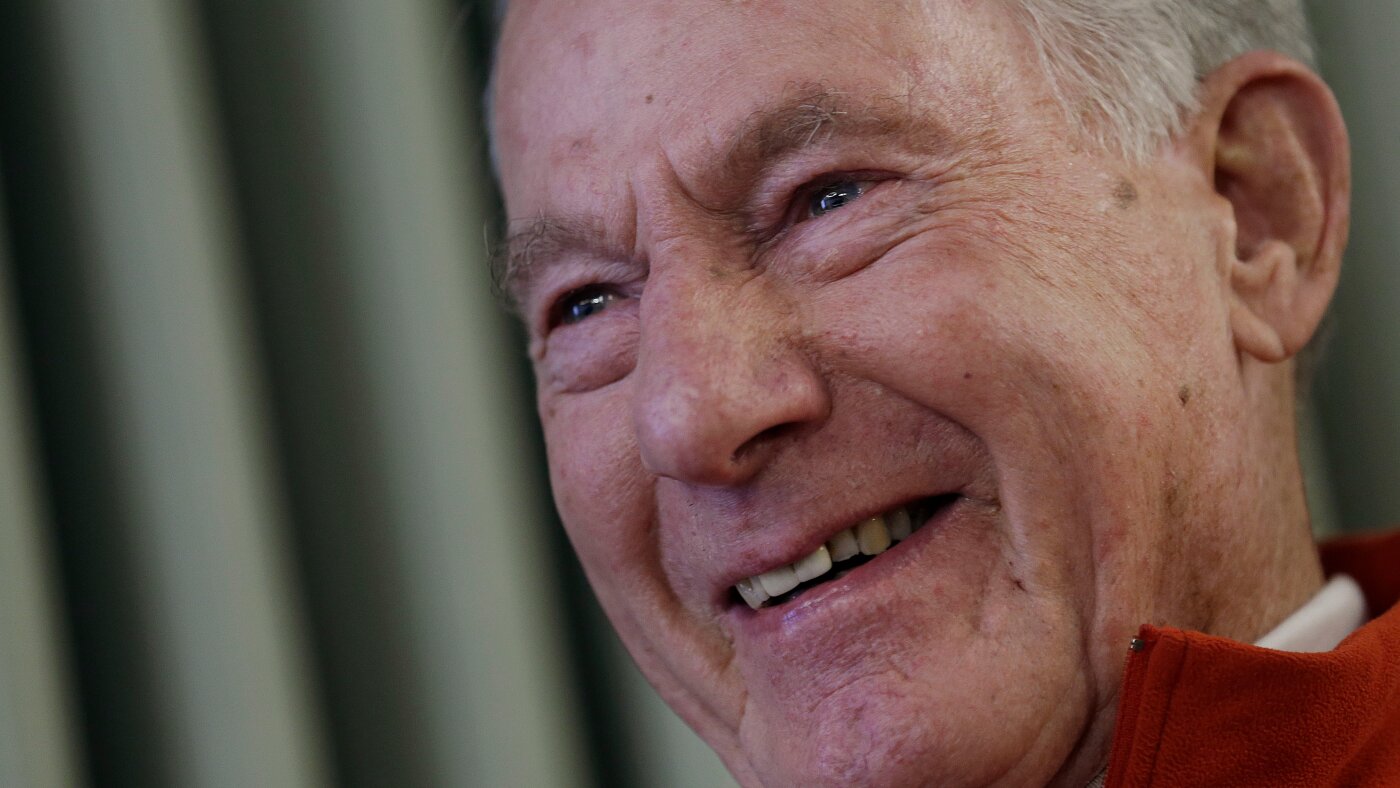
Jim Whittaker, the first American to summit Mount Everest, dies at 97

Video: Suspect in Gilgo Beach Murders Pleads Guilty

Closed Detroit behavioral facility faces lawsuit over alleged sex abuse of teen

Devers belts big HR to clinch Giants' series victory over Phillies

3 musings after Dallas falls to Phoenix, 112-107

Florida High School Football Rankings: Top 25 teams – Oct. 21

How old is Bo Nix? What to know about Oregon quarterback ahead of 2024 NFL Draft

Cleary's 21 help Le Moyne down Central Connecticut State 69-64 in OT

99th annual Pony Swim held in Virginia

Indiana Members Credit Union announced as new anchor tenant at Bottleworks District
Jim Whittaker, the first American to summit Mount Everest, dies at 97

Video: Military Families Bear the Burden of War, Again

Fox News Poll: Record number say taxes are too high; government spending seen as wasteful

‘Even the street cats ran’: Inside Israel’s deadliest attack on Beirut

California Supreme Court halts GOP sheriff’s voter fraud investigation
-

 Atlanta, GA4 days ago
1 teenage girl killed, another injured in shooting at Piedmont Park, police say
-

 Culture1 week ago
Do You Know Where These Famous Authors Are Buried?
-

 Movie Reviews7 days ago
Vaazha 2 first half review: Hashir anchors a lively, chaos-filled teen tale
-

 Georgia2 days ago
Georgia House Special Runoff Election 2026 Live Results
-

 Pennsylvania2 days ago
Parents charged after toddler injured by wolf at Pennsylvania zoo
-

 Education1 week ago
Video: We Put Dyson’s $600 Vacuum to the Test
-
 Milwaukee, WI3 days ago
Potawatomi Casino Hotel evacuated after fire breaks out in rooftop HVAC system
-
 Entertainment1 week ago
Inside Ye’s first comeback show at SoFi Stadium