


The Dallas Mavericks entered the 2026 NBA Draft with the #9 pick, the #30 pick and a fair amount of trade rumors swirling around them. After selecting Morez Johnson, Jr. at #9, things went dreadfully quiet on the trade front. As subsequent picks were made and the minutes ticked by, it seemed apparent that Dallas would be making a selection at #30 instead of packaging that pick with a veteran in an effort to move up the draft board. Any hope at picking up a young guard to help in the rebuild looked bleak.
Dallas, TX
Breaking down the front seven of new Cowboys defensive coordinator Mike Zimmer’s scheme


The Cowboys have found their defensive coordinator, making the decision Thursday night to hire Mike Zimmer. The former Vikings head coach returns to Dallas, where he coached for 13 seasons between the 90’s and early 2000’s. But what does Zimmer’s scheme look like? Let’s take a deep dive into how his front seven operates.
So many simulated pressures
The pass rush has become more important than ever in recent years, as the talent gap between pass rushers and pass protectors has become wildly unbalanced in favor of the defense. However, with the corresponding uptick in lightning-fast passing concepts and intentional creation of YAC opportunities on offense, the notion of blitzing to generate a pass rush has become riskier than ever.
Zimmer practically built his career out of generating pressure without blitzing. Simulated pressures have been around for ages, but Zimmer – as well as a multitude of Ravens defensive coaches in the early 2000’s – was one of the first to fully embrace the concept. The most basic definition of a simulated pressure is having a non-traditional pass rusher go after the quarterback while dropping a traditional pass rusher into coverage; however, as the NFL has become more positionless in recent years, the application of the term can often be applied to any look that bluffs a blitz but actually only sends four rushers.
The thinking behind this is that offenses usually will make adjustments to their pass protection based on the look that a defense shows before the snap. Different offenses have different rules for handling a suspected blitzer, but simulated pressures are designed to trick the offense into adjusting their pass protection scheme to account for a player that isn’t actually blitzing. This then creates more favorable matchups for the real pass rushers, and coaches like Zimmer will often pair this with defensive line stunts to exploit the weaknesses of the pass protection that were created by the fake blitz look.
Simulated pressures have taken the league by storm in the last few years, but Zimmer has been the king of simulated pressures for decades now. He makes frequent use of fake blitz looks and stunts that wreak havoc on the offensive line, and he often succeeds in getting pressure on the quarterback without actually blitzing. Zimmer’s defenses are usually near the bottom of the league in blitz rate (defined as more than four pass rushers) even though he frequently sends linebackers or defensive backs after the quarterback.
Quinn made frequent use of simulated pressures in Dallas, especially after Micah Parsons’ emergence as a premier pass rusher. Zimmer brings a similar mindset, though with a little more routine behind it. While Quinn usually broke out his simulated pressure package in obvious passing downs, Zimmer will usually utilize his on just about any down, which makes it harder for offenses to adjust.
The split mug front
When talking about Zimmer and simulated pressures, the best example is the split mug front, something that became a calling card of his and has since become a staple for NFL defenses all over. The split mug front, also known as the double A gap front, features both linebackers lined up in the A gaps and the slot corner and one safety walked up to the line of scrimmage, threatening to blitz.
For context, this video is 6 years old…
Here’s Jon Gruden breaking down what he loved about Mike Zimmers’ defense in Minnesota.
It’s his “Double-A Package.”
Seems like this could fit the skill set of #Cowboys Micah Parsons and Donovan Wilson very well
( : @espn YT) pic.twitter.com/ggV3u8OSYY
— Brandon Loree (@Brandoniswrite) February 4, 2024
In showing this look, offenses potentially have to account for up to four pass rushers on either side of the field, which puts maximum stress on the pass protection. Zimmer rarely sends the house in these looks, but it’s anyone’s guess as to who is bailing into coverage and who is rushing the passer.
Oftentimes, this is determined by the offensive line. A frequent call from the split mug front is the center read, where the two linebackers in the A gaps read the center and determine their pass rush from there: if the center turns to the linebacker on his right, the one on his left rushes while the other drops into coverage, and vice versa. Zimmer also has a similar read for outside blitzes from either the slot corner or safety. This makes it extremely difficult for the offense to read things pre-snap and – when executed well – makes it impossible for the offense to be right post-snap.
Every defense has this look in their playbook these days, and Quinn utilized it at one of the highest rates in the league the last few years. But Quinn and others mostly use this front on obvious passing downs, where it’s been highly effective. On the contrary, Zimmer has a wide variety of different packages built out of this look, which only expands its utility and applications in a game.
Big bodies on run defense
Run defense was a consistent issue for the Cowboys under Quinn, though it was often by design: Quinn was dedicated to stopping the pass at all costs, and often felt okay with compromising his run fits for better pass rush opportunities. That will certainly not be the case under Zimmer.
Stopping the run is a top priority for Zimmer. The former defensive backs coach has built a career out of his unique ability to affect passing schemes, which is why Zimmer puts a premium on stopping the run. The goal is to make offenses one-dimensional, thus allowing his pass rushers to pin their ears back and get after the quarterback.
Since Zimmer’s scheme often uses aggressive, attacking techniques along the defensive line, the coach has frequently sought out bigger bodies to aid in run defense. When Zimmer first became the Vikings head coach, he went out and signed the 330 pound Linval Joseph to plug the middle of the defensive line. Joseph served as Zimmer’s nose tackle for six seasons, at which time he was replaced by the 350 pound Michael Pierce. It’s likely that one of Zimmer’s first priorities will be getting Mazi Smith into a workout routine with trainers named Ben and Jerry.
Zimmer also prefers more heft at the linebacker position, a departure from Quinn’s preference for leaner second-level players. While Zimmer makes frequent use of nickel packages with just two linebackers, he primarily relied on the duo of Anthony Barr (who hovered around 245 and 255 pounds) and Eric Kendricks (who was usually around 235 pounds). The Cowboys were fairly light at the position, both from a numbers perspective and a size perspective, but Zimmer will likely look to change that moving forward.



Why Gabby Williams chose to play for Golden State Valkyries
Valkyries’ Gabby Williams shares with USAT’s Meghan L. Hall why she chose Golden State in the wild WNBA free agency.
Sports Seriously
When the Dallas Wings travel to Las Vegas for a clash with the Aces on Thursday night, they’ll be without one of their key players.
Alanna Smith is listed as out for Thursday on the latest WNBA injury report as she is in concussion protocol.
Smith seemingly suffered an injury to her face on Saturday night during the Wings’ 93-92 win over the Chicago Sky. In the first quarter, Smith was shaken up after a head-to-head collision with Gabriela Jaquez as Smith was defending the Sky rookie’s drive to the basket. At halftime, the team announced that Smith would not return to the game.
On Monday, Smith didn’t play in the Wings’ 112-110 overtime win over the Seattle Storm, listed as being out due to a face injury. Smith has worn a protective face mask after she suffered a nasal fracture in the Wings’ preseason game against the Aces on May 3.
Smith is the highest-paid player on the Dallas roster, signing a three-year deal worth about $3.7 million this offseason. Last season with the Minnesota Lynx, she was the co-Defensive Player of the Year, sharing the award with A’ja Wilson.
A 6-foot-4 forward from Australia who played collegiately at Stanford, Smith found a consistent role over the past two seasons with the Minnesota Lynx, starting in all 81 games she appeared in for Cheryl Reeve’s squad. Across two seasons in Minnesota, Smith averaged 9.1 points, 5.3 rebounds, 3.1 assists, 1.3 steals and 1.7 blocks per game, helping the Lynx make back-to-back playoff appearances — including a trip to the Finals in 2024.
With the Wings, she’s started in just seven of the 15 games she’s appeared in, playing an average of 15.1 minutes per game. She’s posting 3.5 points, 2.9 rebounds and 1.3 assists per game.
Dallas has instead turned to Jessica Shepard in the frontcourt, who also arrived via free agency after spending last season with the Lynx. The Notre Dame product is posting career-highs in points (14.2), rebounds (11.1) and assists (5.6) per game while shooting 57% from the floor.
Still, Smith brings an imposing presence on defense, one that would have come in handy against the Aces.

A 12-year-old Dallas middle-schooler ended up on the streets, where a pimp discovered her. For as little as $50, he sold her for sex. He withheld food unless she worked. She later disappeared into the state’s foster care system after suffering from depression. She attempted suicide.
A 13-year-old seventh- grader was forced to have sex with men in Houston by a pimp who hooked her on drugs. She died shortly after turning 18 from a fentanyl overdose — a few months before her abuser was sentenced to prison.
A 17-year-old Lubbock runaway was required to have sex with men in hotels and truck stops until she earned her pimp $1,000 daily. That quota meant seeing up to 20 “clients” per day. She spiraled into drug addiction.
These children have more in common than the abuse they endured — and the lifelong trauma that comes with it. Each was mandated by federal law to receive financial compensation from the pimps and pedophiles who abused them.
You can read more in-depth reporting from our media partner, The Dallas Morning News.

With the #30 pick, Dallas selected Koa Peat, Adam Silver said goodnight and that was that. Except it wasn’t. As the first round of the Draft was concluding, rumors started buzzing that the Mavericks were in fact making a move. Details are still being confirmed, but as it stands, Dallas will be trading the #30 pick Koa Peat and two future second-round draft picks to the New York Knicks in exchange for Sergio DeLarrea’s services. The exact second-rounders were still being determined late Tuesday night.
Here are the details we have at this time:
Los Angeles Lakers Received: 24th Overall Pick (Cameron Carr, Baylor)
Dallas Mavericks Received: 25th Overall (Sergio de Larrea, Spain)
Phoenix Suns Received: 30th Overall (Koa Peat, Arizona)
New York Knicks Received: Cash (Lakers), two second-round picks (Mavericks), and three more second-round picks (Suns)
DeLarrea was on the radar of a number of Mavs Moneyball staffers, perhaps none more than Tyler Edsel who wrote an excellent crash course on him and what he can bring to the Mavs. To be clear, it is unlikely he is going to have a massive day-one impact on the team, but the Mavericks really needed to do something to acquire more young talent that fit a position of need. While he may not be as flashy a name as Brayden Burries (whom the Mavs skipped over in favor of Morez) or Labaron Philon, Jr. (who somewhat surprisingly slipped to #22), Dallas really needed to do bolster the guard position and they came through.
If DeLarrea’s shooting transfers to the NBA level, it would be a big boon for a team that struggled from downtown much of last season. While not an immediate impact player, Dallas did well to move up a bit in a low-cost move that keeps all of their other assets intact for what will surely be a summer of retooling via trades and free agency.
Stay tuned for updates, as it is unclear which second-round picks the Mavericks will let go of in this deal.
I invite you to follow me @_80MPH on X, and check back often at Mavs Moneyball for all the latest on the Dallas Mavericks.
You can listen to our latest podcast episode in the player embedded below, and to make sure you don’t miss a single one moving forward, subscribe to the Pod Maverick podcast feed on Apple, Spotify, Pandora, Pocketcasts, YouTube, Amazon Music, and most other places. If you use a feed not listed, let Kirk know.
You can check out our After Dark Recap podcasts, YouTube Live recordings, and guest shows on the Pod Maverick Podcast feed. Please subscribe, rate, and review.
-

 World5 minutes ago
Trump says Venezuela earthquakes left ‘devastating number of deaths’ as US readies aid
-

 Politics8 minutes ago
Closed-door outburst turns into victory for Trump’s Iran negotiations
-

 Health13 minutes ago
Former reality star opens up about new diagnosis after years-long health ordeal
-

 Sports20 minutes ago
Terrion Arnold, Lions’ 2024 first-round pick, charged with kidnapping and armed robbery in Florida
-
 Business28 minutes ago
An electric truck for less than $25,000? Deliveries begin this year
-
 Entertainment35 minutes ago
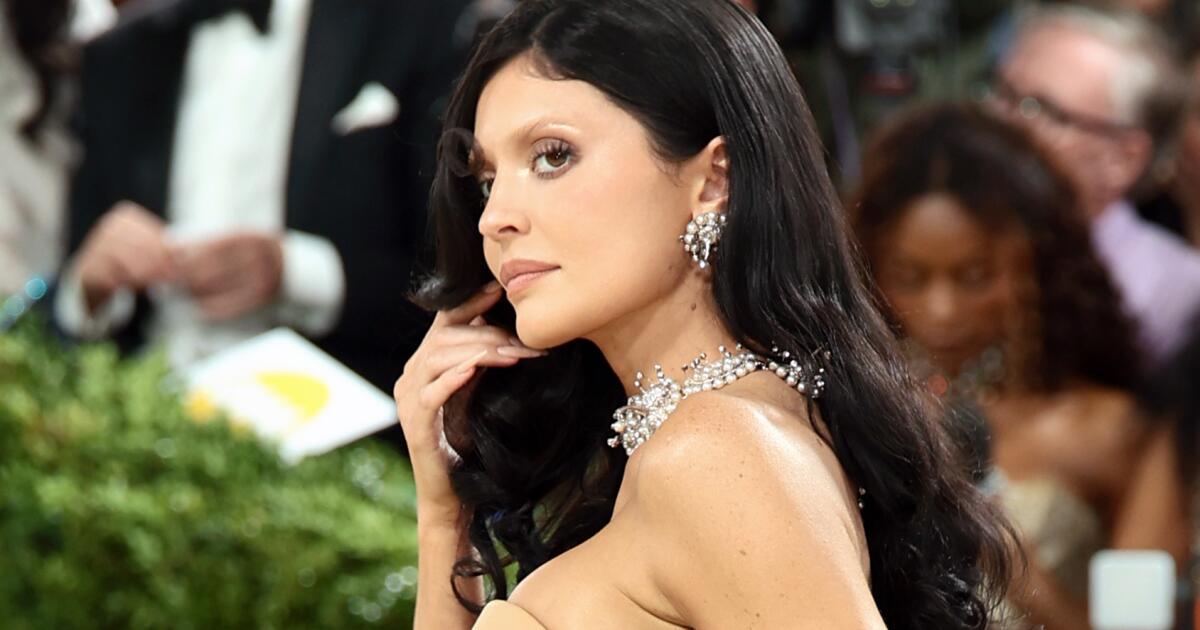
Kylie Jenner hit with third lawsuit as former chef claims Palm Springs party led to miscarriage
-
 Politics43 minutes ago
Trump refuses to sign landmark housing bill, demanding Congress pass voter ID law
-
 Sports53 minutes ago
Mexico celebrates magical World Cup win over Czechia at rowdy Azteca Stadium

