Austin, TX
Cessna, American Airlines 737 have mid-air close call; FAA investigating


The FAA is now investigating a previously unreported close call over the skies of Austin, Texas. An American Airlines 737 and a Cessna 182 came within approximately 350 feet of each other near the Austin airport Wednesday morning.
“Did you ever see him the second time around?” an air traffic controller can be heard asking the pilots of American Flight 2587 on air traffic control audio.
One of the pilots answered, “We saw him when he flashed us and flew right into us.”
The American flight was on approach from Chicago to land with 122 passengers and 6 crew on board when the two planes nearly crossed paths around 10:45 am local time. Flightradar24.com preliminary data puts the American flight about 350 feet above the Cessna 182 with them separated by less than 800 feet horizontally.
“If you want to declare a near miss let us know,” the controller told the pilots.
The FAA tells CBS News the Cessna “unexpectedly entered the flight path of American Airlines Flight 2587” prompting an alert in the Boeing cockpit and the pilots to take evasive action.
According to air traffic control audio posted by liveatc.net, the pilots of the American flight said they were responding to an “RA” or Resolution Advisory signal from the plane’s Traffic Collision Avoidance System known as TCAS. A TCAS warning is among the last lines of defense to avoid a mid-air collision. Pilots are encouraged to respond to an RA within five seconds.
The FAA says when the American pilots responded to that TCAS advisory they turned towards a third plane, a small private jet, resulting in a loss of separation between those two. That prompted air traffic controllers to urgently direct that plane to change course: “6-pappa golf turn right 0-3-0 immediately,” and about 15 seconds later, “papa-golf traffic to your right, an American 737 do you have him in sight?”
American Flight 2587 landed safely a few minutes later. “American Airlines flight 2587 landed safely at AUS after completing a go-around,” said a spokesperson for the airline. “We thank our crew members for their professionalism and expertise and for always prioritizing safety above all else.”
Pilots could be heard on ATC audio discussing foggy conditions shortly before the close call.
The FAA says all three planes ultimately landed safely.
This comes just days after air traffic controllers in San Diego cleared a Southwest flight to cross a runway another Southwest flight was using to take off, putting the planes on a potential collision course before controllers ordered both planes to stop.
Tuesday the FAA announced an audit of runway incursion risk at the nation’s 45 busiest airports. The audit aims to identify any gaps in procedures, equipment and process. It will include a risk profile for each airport and recommendations to improve safety.
“While overall runway incursions are significantly down, even one incident is one too many,” the FAA said in a statement.
Wednesday was not the only close call in Austin.
Last February, a FedEx 767 was cleared to land while a Southwest 737 was still on the runway at the Austin airport in foggy conditions. The National Transportation Safety Board said the two planes came within 150-170 feet of each other before the FedEx first officer Robert Bradeen spotted the other plane.
“I saw a light that turned out to be the position light on the Southwest airplane and quickly saw the silhouette following that and called for a go around,” Bradeen told CBS News in his first interview with a broadcast television network last month. “There’s a moment of disbelief. ‘Am I really seeing this? Is this really an airplane right there?’ And then training and experience kick in.”
FedEx Captain Hugo Carvajal was at the controls of that Boeing 767 and immediately began to climb to avoid a potential collision.
“Without two people in this cockpit on our day it was an aircraft accident,” Carvajal said, adding both pilots were concerned when the controller cleared the Southwest flight while they were on final approach. “As soon as the tower cleared them to takeoff, we knew that there was an issue because we were, we were about three miles, which is too close at that point.”
The NTSB found the probable cause of this incident was “the local controller’s incorrect assumption that the Southwest Airlines airplane would depart from the runway before the Federal Express airplane arrived on the same runway, which resulted in a loss of separation between both airplanes.”




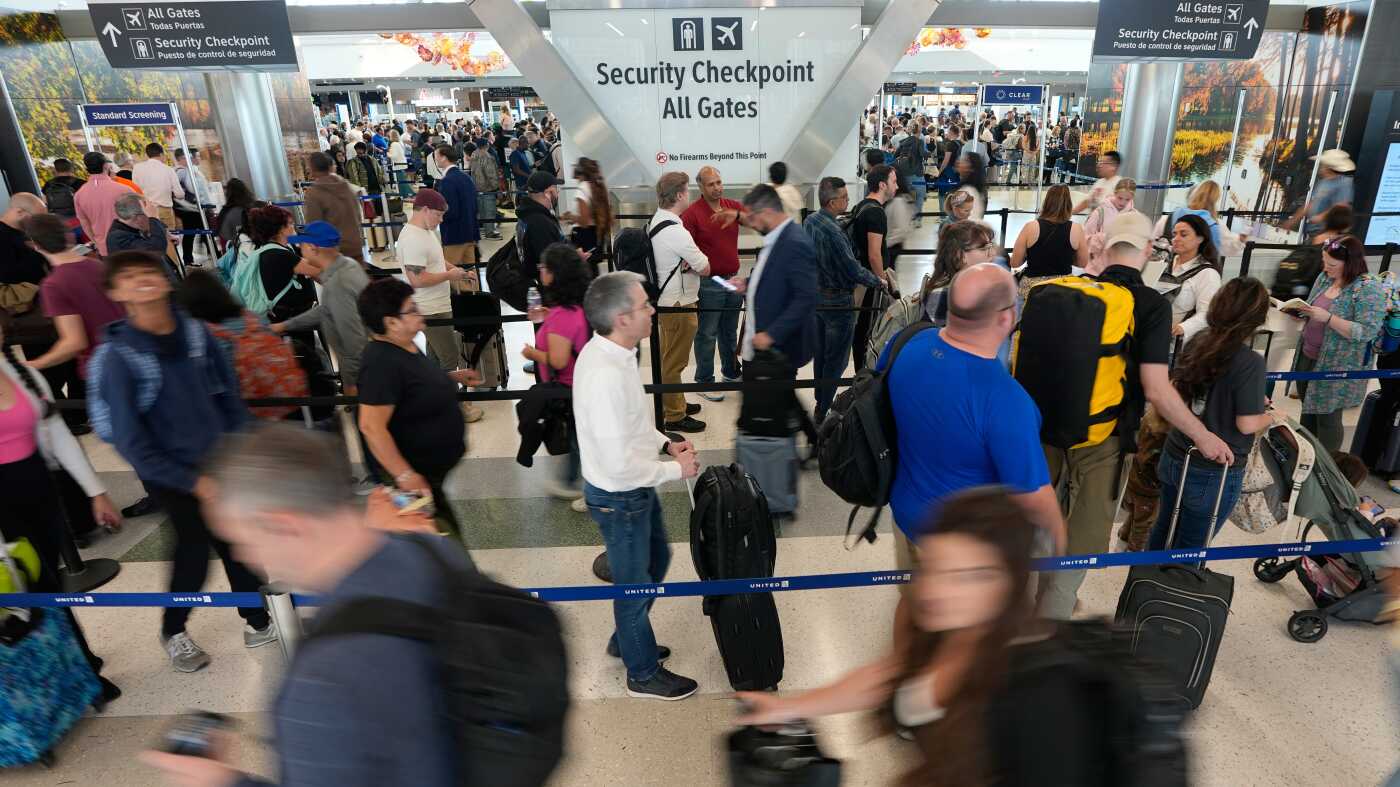
AUSTIN, Texas — Long security lines returned to Austin-Bergstrom International Airport on Sunday as the partial government shutdown continued, prompting some travelers to arrive hours early and still worry they might miss their flights.
Some travelers said they showed up four hours ahead of departure to try to avoid problems at the checkpoint. Inside the terminal, security lines stretched across the building, testing patience as passengers waited to be screened.
“This has been insane. Hopefully they get it figured out,” traveler John Wittle said. Another traveler, Juliana Sombrano, said, “We arrived four hours earlier today because they said the lines were going to be really long today.”
Airport officials said they were expecting about 32,000 travelers Sunday. The airport typically considers anything over 30,000 to be a busy travel day.
The congestion contributed to travel disruptions for some passengers. “American cancelled our flight. Didn’t tell us anything about what to do. Our bags are in a completely different city right now,” traveler Michael Vosicky said.
The extended TSA lines have also affected other Texas airports, including Bush Intercontinental Airport in Houston. TSA agents have not been paid in more than 40 days as the partial shutdown has continued, leaving some travelers sympathetic to workers.
“Obviously feel sorry for the staff who are going through everything,” traveler Michael Radomir said.
ALSO: One person critically injured after vehicle collides with motorcycle in NW Austin
On Friday, President Donald Trump signed an executive order authorizing TSA agents to be paid with Department of Homeland Security funds, while blaming Democrats for the airport controversy. “Some of them are needing money because the Democrats cut off their money. I blame the Democrats more than anything else,” Trump said.
The order came as House Republicans rejected a bipartisan Senate bill that would have fully funded the TSA and several other agencies.
At Austin-Bergstrom, travelers said they hope paying TSA workers will help speed up screening lines. “Hopefully it does nothing but continue to improve everything, everything that we’re seeing here,” traveler Mark Lupkey said.
TSA said agents could begin getting paid as early as Monday. The agency did not confirm how many agents have not been working in Austin since the partial shutdown began.

AUSTIN, Texas — The housing market has cooled, with J.P. Morgan predicting house prices in the U.S. will stall. Despite the stagnate home price analysis, one Texas-based tech company is developing an unconventional way to build. An Austin church is tapping into ICON’s 3D printing technology to rebuild its church campus.
St. Mark’s Episcopal Church has been on its 8-acre property since the late 1950s.
“We’ve long been in this kind of predicament here as a congregation that we have these really deep-level structural problems with our buildings, and we’ve really never been able to imagine being able to pay for it,” said Father Zac Koons, the leader of the church.
He said costly quotas to repair aging infrastructure is one big reason they partnered with ICON to develop a whole new church campus.
“It’s not only a less expensive or a more affordable way to build, it’s also a more environmentally friendly way to build,” Koons said.
ICON’s “Titan” construction system will be used for this project, bringing the world’s first 3D-printed church to Austin.
“I think this will be a famous building,” said Jason Ballard, the CEO and co-founder of ICON. “I think it will stand for hundreds of years, and I think they’re just so pleased with what they’re able to get on their budget out of this building.”
The company says its concrete mixture can save future homeowners and businesses roughly 40% compared to conventional wood and metal frameworks.
“For the past two years, we have been working on a second generation of printer technology that is multi-story, easier to set up, easier to operate, even lower cost, even faster,” Ballard said.
Had it not been for the partnership with ICON, Koons said his church would not have been able to afford such a large-scale project.
“We wouldn’t have been able to do something as ambitious as we’re talking about doing without ICON, for sure,” Koons said.
He said they’ll break ground in about a year, with hopes to finish the first building by the summer of 2028.

Austin, TX — If you’re looking for an easy way to make a difference this Earth Day, Goodwill Central Texas has a simple challenge for you.
It’s called “Swap Your Shop,” and the idea is straightforward. Instead of buying something new, try picking up one secondhand item. That one small switch can help cut down on waste and reduce your environmental impact.
According to a 2023 report, if every U.S. shopper made that choice just once this year, it could reduce carbon emissions by more than 2 billion pounds. That’s like taking 76 million cars off the road for a day. It could also save more than 20 billion gallons of water and keep hundreds of millions of pounds of waste out of landfills.
And it doesn’t have to be a big commitment. Even buying one thrifted clothing item instead of a new one could prevent about 450 million pounds of waste each year.
So whether you already love thrifting or have never tried it, this is a good time to start. Swap out one purchase, give something pre-owned a second life, and see the difference it can make.
BE THE FIRST TO COMMENT
If you do take part, you can even share your find on social media and tag @austingoodwill.

US allows Russian oil tanker to reach Cuba amid blockade as Trump says island ‘has to survive’

Dem senator warns deportation could let Virginia woman’s illegal immigrant killer ‘escape accountability’

Sleeping 11 minutes longer each night shows surprising health benefit, study finds

UConn’s Braylon Mullins hits game-winning 3-pointer to shock Duke, advance to men’s Final Four

Are robots coming to a McDonald’s near you?

Florida High School Football Rankings: Top 25 teams – Oct. 21

How old is Bo Nix? What to know about Oregon quarterback ahead of 2024 NFL Draft

Cleary's 21 help Le Moyne down Central Connecticut State 69-64 in OT

99th annual Pony Swim held in Virginia

Indiana Members Credit Union announced as new anchor tenant at Bottleworks District
Dem senator warns deportation could let Virginia woman’s illegal immigrant killer ‘escape accountability’

Newsletter: G7 ministers to hold talks on war’s economic fallout
ICE officers could remain at airports after TSA workers are paid

Scathing report claims nation’s oldest labor union ‘betrayed’ MAGA members through ‘shocking’ spending

Republican US lawmaker demands Congress vote on any Iran troop deployment
-

 Sports1 week ago
IOC addresses execution of 19-year-old Iranian wrestler Saleh Mohammadi
-

 New Mexico1 week ago
Clovis shooting leaves one dead, four injured
-

 Miami, FL4 days ago
Jannik Sinner’s Girlfriend Laila Hasanovic Stuns in Ab-Revealing Post Amid Miami Open
-

 Tennessee6 days ago
Tennessee Police Investigating Alleged Assault Involving ‘Reacher’ Star Alan Ritchson
-

 Minneapolis, MN4 days ago
Boy who shielded classmate during school shooting receives Medal of Honor
-

 Politics1 week ago
Schumer gambit fails as DHS shutdown hits 36 days and airport lines grow
-

 Science1 week ago
Record Heat Meets a Major Snow Drought Across the West
-

 Technology1 week ago
YouTube job scam text: How to spot it fast