


Theresa Lee was 22 weeks pregnant last year when her doctor confirmed the news: she had no amniotic fluid and the baby she was expecting, who she had named Cielle, was not growing.
In many states across the US, Lee would have been advised that terminating the doomed pregnancy was an option, and possibly the safest course to protect her own life.
But in the state of Arkansas, Lee was told she had just one choice: wait it out.
A doctor who had confirmed the diagnosis was apologetic but insistent: the state’s laws meant he could be fined or jailed if he performed an abortion. In the wake of the US supreme court’s 2022 decision to overturn Roe v Wade, Arkansas activated a so-called trigger law that made all abortion illegal except if a woman was in an acute medical emergency and facing death. There are no other exceptions: not for rape victims, minors or fatal fetal anomalies.
For the next five weeks, on a weekly basis, doctors knew Lee – already a mother to one-year-old Camille at the time – was at risk because she had placenta previa, which could cause bleeding and death. But she returned regularly to her OB-GYN’s office to be scanned, waiting to hear if Cielle’s fetal heartbeat had stopped.
“I was having to prepare for if I passed. Me and my husband had to have a lot of really tough conversations about all the outcomes, just to prepare in case I wasn’t going to be there for my husband and my daughter,” she said.
Lee never seriously considered leaving the state to get an abortion because the cost seemed exorbitant, childcare would be an issue, and she was uncertain about whether she could face criminal charges once she came home. None of her doctors ever suggested it, either.
“I would have had an abortion, 100%. I am very much a realist. I knew she was going to pass. Having to carry her week after week and knowing she was going to pass, it was a horrific waiting game,” she said.
Once Cielle stopped moving, and no fetal heartbeat was detected, she traveled three hours to the UAMS hospital in Little Rock from her home in Fort Smith because doctors thought delivering at the larger hospital would be safer in case of complications.
There, she was induced and delivered a stillbirth. Luckily, the labor proceeded without any incident.
“When I came in they had blood ready just in case. I remember seeing it out of the corner of my eye,” Lee said.
The delivery room seemed prepared especially for women like Lee. She saw signs on the wall that said her baby was in heaven.
When she was told the cost of transferring Cielle’s remains back home would be over $1,000, she opted to take her in her car by herself. She held the casket in her arms the whole way.
Voters in 10 states will cast ballots next week to expand their state’s abortion protections or maintain the status quo. Arkansans won’t be among them.
But for seven weeks this summer, it looked like Arkansas voters would have an opportunity to change the state’s constitution to roll back one of the strictest abortion bans in the country.
There are few places in the US where it is more dangerous to be a pregnant woman than in Arkansas. The state had the worst maternal mortality rate in the country, according to data collected by the CDC from 2018-2021. It showed that about 44 mothers die for every 100,000 live births. An Arkansas maternal mortality review board, which reviews such data, found that 95% of pregnancy related deaths in that period were considered preventable. The Guardian’s reporting has not identified specific cases in which the state’s ban on abortion has led directly to a death, but abortion rights advocates believe the risks are high.
In July, a dedicated network of about 800 grassroots organizers in Arkansas had collected the necessary signatures to get a measure on the November 5 ballot that – if passed – would have changed Arkansas’ constitution to protect the right to abortion for any reason up to 18 weeks of pregnancy. It also would have legalized exceptions for abortion after 18 weeks, including in cases involving rape, incest, fatal fetal anomalies, and life and health of the mother.
It would have saved a woman like Lee from facing potentially fatal outcomes, and emotional and financial distress.
The measure did not provide the same rights that existed under Roe – which protected abortion until viability, or around 24 weeks – a fact that organizers said kept national organizations like Planned Parenthood and the ACLU from getting involved in the effort. But organizers believed that it was a measure that even conservative voters would support. After all, voters in neighboring Kansas, another Republican stronghold, overwhelmingly voted to protect abortion rights when its ballot was put to voters in a referendum in 2022.
To the dismay and shock of the grassroots organizers, however, the Arkansas initiative was ultimately quashed before it ever reached voters. A paperwork error by organizers prompted a legal challenge by Arkansas’s secretary of state, John Thurston, who rejected the abortion amendment. On 22 August, the Arkansas supreme court upheld his decision.
For Arkansas women, there is no end in sight.
A Guardian investigation into the ballot’s demise tells a more complicated story than just a bureaucratic screw-up, revealing a confluence of rightwing actors working in parallel to ensure it never got to voters: a reclusive donor who has helped shape the anti-abortion movement across the US; the inner circle of Arkansas governor Sarah Huckabee Sanders, who has proclaimed Arkansas “the most pro-life state in the country”; and judges who are supposed to be non-partisan but are deeply aligned with the state’s Republican party.
“Everyone knew there was going to be a pretty organized and well funded effort to keep it off the ballot, says Ashley Hudson, a rising Democratic star who represents west Little Rock in the Arkansas state legislature. “Is it collusion, directly? I don’t know. But I think there are a lot of people with aligned interests.”
The atmosphere was euphoric on 5 July 2024 when grassroots organizers and activists marched into the domed capitol building in Little Rock armed with dozens of boxes of signed petitions. They had accomplished the seemingly impossible: collecting over 100,000 signatures across 50 counties in Arkansas in support of getting the abortion rights measure on November’s ballot.
This is the most amazing thing I’ve ever been a part of. No one believed in Arkansas but we got 101,525 signatures to get abortion on the ballot #ARPx pic.twitter.com/CBxfW6vWAD
— Alison Guthrie (@alisonvguthrie) July 5, 2024
For grassroots organizers like Kristin Stuart, the effort had been all consuming. Stuart had previously worked as an escort at Little Rock’s only surgical abortion clinic, helping patients get through the throng of protesters who were usually assembled outside. The clinic no longer performs abortions but is used as resource center for women looking for financial support or information about how to get abortion pills from out of state.
She was motivated to try to change the state’s constitution because she believed the ban was deeply unjust. Stuart was particularly incensed by circumstances that are especially dire for poor women and children in Arkansas, like the fact that it remains the only state in the nation that has not expanded postpartum Medicaid coverage to give poor women health insurance for a year after they give birth.
“There was a small group of us that worked it like it was a full time job,” she said. The campaign, led by Arkansans for Limited Government (AFLG), divided the state into 50 clusters. There were cluster leaders and county leaders. Volunteers were trained three times a week. For a signature to be valid, they needed a person’s name, address, birth date, the date they signed and city. They also had to make sure the signer was a registered voter.
“We knew we had to be perfect. We knew we had to do everything correctly, because they would be looking for anything to disqualify it,” Stuart said.
They sometimes faced harassment, including protesters who could be “loud and mean and scary” who tried to stop people from signing, Stuart said. There were moles in chat and message groups where hundreds of volunteers were communicating. Sometimes the locations where canvassers were planning to collect signatures would be published ahead of time by Arkansas Right to Life, the state’s leading anti-abortion group. Organizers had to adjust the ways they communicated to adapt.
But what volunteers discovered, said Lauren Cowles, was that there were “blue dots” in even the reddest counties of the state.
“We found people who were desperate to connect. There are a lot of people out there who believe women should have the right to choose,” Cowles said. Voters were also being educated. Many did not understand that the total ban did not include any exceptions, including for rape.
“There were many months when I did not believe we could get enough signatures. The last few weeks before the deadline, we saw such a surge of urgency,” Stuart said.
Hudson, the Democratic legislator, believes the Republican effort to stop the measure from succeeding began in 2023, when Republicans first proposed an amendment to the Arkansas constitution that would make it significantly more difficult to get a constitutional amendment on the ballot. Instead of calling for signatures to be collected from at least 15 counties, as is stated in the Arkansas constitution, Republicans wanted to increase the number to 50 counties. Voters rejected the proposal in a referendum. But the Republican legislature passed a law to that effect anyway.
“That was done in anticipation of a ballot like this,” says Hudson. It was a difficult challenge but organizers got the signatures they needed. In a move that would later prove to be a fatal flaw, leaders hired paid canvassers in the final weeks of the campaign to help get the petitions over the line.
Ronnie Cameron, a poultry billionaire from Arkansas, is one of the most important rightwing power players you’ve never heard of. While Republican megadonors like Harlan Crow, Charles Koch, and Dick Uihlein have become well known as big conservative donors, Cameron, a conservative evangelical Christian, has shied away from the spotlight, even as he has donated tens of millions of dollars to anti-abortion causes nationwide.
According to public records, Cameron was the largest single donor in the fight against the abortion amendment, giving about $465,000 to groups that fought the initiative. This included $250,000 to a group called Stronger Arkansas, which was formed to fight the petition as well as a separate ballot initiative that would have increased rights to medical marijuana.
Stronger Arkansas was run by Chris Caldwell, a consultant who is Sanders’s closest political adviser and served as her campaign manager in 2022. Two other officials with close ties to Sanders served as vice-chair and treasurer of the group.
Cameron, the chairman of the chicken company Mountaire Farms, also donated about $215,000 to Family Council Action Committee 2024, a group formed by Jerry Cox, the conservative head of the Arkansas Family Council, which is staunchly anti-abortion. The conservative advocacy group was accused in June 2024 of using intimidation tactics when it published a list of names of paid canvassers who were working on the abortion petition. The names were obtained after the Family Council obtained them via a freedom of information request.
AFLG said in a statement at the time that the publication of canvassers’ names put its team at great risk for harassment, stalking and other dangers.
“The Family Council’s tactics are ugly, transparently menacing, and unworthy of Arkansas. We won’t be intimidated,” it said.
In a 2020 New Yorker report by investigative journalist Jane Mayer, Cameron was described as a reclusive businessman who had donated $3m to organizations supporting Trump’s candidacy in 2016. The report found that Trump had weakened federal oversight of the poultry industry even as he accepted millions of dollars in donations from Cameron and other industry figures. Cameron, whose grandfather founded Mountaire, also served on Trump’s advisory board on the pandemic’s economic impact.
Cameron and his wife, Nina, reportedly attend Fellowship Bible church, which the New Yorker called a hub of social conservatism that lists condemnation of homosexuality as a key belief. Cameron also founded the Jesus Fund, and is a funder of both that private group and another called The Jesus Fund Foundation. According to public records, the Jesus Fund has donated $159m over the last decade to the National Christian Foundation, a highly influential multi-billion dollar charity that is considered the largest single funder of the anti-abortion movement.
According to Opensecrets, Cameron and his wife are considered the 28th largest contributors to outside spending groups in this election cycle. One of the biggest beneficiaries of the couple’s donations is the Arkansas Republican senator Tom Cotton, who has called for fetuses to be given constitutional rights. Cameron also donated $1m to the pro-Trump Super Pac, Make America Great Again Inc, in July.
Nina Cameron was reached by the Guardian at her home but she declined to answer questions about her political activity.
A spokesperson for Mountaire did not respond to the Guardian’s request for comment. A spokesperson for the Family Council did not respond to a request for comment.
Five days after grassroots activists celebrated their milestone on 5 July, reality hit.
Thurston, Arkansas’s secretary of state, who had participated in the state’s March for Life, an anti-abortion rally on state grounds, and had won the endorsement of Arkansas Right to Life in 2022, challenged the legality of the petition. In a claim that would be hotly contested, Thurston said AFLG had not submitted the documents that were required to name the paid canvassers and confirm they had been properly trained. He rendered 14,143 signatures they had collected in the final stretch invalid, leaving the final count at 88,000. They were a few thousand short of the 90,704 they needed under Arkansas’s legal requirements. Thurston offered no “cure period” for organizers to fix the issue. Abortion was off the ballot.
Thurston seemed to be quibbling over a staple and a photocopy: AFLG had already submitted the required paperwork related to training a week earlier, but it should have stapled a copy of it to the petition it submitted on the due date.
Privately, some grassroots organizers seethed at what they saw as an unforgivable mistake by AFLG leaders following a grueling campaign. Others say that even if the paperwork had been perfect, Thurston would have found another issue to challenge.
In legal briefs and statements, AFLG argued that the 2016 secretary of state had counted signatures for other ballot measures even after those organizers failed to submit some paperwork. Thurston’s personal views on abortion, they said, meant he was discriminating against them. They also claimed that they had been verbally assured by Thurston’s assistant director of elections, Josh Bridges, that their paperwork was in order.
Sarah Huckabee Sanders seized on the decision. In a post on X, the governor posted a photograph of Thurston’s letter and wrote “the far left pro-abortion crowd in Arkansas showed they are both immoral and incompetent”.
Then the matter went to court.
Judges in Arkansas are supposed to be non-partisan. But when Sanders announced in June 2023 that Cody Hiland, a former US attorney who served as the head of the Arkansas Republican party, would be appointed to the state’s supreme court following a vacancy, she boasted that her pick would give Arkansas a “conservative majority” for the first time.
“I know it will have the same effect on our state as it has had on our country,” she said at the time, in a reference to the US supreme court.
Hiland would become one of four justices to strike down the abortion amendment on 22 August. The majority decision, written by Justice Rhonda Wood – who counts Ron Cameron’s Mountaire as one of the largest individual donors to her election campaign and had months earlier been endorsed by Arkansas’s state Republican party – found that Thurston had “correctly refused” to count the signatures by paid canvassers because the organizers had failed to file the necessary training certificate.
The August ruling faced strong criticism, including from an unlikely source: a Washington DC lawyer named Adam Unikowsky, a parter in the supreme court practice at Jenner & Block, and former law clerk to the late conservative supreme court justice Antonin Scalia.
“The Arkansas Supreme Court’s decision is wrong,” Unikowsky wrote in a lengthy post on his legal newsletter. The majority’s decision, Unikowsky wrote, said that the allegedly missing paperwork had to be stapled to the organizers petition. Except, he said, Arkansas law does not say that.
The three dissenting judges made the point in their dissent, saying Thurston had “made up out of whole cloth” that such a requirement existed. The dissenting judges said the majority’s endorsement of Thurston’s rationale was inexplicable.
When AFLG argued that it had relied on Thurston’s office’s alleged verbal assurance that their paperwork was in order, the court rejected the argument in their majority opinion saying his comments did not change the law.
Unikowsky also argued that Arkansas law made it clear that AFLG should have been offered time to correct its mistake. “Taking a step back, I have to dwell on the injustice of it all. Arkansans are being disenfranchised,” he wrote. He also noted that conservative groups who had made similar errors in their own ballot initiatives had not faced pushback.
Sanders celebrated the supreme court’s ruling. “Proud I helped build the first conservative supreme court majority in the history of Arkansas and today that court upheld the rule of law, and with it, the right to life,” she said.
The governor has long made touting the state’s so-called “pro-life” stance a priority. In March 2023 she signed a bill to create a “monument to the unborn” near the Arkansas state capitol.
Shortly after the judges’ made their decision, the Pike County Republican committee issued a flyer for a political event in October. It featured a picture of Wood, the justice, alongside Thurston. They were both scheduled to appear at the Republican event. Wood reportedly “panicked” over the flyer and had the Republicans remove her picture but still planned to attend.
Organizers say they will likely try again in 2026. Sanders will also be up for re-election that year.
Looking back, Danielle – an Arkansas resident – realized she had eloped and closed on a house in Little Rock in June 2022, in the same week that Roe fell. A native of Philadelphia, Danielle (who asked the Guardian not to use her last name) and her husband, a doctor, moved to Arkansas so that he could work in underserved communities.
They tried to conceive for months before turning to IVF. Danielle quit her job and commuted back and forth to Texas to receive treatment – her options were limited in Arkansas – and ultimately got pregnant. She was 18 weeks pregnant when a routine scan revealed that there was no fluid around the fetus, which also had no kidneys and no stomach. The pregnancy was not viable, even though the fetus had a heartbeat.
When she was told by her doctor in Arkansas that her only option after the Dobbs decision was carrying the pregnancy to term, she and her husband knew they needed to find another solution. Even her IVF doctor in Texas urgently advised her to terminate the pregnancy. If she ended up needing a C-section during labor, it would take a long time before she would be physically ready to try again, he said.
“My husband and I scrambled and got the earliest appointment in the closest place we could, which was in Illinois,” Danielle says. It was a six- and-a-half-hour drive and a two day medical procedure. They stayed in a hotel for two nights.
Danielle knows she was relatively fortunate to have the means to leave the state, unlike many women in Arkansas who lack resources. She and her husband also understood her life was at risk, even though it was never made explicitly clear. Her local hospital had only offered “palliative care” for the fetus, which meant scans every two-three weeks to check on its fetal heartbeat – not the kind of care Danielle knew she would need to avoid the risk of becoming sick and septic.
After terminating her pregnancy in April 2024 and returning to Arkansas, Danielle got involved in the grassroots effort to collect signatures for the abortion ballot initiative. She remembers how one protester called her a “murderer” for collecting signatures. The person doing the shouting was an anesthesiologist she recognized who had attended one of her husband’s lectures and worked at the UAMS hospital in Little Rock.
She went to the statehouse when the signatures were turned in, full of hope. She was photographed by a friend that day holding a sign that read “I deserved better”.
“We felt so accomplished when we turned those in. I was so excited. I felt very triumphant. We did this in a state where it’s really hard to do,” she said.
When the supreme court of Arkansas ruled against them, Danielle knew she would have to leave. Then she became pregnant again with the one IVF-created embryo she had left.
“I said there is no way we can stay here and my husband agreed. It’s not a safe place for me to be,” she told the Guardian. “We cannot raise a daughter here.”
There were things about life in Arkansas – like their nice home – that she loved. But now they are moving back to Philadelphia.
“I think I was naive moving from a big city where I never would have thought twice about what I could do with my own body. It’s a shame. It’s so sad.”
Theresa Lee, the woman who was forced to deliver a stillbirth, echoed Danielle’s disappointment. “You want to believe that we as citizens have a chance at voting for what we believe in, but with the precedent set by the supreme court in the state of Arkansas, it’s clear we don’t,” she said.
“I do not desire to have another pregnancy in Arkansas. I don’t feel safe and I don’t feel cared for as a woman in our state. What happened to me can happen to any woman and it has. Arkansas is a dangerous place to be pregnant.”


LITTLE ROCK, Ark. (KATV) — Arkansas law enforcement agencies are hosting their 16th-annual Drug Take Back Day this month.
The event is designed so that Arkansans can safely and anonymously dispose of any expired, unused or unwanted medications. Officials say they want to prevent opioid misuse, reduce accidental poisonings, protect waterways from contamination and keep communities safe.
Its set to take place on Saturday, April 25.
“Arkansas Drug Take Back Day continues to bring communities together in the fight against substance misuse, and we’re proud to play such a vital part in it,” said Kirk Lane, director of the Arkansas Opioid Recovery Partnership (ARORP). “We invite Arkansans to take a few minutes to clean out their medicine cabinets, drop off unneeded prescriptions and protect their families and neighbors.”
Arkansans destroyed 26,500 pounds of medication during the fall 2025 Drug Take Back Day. Since 2010, over 342 tons have been destroyed.
BE THE FIRST TO COMMENT
There are more than 300 drop boxes that Arkansans can use year-round. You can find your nearest drop box by CLICKING HERE.

FAYETTEVILLE, Ark. — With the transfer portal reshaping rosters overnight and elite freshmen arriving every summer, projecting the next college basketball season has become an exercise in controlled chaos.
Still, a handful of programs have positioned themselves early as national title contenders through roster continuity, program consistency and coaching stability.
Arkansas will once again be in the mix, but its true preseason forecast will come once the portal is mostly wrapped up. Coach John Calipari knows what type of player he needs to add for his team to advance past the NCAA Tournament Sweet 16 and probably won’t sleep a whole lot until he signs at least one major contributor in the paint.
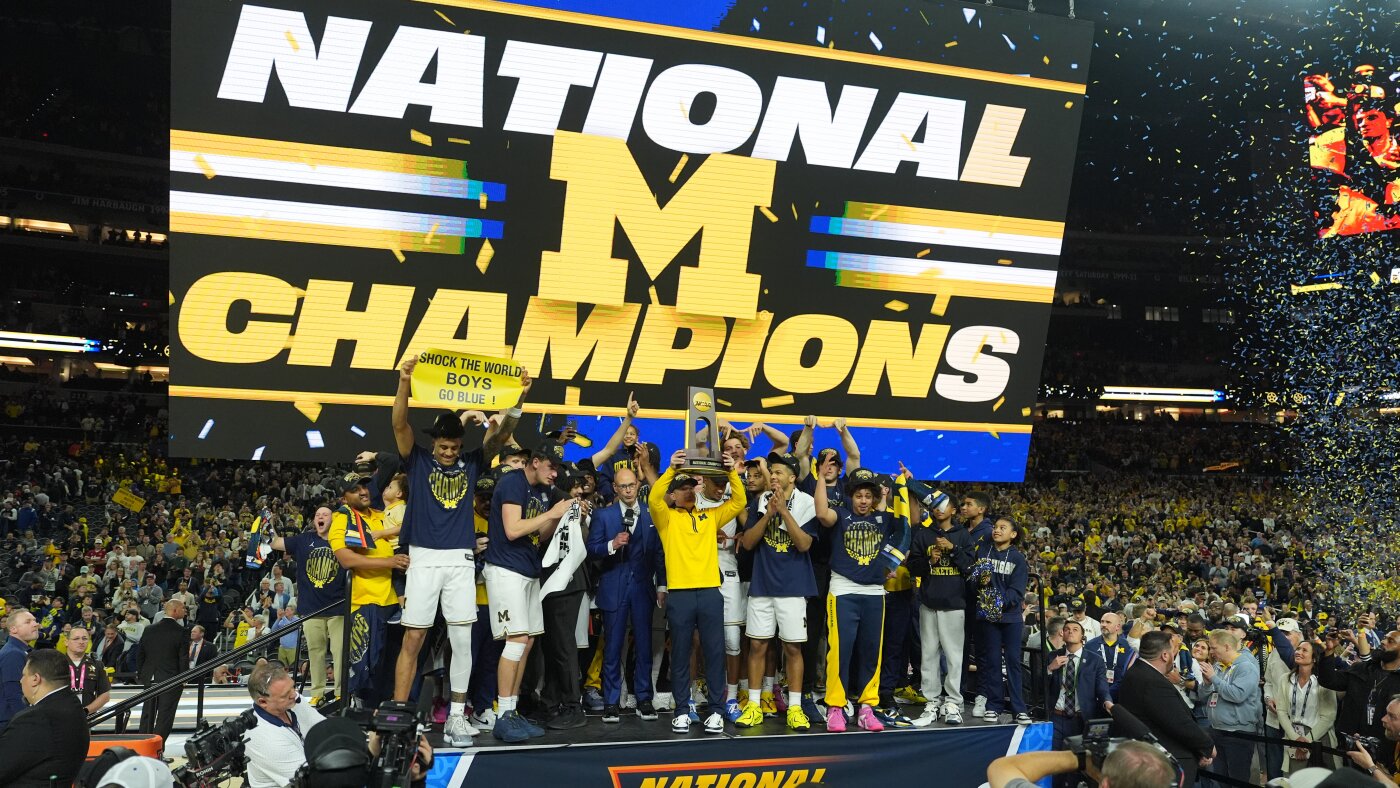
No. 1 seed Michigan had a stellar run in its second season under coach Dusty May, who competes for a national championship against No. 2 seed UConn Monday night. He goes up against two-time championship coach Dan Hurley, who is looking to join elite company by winning his third trophy with the Huskies.
Which teams are best equipped already for next season? Here’s an early look at who can make a run in 2026-27.
The Wolverines absolutely make sense regardless of if they win a national title Monday night. May added a commitment from 5-star guard Brandon McCoy Saturday who projects to be a lead guard at the next level.
Key big man Yaxel Lendeborg will be a huge loss after being a critical piece to Michigan’s championship game run. Power forward Morez Johnson should return after averaging over 13 points and seven rebounds per game.
Another likely returnee is Trey McKenney, who played well as a freshman averaging 11 points and 44% shooting in the month of March.
Whether Hurley’s bid for a third title falls short, his brilliant coaching in the NCAA Tournament is worth keeping the Huskies near the top of all college basketball rankings.
Veterans such as Alex Karaban and Tarris Reed are seeing their eligibility expire while freshman Braylon Mullins could opt to enter the NBA Draft.
Veteran guard Silas Demary has been a nice addition from Georgia out of the portal this season and will likely return as the Huskies’ starting point guard.
The Blue Devils are set to lose the Boozer twins, but have signed capable replacements in true freshmen Cameron Williams and Deron Rippey, Jr.
Coach Jon Scheyer’s group will continue to run the ACC until anyone else decides to be up for the challenge. If he can find a way to keep Patrick Ngongba around for next season as his key big man, then there’s no reason to count out Duke as national title favorites once again.
No one will ever doubt coach Tom Izzo’s ability to assemble a championship contender and he did just that with Coen Carr, Jeremy Fears and company this season.
With a top high school recruiting class and a couple of key portal additions on the perimeter, the Spartans will be Big Ten title contenders and earn a Top 4 NCAA Tournament seed.
Coach Brad Underwood has made the Fightin’ Illini a raging success and nearly led his team to the promised land this season.
He discovered freshman wing Keaton Wagler before anyone else, and became a household name and potential lottery pick after arriving to school as aTop 150 prospect.
Lightning might not strike twice next year, but he’ll probably have another solid team built for a deep NCAA Tournament run. Sharpshooter Andrej Stojakovic and forward David Mirkovic are both expected to return after playing key roles in Illinois’ first Final Four run in two decades.
The Wildcats were no match for Michigan in the Final Four and are likely going to lose key freshmen Koa Peat and Brayden Burries to the NBA Draft. Keeping veteran big man Mo Krivas and key wing Ivan Kharchenkov in the rotation is key.
Adding McDonald’s All-American MVP Caleb Holt won’t hurt either as the next great freshman for the Wildcats.
Coach John Calipari knows his biggest assignment will be adding a big man or two to round out his rotation. He has a three 5-star freshmen in Jordan Smith, Jr. (No. 2 ranked prospect, JJ Andrews and Abdou Toure coming in with potential key returnee Billy Richmond to potentially lockdown the perimeter.
Arkansas fans are hungry to see their team get back to the Final Four and have been inching closer each of the previous five seasons.
The Boilermakers are set to lose All-American guard Braden Smith, Fletcher Loyer and Trey Kaufman-Renn which will be hard to come back from for any team.
However, Matt Painter continues to reload with guys who often fly under the radar or lesser known on the recruiting trail out of high school. His next team may not be as talented, or veteran laden but should be fixtures in the Big Ten no matter what the offseason brings.
The Red Storm will find it tough to replace versatile big man Zury Ejifor, but if anyone can do so it’s hall of fame coach Rick Pitino. His team has been close to breaking into national title contention over the previous two seasons.
Pitino’s combination of Ian Jackson, Dylan Darling and Ruben Prey can give St. John’s a boost next season.
Nate Oats has the Crimson Tide at a level never before seen in Tuscaloosa with at least a Sweet 16 or better finish in each of the previous four seasons.
Star guard Labaron Philon is probably headed to the league as a mid-first round prospect which leaves a gaping hole in Alabama’s rotation for next season.
Top 20 freshman guard Qadyden Samuels is potentially a solid replacement with a complete offensive skillset as a three-level scorer. If his length translates well to college, he can be an exceptional perimeter defender.
Oats will need to find a way to keep key big men such as Amari Allen and Aiden Sherrell around or pick up a couple out of the transfer portal to stay near the top of the SEC.
The Cyclones were on the verge of a breakthrough before falling short in the Sweet 16. Losing All-American Joshua Jefferson early in the tournament sidelined any hopes of coach T.J. Otzelberger leading his team to its first Final Four since 1944.
Iowa State will probably make a strong run in the portal to replace other key contributors. But one thing is sure that this program has staying power on the national scene.
Each passing year it seems that the biggest question is whether or not coach Bill Self will return for another year.
He is, at least this year, but even with his exceptional recruiting skills and a deep portal budget, it seems like a slight nosedive has taken place since winning the national title in 2022.
Star freshman Darryn Peterson’s one-and-done stay in Lawrence certainly didn’t live up to the hype. Big man Flory Bidunga is currently evaluating his options, which shouldn’t give anyone a reason to rank the Jayhawks higher.
13. Iowa Hawkeyes
14. Gonzaga Bulldogs
15. Florida Gators
16. North Carolina Tar Heels
17. Louisville Cardinals
18. Wisconsin Badgers
19. Nebraska Cornhuskers
20. Houston Cougars
21. Providence Friars
22. St. Louis Billekins
23. Texas Longhorns
24. Auburn Tigers
25. LSU Tigers

Editorial







1 teenage girl killed, another injured in shooting at Piedmont Park, police say


South Carolina vs TCU predictions for Elite Eight game in March Madness


Vaazha 2 first half review: Hashir anchors a lively, chaos-filled teen tale


Skier dies after fall at Sugarbush Resort


Trump’s Ballroom Design Has Barely Been Scrutinized


JD Vance says he was ‘obsessed’ with UFOs, believes aliens are actually ‘demons’


Jeffries declines to break with indicted Democrat after ethics panel’s guilty verdict

Inside Ye’s first comeback show at SoFi Stadium