Science
Sea urchins made to order: Scripps scientists make transgenic breakthrough

Consider the sea urchin. Specifically, the painted urchin: Lytechinus pictus, a prickly Ping-Pong ball from the eastern Pacific Ocean.
The species is a smaller and shorter-spined cousin of the purple urchins devouring kelp forests. They produce massive numbers of sperm and eggs that fertilize outside of their bodies, allowing scientists to watch the process of urchin creation up close and at scale. One generation gives rise to the next in four to six months. They share more genetic material with humans than fruit flies do and can’t fly away — in short, an ideal lab animal for the developmental biologist.
Scientists have been using sea urchins to study cell development for roughly 150 years. Despite urchins’ status as super reproducers, practical concerns often compel scientists to focus their work on more easily accessible animals: mice, fruit flies, worms.
Scientists working with mice, for example, can order animals online with the specific genetic properties they are hoping to study — transgenic animals, whose genes have been artificially tinkered with to express or repress certain traits.
Researchers working with urchins typically have to spend part of their year collecting them from the ocean.
“Can you imagine if mouse researchers were setting a mousetrap every night, and whatever it is they caught is what they studied?” said Amro Hamdoun, a professor at UC San Diego’s Scripps Institution of Oceanography.
UC San Diego professor Amro Hamdoun holds a painted urchin. His breakthrough creating the creatures could lead to developments in science and medicine.
(Sandy Huffaker / For The Times)
Marine invertebrates represent about 40% of the animal world’s biological diversity yet appear in a scant fraction of a percentage of animal-based studies. What if researchers could access sea urchins as easily as mice? What if it were possible to make and raise lines of transgenic urchins?
How much more could we learn about how life works?
“You know how during the pandemic, everyone was making sourdough? I’m not good at making sourdough,” Hamdoun said recently at his office in Scripps’ Hubbs Hall. He set his sights instead on a project of a different sort: a new transgenic lab animal, “a fruit fly from the sea.”
In March, Hamdoun’s lab published a paper on the bioRxiv preprint server demonstrating the successful insertion of a piece of foreign DNA — specifically, a fluorescent protein from a jellyfish — into the genome of a painted urchin that passed the change down to its offspring.
The result is the first transgenic sea urchin, one that happens to glow like a Christmas bulb under a fluorescent light. (The paper has been submitted for peer review.)
The animals are the first transgenic echinoderms, the phylum that includes starfish, sea cucumbers and other marine animals. Hamdoun’s mission is to make genetically modified urchins available to researchers anywhere, not just those who happen to work in research facilities at the edge of the Pacific Ocean.
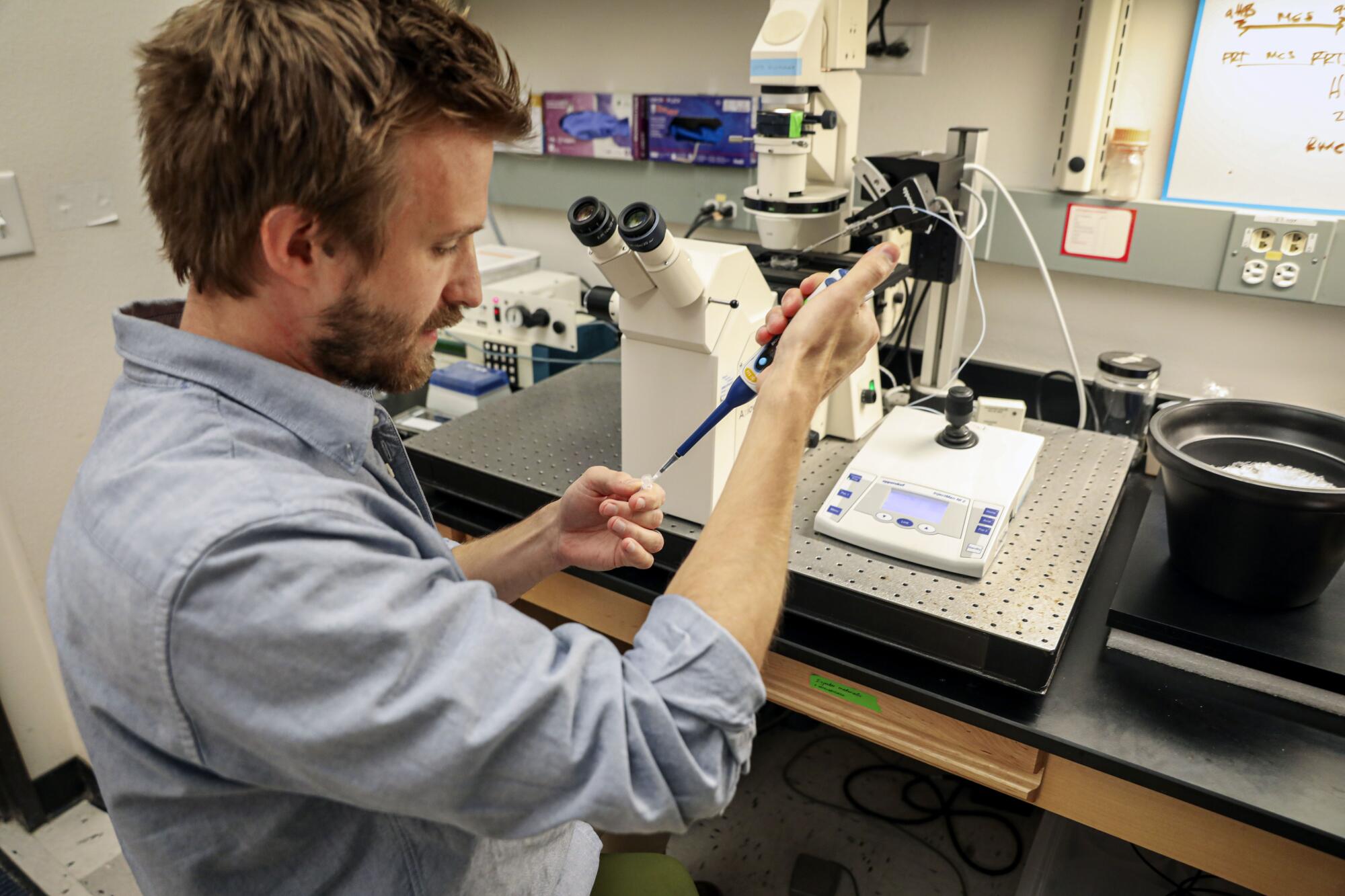
Postdoctoral researcher Elliot Jackson works with sea urchin eggs in a lab at Scripps.
(Sandy Huffaker / For The Times)
“If you look at some of the other model organisms, like Drosophila [fruit flies], zebrafish and mouse, there are well-established resource centers,” said Elliot Jackson, a postdoctoral researcher at Scripps and lead author of the paper. “If you want a transgenic line that labels the nervous system, you could probably get that. You could order it. And that’s what we hope we can be for sea urchins.”
Being able to genetically modify an animal supercharges what scientists can learn from it, with implications far beyond any individual species.
“It will transform sea urchins as a model for understanding neurobiology, for understanding developmental biology, for understanding toxicology,” said Christopher Lowe, a Stanford professor of biology who was not involved in the research.
The lab’s breakthrough, and its focus on making the animals freely available to fellow scientists, will “allow us to explore how evolution has solved a lot of really complicated life problems,” he said.
Researchers tend to study mice, flies and the like not because the animals’ biology is best suited to answer their questions but because “all the tools that were necessary to get at your questions were built up in just a few species,” said Deirdre Lyons, an associate professor of biology at Scripps who worked with Hamdoun on early research related to the project.
Expanding the range of animals available for sophisticated lab work is like adding colors to an artist’s palette, Lyons said: “Now you can go get the color that you really want, that best fits your vision, rather than being stuck with a few models.”
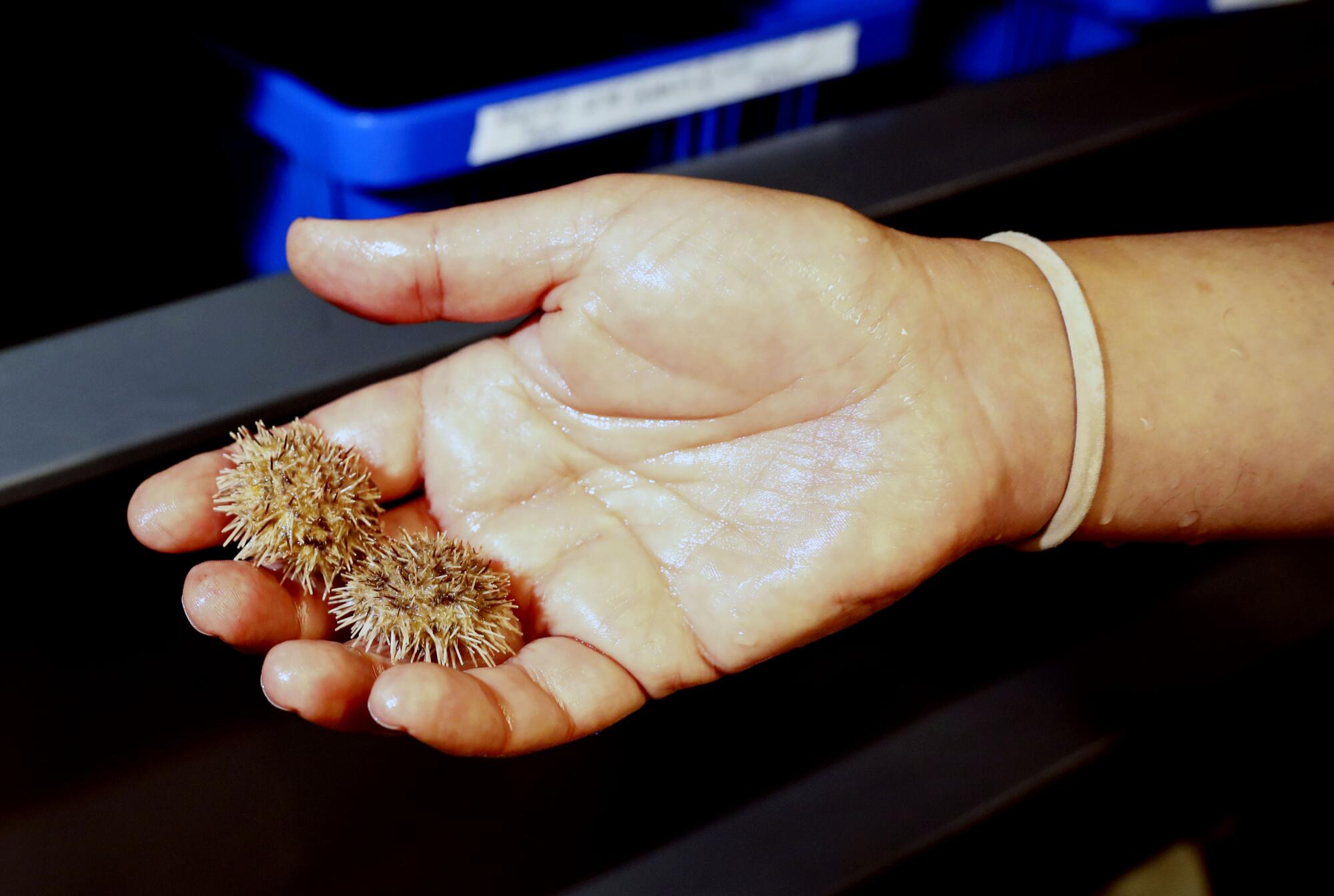
Painted urchins and humans live vastly different lives but genetically are quite similar.
(Sandy Huffaker / For The Times)
On the ground floor of Hamdoun’s office building is the Hubbs Hall experimental aquarium, a garage-like space crammed with tanks full of recirculating seawater and a motley assortment of marine life.
On a recent visit, Hamdoun reached into a tank and gently dislodged a painted urchin. It scooched with surprising speed across an outstretched palm, as if exploring alien terrain.
The last common ancestor of L. pictus and Homo sapiens lived at least 550 million years ago. Despite the different evolutionary paths we’ve since traveled, our genomes reveal a shared biological heritage.
The genetic instructions that drive the transformation of a single zygote into a living body are strikingly similar in our two species. Specialized systems differentiating from a single fertilized egg and the translation of a jumble of proteins into a singular living thing — on the cellular level, all of that proceeds in much the same way for urchins and people.
These animals are “really fundamental to our understanding of all of life,” Hamdoun said, placing the urchin back in its tank. “And historically, very inaccessible genetically.”
The experimental aquarium was built in the 1970s, when scooping life from the sea was the only way to acquire research specimens. A few floors up in Hubbs Hall, Hamdoun led the way into the urchin nursery — the first large-scale effort to raise successive generations of the animals in a laboratory. At any given moment, the team has 1,000 to 2,000 sea urchins in various stages of development.
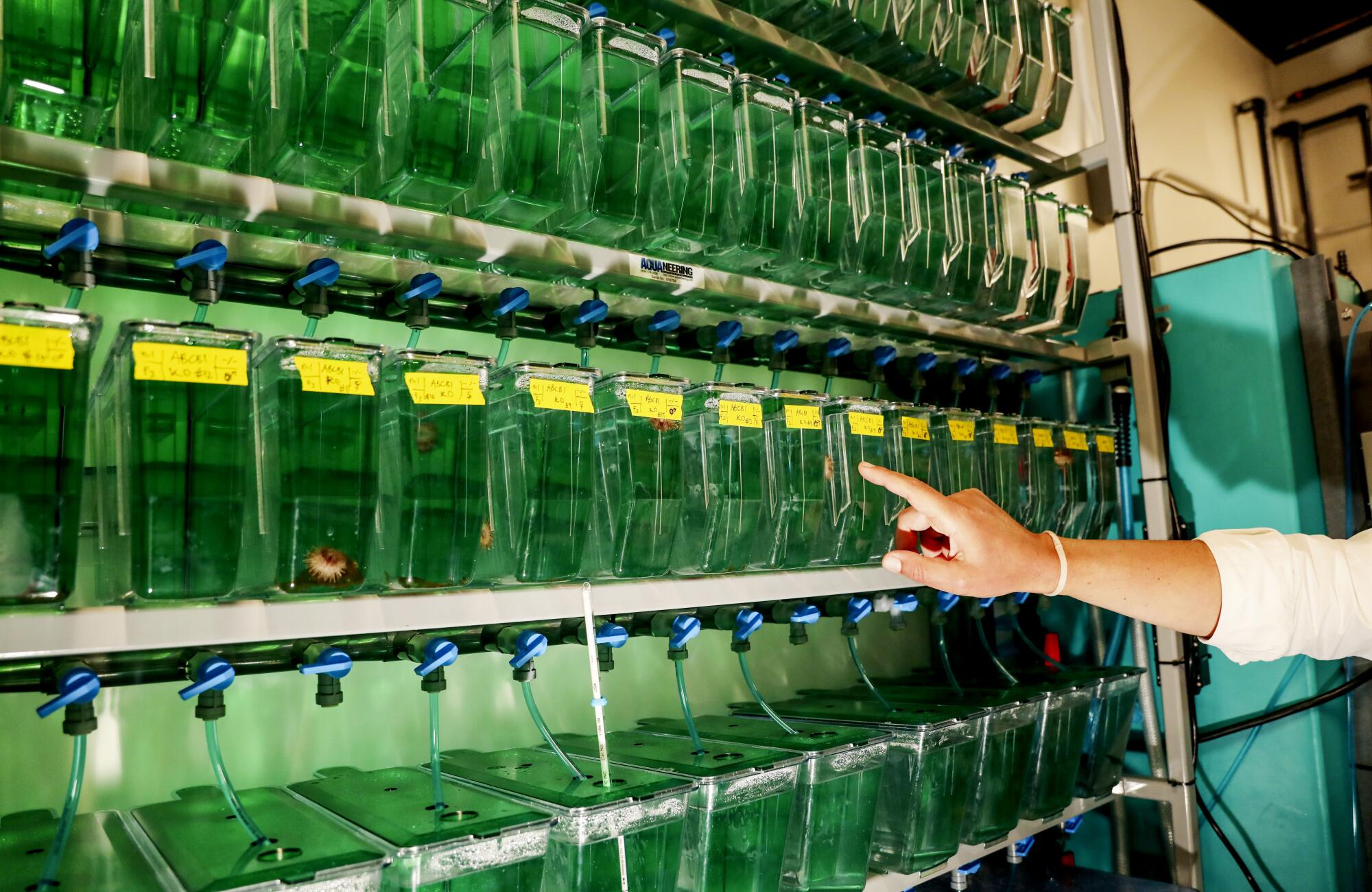
Hamdoun points to transgenic sea urchins his lab is raising at Scripps.
(Sandy Huffaker / For The Times)
Row upon row of tiny plastic tanks stood against a wall, each containing a lentil-size juvenile urchin. A strip of tape on each tank noted the animal’s genetic modification and date of fertilization. On some, a second bit of tape indicated animals that had the modification in their sex cells’ DNA, meaning it could be passed down to offspring. (For this reason, the lab keeps its urchins scrupulously separate from the wild population.)
“One of the big questions in all of biology is to understand how the series of instructions in the genome gives you whatever phenotype you want to study,” Hamdoun said — essentially, how the string of amino acids that is an animal’s genetic code gives rise to the characteristics of the living, respiring creature. “One of the fundamental things you have to do is be able to modify that genome, and then study what the outcome is.”
He pointed to a tank containing a tiny urchin from whose genetic code the protein ABCD1 has been snipped.
ABCD1 acts like a bouncer, Hamdoun explained, parking along the cell membrane and ejecting foreign molecules. The protein’s action can preserve the cell from harmful substances but can sometimes work against an organism’s best interest, as when it prevents the cell from absorbing a necessary medication.
Researchers using urchins in which that protein no longer works can study the movement of a molecule through an organism — DDT, for example — and measure how much of the substance ends up in the cell without the confounding interference of ABCD1. They can reverse-engineer how big a role ABCD1 plays in preventing a cell from absorbing a drug.
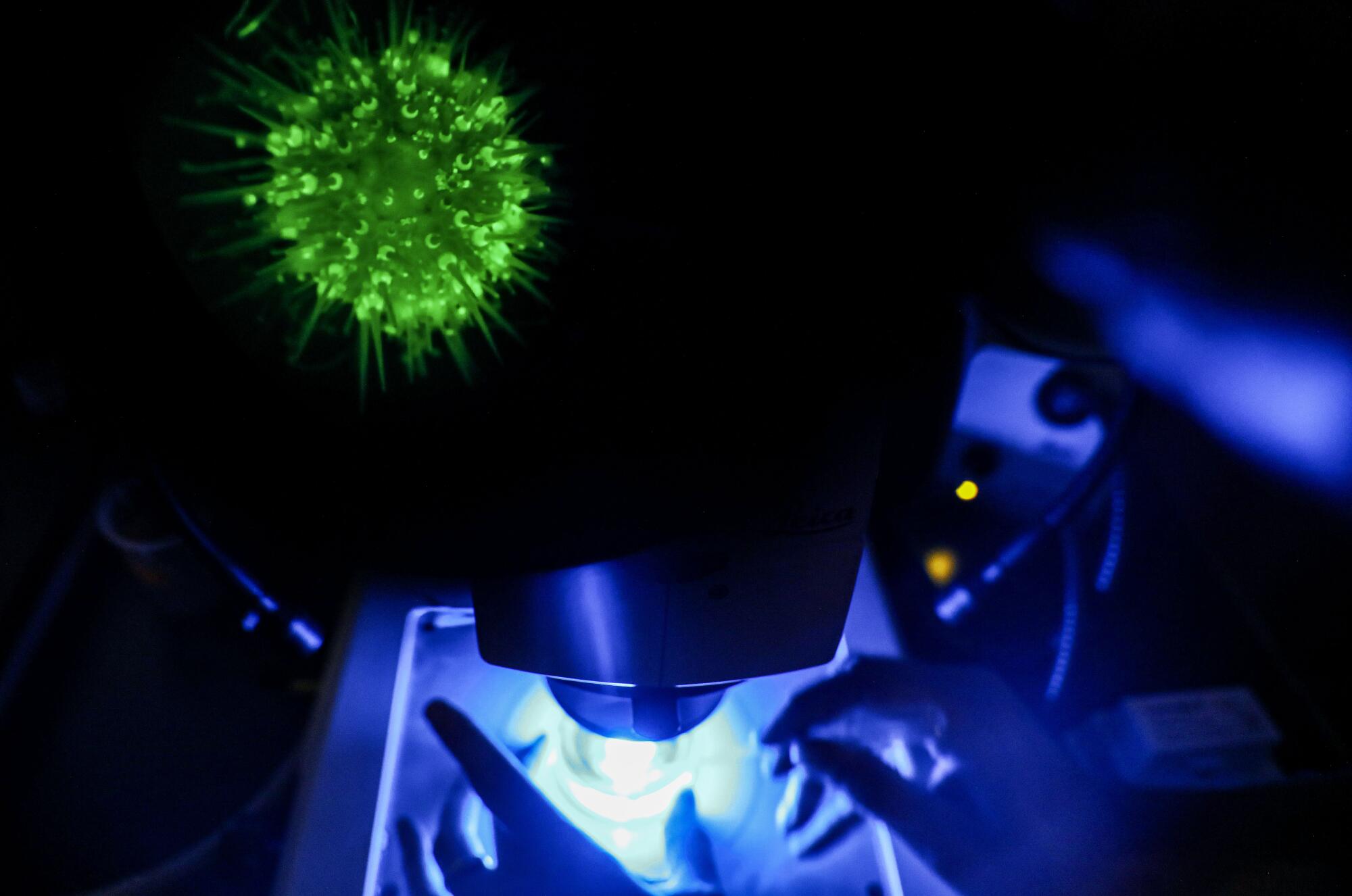
One biology professor said Scripps’ work will transform sea urchins as a model for research.
(Sandy Huffaker / For The Times)
And then there are the fluorescent urchins.
“The magic happens in this room,” Jackson said, walking into a narrow office with $1 million worth of microscopes at one end and a decades-old hand-cranked centrifuge bolted to a table at another.
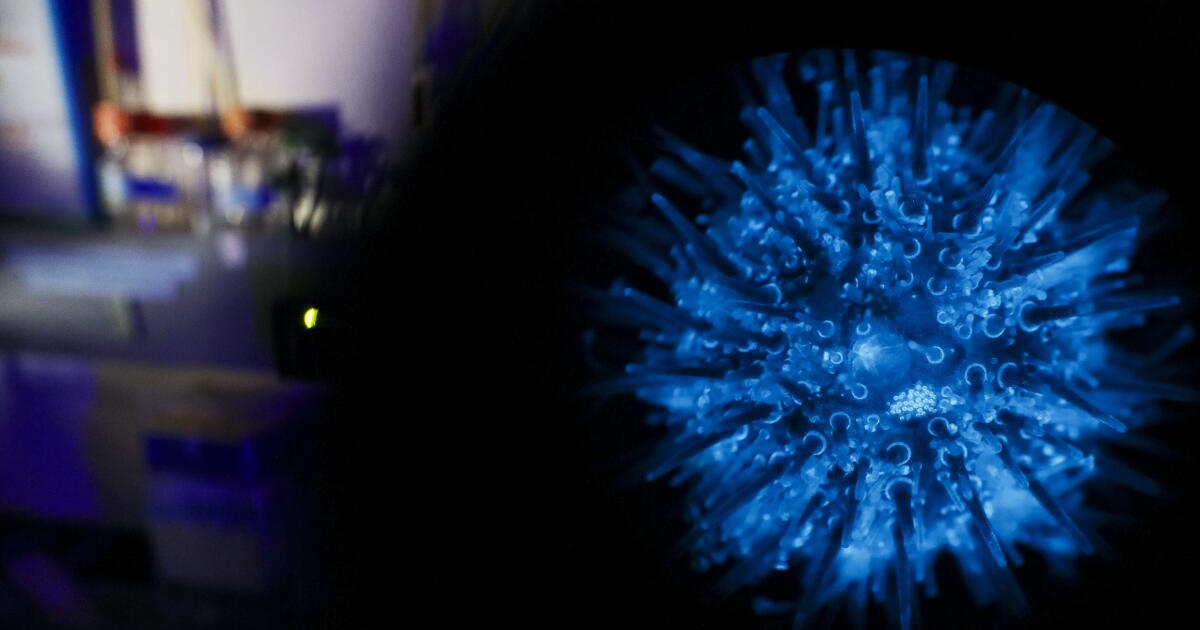
He placed a petri dish containing three pencil-eraser-size transgenic urchins under a microscope. At 120 times its size, each looked like the Times Square New Year’s Eve ball come to life — a glowing, wiggling creature of pentamerous radial symmetry.
Fluorescence is not just an echinoderm party trick. Lighting up the cells makes it easier for researchers to track their movement in a developing organism. Researchers can watch as the early cells of a blastula divide and reorganize into neural or cardiac tissue. Eventually, scientists will be able to turn off individual genes and see how that affects development. It will help us understand how our own species develops, and why that development doesn’t always proceed according to plan.
The lab has “done a great job. It’s really been welcomed by the community,” said Marko Horb, senior scientist and director of the National Xenopus Resource at the University of Chicago’s Marine Biological Laboratory.
Horb runs the national clearinghouse for genetically modified species of Xenopus, a clawed frog used in lab research. Funded in part by the National Institutes of Health, the center develops lines of transgenic frogs for scientific use and distributes them to researchers.
Hamdoun envisions a similar resource center for his lab’s urchins. They’ve already started sending tiny vials of transgenic urchin sperm to interested scientists, who can grow bespoke urchins with eggs acquired from Hamdoun’s lab or another source.
Hamdoun vividly recalls the time he spent earlier in his career trying to track down random snippets of DNA necessary for his research, the disappointment and frustration of writing to professors and former postdocs only to find that the material had long been lost. He’d rather future generations of scientists spend their time on discovery.
“Biology is really interesting,” he said. “The more people can get access to it, the more we’re going to learn.”
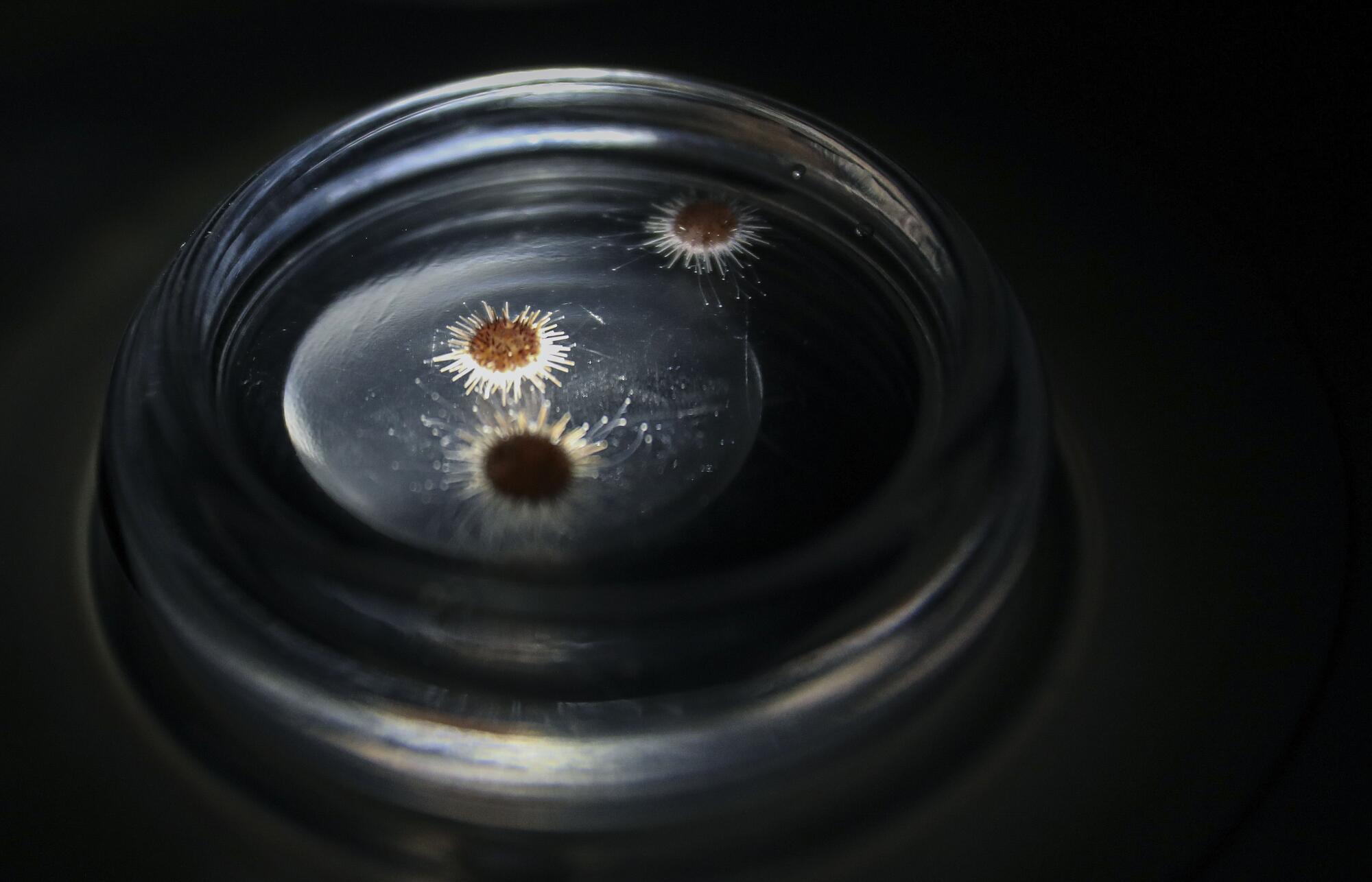
Three transgenic sea urchins in a petri dish.
(Sandy Huffaker / For The Times)


new video loaded: NASA Announces Artemis III Crew
transcript
transcript
NASA Announces Artemis III Crew
NASA announced the crew of Artemis III mission, which will fly to low-Earth orbit to test rendezvous and docking maneuvers with one or two lunar landers.
-
“I am excited to welcome you as the next crew in the Artemis journey to successfully return to the moon — this time to stay.” “I’m honored by the role that I’ve been given. I’m also very humbled by the task in front of us. But first and foremost, I’m grateful.” “So with that, the Artemis II crew, comrade, hands you the baton. You got the controls.” “As you know, we had a significant anomaly at our Launch Complex 36A on May 28. We’ve redoubled our efforts and are moving forward.”
By Alisa Shodiyev Kaff
June 9, 2026
Science
Santa Monica Mountains’ last steelhead trout survived the Palisades fire — and even had babies

Scientists feared the Santa Monica Mountains’ last remaining steelhead trout were dead, smothered by debris flows unleashed by the Palisades fire.
But the endangered fish surprised them: A team of biologists recently spotted 30 of the rare trout — and 21 babies — in Topanga Creek.
“There was a lot of happy dancing in the creek,” said Rosi Dagit, principal conservation biologist for the Resource Conservation District of the Santa Monica Mountains, which works with public and private landowners to conserve natural resources.
That’s because the steelhead here are endangered, at both the state and federal levels. Once, they swam in most streams of the Santa Monicas, but their numbers plummeted amid overfishing and coastal development. Increasingly frequent wildfire has further stressed their habitat. Topanga Creek, a biodiversity hot spot, is home to their last known population in the mountains that stretch from the Hollywood Hills to Point Mugu in Ventura County.
The trout that were spotted, including this one, are part of a distinct Southern California population that’s listed as endangered at the state and federal levels.
(RCDSMM Stream Team)
The California Department of Fish and Wildlife spearheaded a complex mission to rescue trout threatened by the Palisades fire that sparked in January 2025.
Time was of the essence. The fire hadn’t yet been fully contained. But rain was on the way, which would sweep massive amounts of sediment from the denuded hillsides into the water. Fish are often killed this way.
Crews stunned the fish with electricity, scooped them up in buckets, trucked them to a hatchery and ultimately moved them to Arroyo Hondo Creek in Santa Barbara County.
Within days, Topanga Creek was choked with mud. Some assumed the fish left behind were goners.
But in March, the conservation district’s team found four. The following month, when water conditions were clearer, they saw more.
“These fish continue to amaze me,” said Kyle Evans, environmental program manager for the state Department of Fish and Wildlife, who had seen the damage to the creek. “I had seen populations get wiped out in similar situations. So when I heard, I was thrilled.”
Evans surmises the fish that survived were in an area of the creek where less charred material and sediment were swept in.
“These fish likely hunkered down, were hiding under some rocks or places to try to get away from the main concentration of flow,” he said. “And luckily they weren’t buried.”
The ones that were spotted were fairly small, around 6 to 14 inches. Rainbow trout and steelhead trout are the same species, but with different lifestyles. If the fish remain in freshwater, they’ll be considered rainbows. However, they can migrate to the ocean and become steelhead, where they typically grow larger before returning to their natal waters to spawn.
Topanga Creek hasn’t fully recovered from the damage it sustained, but scientists say it’s looking better. Surveys last year were “so depressing,” Dagit said, with very few animals, and stretches that were essentially transformed into flat roads from all the sediment buildup. Some of the riparian canopy burned right down to the creek.
Then came 32 inches of rain over the last nine months, scouring out and moving sediment, creating deeper pools. Dagit said they recently found newt egg masses for the first time in years, as well as a few adult newts and many frogs. Plants that provide cover are starting to recover.
She provided photos comparing certain pools last year and this year, some dramatically transformed. In September 2025, the Shrine Pool could have been an overgrown hiking trail. This April, it was filled with shallow water.

The Shrine Pool in September 2025, left, and the same location in April 2026, right, with RCDSMM’s Isaac Yelchin donning a wetsuit.
(RCDSMM Stream Team)
Topanga Creek is home to another endangered fish, the small but hardy northern tidewater goby, often described as cute. Not long before the trout operation, Dagit led a rescue of hundreds of these fish too. Many were repatriated to the lagoon at the mouth of the creek in a moving ceremony last June.
There’s still the matter of what to do with the trout that were moved to Santa Barbara County last year. Evans would like to bring them home to the Santa Monicas at some point, but isn’t sure if it will happen. On one hand, they could bolster the small, genetically isolated surviving population. On the other, they might inadvertently bring in a disease or bacteria. There is some time to decide. Evans estimates the creek still needs to recover for two to three more years.
For now, the fish are functioning fine in their adopted creek. Experts worried the trauma wrought by the move would disrupt their spawning process, but they had babies that spring. This year, they spawned again.

The Pacifica Municipal Pier was shut down and taped off Thursday after city workers noticed cracks running through the landmark structure and concrete chunks falling into the ocean.
It’s just one of many coastal California structures that have recently crumbled under pressure from a rising and relentless ocean.
Officials from the small, beach city south of San Francisco said the pier was closed due to “cracking, separation, and displacement of the concrete walkway and structural elements.”
It will stay closed while structural engineers asses its safety.
Photos taken by city employees show a wide crack that runs from top to bottom and across the structure as well. Other photos show a large horizontal crack under the foundation of a small restaurant on the pier, the Chit Chat Cafe.
The cafe was also shut down.
This is not the first time the 53-year-old pier has shown signs of stress. In 2021, part of it was shut down after handrails along the edge collapsed. And in 2023, after a series of storms pummeled the Central California coast, damaging parts of the pier, the structure was partially closed for more than year.
Those same storms caused extensive damage in Aptos and Capitola, 70 miles south, where piers and waterfront infrastructure were swept away or damaged.
In 2024, a 150- to 180- foot section of the Santa Cruz wharf was ripped off by powerful waves.
At least 10 of the state’s dozens of coastal public piers were closed for part or all of 2024 due to structural damage sustained in winter storms since 2022. At least five others have longer-term upgrades planned to address structural issues.
“These things are costly to maintain,” said Zach Plopper, senior environmental director at Surfrider. “They are a part of our California coastal culture in many ways, but we’re going to need to reckon with, one, the state that they’re in, and two, the continuous and worsening threats they’re going to experience,”
He said most of the piers were constructed in the early 1900s, and they weren’t built to withstand decades of rough seas, storms and rising sea level.
“With this incoming El Niño, which is forecasted to be significant, and this marine heat wave we’re in the midst of, we’re kind of in uncharted waters as far as what this winter could bring in terms of storms and swells to the California coast, and we’re likely going to see a lot more damage,” he said. “Not just piers, but roads and other coastal infrastructure up and down the state.”
There was no storm in Pacifica earlier this week, so no single event could be blamed for the destruction.
However, a 2025 report from an outside engineering firm, GHD, found that several sections of the pier were in “poor” or “serious” condition, and they recommended closure before anticipated storms or events that could “subject the piles to high winds, swells and large waves.”
The firm found several areas of the pier where concrete was missing and rebar was exposed and corroding.
“The pier has continued to experience high winds and large waves in a harsh marine environment,” the engineers wrote in the report, noting that continuous exposure to seawater or marine spray was “detrimental” to the structure.
A 2023 city report estimated it would cost $19 million to repair.
That same year, a state law was enacted to require local governments along the California coast to plan for sea level rise in the coming decades.
Sea level has risen some 8 inches, on average, along the coast in the past 150 years, Plopper said, and researchers anticipate another foot in the next 25 years.
“We’re going to see profound shifts on our coastline, none that we have ever experienced before, and building static structures on the coast just doesn’t work all that well,” he said. “We’re going to have to make some really hard decisions.”
-

 South Dakota28 seconds ago
What to know about the SD’s first gubernatorial runoff
-

 Tennessee8 minutes ago
Comparing Tennessee’s Neyland Entertainment District to others in college sports
-

 Texas11 minutes ago
Where to watch Texas Rangers vs Kansas City Royals: TV channel, start time, streaming for June 10
-

 Utah16 minutes ago
New NBA Draft Intel: AJ Dybantsa, Darryn Peterson and Utah
-

 Vermont23 minutes ago
Vermont Green FC plays Canada’s national soccer team in World Cup tuneup – VTDigger
-

 Virginia26 minutes ago
Navy sailor sentenced to 44 years for killing fellow service member Angelina Resendiz in his Virginia barracks room
-
Washington31 minutes ago
Where to watch Washington Nationals vs San Francisco Giants: TV channel, start time, streaming for June 10
-

 Wisconsin38 minutes ago
Chris Borland heads back to Wisconsin as Hall of Fame inductee

