Science
Killing 166 million birds hasn’t helped poultry farmers stop H5N1. Is there a better way?

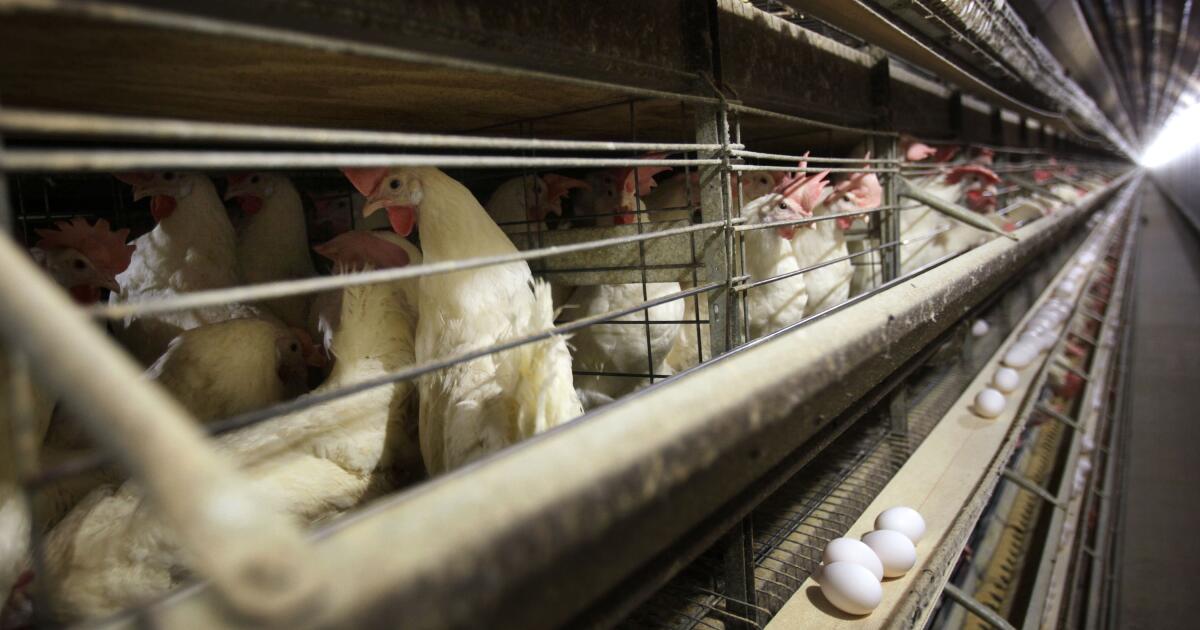
When the deadly H5N1 bird flu virus made its first appearance at a U.S. poultry farm in February 2022, roughly 29,000 turkeys at an Indiana facility were sacrificed in an attempt to avert a larger outbreak.
It didn’t work. Three years later, highly pathogenic avian influenza has spread to all 50 states. The number of commercial birds that have died or been killed exceeds 166 million and the price of eggs is at an all-time high.
Poultry producers, infectious disease experts and government officials now concede that H5N1 is likely here to stay. That recognition is prompting some of them to question whether the long-standing practice of culling every single bird on an infected farm is sustainable over the long-term.
Instead, they are discussing such strategies as targeted depopulation, vaccinations, and even the relocation of wetlands and bodies of water to lure virus-carrying wild birds away from poultry farms.
But each of these alternatives entails a variety of logistical, economic and environmental costs that may eclipse the intended savings.
“People talk about common-sense solutions to bird flu,” said Dr. Maurice Pitesky, a veterinarian and commercial poultry expert at UC Davis. “But that’s what mass culling is. There’s a reason we’ve been doing it: It’s common sense.”
The current version of the bird flu — known as H5N1 2.3.4.4b — is both highly contagious and highly lethal. It has has plowed through the nation’s commercial chickens, turkeys and ducks with a mortality rate of nearly 100%.
“There’s a reason why they call it ‘highly pathogenic avian influenza,’” said Angela Rasmussen, a virologist at the University of Saskatchewan’s Vaccine and Infectious Disease Research Organization. “It just goes straight through a flock like a hot knife through butter.”
And it’s why most researchers and veterinarians promote mass culling, describing it as humane and cost-effective.
A natural death from H5N1 is not pleasant for a chicken, said Rasmussen. The virus produces a gastrointestinal infection, so the birds wind up dying of diarrhea along with respiratory distress.
“It’s like Ebola without the hemorrhage,” she said.
Sparing birds that don’t look sick is a gamble. They may be infected and able to spread the virus through their poop before they have any outward signs of illness. The only way to know for sure is to test each bird individually — an expensive and time-consuming prospect. And if even a single infected bird is missed, it can spread the virus to an entire flock of replacements, Rasmussen said.
Besides, she said, all of the extra work that would go into making sure some chickens can stay alive would only drive up labor costs and ultimately make eggs more expensive.
It also has the potential to increase the total amount of virus on farms, which is dangerous for human poultry workers, said Dr. Ashish Jha, dean of the Brown University School of Public Health.
“One of the reasons to cull early is that you don’t want a lot of bird-human exposures,” he said. “The more infections we introduce to humans, the more mutations we’re going to see that increase the risk for a broader epidemic or pandemic.”
For all of these reasons, international trade agreements require mass culling — also known as “stamping out” — so that importers don’t get a side of H5N1 with their poultry, said Dr. Carol Cardona, a veterinarian and avian influenza researcher at the University of Minnesota.
That’s not the only financial incentive for mass culling. The USDA reimburses farmers for eggs and birds that have to be killed to contain an outbreak, but not for birds that die of the flu.
Yet at times, this has meant killing more than 4.2 million birds, most of which may have been healthy.
Bill Mattos, president of the California Poultry Federation, said a more targeted approach could be feasible when all birds are not living under the same roof. In California, for instance, farms that raise broiler chickens typically operate multiple stand-alone buildings with separate ventilation systems, entryways and exits.
Biosecurity measures like these can keep pathogens from spreading between barns, Cardona said. Risks could be reduced further by requiring workers to change their clothes and boots when moving from barn to barn, or by assigning workers to a single barn, she said.
But others, including Dr. John Korslund, a veterinarian and former USDA researcher, are skeptical that such a practice could work, considering the virulence of H5N1.
“Chickens are infected and shedding virus very early, before evidence of clinical illness,” Korslund said. “Odds are that ‘healthy’ buildings on infected premises are in reality in the early stages of incubating infections,” he said.
While it was possible some buildings might remain virus free, and some birds could be salvaged, the downsides of this approach are huge, Korsland said. “A lot of additional virus will be put into the environment,” he said.
Indeed, flu particles from one facility can escape exhaust fans and travel great distances, said Michael Osterholm, director of the Center for Infectious Disease Research and Policy at the University of Minnesota. Studies have shown that “the movement of virus from farm to farm was associated with wind direction and speed,” he said.
Bird flu vaccines may offer some protection. Both China and France use them, and the USDA granted a conditional license this month for an H5N2 vaccine designed for chickens, according to Zoetis, the company that developed it.
While some are heralding vaccines as a potential tool to inoculate the nation’s poultry farms, others say the costs could be too much.
Most U.S. trade partners are not keen to import poultry products from countries that vaccinate their birds due to concerns that the shots can mask the presence of the virus. And most will blackball a nation’s entire poultry portfolio, even if just one region or type of poultry is infected.
The U.S. exports more than 6.7 billion pounds of chicken meat each year, second only to Brazil, according to the National Chicken Council. So as long as foreign buyers are resistant to vaccination, the shots probably won’t be deployed even if egg-laying hens are getting wiped out by the virus.
As members of the U.S. Congressional and Senate Chicken Caucuses wrote in a letter this month to the USDA, “if an egg-laying hen in Michigan is vaccinated for HPAI, the U.S. right now would likely be unable to export an unvaccinated broiler chicken from Mississippi.”
The new H5N2 vaccine might allay such concerns. While it would offer protection against H5N1, it would elicit antibodies that look distinct from the ones that arise from an actual infection, Cardona said.
Pitesky said that none of these measures will work if we don’t do a better job with flu surveillance and farm placement.
Wildlife and agriculture officials should ramp up their testing of wild birds to determine where the virus is moving and how it is evolving, he said. That will require global coordination because infected birds can travel back and forth between the U.S., Canada, Russia, East Asia and Europe.
Poultry farms near ponds, lagoons or wetlands that attract wild birds should be on high alert during migration season, Pitesky said. Farmers should use apps such as eBird, BirdCast or the Waterfowl Alert Network to keep tabs on when the birds are nearby so they can step up their biosecurity measures as needed, he said.
It may be possible to lure wild birds away from agricultural facilities by bolstering wetlands in more remote areas, he said.
“I keep pushing the idea of starting to reflood some of those wetlands, but we haven’t done it in any kind of strategic fashion,” Pitesky said.
The idea makes sense, but has been brushed off as “pie in the sky, which I push back on,” he said. “I’m like, what we’re doing right now is obviously not working.”


Three months after his son was born, Kevin Maguire felt alone.
It was 2019. He had recently moved to Barcelona with his wife and daughter and was working on marketing projects for Fortune 500 companies. The birth of his son, Bodhi, should have been a joyous event. But Maguire, now 43, became sad and irritable, and didn’t want to be around his newborn. He withdrew from family and friends, often playing video games late into the night or finding excuses to get out of the house.
“I would take the dog out for a walk,” Maguire said. “I wanted to get far away enough that I wouldn’t bump into anyone I knew and I would just sit and cry.”
Desperate for answers, he entered his symptoms online. Maguire, author of the recently published book “The New Fatherhood: Why Everything They Told You About Being a Dad Is Wrong, and How Embracing It Will Transform Your Life,” knew to look for signs of the “baby blues” in his wife. But he was surprised by articles that said men could experience postpartum depression too. The diagnosis resonated and he began writing about his condition and the trials of fatherhood on Substack.
New dads face psychological pressures, from sleepless nights to sky-high bills, which can contribute to postpartum depression. So can shifting hormone levels.
“One thing I found in my lab’s research is that when new dads have really low levels of testosterone, they might report more symptoms of postpartum depression,” said Darby Saxbe, a professor of psychology at USC and author of the recently published “Dad Brain: The New Science of Fatherhood and How It Shapes Men’s Lives.”
While hormonal shifts can create challenges, they also help men adapt to fatherhood, Saxbe explained. Several hormones can spike in men when they become dads, including oxytocin, linked to better relationship quality; vasopressin, associated with emotional bonding; and prolactin, which promotes lactation in women and caregiving behavior in guys.
New dads can also experience a decline in testosterone. According to a 2011 paper from University of Notre Dame professor Lee Gettler, part of the largest study on fatherhood and testosterone ever conducted, men averaged around a 25% drop in testosterone after becoming fathers.
While dads have reasons to be concerned by plummeting levels of testosterone, a modest dip isn’t necessarily a disaster — in fact, it can make men better parents and partners.
“We often get invested in the idea that men should always have the highest possible levels of testosterone,” Saxbe said. “What the research tells us is a little more nuanced. You really want flexibility. You want a hormonal system that can adapt to the different demands of your life.”
The prospect of a decline might scare soon-to-be fathers, especially those on TikTok and Instagram, where accounts push the idea that having “high T” is the key to being a “real man,” according to a recent study in the journal Social Science & Medicine.
Influencers stand to profit persuading men there’s a widespread “masculinity crisis,” the researchers found, noting that 72% of the accounts they analyzed had a stake in testosterone supplements and treatments.
But studies show more testosterone isn’t always better. “We found that when dads have higher testosterone, even before birth, they’re less invested [than men with lower testosterone] in co-parenting a few months after birth,” Saxbe said. High T fathers were more stressed from parenting than their lower T counterparts, and had partners who were less satisfied in their romantic relationships.
This jibes with the challenge hypothesis, which says, in multiple species, testosterone levels rise when males battle for attention from potential mates and go down when it’s time to take care of the young.
While a small decline can be adaptive, dads face mental health risks when their testosterone drops too low.
There is no “normal” level of testosterone, said Dr. Jesse Mills, director of the Men’s Clinic at UCLA Health. Experts recommend that men should consider treatment if their levels dip below 300 nanograms per deciliter (ng/dL). But men metabolize testosterone in different ways, meaning a healthy level for one might be low for another.
“If a new dad comes to me and his testosterone is 298 [ng/dL], he’s below the threshold,” Mills said. “But if he has zero symptoms and everything else is going great — he’s over the moon with his new child, he’s so happy — that’s not somebody I’m going to treat with testosterone.”
He notes that the drop in testosterone fathers experience can partly be attributed to the stresses that come with a new kid: less sleep, a poor diet and fewer trips to the gym. That means there are precautions that expectant fathers can take that don’t involve testosterone replacement therapy (TRT).
Still, while some guys with low testosterone levels might not need TRT, others in the “normal” range could benefit from treatment. (Dads who want another kid soon, beware. Mills notes that testosterone replacement therapy can take a man’s sperm count to zero.)
Both Mills and Saxbe stress that men should be paying attention to symptoms of low testosterone — such as depression and low libido — rather than trying to reach or maintain an ideal number. They also agree that tending to mental health concerns is hugely important for new fathers.
Eventually, after Maguire researched his condition, he recovered after time spent meditating, exercising and bonding with his son.
“A lot of new dads don’t realize how much they’re struggling because they feel ashamed or because they don’t realize it’s common shortly after the birth of a baby,” Saxbe said.
When they struggle, fathers can fixate on testosterone because that’s what modern culture tells them will make them feel better. And sometimes testosterone replacement therapy works. But Saxbe stresses a lot of men could use psychotherapy or support groups that bring dads together, as well as more time bonding with loved ones in general.
“The thing that predicts a man’s well-being and longevity is the quality of his relationships with other people,” said Saxbe. “You can be the world’s best weightlifter. You can have a low body-fat percentage. You can be killing it at work. Those things don’t predict how happy you’re going to be at 80.”

new video loaded: NASA Announces Artemis III Crew
transcript
transcript
NASA Announces Artemis III Crew
NASA announced the crew of Artemis III mission, which will fly to low-Earth orbit to test rendezvous and docking maneuvers with one or two lunar landers.
-
“I am excited to welcome you as the next crew in the Artemis journey to successfully return to the moon — this time to stay.” “I’m honored by the role that I’ve been given. I’m also very humbled by the task in front of us. But first and foremost, I’m grateful.” “So with that, the Artemis II crew, comrade, hands you the baton. You got the controls.” “As you know, we had a significant anomaly at our Launch Complex 36A on May 28. We’ve redoubled our efforts and are moving forward.”
By Alisa Shodiyev Kaff
June 9, 2026
Science
Santa Monica Mountains’ last steelhead trout survived the Palisades fire — and even had babies

Scientists feared the Santa Monica Mountains’ last remaining steelhead trout were dead, smothered by debris flows unleashed by the Palisades fire.
But the endangered fish surprised them: A team of biologists recently spotted 30 of the rare trout — and 21 babies — in Topanga Creek.
“There was a lot of happy dancing in the creek,” said Rosi Dagit, principal conservation biologist for the Resource Conservation District of the Santa Monica Mountains, which works with public and private landowners to conserve natural resources.
That’s because the steelhead here are endangered, at both the state and federal levels. Once, they swam in most streams of the Santa Monicas, but their numbers plummeted amid overfishing and coastal development. Increasingly frequent wildfire has further stressed their habitat. Topanga Creek, a biodiversity hot spot, is home to their last known population in the mountains that stretch from the Hollywood Hills to Point Mugu in Ventura County.
The trout that were spotted, including this one, are part of a distinct Southern California population that’s listed as endangered at the state and federal levels.
(RCDSMM Stream Team)
The California Department of Fish and Wildlife spearheaded a complex mission to rescue trout threatened by the Palisades fire that sparked in January 2025.
Time was of the essence. The fire hadn’t yet been fully contained. But rain was on the way, which would sweep massive amounts of sediment from the denuded hillsides into the water. Fish are often killed this way.
Crews stunned the fish with electricity, scooped them up in buckets, trucked them to a hatchery and ultimately moved them to Arroyo Hondo Creek in Santa Barbara County.
Within days, Topanga Creek was choked with mud. Some assumed the fish left behind were goners.
But in March, the conservation district’s team found four. The following month, when water conditions were clearer, they saw more.
“These fish continue to amaze me,” said Kyle Evans, environmental program manager for the state Department of Fish and Wildlife, who had seen the damage to the creek. “I had seen populations get wiped out in similar situations. So when I heard, I was thrilled.”
Evans surmises the fish that survived were in an area of the creek where less charred material and sediment were swept in.
“These fish likely hunkered down, were hiding under some rocks or places to try to get away from the main concentration of flow,” he said. “And luckily they weren’t buried.”
The ones that were spotted were fairly small, around 6 to 14 inches. Rainbow trout and steelhead trout are the same species, but with different lifestyles. If the fish remain in freshwater, they’ll be considered rainbows. However, they can migrate to the ocean and become steelhead, where they typically grow larger before returning to their natal waters to spawn.
Topanga Creek hasn’t fully recovered from the damage it sustained, but scientists say it’s looking better. Surveys last year were “so depressing,” Dagit said, with very few animals, and stretches that were essentially transformed into flat roads from all the sediment buildup. Some of the riparian canopy burned right down to the creek.
Then came 32 inches of rain over the last nine months, scouring out and moving sediment, creating deeper pools. Dagit said they recently found newt egg masses for the first time in years, as well as a few adult newts and many frogs. Plants that provide cover are starting to recover.
She provided photos comparing certain pools last year and this year, some dramatically transformed. In September 2025, the Shrine Pool could have been an overgrown hiking trail. This April, it was filled with shallow water.

The Shrine Pool in September 2025, left, and the same location in April 2026, right, with RCDSMM’s Isaac Yelchin donning a wetsuit.
(RCDSMM Stream Team)
Topanga Creek is home to another endangered fish, the small but hardy northern tidewater goby, often described as cute. Not long before the trout operation, Dagit led a rescue of hundreds of these fish too. Many were repatriated to the lagoon at the mouth of the creek in a moving ceremony last June.
There’s still the matter of what to do with the trout that were moved to Santa Barbara County last year. Evans would like to bring them home to the Santa Monicas at some point, but isn’t sure if it will happen. On one hand, they could bolster the small, genetically isolated surviving population. On the other, they might inadvertently bring in a disease or bacteria. There is some time to decide. Evans estimates the creek still needs to recover for two to three more years.
For now, the fish are functioning fine in their adopted creek. Experts worried the trauma wrought by the move would disrupt their spawning process, but they had babies that spring. This year, they spawned again.
-
 Montana5 minutes ago
HGTV names The Garden Barn Montana’s must-visit garden center
-

 Nebraska8 minutes ago
Nebraska State Runner-up and Futures Finalist Matt Brailita (2026) to Swim for Johns Hopkins
-

 Nevada13 minutes ago
Ranking Nevada football’s 2026 opponents from least interesting to most interesting
-

 New Hampshire20 minutes ago
Man With Warrants Chased Through Bow, Concord: New Hampshire State Police Roundup
-

 New Jersey23 minutes ago
New Jersey beach report: Where is it safe to swim?
-

 New Mexico28 minutes ago
Gregg Hull: Trump endorsement would be a “pretty cool thing” – New Mexico Political Report
-
North Carolina35 minutes ago
NC lawmakers renew push to regulate where homeless people can sleep
-

 North Dakota38 minutes ago
Capstone Academy of Fargo and nonprofit sue North Dakota over teacher licensing requirements


