Science
Are 'deaths of despair' really more common for white Americans? A UCLA report says no

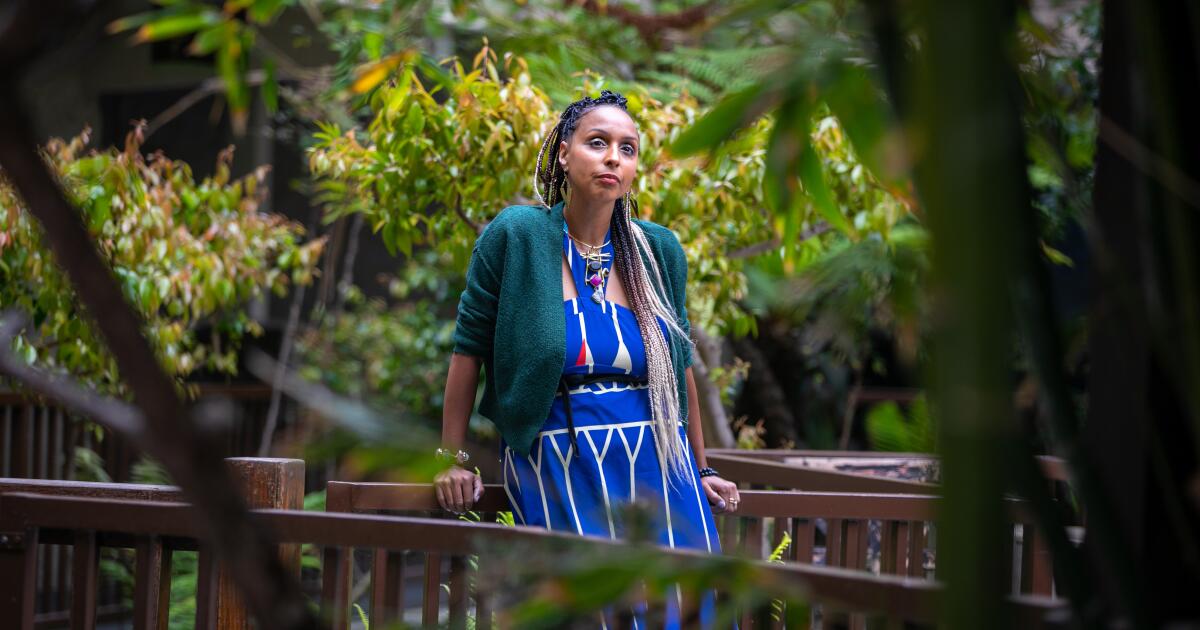
Nakeya Fields has seen how the stresses that come with being Black — racial injustice, financial strain, social isolation — can leave people feeling hopeless and push some into substance abuse.
It’s one of the reasons the Pasadena social worker started offering “therapeutic play” gatherings for Black mothers like herself and children.
“I’m trying to host more safe spaces for us to come and share that we’re suffering,” the 32-year-old said. “And honestly, the adults need play more than kids.”
Yet while Black and brown mental health practitioners such as Fields have labored to address these issues within their communities, a very different conversation has been occurring in the nation at large.
For years, discussions about America’s substance-abuse crisis have focused almost exclusively on the narrative that it is white, middle-age adults who face the greatest risk of dying from drug overdoses, alcoholic liver disease and suicide.
The theory, which was presented by two Princeton economists in 2015 and based on data from 1999 to 2013, argued that despair was behind rising premature mortality rates among white Americans, especially those who were less educated.
Virtually overnight, the “deaths of despair” concept began to drive the national discourse over populist far-right politics; the rise of Donald Trump; and deepening political polarization over such topics as addiction treatment, law enforcement and immigration.
But after roughly a decade, researchers at UCLA and elsewhere have begun to dismantle this idea.
In a study published recently in the journal JAMA Psychiatry, authors found that deaths of despair rates for middle-age Black and Native Americans have surged past those of white Americans as the overdose crisis moves from being driven by prescription opioids to illegal drugs such as fentanyl and heroin.
While the opioid crisis did raise drug overdose deaths among white Americans for a time, it was an anomaly, said Joseph Friedman, a social medicine expert at UCLA’s David Geffen School of Medicine who was the lead author of the journal analysis. In fact, by 2022 the rate for white Americans had started to dip.
“What’s really important is that now, with these three causes of death, the gap has closed, and it’s moving in the other direction,” Friedman said.
Sandra Mims, a community health worker with Community Health Project L.A., puts out boxes of Narcan — a naloxone nasal spray that reverses the effects of opioid overdose — at an event at MacArthur Park in Los Angeles on International Overdose Awareness Day.
(Mel Melcon / Los Angeles Times)
The analysis found that deaths of despair for Black Americans hit a rate of 103.81 per 100,000 people in 2022, compared with 102.63 for white Americans. The rate for Native American and Alaska Native populations was even higher at 241.7 per 100,000 people in 2022.
The UCLA analysis doesn’t specify the midlife personal issues that might have led to addiction or suicide.
But the authors say that flaws in the methodology of the 2015 deaths of despair report skewed its conclusions about who was most at risk. Specifically, Friedman said that it failed to give enough consideration to long-standing racial inequities that Black Americans experience in income, educational attainment, incarceration and access to quality medical care, all of which can contribute to drug use and poor mental health outcomes. And statistics for Native Americans weren’t factored in at all.
“It was burned into the American psyche that it was white people in the rural U.S.,” Friedman said. “It was just a very small piece of the truth that was very interesting but was widely sold as something it wasn’t.”
Another recent worrying sign, Friedman says: Deaths of despair among Latinos are starting to catch up to those among Black and Native Americans.
Princeton professors Anne Case and her husband Angus Deaton, winner of the 2015 Nobel Prize in economic sciences, were thrust into the media spotlight when their deaths of despair findings were first published. Deaton told NPR that during a visit to the White House, even President Obama asked him about the phenomenon.
Their 2020 book, “Deaths of Despair and the Future of Capitalism,” was described by publisher Princeton University Press as “a troubling portrait of the American dream in decline.”
“For the white working class, today’s America has become a land of broken families and few prospects. As the college educated become healthier and wealthier, adults without a degree are literally dying from pain and despair,” the publisher said.
Fields, who employs yoga and pottery in her therapy, said this framing was misleading and racially biased.
“I’m actually flabbergasted that somebody has a term called ‘deaths of despair,’” Fields said. “It’s ‘despair’ when white people experience this suffering. But when we experience it, it’s just what we have to deal with.”
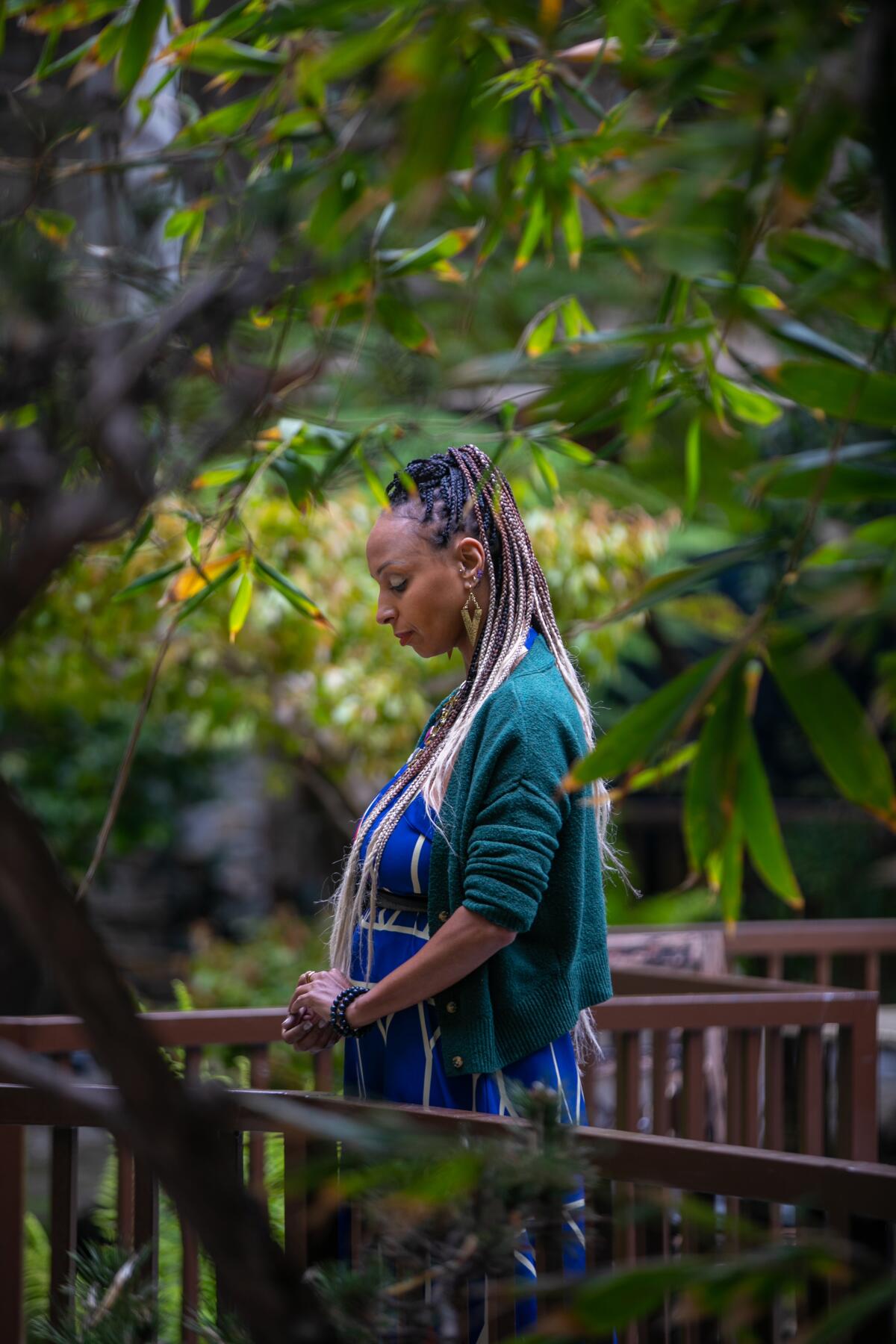
Nakeya Fields says it’s important to address mental wellness issues early, before people reach a crisis point and become another statistic.
(Jason Armond / Los Angeles Times)
Both Friedman and Fields say their critiques are not intended to minimize deaths among white Americans.
Still, Friedman wonders: “How do we empower Black and Native American communities in a way that enables them to treat these problems?”
Racism must be considered when trying to make sense of the crisis in premature deaths, says Dr. Helena Hansen, head of UCLA’s Department of Psychiatry and a senior author on Friedman’s analysis. Hansen, who is Black and specializes in addiction psychiatry, also co-authored the book “Whiteout: How Racial Capitalism Changed the Color of Opioids in America.”
For years, pharmaceutical companies steered expensive prescription pain medications, such as the opioid Oxycontin, as well as the most effective medications for opioid-use disorder, to white Americans with good access to healthcare, she said.
But at the same time, Black and brown Americans were unfairly subjected to law enforcement policies that prioritized incarceration for illegal drug use over increasing access to more humane medical strategies to help them, further harming already vulnerable communities, Hansen said.
“In our society, people with access to the new technologies and pharmaceuticals are more likely to be white,” Hansen says. “None of this is by accident. All of this is the direct result of careful racially and class-segmented marketing strategies by pharmaceutical companies.”
This two-tiered system arose because drug manufacturers, doctors and policymakers have for too long failed to see people from historically marginalized communities who live with addiction and mental health crises as worthy of the same sympathy and treatments that many white Americans receive, Hansen says.
Joseph Gone, a professor of anthropology at Harvard who has spent 25 years studying the intersection of colonialism, culture and mental health in Indigenous communities, agreed.
“Deaths of despair have been a reality for Indigenous communities since conquest and dispossession,” he said.
“It’s amazing how much grief our people contend with from early deaths — there are not that many communities in America that bear it quite the way we do,” said Gone, who is a member of the Aaniiih-Gros Ventre tribal nation of north-central Montana. “Until we acknowledge and take responsibility for the casualties of colonization, which endure to this day through deaths of despair, it’s going to be very hard to turn this around.”
Gone, who has collaborated with Friedman on previous research, says the mental health crisis in tribal nations is aggravated by widespread joblessness and generational poverty, and a lack of healthcare resources to treat people in need of immediate or long-term treatment.
Just one traveling psychiatrist serves reservations spread across both Montana and Wyoming — a region covering more than 243,300 square miles — mostly to manage patients’ prescriptions, he says.
And “for all of Indian country, we’re talking about a very small number of in-patient psychiatric facilities,” Gone says.
General practitioners can serve as a first line of defense, but they are not necessarily equipped to address the ongoing life crises that can lead to excessive drug and alcohol use, Gone says.
Fields says it’s important to address mental wellness issues early, before people reach a crisis point and become another statistic.
While her focus remains on Black women, she’s developed additional programming for adults, families and children, such as developmental screenings that measure for high stress levels. In June, Fields will co-present “Rap 4 Peace,” a conference and gala featuring hip-hop artists talking about mental health and reducing gun violence.
“This ‘tragedy of despair’ lives in us,” Fields says. “We breathe it. We go outside hoping that nobody will harm us or our children because they feel threatened by us. This is truly harmful to our bodies.”


new video loaded: NASA Announces Artemis III Crew
transcript
transcript
NASA Announces Artemis III Crew
NASA announced the crew of Artemis III mission, which will fly to low-Earth orbit to test rendezvous and docking maneuvers with one or two lunar landers.
-
“I am excited to welcome you as the next crew in the Artemis journey to successfully return to the moon — this time to stay.” “I’m honored by the role that I’ve been given. I’m also very humbled by the task in front of us. But first and foremost, I’m grateful.” “So with that, the Artemis II crew, comrade, hands you the baton. You got the controls.” “As you know, we had a significant anomaly at our Launch Complex 36A on May 28. We’ve redoubled our efforts and are moving forward.”
By Alisa Shodiyev Kaff
June 9, 2026
Science
Santa Monica Mountains’ last steelhead trout survived the Palisades fire — and even had babies

Scientists feared the Santa Monica Mountains’ last remaining steelhead trout were dead, smothered by debris flows unleashed by the Palisades fire.
But the endangered fish surprised them: A team of biologists recently spotted 30 of the rare trout — and 21 babies — in Topanga Creek.
“There was a lot of happy dancing in the creek,” said Rosi Dagit, principal conservation biologist for the Resource Conservation District of the Santa Monica Mountains, which works with public and private landowners to conserve natural resources.
That’s because the steelhead here are endangered, at both the state and federal levels. Once, they swam in most streams of the Santa Monicas, but their numbers plummeted amid overfishing and coastal development. Increasingly frequent wildfire has further stressed their habitat. Topanga Creek, a biodiversity hot spot, is home to their last known population in the mountains that stretch from the Hollywood Hills to Point Mugu in Ventura County.
The trout that were spotted, including this one, are part of a distinct Southern California population that’s listed as endangered at the state and federal levels.
(RCDSMM Stream Team)
The California Department of Fish and Wildlife spearheaded a complex mission to rescue trout threatened by the Palisades fire that sparked in January 2025.
Time was of the essence. The fire hadn’t yet been fully contained. But rain was on the way, which would sweep massive amounts of sediment from the denuded hillsides into the water. Fish are often killed this way.
Crews stunned the fish with electricity, scooped them up in buckets, trucked them to a hatchery and ultimately moved them to Arroyo Hondo Creek in Santa Barbara County.
Within days, Topanga Creek was choked with mud. Some assumed the fish left behind were goners.
But in March, the conservation district’s team found four. The following month, when water conditions were clearer, they saw more.
“These fish continue to amaze me,” said Kyle Evans, environmental program manager for the state Department of Fish and Wildlife, who had seen the damage to the creek. “I had seen populations get wiped out in similar situations. So when I heard, I was thrilled.”
Evans surmises the fish that survived were in an area of the creek where less charred material and sediment were swept in.
“These fish likely hunkered down, were hiding under some rocks or places to try to get away from the main concentration of flow,” he said. “And luckily they weren’t buried.”
The ones that were spotted were fairly small, around 6 to 14 inches. Rainbow trout and steelhead trout are the same species, but with different lifestyles. If the fish remain in freshwater, they’ll be considered rainbows. However, they can migrate to the ocean and become steelhead, where they typically grow larger before returning to their natal waters to spawn.
Topanga Creek hasn’t fully recovered from the damage it sustained, but scientists say it’s looking better. Surveys last year were “so depressing,” Dagit said, with very few animals, and stretches that were essentially transformed into flat roads from all the sediment buildup. Some of the riparian canopy burned right down to the creek.
Then came 32 inches of rain over the last nine months, scouring out and moving sediment, creating deeper pools. Dagit said they recently found newt egg masses for the first time in years, as well as a few adult newts and many frogs. Plants that provide cover are starting to recover.
She provided photos comparing certain pools last year and this year, some dramatically transformed. In September 2025, the Shrine Pool could have been an overgrown hiking trail. This April, it was filled with shallow water.

The Shrine Pool in September 2025, left, and the same location in April 2026, right, with RCDSMM’s Isaac Yelchin donning a wetsuit.
(RCDSMM Stream Team)
Topanga Creek is home to another endangered fish, the small but hardy northern tidewater goby, often described as cute. Not long before the trout operation, Dagit led a rescue of hundreds of these fish too. Many were repatriated to the lagoon at the mouth of the creek in a moving ceremony last June.
There’s still the matter of what to do with the trout that were moved to Santa Barbara County last year. Evans would like to bring them home to the Santa Monicas at some point, but isn’t sure if it will happen. On one hand, they could bolster the small, genetically isolated surviving population. On the other, they might inadvertently bring in a disease or bacteria. There is some time to decide. Evans estimates the creek still needs to recover for two to three more years.
For now, the fish are functioning fine in their adopted creek. Experts worried the trauma wrought by the move would disrupt their spawning process, but they had babies that spring. This year, they spawned again.

The Pacifica Municipal Pier was shut down and taped off Thursday after city workers noticed cracks running through the landmark structure and concrete chunks falling into the ocean.
It’s just one of many coastal California structures that have recently crumbled under pressure from a rising and relentless ocean.
Officials from the small, beach city south of San Francisco said the pier was closed due to “cracking, separation, and displacement of the concrete walkway and structural elements.”
It will stay closed while structural engineers asses its safety.
Photos taken by city employees show a wide crack that runs from top to bottom and across the structure as well. Other photos show a large horizontal crack under the foundation of a small restaurant on the pier, the Chit Chat Cafe.
The cafe was also shut down.
This is not the first time the 53-year-old pier has shown signs of stress. In 2021, part of it was shut down after handrails along the edge collapsed. And in 2023, after a series of storms pummeled the Central California coast, damaging parts of the pier, the structure was partially closed for more than year.
Those same storms caused extensive damage in Aptos and Capitola, 70 miles south, where piers and waterfront infrastructure were swept away or damaged.
In 2024, a 150- to 180- foot section of the Santa Cruz wharf was ripped off by powerful waves.
At least 10 of the state’s dozens of coastal public piers were closed for part or all of 2024 due to structural damage sustained in winter storms since 2022. At least five others have longer-term upgrades planned to address structural issues.
“These things are costly to maintain,” said Zach Plopper, senior environmental director at Surfrider. “They are a part of our California coastal culture in many ways, but we’re going to need to reckon with, one, the state that they’re in, and two, the continuous and worsening threats they’re going to experience,”
He said most of the piers were constructed in the early 1900s, and they weren’t built to withstand decades of rough seas, storms and rising sea level.
“With this incoming El Niño, which is forecasted to be significant, and this marine heat wave we’re in the midst of, we’re kind of in uncharted waters as far as what this winter could bring in terms of storms and swells to the California coast, and we’re likely going to see a lot more damage,” he said. “Not just piers, but roads and other coastal infrastructure up and down the state.”
There was no storm in Pacifica earlier this week, so no single event could be blamed for the destruction.
However, a 2025 report from an outside engineering firm, GHD, found that several sections of the pier were in “poor” or “serious” condition, and they recommended closure before anticipated storms or events that could “subject the piles to high winds, swells and large waves.”
The firm found several areas of the pier where concrete was missing and rebar was exposed and corroding.
“The pier has continued to experience high winds and large waves in a harsh marine environment,” the engineers wrote in the report, noting that continuous exposure to seawater or marine spray was “detrimental” to the structure.
A 2023 city report estimated it would cost $19 million to repair.
That same year, a state law was enacted to require local governments along the California coast to plan for sea level rise in the coming decades.
Sea level has risen some 8 inches, on average, along the coast in the past 150 years, Plopper said, and researchers anticipate another foot in the next 25 years.
“We’re going to see profound shifts on our coastline, none that we have ever experienced before, and building static structures on the coast just doesn’t work all that well,” he said. “We’re going to have to make some really hard decisions.”
-

 South Dakota4 minutes ago
What to know about the SD’s first gubernatorial runoff
-

 Tennessee12 minutes ago
Comparing Tennessee’s Neyland Entertainment District to others in college sports
-

 Texas15 minutes ago
Where to watch Texas Rangers vs Kansas City Royals: TV channel, start time, streaming for June 10
-

 Utah20 minutes ago
New NBA Draft Intel: AJ Dybantsa, Darryn Peterson and Utah
-

 Vermont27 minutes ago
Vermont Green FC plays Canada’s national soccer team in World Cup tuneup – VTDigger
-

 Virginia30 minutes ago
Navy sailor sentenced to 44 years for killing fellow service member Angelina Resendiz in his Virginia barracks room
-
Washington35 minutes ago
Where to watch Washington Nationals vs San Francisco Giants: TV channel, start time, streaming for June 10
-

 Wisconsin42 minutes ago
Chris Borland heads back to Wisconsin as Hall of Fame inductee

