Politics
Trump administration’s demands for California’s voter rolls, including Social Security numbers, rejected by federal judge


A federal judge on Thursday dismissed a U.S. Justice Department lawsuit demanding California turn over its voter rolls, calling the request “unprecedented and illegal” and accusing the federal government of trying to “abridge the right of many Americans to cast their ballots.”
U.S. District Judge David O. Carter, a Clinton appointee based in Santa Ana, questioned the Justice Department’s motivations and called its lawsuit demanding voter data from California Secretary of State Shirley Weber not just an overreach into state-run elections, but a threat to American democracy.
“The centralization of this information by the federal government would have a chilling effect on voter registration which would inevitably lead to decreasing voter turnout as voters fear that their information is being used for some inappropriate or unlawful purpose,” Carter wrote. “This risk threatens the right to vote which is the cornerstone of American democracy.”
Carter wrote that the “taking of democracy does not occur in one fell swoop; it is chipped away piece by piece until there is nothing left,” and that the Justice Department’s lawsuit was “one of these cuts that imperils all Americans.”
The Justice Department did not immediately respond to a request for comment late Thursday.
In a video she posted to the social media platform X earlier Thursday, Assistant Atty. Gen. Harmeet Dhillon — who heads the Justice Department’s Civil Rights Division — said she was proud of her office’s efforts to “clean up the voter rolls nationally,” including by suing states for their data.
“We are going to touch every single state and finish this project,” she said.
Weber, who is California’s top elections official, said in a written statement that she is “entrusted with ensuring that California’s state election laws are enforced — including state laws that protect the privacy of California’s data.”
“I will continue to uphold my promise to Californians to protect our democracy, and I will continue to challenge this administration’s disregard for the rule of law and our right to vote,” Weber said.
Gov. Gavin Newsom’s office called the decision another example of “Trump and his administration losing to California” — one day after another court upheld California’s congressional redistricting plan under Proposition 50, which the Trump administration also challenged in court after state voters passed it overwhelmingly in November.
The Justice Department sued Weber in September after she refused to hand over detailed voter information for some 23 million Californians, alleging that she was unlawfully preventing federal authorities from ensuring state compliance with federal voting regulations and safeguarding federal elections against fraud.
It separately sued Weber’s counterparts in various other states who also declined the department’s requests for their states’ voter rolls.
The lawsuit followed an executive order by President Trump in March that purported to require voters to provide proof of citizenship and ordered states to disregard mail ballots not received by election day. It also followed years of allegations by Trump, made without evidence, that voting in California has been hampered by widespread fraud and voting by noncitizens — part of his broader and equally unsupported claim that the 2020 presidental election was stolen from him.
In announcing the lawsuit, Atty. Gen. Pam Bondi said in September that “clean voter rolls are the foundation of free and fair elections,” and that the Justice Department was going to ensure that they exist nationwide.
Weber denounced the lawsuit at the time as a “fishing expedition and pretext for partisan policy objectives,” and as “an unprecedented intrusion unsupported by law or any previous practice or policy of the U.S. Department of Justice.”
The Justice Department demanded a “current electronic copy of California’s computerized statewide voter registration list”; lists of “all duplicate registration records in Imperial, Los Angeles, Napa, Nevada, San Bernardino, Siskiyou, and Stanislaus counties”; a “list of all duplicate registrants who were removed from the statewide voter registration list”; and the dates of their removals.
It also demanded a list of all registrations that had been canceled due to voter deaths; an explanation for a recent decline in the recorded number of “inactive” voters in California; and a list of “all registrations, including date of birth, driver’s license number, and last four digits of Social Security Number, that were canceled due to non-citizenship of the registrant.”
Carter, in his ruling Thursday, took particular issue with the Justice Department’s reliance on federal civil rights laws to make its case.
“The Department of Justice seeks to use civil rights legislation which was enacted for an entirely different purpose to amass and retain an unprecedented amount of confidential voter data. This effort goes far beyond what Congress intended when it passed the underlying legislation,” Carter wrote.
Carter wrote that the legislation in question — including Title III of the Civil Rights Act of 1960 and the National Voter Registration Act (NVRA) of 1993 — was passed to defend Black Americans’ voting rights in the face of “persistent voter suppression” and to “combat the effects of discriminatory and unfair registration laws that cheapened the right to vote.”
Carter found that the Justice Department provided “no explanation for why unredacted voter files for millions of Californians, an unprecedented request, was necessary” for the Justice Department to investigate the alleged problems it claims, and that the executive branch simply has no power to demand such data all at once without explanation.



NEWYou can now listen to Fox News articles!
The Department of Justice (DOJ) is continuing its investigation into former President Joe Biden’s use of an autopen in the final months of his administration — focusing on pardons and commutations — though a senior official said Biden is unlikely to face criminal exposure.
A senior DOJ official told Fox News the autopen investigation is ongoing and not closed, adding investigators are reviewing clemency actions taken in the final months of the Biden administration.
The official also pointed out, however, that the use of an autopen by a sitting president is “established law.”
The issue under review is whether the autopen was used in violation of the law, specifically, whether Biden personally approved each name included on pardon and commutation lists.
A framed portrait shows former President Joe Biden’s signature and an autopen along “The Presidential Walk of Fame” outside the Oval Office of the White House. (Andrew Harnick/Getty Images)
“These types of cases are tough. Executive privilege issues come into play,” the official said.
What is also clear, the official indicated, is that the target of any potential prosecution would not likely be Biden.
“It’s hard to imagine how [Biden] could be criminally liable for pardon power,” the senior DOJ official said.
BIDEN’S AUTOPEN PARDONS DISTURBED DOJ BRASS, DOCS SHOW, RAISING QUESTIONS WHETHER THEY ARE LEGALLY BINDING
The use of the autopen by former President Joe Biden remains under investigation. (AP Photo)
The official noted that one reason the former president would be unlikely to face charges stems from a 2024 Supreme Court ruling that originally involved current President Donald Trump but would also apply to Biden.
“We conclude that under our constitutional structure of separated powers, the nature of Presidential power requires that a former President have some immunity from criminal prosecution for official acts during his tenure in office,” the Supreme Court ruled in Trump v. United States in 2024.
“At least with respect to the President’s exercise of his core constitutional powers, this immunity must be absolute.”
Sources familiar with the matter told Fox News Digital that U.S. Attorney Jeanine Pirro’s team continues to review the Biden White House’s reliance on an autopen, contradicting a recent New York Times report that indicated the investigation had been paused.
DOJ SIGNALS IT’S STILL DIGGING INTO BIDEN AUTOPEN USE DESPITE REPORTS PROBE FIZZLED
President Donald Trump has pushed for consequences for former President Joe Biden’s alleged use of the autopen. (Julia Demaree Nikhinson/AP Photo)
Trump has pushed for consequences over the autopen controversy, alleging on social media that aides acted unlawfully in its use and raising the prospect of perjury charges against Biden.
Biden has rejected those claims, saying in a statement last year he personally directed the decisions in question.
“Let me be clear: I made the decisions during my presidency,” Biden said. “I made the decisions about the pardons, executive orders, legislation and proclamations. Any suggestion that I didn’t is ridiculous and false.”
The House Oversight Committee has homed in on Biden’s clemency actions, including five controversial pardons for family members in the final days of his presidency, citing what it described as a lack of “contemporaneous documentation” confirming that Biden directly ordered the pardons.
CLICK HERE TO DOWNLOAD THE FOX NEWS APP
The committee asked the DOJ to investigate “all of former President Biden’s executive actions, particularly clemency actions, to assess whether legal action must be taken to void any action that the former president did not, in fact, take himself.”
Fox News Digital’s Ashley Oliver contributed to this report.
Related Article

Politics
Anxiety grows among California Democrats as gubernatorial candidates rebuff calls to drop out

SACRAMENTO — Despite a plea from the head of the California Democratic Party for underperforming candidates to drop out of the governor’s race, all but one of the party’s top hopefuls spurned the request.
Party leaders fear the growing possibility that the crowded field will split the Democratic electorate in the state’s June top-two primary election and result in two Republicans advancing to the November ballot, ensuring a Republican governor being elected for the first time since 2006.
His advice largely unheeded, state party Chairman Rusty Hicks on Thursday said the fate of a Democratic victory now rests squarely on the gubernatorial candidates who flouted him.
“The candidates for Governor now have a chance to showcase a viable path to win,” Hicks said in a statement Thursday.
Eight top Democratic candidates filed the official paperwork to appear on the June ballot after Hicks released a letter on Tuesday urging those “who cannot show meaningful progress towards winning” to drop out. Friday is the deadline to file to appear on the primary election ballot. On March 21, the secretary of state’s office will formally announce who will appear on the June ballot.
“It sounded like someone who has his head in the sand,” former Los Angeles Mayor Antonio Villaraigosa said of Hicks’ open letter. “[Most] of us filed within 24 hours of getting that letter. It created some press but not much else. It didn’t impact [most] of the candidates and it certainly didn’t impact my candidacy.”
Democratic strategist Elizabeth Ashford said it was appropriate for Hicks and other Democratic leaders to make a public plea as opposed to keeping such discussions solely behind closed doors.
But the response showed the limited power of the modern-day party bosses.
“It’s definitely not Tammany Hall,” said Ashford, referring to the storied Democratic political machine that had a grip on New York City politics for nearly a century. “The party and Rusty are influential and they are helpful and that is their role. I don’t think anyone would be comfortable with outright public strong-arming of specific candidates.”
Ashford, who worked for former Govs. Jerry Brown and Arnold Schwarzenegger, along with former Vice President Kamala Harris when she served as state attorney general, added that the minimal power of the state GOP is likely a factor in the dynamics of Democrats’ decision to stay in the race. Democratic registered voters outnumber Republicans by almost a 2-to-1 margin in the state, and Democrats control every statewide elected office and hold supermajorities in both chambers of the California Legislature.
“If there were a strong viable opposition that existed, if the Republican Party was actually relevant in California, I think that would sort of force greater unity amongst Democrats,” she said.
Just one of the nine major Democrats did heed the party chair’s message. Ian Calderon, a former Los Angeles-area Assemblyman who consistently polled near the bottom of the field, withdrew from the race and endorsed Rep. Eric Swalwell (D-Dublin) on Thursday.
Candidates cannot withdraw their name from the ballot once they officially file to run for office, leading to some fears that even if other candidates drop out of the race, a crowded primary ballot could still split California’s liberal votes.
“I’m disappointed most of them will be on the ballot,” said Lorena Gonzalez, the head of the California Federation of Labor Unions, which will announce whether it endorses in the governor’s race on March 16. But “I do still think you can have people drop out of the race or become viable. I think that there are candidates who know viability is a real thing they have to show in coming weeks” before ballots start being mailed to voters.
Jodi Hicks, chief executive and president of Planned Parenthood Affiliates of California, said she is “still worried” about the prospect of two Republicans winning the top two spots in the June primary, shutting Democrats out of any chance of winning the governor’s office in November.
“I didn’t have any specifics of who I wanted to do what,” she said. “I’m just very, very concerned and the stakes are really high right now and seem to be getting worse by the day.”
Republican candidate Steve Hilton, a former Fox News host, said he is “confident that I’ll be in the top two” along with a Democratic candidate. “I find it very difficult to believe that the Democratic Party will just surrender California and allow two Republicans to be in the top two.”
Hilton made the comments Thursday after a gubernatorial forum in Sacramento hosted by the California Assn. of Realtors focused on housing and homeownership. Villaraigosa, former Health and Human Services Secretary Xavier Becerra, San Jose Mayor Matt Mahan and former Rep. Katie Porter also attended. Swalwell, who is currently in Washington, joined the panel virtually.
During the panel, candidates were in broad agreement about the need to reduce barriers and costs in order to build more housing in California, where the median single-family home costs more than $820,000. Many also endorsed proposals to disincentivize private investment firms from buying up homes as well as a $25-billion bond proposed by former Sen. Bob Hertzberg to help first-time homebuyers afford a down payment.
“This really isn’t a debate because we’re agreeing so much with each other,” Hilton said at one point during the event.
That political alignment on one of the most pressing issues facing California may explain why voters are having such a difficult time deciding who to support.
A recent poll of the Public Policy Institute of California found that the five candidates topping the crowded field were within 4 percentage points of one another: Porter, Swalwell, Hilton, Democratic hedge fund founder Tom Steyer and Republican Riverside County Sheriff Chad Bianco. Earlier polls had Hilton and Bianco leading the field, though many voters remained undecided.
Some candidates took issue with Hicks’ push to cull the field, noting that most of the lower-polling candidates he asked to drop out are people of color.
“Our political system is rigged, corrupted by the political elites, the wealthy and well connected,” state Supt. of Public Instruction Tony Thurmond, who is Black and Latino, said in a video posted on social media in response to the open letter. “The California Democratic Party is essentially telling every person of color in the race for Governor to drop out.”
Villaraigosa argued that enough voters remain undecided that it was too early for quality candidates to call it quits.
“Most people don’t even know who’s in the race,” said Villaraigosa. “It’s premature to be thinking about getting out of the race. I certainly am not considering it and I feel no pressure.”
Aside from the opinion polls, other indicators on who may emerge from the pack a candidates are slowly emerging.
Though it wasn’t enough to win the party’s endorsement, Swalwell won support from 24% of delegates at the state Democratic convention last month, the most of any party candidate.
While spending is no guarantee of success, Steyer has donated $47.4 million of his own wealth to his campaign. Mahan, who recently entered the race and is supported by Silicon Valley leaders, has quickly raised millions of dollars, as have two independent expenditures committees backing his bid.
Ashford said part of candidates’ decisions to remain in the race could have been driven by their lengthy political careers, as well as Democrats’ crushing November redistricting victory.
“In several cases, these are people who have won statewide office,” she said. “It’s tough to feel like there may not be a sequel to that.”
Nixon reported from Sacramento and Mehta from Los Angeles.

NEWYou can now listen to Fox News articles!
Texas Attorney General Ken Paxton is making it clear: he’s staying in the race for the Republican Senate nomination even if President Donald Trump endorses Paxton’s rival, longtime Sen. John Cornyn.
“I’m staying in this race,” Paxton said in an interview Wednesday evening. “I owe it to the people of Texas.”
Trump says he’ll soon take sides in the costly and combustible GOP primary showdown Cornyn and Paxton.
“I will be making my Endorsement soon,” the president wrote in a social media post hours after Cornyn and Paxton advanced to a May 26 runoff election.
The two heated rivals topped a crowded field of contenders in Tuesday’s primary, but since no one cleared the 50% threshold, the nomination race heads into overtime.
Texas Governor Greg Abbott, second from left, President Donald Trump, center, Sen. Ted Cruz (R-Texas), second from right, and Secretary of Energy Chris Wright, right, take part in a briefing on energy at the Port of Corpus Christi in Corpus Christi, Texas, Feb, 27, 2026. (Mandel NGAN/AFP via Getty Images)
Trump added that he “will be asking the candidate that I don’t Endorse to immediately DROP OUT OF THE RACE!”
A Republican operative in Trump’s political orbit told Fox News Digital it’s expected Cornyn will get the president’s endorsement. However, the president has been known to change his mind on candidates or even reverse endorsements.
A second source in Trump’s political orbit told Fox News that while there’s still jockeying to influence the president’s decision, given Cornyn’s better-than-expected performance in the primary, Trump is expected to back the senator and prevent a messy and expensive runoff.
CONTENTIOUS REPUBLICAN SENATE PRIMARY IN TEXAS HEADED INTO OVERTIME
Asked if he would end his Senate bid if Trump backed Cornyn, Paxton, a MAGA firebrand and longtime Trump supporter and ally, said no in an interview with Real America’s Voice.
“I’ve spent a year of my life campaigning against John Cornyn because John has not represented the people of Texas well,” Paxton argued. “He’s been against Trump in both of his elections, said he shouldn’t run last time. … The people of Texas, at least the Republicans, would like something different.”
Texas Attorney General Ken Paxton, a Republican candidate for the U.S. Senate, speaks during a primary election night watch party March 3, 2026, in Dallas. (Julio Cortez/The Associated Press )
And a source in Paxton’s political orbit emphasized to Fox News Digital that the Texas attorney general isn’t getting out of the race.
Cornyn or Paxton will face off in the general election against rising Democratic Party star state Rep. James Talarico, who topped progressive firebrand Rep. Jasmine Crockett, a vocal Trump critic, in the Democrats’ primary. Talarico is trying to become the first Democrat in nearly four decades to win a Senate election in right-leaning Texas.
‘OPEN BORDERS, TRUMP-HATING RADICAL’—REPUBLICANS QUICKLY POUNCE ON TALARICO
The 2026 Senate showdown in Texas is one of a handful across the country that could determine if Republicans hold their majority in the chamber in the midterm elections. The GOP currently controls the chamber 53–47.
The Cornyn campaign and aligned super PACs spent nearly $100 million to run ads attacking Paxton and Republican Rep. Wesley Hunt — who came in third — with the senator charging in the closing weeks of the primary campaign that Democrats would flip the seat in the general election if Paxton was the GOP’s nominee.
Cornyn, his allies and the National Republican Senatorial Committee (NRSC), the campaign arm of the Senate GOP, repeatedly pointed to the slew of scandals and legal problems that have battered Paxton over the past decade, as well as his ongoing messy divorce.
“Over the next 12 weeks, Texas Republican primary voters will hear more about my record of delivering conservative victories in the United States Senate, and learn more about Ken’s indefensible personal behavior and failures in office,” Cornyn told reporters on Tuesday night.
“Just like the primary, we have a plan to win the runoff, and we are in the process of executing it,” Cornyn said. “Judgment day is coming for Ken Paxton.”
Sen. John Cornyn, R-Texas, speaks during a campaign stop in The Woodlands, Texas, Feb. 28, 2026. (Annie Mulligan/AP Photo)
Paxton, a MAGA firebrand and longtime Trump supporter and ally who grabbed significant national attention by filing lawsuits against the Obama and Biden administrations, told supporters on primary night, “As we head into this runoff, we’re going to make the choice even clearer. While John Cornyn was cutting deals on gun control and amnesty, I was suing corrupt Joe Biden over 107 times.”
And he charged, “John Cornyn spent around $100 million trying to buy this seat. We’ve spent around $5 million.”
ROUND TWO OF CORNYN VS. PAXTON GETS UNDER WAY
Trump on Wednesday urged, “for the good of the Party, and our Country, itself, be allowed to go on any longer. IT MUST STOP NOW!”
And pointing to Talarico, the president argued, “We have an easy to beat, Radical Left Opponent, and we have to TOTALLY FOCUS on putting him away, quickly and decisively.”
State Rep. James Talarico, a Democratic candidate for the U.S. Senate, speaks at a primary election watch party Tuesday, March 3, 2026, in Austin, Texas. (Eric Gay/AP Photo)
“Both John and Ken ran great races, but not good enough. Now, this one, must be PERFECT!” Trump warned.
Trump, whose clout over the GOP remains immense, stayed neutral in the Republican primary race. All three candidates, who sought the president’s endorsement, were in attendance Friday as Trump held an event in Corpus Christi, Texas.
“They’re in a little race together,” Trump said of Cornyn and Paxton. “You know that, right? A little bit of a race. It’s going to be an interesting one, right? They’re both great people, too.”
Meanwhile, on Capitol Hill, the lobbying campaign to clinch the endorsement for Cornyn hasn’t stopped, and if anything, is intensifying in the hours since primary night.
Senate Majority Leader John Thune, R-S.D., told reporters that Cornyn had “a great night” against Paxton. The top Senate Republican has spent the last several months bending Trump’s ear at every opportunity to jump into the race and back the longtime incumbent.
“He’s positioned to win the runoff, and if the president endorses early, it saves everybody a lot of money, and a lot of, you know, just 10 weeks of another spirited campaign on our side that keeps us from spending time focusing on the Democrats,” Thune said.
Thune spoke with Cornyn on Wednesday morning, and believed that Talarico was the more formidable match-up for Republicans in November — one that Cornyn was better suited to win.
“The matchup that’s good for us is John Cornyn at the top of the ticket,” Thune said.
NRSC communications director Joanna Rodriguez told Fox News Digital, “John Cornyn remains the only candidate who guarantees state Rep. Talarico never becomes a United States senator and ensures the fight for President Trump’s Senate majority is waged in true battleground states, not Texas.”
And the Thune-aligned Senate Leadership Fund (SLF), the top super PAC backing Senate Republicans, which spent millions on behalf of Cornyn in the primary campaign, made it clear in a statement early Wednesday that it will continue to support the senator in the runoff.
“SLF and its sister organizations were proud to support Senator Cornyn early, and we look forward to him securing the Republican nomination on May 26,” the group’s executive director, Alex Latcham, said in a statement.
Meanwhile, a GOP political operative in Trump’s orbit told Fox News Digital, “Talarico being the nominee makes President Trump’s endorsement of Cornyn more important than ever.”
While Trump stayed neutral, his top pollster, Tony Fabrizio, helped the Cornyn campaign. And veteran Republican strategist Chris LaCivita, who served as co-campaign manager of Trump’s 2024 White House bid, consulted for a top Cornyn-aligned super PAC.
LaCivita, in a social media post Tuesday night aimed at Paxton and his top political consultant, wrote, “The second wave is going to be a (bi–h.)”
But on the Paxton side of the playing field, operatives and donors are confident they can unseat the senator.
Dan Eberhart, an oil drilling chief executive officer and prominent Republican donor and bundler who supports Paxton, told Fox News Digital, “This was Cornyn’s shot to fend off his challenger by getting over 50%, and he couldn’t do it. The runoff voters will be even less friendly territory for Cornyn.”
Pointing to former longtime Senate GOP leader Sen. Mitch McConnell, R-Ky., who has often acted as a Trump foil, Eberhart said, “This race is about MAGA vs. McConnell.”
Texas Attorney General Ken Paxton speaks to supporters at a campaign event on primary eve, in Waco, Texas on March 2, 2026. (Paul Steinhauser/Fox News)
Meanwhile, Lone Star Liberty, a pro-Paxton super PAC, circulated a memo ahead of Tuesday’s election that shrugged off threats that Cornyn would succeed in the runoff by continuing to hammer the attorney general over his litany of scandals, arguing there was nothing new to offer.
CLICK HERE TO DOWNLOAD THE FOX NEWS APP
“Cornyn’s talk of ‘unleashing’ new attacks in the runoff is bluster,” the memo states. “The truth is that from day one, his forces fired every bullet they had. There are no new attacks left — only more of the same, at ever-greater cost and with ever-diminishing returns.”
Fox News’ Rich Edson contributed to this report
Related Article

GLP-1 Drugs Linked to Osteoporosis and Gout: Here’s How To Stay Safe
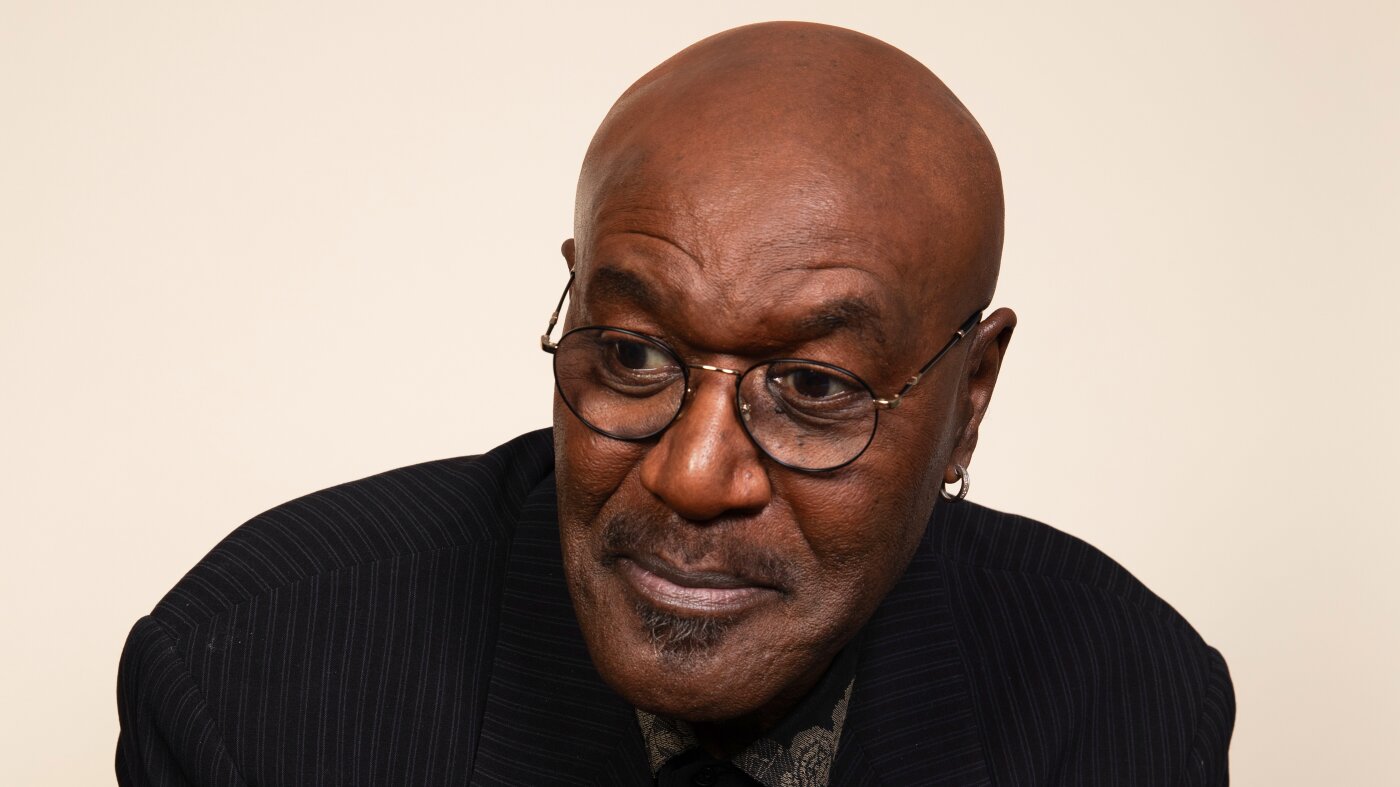
No matter what happens at the Oscars, Delroy Lindo embraces ‘the joy of this moment’

Amazon.com says things are fixed after some issues with logging in and checking out

Private flights account for 30% of departures from Oman airport as wealthy evacuate Middle East

DOJ continues Biden autopen probe despite former president unlikely to face charges

Florida High School Football Rankings: Top 25 teams – Oct. 21

Cleary's 21 help Le Moyne down Central Connecticut State 69-64 in OT

How old is Bo Nix? What to know about Oregon quarterback ahead of 2024 NFL Draft

99th annual Pony Swim held in Virginia

Indiana Members Credit Union announced as new anchor tenant at Bottleworks District
DOJ continues Biden autopen probe despite former president unlikely to face charges
Fact check: Did French border guards mock influencers returning from Dubai amid Iran war?

Iran’s fight for survival / The widening war / Trump’s nebulous goals : Sources & Methods

Map: 4.9-Magnitude Earthquake Shakes Louisiana

Paxton vows he’s ‘staying in this race’ even if Trump backs Cornyn in Texas GOP clash
-

 World1 week ago
Exclusive: DeepSeek withholds latest AI model from US chipmakers including Nvidia, sources say
-

 Wisconsin4 days ago
Setting sail on iceboats across a frozen lake in Wisconsin
-

 Massachusetts1 week ago
Mother and daughter injured in Taunton house explosion
-

 Maryland5 days ago
AM showers Sunday in Maryland
-

 Massachusetts3 days ago
Massachusetts man awaits word from family in Iran after attacks
-

 Florida5 days ago
Florida man rescued after being stuck in shoulder-deep mud for days
-

 Denver, CO1 week ago
10 acres charred, 5 injured in Thornton grass fire, evacuation orders lifted
-

 Oregon6 days ago
2026 OSAA Oregon Wrestling State Championship Results And Brackets – FloWrestling