Politics
Trump admin cracks down antisemitism as DOJ official exposes 'violent rhetoric' of radical protesters


NEWYou can now listen to Fox News articles!
The Trump administration has taken a more aggressive approach than its predecessor toward addressing the nationwide surge in antisemitic incidents, launching investigations, punishing elite universities, and intensifying its immigration enforcement practices.
President Donald Trump, through his Department of Justice (DOJ) and other agencies, is using law-and-order tactics that his deputies say are necessary, but that critics say could constitute overreach.
Harmeet Dhillon, the DOJ’s assistant attorney general for the Civil Rights Division, told Fox News Digital she has not seen any “close cases” when it comes to weighing antisemitic behavior against First Amendment rights of those who oppose Israel or Judaism.
BIDEN EDUCATION DEPT PUT PRIORITY ON PRONOUNS, LEFT BACKLOG OF NEARLY 200 ANTISEMITISM COMPLAINTS: OFFICIAL
“Criticizing the government of Israel is not what I’m typically seeing here,” Dhillon said. “I’m seeing an intifada revolution. I’m seeing blocking Jewish students from crossing campuses and destroying property on campus, which is a crime. … Quiet, polite conversation and disagreement with Israeli policy is not really what’s happening here. It’s literally people saying Israel shouldn’t exist — and bringing the revolution to the United States.”
Dhillon added that “that type of violent rhetoric has led to violent acts in our country.”
Antisemitic violence
After Hamas’s deadly terrorist attack on Israel on Oct. 7, 2023, the FBI’s hate crime statistics showed a sharp spike in anti-Jewish incidents in the U.S. The data runs through December 2023.
Anti-Defamation League (ADL) data from 2024 and high-profile incidents this year suggest the trend is continuing.
Police respond to a firebombing in Boulder, Colo., last week, where a suspect identified as Mohamed Sabry Soliman, right, was arrested and charged by state and federal authorities. (Storyful/KDVR)
An Egyptian national in the U.S. illegally in Boulder, Colorado, is facing state and federal charges for allegedly injuring 15 people, including elderly victims and a dog last weekend with Molotov cocktails during a peaceful pro-Israel demonstration in support of hostages being held by Hamas terrorists in Gaza.
Suspect Mohamed Sabry Soliman, 45, stated to authorities “he wanted to kill all Zionist people and wished they were all dead,” according to an FBI affidavit. During the attack he allegedly yelled “free Palestine,” the agent said.
In May, Yaron Lischinsky and Sarah Milgrim, who worked at the Israeli Embassy in Washington, D.C., were gunned down outside the Capitol Jewish Museum in D.C.
Suspect Elias Rodriguez of Illinois shouted “free Palestine” as he was detained, and Interim U.S. Attorney for D.C. Jeanine Pirro said her office is investigating the case as a hate crime and act of terrorism.
Mohamed Sabry Soliman, left, and Elias Rodriguez allegedly committed crimes, including murder, and shouted, “Free Palestine” afterward. (Alex Osante / Instagram/@shinewithIsrael)
SUSPECT CHARGED WITH MURDERING ISRAELI EMBASSY STAFF COULD FACE DEATH PENALTY
In another incident, a man allegedly set fire to Pennsylvania Gov. Josh Shapiro’s residence on the first night of Passover. Emergency call logs released by local authorities revealed that the suspect, Cody Balmer, invoked Palestine after the arson and blamed Shapiro, who is Jewish, for “having my friends killed.”
Tarek Bazrouk, who identified himself as a “Jew hater” and said Jewish people were “worthless,” allegedly carried out a series of assaults on Jewish New Yorkers in 2024 and 2025, according to an indictment brought against him in May.
Bazrouk wore a green headband that mimicked Hamas garb and a keffiyeh during the attacks, and he celebrated Hamas and Hizballah on his social media, according to federal authorities.
Harvard and Columbia
Trump warned in an executive order at the start of his presidency that foreign nationals participating in “pro-jihadist protests” would be deported, and he specifically highlighted college campuses as being “infested with radicalism.”
Unlike the Biden administration, the Trump administration has since gone to war with elite universities, some of which have been roiled by disruptive pro-Palestinian protests that involve occupying academic buildings and installing encampments.
The Trump administration has taken on elite universities such as Harvard.
LEO TERRELL SAYS TRUMP ADMIN WILLING TO TAKE HARVARD ANTISEMITISM FIGHT ALL THE WAY TO SUPREME COURT
Harvard and Columbia, in particular, are now engaged in litigation after Trump moved to freeze billions of dollars in federal funding for the universities and ban Harvard’s foreign students.
The embattled schools have been successful in winning temporary pauses to Trump’s sanctions through the courts, but litigation is pending and legal experts have said they face an uphill battle.
Free speech controversies
The Trump administration has zeroed in on non-citizen students and activists who it has accused of supporting Palestinian causes in ways it deems hostile to U.S. interests.
Amid Trump’s pursuit of visa and green card holders, Mahmoud Khalil’s case has become a flashpoint.
Khalil was arrested in March and detained after the administration accused him of violating immigration laws by engaging in anti-Israel activism.
This week, Khalil said in court papers the administration’s claims against him were “grotesque” and that his activism involved “protesting this Israeli government’s indiscriminate killing of thousands of innocent Palestinians.”
Acting Columbia University President Claire Shipman was interrupted by students during graduation, who chanted, “Free Mahmoud,” calling for Mahmoud Khalil, right, to be freed. (Columbia University / Selcuk Acar/Anadolu via Getty Images)
Civil rights groups have warned that the government’s hardliner posture risks violating free speech and protest rights. A coalition of 60 groups issued a joint statement this week on antisemitic hate crimes in which it warned the Trump administration not to over-correct because it would “make us all less safe.”
“As we condemn these heinous [antisemitic] acts and those who perpetrate hate and violence, we also recommit to ensuring that these events — and the legitimate fear in the Jewish community — are not exploited to justify inhumane immigration policies or to target Arab Americans and those who peacefully and nonviolently exercise their First Amendment rights in support of Palestinian human rights,” the groups said.
Dhillon told Fox News Digital: “It’s not my responsibility to balance free speech issues on campus. It’s my responsibility to enforce the federal civil rights laws. And my opinion, there’s really no conflict.”
Antisemitic task force and more
When he took office, Trump vowed in a string of executive orders to direct Attorney General Pam Bondi to “aggressively prosecute terroristic threats, arson, vandalism and violence against American Jews.”
Trump appointees at the DOJ then moved quickly to convene an antisemitism task force. Dhillon said there is also frequent communication between the White House, the DOJ, and Jewish leaders about addressing antisemitism.
JEWISH STUDENTS WELCOME TRUMP ADMIN’S CRACKDOWN ON ANTISEMITISM, HAMAS SYMPATHIZERS ON CAMPUSES
DOJ Assistant Attorney General for the Civil Rights Division Harmeet Dhillon says she’s focused on launching the division’s work toward combating antisemitism. (Kyle Grillot/Bloomberg via Getty Images)
“We have heard from the Jewish community, and I’ve probably met with — I think there’s at least two dozen rabbis who have my number on speed dial now. I literally sent three emails to rabbis in the last hour,” she said.
She said her division has opened several investigations involving land use for religious purposes under a law known as the Religious Land Use and Institutionalized Persons Act (RLUIPA), including five related to Judaism. The administration is also notifying Jewish communities of grants available for added security at synagogues, and she said campuses are a “significant focus” for her.
Internal turmoil
After reports surfaced that Dhillon’s shakeup in the Civil Rights Division led to a mass exodus of more than 100 attorneys leaving the division, she told the media she was unfazed by the departures and that her focus remains on launching the division’s work toward combating antisemitism.
Testing the limits of his subordinates and the courts, another top DOJ official, Emil Bove, launched an internal investigation into Columbia student protesters early this year. The probe caused concern among line attorneys, who felt it was flimsy and was also met with multiple reprimands from a magistrate judge, according to the New York Times.
Deputy Attorney General Todd Blanche said in a statement in May that the New York Times’ story was false and fed to the newspaper “by a group of people who allowed antisemitism and support of Hamas terrorists to fester for years.”
Blanche confirmed the veracity of the investigation and said it involved, in part, a probe into a Hamas-linked image on Columbia University Apartheid Divest’s social media.



Politics
Iran fires missiles at US bases across Middle East after American strikes on nuclear, IRGC sites

NEWYou can now listen to Fox News articles!
Iran launched missile and drone strikes targeting U.S. military facilities in multiple Middle Eastern countries Friday, retaliating after coordinated U.S.–Israeli strikes on Iranian military and nuclear-linked sites.
Explosions were reported in or near areas hosting American forces in Bahrain, Qatar, the United Arab Emirates, Kuwait and Jordan, according to regional officials and state media accounts. Several of those governments said their air defense systems intercepted incoming projectiles.
It remains unclear whether any U.S. service members were killed or injured, and the extent of potential damage to American facilities has not yet been confirmed. U.S. officials have not publicly released casualty figures or formal damage assessments.
Iran’s Islamic Revolutionary Guard Corps (IRGC) described the operation as a direct response to what Tehran called “aggression” against Iranian territory earlier in the day. Iranian officials claimed they targeted U.S. military infrastructure and command facilities.
Explosions were reported in or near areas hosting American forces in Bahrain, pictured above. (Photo by Petty Officer 2nd Class Adelola Tinubu/U.S. Naval Forces Central Command/U.S. 5th Fleet )
The United States military earlier carried out strikes against what officials described as high-value Iranian targets, including IRGC facilities, naval assets and underground sites believed to be associated with Iran’s nuclear program. One U.S. official told Fox News that American forces had “suppressed” Iranian air defenses in the initial wave of strikes.
Tomahawk cruise missiles were used in the opening phase of the U.S. operation, according to a U.S. official. The campaign was described as a multi-geographic operation designed to overwhelm Iran’s defensive capabilities and could continue for multiple days. Officials also indicated the U.S. employed one-way attack drones in combat for the first time.
IF KHAMENEI FALLS, WHO TAKES IRAN? STRIKES WILL EXPOSE POWER VACUUM — AND THE IRGC’S GRIP
Smoke rises after reported Iranian missile attacks, following strikes by the United States and Israel against Iran, in Manama, Bahrain, Feb. 28, 2026. (Reuters)
Iran’s retaliatory barrage targeted countries that host American forces, including Bahrain — home to the U.S. Navy’s Fifth Fleet — as well as Qatar’s Al Udeid Air Base and the UAE’s Al Dhafra Air Base. Authorities in those nations reported intercepting many of the incoming missiles. At least one civilian was killed in the UAE by falling debris, according to local authorities.
Iranian officials characterized their response as proportionate and warned of additional action if strikes continue. A senior U.S. official described the Iranian retaliation as “ineffective,” though independent assessments of the overall impact are still developing.
Smoke rises over the city after the Israeli army launched a second wave of airstrikes on Iran in Tehran on Feb. 28, 2026. (Fatemeh Bahrami/Anadolu via Getty Images)
CLICK HERE TO DOWNLOAD THE FOX NEWS APP
Regional governments condemned the strikes on their territory as violations of sovereignty, raising the risk that additional countries could become directly involved if escalation continues.
The situation remains fluid, with military and diplomatic channels active across the region. Pentagon officials are expected to provide further updates as damage assessments and casualty reviews are completed.
Fox News’ Jennifer Griffin contributed to this report.
Related Article

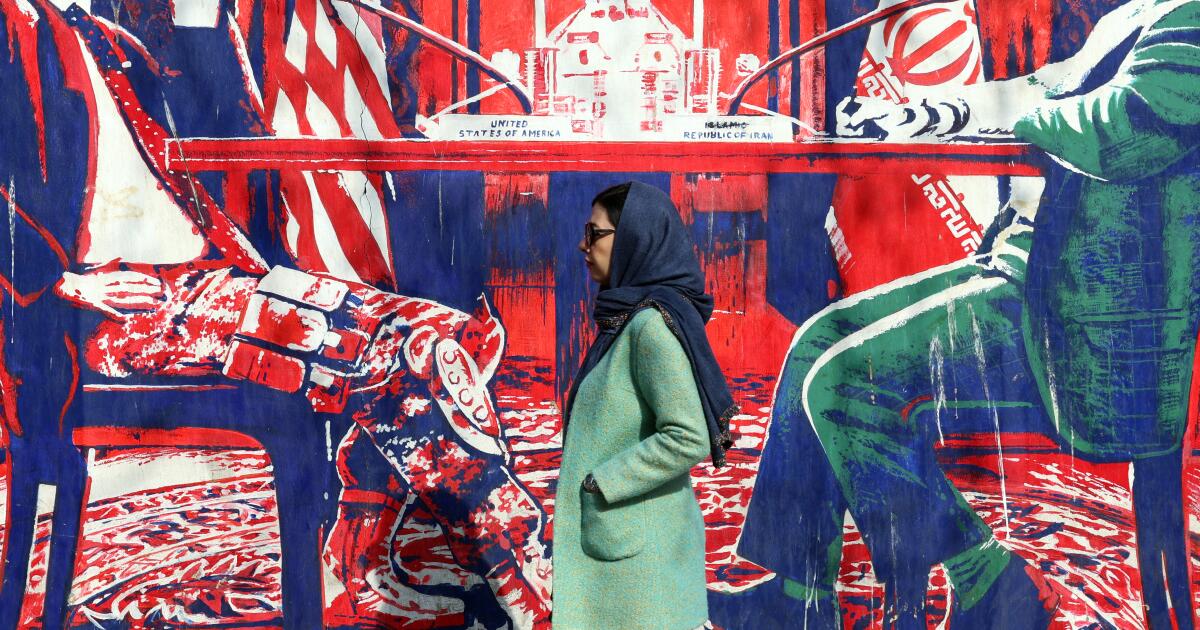
Embassy staffers and dependents evacuating, airlines suspending service, eyes in Iran warily turning skyward for signs of an attack.
The prospects of a showdown between the U.S. and Iran loom ever higher, as massive American naval and air power lies in wait off Iran’s shores and land borders.
Yet little of that urgency is felt in Iran’s government. Rather than quickly acquiescing to President Trump’s demands, Iranian diplomats persist in the kind of torturously slow diplomatic dance that marked previous discussions with the U.S., a pace that prompted Trump to declare on Friday that the Iranians were not negotiating in “good faith.”
But For Iran’s leadership, Iranian experts say, concessions of the sort Trump are asking for about nuclear power and the country’s role in the Middle East undermine the very ethos of the Islamic Republic and the decades-old project it has created.
“As an Islamic theocracy, Iran serves as a role model for the Islamic world. And as a role model, we cannot capitulate,” said Hamid Reza Taraghi, who heads international affairs for Iran’s Islamic Coalition Party, or Hezb-e Motalefeh Eslami.
Besides, he added, “militarily we are strong enough to fight back and make any enemy regret attacking us.”
Even as another round of negotiations ended with no resolution this week, the U.S. has completed a buildup involving more than 150 aircraft into the region, along with roughly a third of all active U.S. ships.
Observers say those forces remain insufficient for anything beyond a short campaign of a few weeks or a high-intensity kinetic strike.
Iran would be sure to retaliate, perhaps against an aircraft carrier or the many U.S. military bases arrayed in the region. Though such an attack is unlikely to destroy its target, it could damage or at least disrupt operations, demonstrating that “American power is not untouchable,” said Hooshang Talé, a former Iranian parliamentarian.
Tehran could also mobilize paramilitary groups it cultivated in the region, including Iraqi militias and Yemen’s Houthis, Talé added. Other U.S. rivals, such as Russia and China, may seize the opportunity to launch their own campaigns elsewhere in the world while the U.S. remains preoccupied in the Middle East, he said.
“From this perspective, Iran would not be acting entirely alone,” Tale said. “Indirect alignment among U.S. adversaries — even without a formal alliance — would create a cascading effect.”
We’re not exactly happy with the way they’re negotiating and, again, they cannot have nuclear weapons
— President Trump
The U.S. demands Iran give up all nuclear enrichment and relinquish existing stockpiles of enriched uranium so as to stop any path to developing a bomb. Iran has repeatedly stated it does not want to build a nuclear weapon and that nuclear enrichment would be for exclusively peaceful purposes.
The Trump administration has also talked about curtailing Iran’s ballistic missile program and its support to proxy groups, such as Hezbollah, in the region, though those have not been consistent demands. Tehran insists the talks should be limited to the nuclear issue.
After indirect negotiations on Thursday, Oman’s Foreign Minister Badr al-Busaidi — the mediator for the talks in Geneva — lauded what he said was “significant progress.” Iranian Foreign Ministry spokesman Esmail Baghaei said there had been “constructive proposals.”
Trump, however, struck a frustrated tone when speaking to reporters on Friday.
“We’re not exactly happy with the way they’re negotiating and, again, they cannot have nuclear weapons,” he said.
Trump also downplayed concerns that an attack could escalate into a longer conflict.
This frame grab from footage circulating on social media shows protesters dancing and cheering around a bonfire during an anti-government protest in Tehran, Iran, on Jan. 9.
(Uncredited / Associated Press)
“I guess you could say there’s always a risk. You know, when there’s war, there’s a risk in anything, both good and bad,” Trump said.
Three days earlier, in his State of the Union address Tuesday, said, “My preference is to solve this problem through diplomacy. But one thing is certain, I will never allow the world’s number one sponsor of terror, which they are by far, to have a nuclear weapon — can’t let that happen.”
There are other signs an attack could be imminent.
On Friday, the U.S. Embassy in Israel allowed staff to leave the country if they wished. That followed an earlier move this week to evacuate dependents in the embassy in Lebanon. Other countries have followed suit, including the U.K, which pulled its embassy staff in Tehran. Meanwhile, several airlines have suspended service to Israel and Iran.
A U.S. military campaign would come at a sensitive time for Iran’s leadership.
The country’s armed forces are still recovering from the June war with Israel and the U.S, which left more than 1,200 people dead and more than 6,000 injured in Iran. In Israel, 28 people were killed and dozens injured.
Unrest in January — when security forces killed anywhere from 3,000 to 30,000 protesters (estimates range wildly) — means the government has no shortage of domestic enemies. Meanwhile, long-term sanctions have hobbled Iran’s economy and left most Iranians desperately poor.
Despite those vulnerabilities, observers say the U.S. buildup is likely to make Iran dig in its heels, especially because it would not want to set the precedent of giving up positions at the barrel of a U.S. gun.
Other U.S. demands would constitute red lines. Its missile arsenal, for example, counts as its main counter to the U.S. and Israel, said Rose Kelanic, Director of the Middle East Program at the Defense Priorities think tank.
“Iran’s deterrence policy is defense by attrition. They act like a porcupine so the bear will drop them… The missiles are the quills,” she said, adding that the strategy means Iran cannot fully defend against the U.S., but could inflict pain.
At the same time, although mechanisms to monitor nuclear enrichment exist, reining in Tehran’s support for proxy groups would be a much harder matter to verify.
But the larger issue is that Iran doesn’t trust Trump to follow through on whatever the negotiations reach.
After all, it was Trump who withdrew from an Obama-era deal designed to curb Iran’s nuclear ambitions, despite widespread consensus Iran was in compliance.
Trump and numerous other critics complained Iran was not constrained in its other “malign activities,” such as support for militant groups in the Middle East and development of ballistic missiles. The Trump administration embarked on a policy of “maximum pressure” hoping to bring Iran to its knees, but it was met with what Iran watchers called maximum resistance.
In June, he joined Israel in attacking Iran’s nuclear facilities, a move that didn’t result in the Islamic Republic returning to negotiations and accepting Trump’s terms. And he has waxed wistfully about regime change.
“Trump has worked very hard to make U.S. threats credible by amassing this huge military force offshore, and they’re extremely credible at this point,” Kelanic said.
“But he also has to make his assurances credible that if Iran agrees to U.S. demands, that the U.S. won’t attack Iran anyway.”
Talé, the former parliamentarian, put it differently.
“If Iranian diplomats demonstrate flexibility, Trump will be more emboldened,” he said. “That’s why Iran, as a sovereign nation, must not capitulate to any foreign power, including America.”

new video loaded: Bill Clinton Says He ‘Did Nothing Wrong’ in House Epstein Inquiry
transcript
transcript
Bill Clinton Says He ‘Did Nothing Wrong’ in House Epstein Inquiry
Former President Bill Clinton told members of the House Oversight Committee in a closed-door deposition that he “saw nothing” and had done nothing wrong when he associated with Jeffrey Epstein decades ago.
-
“Cause we don’t know when the video will be out. I don’t know when the transcript will be out. We’ve asked that they be out as quickly as possible.” “I don’t like seeing him deposed, but they certainly went after me a lot more than that.” “Republicans have now set a new precedent, which is to bring in presidents and former presidents to testify. So we’re once again going to make that call that we did yesterday. We are now asking and demanding that President Trump officially come in and testify in front of the Oversight Committee.” “Ranking Member Garcia asked President Clinton, quote, ‘Should President Trump be called to answer questions from this committee?’ And President Clinton said, that’s for you to decide. And the president went on to say that the President Trump has never said anything to me to make me think he was involved. “The way Chairman Comer described it, I don’t think is a complete, accurate description of what actually was said. So let’s release the full transcript.”

By Jackeline Luna
February 27, 2026

Oklahoma leaders react after U.S. and Israel launch joint attack on Iran

Arizona baseball loses to Oregon in Las Vegas

Quakertown police chief on leave after clash with student protesters

Frostbitten lizard found in Rhode Island is healing

Men’s Golf Visits South Carolina for Colleton River Collegiate

Florida High School Football Rankings: Top 25 teams – Oct. 21

Cleary's 21 help Le Moyne down Central Connecticut State 69-64 in OT

How old is Bo Nix? What to know about Oregon quarterback ahead of 2024 NFL Draft

99th annual Pony Swim held in Virginia

Indiana Members Credit Union announced as new anchor tenant at Bottleworks District

2 Survivors Describe the Terror and Tragedy of the Tahoe Avalanche

Iran fires missiles at US bases across Middle East after American strikes on nuclear, IRGC sites

Israel strikes two schools in Iran, killing more than 50 people

Anthropic CEO says he’s sticking to AI “red lines” despite clash with Pentagon

ICE blasts Washington mayor over directive restricting immigration enforcement
-

 World3 days ago
Exclusive: DeepSeek withholds latest AI model from US chipmakers including Nvidia, sources say
-

 Massachusetts3 days ago
Mother and daughter injured in Taunton house explosion
-

 Montana1 week ago
2026 MHSA Montana Wrestling State Championship Brackets And Results – FloWrestling
-

 Louisiana5 days ago
Wildfire near Gum Swamp Road in Livingston Parish now under control; more than 200 acres burned
-

 Denver, CO3 days ago
10 acres charred, 5 injured in Thornton grass fire, evacuation orders lifted
-

 Technology1 week ago
YouTube TV billing scam emails are hitting inboxes
-

 Technology1 week ago
Stellantis is in a crisis of its own making
-

 Politics1 week ago
OpenAI didn’t contact police despite employees flagging mass shooter’s concerning chatbot interactions: REPORT