Politics
Tesla attacks mark troubling twist in political violence as Musk divides America


There were broad expectations that the widening political divides in America following Donald Trump’s second presidential victory would explode.
But few could have predicted the flash point would be electric cars.
Teslas have been set ablaze with Molotov cocktails, riddled with bullets and defaced with swastikas. Doors and windows at once pristine luxury electric vehicle showrooms are now scrawled with profanity and Nazi symbols.
Teslas, once the darling of alternative energy advocates, are now the unlikely target of political violence. Experts say while the singling out of individual vehicles is unusual, activists focusing ire on a corporation has a long history in America.
No one has been seriously hurt in the incidents, but they have heightened alarm from both law enforcement officials and experts in political extremism about where this is heading.
“We have a continuum of activity, some of which we rightfully tolerate, such as boisterous and passionate protests,” said Brian Levin, a professor emeritus at Cal State San Bernardino and an expert on extremism. “But now we’re getting to another level of this kind of directed arson and violence, which, to be sure, has an intimidation effect.”
The Tesla attacks have been scattered and do not appear to be coordinated. But the one thing they seem to have in common is disdain for Tesla owner Elon Musk and his efforts to fire federal workers and shrink the size of government.
After Las Vegas was hit with a spate of Tesla attacks, Spencer Evans, FBI special agent in charge of the Las Vegas bureau, issued a warning to would-be political vandals.
“Specifically to those who might think that something like this is justifiable or potentially even admirable, we want to let you know it’s a federal crime,” he said. “We will come after you, we will find you, and prosecute you to the fullest extent of the law. I encourage anyone that’s considering something like this to seriously reconsider.”
This isn’t the first time corporations or even car brands have been the target of political protest, and sometimes vandalism.
Protests over Energy Transfer’s construction of the Dakota Access Pipeline in North Dakota drew national attention and thousands of people to months-long encampments in 2016 and 2017. A jury this week awarded damages of more than $660 million to the pipeline company in its lawsuit against Greenpeace over the environmental organization’s role in the protests.
In 2003, activists set fire to a Chevrolet dealership and destroyed or defaced dozens of Hummers and other sport utility vehicles, scrawling many with the word “polluter.” Earth Liberation Front, an association of militant environmentalists, claimed responsibility for the attacks at the time, saying it had been intended to take the profit motive away from the companies responsible for pollution.
The same group was suspected to be involved in a fire that tore through a construction site in San Diego that same year, according to a Times report from 2003.
“Over the last decade ideologically motivated militants from across a spectrum, as well as some unstable and idiosyncratic types, have targeted their broadening attacks not only against traditional, governmental, communication and academic enterprises, but also increasingly against powerful corporate or defense industry targets who they regard as political co-conspirators of their adversaries,” Levin said.
There have been growing concerns about political extremism in the United States in the Trump era, especially after rioters stormed the U.S. Capitol on Jan. 6, 2021, in an attempt to prevent Congress from certifying election results.
On his first day in office, President Trump granted sweeping pardons or commutations to more than 1,500 people convicted of Jan. 6 offenses. The pardons and now the efforts to protect Tesla have sent out a conflicting message about how the Trump administration will handle targeted political violence, Levin said.
“You can’t have it both ways,” Levin said. “If the Trump administration is going to talk the talk, they need to walk the walk with respect to targeted violence. You can’t just pick and choose which particular ideology you prefer when it comes to having a legal response to acts of targeted violence.”
Atty. Gen. Pam Bondi labeled the attacks on Tesla dealerships this week as “nothing short of domestic terrorism.”
Bondi promised to impose severe consequences on those involved in the Tesla attacks, including “those operating behind the scenes to coordinate and fund these crimes.”
While domestic terrorism is defined in federal law, it’s not an official criminal statute that carries a specific penalty. Those arrested in the attacks have so far been charged under other federal statutes that can carry significant jail time.
Under federal statutes, conspiracy and malicious destruction counts each carry a mandatory minimum of five years in prison and a statutory maximum penalty of 20 years in federal prison. A count of possession of an unregistered destructive device is punishable by up to 10 years.
Neama Rahmani, a former federal prosecutor, said applying terror charges to Tesla attacks is possible, but it’s not how terrorism charges have been filed in the past.
“Americans have not been charged with terrorism because it can be difficult to get inside a criminal defendant’s head and prove why they committed the violent act. It’s much easier if they are a member of or have pledged allegiance to a foreign terrorist organization,” Rahmani said.
It’s not just showrooms that are on alert. A website, Dogequest, allegedly published the personal information of Tesla owners across the United States, raising privacy and safety concerns for those who own the electric vehicles. The website has since been taken down.
Musk has fired back on his social media platform, X, doling out blame for the attacks on Democrats and others.
“Has there ever been such a level of coordinated violence against a peaceful company? I understand not wanting to buy a product, but this is extreme arson and destruction!” Musk wrote on X.
In San Diego, a person wearing dark clothing and a red bandanna around their face sneaked onto the Tesla showroom in Encinitas before 2 a.m. Monday and spray-painted swastikas on eight vehicles and defaced the dealership’s windows with profanity, said San Diego County Sheriff Sgt. Christie Ramirez.
Ramirez said investigators have not made any arrests.
Several dealerships have been defaced with Nazi symbols — an apparent response to the arm gesture Musk made while speaking at a rally celebrating Trump’s inauguration in January. Musk denies the gesture was a Nazi salute.
In Las Vegas, the FBI and Las Vegas metro police launched an investigation this week after vandals threw Molotov cocktails and fired at least three rounds into vehicles at a Tesla Collision Center just a few miles from the Vegas Strip around 2:45 a.m. Tuesday, authorities said.
Several Teslas were engulfed in flames and the word “resist” was spray-painted on building doors, said Assistant Sheriff Dori Koren. A 911 caller reported seeing a person wearing black clothing setting multiple electric vehicles on fire.
At least five Tesla vehicles were damaged in the incident, including two fully engulfed by fire, authorities said.
The FBI and the Bureau of Alcohol, Tobacco, Firearms and Explosives are investigating a similar incident in Kansas City, Mo., where two Cybertrucks were set ablaze early Tuesday. Authorities say so far there is no connection to the Las Vegas attack.
There have been at least half a dozen similar acts of vandalism at Tesla showrooms across the country in the past several months.
On March 2, someone scrawled the words “NO Musk” in red spray paint on the windows of a Tesla dealership in Owings Mills, Md. A day later, seven Tesla charging stations were set on fire in Littleton, Mass.
In Tigard, Ore., police are investigating after someone opened fire at a Tesla dealership twice in a span of about a week. In the first incident, which occurred March 6, someone fired at least seven rounds — damaging three cars and shattering windows. One bullet went through an office wall and into a computer monitor, according to police.
“Fortunately, this happened overnight when the property was unoccupied,” authorities wrote in a news release.
In Seattle, four Cybertrucks that were parked in a Tesla lot were set ablaze on March 9. In Dedham, Mass., three Teslas were spray-painted with graffiti and their tires were slashed on March 11, police said.
In Lynnwood, Wash., someone spray-painted red swastikas on Cybertrucks that were parked at a Tesla center waiting to be serviced.
Many of the investigations remain ongoing, but at least four people have been charged after allegedly destroying Tesla property.
Adam Matthew Lansky, 41, of Salem, Ore., has been charged federally with illegally possessing an unregistered destructive device after authorities say he allegedly tried to destroy Teslas at a local dealership with Molotov cocktails. Lansky also allegedly fired several rounds into a building and a vehicle at the dealership, according to court records.
In Loveland, Colo., two people have been arrested after attacks on a Tesla dealership. Cooper Jo Frederick, 24, of Fort Collins was charged with using and possessing an explosive, second-degree arson, criminal mischief and attempted criminal felony after police say an incendiary device was ignited and thrown at a Tesla building, landing between two vehicles.
Lucy Grace Nelson, 42, of Lyons, Colo., was charged with a count of malicious destruction of property for allegedly lighting a fire near a Cybertruck at the dealership and writing “Nazi” on a dealership sign, according to court records.
Daniel Clarke-Pounder, 24, of South Carolina was also charged this month with arson involving property used for interstate commerce after prosecutors allege he spray-painted “F— Trump” and “Long Live Ukraine” in a parking spot used for people charging their vehicles.
Authorities allege he pulled out five Molotov cocktails and threw them at the chargers, damaging the devices. He faces up to 20 years in prison, if convicted, according to prosecutors.
Separately from the violence, peaceful protesters have mobilized around the country at Tesla dealerships.
A group of women calling themselves the “Grandma Brigade” gathered outside the Tesla showroom and service center on Pullman Street in Costa Mesa this month to speak out against Musk’s involvement in the federal government.
“Maybe if we hit back economically we’ll be able to show that the United States can’t be bought for a few million dollars from a rich man,” said Debbie Marsteller, one of the members of the group.
But Marsteller was shocked by the vandalism others have unleashed on the dealerships.
“People putting Nazi swastikas on Tesla cars … it’s absurd to me,” she said. “It doesn’t help our cause.”



NEWYou can now listen to Fox News articles!
The Wyoming Supreme Court ruled on Tuesday that a pair of laws restricting abortion access violate the state constitution, including the country’s first explicit ban on abortion pills.
The court, in a 4-1 ruling, sided with the state’s only abortion clinic and others who had sued over the abortion bans passed since the U.S. Supreme Court overturned Roe v. Wade in 2022, which returned the power to make laws on abortion back to the states.
Despite Wyoming being one of the most conservative states, the ruling handed down by justices who were all appointed by Republican governors upheld every previous lower court ruling that the abortion bans violated the state constitution.
Wellspring Health Access in Casper, the abortion access advocacy group Chelsea’s Fund and four women, including two obstetricians, argued that the laws violated a state constitutional amendment affirming that competent adults have the right to make their own health care decisions.
TRUMP URGES GOP TO BE ‘FLEXIBLE’ ON HYDE AMENDMENT, IGNITING BACKLASH FROM PRO-LIFE ALLIES
The Wyoming Supreme Court ruled that a pair of laws restricting abortion access violate the state constitution. (Tom Williams/CQ-Roll Call, Inc via Getty Images)
Voters approved the constitutional amendment in 2012 in response to the federal Affordable Care Act, which is also known as Obamacare.
The justices in Wyoming found that the amendment was not written to apply to abortion but noted that it is not their job to “add words” to the state constitution.
“But lawmakers could ask Wyoming voters to consider a constitutional amendment that would more clearly address this issue,” the justices wrote.
Wellspring Health Access President Julie Burkhart said in a statement that the ruling upholds abortion as “essential health care” that should not be met with government interference.
“Our clinic will remain open and ready to provide compassionate reproductive health care, including abortions, and our patients in Wyoming will be able to obtain this care without having to travel out of state,” Burkhart said.
Wellspring Health Access opened as the only clinic in the state to offer surgical abortions in 2023, a year after a firebombing stopped construction and delayed its opening. A woman is serving a five-year prison sentence after she admitted to breaking in and lighting gasoline that she poured over the clinic floors.
Wellspring Health Access opened as the only clinic in the state to offer surgical abortions in 2023, a year after a firebombing stopped construction. (AP)
Attorneys representing the state had argued that abortion cannot violate the Wyoming constitution because it is not a form of health care.
Republican Gov. Mark Gordon expressed disappointment in the ruling and called on state lawmakers meeting later this winter to pass a constitutional amendment prohibiting abortion that residents could vote on this fall.
An amendment like that would require a two-thirds vote to be introduced as a nonbudget matter in the monthlong legislative session that will primarily address the state budget, although it would have significant support in the Republican-dominated legislature.
“This ruling may settle, for now, a legal question, but it does not settle the moral one, nor does it reflect where many Wyoming citizens stand, including myself. It is time for this issue to go before the people for a vote,” Gordon said in a statement.
APPEALS COURT SIDES WITH TRUMP ON BUDGET PROVISION CUTTING PLANNED PARENTHOOD FUNDS
Gov. Mark Gordon expressed disappointment in the ruling. (Getty Images)
One of the laws overturned by the state’s high court attempted to ban abortion, but with exceptions in cases where it is needed to protect a pregnant woman’s life or in cases of rape or incest. The other law would have made Wyoming the only state to explicitly ban abortion pills, although other states have implemented de facto bans on abortion medication by broadly restricting abortion.
CLICK HERE TO DOWNLOAD THE FOX NEWS APP
Abortion has remained legal in the state since Teton County District Judge Melissa Owens blocked the bans while the lawsuit challenging the restrictions moved forward. Owens struck down the laws as unconstitutional in 2024.
Last year, Wyoming passed additional laws requiring abortion clinics to be licensed surgical centers and women to receive ultrasounds before having medication abortions. A judge in a separate lawsuit blocked those laws from taking effect while that case moves forward.
The Associated Press contributed to this report.

SACRAMENTO — Gov. Gavin Newsom and other state Democratic leaders accused President Trump of unleashing a political vendetta after he announced plans to freeze roughly $10 billion in federal funding for child care and social services programs in California and four other Democrat-controlled states.
Trump justified the action in comments posted on his social media platform Truth Social, where he accused Newsom of widespread fraud. The governor’s office dismissed the accusation as “deranged.”
Trump’s announcement came amid a broader administration push to target Democratic-led states over alleged fraud in taxpayer-funded programs, following sweeping prosecutions in Minnesota. The U.S. Department of Health and Human Services confirmed the planned funding freeze, which was first reported by the New York Post.
California officials said they have received no formal notice and argued the president is using unsubstantiated claims to justify a move that could jeopardize child care and social services for low-income families.
How we got here
Trump posted on his social media site Truth Social on Tuesday that under Newsom, California is “more corrupt than Minnesota, if that’s possible???” In the post, Trump used a derogatory nickname for Newsom that has become popular with the governor’s critics, referring to him as “Newscum.”
“The Fraud Investigation of California has begun,” Trump wrote.
The president also retweeted a story by the New York Post that said his Department of Health and Human Services will freeze taxpayer funding from the Child Care Development Fund, the Temporary Assistance for Needy Families program, which is known as CalWORKS in California, and the Social Services Block Grant program. Health and Human Services said the affected states are California, Colorado, Illinois, Minnesota and New York.
“For too long, Democrat-led states and Governors have been complicit in allowing massive amounts of fraud to occur under their watch,” said Andrew Nixon, a department spokesperson. “Under the Trump Administration, we are ensuring that federal taxpayer dollars are being used for legitimate purposes. We will ensure these states are following the law and protecting hard-earned taxpayer money.”
The department announced last month that all 50 states will have to provide additional levels of verification and administrative data before they receive more funding from the Child Care and Development Fund after a series of fraud schemes at Minnesota day-care centers run by Somali residents.
“The Trump Administration is using the moral guise of eliminating ‘fraud and abuse’ to undermine essential programs and punish families and children who depend on these services to survive, many of whom have no other options if this funding disappears,” Kristin McGuire, president of Young Invincibles, a young-adult nonprofit economic advocacy group, said in a statement. “This is yet another ideologically motivated attack on states that treats millions of families as pawns in a political game.”
California pushes back
Newsom’s office brushed off Trump’s post about fraud allegations, calling the president “a deranged, habitual liar whose relationship with reality ended years ago.” Newsom himself said he welcomes federal fraud investigations in the state, adding in an interview on MS NOW that aired Monday night: “Bring it on. … If he has some unique insight and information, I look forward to partnering with him. I can’t stand fraud.”
However, Newsom said cutting off funding hurts hardworking families who rely on the assistance.
“You want to support families? You believe in families? Then you believe in supporting child care and child-care workers in the workforce,” Newsom told MS NOW.
California has not been notified of any changes to federal child-care or social services funding. H.D. Palmer, a spokesperson for the Department of Finance, said the only indication from Washington that California’s child-care funding could be in jeopardy was the vague 5 a.m. post Tuesday by the president on Truth Social.
“The president tosses these social media missives in the same way Mardi Gras revelers throw beads on Bourbon Street — with zero regard for accuracy or precision,” Palmer said.
In the current state budget, Palmer said, California’s child-care spending is $7.3 billion, of which $2.2 billion is federal dollars. Newsom is set to unveil his budget proposal Friday for the fiscal year that begins July 1, which will mark the governor’s final spending plan before he terms out. Newsom has acknowledged that he is considering a 2028 bid for president, but has repeatedly brushed aside reporters’ questions about it, saying his focus remains on governing California.
Palmer said while details about the potential threat to federal child-care dollars remain unclear, what is known is that federal dollars are not like “a spigot that will be turned off by the end of the week.”
“There is no immediate cutoff that will happen,” Palmer said.
Since Trump took office, California has filed dozens of legal actions to block the president’s policy changes and funding cuts, and the state has prevailed in many of them.
What happened in Minnesota
Federal prosecutors say Minnesota has been hit by some of the largest fraud schemes involving state-run, federally funded programs in the country. Federal prosecutors estimate that as much as half of roughly $18 billion paid to 14 Minnesota programs since 2018 may be fraudulent, with providers accused of billing for services never delivered and diverting money for personal use.
The scale of the fraud has drawn national attention and fueled the Trump administration’s decision to freeze child-care funds while demanding additional safeguards before doling out money, moves that critics say risk harming families who rely on the programs. Gov. Tim Walz has ordered a third-party audit and appointed a director of program integrity. Amid the fallout, Walz announced he will not seek a third term.
Outrage over the fraud reached a fever pitch in the White House after a video posted online by an influencer purported to expose extensive fraud at Somali-run child-care centers in Minnesota. On Monday, that influencer, Nick Shirley, posted on the social media site X, “I ENDED TIM WALZ,” a claim that prompted calls from conservative activists to shift scrutiny to Newsom and California next.
Right-wing podcaster Benny Johnson posted on X that his team will be traveling to California next week to show “how criminal California fraud is robbing our nation blind.”
California officials have acknowledged fraud failures in the past, most notably at the Employment Development Department during the COVID-19 pandemic, when weakened safeguards led to billions of dollars in unemployment payments later deemed potentially fraudulent.
An independent state audit released last month found administrative vulnerabilities in some of California’s social services programs but stopped short of alleging widespread fraud or corruption. The California state auditor added the Department of Social Services to its high-risk list because of persistent errors in calculating CalFresh benefits, which provides food assistance to those in need — a measure of payment accuracy rather than criminal activity — warning that federal law changes could eventually force the state to absorb billions of dollars in additional costs if those errors are not reduced.
What’s at stake in California
The Trump administration’s plans to freeze federal child-care, welfare and social services funding would affect $7.3 billion in Temporary Assistance for Needy Families funding, $2.4 billion for child-care subsidies and more than $800 million for social services programs in the five states.
The move was quickly criticized as politically motivated because the targeted states were all Democrat-led.
“Trump is now illegally freezing childcare and other funding for working families, but only in blue states,” state Sen. Scott Wiener (D-San Francisco) said in a statement. “He says it’s because of ‘fraud,’ but it has nothing to do with fraud and everything to do with politics. Florida had the largest Medicaid fraud in U.S. history yet isn’t on this list.”
Added California Assembly Speaker Robert Rivas (D-Hollister): “It is unconscionable for Trump and Republicans to rip away billions of dollars that support child care and families in need, and this has nothing to do with fraud. California taxpayers pay for these programs — period — and Trump has no right to steal from our hard-working residents. We will continue to fight back.”
Times staff writer Daniel Miller contributed to this report.

new video loaded: Walz Drops Re-Election Bid as Minnesota Fraud Scandal Grows
transcript
transcript
Walz Drops Re-Election Bid as Minnesota Fraud Scandal Grows
Governor Tim Walz of Minnesota abandoned his re-election bid to focus on handling a scandal over fraud in social service programs that grew under his administration.
-
“I’ve decided to step out of this race, and I’ll let others worry about the election while I focus on the work that’s in front of me for the next year.” “All right, so this is Quality Learing Center — meant to say Quality ‘Learning’ Center.” “Right now we have around 56 kids enrolled. If the children are not here, we mark absence.”
By Shawn Paik
January 6, 2026

Stream It Or Skip It: ‘The Home’ on Starz, a paranoid thriller where Pete Davidson gets trapped in a creepy retirement home

Map: 6.4-Magnitude Earthquake Shakes the Philippine Sea

Brain Health Challenge: Try the MIND Diet
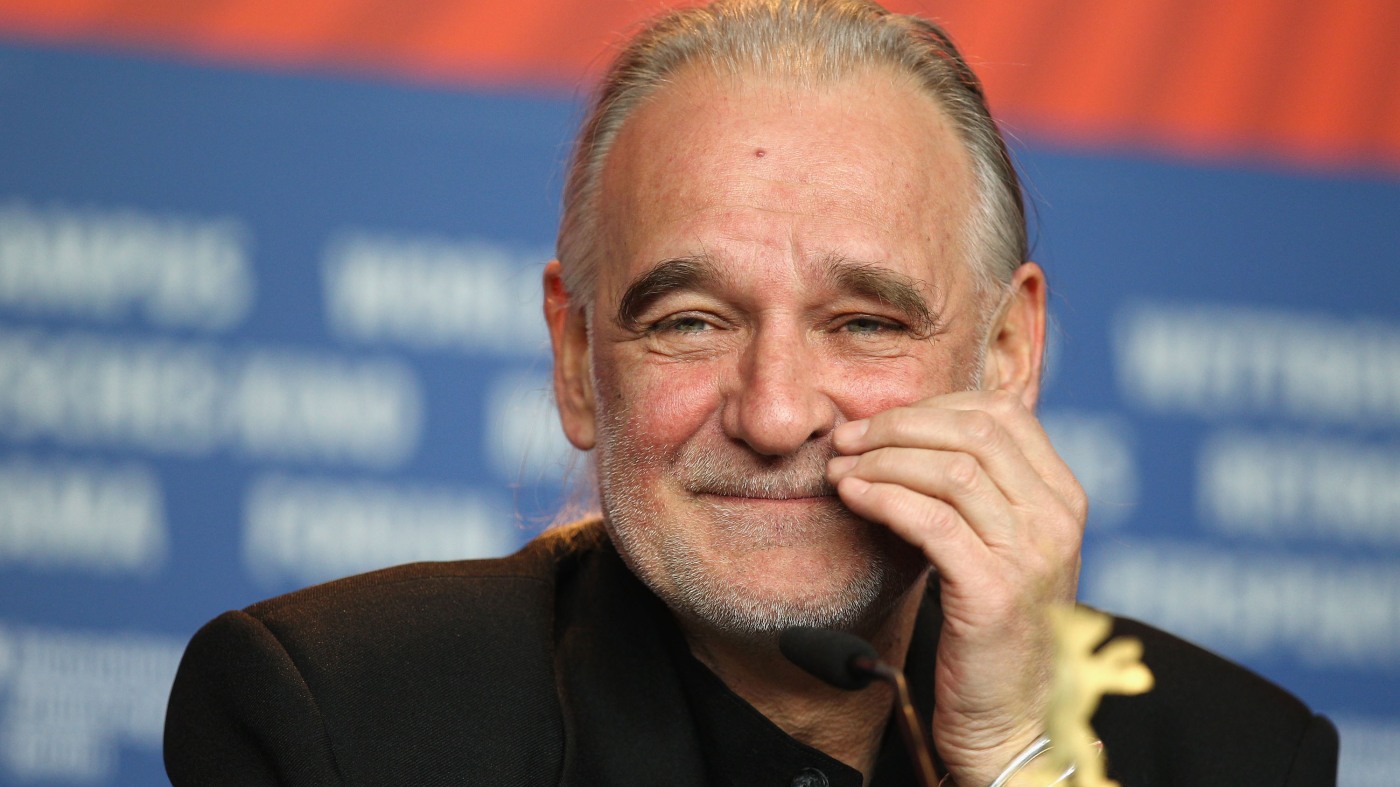
Hungarian filmmaker Béla Tarr — known for bleak, existential movies — has died

Intel is planning a custom Panther Lake CPU for handheld PCs

Florida High School Football Rankings: Top 25 teams – Oct. 21

Cleary's 21 help Le Moyne down Central Connecticut State 69-64 in OT

How old is Bo Nix? What to know about Oregon quarterback ahead of 2024 NFL Draft

99th annual Pony Swim held in Virginia

Video: ‘It Didn’t Have to Happen This Way:’ U.Va. Faculty Call for Review of Police Response to Protests

Wyoming Supreme Court rules laws restricting abortion violate state constitution

How strong are Latin America’s military forces, as they face US threats?

Trump says Venezuela will turn over 30 million to 50 million barrels of oil to US | CNN Business

Video: Nvidia Shows Off New A.I. Chip at CES

Pelosi heir-apparent calls Trump’s Venezuela move a ‘lawless coup,’ urges impeachment, slams Netanyahu
-

 World1 week ago
Hamas builds new terror regime in Gaza, recruiting teens amid problematic election
-
 News1 week ago
For those who help the poor, 2025 goes down as a year of chaos
-
 Business1 week ago
Instacart ends AI pricing test that charged shoppers different prices for the same items
-

 Health1 week ago
Did holiday stress wreak havoc on your gut? Doctors say 6 simple tips can help
-

 Technology1 week ago
ChatGPT’s GPT-5.2 is here, and it feels rushed
-
 Business1 week ago
A tale of two Ralphs — Lauren and the supermarket — shows the reality of a K-shaped economy
-

 Science1 week ago
We Asked for Environmental Fixes in Your State. You Sent In Thousands.
-

 Politics1 week ago
The biggest losers of 2025: Who fell flat as the year closed