Politics
How New York’s Mayor, Eric Adams, Wooed Donald Trump


Donald J. Trump’s electoral victory alarmed most New York Democrats — but not Eric Adams. For Mr. Adams, the mayor of New York City who had been criminally indicted and faced political isolation, it was a golden opportunity.
In the weeks before the presidential inauguration, Mr. Adams cozied up to Mr. Trump, his political allies and his family.
The mayor called the president-elect on multiple occasions, congratulating him on his election victory and discussing city affairs. He met at a luxury Manhattan hotel with Stephen K. Bannon, Mr. Trump’s ally and former top aide. And he contacted the president’s second son, Eric Trump, who runs the Trump family business.
The previously unreported extent of the charm campaign was recounted in interviews with more than a dozen people knowledgeable about the effort, who spoke on the condition of anonymity to discuss the nature of the communications.
The effort culminated in Mr. Adams receiving an in-person meeting with Mr. Trump in Florida just days before the inauguration.
While Mr. Adams did not explicitly raise his corruption case at the Florida meeting, the people said, Mr. Trump appeared sympathetic to the mayor’s legal plight. The president-elect, on the verge of attaining the power to make the mayor’s case disappear, lamented that the Justice Department under President Joseph R. Biden Jr. was “weaponized.”
Mr. Adams has said that he was there on city business, and that his outreach to Mr. Trump was normal political bridge-building, irrelevant to his criminal case. A City Hall spokeswoman noted he was not the only Democrat who has sought to find some common ground with Mr. Trump.
“Mayor Adams wants to work with the new president, and not war with him, to better the lives of New Yorkers,” Liz Garcia, the city hall spokeswoman, said in a statement. “There is no difference between how the mayor has approached his relationship with President Trump and how he approached his relationship with former President Biden. Any claim that he has anything but a professional relationship with President Trump is based in falsehood.”
Yet their in-person meeting sealed a connection between the two men and was a prelude to the mayor’s lawyers formally asking the Trump administration to abandon the case.
Less than a month after their meeting, Mr. Trump’s Justice Department ordered federal prosecutors in Manhattan to seek a dismissal of the indictment, arguing that it hindered Mr. Adams’s cooperation with the administration’s immigration crackdown. The department also claimed the corruption case would interfere in this year’s mayoral election. It left open the possibility of reviving the charges after November.
That striking move to drop the case — which prompted several Justice Department resignations last month and a political crisis in New York — reflected a changed reality for the American justice system as the president has begun to demolish the wall between prosecution and politics.
The mayor’s case offers a blueprint for fighting criminal charges in this new, transactional era: flatter Mr. Trump, forge a personal connection and, when possible, support his agenda.
Both sides stood to gain: Mr. Adams might well have secured his freedom, while Mr. Trump gained a friend in City Hall, someone to support elements of his immigration crackdown — and, potentially, his family business.
That business, the Trump Organization, played a role in the mayor’s in-person meeting with Mr. Trump.
For one thing, the meeting was held at a Trump Organization property, a golf club in West Palm Beach, Fla. And it came about after Frank Carone, the mayor’s trusted outside adviser and former chief of staff, contacted Eric Trump, two people with knowledge of the matter said. The two men became acquainted when Mr. Carone was in City Hall in New York and the Trump Organization was operating a golf course on city land.
The Florida meeting also came as the Trump Organization was bidding on a New York City contract to operate a Central Park skating rink, according to people with knowledge of the matter.
There is no indication that the mayor’s office has advocated for the Trump Organization. But the situation is awkward nonetheless as the city’s Department of Parks and Recreation must evaluate a business owned by a family to which Mr. Adams is seemingly indebted.
Mr. Adams, his spokeswoman said, has not discussed the bid with the parks agency, which she said will follow its standard procedure.
She also disputed that Mr. Adams, who has offered mild pushback on some of the most polarizing Trump administration actions, was indebted to the president. The mayor, who has maintained his innocence, has said he never discussed his case with Mr. Trump, and has repeatedly denied that he promised anything in exchange for dropping it.
Mr. Trump, who has played down the significance of the charges, has nonetheless denied having had anything to do with his Justice Department’s abandonment of the case.
For the president, any political gain from the case disappearing might be fleeting. The appearance of a backroom deal playing out in public has damaged the mayor’s re-election prospects, potentially limiting his usefulness to the president.
Moreover, the federal judge overseeing the case might not approve the Justice Department’s plan to revisit the charges after the mayoral race.
Paul D. Clement, a prominent lawyer who the judge tasked with offering an independent recommendation on the case, warned that the arrangement could give the impression that the Trump administration was threatening the mayor with the specter of a revived case.
It could create the appearance, Mr. Clement wrote, “that the actions of a public official are being driven by concerns about staying in the good graces of the federal executive, rather than the best interests of his constituents.”
The judge has already delayed Mr. Adams’s trial, once set for April. Mr. Clement recommended that the judge dismiss the case entirely.
Building a Connection
In late October, a month after he was indicted, the mayor held a briefing for reporters ahead of Mr. Trump’s election rally at Madison Square Garden. He was asked whether he agreed with other Democrats who had called the former president a fascist.
Mr. Adams, who a few years earlier had characterized Mr. Trump as a “complete embarrassment to our nation,” leaned forward, his hands clasped in front of him. “My answer is no,” he said, adding, “I think we could all dial down the temperature.”
Mr. Trump soon won the election, and returned to New York, and the Garden, for a victory lap. This time, the event was an Ultimate Fighting Championship bout, where Mr. Adams approached the president-elect at his ringside seat, striking up a brief, friendly conversation.
Those episodes were early signs of compatibility between the two men. In subsequent months, they bonded over their views on immigration. Unlike other big city Democratic mayors, Mr. Adams has pledged to work with the president to target immigrants who have committed crimes, though local sanctuary laws have thus far prevented him from cooperating fully.
They also shared a sense of grievance against the justice system.
Last year, Mr. Trump became the first former and future president to be convicted of a crime and Mr. Adams became the first New York City mayor in modern history to be indicted.
Mr. Trump was convicted of falsifying business records related to a sex scandal. Federal prosecutors in Manhattan accused Mr. Adams of soliciting illegal foreign campaign donations and accepting thousands of dollars’ worth of travel benefits in exchange for helping Turkish officials open a new consulate building.
After Mr. Trump’s electoral victory, Mr. Adams began calling him, according to people with knowledge of the conversations. In an initial call, he congratulated Mr. Trump on his election victory and on subsequent calls discussed city business, though the people declined to elaborate on the business that was discussed. Mr. Adams did not raise his case on the calls, the people said.
In December, as their connection strengthened, Mr. Trump told reporters he would consider pardoning Mr. Adams, contending that the mayor had been treated “pretty unfairly” by federal prosecutors.
Asked about the president-elect’s comments at the time, Mr. Adams deferred to his legal team, saying, “I have an attorney that is going to look at every avenue to ensure I get justice.”
Soon after, Mr. Adams’s defense team learned of a troubling development. According to court filings, a “credible source” on Dec. 22 told Mr. Adams’s lawyer Alex Spiro that a grand jury was hearing testimony related to a potential new charge.
Around this time, Mr. Adams appears to have stepped up his outreach to Mr. Trump’s circle of supporters. That included turning to Mr. Bannon — a hard-right provocateur who was hardly a natural touch point for a Democratic mayor. But Mr. Bannon, too, had once faced charges brought by the Manhattan federal prosecutors’ office, and he had been represented by Mr. Spiro.
Weeks before the inauguration, after Mr. Spiro helped to connect them, the mayor met with Mr. Bannon at the Pierre Hotel on Fifth Avenue, according to people with knowledge of the encounter. Mr. Adams did not mention his case, one of the people said, but they discussed a potential mayoral primary against former Gov. Andrew M. Cuomo.
“The mayor did not do anything differently than mayors do during administration changes,” Mr. Spiro said in an emailed statement.
Mr. Adams had other meetings with people in Mr. Trump’s orbit.
A person with knowledge of the matter said that Mr. Carone, the mayor’s political problem-solver, contacted Bruce Blakeman, a Republican and the Nassau County executive. Mr. Adams and Mr. Blakeman then dined together on Long Island in mid-January, after which the mayor said the two men had discussed “the issue of violent gangs in our region.”
In a statement, a spokesman for Mr. Blakeman declined to discuss the specifics of the conversation, saying only that the men “from time to time discuss matters of regional interest.”
As the inauguration approached, the president-elect was not the only Trump family member to receive a call from the mayor. Mr. Adams also contacted Eric Trump, people with knowledge of the previously unreported call said.
It is unclear what they discussed beyond pleasantries, though the people said that Mr. Adams’s case did not come up.
The friendly call reflected a contrast with the Trump Organization’s relationship with the previous mayor, Bill de Blasio. He had sought to oust the company from its Ferry Point golf course — operated on city land in the Bronx — in the aftermath of Trump supporters’ storming of the U.S. Capitol on Jan. 6, 2021.
But in 2022, with Mr. Adams as mayor and Mr. Carone as his chief of staff, the city made two decisions about Ferry Point that were favorable for the Trumps.
It did not appeal a court ruling that allowed the Trump Organization to keep Ferry Point, and it approved the Trumps to host a Saudi Arabia-backed women’s golf tournament there.
Eric Trump later called Mr. Carone to express his appreciation, according to people with knowledge of the previously unreported call. Though Mr. Carone left the Adams administration by early 2023, he and Eric Trump periodically stayed in touch.
Less than a week before the presidential inauguration, Mr. Carone called Eric Trump to arrange the meeting between the mayor and the president-elect.
The younger Trump explained that he was not a formal member of his father’s political operation, but nonetheless offered to connect Mr. Carone with a scheduler for the president-elect.
By the end of that week, Mr. Adams was on his way to Florida.
A Crucial Lunch
The Trump International Golf Club West Palm Beach, the first golf course Mr. Trump acquired, is a sprawling property nestled between an airport and the ocean.
Mr. Adams and Mr. Carone arrived in time for lunch, on a cool day after Mr. Trump had finished a round of golf. Steve Witkoff, a billionaire real estate developer now serving as special envoy to the Middle East, was there, as was Eric Trump. The mayor did not bring any other city officials.
The group huddled in a roped-off corner of the dining room. They discussed the recently signed cease-fire agreement between Israel and Hamas — Mr. Witkoff had played a role in the negotiations — and areas where the Trump and Adams administrations might work together.
“To be clear, we did not discuss my legal case,” Mr. Adams said in a statement afterward. He said he had discussed the city’s priorities, adding, “I strongly believe there is much our city and the federal government can partner on to make New York City safer, stronger and more affordable.”
Three days later, Mr. Adams said he had received a last-minute invitation to the presidential inauguration from Mr. Witkoff, which he accepted “on behalf of New York City.”
Mr. Adams’s lawyers seized the momentum.
Soon after the inauguration, they sent a letter to the top White House lawyer to request that Mr. Trump pardon the mayor. And while the White House did not respond, the acting deputy attorney general, Emil Bove III, one of Mr. Trump’s former criminal defense lawyers, soon reached out to discuss potentially dropping the case.
‘He Was Always Supportive’
Mr. Adams was not the only one who wanted something.
The Trump administration sought the mayor’s support for an immigration crackdown.
And the Trump Organization wants the city’s blessing to regain control of the Wollman ice rink in Central Park, a chance to restore his name to a hometown landmark.
Wollman is a city-owned property that Mr. Trump helped refurbish in 1986 and wove into his public image as a master builder. The Trump Organization operated the rink for years, but the de Blasio administration moved to expel the company after the Jan. 6, 2021, Capitol riot. The Trump contract expired, and a new operator took over later that year.
The current contract expires in 2027, so the city parks agency last year solicited bids on a new 20-year deal to operate the rink. The Trump Organization and the existing operator of the rink — a consortium that includes the real estate giant Related Companies — submitted bids that the city is now evaluating, people with knowledge of the matter said.
In a statement, the parks agency said it was “currently reviewing all proposals consistent with its procedures and the terms of the solicitation.”
Even if the Trump Organization loses out on the rink, it owns several properties in the city and must interact with city agencies. As such, Trump Organization executives have privately discussed wanting to maintain friendly ties with Mr. Adams, whose term as mayor will continue through the end of the year even if he loses the Democratic primary in June.
In a radio interview last month, Eric Trump expressed his appreciation for Mr. Adams, comparing him positively with Mr. de Blasio.
“He never tried to throw our company out in New York,” Mr. Trump said of Mr. Adams. “He was always supportive of everything that we did.”
Eric Trump also argued that prosecutors had railroaded Mr. Adams after he criticized the Biden administration’s immigration policies. (In fact, the investigation into Mr. Adams began more than a year before his dispute with Mr. Biden.)
Five days after the radio interview, Mr. Bove ordered the Manhattan federal prosecutors to seek a dismissal of their case against Mr. Adams. The directive led to the resignations of at least eight prosecutors in New York and Washington, including the acting U.S. attorney in Manhattan, Danielle Sassoon.



new video loaded: Erika Kirk’s Message for Women at Turning Point USA

By Vivian Yee, Christina Shaman, Lauren Pruitt, James Surdam and Melanie Bencosme
June 18, 2026

NEWYou can now listen to Fox News articles!
FIRST ON FOX: Americans are nearly evenly split between favoring Iranian regime change and a negotiated U.S. settlement with Iran, according to a new survey.
Some 39% of respondents favor a negotiated settlement where Iran’s current government remains in place, with verifiable limits on its nuclear and missile programs, according to the findings of the Reagan Institute Summer Survey, while 36% favor replacing Iran’s current government with one more favorable to the U.S.
Another 16% favor a weakened regime where the current government stays in place but is significantly diminished militarily and economically, and 8% responded that they don’t know.
The findings underscore the political challenge facing President Donald Trump as his administration pursues a newly signed memorandum of understanding with Iran. While the agreement seeks to curb Iran’s nuclear ambitions through negotiations, Americans remain divided over the ultimate objective of U.S. policy toward the Islamic Republic.
Americans are nearly evenly split between favoring Iranian regime change and a negotiated U.S. settlement with Iran, according to a new survey. (Mandel NGAN / AFP via Getty Images)
AMERICANS AGREE WITH TRUMP THAT IRAN POSES THREAT TO UNITED STATES: POLL
Republicans who responded to the survey favored replacing Iran’s government by a 2-to-1 margin over a diplomatic deal.
Republicans were far more likely than Democrats to favor a more aggressive outcome in Iran. Half of Republican respondents said they would prefer to see Iran’s current government replaced with one more favorable to the United States, compared to 25% who said they would favor a negotiated settlement that leaves the regime in place in exchange for verifiable limits on its nuclear and missile programs.
The findings were nearly identical among self-identified MAGA Republicans, 51% of whom favored regime change while 25% backed a negotiated settlement.
SHARP PARTISAN DIVIDE EMERGES OVER IRAN STRIKE, TRUMP’S STRATEGY: POLLS
Democrats, meanwhile, largely favored diplomacy. A majority, 52%, said they would prefer a negotiated settlement with Iran’s current government, while 25% favored regime change. Another 14% favored leaving the regime in place but significantly weakened militarily and economically.
The Reagan Institute Summer Survey was conducted May 26 through June 3 among 1,555 respondents nationwide and carries a margin of error of plus or minus 2.5 percentage points. The survey used a mixed-mode methodology that included live telephone interviews, an online panel and text-to-web responses.
Smoke rises over Tehran following an explosion amid ongoing U.S. and Israeli military strikes on Iranian targets on March 2, 2026. (Majid Saeedi/Getty Images)
The findings underscore the political challenge facing President Donald Trump as his administration pursues a newly signed memorandum of understanding with Iran. (Hamid FOROUTAN / ISNA / AFP via Getty Images)
Republicans were far more likely than Democrats to favor a more aggressive outcome in Iran. (Pool via WANA/Reuters)
To better reflect the U.S. population, the results were weighted using demographic benchmarks from the U.S. Census Bureau’s 2023 American Community Survey, including age, gender, race, region and education levels. The poll also included an oversample of 331 MAGA Republicans under age 30, a group with a margin of error of plus or minus 5 percentage points.
The Reagan Institute is a Washington-based policy organization that advocates the Reagan foreign-policy tradition of “peace through strength” and sustained American leadership abroad.
The findings come as Trump has defended a newly signed memorandum of understanding with Iran as a way to reduce tensions and create a pathway toward a broader agreement addressing Tehran’s nuclear program.
The memorandum establishes a 60-day negotiating period during which the United States and Iran will attempt to reach a more comprehensive deal. The agreement also includes provisions aimed at restoring commercial shipping through the Strait of Hormuz and provides limited sanctions waivers tied to continued negotiations. Several of the most contentious issues, including the long-term future of Iran’s nuclear program, are expected to be addressed in subsequent talks.
Trump has described the arrangement as a means of avoiding a wider conflict while pursuing what he called a “great settlement” with Tehran. He has also argued that the agreement could help stabilize energy markets by reopening the Strait of Hormuz, a critical global shipping route, while creating an opportunity to negotiate additional restrictions on Iran’s nuclear activities.
CLICK HERE TO DOWNLOAD THE FOX NEWS APP
The president added that he agreed to a settlement to avoid “economic catastrophe.”
“I didn’t want to see economic catastrophe. If you kept this going, that could have happened,” he told reporters at the G7 Summit in France.
WASHINGTON — The White House pushed back Thursday against growing bipartisan criticism of a negotiated settlement to the war with Iran, arguing its concessions to the Islamic Republic were contingent on its conduct and essential to securing peace.
The administration’s defensive posture came as details of the framework agreement, known as a memorandum of understanding, were finally shared with the public, revealing a raft of compromises with Tehran long opposed by Republicans.
Vice President JD Vance, who helped negotiate the deal, told reporters Thursday that the deal was structured to reward Iran for good behavior. But the text of the agreement suggests otherwise.
The Trump administration agreed to release billions of dollars in Iranian assets that were frozen and restricted by the United States “upon the implementation” of the memorandum — before any further actions are taken or additional negotiations begin. The president will issue sanctions waivers on Iranian oil, allowing Tehran to resume trading its most valuable export and breaking with decades of policy. And to facilitate that trade, boosting Tehran’s revenues, Trump agreed to immediately end a U.S. naval blockade of Iranian ports.
Still more concessions were offered to the Iranians, including a commitment by the U.S. administration to establish a fund of “at least $300 billion for the reconstruction and economic development of the Islamic Republic” — in effect providing reparations for the war Trump started.
“All required licenses, waivers and permissions needed for the relevant financial transactions will be granted by the United States of America,” the memorandum reads.
Taken together, the document reads as a stunning reversal of U.S. policy toward Iran after decades of concern across administrations in Washington — including throughout Trump’s two terms — that the Islamic Republic represents the nation’s greatest security threats as the world’s largest state sponsor of terrorism.
Criticism from Republican senators, in particular, has been sharp and swift.
Sen. Roger Wicker (R-Miss.), chairman of the Senate Armed Services Committee, said the $300-billion fund “would make Iran’s payoff under President Obama’s 2015 deal look like a pittance by comparison.” And Sen. Ted Cruz (R-Texas) accused the Trump administration of giving Iran money it would use to kill Americans.
“History demonstrates that giving billions of dollars to theocratic lunatics who want to murder us is an exceptionally bad idea, and I think, unfortunately, the president is receiving some really bad advice on this deal,” Cruz said. “I don’t want to see us send a penny to the ayatollah. And I hope that we don’t.”
The Obama-era deal, known as the Joint Comprehensive Plan of Action, included structured sanctions relief for Iran in exchange for concrete and verifiable steps by Tehran to dismantle much of its nuclear program — a framework that Republicans broadly criticized at the time.
By contrast, Trump’s agreement commits the United States to pursuing economic relief for Iran while providing no clarity about the future of Iran’s nuclear program — the very issue Trump cited as the rationale for launching the war.
The memorandum includes a pledge by Iran to never purchase or construct nuclear weapons — a vow the Islamic Republic has made multiple times before, including by signing the Nuclear Non-Proliferation Treaty, in a religious edict issued by the late supreme leader and in the Obama-era nuclear accord.
Vice President JD Vance speaks to reporters at the White House on June 18, 2026.
(Manuel Balce Ceneta / Associated Press)
Detailed negotiations over Iran’s nuclear program — including whether Tehran could continue domestic uranium enrichment, at what level, and under what monitoring regime — were left for another day.
For more than a decade, the U.S. intelligence community has assessed that Iran sought a threshold nuclear capability, securing the strategic advantages of a nuclear power without incurring the costs of openly pursuing a bomb.
The agreement does include a commitment by Iran to do its “best” to bring commercial shipping traffic through the Strait of Hormuz, a vital international waterway, back to prewar levels. But critics of the president said he had to make deep, historic concessions just to secure a status quo ante upended by the war he started. And in the document, Tehran agreed to refrain from imposing a toll on ships transiting the strait for only a 60-day period.
“Unless you were homeschooled by a day drinker, no one’s confident that Iran is going to do anything,” Sen. John Kennedy, a Republican from Louisiana, told reporters this week.
Sen. Bill Cassidy, Kennedy’s Republican counterpart from Louisiana, called the deal “the worst foreign policy blunder in decades” that would have President Reagan “rolling over in his grave.”
“Iran’s nuclear ambitions were not curbed, and they have learned that threatening the Strait of Hormuz works and will undoubtedly leverage it in the future. Now, Iran gets to build brand-new infrastructure under this deal,” Cassidy said.
“Before the war, the strait was open, Iran was being crushed by sanctions, and 13 service members were still alive,” he added. “Now, 13 Americans are dead, families have paid billions at the pump, sanctions will be lifted, and the bombing has stopped.”
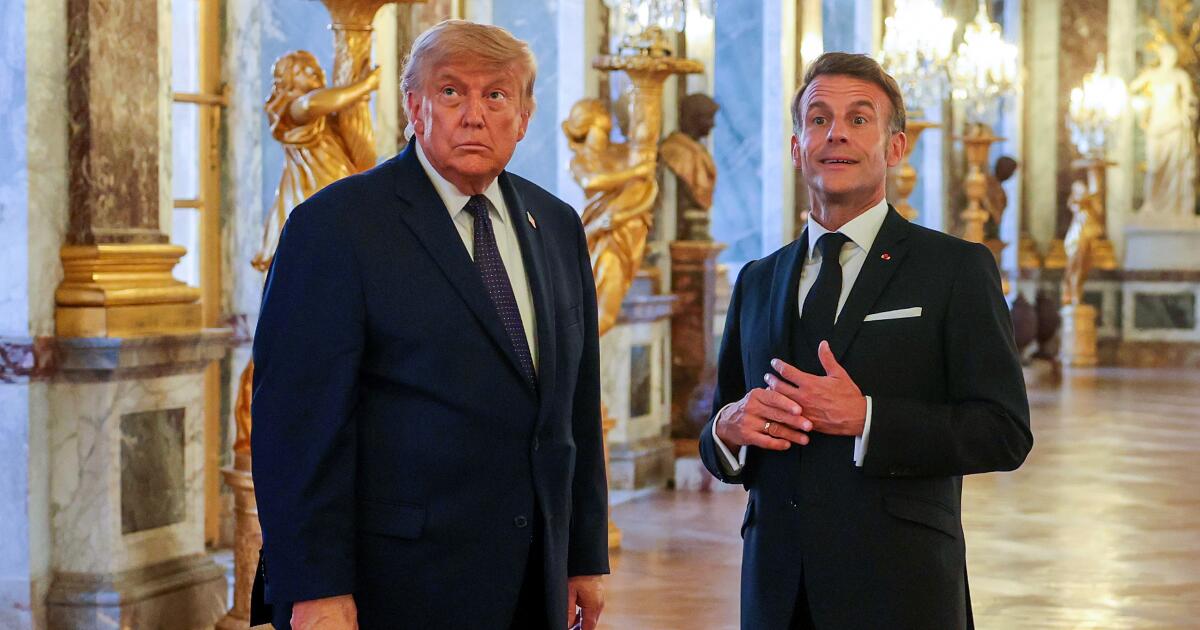
Despite mounting criticism, Trump put his signature to the memorandum on Wednesday night while attending a dinner with the French president in Versailles, a palace infamous for hosting a treaty signing that disgraced Germany at the end of the First World War.
He defended the agreement while in Europe and suggested further concessions might be forthcoming, including recognition of Iran’s claimed right to enrich uranium and a new willingness to tolerate its continued ballistic missile development — another program that Trump had vowed to eliminate as a central war aim.
“He took America to war — killing 13 soldiers, thousands of Iranian civilians and costing taxpayers $60 billion — to get rid of Iran’s missile program. And now that he’s lost the war, he pretends like it’s no big deal,” said Sen. Chris Murphy, a Democrat from Connecticut.
“Just unforgivable,” he added. “What a charlatan.”
-

 Augusta, GA5 minutes ago
Progress continues on James Brown Linear Park in downtown Augusta
-

 Washington, D.C7 minutes ago
Vans Warped Tour Day One at RFK Festival Grounds in Washington, DC – Loud Hailer Magazine
-
 Cleveland, OH13 minutes ago
Violent crime crackdown leads to 11 felony arrests and gets eight guns off Cleveland’s streets
-
 Austin, TX20 minutes ago
7 Juneteenth celebrations happening in Austin this weekend
-

 Alabama23 minutes ago
Kids take center stage at Alabama Shakespeare Festival summer camp
-

 Alaska28 minutes ago
Alaska Airlines names CFO as new president
-

 Arizona35 minutes ago
Wife turns in Arizona startup CEO husband over fraud allegations
-

 Arkansas38 minutes ago
Arkansas men’s track and field celebrates banner season with updated flag | Northwest Arkansas Democrat-Gazette

