Politics
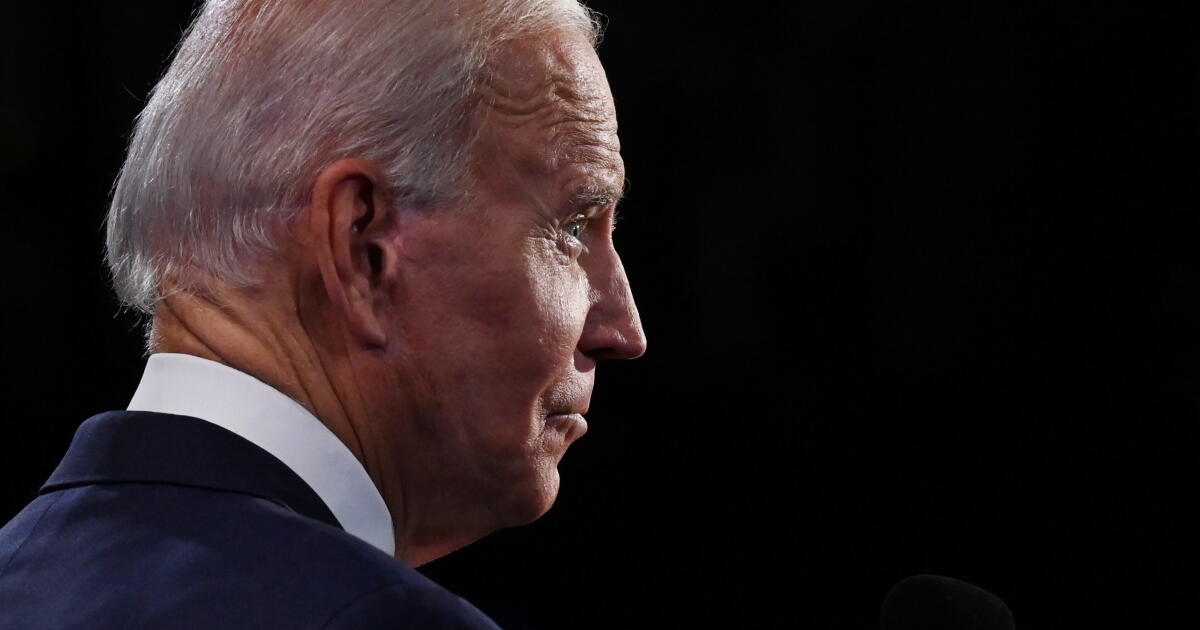
Column: 5 reasons Biden made the right move

A few years ago, when I was contemplating retirement, one piece of advice stood out.
“You’ll know when there’s certainty, and you’re not ignoring the truth,” said Los Angeles Rabbi Naomi Levy. “When it’s time, you’ll know. You’ll just know.”
For President Biden, who announced Sunday that he will not seek reelection, it was time.
And finally, after weeks of resistance, he knew.
It had to be a wrenching, soul-searching, heartbreaking decision. But pulling out of the presidential race will not necessarily be the end of Biden. If his health holds up, and that’s a big “if,” he wouldn’t be the first ex-president to find ways to continue serving his country.
I’ve been advocating for those who want to keep working into their 70s, 80s, whatever, as many people do, fully as efficient as ever. But some people hang on too long. When your skills are no longer sharp, and health gets in the way, you’ve earned a break.
I can think of several advantages Biden will enjoy by stepping away.
A: His health is in decline, a fact that became painfully obvious during his halting performance in the June 27 debate against former President Trump, and Biden can now devote full attention to addressing his medical needs. Doctors have told me they see clear signs of a neurological disorder that may be progressive, and stepping away from one of the most taxing jobs in the world, at the age of 81, makes sense.
B: He’s a family man whose time with family has been sacrificed, for five decades, by the demands of his high-level jobs in public service. I’ve been to Rehobeth Beach, Del., where Biden has a vacation home. It’s going to be nice for the family to gather there without the constant press of
national and world events.
C: Biden did not appear likely to beat Trump, if the polls are to be believed. By stepping away now, his political career won’t end with a painful election defeat, but with his decision to face the reality of those polling trends, pass the baton to the next generation in Vice President Kamala Harris, and put the Democratic Party before his own ego.
D: Biden made plenty of mistakes in office (to name just two, the border has been mismanaged and the pullout from Afghanistan was botched). But his accomplishments are many. And he is a decent and civil man who will now be out of the fray in a country that has lost its way and lost its mind. That’s got to be a relief on some level.
E: I don’t think Biden could have won reelection, but it’s possible Harris can recharge the dated and deflated Democratic Party and use her prosecutorial skills to pummel Trump on his climate change disgraces and the theft of women’s reproductive rights, among other things. If she does pull out a win, she’ll have her own agenda, of course, but it’s likely to include some of the initiatives begun by Biden.
So that’s the upside of Biden’s stepping away, but will there be disadvantages as well?
Absolutely.
Transitions can be difficult for anyone at any age, and retirement is one of the biggest life changes.
In Biden’s case, we’re not talking about a classic retirement, obviously. But he’s been in elective office so long, that’s essentially what it will be. He’ll still have a public role and profile, as do other ex-presidents. But in general, retirements are more difficult for people who leave jobs that were a big part of their identity. Jobs that weren’t just what they did, but who they were. Like president of the United States.
For Biden or anyone else who works through such a big transition, I’m reminded of some advice I got while researching my book on retirement. Father Greg Boyle of Homeboy Industries, the world’s largest gang-intervention and reentry program, said that whether you stay on the job or leave it, you need to go where life is, stay tethered, and do what gives you a sense of relevance and purpose.
President Carter did just that, working to resolve international conflict and building houses with Habitat for Humanity after leaving office. I don’t know if, at Biden’s age and given his health, that sort of thing is in his immediate future. We’ll have to wait and see.
In his letter announcing his decision, Biden said, “I believe it is in the interest of my party and the country for me to stand down and to focus solely on fulfilling my duties as President for the remainder of my term.” He listed among his achievements “significant climate legislation” and “the first gun safety law in 30 years.
I can see him finding ways to contribute to both causes going forward, serving as a voice of reason.
After being wounded in an assassination attempt by a shooter in Pennsylvania, Trump said, “I felt very safe, because I had God on my side.” His disciples also spoke of Trump being saved by the hand of God.
I know I’m not the only one who cringed.
In the time Biden has left in office, I’d like to see him point out that Trump and the GOP are the architects and protectors of the nation’s gun culture, and that God must have been off-duty every time schoolchildren or mall patrons were slaughtered in mass shootings.
Biden has nothing to lose now, so why not keep throwing punches and calling out all the hypocrisy?
When news of Biden’s decision first broke, I had two immediate thoughts.
First, it’s a sad moment.
Regardless of whether he was motivated in the end by health considerations, or polls, or both, it was a tough way to end a long career. Biden must have been bitter, watching so many longtime supporters call for him to give it up. And yet he was able to swallow his pride, stare down his fears and disappointments, and handle his declining health and shrinking political viability with grace.
My second thought was that it’s time.
steve.lopez@latimes.com

Politics
Trump administration pledges $150M in aid, deploys Navy warships after deadly Venezuela earthquakes

Secretary Rubio details US aid to Venezuela after earthquakes
Secretary Rubio, in Manama, Bahrain, outlines the comprehensive U.S. government response to the devastating back-to-back earthquakes in Venezuela. He confirms immediate deployment of search and rescue teams, medical resources and humanitarian assistance, emphasizing the urgency to save lives. Rubio reiterates President Donald Trump’s commitment to supporting Venezuela and collaborating with international partners on recovery efforts and long-term stability.
NEWYou can now listen to Fox News articles!
Following a catastrophic set of earthquakes that left at least 235 people dead in Venezuela, the Trump administration has activated a government-wide humanitarian response, pledging $150 million in aid and deploying U.S. Navy warships to assist in life-saving rescue operations.
The rapid mobilization Thursday comes after back-to-back magnitude 7.2 and 7.5 earthquakes rocked northern Venezuela roughly 120 miles west of Caracas Wednesday night.
The rare earthquake “doublet” injured more than 940 people and turned the state of La Guaira into a disaster zone, while forcing the closure of the damaged Simón Bolívar International Airport, according to Venezuela’s Health Ministry.
US RESCUE TEAMS TO DESCEND ON HARD-HIT CARIBBEAN AFTER CATASTROPHIC HURRICANE MELISSA’S IMPACT
Rescuers search for victims in a collapsed building following an earthquake in Caracas on June 24, 2026. (Manaure Quintero / AFP via Getty Images)
The U.S. Department of State announced on Thursday it is mobilizing $150 million in aid, which includes $50 million in new bilateral awards for relief partners on the ground — such as Samaritan’s Purse, Catholic Relief Services and World Vision — along with a $100 million contribution to a United Nations humanitarian pooled fund.
To spearhead efforts on the ground, the State Department has deployed a regional Disaster Assistance Response Team alongside two highly specialized urban search-and-rescue teams from fire departments in Fairfax County, Virginia, and Los Angeles County, California.
U.S. WARSHIPS TO PATROL INTERNATIONAL WATERS AROUND VENEZUELA AS TRUMP VOWS TO STOP CARTELS
Members of the County of Los Angeles Fire Department’s international urban search and rescue team (USA-2) prepare to leave for Venezuela, in Pacoima, Calif., Thursday. (Blake Fagan/AFP via Getty Images)
U.S. Southern Command (SOUTHCOM) said it is surging assigned U.S. military forces to the region, directing the USS Fort Lauderdale and the USS Billings to Venezuela to back the State Department-led operations.
The USS Fort Lauderdale will serve as a “floating command center” with a flight deck to support heavy-lift helicopters and a well deck to launch landing craft, according to SOUTHCOM.
Meanwhile, the agile USS Billings will provide critical support close to the shorelines to accelerate the disaster response missions.
U.S. SOUTHCOM said it has directed USS Fort Lauderdale (LPD 28) and USS Billings (LCS 15) to Venezuela to support State Department-led U.S. government relief operations in Venezuela. (@Southcom/X)
SOUTHCOM said it is also sending rotary-wing aircraft, which will provide critical life-saving airlift support, transporting U.S. government response personnel, search and rescue teams and partners during relief operations.
Amid the crisis, the State Department emphasized that the safety of U.S. citizens remains the administration’s highest priority.
“The Trump Administration has no higher priority than the safety and security of Americans. The Department of State is working tirelessly to provide consular assistance to U.S. citizens and their families in the affected areas,” officials wrote in a statement. “The United States remains steadfast in its commitment to helping Venezuela recover from this devastating disaster and will continue to explore additional ways to provide meaningful assistance during this critical time.”
CLICK HERE TO DOWNLOAD THE FOX NEWS APP
U.S. citizens in Venezuela are urged to enroll in the Smart Traveler Enrollment Program (STEP) and can contact the State Department 24/7 at 202-501-4444 for emergency assistance.
Family members in the U.S. seeking information on loved ones can call toll-free at 888-407-4747.
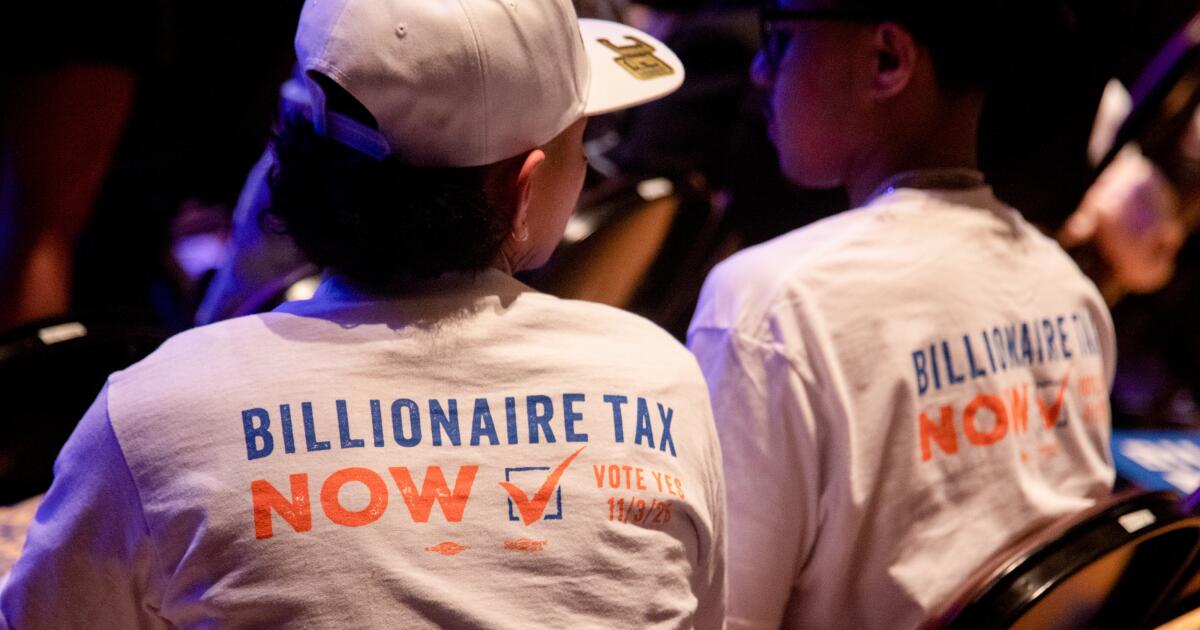
Proponents of a tax on California billionaires vowed on Thursday to move forward with their November ballot measure despite mounting opposition from many of the state’s most powerful political forces.
A labor union spent $31 million gathering signatures to qualify the measure for the ballot in an effort to offset federal healthcare funding cuts that will affect millions of California’s most vulnerable residents. A representative for the campaign supporting the ballot measure pushed back at opposition to the effort as self-entitled wealthy Californians and entrenched Sacramento interests.
“While a few morally bankrupt billionaires and their buddies in Sacramento want to see California’s hospitals close, and tax breaks for billionaires protected — I assure you, the vast majority of voters do not,” said Debru Carthan, a spokesperson for the Billionaire Tax Now Coalition, which is funded by the Service Employees International Union-United Healthcare Workers West, the sponsor of the proposal.
California Secretary of State Shirley Weber is expected to officially certify the measure to appear on the Nov. 3 ballot on Thursday evening.
Carthan said their effort has support in public opinion polls, and from lawmakers, unions, community organizations and volunteers across the state, “something the billionaires and their buddies will never have.” And she criticized Gov. Gavin Newsom for opposing the measure, saying that he is in “lock-step” with President Trump and billionaires.
“Gov. Newsom has no plan,” Carthan said during a Thursday evening news conference. “He has no plan to stop emergency rooms from closing. He has no plan for your healthcare costs. He has no plan to make sure that your family doesn’t have to drive further and wait longer to get medical care. Gov. Newsom has no plan to fix one of Trump’s deadliest domestic policy blunders.”
Rep. Ro Khanna (D-Fremont) also attacked the governor, though not by name.
“If you’re opposed to this tax, you’re on the side of trickle-down economics,” Khanna said. “You’re protecting the very, very rich, as opposed to standing up for the working class.”
Both Khanna and Newsom are considering running for president in 2028.
The Newsom administration did not respond to a request for comment Thursday evening.
A coalition of healthcare, education, public safety, housing, business and labor leaders opposed to the proposal warned that it would make the state’s notoriously unstable budget even more unpredictable.
“The dangerous wealth tax directly threatens vital funding for education and schools, healthcare and clinics, public safety, and infrastructure projects by making California’s revenue even more volatile,” the leaders of the California Medical Assn., the California Primary Care Assn. and the California School Boards Assn. said in a statement. “That’s why so many leaders – both Democrats and Republicans – are joining us and saying NO. We look forward to ensuring voters have the facts, know the stakes, and resoundingly reject this reckless experiment in November.”
Supporters of the one-time proposed 5% tax on the assets of the state’s wealthiest residents pitched the effort as a stop-gap measure to offset devastating federal healthcare funding cuts passed by the GOP-led Congress and signed by President Trump nearly one year ago. The federal legislation is expected to result in $100 billion in cuts that would affect California’s most vulnerable residents.
The proposed tax, which would be retroactive to billionaires who lived in the state as of Jan. 1, drew predictable opposition from the wealthy, notably Silicon Valley tech leaders.
But it notably divided liberals. While Sen. Bernie Sanders (I-Vt.) and Khanna supported the proposal, Newsom was among the Democrats who opposed it because of fears about the potential impact on the state’s volatile budget.
Despite being the fourth largest economy in the world — the home of Hollywood and Silicon Valley — California’s budget is extremely dependent on the state’s most prosperous residents.
Newsom and others who generally support increasing taxes on the wealthiest Americans also argued that the proposed billionaire tax in California was poorly crafted and that any such levies ought to be enacted nationally, because varying state policies would be ineffective.
Opponents also argued that the political priority in the 2026 midterm election should be squarely focused on efforts to make sure Democrats regain control of Congress to serve as a counter balance during the final two years of Trump’s presidency.
“It’s disappointing. This is a critical election where we need to concentrate on flipping the house and undoing the damage that was done” by Trump’s legislation that led to the healthcare funding cuts, said Jodi Hicks, chief executive and president of Planned Parenthood Affiliates of California. The wealth tax “is short term and doesn’t address what is the long-term problem. And I’m not even sure the policy is a viable solution. It’s so critical to be sending the right message — holding Congress accountable and how we need to find long-term solutions to make sure Californians have access to healthcare.”
Dave Regan, the president of SEIU-United Healthcare Workers West, lashed out at the leadership of Planned Parenthood as “out of touch” with their workers and their patients.
Rob Lapsley, co-chair of Californians Against Tax Increases and president of the California Business Roundtable, argued that the proposed wealth tax would ultimately affect every Californian.
“Strip away the spin, and this measure forces every California taxpayer, not just billionaires, to file a sworn declaration of their net worth with the Franchise Tax Board under penalty of perjury,” Lapsley said in a statement. “And it hands the Legislature the power to extend the wealth tax to all Californians and every kind of property, including home equity, retirement savings without ever returning to the voters – effectively gutting” voter-approved caps on property tax increases.
Supporters of the tax submitted nearly 1.6 million signatures in April to qualify the proposal for the ballot, roughly double the number required. However, support for the effort has grown increasingly shaky. Newsom’s team created a broad coalition of opponents, including healthcare and education activists, that undercut the foundational argument for the tax.
The union that crafted the proposal responded last week by proposing a legislative alternative that would create a 2% tax on billionaire’s assets. It was flatly refused by the Newsom administration. No deal was reached by the Thursday evening deadline for the union to withdraw the proposal from the November ballot.
Two efforts that were crafted to sink the proposed billionaire tax — dubbed poison pills — also qualified for the Nov. 3 ballot, according to the California Secretary of State’s office. One would bar new state taxes on personal property, while the other prohibits any new taxes being exempted from existing state spending rules and to be regularly audited. If the billionaire tax proposal is approved by voters but either of the other proposals receives more votes, the tax measure would be voided.
“We will not allow California’s most vulnerable patients to be used as political pawns,” said Francisco Silva, president and CEO of the California Primary Care Assn. “Our broad coalition will mount an aggressive campaign to educate voters, defeat this reckless initiative, and protect care for millions of patients.”
The proposed billionaire tax would apply to more than 200 Californians, some of whom proactively left the state or moved their companies out of California because of the proposal.
The prospect of the wealthy fleeing the state is among the reasons that prominent Democrats such as Newsom opposed it, given California’s budget being so reliant on the state’s most prosperous residents.
Sergey Brin, a co-founder of Google, is among the billionaires who have reportedly moved out of California because of the tax proposal. He donated at least $82 million to an organization that is funding efforts to invalidate the proposed billionaire tax.
Ballot measure proponents had a Thursday evening deadline to withdraw their proposals.
Other policy proposals that will appear on the Nov. 3 ballot include:
- Requiring government-issued voter identification to cast ballots in elections.
- Reforming the California Environmental Quality Act, once a third-rail in Democratic politics that has become increasingly scrutinized in the rebuilding in the aftermath of the Palisades and Eaton wildfires.
- Creating a $11.3-billion affordable housing bond.
Two notable proposals were pulled off the ballot after negotiations between the California Hospital Assn. and labor unions:
- An effort to limit healthcare executives’ compensation.
- A union proposal by the same union backing the billionaire tax that would have required many healthcare clinics to spend 90% of their revenue to serve low-income and underserved residents.
Politics
Biden judge rejects Trump’s sanctuary cities lawsuit, says even a win wouldn’t solve DOJ’s problem

Authorities investigate ICE ramming incident in New Jersey
Criminal defense attorney Josh Ritter and former NYPD Lt. Darrin Porcher react to the New Jersey incident where an illegal alien allegedly rammed an ICE agent. They emphasize the staggering 3300% increase in vehicle attacks against law enforcement officers.
NEWYou can now listen to Fox News articles!
A federal judge has tossed the Trump administration’s lawsuit against four New Jersey sanctuary cities, ruling the Justice Department targeted local policies that largely mirror a statewide immigration directive — meaning a court victory wouldn’t eliminate restrictions on ICE cooperation.
U.S. District Judge Evelyn Padin of the District of New Jersey, who was appointed by President Joe Biden, on Wednesday dismissed the Department of Justice’s lawsuit against Newark, Hoboken, Jersey City and Paterson, ruling the federal government lacked standing because striking down the cities’ policies would not remedy its alleged injuries.
“The Federal Government’s case has a fundamental flaw — it treats the Challenged Policies as though they operate in isolation. They do not,” Padin wrote. “New Jersey’s Immigrant Trust Directive is a statewide directive that, like the Challenged Policies, limits voluntary cooperation with federal civil immigration enforcement beyond what the law requires.”
The lawsuit was part of President Donald Trump’s renewed immigration crackdown following his return to office. Since declaring a national emergency at the southern border on Jan. 20, 2025, the administration has aggressively targeted so-called sanctuary jurisdictions, arguing that local policies limiting cooperation with ICE obstruct federal immigration enforcement and violate the Constitution.
DHS TORCHES NEW JERSEY’S PROFANE ‘F—ICE ACT’ AS ASSAULTS ON AGENTS SKYROCKET 1,300%
Immigration and Customs Enforcement (ICE) agents stand outside Delaney Hall detention center in Newark, New Jersey. 5/28/26. (Rashid Umar Abbasi for Fox News Digital.)
The Justice Department filed the lawsuit in May 2025, arguing the four cities’ sanctuary policies violate the Constitution’s Supremacy Clause by interfering with federal immigration enforcement, including limiting voluntary cooperation with ICE, restricting information sharing, declining to honor certain immigration detainers and barring participation in civil immigration enforcement beyond what federal law requires.
Newark, Hoboken and Jersey City each adopted executive orders declaring themselves “fair and welcoming” or “sanctuary” cities, while Paterson implemented police procedures designed to comply with New Jersey’s immigrant protections. The cities have argued the policies preserve community trust and allow local police to focus on state and local crime rather than federal civil immigration enforcement.
But Padin did not address the question of whether the sanctuary policies are constitutional. Instead, she ruled the federal government lacked standing because New Jersey’s Immigrant Trust Directive independently imposes many of the same restrictions on law enforcement agencies across the state.
GOP CANDIDATE RIPS BLUE STATE DIRECTIVE MEDDLING IN POLICE FORCE’S COOPERATION WITH ICE: ‘HANDCUFFED’
New Jersey Gov. Mikie Sherrill said ICE is denying her access to Newark’s Delaney Hall detention center. (Rashid Umar Abbasi for Fox News Digital; Daniel Heuer/Bloomberg via Getty Images)
The directive, first issued under former Gov. Phil Murphy in 2018 and codified into state law by Gov. Mikie Sherrill earlier this year, limits when state and local police can cooperate with federal immigration authorities on civil immigration enforcement.
Because the statewide directive wasn’t challenged in this case, Padin concluded that even if she struck down the cities’ policies, many of the same restrictions would remain in place.
“Even if the Court enjoined the Challenged Policies,” she wrote, “its injuries would persist.”
NEW JERSEY’S BAN ON PRIVATELY OPERATED ICE DETENTION CENTERS STRUCK DOWN BY COURT
That directive has already survived multiple legal challenges. The Third Circuit upheld it after New Jersey counties argued it conflicted with federal immigration law, and the Justice Department later sued New Jersey directly over the policy, lost and did not appeal.
“No judgment here could invalidate the ITD or relieve municipal law enforcement officers of their independent obligation to follow it,” Padin wrote.
U.S. Immigration and Customs Enforcement agents are seen at Terminal 1 of JFK Airport in New York City. An ICE agent saved the life of a 1-year-old boy at JFK after performing the Heimlich maneuver, the Department of Homeland Security said. (Getty Images)
The opinion also faulted the government for failing to identify concrete injuries caused solely by the cities’ policies. While the Justice Department cited several instances in which ICE detainers allegedly were ignored, every example involved the Essex County Correctional Facility, a county-operated jail that is not a defendant in the lawsuit and is governed by the statewide directive.
“The Federal Government must plead facts that substantiate its feared harm,” Padin wrote.
CLICK HERE TO DOWNLOAD THE FOX NEWS APP
Padin dismissed the lawsuit without prejudice, meaning the administration isn’t barred from bringing the case again if it can overcome the standing issue.
The Justice Department declined to comment.
-
 Lifestyle2 minutes ago
‘The Bear’ is back in the kitchen
-

 Technology14 minutes ago
Android 17’s new foldable gaming mode could make flippy phones more fun
-

 World17 minutes ago
Shark attack survivor wakes from 10-day coma and shares first words with family at her hospital bedside
-

 Politics22 minutes ago
Trump administration pledges $150M in aid, deploys Navy warships after deadly Venezuela earthquakes
-

 Sports32 minutes ago
Second Lady Usha Vance joins celebrity-filled crowd for Team USA’s group-stage finale in LA
-

 Technology37 minutes ago
Debt collection letter for debt you don’t owe? What to do now
-
 Business44 minutes ago
Newsom blesses Uber ballot measure truce — but fight over car crash lawsuits continues
-
 Entertainment47 minutes ago
La Cruz offers a musical memorial to Pulse shooting victims on Pride Month

