Vermont
Vermont Is Getting a Brand-New Film Festival, Founded by Two Indie Film Luminaries


Later this month, the Green Mountain State will roll out the red carpet for the United States’ newest international film festival: The Vermont Film & Folk Festival, which will open in Manchester, Vermont on Thursday, May 23 with a full lineup of award-winning narrative features, documentaries, and shorts from around the world, including a spotlight on Vermont-made films.
Founded by a pair of indie film luminaries and recent Manchester transplants — MovieMaker Magazine founder Tim Rhys and Filmmaker Magazine co-founder Karol Martesko-Fenster — the festival will play home to screenings of more than 40 new and classic films, including rare 16mm screenings of some of Hollywood’s most beloved movies, including 70th anniversary screenings of “On the Waterfront” and “La Strada,” a 75th anniversary screening of James Cagney’s “White Heat,” and an 80th anniversary screening of “Double Indemnity, and more.

The festival will kick off at The Southern Vermont Arts Center with the opening night feature screening of festival circuit darling “Tokyo Cowboy” with director Marc Marriott in attendance, followed by an opening night party to include a performance from the Hartford, Connecticut-based band Gravity. In addition to the film screenings, the program will include afternoon happy hour cocktail parties for festival supporters and guests, and two seminars to be held at Burr and Burton Academy: “Producing the Independent Feature” and “Why Folklore is Integral to Vermont’s Character.” The festival will run May 23-26.
On a personal note, if you’re wondering about the kismet and coincidence of both Rhys and Martesko-Fenster moving to the same small Vermont town, imagine this writer’s shock when she walked into a brand-new bookstore during a recent visit to her own hometown, only to find Rhys behind the register (he owns the place, which is located next door to his wife’s darling preschool, truly a Vermont dream).
“When Karol and I discovered we had both moved from urban areas to the same small town, we talked about all the things we loved about Manchester, Vermont and the thing we both missed most of all —accessible cinema on the big screen,” said co-founder and festival director Rhys in an official statement. “We know we’re not alone, as Bennington County is home to an extremely dynamic, artistic population. We hope that folks will come out and support these films and filmmakers by attending the screenings this Memorial Day weekend. We’ve already gotten a nice response from the business community and we’re so excited to serve up what we’ve been cooking this past year.”
Rhys and Martesko-Fenster’s venture is also notable because Manchester lacks its own movie theater. The two-screen joint this writer grew up watching films in is now a Sherwin-Williams paint store. For Manchester denizens, like my own family, the closest theater is over half an hour away in Bennington, with the nearest multiplex located more than an hour away in Saratoga Springs, New York (yes, a whole other state away; yes, I’ve lived it).

According to the festival, its mission “is to serve the people of southern Vermont by creating an annual event that underscores the importance of story to who we are as a society with a shared set of values, while simultaneously discovering and nurturing new talent and shining a spotlight on some of the most talented storytellers of our time. Honoring and reveling in storytelling is VFFF’s primary role.”
Film awards will be given in the following categories by a jury to be announced: Best Narrative Feature, Best Documentary Feature, Best Narrative Short, Best Documentary Short, The Equinox Award (Jury Award for Best of Fest), and the Green Mountain Award (Audience Award for Best of Fest). Venues for the festivities include the Southern Vermont Arts Center, Manchester Community Library, Burr & Burton Academy, and Rhys’ Wheelwrite Imaginarium Bookshop Arthouse, which will also be the location of the Filmmakers Lounge during the festival.
You can find out more about the festival, including its full schedule and how to purchase tickets and passes, on its official website. Check out the full lineup below, with all synopses provided by the festival.
FEATURE FILMS
TOKYO COWBOY
Directed by Marc Marriott
A Japanese businessman goes on an unwitting journey of self-discovery when he takes a company trip from Tokyo to a Montana cattle ranch.
ROWDY GIRL
Directed by Jason Goldman
Determined to make the planet a better place, former Texas cattle rancher Renee King-Sonnen transforms her husband’s beef operation into a farm animal sanctuary, encouraging other farmers to transition from animal agriculture to plant-based food production.
FULL CIRCLE
Directed by Josh Berman
Faced with a traumatic injury that leaves you permanently disabled; how would you reinvent yourself? Trevor Kennison’s life was forever altered by a broken back – for worse and for better, in equal measures.
ROBERT SHIELDS: MY LIFE AS A ROBOT
Directed by Mark Bonn
“No words” can describe him, literally. Robert Shields, one of the most unique performers of the century, performing for 2 Presidents a Queen while gaining the admiration of many of Hollywood’s greats-all of it done without saying a word.
THE QUIETEST YEAR
Directed by Karen Atkins
Filmmaker Karen Atkins’ darkly quirky personal quest to curb noise pollution in her quaint Vermont village uncovers dire consequences for noise regulation, not only in her home state, but nationwide.
THE ARTIST AND THE ASTRONAUT
Directed by Bill Muench
A uniquely American couple’s captivating story during the pinnacle of American exploration and social change.
THE NINE LIVES OF BARBARA DANE
Directed by Maureen Gosling
Barbara Dane turns setbacks into opportunities, paving her own way with her art, participating in, and influencing international social justice and musical movements across nine decades.
DEMON MINERAL
Directed by Hadley Austin
A portrait of life in the radioactive desert on the Navajo Reservation, following a group of indigenous scientists, elders, and activists as they work to protect a vital living space on contaminated land.
CHAPERONE
Directed by Zoe Eisenberg
Alienated by friends and family for her lack of ambition, 29-year-old Misha finds a dangerous acceptance in a bright 18-year-old athlete who mistakes her for a fellow student.
THE ACCIDENT
Directed by Giuseppe Garau
After being fired, Marcella, a gentle-hearted mother going through separation, buys a tow truck, gets trapped deeper and deeper in a cynical and aggressive world until a terrible opportunity shines in front of her.
FALLEN DRIVE
Directed by Nick Cassidy and David Rice
On the night of their high school reunion, Charlie and her boyfriend Reese have come with plans to exact revenge on former classmate, Liam. The plan – to stage the same heinous crime he committed in high school, but this time collect the evidence to prove his guilt.
JUST GETTING BY
Directed by Bess O’Brien
A documentary film that explores the day-to-day challenges and incredible resiliency that low-income Vermonters bear witness to every day. The film sheds light on an often-hidden Vermont population persevering against all odds to feed and house themselves and their families.
AFRICAN GIANTS
Directed by Omar S. Kamara
Over a weekend visit in Los Angeles, two first-generation Sierra Leonean American brothers navigate the changing dynamics of brotherhood after a surprise announcement.
THE YORKIE WEREWOLF
Directed by Michael DiBiasio-Ornelas
A rebellious teen witch is turned into a tiny werewolf and thrown into the middle of a decades-old war between one small town’s creatures of the night – and the local mafia.
UNDERDOG
Directed by Tommy Hyde
A hardscrabble Vermont dairy farmer risks losing the only home he’s ever known to chase his dreams of dog mushing in Alaska. Meticulously captured over the course of a decade, UNDERDOG paints an intimate verité portrait of Doug Butler as he puts a curiously optimistic twist on the kinds of family farm tragedies that have marked American rural life.
COMMON GROUND
Directed by Joshua Tickell and Rebecca Harrell Tickell
The solution of Regenerative farmers to bring soil health across the continent and beyond.
VERMONT-MADE FILMS
MOTHER’S HOUSE
Directed by Garret Harkawik
In the 1950s Mary Tarinelli’s mother had a vision while visiting a historic site purported to be the final home of the Virgin Mary. Tarinelli recounts the story and explains the unique ways in which her mother’s experience has shaped her life.
LIA: A BODYBUILDING STORY
Directed by Susan Weiss
The story of a female body builder, a woman with focus, determination, and the goal to participate in a pro tournament.
LOVE OF THE LAND
Directed by Travis Van Alstyne
A short, animated film based on the true and tragic story of Vermont farmer Romaine Tenney. His farm was in the construction path of Interstate 91 in the 1960s and the State of Vermont seized his land through eminent domain. 2024 marks the 60th anniversary of his passing.
STEVE’S CHAPEL
Directed by Gail Osherenko
The tale of one individual’s quest to establish a sanctuary wherein people can contemplate and rejoice in a world that has shed much of its ceremonial and profound significance.
THE THAW
Directed by Sarah Wisner and Sean Temple
In 19th century Vermont, a young woman’s parents drink sleeping tea in order to survive the harsh winter, but an early thaw leads to horrifying results.
SHORTS PROGRAM 1
SUBTEXT
Directed by Erin Brown Thomas
Two people on a first date mask and ignore their insecurities until an event forces them to say what they’re really thinking.
RIZOO
Directed by Azadeh Navai
To Rizzo, 8—who’s recently moved back from Tehran from California—the world is a magical place. But when she must take a class portrait, her world suddenly becomes very complicated. Does she wear the traditional head-scarf, which all girls over the age of 9 must wear—or not?
SCREWJOB
Directed by Sam Benjamin
On the night before she is set to be crowned World Champion, a talented but injury cursed pro wrestler finds out that plans have changed and that she will be forced to lose the match or will be fired from the company.
LEAF
Directed by Cash Cassidy
Young Portland, Maine-based band LEAF plays their biggest show yet at the Portland House of Music.
COMMON AS RED HAIR
Directed by Robbie Robertson
The aftermath of an emotional funeral causes a grieving father and mother to re-examine their early life decision to have gender normalization surgery performed on their intersex infant.
YOU CAN’T SHRINK LOVE
Directed by Veena Rao
An artist gives life to the memories of our most beloved companions.
SCAM
Directed by Julie Sharbutt
When a phone scammer makes one last late-night call, the woman on the other end gives her much more than she bargained for.
SHORTS PROGRAM 2
THE ABCs OF BOOK BANNING
Directed by Sheila Nevins, Trish Adlesic and Nazenet Habtezghi
Reveals the voices of the impacted parties of books banned from school districts, inspiring hope for the future through the profound insights of inquisitive youthful minds.
MATTRESS EXPRESS
Directed by Noah Morse
After twins Ben and Rosie botch their only chance to pull their childhood home out of foreclosure, their night spirals out of control.
TREE CROWN
Directed by Predrag Todorovic
Without narrative sandstone and wretched landmark, people of Western Serbia seem to have never existed. The only portraits and biographies were given to them only after they had died.
VESPA
Directed by Olivia Ramos
Luiza visits her estranged mother’s new home, inadvertently inheriting her role in a peculiar natural cycle.
DECIDING VOTE
Directed by Robert J. Lyons and Jeremy Workman
50 years ago, assemblyman George Michaels cast a single vote on New York’s abortion bill that changed the course of American history but destroyed his political career in the process.



MONTPELIER — After weeks of false starts and discarded plans, the House Education Committee passed an education reform proposal Thursday. But it’s a far cry from what was envisioned in last year’s landmark Act 73, and will almost certainly face political hurdles in the House, Senate and from Gov. Phil Scott’s administration.
The proposal, H.955, which passed with only Democratic support, would create study committees in seven areas of the state to facilitate voluntary mergers of the state’s 119 school districts. Rep. Peter Conlon, D-Cornwall, the House Education Committee chair, praised the committee’s work before calling the vote.
“For the field and school districts and Vermonters out there, we are respecting — I think, very much so — the different ways we deliver education in Vermont,” he said. “We are respecting local voice. We are respecting an aversion to forced mergers at the state level.”
The proposal marks a compromise after weeks of political gridlock among committee members over perennial issues like school choice and preserving local voice in rural communities.
Education reform has consumed much of the political oxygen in the Statehouse this year and last. Gov. Phil Scott, buoyed by Republican electoral gains in the November 2024 election, ushered in plans to consolidate Vermont’s 119 school districts and reform the state’s education finance system.
Leaders in both parties have endorsed plans for reform, citing the ever increasing cost of education and the need to expand access to educational opportunities.
But Thursday’s committee plan is out of step with the more ambitious ideas floated by Scott, his Agency of Education and even Conlon himself, which would have mandated school district mergers. Conlon’s initial plan in February would have forced the merger of the state’s 119 school districts into 27, each with student populations between 2,000 and 4,000.
Yet after several weeks of deadlock, the committee pivoted to a proposal with voluntary mergers. Conlon’s plan for forced mergers “didn’t get a lot of love” from colleagues or constituents, he said.
The Senate, meanwhile, continues to hammer away at the details of their own proposal, which doesn’t look likely to follow Scott’s vision for education reform either.
The House proposal has a long road ahead of it, and will likely change significantly as it proceeds through the House and Senate. Lawmakers in both chambers will scrutinize the plan’s emphasis on voluntary mergers, and question whether the plan could find the types of savings the governor has called for.
“For me, there are misses in this,” Rep. Joshua Dobrovitch, R-Williamstown, said Thursday. “I feel like we’re not actually providing the relief that our taxpayers want in a timely fashion.”
The bill will next be taken up by the House ways and means and appropriations committees.
To merge or not to merge
The House’s proposal borrows from the school redistricting task force, the body created last year to draw up school consolidation maps. That group’s recommendation last fall bucked calls for forced mergers and instead suggested new regional entities that would share services among member school districts.
The proposal advanced Thursday would overlay seven cooperative education service agencies, or CESAs, over the state’s 119 school districts and 52 governing units.
Those regional entities, already in use in southeastern Vermont, would then facilitate the sharing of services in special education, professional development, human resources and other areas for member school districts.
Grants from the Vermont Agency of Education would help stand up those agencies, and they would be managed by a board of directors appointed by member supervisory unions and supervisory districts.
Study committees would then be formed within each CESA, which would work towards a voluntary merger process for member districts. All member school districts would be required to participate in the committees.
The study committees’ work would run through 2027 and 2028. Residents in school districts queued up by the study committees for a merger would then vote on whether to merge.
The law does offer preliminary guidance for how study committees could consider merging districts.
One proposal in the legislation, for example, would have the Addison Central, Addison Northwest and Lincoln school districts merge with the Mount Abraham Unified School District.
Another would see the Franklin Northeast, Northern Mountain Valley and Missisquoi school districts merge into one.
But voters in a district in any proposed merger would have the final say under the legislation.
The legislation would also change the effective date of the foundation formula, moving it back from July 1 2028, to July 1, 2030.
Act 73 will shift spending decisions away from local districts and their communities and to the state via a foundation formula, which would then provide each school district with a set amount of money based on the number of students enrolled.
Policy v. politics
Scott and leaders in his Agency of Education have made it clear they do not support the House’s proposal.
Scott said Wednesday he was “appreciative” of lawmakers moving anything out at all, but the proposal was not something he could accept. He’s previously threatened to veto the state budget if lawmakers don’t follow through on his education reform demands.
“If we end up in the same position that we’ve ended up in years past with increasing property taxes that dysfunction won’t allow us to fix, the voters will decide what to do with that,” he said Wednesday.
Education Secretary Zoie Saunders last Friday told lawmakers in the House Education Committee that the direction of both the House and Senate’s proposals were “concerning.”
“Each of the proposals that are put forward are not fully benefiting from scale. And we know we need to move to scale,” she said. “And if we don’t, the smaller districts will be at an inherent disadvantage.”
In the end, Conlon said he was bound by the political realities in the Statehouse. He said barriers like support for school choice and local control were too difficult to clear.
“The world we are trying to maneuver and move around in is not just policy, it is also politics,” he said.
This story was republished with permission from VtDigger, which offers its reporting at no cost to local news organizations through its Community News Sharing Project. To learn more, visit vtdigger.org/community-news-sharing-project.

More than a month into the Iran war, Vermonters are facing the strain of ballooning fuel costs as commuters wince at high prices at the pump.
“It’s painful to the pocketbook,” said David Armstrong, who works in the construction industry, as he filled his truck at a gas station in Burlington on Friday.
Armstrong commutes about 40 miles a day for work, he said, and it cost him over $123 to fill his tank, even with a discount program. That’s a steep increase from the approximately $90 he says he was paying prior to the Iran war.
Fuel costs have risen dramatically across the U.S., but in Vermont, where motorists in more rural communities must travel long distances to get to jobs or to buy essentials, prices for gas and diesel have hit especially hard.
Average gas prices in Vermont have risen to $3.99 per gallon as of April 2, and prices in northern counties like Orleans, Essex, Franklin and Grand Isle have all eclipsed $4, according to AAA’s gas price tracker.
Vermont is just below the national average of $4.08 per gallon, but compared to the rest of New England, only Connecticut has a higher average price.
American households have paid $8.4 billion more for gasoline over the past month compared to prices before the start of the war on Iran, according to analysis by congressional Democrats on the Joint Economic Committee. In response to U.S. and Israeli strikes against Iran, the country closed a vital naval passage between the Persian Gulf and the Gulf of Oman called the Strait of Hormuz, effectively cutting off much of the Middle East’s supply of crude oil and natural gas from the global market.
The average household in Chittenden County uses 575 gallons of gasoline annually, which, if calculated for a year, would cost around $2,300 if Friday’s gas prices went unchanged, according to data from the Chittenden County Regional Planning Commission. Using the approximate cost of gas a year ago, a full year’s worth would cost $1,800, meaning that Chittenden County households would see an increase of $42 a month and around a $500 bump for the year.
Vermonters, who drive more and have fewer alternatives to driving compared to most states, are more exposed to price changes, according to Greg Rowangould, director of the Transportation Research Center and associate professor in the Department of Civil and Environmental Engineering at the University of Vermont.
The Transportation Research Center studied how Vermonters reacted to the last major increase in fuel prices back in 2022 at the start of the war in Ukraine. It found that people across the spectrum, from remote rural communities to Burlington, were forced to cut down on travel. Respondents said they took fewer trips, favored closer destinations and opted to chain tasks together rather than take multiple trips for essentials.
Some drivers decided to cut back on non-essential travel, too, choosing to watch Netflix rather than going on a night out, according to Rowangould.
“There are things that people do to try to avoid the costs,” Rowangould said. “But, of course, you can’t avoid all of it.”
“We’re definitely driving less now,” Dennis DeSilvey said as he and his wife, Kathy, filled their hybrid car on Friday. After a career as a doctor, DeSilvey has to watch his budget much more closely since retiring.
Meanwhile, Sarah McNamara, who works as a substitute teacher in Burlington, said she’s considering switching to commuting by bike or bus if the high prices stick around. She said her husband, who commutes to the Champlain Islands, has started talking with coworkers about carpooling to save money.
“It’s definitely going to be a new budget item, in a different category,” McNamara said of the fuel prices.
Fuel cost increases will also hit homes using heating oil, propane and kerosene, according to Vermont Department of Public Service data.
However, Vermont’s electric utilities mainly use long-term contracts with less exposure to sudden price spikes. New England’s electric grid largely relies on natural gas, nuclear, hydro and other renewable fuel sources, avoiding an immediate impact from global crude prices, according to Philip Picotte, a utilities economic analyst at the Vermont Department of Public Service.
Disruptions in global supply — especially to liquified natural gas — will have some effect on New England’s electric prices in the medium-term, according to Picotte.
Diesel fuel in Vermont has now reached $5.80 per gallon, outpacing the national average of $5.51, according to AAA, which could hit long-haul and delivery trucks especially hard. Diesel is also a main fuel source in dairy and other farming operations throughout the state.
Fuel cost increases absorbed by local businesses would eventually be passed down to the consumer level, explained Ryan Bellavance, the president of Bellavance Trucking, which operates a fleet of nearly 100 trucks based out of Barre. Bellavance transports everything from construction materials to refrigerated food items, so increased costs could be felt across a wide range of products.
Bellavance explained that fuel is already one of their largest expenses. With the recent price increase, it now might be their largest. Compared to the start of the year, prices have increased 31 cents per mile. Multiplied across their operation, that increase quickly becomes problematic.
“It’s gonna be fine until the people stop buying, you know?” he said. “And then everything comes to a halt.”

Some of Vermont’s smallest haulers were parked outside the Statehouse on Friday to drum up support for a bill that is meant to make registering these so-called mini trucks easier.
“If you asked me everything I like about this truck, I would not be able to stop talking,” said Xavier Stevens of Newport, who brought his 1995 Mazda Scrum — length, just 11 feet — all the way to State Street for the gathering, branded as Mini Truck Day. “It’s the perfect vehicle.”
About a half-dozen other tiny tow-ers lined the street alongside several similarly scaled cars. One was decorated to look like a firetruck — presumably used for putting out very small fires. Under a tent nearby, supporters handed out miniature cupcakes.
While mini-truck owners use their vehicles just like any other truck, their small size and weight, coupled with limited modern safety features, means their legality on the road varies from state to state. The trucks are manufactured in Japan and later imported to the U.S. as used vehicles.
Vermont’s Department of Motor Vehicles allows people to register mini trucks here — and indeed, some at Friday’s event had Vermont license plates. But according to Sen. Becca White, D-Windsor, who’s vice chair of the Senate Transportation Committee, owners have had varying success getting their trucks registered in practice. She said it seems to depend on which DMV location they use.
Enter a portion of this year’s miscellaneous motor vehicle bill, S.326. The legislation would create a new definition of mini trucks, also known as Kei trucks, which White said she hopes will give the DMV more clarity when someone comes in seeking to register one.
The Senate approved the DMV bill last month, and it’s now being considered in the House Transportation Committee. White said she sees “all green lights” ahead for the mini-truck provision in the other chamber.
Stevens, the mini-truck owner, is among those who wasn’t able to get his vehicle registered. Instead, he registered the truck in Montana using a limited liability company he set up in that state, he said.
His truck is painted like a helmet for his favorite NFL team, the New York Giants. It’s an ironic paint job, he acknowledged, given the truck’s small size. A sticker on the back windshield warns that its 650cc engine will work its way from zero to 60 mph … eventually.
One of the best things about Kei trucks, Stevens and others at the event said, is that they are far cheaper than the average truck sold in the U.S., but still offer a decent-sized bed and, in many cases, even have four-wheel drive. Stevens paid just $2,300 for his, including the cost of importing it from Japan.
“So many people in Vermont want a four-wheel-drive pickup truck. So, this market makes that accessible,” said Cristina Shayonye, who met her spouse when they both pulled up to an apple pie festival in Dummerston in the same model of miniature van.
These days, the couple operates a vehicle repair shop in Brattleboro that specializes in tiny vehicles. Both said that on top of the practicality, the trucks are simply a good time.
“I kind of feel like Santa Claus every time I roll up into a parking lot,” Shayonye said. “It just brightens people’s days.”
— Shaun Robinson
In the know
Friday marked the end of the first legislative week for which public access to the Statehouse was limited to a single entrance daily. A combination of Capitol Police officers and sheriff’s deputies were scanning bags and wanding down entrants daily, too. Previously, it had often been just once a week that the loading dock entrance was the only one available.
Agatha Kessler, the sergeant-at-arms, has said it was “very likely” that officials would make the single point of entry permanent before the end of this year’s session. The decision to bolster security was made, in part, over concerns stemming from the assassination of a Minnesota lawmaker and her husband last year, Kessler has said.
— Shaun Robinson
Some of Vermont’s Olympic medalists were out and about in the Statehouse on Friday, part of their celebratory homecoming after this winter’s Milan-Cortina games.
Alpine silver medalist Ryan Cochran-Siegle of Starksboro, Alpine bronze medalist Paula Moltzan of Waitsfield and two-time cross-country silver medalist Ben Ogden of Landgrove were honored in a House resolution. So were gold medalist Alpine racer Mikaela Shiffrin, who trained at Burke Mountain Academy, Stratton-trained cross-country bronze medalist Jessie Diggins, and ski big air silver medalist Mac Forehand, of Winhall.
Current and former Olympians — both medalists and competitors — toured the Golden Dome with Rep. Jed Lipsky, I-Stowe, who commended Vermont’s winter sports excellence in a floor speech.
— Ethan Weinstein
On the trail
Newbury resident Susan Culp is running as an independent for the Caledonia-Orange House seat, she announced this week. Culp serves as the Newbury Selectboard chair.
That House seat is held by Newbury Rep. Joe Parsons, who is listed on the Legislature’s website as an independent and has previously run as a Republican.
And Rep. Elizabeth Burrows, D-West Windsor, announced last month that she’s running for Senate. A vacancy in the three-seat Windsor County district opened up after Democratic Sen. Alison Clarkson said earlier this year she would not seek reelection.
— Ethan Weinstein

Boston Celtics Upgrade Breakout Player To Remake Bench, Complete Tax-Saving Plan

Summit FC unable to rain on Seattle’s parade, battle to second straight scoreless draw

New York Sirens beat Seattle Torrent in front of sold-out MSG crowd in historic game for women’s hockey

The Best Seat in the House Might Be at the Omni San Diego Hotel

Brewers fall to Royals, split doubleheader in Kansas City

Florida High School Football Rankings: Top 25 teams – Oct. 21

How old is Bo Nix? What to know about Oregon quarterback ahead of 2024 NFL Draft

Cleary's 21 help Le Moyne down Central Connecticut State 69-64 in OT

99th annual Pony Swim held in Virginia

Indiana Members Credit Union announced as new anchor tenant at Bottleworks District

FBI’s Patel delivers blunt warning to law enforcement attackers: ‘We’re going to put you down’

Indonesia receives bodies of peacekeepers killed in southern Lebanon
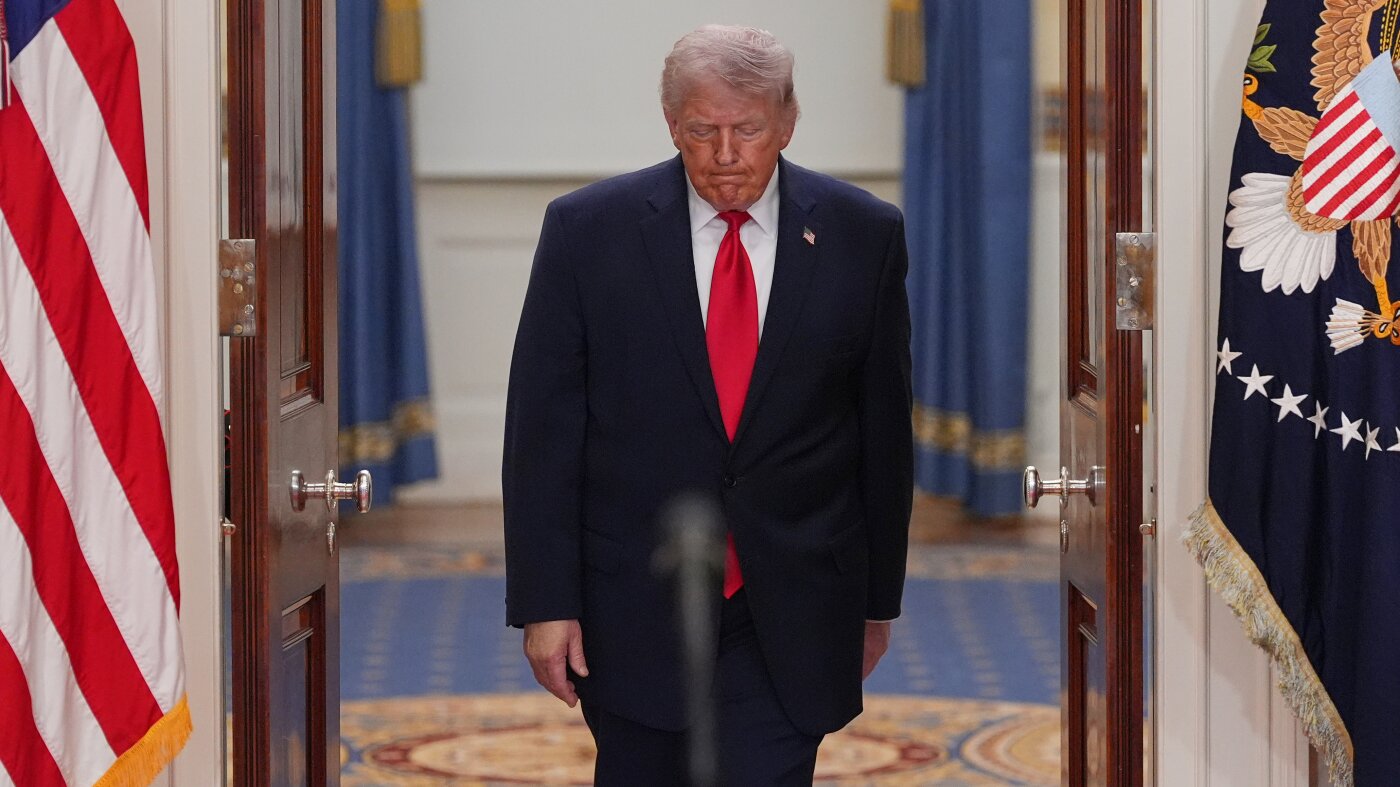
Judge halts Trump effort requiring colleges to show they don’t consider race in admissions

Trump says ‘America needs God’ in Good Friday message touting ‘resurgence of religion’
Fact check: How can a country actually withdraw from NATO?
-

 South-Carolina7 days ago
South Carolina vs TCU predictions for Elite Eight game in March Madness
-

 Education1 week ago
Video: Transgender Athletes Barred From Women’s Olympic Events
-

 Miami, FL1 week ago
Jannik Sinner’s Girlfriend Laila Hasanovic Stuns in Ab-Revealing Post Amid Miami Open
-

 Minneapolis, MN1 week ago
Boy who shielded classmate during school shooting receives Medal of Honor
-

 Vermont7 days ago
Skier dies after fall at Sugarbush Resort
-

 Politics7 days ago
Trump’s Ballroom Design Has Barely Been Scrutinized
-

 Atlanta, GA7 days ago
Fetishist ‘No Kings’ protester in mask drags ‘Trump’ and ‘JD Vance’ behind her wheelchair
-
 Entertainment3 days ago
Inside Ye’s first comeback show at SoFi Stadium