Lifestyle
Ken Burns’ ‘American Revolution’ will make you think differently about U.S. history


The Death of General Mercer at the Battle of Princeton, January 3, 1777, by John Trumbull, ca. 1789-1831
Alamy Stock Photo/PBS
hide caption
toggle caption
Alamy Stock Photo/PBS
Documentary producer and director Ken Burns came to prominence 35 years ago with The Civil War, a massively popular multi-part nonfiction series on PBS. His latest effort is a six-part series called The American Revolution.
By focusing on the Revolutionary War, Burns is revisiting some very familiar territory. His long and impressive filmography includes a history of Congress, and biographies of Thomas Jefferson and Benjamin Franklin. He’s done deep dives into American military conflicts, including World War II and the Vietnam War.
Throughout his career, Burns has developed and perfected the tricks of his particular trade: the evocative use of music and quotations from speeches and correspondence; the use of actors to read the words of historical participants; the zooming in and out to reveal key details in period photos; and the painstaking attention to sound effects, from birds to bullets, to help bring those images to life.

All of that knowledge, and all of those gimmicks, are utilized in The American Revolution, an exceptional work about the founding of our country. It’s written by Geoffrey C. Ward, who wrote The Civil War and many other Burns documentaries, including the ones on Congress and Thomas Jefferson. And it’s co-directed by Sarah Botstein and David Schmidt, both of whom have worked with Burns for years.
But The American Revolution presents a challenge that even The Civil War did not. No photographs, period. To compensate, Burns and company use war re-enactors and place them in the actual historical locations.

On many — let’s say most — documentaries using a similar technique, the effect can be cheesy. But in The American Revolution, the directors avoid showing the faces of the actors re-enacting battle movements. Instead, parts of their bodies are shown in intense close-up: a bandaged hand here, a muddy boot there. Elsewhere, in an approach that borders on pure art, the directors use drones to capture the action from high, high above. It’s unusual — and beautiful.
Battles are the surprisingly dominant ingredient of this series. The American Revolution goes into more detail about individual battles than I ever learned in my own American history classes — but new and vintage maps, animated to show troop positions and movements, make it all very clear, and very vibrant. The actors quoting from the historical participants, and the historians interviewed to comment on the action, do the rest. Peter Coyote, the actor who has narrated many Burns documentaries, does so again here. He’s got a great voice for it, and leans into all the difficult place names, and people’s names, with confident authority.

In their various war documentaries, Burns and his team always have focused as much on the ground troops as on the generals — often much more so, telling their story from the bottom up, rather than the top down. The American Revolution does both: We hear important observations from George Washington and Benjamin Franklin, but also from Native Americans, revolutionary women, enslaved people and others not always given voice in such narratives.
In addition, the program’s historians make us think differently about the history we’re witnessing. In the colonies, those who were faithful to the crown were called Loyalists, and those against them called themselves Patriots. This series humanizes both sides, and also explains why some Native tribes, including the Shawnees, sided with the British in hopes of protecting their own lands.
The sheer number of the battles, and the details about them, attest to how hard our ancestors fought for the notion of a Federalist society. At the end, The American Revolution reminds us that the quest to maintain that society, and to strive to achieve a more perfect union, is far from over.

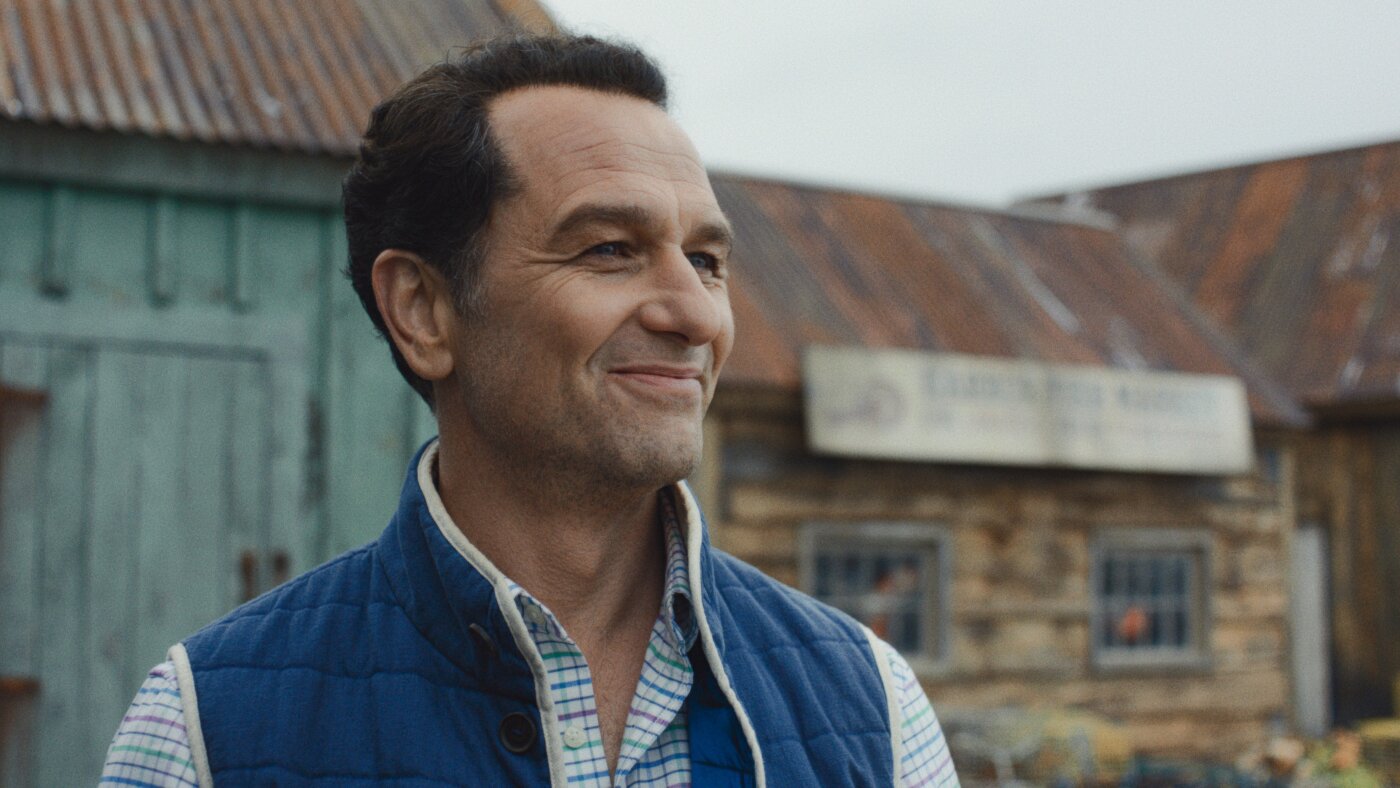
Matthew Rhys was nominated for his role in Widow’s Bay.
Apple TV
hide caption
toggle caption
Apple TV
The 2026 Emmy nominations are here. We’re unpacking the record-breaking nominations for Hacks, plus a big day for Widow’s Bay, The Pitt, and The Bear. We’ll also talk about the snubs and make some early predictions of who will win.
Connect with Pop Culture Happy Hour:
Letterboxd / Facebook
Our weekly newsletter
Support Pop Culture Happy Hour+


Can you say no to a friend’s wedding?
Getty Images/Getty images
hide caption
toggle caption
Getty Images/Getty images
Are we spending too much on other people’s weddings?
Going to a friend’s weddings can be so fun and meaningful… but it can also really hurt your wallet. A survey by LendingTree found that 31% of people who had been to a wedding in the past five years had accrued debt to attend. So what’s driving up the cost of weddings for guests? And what makes it so hard to say no to these expenses?
Brittany breaks it down with Allyson Rees, senior analyst at trend forecasting firm WGSN, and Annie Joy Williams, assistant editor at The Atlantic.
This episode was produced by Liam McBain, with additional support from Corey Antonio Rose. It was edited by Neena Pathak. Our Supervising Producer is Cher Vincent. Our Executive Producer is Barton Girdwood. Our VP of Programming is Yolanda Sangweni.
-
Lifestyle39 minutes ago
We unpack the 2026 Emmy nominations : Pop Culture Happy Hour
-

 Technology47 minutes ago
Get a $30 credit when you reserve Samsung’s upcoming Galaxy phones
-

 World54 minutes ago
Critics say Turkey’s verbal attacks on Israel have crossed into antisemitism
-

 Politics57 minutes ago
WATCH: Dana White drops 2028 hints while raving about his favorite Trump cabinet secretary
-

 Health1 hour ago
Katie Couric couldn’t remember the year or the president during frightening brain episode
-

 Sports1 hour ago
Justin Verlander announces he will retire after this season: ‘I’ve realized that time has come’
-

 Technology1 hour ago
Apple AI security update proves hackers move fast
-
 Business1 hour ago
Fire-damaged Pacific Palisades shopping center sets reopening date

