During the first dark days of the COVID-19 pandemic, in March 2020, information about staying safe rolled out on a daily and sometimes hourly basis in Vermont. Hard enough to keep up with for English speakers, it was less accessible to Vermonters who spoke different languages.
Burlington-based social worker and videographer Alison Segar says she began worrying for family, friends and clients with limited English and limited reading and writing skills.
“I was really concerned about how they were going to gather information about what seemed to be this completely terrifying virus that was sweeping the world,” she says. “So I really had the idea, like, how can we make, you know, audiovisual kind of messages.”
Advertisement
Alison Segar began the Vermont Language Justice Project during the COVID-19 pandemic.
Segar says she started working from her kitchen, talking over Zoom with community partners to work on messaging and produce COVID-19 safety videos in 10 different languages. Thus the Vermont Language Justice Project (VLJP), initially called the Vermont Multicultural Coronavirus Task Force, was born, with Segar as its director.
“The translators were sending them out to their communities, the school districts were sending just the audio files out through robocall systems,” Segar says.
Local Kenyan American singer-songwriter KeruBo was among those involved in the earliest stages of VLJP. KeruBo is also a caseworker for the Association of Africans Living in Vermont, helping people who arrive as refugees get settled and thrive here.
Part of her work, she says, is disseminating information to the community — like through the 2021 music video, “Chanjo.”
Advertisement
“There were antivaxxers out there who don’t care for, you know, taking the vaccine,” KeruBo says. ”And so I thought, ‘Hey, why don’t I make a video, a song music video that would help, you know, help my community.”
In the video, KeruBo is surrounded by dancers as she sings in Swahili, encouraging viewers to get the COVID-19 vaccine to save lives. At one point in the video, KeruBo gets her own COVID-19 shot.
“They saw me actually taking the vaccine, and I didn’t suddenly have like five heads or things that people were being told out there,” she says. “They started to feel a little bit comfortable to participate in taking the vaccine.”
KeruBo, who is the Swahili translator for the Vermont Language Justice Project and is also a caseworker for the Association of Africans Living in Vermont.
That kind of responsive, on-the-ground outreach to refugee and immigrant communities is what Vermont Language Justice Project Director Alison Segar says VLJP did as the pandemic stretched out. And initially, VLJP did this work for free.
Advertisement
Then, Segar says, the Vermont Department of Health realized what they were doing.
“And [when they] knew that we were really kind of doing their job for them, they absolutely stepped in and gave some money,” she says. “So that we could pay our translators for the work that they were doing.”
In 2021, Segar says the VLJP received nearly $330,000 from the Department of Health through a CDC COVID-19 Health Equity grant. Thanks to that money and some additional grants, she says they now have three full-time staffers, and their videos are available in 18 different languages and sometimes American Sign Language.
“We’ve made over 140 videos in any one language,” Segar says.
Advertisement
All these videos have a combined 227,000-plus views. And they’re no longer just about COVID-19. In addition to covering of-the-moment topics like the solar eclipse or flood safety, they also tackle ongoing, everyday topics — like how to pick up medication from the pharmacy, information about ticks, and tips for how parents can talk with and listen to their kids.
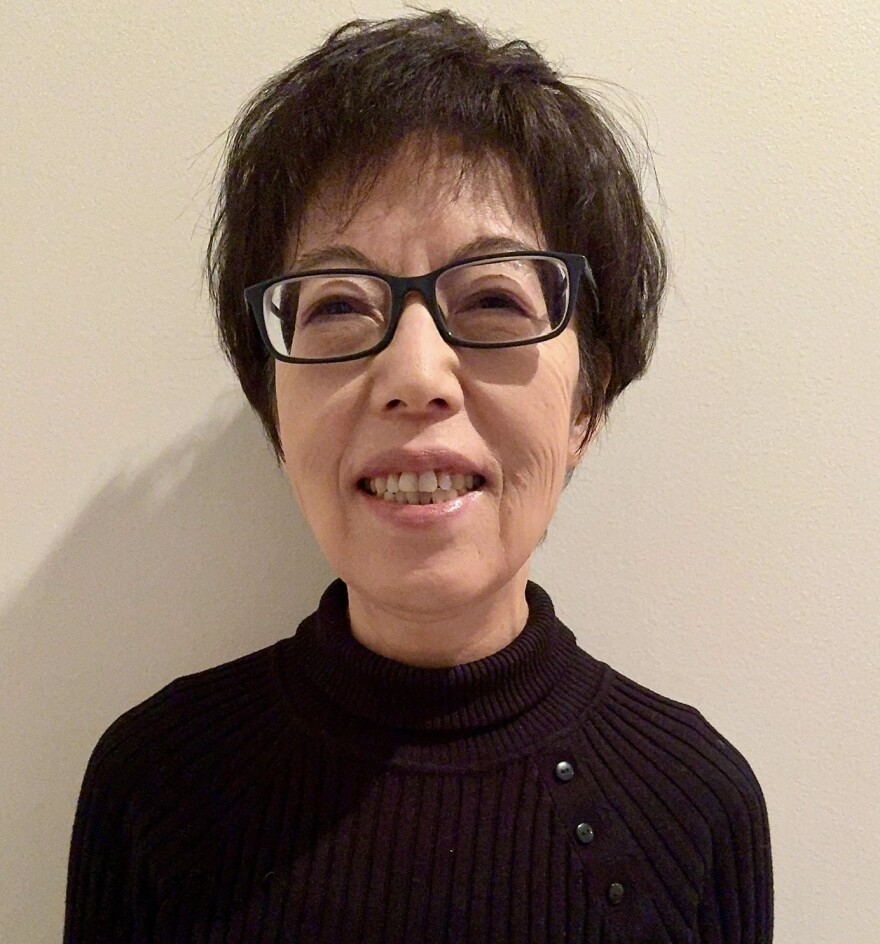
“Each time I send out the video, share with them, and they all get back to me, say, ‘It’s really good,’” saysLili Feng, who serves Chinese communities through VLJP. She says there’s a particular need to address language and cultural barriers among the families who operate Chinese restaurants in Vermont.
“A lot of them tell me, ‘Lili, you know, I have eyes, I cannot read. I have a mouth, I cannot talk. I have ears, I don’t understand,’” Feng says.
Lili Feng serves Chinese communities through the Vermont Language Justice Project.
VLJP translators like Feng are acting as trusted messengers and cultural liaisons to communities that the Vermont Department of Health has struggled to reach on its own. That’s according to Sara Chesbrough, who is the health equity team lead for the Division of Family and Child Health at the health department.
Advertisement
“Everyone needs to stay safe and healthy,” Chesbrough says. “In emergency situations or public health crises, not having that information available to them is inequitable, but also puts lives at risk. So this was really, to me, life and death.”
The challenge, though, is that the major chunk of money the VLJP relies on, that CDC COVID-19 grant, is running out. Segar expects it to dry up by December. And she says the VLJP is looking everywhere for more funding.
Chesbrough, who is the health department’s point of contact for VLJP grant funds, says she hopes programs in the department and across state government, nonprofits and community organizations can chip in.
“I’m not quite sure, you know, how that would look from place to place, but it would be really amazing for them to be able to sustain funding to continue their work,” she says.
The Vermont Language Justice Project’s funding is an open question. But according to testimonials from people working in Vermont’s health, refugee resettlement and equity organizations, the project’s services are vital — and there would be a void without them.
Advertisement
“This was a resource that didn’t exist prior to the Vermont Language Justice Project,” saysCheryle Wilcox, the director of mental health collaborations at the Department of Mental Health. “At this point, you know, having things in different languages and interpreting them, like it’s not an extra thing. It’s something we should be doing.”
Underneath KeruBo’s “Chanjo” YouTube video about the COVID-19 vaccine, there are dozens of comments expressing gratitude. The messages are from Swahili speakers, English speakers and from people in other states who say they work with refugee communities.
“I just think that when people hear their mother tongue first, it’s so grounding. It makes them feel like … ‘I’m part of this culture, of this community, too. That I matter, that someone is paying attention to what I’m going through,’” KeruBo says.
She adds that providing information this way works — and that it should be supported.
Have questions, comments or tips? Send us a message.
Vermont’s barn preservation effort is getting a fresh coat of energy as the state opens applications for the 2026 Vermont Barn Painting Project.
The initiative offers reimbursement to farm families for painting and minor repairs that help maintain historic barns, according to a community announcement. Funding comes from the A. Pizzagalli Family Farm Fund, and ten barns will be selected for support this year.
The announcement notes that the program continues a long-running effort supported by Angelo Pizzagalli and the family fund. The fund has been involved in barn restoration work for years, evolving into the microgrant format now being used to help farm families manage the upkeep of large, aging structures.
Advertisement
Applications are open through April 30 and will be reviewed as they arrive, according to the announcement. Incomplete submissions will not be considered.
Interested barn owners may apply online or email Scott Waterman at Scott.Waterman@vermont.gov for more information.
This story was created by Dave DeMille, ddemille@gannett.com, with the assistance of Artificial Intelligence (AI). Journalists were involved in every step of the information gathering, review, editing and publishing process. Learn more at cm.usatoday.com/ethical-conduct.
A person holds a giant penny at a mock funeral for the coin, which was discontinued in 2025, in front of the Lincoln Memorial in Washington. AP Photo/Julia Demaree Nikhinson
What good is a penny at this point? Penny candy is a thing of the past, and a modern-day penny-pincher wouldn’t get very far if this were their get-rich strategy.
(This newsletter, though, costs you less than a penny. Chip in if you can.)
U.S. mints no longer make pennies, a decision that saves taxpayers an estimated $56 million annually. When the U.S. Treasury Department announced the country would stop minting them, it marked the end of an era — sorta.
Though those pesky copper-colored coins remain in circulation, some businesses, both in Vermont and nationwide, have begun experiencing penny shortages.
Advertisement
Enter H.837. The bill outlines a plan that could allow retailers to phase out the penny by rounding up or down cash transactions to the nearest nickel.
Other states, including Arizona and Indiana, have passed rounding legislation, and a handful of others are considering it. As written, Vermont’s bill wouldn’t require rounding, a similar approach favored in other jurisdictions.
Some Vermont businesses have already adopted rounding. But lobbyists for Vermont businesses say some of their members fear the practice — without explicit state blessing — could open a business up to a lawsuit over alleged unfair and deceptive practices.
Worried or not, rounding will likely become more necessary as pennies get harder to find, Maggie Lenz, a lobbyist for the Vermont Retail and Grocers Association, told the House Commerce and Economic Development Committee Tuesday. She encouraged the state to create a rounding framework, but discouraged lawmakers from making such a program mandatory.
Rep. Tony Micklus, R-Milton, agreed that rounding should be optional, but said the state should mandate a specific rounding framework for the businesses that choose to round.
Advertisement
H.837’s approach, which would round down totals ending in 1,2,6 and 7 cents, and round up totals ending in 3, 4, 8 and 9 cents, would seem to be the fairest to consumers and businesses, those who testified agreed.
But the change is likely not net neutral. Zachary Tomanelli, a consumer protection advocate for the Vermont Public Interest Research Group, cited a Federal Reserve study that indicated rounding could cost consumers $6 million annually nationwide. That’s because businesses price goods in ways that tend to lead to rounding up.
He called the cost modest and said he generally supported the bill.
Despite H.837 not making it past the crossover deadlines, there’s still hope that pennies might make it into Vermont’s currency cemetery. Rep. Michael Marcotte, R-Coventry, the commerce committee’s chair, said his committee could stick the rounding legislation in the Senate’s economic development bill.
That said, you might not want to ditch your pennies quite yet.
Advertisement
In the know
Here are some numbers for you: Between 2012 and 2022, Vermont’s primary care workforce declined by 13%. In that same time period, the specialist workforce grew by 23%. That’s according to testimony Jessa Barnard, with the Vermont Medical Society, gave to lawmakers in the House Health Care Committee Tuesday. She said the numbers are reflective of a trend in medicine nationwide, attributed to the fact that primary care docs often make less but pay the same high cost for medical school as their peers in more specialized roles.
In Vermont, Barnard said that this widening gap is leading to a particularly acute shortage. According to a report her organization put out in 2022, the state needs 115 primary care providers to meet the national benchmark for our population size. That figure includes OBGYNs, pediatricians and family medicine docs. By 2030, as our state’s population grows even older, the Vermont Medical Society expects the state to need 370 more primary care physicians to meet the national benchmark.
— Olivia Gieger
Sen. Alison Clarkson, D-Windsor, spoke with members of the House Commerce and Economic Development Committee Tuesday afternoon about S.327, an economic development bill that supports a number of public resources for business owners across the state.
The bill has had a tough go of it so far.
Advertisement
Clarkson handed out copies of what she referred to as “the actual bill,” which meant the package voted out by her own Senate Economic Development Committee before being “pretty much fully gutted” on its way through the Senate Appropriations Committee.
In a tight budget year, she said, this bill’s focus was on “supporting what works really well” for Vermont businesses. For Clarkson, that means continuing to invest in the initiatives like the Vermont Economic Growth Incentive program, a set of grants to help businesses expand in the state, which is scheduled to end in January. The Senate, she pointed out, has voted to extend the program for several years in a row, most recently through S.327.
“I am charging the House with doing the same thing,” she said.
Clarkson is also in favor of deepening the state’s relationships with outside investors by funding state delegates abroad. Vermont, she argued, should have more well-placed representation in areas like Québec — which this bill would provide for — and in the future Taiwan, which recently pledged to invest heavily in U.S. tech industries.
“We need somebody whose hand is up saying ‘yes, over here!’” Clarkson said.
Advertisement
House commerce members met informally with a delegation from Taipei later Tuesday.
— Theo Wells-Spackman
On the move
The Senate advanced a bill Tuesday that would allow parents in Essex County to pay tuition to send pre-K students to New Hampshire schools.
In Vermont’s most rural county, families struggle to access pre-K programs, at least on this side of the border.
But S.214, legislation originally proposed by Sen. Kesha Ram Hinsdale, D-Chittenden Southeast, would allow for a handful of families near the New Hampshire border in Essex County to tuition their pre-K-aged children to New Hampshire schools, Sen. Steve Heffernan, R-Addison, said on the Senate floor.
Advertisement
Kindergarten through grade 12 are already able to tuition to New Hampshire schools.
The Senate will need to vote on the bill once more before sending it to the House.
Vermont and the federal government faced off Monday over the state’s first-in-the nation law aimed at forcing polluters to pay for the effects of climate change with the Trump administration warning it would spur “the type of chaos that the Constitution is designed to prevent.”
The hearing before Judge Mary Kay Lanthier of the U.S. District Court for the District of Vermont comes as the administration has unleashed a broad assault on state-based climate efforts, including suing to invalidate the Vermont law establishing a “climate superfund” to recoup money from the oil and gas industry.
The Biden appointee did not tip her hand, pressing attorneys for the state and the federal government over whether the state is within its rights or stepping on federal authority. The administration is challenging a similar law in New York, and a ruling against Vermont would likely jeopardize that law and chill efforts in other states to adopt climate superfunds.
Advertisement
Vermont argued the law — “a modest action” — was passed by state lawmakers in 2024 to help raise money to deal with climate change.