Vermont
Green Mountain Mysteries: A Taxonomy of Vermont Noir


For a small state (pop. 647,064), Vermont looms large in literature. Not only do we claim the second highest per capita number of working writers in the country, behind only Washington, D.C., but we can claim Robert Frost, Sinclair Lewis, Dorothy Thompson, Shirley Jackson, Chris Bohjalian, Julia Alvarez, and Rebecca Makkai, as full- or part-time residents of our state.
Article continues after advertisement
While the state has historically had an extremely low crime rate (though we have had sensational and violent murders that have rocked our communities), it has been host to many fictional horrors and murders. The landscape of Vermont lends itself well to made-up mystery. Our mountainous terrain creates a sense of remoteness, a feeling that we’re beyond the reach of many traditional forms of law enforcement. Our location at the edge of the country, just an hour or two’s drive to Quebec for most Vermonters, opens up the omnipresent possibility of escape. And our sparsely populated hills and valleys mean you may not be seen doing whatever dastardly thing you want to do. It seems like Vermont has been having a bit of a moment in the thriller space—Bestselling writers like Riley Sagar, Dervla McTiernan, Shari LaPena, and Jessa Maxwell have recently set books here, making good use of that remoteness, of our close-knit communities and our otherworldly natural beauty.
In his 1930 story/novella, The Whisperer in Darkness, H.P Lovecraft (who stayed in Vermont for short periods) establishes a version of Vermont that would take hold in readers’ imaginations, describing “the wild domed hills of Vermont” where the narrator, a folklorist and professor of literature at a Massachusetts college, arrives to meet up with a man named Henry Akeley. Akeley claims to have important information about the discovery of the remains of strange beings washing down into the valleys in the aftermath of the 1927 flood. Lovecraft creates a sense of gothic claustrophobia in Akeley’s ancestral farmhouse and the narrator’s descriptions of Vermont as a barely tamed wilderness makes his tale of horror all the more possible — and chilling.
Twenty-one years later, the writer Shirley Jackson, who lived with her husband, Stanley Edgar Hyman, and their children in North Bennington, Vermont while he was teaching at Bennington College, took inspiration from the mountains of Southwestern Vermont and the Berkshire Mountains of Massachusetts to create the eerie landscapes in her stories and novels. Her 1951 novel Hangsaman was inspired by the real-life disappearance of a Bennington College student and her classic short story The Lottery was suggested by a shopping trip out and about in North Bennington.
Donna Tartt’s 1992 novel of collegiate murder, The Secret History, was many readers’ introduction to the fourteenth state. I love the book with a white-hot passion and reread it at least once a year. Tartt, who lived in Vermont for four years while a student at Bennington College, weaves and unweaves a deconstructed murder plot, the solution revealed on the very first page, the turns of the path to get there snaring readers and not letting them go until the final, devastating word. The novel is unrelentingly brilliant and she draws, in elegiac description, the landscape of Southwestern Vermont up against the New York border. On my frequent revisitings, I have sometimes wished that Tartt had lavished as much care and characterization on the town part of the fictional Hampden’s town and gown dynamic as she does on the gown. In many ways though, that’s the point of a novel set firmly within the consciousness of a Californian experiencing Vermont for the first time and if her Vermonters can seem one dimensionally backwards sometimes, Tartt’s poetic descriptions of the Vermont winter are so specific and so rapturous you can feel her own wonder as a Southerner experiencing the season during her time in Bennington coming off the page.
It’s always interesting to see what writers not familiar with the state do with our ingredients. A few years ago, the Burlington Free Press hilariously rated some of the astonishing number of Hallmark channel Christmas movies set in Vermont. (My takeaway is that writers should always research the governance structures of places they want to write about but do not live in; one of the many ways these movies reveal themselves as not written by locals is by assigning mayors and city councils to little towns of 1,500 people.)
And although we love the series, my family had fun speculating about why its producers tried to claim that the not-really-Vermonty-looking New England location of the boarding school in the Addams Family spinoff Wednesday was in the Green Mountain State. (“Um, I really, really like this, but why are there Pilgrims?” one of my children was heard to say.)
Actually, there seem to be quite a few novels set at fictional Vermont boarding schools, which is curious since . . . we don’t have many of them. We have a small number of public-private academies and two smaller boarding schools in the southern part of the state, but for reasons having to do with Vermont’s location, historic economy, and post-Civil War depopulation, the state is not dotted with tony or possibly spooky private secondary boarding schools the way New Hampshire, Massachusetts, and Connecticut are.
My very favorite Vermont mystery and horror tales capture the odd contradictions and dichotomies of my state—its remoteness and its worldliness; its natural beauty and its stark post-industrial downtowns and renewed downtown areas; its wild forests and its manicured pastures and farmland; its frigid winters and its glorious short summers; its progressive (by reputation and—mostly—in reality) present and the shameful periods and incidents in its distant and not-so-distant past; its warm welcome and its derision of flatlanders and those who (like me) weren’t born here; its flinty independence existing side-by-side with a longstanding communitarian impulse. There are many non-resident writers who have done the work to learn about our quirky, wonderful state but I’d like to highlight some Vermont writers, whether they’ve been here for generations or a few months or years.
Here then is a non-exhaustive list of some crime fiction—or novels with crimey elements—set in Vermont and written by Vermont or Vermont-adjacent writers. Cozy, stark, gritty, dark, funny, disturbing—there’s something here for every taste:
The novels of Howard Frank Mosher
They’re not crime fiction, but Mosher’s wonderful twelve novels, set in the fictional Kingdom County, are a first stop for anyone wanting to know more about the state, its personalities, and the parts of our history we highlight and hide. Many of the novels have plenty to offer for fans of crime fiction, in particular 1977’s Disappearances, about a bootlegging father and son duo, and 1989’s wonderful A Stranger in the Kingdom (inspired by actual events) in which a Black minister arrives in a small Vermont town and is charged with adultery and murder.

The Joe Gunther series by Archer Mayor
In his thirty-three police procedurals featuring Vermont Bureau of Investigation detective Joe Gunther, Mayor has crisscrossed the state (and sometimes beyond), finding confounding murders for his protagonist to solve. The pleasures of the series are many and many readers around the world have been introduced to Vermont and Joe’s home of Brattleboro through the books. Joe is an imperfect and sympathetic protagonist and the cast of characters contains friends, neighbors, and fellow investigators of Joe’s who have come to feel like family to Mayor’s readers. The novels don’t bow to Vermonty stereotypes, instead exploring a grittier side of our hamlets than the one found in tourism brochures, and his characters inhabit real towns, cities, and landscapes representing a broad swathe of the state’s residents.
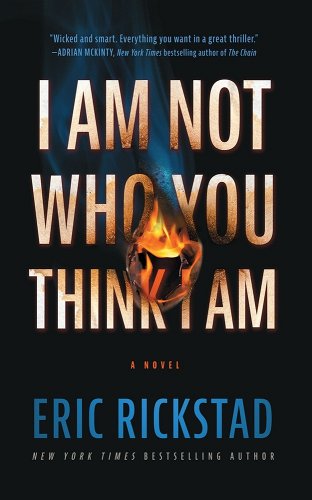
The Canaan Series, I Am Not Who You Think I Am and other novels by Eric Rickstad
Rickstad, who lives in the Bennington area, is the author of a series and standalone novels set in his home state, as well as his latest, Lilith, about a mother seeking justice after a school shooting. The Canaan novels, set in the actual Northeast Kingdom town of Canaan, feature good investigators going after very bad killers. Rickstad’s version of Vermont is multi-layered. There are no picture-postcard scenes and his characters move about in real darkness. He writes with a critical eye but also a reverence for his home. 2021’s I Am Not Who You Think I Am is a gothic treat, set in the Bennington area and featuring a once-extravagant mansion that hides terrible secrets.

The Hector Bellevance series by Don Bredes
I really enjoyed Bredes’s three-book series, published in the 2000s, and always wished there had been more of them. Bellevance returns to his hometown in northern Vermont after a career as a homicide detective in Boston. The novels balance small-town intrigue with authentic emotional darkness as Hector, appointed town constable in the first novel, solves mysteries, grows vegetables, dates and then marries the town’s reporter, and learns that, as Robert Frost wrote, “Home is the place where, when you have to go there, they have to take you in.”

The Sleepwalker by Chris Bohjalian
The work of bestseller Bohjalian has long spanned genres and categories, but his breakout hit Midwives, is set in Vermont and he has set books in his home state throughout his career. 2017’s The Sleepwalker, set in a fictional Vermont village, is perhaps the novel most firmly within the crime category. The daughter of a missing woman who was a habitual sleepwalker gets too close to the investigation into her mother’s disappearance. Bohjalian channels Hitchcock, using the trappings of small town Vermont and the natural landscape of Addison County to ratchet up the tension.

Jennifer McMahon’s suspense novels
McMahon, who was until recently a Vermont resident, has set most of her thrillers in the state. Many have supernatural elements and she uses the region’s history in powerful ways, dredging up mystery and murder from the past to populate the present with ghosts. Her characters are complicated and beautifully drawn and she is especially interested in children and young people and the way childhood trauma can stalk us as adults.

The Shana Merchant series by Tessa Wegert
Connecticut author Wegert’s series is actually set in the Thousand Islands region of upstate New York, but her wonderful protagonist, New York State Senior Investigator Shana Merchant, grew up in Swanton, Vermont, and Wegert, who was raised just over the border from Vermont in Quebec, captures the particular feel of the town, the specifics of border-spanning Lake Champlain, and the surrounding landscape on Vermont’s boundary with Quebec. Vermont also provides much of the origin story for Shana’s narrative arc, in ways I won’t detail for fear of spoiling her twisty plots. The sixth Shana Merchant mystery, The Coldest Case, comes out in November.

The Edie Brown series by Trish Esden
Edie Brown, an art and antiques dealer (like Esden), returns to her family home in northern Vermont after a scandal involving her mother and solves mysteries related to rare and stolen objects. Esden knows her subject well and Edie’s explorations provide an in-depth look at contemporary Vermont, as well as the state’s multi-faceted history.

We Love to Entertain by Sarah Strohmeyer
Strohmeyer, the author of the Bubbles Yablonsky series, as well as many other works of fiction and suspense, sets her home renovation show thriller in the fictional town of Snowden, Vermont, uncovering long-held secrets amongst the townspeople. She pokes delicious fun at reality show culture, writes with authority about the administration and business dealings of a small Vermont town, and readily captures the dynamics between locals and out-of-staters interested in cheap rural real estate.

The Mercy Carr and Troy Warner series by Paula Munier
Munier, who lives just over the border in New Hampshire, sets her series in a fictional Vermont town based on Manchester, Vermont. Former Army MP Mercy Carr and her retired military bomb-sniffing dog Elvis solve mysteries with game warden — and Mercy’s love interest — Troy Warner. Munier really nails the dynamic of a shire town and its relationship to the grittier places around it. Many of her plots take place in Vermont’s wilderness areas and there is great appeal here for dog lovers.
The Perfect Liar by Thomas Christopher Greene
Greene, the author of six novels and a recent collection of essays, and the founder of the Vermont College of Fine Arts, sets this domestic thriller in Burlington, Vermont’s largest city. A newly married couple who are keeping secrets from each other find that their pasts have followed them to Vermont when a strange note, reading I Know Who You Are, appears on their door.
And two books not out yet by Vermont authors:
Vermont author Margot Harrison, who has written four YA novels, makes her adult debut with The Midnight Club. It isn’t out until September, but it has a really compelling concept: in order to solve the long-ago murder of one of their own, a group of friends who went to college together in Vermont meet for a reunion and take a drug that allows you to relive your memories.
Also out in September is Vermont author Kara Lacey’s Caught on Camera, about a grieving widow who moves to a fictional village in Vermont and joins a local camera club. This sounds like a fun take on the cozy, village mystery.
***


Powerball, Mega Millions jackpots: What to know in case you win
Here’s what to know in case you win the Powerball or Mega Millions jackpot.
Just the FAQs, USA TODAY
The Vermont Lottery offers several draw games for those willing to make a bet to win big.
Those who want to play can enter the MegaBucks and Lucky for Life games as well as the national Powerball and Mega Millions games. Vermont also partners with New Hampshire and Maine for the Tri-State Lottery, which includes the Mega Bucks, Gimme 5 as well as the Pick 3 and Pick 4.
Drawings are held at regular days and times, check the end of this story to see the schedule.
Here’s a look at July 16, 2026, results for each game:
Winning Gimme 5 numbers from July 16 drawing
08-10-35-36-37
Check Gimme 5 payouts and previous drawings here.
Winning Pick 3 numbers from July 16 drawing
Day: 4-3-2
Evening: 3-4-4
Check Pick 3 payouts and previous drawings here.
Winning Pick 4 numbers from July 16 drawing
Day: 5-7-1-5
Evening: 6-6-9-0
Check Pick 4 payouts and previous drawings here.
Winning Millionaire for Life numbers from July 16 drawing
09-21-29-52-57, Bonus: 05
Check Millionaire for Life payouts and previous drawings here.
Feeling lucky? Explore the latest lottery news & results
Are you a winner? Here’s how to claim your lottery prize
For Vermont Lottery prizes up to $499, winners can claim their prize at any authorized Vermont Lottery retailer or at the Vermont Lottery Headquarters by presenting the signed winning ticket for validation. Prizes between $500 and $5,000 can be claimed at any M&T Bank location in Vermont during the Vermont Lottery Office’s business hours, which are 8a.m.-4p.m. Monday through Friday, except state holidays.
For prizes over $5,000, claims must be made in person at the Vermont Lottery headquarters. In addition to signing your ticket, you will need to bring a government-issued photo ID, and a completed claim form.
All prize claims must be submitted within one year of the drawing date. For more information on prize claims or to download a Vermont Lottery Claim Form, visit the Vermont Lottery’s FAQ page or contact their customer service line at (802) 479-5686.
Vermont Lottery Headquarters
1311 US Route 302, Suite 100
Barre, VT
05641
When are the Vermont Lottery drawings held?
- Powerball: 10:59 p.m. Monday, Wednesday, and Saturday.
- Mega Millions: 11 p.m. Tuesday and Friday.
- Gimme 5: 6:55 p.m. Monday through Friday.
- Lucky for Life: 10:38 p.m. daily.
- Pick 3 Day: 1:10 p.m. daily.
- Pick 4 Day: 1:10 p.m. daily.
- Pick 3 Evening: 6:55 p.m. daily.
- Pick 4 Evening: 6:55 p.m. daily.
- Megabucks: 7:59 p.m. Monday, Wednesday and Saturday.
- Millionaire for Life: 11:15 p.m. daily
What is Vermont Lottery Second Chance?
Vermont’s 2nd Chance lottery lets players enter eligible non-winning instant scratch tickets into a drawing to win cash and/or other prizes. Players must register through the state’s official Lottery website or app. The drawings are held quarterly or are part of an additional promotion, and are done at Pollard Banknote Limited in Winnipeg, MB, Canada.
This results page was generated automatically using information from TinBu and a template written and reviewed by a Vermont editor. You can send feedback using this form.

Sam Gabriels and Chrissy Bellmeyer were no strangers to living small. Before they met, Bellmeyer designed and lived in a tiny house on wheels and Gabriels spent four years living out of a van, looping the country to organize pop-up farm-to-table dinners alongside Michelin-starred chefs. So, when the couple bought a half-acre lot in Waitsfield, Vermont’s Mad River Valley in a development called the Waitsfield Ten, where neighbors help each other build, 800 square feet didn’t feel like a constraint.
Architectural designer and builder Andy White of Boreal Design started by creating a simple, 20-by-20-foot box that was drywalled, then painted, in a weekend. Inside it, White built the living spaces as independent, self-supporting platforms arranged at staggered heights. He describes the plan as a counter-clockwise spiral: Down one step from the entry into the living room, up two into the kitchen, up one more into the dining room.
The level variations define each space. “If built traditionally with two floor plates and 9-foot ceilings, the house would feel claustrophobic,” White says. “Here, you experience the full interior volume, with long sightlines from corner to corner.”
Without walls dividing the public spaces, rooms morph to fit current needs and individual elements do double or triple duty. For example, the open cubbies that store Gabriels’s vinyl collection are also perches for overflow dinner party guests in the dining room and extra seating in the living room. Initially, White worried — unnecessarily — that the living room was too small and lacked a wall for a television. The couple got a projector and screen, and noted that the deck expands the experience. The mechanicals and storage are under the floors.
Upstairs, the 8-by-12-foot space in front of the primary bedroom is both a closet/dressing area and mini lounge. In the morning, guests might wander over from the second bedroom to chat; during parties, it’s another spot to hang out. “We’re very open people, so it works for us,” Gabriels says. If things change, the couple could add standard-size French doors to hide their bed. The second bedroom, which already has a pocket door for privacy, could absorb the office nook beside it to become a larger bedroom.
The materials palette celebrates what’s commonly available: nothing is precious, everything is considered. Walls and ceilings throughout are CDX fir plywood — construction-grade sheathing that is normally hidden behind drywall. Structural fir posts, usually buried, are left exposed. The couple planed, sanded, and stained the posts and sanded all the plywood, removing lumberyard stamps. In place of galvanized joist hangers, White used inexpensive angle steel, spray-painted black. Running the length of the staircase and bracketing the bedroom thresholds, it’s the home’s signature accent. It matches the exterior siding — corrugated metal that is distinctive, inexpensive, easy to install, and low-maintenance.

Sustainability was non-negotiable. Fourteen-inch-thick, cellulose-filled walls push the dwelling past passive-house standards for insulation and airtightness. They also leave deep window sills that double as seating, plant shelves, and such. The utility bill for the all-electric home averages just over $100 per month (excluding internet).
Decor-wise, color does the talking. The bright yellow kitchen and pink-tiled bath are odes to homes that Gabriels admired in New Mexico, Oregon, and California. “We took a Pacifico beer bottle cap to Home Depot to find the right canary yellow for the kitchen cabinets,” Bellmeyer says.

White says his construction methods make it easy to add onto the home, although the couple has no plans to do so. Rather, they hope to build an ADU to offer housing to others in the community. “This is a mid-income development, making it cheaper than the median house price but not attainable for everyone,” Bellmeyer says.
Meanwhile, they’re grateful for White’s unconventional approach, fulfilling their wish list within the square footage their budget allowed.
White deflects the praise back onto the couple. “The home wouldn’t have come together the way that it did for anyone else; it’s very much theirs,” he says. “Chrissy and Sam’s vision, willingness to take risks and reimagine typical rooms, informed the design more than any specific space-saving or building strategy.”
Architectural designer and builder: Boreal Design, borealdesignvt.com
Cabinetmaker: Han Hewn, hanhewn.com

Marni Elyse Katz is a contributing editor to the Globe Magazine. Follow her on Instagram @StyleCarrot. Send comments to magazine@globe.com.
Vermont
Ben & Jerry’s Foundation says it will shut down amid legal dispute with parent company – VTDigger

The Ben & Jerry’s Foundation says it will shut down at the end of the year after its corporate parent cut off funding and evicted its three staffers Wednesday. The move leaves $600,000 a year in grants to Vermont organizations, and 40 years of the ice cream brand’s progressive mission, hanging on a judge’s future ruling.
“This is the other foot dropping in terms of the way Magnum is trying to destroy the social values of Ben & Jerry’s,” said Ben Cohen, co-founder of Ben & Jerry’s Homemade, in an interview Wednesday.
The Vermont-based iconic ice cream brand has been in a legal fight with its parent company, The Magnum Ice Cream Co. — an ice-cream spinoff of the larger corporation Unilever — since November 2024. Ben & Jerry’s alleges that the corporation overreached its control, pushing out the CEO and interfering with the brand’s political views. The question before a judge is whether the corporate parent had the authority to reshape governance and withhold funding from the foundation.
Amid the push-and-pull over governance, Unilever audited the foundation, which is the philanthropic arm of Ben & Jerry’s, in April 2025, finding conflicts of interest and a lack of governance and financial control.
Liz Bankowski, president of the foundation’s board of trustees, said in an interview that Unilever withheld the philanthropy’s funding late last year and ordered foundation staff to vacate its corporate office in South Burlington by July 15 because of governance issues the audit raised. This led the foundation’s leaders to join the ongoing lawsuit, fought by the ice cream brand’s independent board, in an effort to retain funding. The lawsuit is pending in the U.S. District Court for the Southern District of New York.
While the foundation’s leadership is framing the decision to cease operations as the only option after Unilever withheld funding, an unnamed spokesperson for Magnum wrote in a statement to VTDigger that the shuttering is “entirely down to the Trustees and their decision to ignore the findings of an independent audit and failure to put in place basic good governance; much to our dismay.”
Since the audit, the foundation has adopted a conflict of interest policy, but “the bottom line was that unless we changed our board, they were going to continue to withhold funding,” Bankowski said.
Cohen described the audit as “a bunch of trumped-up charges.”
“The foundation has been independently audited every year,” he said. “I think that Magnum was searching in vain for some illegal or unethical activities. I think they found none.”
Since Ben & Jerry’s sold the ice cream business to Unilever in 2000, the corporation has given $60 million to the foundation. The philanthropic arm has operated for 40 years, supporting the ice cream brand’s progressive mission by offering financial backing to social justice organizations across the country. The foundation does not have an endowment and is reliant on the funding its parent company gives annually, outlined in its merger contract.
A chunk of that funding, $600,000 a year, goes to Vermont organizations such as the immigrant farmworker rights organization Migrant Justice and the LGBTQ+ nonprofit Outright Vermont, according to foundation leaders.
“We fill a particular niche that not a lot of other funders fill,” said Rebecca Golden, the foundation’s director of programs, who has worked at the organization for 34 years.
Golden is one of three foundation staffers whose last day in the physical office is Wednesday, following orders from Magnum to vacate. Although Magnum did not directly address its vacate order in its statement to VTDigger, the spokesperson wrote that the foundation’s leaders recently “took the position that its staff are not Ben & Jerry’s employees, despite utilising Ben & Jerry’s offices and systems.”
Golden described the possible shutdown as an “enormous loss” that will not only affect the organizations that the foundation supports but also Ben & Jerry’s employees who “feel very proud of being a part of the foundation.”
“It’s been a really long year, so there’s been a lot of emotions — the whole gamut, as we like to say of the seven stages of grief. But I think at this point we’re sort of in the acceptance phase,” she said.
The Magnum spokesperson indicated that the work of the foundation will continue even if its leaders decide to cease operations at the end of the year, writing that the company is “firmly committed to funding a grant-giving foundation, supported by appropriate governance controls to ensure it is living by its values.”
But Cohen is not confident that Magnum will uphold the values of the Ben & Jerry’s Foundation in the corporation’s continued philanthropic efforts.
“What are they going to fund? I have no idea. My guess is that they would not be looking to fund entities that are opposed to the status quo,” Cohen said.
The foundation’s leaders have pointed to its support of Migrant Justice during a period when the farmworker organization was considering a boycott of Ben & Jerry’s as an example of their commitment to social justice. After immigrant farmworkers raised concerns about working conditions at farms supplying Ben & Jerry’s, the company joined a program that collaborates with farmworkers to strive for fair working conditions.
Political activism has been central to the Ben & Jerry’s brand since its founding. As a part of the ongoing lawsuit, Ben & Jerry’s alleged in a May filing that Magnum has been undercutting its social justice mission in order to “censor, intimidate and purge” the company’s independent board, which Cohen said was created to defend its progressive values.
Three of the board’s members, including one who has been an outspoken critic of Israel, were removed late last year after the parent corporation introduced a new set of governance practices. In its motion to dismiss the lawsuit, Magnum argues that it retains ultimate authority and the brand’s social mission must be nonpartisan.
As the lawsuit awaits a decision, Cohen, who is not a part of the suit, has created a campaign to “free Ben & Jerry’s,” amassing around 160,000 signers for its petition demanding that Magnum sell Ben & Jerry’s to a “group of values-aligned investors.”
“The very values-led business model that built Ben & Jerry’s into this amazing, phenomenal brand is the very thing that Magnum is currently destroying,” Cohen said.
-

 Los Angeles, Ca32 minutes ago
LADWP begins long-term repairs after West Hollywood water main rupture
-

 Detroit, MI56 minutes ago
Livestream: Mayor Sheffield, Detroit health chief to address wildfire smoke threat
-
 San Francisco, CA1 hour ago
A sculpture of a giant naked woman goes on sale in San Francisco. Bring a crane
-

 Dallas, TX1 hour ago
No ‘straight answer’: Why Pioneer Cemetery is the latest battleground at City Hall
-

 Miami, FL1 hour ago
TSA hosts news conference ahead of World Cup third place match at Miami Stadium
-

 Boston, MA1 hour ago
ICE Boston arrests Barbados national during targeted operations in Attleboro
-

 Denver, CO2 hours ago
Denver Broncos training camp is 2 weeks away
-

 San Diego, CA2 hours ago
Daily Business Report: July 17, 2026, San Diego Metro Magazine

