Vermont
Final Reading: ‘You’ve seen so much’ — Springfield’s Alice Emmons is dean of the Vermont House – VTDigger


For more than 40 years, Rep. Alice Emmons, D-Springfield, has roamed the Statehouse halls representing her hometown.
That makes her the longest-tenured member currently in the House, earning her the title of “dean.”
For the last 20 years, she’s led the House Corrections and Institutions Committee. She knows things few others do — like how the state has gone about building new prisons in the past.
In fact, before she joined the committee as vice chair, Emmons said there wasn’t a committee even paying attention to prisons.
“There was no legislative committee that worked directly with the Department of Corrections, with their policies and their programming and staffing issues, none of that,” she recalled. “I kept pushing and pushing and saying, ‘look, we’ve got a department here in state government that we have no legislative knowledge of.’”
Emmons has seen more change than just her committee’s focus. The general fund is no longer a measly $300 million. No one plays cards in the cardroom anymore. Fewer reporters stake out the Golden Dome.
But there’s something else more disconcerting to her.
“The biggest change is people don’t build the relationships with each other that they used to,” Emmons said. Issues once hashed out face-to-face now get resolved over email or quick moments in the hallway. A faster pace of work means less time to get to know each other, she said.
Once upon a time, lawmakers spilled into the Thrush Tavern next door for drinks after work. More people stayed in Montpelier, according to Emmons, and brought their spouses along with them. Nights would extend as lawmakers invited each other over for dinners.
“It’s those connections that just solidify what the General Assembly is,” Emmons said, “and I think now we’ve become too separated because we’re so tied to our cellphone.”
As a vault of institutional knowledge, Emmons sees it as her responsibility to keep some of the old ways alive. Her advice to newcomers? “To listen, to listen, to listen. And don’t keep talking.”
Much of what Emmons knows she learned from listening, watching committee chairs run a room. She recalled serving with Michael Obuchowski, former House speaker and a previous dean.
“He said to me, ‘the dean of the house is the conscience.’ And that resonated with me,” she said, “because you’ve seen so much.”
She paused, tears welling in her eyes.
“The thing I’m most proud of is being able to represent my hometown here, and just being able to contribute to the state that I love. Because I’m a Vermonter, and I’ve always wanted to contribute back to my state.”
—Ethan Weinstein
In the know
The Trump administration’s haphazard explanations for slashing thousands of federal jobs have state officials reexamining how they’d review fired federal workers’ claims for unemployment insurance, Michael Harrington, Vermont’s labor commissioner, told lawmakers on Friday.
Harrington told the House Commerce and Economic Development Committee that it could be difficult for the state to determine, based on accounts provided by the feds, whether employees were truly fired for misconduct — which, if true, could make them ineligible to receive support.
CNN reported Thursday that while the Trump administration has said it’s taking aim only at “low-performing” employees or those on probationary status, many of its firing decisions have been more arbitrary and in fact led to some workers being fired who had received strong recent performance reviews.
“Our team in the (unemployment) division, and myself included, will be ensuring to instruct our staff that they need to take a hard look at these,” Harrington said. “They should not just be relying on what is put on the separation form — they would need additional information to justify that this was, again, a for-cause separation.”
Harrington said he wasn’t aware of a wave of firings impacting most federal workers in Vermont so far. There are about 6,800 federal workers across the state, he said.
— Shaun Robinson
Food for thought
As part of his “education transformation” plan, Gov. Phil Scott has put the state’s universal school meals program on the chopping block. According to Scott, nixing the program would help bring down education property taxes. He’s also argued the program is regressive.
As a line item, universal school meals would cost Vermont about $18.5 million next year, inside the more than $2 billion education fund. To cut it, Scott would need the Legislature’s sign-off.
Scott has said that if the Legislature is opposed to the repeal, lawmakers need to find an equivalent way to lower property taxes — something that hasn’t yet happened.
Meanwhile, support for the program appears strong and growing.
At the Statehouse Thursday, a group of anti-hunger advocates, school officials and lawmakers declared their intent to maintain the free meals initiative. House and Senate Democratic leadership have united in support of universal meals, and some Republicans have joined their colleagues across the aisle. In a straw poll, the House Agriculture, Food Resiliency and Forestry Committee voted unanimously to support the program.
According to advocates who spoke Thursday, the program costs about $30 per Vermonter annually. The Agency of Education says it saves families $1100 per student on the cost of food.
Read more about the debate here.
—Ethan Weinstein
Corrections section
Yesterday’s newsletter misidentified a speaker testifying before the House Energy and Digital Infrastructure Committee. The speaker was the Agency of Digital Services Secretary Denise Reilly-Hughes.
— VTD Editors



Powerball, Mega Millions jackpots: What to know in case you win
Here’s what to know in case you win the Powerball or Mega Millions jackpot.
Just the FAQs, USA TODAY
The Vermont Lottery offers several draw games for those willing to make a bet to win big.
Those who want to play can enter the MegaBucks and Lucky for Life games as well as the national Powerball and Mega Millions games. Vermont also partners with New Hampshire and Maine for the Tri-State Lottery, which includes the Mega Bucks, Gimme 5 as well as the Pick 3 and Pick 4.
Drawings are held at regular days and times, check the end of this story to see the schedule.
Here’s a look at March 27, 2026, results for each game:
Winning Vermont Mega Millions numbers from March 27 drawing
13-27-28-41-62, Mega Ball: 16
Check Vermont Mega Millions payouts and previous drawings here.
Winning Gimme 5 numbers from March 27 drawing
05-10-18-38-39
Check Gimme 5 payouts and previous drawings here.
Winning Pick 3 numbers from March 27 drawing
Day: 0-0-8
Evening: 7-6-3
Check Pick 3 payouts and previous drawings here.
Winning Pick 4 numbers from March 27 drawing
Day: 3-5-4-1
Evening: 9-5-7-6
Check Pick 4 payouts and previous drawings here.
Winning Millionaire for Life numbers from March 27 drawing
06-09-28-33-46, Bonus: 04
Check Millionaire for Life payouts and previous drawings here.
Feeling lucky? Explore the latest lottery news & results
Are you a winner? Here’s how to claim your lottery prize
For Vermont Lottery prizes up to $499, winners can claim their prize at any authorized Vermont Lottery retailer or at the Vermont Lottery Headquarters by presenting the signed winning ticket for validation. Prizes between $500 and $5,000 can be claimed at any M&T Bank location in Vermont during the Vermont Lottery Office’s business hours, which are 8a.m.-4p.m. Monday through Friday, except state holidays.
For prizes over $5,000, claims must be made in person at the Vermont Lottery headquarters. In addition to signing your ticket, you will need to bring a government-issued photo ID, and a completed claim form.
All prize claims must be submitted within one year of the drawing date. For more information on prize claims or to download a Vermont Lottery Claim Form, visit the Vermont Lottery’s FAQ page or contact their customer service line at (802) 479-5686.
Vermont Lottery Headquarters
1311 US Route 302, Suite 100
Barre, VT
05641
When are the Vermont Lottery drawings held?
- Powerball: 10:59 p.m. Monday, Wednesday, and Saturday.
- Mega Millions: 11 p.m. Tuesday and Friday.
- Gimme 5: 6:55 p.m. Monday through Friday.
- Lucky for Life: 10:38 p.m. daily.
- Pick 3 Day: 1:10 p.m. daily.
- Pick 4 Day: 1:10 p.m. daily.
- Pick 3 Evening: 6:55 p.m. daily.
- Pick 4 Evening: 6:55 p.m. daily.
- Megabucks: 7:59 p.m. Monday, Wednesday and Saturday.
- Millionaire for Life: 11:15 p.m. daily
What is Vermont Lottery Second Chance?
Vermont’s 2nd Chance lottery lets players enter eligible non-winning instant scratch tickets into a drawing to win cash and/or other prizes. Players must register through the state’s official Lottery website or app. The drawings are held quarterly or are part of an additional promotion, and are done at Pollard Banknote Limited in Winnipeg, MB, Canada.
This results page was generated automatically using information from TinBu and a template written and reviewed by a Vermont editor. You can send feedback using this form.

This story, by Report for America corps member Carly Berlin, was produced through a partnership between VTDigger and Vermont Public.
The Vermont Senate passed a bill on Thursday that will delay the implementation of Act 181, a contentious 2024 law that overhauled the state’s land use permitting system.
But that vote followed several rounds of heated debate over rolling back or further postponing land conservation measures, fueled by a Tuesday protest attended by hundreds of rural landowners who called on lawmakers to repeal the law altogether.
The sparring over Act 181 has surfaced a rural-urban divide at the Statehouse. Rural conservatives argue that the law’s benefits flow only to Vermont’s larger cities and towns, and that its conservation rules place an undue burden on private property owners. Democrats have defended the law’s goals to both boost housing in downtowns and villages and increase environmental protections elsewhere, though they’ve heeded calls to pump the brakes.
Details: Vermont is overhauling Act 250. Here’s what the development maps look like so far
On the Senate floor, Republicans contended that new development regulations set forth in Act 181, which bolster protections over sensitive ecosystems, effectively undermine personal property rights. Sen. Steve Heffernan, R-Addison, framed the issue around affordability — wealthy second home-owners can afford more land-use permits, he said, but regular Vermonters can’t.
“We must ask ourselves … are we protecting Vermont’s lands, or pricing Vermonters out of it?” Heffernan said.
Brian Stevenson
/
Vermont Public
Democrats, who control the chamber, countered that the new rules are critical for preserving Vermont’s landscape for the good of the broader community.
“Future generations may not have the same ecosystems that we have access to because of development,” said Sen. Becca White, D-Windsor.
The bill in question, S.325, is a set of tweaks to Act 181, which the Legislature passed over Republican Gov. Phil Scott’s objections two years ago.
Act 181 aimed to encourage more homebuilding in already-developed areas of Vermont by removing state level review under Act 250, Vermont’s signature land use law. At the same time, the law beefed up protections for to-be-determined critical natural resources.
The 2024 law mandated a first-of-its-kind mapping effort that will essentially dictate where future development will be subject to Act 250 scrutiny, and where it won’t be, through a tiered land-use classification system.
That mapping process is still underway, and the board overseeing it has asked for more time to complete its work — in part because of feedback from municipal officials and rural residents who objected to early drafts.
S.325 would postpone the implementation of many pieces of Act 181. It would extend temporary housing exemptions, delay the start of a new “road rule” that would require a permit for private road construction over a certain length in much of the state until 2030 and pushes out the beginning of new “Tier 3” rules. These rules would heighten scrutiny over building near headwater streams, habitat connectors and rare natural communities.

Brian Stevenson
/
Vermont Public
The fate of Tier 3 garnered the most attention on the Senate floor. Republicans backed an amendment on Wednesday to scrap the tier entirely.
Sen. Russ Ingalls, R-Essex, a cosponsor of the amendment and an organizer of Tuesday’s rally, argued that the entirety of his Northeast Kingdom district would fall into the tier and suggested that a majority of Vermonters currently live in Tier 3 areas.
“We should be able to live like the rest of Vermont does, and not be restricted,” Ingalls said.
Yet the bounds of Tier 3 have not yet been set, and the Land Use Review Board, which is creating its boundaries, has said the tier will only make up a small portion of land in Vermont. The board is also looking to limit what kinds of construction would trigger the need for an Act 250 permit in these zones.
“It may be that a single house, for instance, depending on where it is, doesn’t even matter. It won’t be counted,” said Sen. Seth Bongartz, D-Bennington, one of the architects of Act 181 when he served in the House.
The amendment to roll back Tier 3 ultimately failed in a party-line vote on Wednesday. A separate amendment to further delay its implementation failed on Thursday. Another Republican-backed amendment that was adopted eases state regulations for housing in rural areas that lack local zoning.
“We absolutely hear the concerns from different corners of the state of Vermont and we take those seriously.”
House Speaker Jill Krowinski, D-Burlington
Scott, Act 181’s longest-standing detractor, vetoed the legislation in 2024, arguing that it was a “conservation bill” that did little to boost housing growth in rural areas. The governor said at a Thursday press conference that he thinks the bill to delay its implementation is “moving in the right direction, but we need more.”
Scott was pleased to see protesters this week heeding his message.
“I’ve said this before: this hurts rural Vermont. And now they’re just waking up to the fact that, yes, indeed, it will,” Scott said.
The bill now heads to the House. House Speaker Jill Krowinski, D-Burlington, said she sees the need to delay Act 181 — and that she hears the upswell of pushback against the law from beyond the Statehouse.
“We absolutely hear the concerns from different corners of the state of Vermont and we take those seriously,” Krowinski said.

Brian Stevenson
/
Vermont Public
S.325 will land in the House environment committee, helmed by Rep. Amy Sheldon, D-Middlebury, one of Act 181’s initial drafters. Sheldon understands the rationale to postpone pieces of its implementation, she said in a Wednesday interview. But she is not open to rolling back elements of the 2024 law.
Sheldon believes that some of the arguments raised by opponents of the law are overstated and misguided. She still stands by the core aims of the law, she said, gesturing toward Vermont’s state motto.
“We’re balancing freedom and unity, right? That’s what we do,” Sheldon said.

Vermonters protest against deportations, stand in solidarity with LA
Vermonters marched up Church Street in solidarity of Los Angeles protestors and against the federal government’s immigration policies June 10.
Large scale anti-Trump protests are coming to Vermont for a third time, with at least 46 No Kings protests planned across the state for March 28.
This round of No Kings protests might be the biggest so far: organizers anticipate it’ll be “one of the largest single-day nonviolent nationwide protests in U.S. history,” with more than 3,000 events already planned across the country on March 28.
“As President Trump escalates his attempts to control us, it is on us, the people, to show that we will fight to protect one another and our country,” the “No Kings” website says. “If he believes we will roll over and allow him to take our freedoms, he is mistaken. We are coming together again on March 28 because we know we can overcome this repression when we unite.”
In Vermont, protests are being held in all corners of the state, from Bennington to Newport. There are about six protests listed in Burlington, including a march to City Hall, a New North End Honk and Wave and a rally at the intersection of Shelburne Rd and Hannaford Drive.
Here’s what to know ahead of the protests.
What are ‘No Kings’ protests and what does it mean?
In June 2025, large crowds of Vermont residents took part in the first round of “No Kings Day” protests, planned the same day as the U.S. Army’s 250th anniversary celebration and the president’s birthday.
Another wave of nationwide “No Kings” protests came several months later in October, in which over seven million Americans joined events in all 50 states, according to the organization. In Burlington, thousands of protesters brought homemade signs protesting Trump, dressed in colorful inflatable costumes, played music and chanted.
Organizers behind the No Kings protests say that it is a “peaceful movement” to push back on President Donald Trump’s policies, including on immigration, foreign policy and the economy.
“With every ICE raid, every escalation abroad, and every abuse of power at home, Americans are rising up in opposition to Trump’s attempt to rule through fear and force. Each day Trump crosses a new red line, and more people are deciding they’ve had enough,” said Ezra Levin, co-executive director of Indivisible, one of the many organizations backing the mass protests.
Others include American Civil Liberties Union, the Human Rights Campaign, MoveOn and 50501.
No Kings protests near me: See events, rallies in Vermont
As of 2 p.m. on March 26, there were 46 No Kings events planned in Rhode Island for March 28. Some towns and cities are holding multiple events.
Here’s a list of events in Burlington:
- Burlington New North End Honk and Wave: 11a.m. – 12:30 p.m., 1127 North Ave, Burlington
- “Invite your friends and neighbors and meet up at 11 a.m. at 1127 North Avenue along the sidewalks at the entrances of the Ethan Allen Shopping Plaza (home to Hannaford Supermarket and many other shops). Bring your signs, banners, noise makers, and American flags,” the listing reads. “This joyous, non-violent honk and wave action will wrap up at 12:30 p.m. Following the Honk and Wave, participants are welcome to proceed to City Hall Park to join the conclusion of the North End and South End marches.”
- Patchen Road Overpass: 11 a.m. – 1 p.m., Patchen Road & Landfill Road, South Burlington
- “We’ll be unfurling our huge NO KINGS banners on the overpass as 4,000 – 5,000 vehicles per hours pass below on Interstate 89. Bring a sign, bring an American flag, and bring a friend,” reads the listing. It says to register and to follow the guidance of safety marshals, and encourages attendees to carpool as “parking is tight.”
- Burlington South End March: 11 a.m. – 1:30 p.m., Calahan Park, 45 Locust St, Burlington
- “We’ll be marching from Calahan Park to City Hall Park,” says the event description. “If you don’t want to march or are unable please join us at City Hall park at 12:30 p.m. for singing, chanting and more.”
- South Burlington: 11 a.m. – 12:30 p.m., Intersection of Shelburne Rd and Hannaford Dr in South Burlington, 1001 Shelburne Rd, South Burlington, VT
- “Join Champlain Valley Indivisible at the intersection of Shelburne Rd and Hannaford Drive in South Burlington to stand up and speak out against this administration’s unjust and cruel acts of violence,” the event listing says, adding that those interested should register.
- Burlington March to City Hall: 11:30 a.m. – 12:30 p.m., 1 S Prospect St., Burlington
- Burlington Old North End March: 11 a.m. – 1:30 p.m., Roosevelt Park, 57 Oak St., Burlington
- “We’ll be marching from Roosevelt park to City Hall Park,” the listing says. “If you don’t want to march or are unable please join us at City Hall park at 12:30 p.m. for singing, chanting and more.”
Here’s a list of all the towns in Vermont holding protests so far, plus when, where and other helpful information listed on the event pages or provided in press releases:
- Bellow Falls
- Bennington
- Bradford
- Brandon
- Brattleboro
- Burlington
- Charlotte
- Chester
- Essex Junction
- Fair Haven
- Fairfax
- Hardwick
- Hartford
- Huntington
- Jericho
- Manchester
- Middlebury
- Milton
- Milton
- Montpelier
- Morrisville
- Newbury
- Newport
- Northfield
- Randolph
- Randolph
- Richmond
- Rutland
- Saint Johnsbury
- Shelburne
- South Burlington
- South Burlington
- St. Albans
- Wallingford
- Waterbury
- Westfield
- Williston
- Wilmington
- Windsor
- Winooski
- Wolcott
- Woodstock
More events may be planned. You can check the map on the No Kings website to see if your town is holding a protest.
What time are No Kings events?
“No Kings” protests in Vermont start at various times on March 28, with some events planned at 10 a.m. and others planned throughout the afternoon, according to the online map of events.
Contributing: Paris Barraza

Baseball is changing forever with robot ump challenges

How the landmark verdict against Meta and YouTube could hit their businesses

Florida manosphere influencer Clavicular arrested on suspicion of battery

Gen Z is the loneliest generation. Here’s what can help

Millions are expected to protest Trump during Saturday’s ‘No Kings’ rallies

Florida High School Football Rankings: Top 25 teams – Oct. 21

How old is Bo Nix? What to know about Oregon quarterback ahead of 2024 NFL Draft

Cleary's 21 help Le Moyne down Central Connecticut State 69-64 in OT

99th annual Pony Swim held in Virginia

Indiana Members Credit Union announced as new anchor tenant at Bottleworks District

Hundreds of thousands march through London in stand against the far right

2 students killed, 7 other people injured in Tennessee bus crash during school field trip

Dem senators dodge crucial question on illegal alien accused of killing Chicago college student

EU Parliament unblocks key political hurdle in digital euro talks
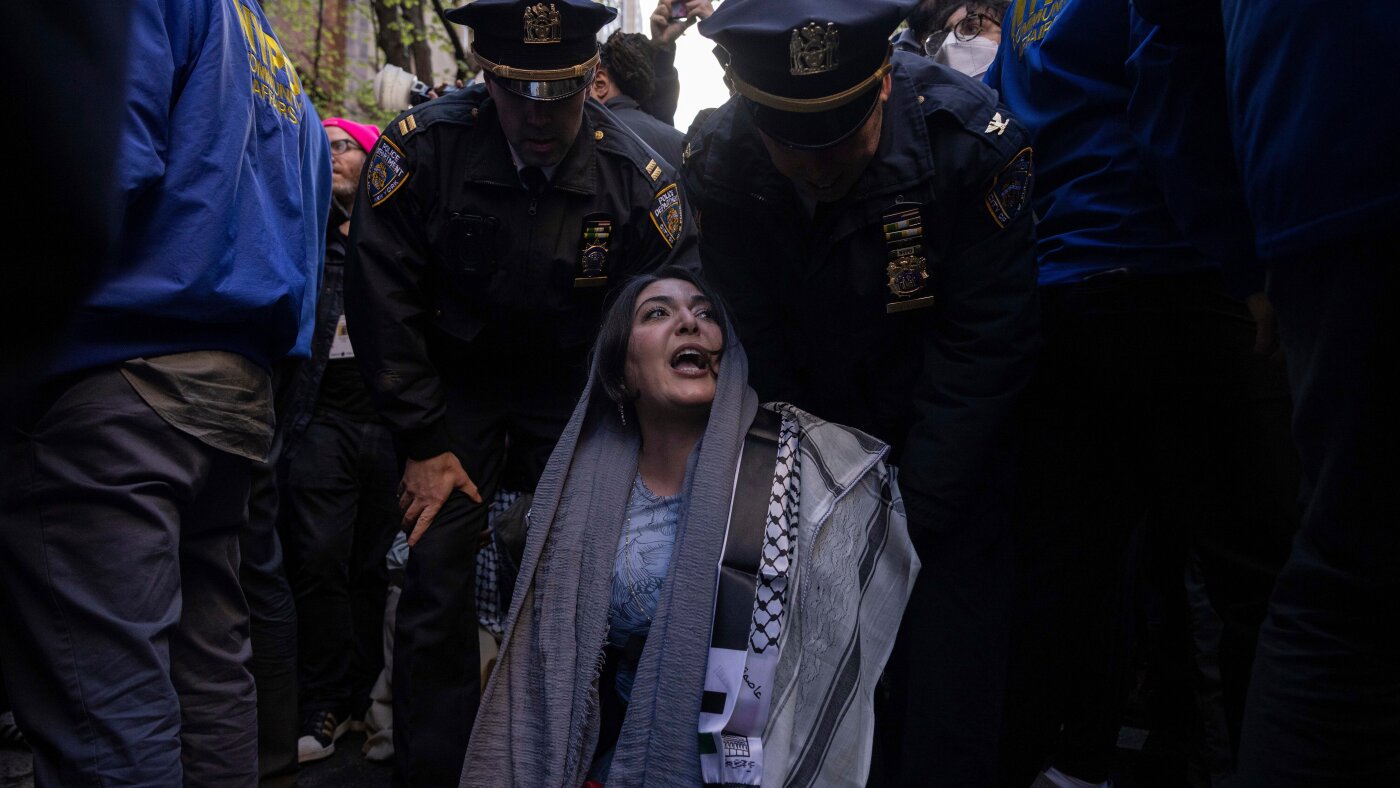
Man arrested in plot to firebomb Palestinian activist’s home after undercover op
-

 Detroit, MI1 week ago
Drummer Brian Pastoria, longtime Detroit music advocate, dies at 68
-

 Movie Reviews1 week ago
‘Youth’ Twitter review: Ken Karunaas impresses audiences; Suraj Venjaramoodu adds charm; music wins praise | – The Times of India
-

 Sports1 week ago
IOC addresses execution of 19-year-old Iranian wrestler Saleh Mohammadi
-

 New Mexico6 days ago
Clovis shooting leaves one dead, four injured
-
 Business1 week ago
Disney’s new CEO says his focus is on storytelling and creativity
-

 Tennessee5 days ago
Tennessee Police Investigating Alleged Assault Involving ‘Reacher’ Star Alan Ritchson
-

 Technology6 days ago
YouTube job scam text: How to spot it fast
-

 Texas1 week ago
How to buy Houston vs. Texas A&M 2026 March Madness tickets