Vermont
City Center vision coming together, South Burlington officials say – VTDigger


This story by Liberty Darr was first published in The Other Paper on Nov. 21
As the state’s second-largest city, South Burlington has for decades had plans for a downtown area ripe with commerce, community and connectivity and data now shows those plans are coming to fruition.
The idea for a thriving city center dates back 50 years when South Burlington was officially incorporated as a city in 1971. Those plans for a vibrant downtown began taking shape nearly 10 years later as the term “City Center” would appear in three master plans that followed.
But it wasn’t long ago that the heart of City Center, the roughly 100 acres wedged between Dorset and Hinesburg roads most notable for housing the state’s only Target and Trader Joe’s, looked much different than it does today.
While the city hit a milestone in 2021 when it cut the ribbon on brand new municipal and other community buildings at 180 Market St., Ilona Blanchard, community development director and an employee of the city for over a decade, remembers that even paving that street was a major accomplishment for the city.
“If you were here 15 years ago, half of Market Street was paved and the other half was a dirt road,” she said, letting out a laugh. “When I came here, we had to borrow a grader from an adjoining community to grade it.”
But after what state and local officials recognize as a critical housing shortage, data shows that South Burlington has become one of the largest suppliers of new homes in the state.
A recent analysis put together by the Vermont Housing Financing Agency for the Department of Housing and Community Development, known as the “Vermont Housing Needs Assessment 2025-2029,” outlined staggering statistics for the state of just under 650,000 people.
In recent years, the report outlines that the supply of available homes has simply not kept pace with the increased demand to live in Vermont.
To accommodate projected growth in households living year-round in Vermont, replace homes that are lost from the housing stock due to disrepair, normalize vacancy rates and house the homeless, Vermont is likely to need an additional 24,000-36,000 total homes across the state over the next five years.
Without increased supply, Vermont’s home sale and rental markets will continue to grow even tighter than they currently are, the report says, with prices likely to continue to skyrocket and further intensify an affordability crisis throughout the state.
READ MORE
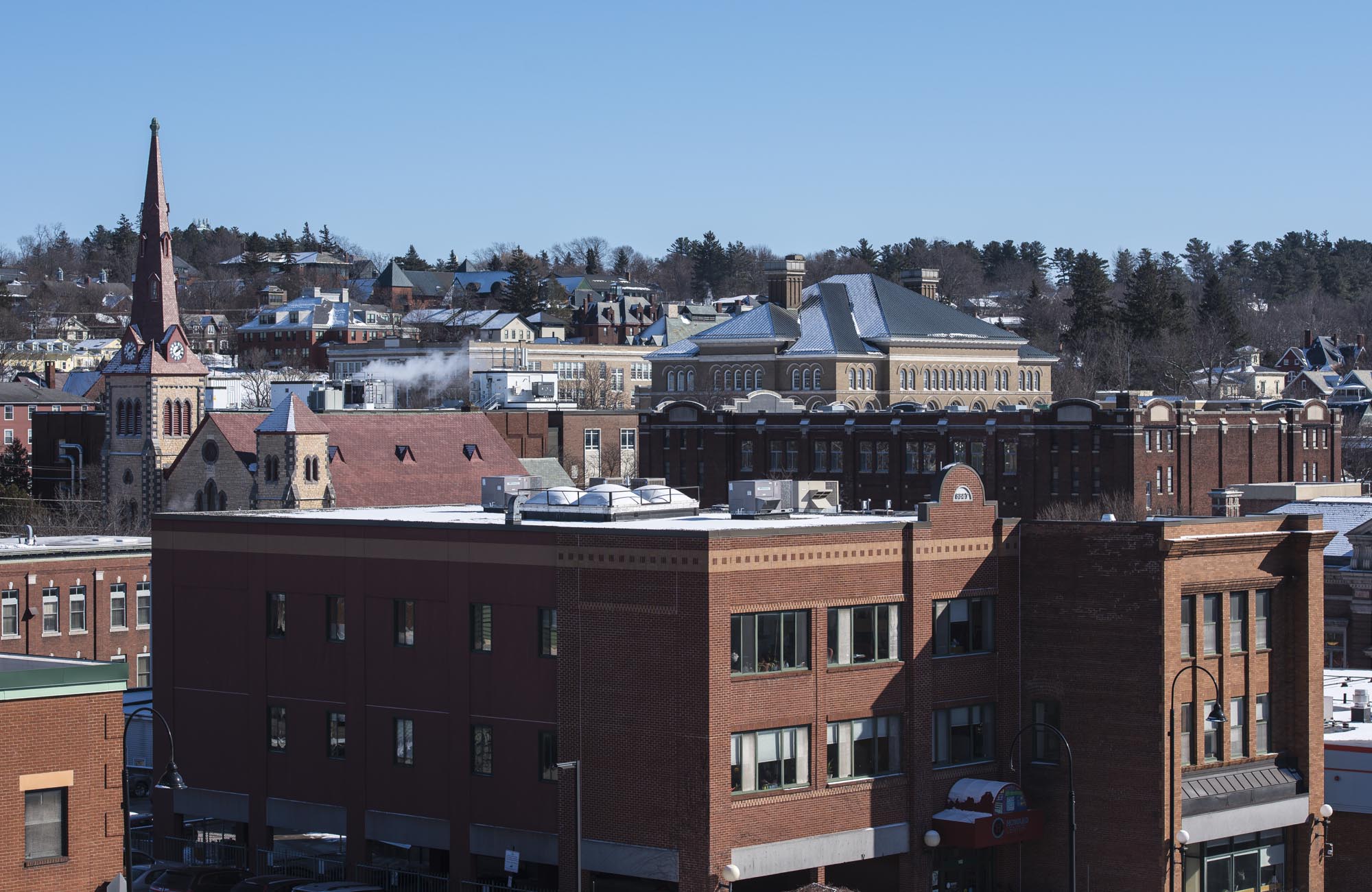
According to the report, Vermont’s homeowner vacancy rate — the number of homes on the market compared to the total number of actual households — is estimated at 1.2 percent, below the 2.0 percent rate considered indicative of a healthy housing market, with Chittenden County at a notably low vacancy rate of .5 percent, reflecting the high demand for homes in the region.
While the Legislature made monumental strides in housing legislation over the last two years — Act 47 and working to modernize Vermont’s 50-year-old land use law, Act 250 — meant to spur development and limit obstacles to building housing, a campaign, Building Homes Together, launched by Chittenden County Regional Planning, Champlain Housing Trust and non-profit developer Evernorth aims to build nearly 1,000 units of housing per year in the county over the next five-year period.
But in October, the group announced that Chittenden County had drastically failed to meet that goal with 720 units built in 2023.
Housing plans
Nearly 40 percent of those homes — 290 — were in South Burlington’s city limits. That trend, director of planning and zoning Paul Conner said, has been happening over the last 10 years and is something the city has specifically planned for and welcomed.
The boom can mostly be traced to 2012 when the city took steps to implement a financing model that city manager Jessie Baker said is one of the most powerful economic tools available to municipalities: tax increment financing or TIF. To most, the idea is mysteriously complex, but to city officials like Blanchard, that was the catalyst for much of the growth seen today.
The TIF district, a subset of the 300-acre City Center, was officially adopted by the city council in 2012 and allows the municipality to take out debt to build public infrastructure projects and pay off the debt using future tax revenue from new development.
The idea is that as the infrastructure is built and improved, it attracts private sector investment in new and renovated buildings and incrementally increases the value of the grand list, or the total value of all city property.
READ MORE

Since its inception, more than 500 homes have been built in the district; 187 are under construction, and 46 have been permitted and are awaiting construction. Of those, 139 are perpetually affordable. These numbers do not include the roughly 200 new homes built within City Center, but outside of the TIF district.
“When I think about the TIF district, I think about it as the kernel or the seed,” Blanchard said. “What we’re seeing right now is we have now established a downtown market in South Burlington, which we did not have before and the TIF district as an economic tool has established this form of the downtown. It’s the core of it. But that also means that it is blazing the way for other properties in the area to build on the success that is here.”
Baker noted that a large portion of these numbers comes from the University of Vermont and the University of Vermont Medical Center’s investment in housing but countered the common perception that since the institution’s faculty, staff and students have first-right of refusal to the housing, it’s not really adding positively to the housing stock.
“I think that’s a real misconception,” she said. “A lot of these folks are folks that will be otherwise living in our community, in other apartment buildings or condos or pricing out other folks who want to live here. It’s important to always note that adding capacity across the living spectrum is adding capacity. It’s not fighting between our neighbors on what capacity that is, whether it is affordable housing, student housing, designated housing, it is still adding new homes.”
Competing goals
But with that growth, both Baker and Conner noted that there is simultaneously an increased focus on things like environmental protection, climate resiliency and connectivity. All these are also areas of focus that the city’s planning department and commission focused on when crafting the new land use regulations that were just passed by the city council earlier this month. But the team also noted that the battle between the need for housing and protecting portions of Vermont’s landscape is not always easy to balance.
Like many neighboring communities, some residents in South Burlington have voiced opposition to development and lawsuits over environmental and aesthetic concerns have frequently ended up in court.
“Zoning is an incredibly strong tool to be strategic as a community,” Baker said. “I think South Burlington is really trying to thread that needle right now and actively participate in all the climate conservation efforts and the housing efforts, and I think that’s a hard conversation in our community, and that’s a hard conversation at the state level.”
While South Burlington is partly leading the way for housing goals in the county, the work to meet demand is not possible without collaboration with surrounding communities, Conner and Baker said, which reflects the way people inherently move through the county on a daily basis.
“They don’t live their daily lives within the bounds of one single municipality,” Conner said. “They use Chittenden County and beyond every day for their everyday needs. The community uses our core communities interchangeably every day, and so it’s therefore our responsibility collectively to make sure that the transportation, housing, the services, all that is provided to the way people live.”
The growth over the last 10 years is only set to continue as the city has plans for even more infrastructure projects — all approved by voters — to create a more walkable, thriving downtown and includes projects like the planned walking and biking bridge over I-89.
“It’s always really thrilling to go outside and to see people walking on Market Street and sitting at the bench in front of the library and city hall, seeing the seniors in the senior center,” Blanchard said. “Our downtown is about people, and it’s just so great to see people using it in the way that it was intended.”



MONTPELIER, Vt. (WCAX) – The state of Vermont wants more flexibility in how it charges for access to state parks.
Right now, fees are determined by location, size, and type of camping.
However, leaders say parking at state parks and ponds is seeing more foot traffic, and costs of maintaining them have gone up.
The Department of Forest Parks and Recreation wants to be able to price campsites and day-use parks more dynamically.
There’s no proposal to raise fees now, but if approved, some state parks could see increased fees depending on their popularity, the date, and location.
“It is trying to find that balance of covering costs, providing the service parkgoers have come to expect and making sure we aren’t creating unintentional barriers for people who want to enjoy our fabulous state lakes,” said Julie Moore, Vermont Natural Resources Secretary.
She adds that last year’s Vermont ‘Parks Forever’ initiative, which allows for people who receive three squares benefits free entry to parks, meant an additional 30,000 visits last year.
Copyright 2026 WCAX. All rights reserved.
Vermont
Hundreds of housing units in the works at closely-watched project in Burlington’s South End – VTDigger

This story, by Report for America corps member Carly Berlin, was produced through a partnership between VTDigger and Vermont Public.
A long-awaited housing development that could bring hundreds of new apartments to a series of empty lots in Burlington’s South End neighborhood is beginning to come together.
The first phase of the major public-private deal, called the South End Coordinated Redevelopment Project, got official sign-off from the Burlington City Council last month. The project’s backers have also scored key funding commitments from Treasurer Mike Pieciak’s office and state housing funding agencies.
The project on Lakeside Avenue is the beginning of “a neighborhood being born out of a big parking lot,” Burlington Mayor Emma Mulvaney-Stanak told city councilors in May.
City officials and developers hope the project could eventually include over a thousand homes, making it one of the largest developments in Vermont – and putting a considerable dent in the Queen City’s housing shortage. Regional planners estimate that Burlington needs to add between 3,500 and 10,500 homes by 2050 to get the housing market to a healthy state.
The development is possible, in part, because of a 2023 zoning change in the formerly industrial area that allows for some of the densest housing development in the state, according to local planners.
 100vw, 1200px”/><figcaption class=) A rendering of the South End Coordinated Redevelopment Project, courtesy of Andrew Foley, development director at Jonathan Rose Companies. Credit: GOA Architecture.
A rendering of the South End Coordinated Redevelopment Project, courtesy of Andrew Foley, development director at Jonathan Rose Companies. Credit: GOA Architecture.
The South End project’s backers include Champlain College, Champlain Housing Trust and Ride Your Bike LLC, the investors behind the nearby Hula coworking campus. They have brought on Jonathan Rose Companies, an affordable housing developer with projects from New York to California, as the lead developer. The South End project is the company’s first in Vermont.
The development agreement signed by city councilors in May greenlights the South End project’s first 204 units, estimated to cost roughly $100 million.
Per Burlington’s inclusionary zoning policy and state rules, at least 20% of the first round of apartments will be set aside as affordable. But the developers hope to secure enough funding to allow them to earmark a third of the 204 apartments with income restrictions, said Andrew Foley, director of development at Jonathan Rose Companies, in an interview. The development agreement offers the developers reduced city fees if the affordable units are priced even more modestly than required.
The lion’s share of the new apartments will be studios and one-bedrooms, Foley said. The building would include common social spaces for neighbors to gather, he added.
Like any large-scale housing project, the developers of the South End apartments are piecing together financing from a wide array of sources. They recently scored an $8 million low-interest loan from Pieciak’s 10% for Vermont program, along with a $6.7 million award from the Vermont Housing and Conservation Board to support 67 affordable apartments – including 10 reserved for people experiencing homelessness.
To build out new roads – along with wastewater connections and stormwater infrastructure meant to cut down on sewer overflows into nearby Lake Champlain – city officials are going after funding from a new state program. The Community and Housing Infrastructure Program, a tax-increment financing tool created by the Legislature last year, would allow the city and the developers to borrow the funds needed to build out the infrastructure against the development’s future property tax revenue.
READ MORE

City officials and the developers are working together to submit an application for this CHIP financing. The South End development could be the first project in the state to utilize the program after its launch in January.
“I think a lot of other potential applicants are kind of saying, ‘I wonder how that South End project works out’ – for us to maybe go first,” Foley said.
With an eye toward lowering the project’s carbon footprint, the development will be all-electric, Foley said. The developers are looking to use mass-timber construction techniques, he added – essentially using large, prefabricated wood panels in place of steel or concrete. They also want to construct a rooftop solar array, employ a geothermal heating and cooling system and promote a “car-light” neighborhood in close proximity to bike paths and transit routes.
The developers hope to close on their construction financing by the end of the year.
“Everyone’s eager to see the construction start and housing built, so we’re trying to move as fast as we can,” Foley said.
Powerball, Mega Millions jackpots: What to know in case you win
Here’s what to know in case you win the Powerball or Mega Millions jackpot.
Just the FAQs, USA TODAY
The Vermont Lottery offers several draw games for those willing to make a bet to win big.
Those who want to play can enter the MegaBucks and Lucky for Life games as well as the national Powerball and Mega Millions games. Vermont also partners with New Hampshire and Maine for the Tri-State Lottery, which includes the Mega Bucks, Gimme 5 as well as the Pick 3 and Pick 4.
Drawings are held at regular days and times, check the end of this story to see the schedule.
Here’s a look at June 2, 2026, results for each game:
Winning Vermont Mega Millions numbers from June 2 drawing
15-26-43-48-60, Mega Ball: 12
Check Vermont Mega Millions payouts and previous drawings here.
Winning Gimme 5 numbers from June 2 drawing
03-05-16-32-37
Check Gimme 5 payouts and previous drawings here.
Winning Pick 3 numbers from June 2 drawing
Day: 2-5-2
Evening: 5-8-6
Check Pick 3 payouts and previous drawings here.
Winning Pick 4 numbers from June 2 drawing
Day: 6-9-7-0
Evening: 3-4-1-3
Check Pick 4 payouts and previous drawings here.
Winning Millionaire for Life numbers from June 2 drawing
16-33-41-50-52, Bonus: 01
Check Millionaire for Life payouts and previous drawings here.
Feeling lucky? Explore the latest lottery news & results
Are you a winner? Here’s how to claim your lottery prize
For Vermont Lottery prizes up to $499, winners can claim their prize at any authorized Vermont Lottery retailer or at the Vermont Lottery Headquarters by presenting the signed winning ticket for validation. Prizes between $500 and $5,000 can be claimed at any M&T Bank location in Vermont during the Vermont Lottery Office’s business hours, which are 8a.m.-4p.m. Monday through Friday, except state holidays.
For prizes over $5,000, claims must be made in person at the Vermont Lottery headquarters. In addition to signing your ticket, you will need to bring a government-issued photo ID, and a completed claim form.
All prize claims must be submitted within one year of the drawing date. For more information on prize claims or to download a Vermont Lottery Claim Form, visit the Vermont Lottery’s FAQ page or contact their customer service line at (802) 479-5686.
Vermont Lottery Headquarters
1311 US Route 302, Suite 100
Barre, VT
05641
When are the Vermont Lottery drawings held?
- Powerball: 10:59 p.m. Monday, Wednesday, and Saturday.
- Mega Millions: 11 p.m. Tuesday and Friday.
- Gimme 5: 6:55 p.m. Monday through Friday.
- Lucky for Life: 10:38 p.m. daily.
- Pick 3 Day: 1:10 p.m. daily.
- Pick 4 Day: 1:10 p.m. daily.
- Pick 3 Evening: 6:55 p.m. daily.
- Pick 4 Evening: 6:55 p.m. daily.
- Megabucks: 7:59 p.m. Monday, Wednesday and Saturday.
- Millionaire for Life: 11:15 p.m. daily
What is Vermont Lottery Second Chance?
Vermont’s 2nd Chance lottery lets players enter eligible non-winning instant scratch tickets into a drawing to win cash and/or other prizes. Players must register through the state’s official Lottery website or app. The drawings are held quarterly or are part of an additional promotion, and are done at Pollard Banknote Limited in Winnipeg, MB, Canada.
This results page was generated automatically using information from TinBu and a template written and reviewed by a Vermont editor. You can send feedback using this form.