Connect with us

Northeast

'Squad' faces final primary challenge as 4 states go to polls Tuesday

Published

on

'Squad' faces final primary challenge as 4 states go to polls Tuesday

Join Fox News for access to this content

You have reached your maximum number of articles. Log in or create an account FREE of charge to continue reading.

By entering your email and pushing continue, you are agreeing to Fox News’ Terms of Use and Privacy Policy, which includes our Notice of Financial Incentive.

Please enter a valid email address.

Having trouble? Click here.

After a tough summer at the ballot box for members of the so-called “Squad,” the group of progressive and diverse House Democrats is facing its final intraparty challenge on Tuesday as four states in the Midwest and New England hold primary elections.

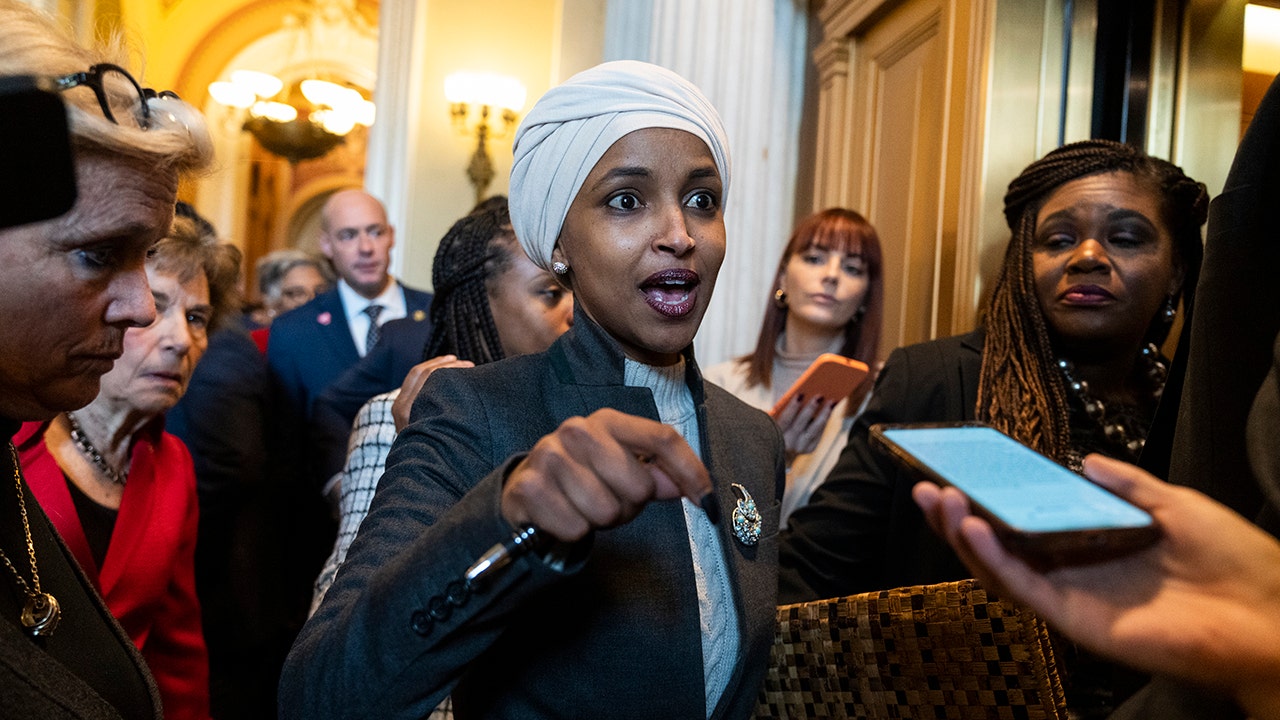
Rep. Ilhan Omar of Minnesota faces voters one week after her fellow Squad member, Rep. Cori Bush of Missouri, lost her bid for re-nomination and nearly two months after another Squad member, Rep. Jamaal Bowman of New York, fell to his primary challenger.

Advertisement

But Omar, who made history as the first Somali American in Congress and the first woman of color to represent Minnesota on Capitol Hill, is the favorite as she faces three primary challengers in the Democrat primary. Omar is seeking a fourth two-year term representing the Minneapolis-anchored 5th Congressional District.

CHECK OUT THE LATEST FOX NEWS POWER RANKING IN THE 2024 ELECTION

Rep. Ilhan Omar, D-Minn. (Tom Williams/CQ-Roll Call via Getty Images)

Bush and Bowman faced well-funded challengers and millions in outside spending by United Democracy Project, a super PAC affiliated with the American Israel Public Affairs Committee. While Omar is also a very vocal critic of Israel, she hasn’t been targeted by any ads from the United Democracy Project.

And Omar is considered to be in a much better political position than she was two years ago when she narrowly defeated Don Samuels, who for a second straight cycle is her top challenger.

Advertisement

But Samuels, in an interview Monday on Fox News’ “America’s Newsroom,” said he’s seen a surge in his fundraising and in volunteers to his campaign in the week since Bush’s defeat. And he said Omar is “divisive and combative. She picks a side including, simply trying to divide her, her constituency, and ignores the other side.”

Minnesota’s primary comes a week after Vice President Harris named the state’s governor, Gov. Tim Walz, as her running mate on the Democrat 2024 ticket. And an old clip of Walz praising Omar has gone viral in recent days.

Vice President Harris greets Minnesota Gov. Tim Walz in Eau Claire, Wis., on Aug. 7, 2024. (AP Photo/Charles Rex Arbogast)

Arguably the highest-profile Squad member, three-term Rep. Alexandria Ocasio-Cortez of New York, easily crushed her primary challenger in June.

The only other Squad member with a primary yet to come this cycle is Rep. Ayanna Pressley of Massachusetts, who is unchallenged in her September contest.

Advertisement

Sen. Amy Klobuchar is the overwhelming favorite in a five-candidate Democrat Senate primary as she seeks a fourth six-year term representing Minnesota in the chamber. Eight candidates are running in the GOP Senate primary.

In neighboring Wisconsin, Democrat Sen. Tammy Baldwin is unopposed in her party’s primary as she seeks a third term. Republican businessman Eric Hovde, a real estate developer who’s loaned his campaign $13 million and who is backed by former President Trump, faces nominal opposition in the GOP primary.

Two Democrats are running in their party’s primary in western Wisconsin’s 3rd Congressional District, with the winner taking on Republican Rep. Derrick Van Orden, a staunch Trump ally, in November.

And in northeast Wisconsin’s heavily red 8th Congressional District, all eyes are on the GOP primary in the race to fill the seat of former Rep. Mike Gallagher, who left Congress in April. Taking place alongside the primary is a special election for the remainder of Gallagher’s current term, which expires at the end of the year.

Advertisement

In Connecticut, the spotlight is on Republican primaries to challenge two longtime Democrat members of Congress: Sen. Chris Murphy and Rep. Jim Himes.

In Vermont, two Democrats are vying for their party’s gubernatorial nomination, with the winner challenging Republican Gov. Phil Scott in November.

Scott, a moderate Republican and GOP Trump critic, is unopposed in his party’s primary as he seeks a fifth two-year term steering Vermont. Even though Vermont is a reliably blue state. Scott remains popular and grabbed nearly 70% of the vote in his 2022 re-election.

Get the latest updates from the 2024 campaign trail, exclusive interviews and more at our Fox News Digital election hub.

Read the full article from Here

Advertisement
Continue Reading
Click to comment

Leave a Reply

Your email address will not be published. Required fields are marked *

This site uses Akismet to reduce spam. Learn how your comment data is processed.

Northeast

AI raises the stakes for national security. Here’s how to get it right

Published

on

AI raises the stakes for national security. Here’s how to get it right

NEWYou can now listen to Fox News articles!

Regulating advanced AI isn’t a game of checkers. It’s a game of chess.

Every move matters. You have to think several steps ahead. And if you focus only on the next play — or worse, react after the fact — you risk losing the long game.

Today, the United States finds itself at a turning point on AI, where real policy choices are being made. You can see it in the actions underway in both the states and Washington.

In recent months, leaders in both New York and California have passed landmark AI safety legislation. California’s SB 53 took effect on January 1, while New York’s RAISE Act was signed into law by Democrat Gov. Kathy Hochul in December and will take effect in 2027.

Advertisement

MIKE DAVIS: CONGRESS MUST STOP BIG TECH’S AI AMNESTY SCAM BEFORE IT’S TOO LATE

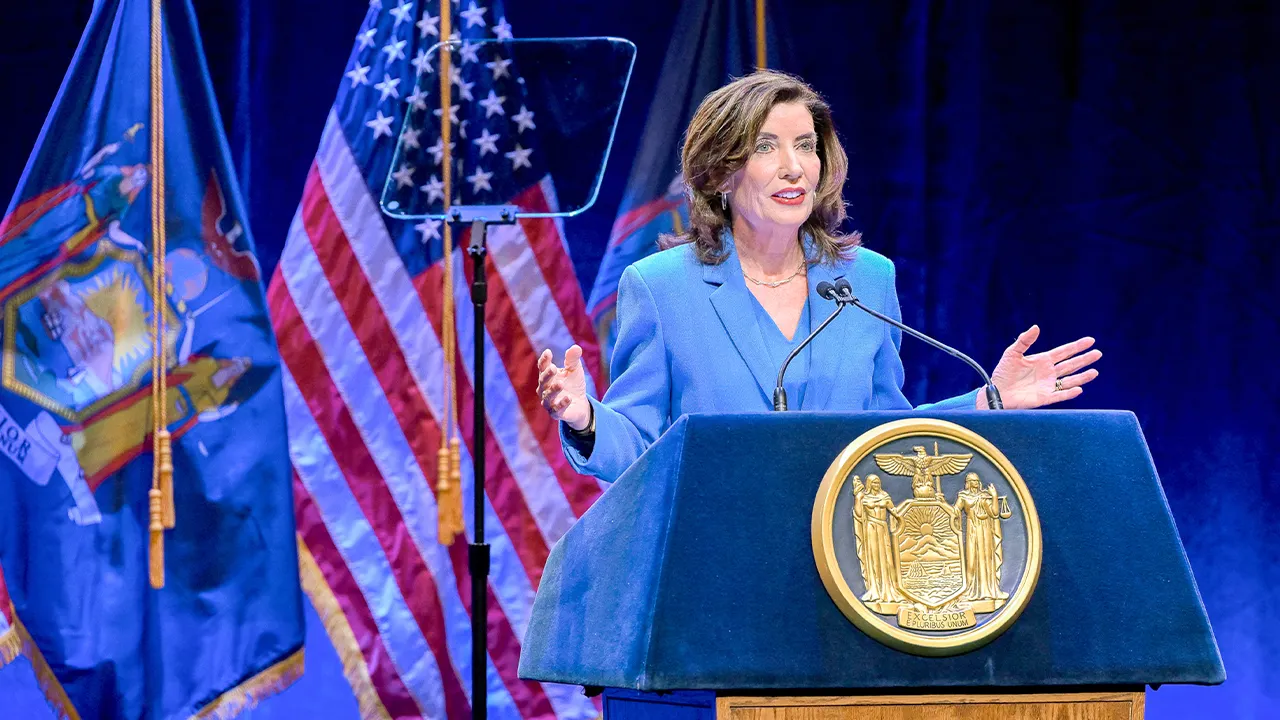
New York Gov. Kathy Hochul delivers her State of the State address at Hart Theatre at The Egg in Albany, New York, Jan. 13, 2026. (Heather Ainsworth/Bloomberg via Getty Images)

Both states are moving toward approaches that align state and federal law — recognizing that a fragmented, state-by-state patchwork isn’t sustainable. Given their size and economic impact, these moves create a clear path forward for federal action while positioning New York and California to lead the nation into the AI era.

There’s a word for this kind of alignment between state and federal action: harmonization. The federal government sets one clear national standard for the most powerful AI systems — the issues that affect national security and the country as a whole. States continue to focus on the issues closest to people’s daily lives: consumer protection, civil rights and how AI is used in schools, workplaces and public services. Each level of government plays to its strengths.

Think of it as one rulebook with two clear roles and one urgent mission: ensuring the United States maintains its competitive advantage in a technology central to national security and global economic leadership. Russian President Vladimir Putin has said bluntly that whoever leads in AI will lead the world. The United States can’t afford to drift — or to divide itself — at this critical moment.

Advertisement

STATE-LEVEL AI RULES SURVIVE — FOR NOW — AS SENATE SINKS MORATORIUM DESPITE WHITE HOUSE PRESSURE

That’s because AI leadership is increasingly an issue of national security — and national security requires prevention, not punishment after the fact.

When states act alone, they are often forced into a liability-only approach — holding companies accountable after harm has already occurred. Preventing the most serious risks requires access to the technical expertise and classified systems that only the federal government possesses.

That is why our North Star must remain clear: deploying frontier models safely and in a way that best positions the United States to maintain its innovation lead.

TRUMP ADMINISTRATION EYES SWEEPING FEDERAL POWER OVER AI, DRAFT ORDER SHOWS

Advertisement

That prevention-first approach already exists in practice. The Center for AI Standards and Innovation — created by the Biden administration and updated by the Trump administration — gives the federal government the ability to test and evaluate advanced AI systems before they are widely deployed. That kind of centralized testing is essential for managing risks that no single state or company can address on its own.

Without harmonization, AI companies would face a confusing patchwork of conflicting state requirements that slows innovation without improving public safety. With it, companies get clarity and consistency, the public gets stronger protections and states are given clear room to act where they add the most value.

Today, the United States finds itself at a turning point on AI, where real policy choices are being made. You can see it in the actions underway in both the states and Washington.

At the same time, states play a vital role, and the recent moves in New York and California show what that balance looks like in practice. By moving away from fragmented approaches and toward alignment, the two largest innovation economies in the country are helping create a de facto national standard that exists alongside, and not instead of, state action.

WHITE HOUSE OFFICIAL PRESSES ALLIES TO FREE AI FROM INNOVATION-KILLING REGULATIONS

Advertisement

This is what harmonization looks like in practice: Washington focuses on the highest-stakes safety issues, while states address kitchen-table ones. It is a third way forward — avoiding both unregulated acceleration and fragmented overreach.

Think about how we handle car safety. We don’t wait for accidents to happen and then rely solely on lawsuits to make cars safer. The federal government sets clear national safety standards. It requires rigorous testing. And it makes seatbelts, airbags, and braking systems mandatory — with strict rules for how well they must perform — before cars ever hit the road. Liability still matters, but prevention comes first, because the stakes are too high to get it wrong.

That balance isn’t new. It’s how the United States has governed aviation, food and drug safety, financial markets and telecommunications. In each case, the federal government set clear national standards for systems that power the entire country, while states continued to play a critical role closer to home. The result wasn’t less innovation or less growth. It was regulatory clarity, economic growth, and American leadership.

CHINA RACES AHEAD ON AI —TRUMP WARNS AMERICA CAN’T REGULATE ITSELF INTO DEFEAT

I saw this dynamic firsthand in 1996, when I was working in the White House just as the internet was beginning to reshape the economy.

Advertisement

Washington faced a choice that feels familiar today: apply old rules to a new technology, or agree on a new national framework built for what was coming next. Democrats and Republicans chose the latter.

CLICK HERE FOR MORE FOX NEWS OPINION

The result was the Telecommunications Act of 1996. It wasn’t perfect, but it got the big things right. It created clear national standards, gave innovators room to build and helped position the United States to lead the internet era that followed.

Think of it as one rulebook with two clear roles and one urgent mission: ensuring the United States maintains its competitive advantage in a technology central to national security and global economic leadership.

The lesson is straightforward. When America sets smart, national standards for emerging technologies, we don’t fall behind — we lead.

Advertisement

CLICK HERE TO DOWNLOAD THE FOX NEWS APP

The chessboard is set. If the United States focuses on prevention, harmonizes state and federal efforts, and keeps its eyes on that North Star, we can once again lead a defining technological era.

That’s how you win the long game: by playing chess, not checkers.

Read the full article from Here

Continue Reading

Boston, MA

‘Annoying and unsafe’: Boston cyclists frustrated over lack of bike lane snow removal – Boston News, Weather, Sports | WHDH 7News

Published

on

‘Annoying and unsafe’: Boston cyclists frustrated over lack of bike lane snow removal – Boston News, Weather, Sports | WHDH 7News


BOSTON (WHDH) – More than a week after Boston’s largest snowstorm in years, some bike lanes are still buried — and frustrated cyclists are calling on city leaders to clear the way.

Many cyclists say they are having to choose between riding in traffic or walking their bikes because there is no room for them to ride.

“It definitely feels a bit unsafe because many cars pass closely,” said Marvin Kinz, a cyclist. “Either you’re on the side and hope they don’t hit you, or you have to take the middle of the right lane so they can’t pass you.”

Packed snow and ice are covering many of the lanes that cyclists say are supposed to be plowed.

Advertisement

“Commonwealth Avenue is not good, which is a pity because the bike lanes are really good in general,” said Kinz.

“Currently the majority of bike lanes look like a place to hold snow that has been removed from the roadways and from the sidewalks,” said Boston Cyclist Union Executive Director Tiffany Coggell.

Even when the lanes are clear, people say there’s another problem.

“When they clean the bike lane but don’t clear the parking spaces, so the cars park in the bike lane,” said Kinz.

Coggell said this is a citywide issue, and residents have taken matters into their own hands and reached out to city councilors.

Advertisement

“The city has neglected to reach out to us,” Coggell said. “We have also had reports from inside the city that some counselors are talking to the chief of streets, as well as the Mayor, asking them when these bike lanes will be cleared.”

Coggell said the city did send out some plows to clear the lanes, but there are still issues.

“The entrances to the bike lanes are still huge amounts of snow so they are mostly impassable,” she said.

Cyclists said they hope the city takes action to fix this soon.

“I hope it gets better and I hope that they do something about it rather than just letting it melt,” said Nick Sheehan, a cyclist. “Which is very annoying and unsafe so definitely wish they would take care of this. It’s been two weeks.”

Advertisement

7NEWS has reached out to Mayor Michelle Wu’s Office, but has not yet heard back.

(Copyright (c) 2025 Sunbeam Television. All Rights Reserved. This material may not be published, broadcast, rewritten, or redistributed.)

Join our Newsletter for the latest news right to your inbox


Source link

Advertisement
Continue Reading

Pittsburg, PA

Woodland Hills school board president charged in Rankin Borough theft case

Published

on

Woodland Hills school board president charged in Rankin Borough theft case


The president of the Woodland Hills school board has been charged with multiple felonies in connection with alleged credit card misuse from when she was the manager of Rankin Borough.

According to court records and police paperwork, Terri Lawson has been charged with theft by deception, forgery, tampering with records, and access device fraud and is accused of using a Rankin Borough credit card for personal purchases. 

A criminal complaint filed by the Eastern Mon Valley Regional Police Department details the allegations against Lawson, who is also is the president of the Woodland Hills School District board of directors. 

Police said that an investigation was opened earlier this year after the borough’s interim manager reported that Lawson, who used to serve as borough manager, had used a borough credit card for personal expenses last year.

Advertisement

According to investigators, Lawson allegedly used a borough credit card that she was the designated cardholder for on more than 130 different occasions over a six-month period between August 2025 and December 2025.

Police said that the credit card was used for purchases at a number of different retailers including, but not limited to Lowe’s, Amazon, Giant Eagle, Walmart, Sunoco, Sam’s Club, ALDI, TJ Maxx, Big Lots, Olive Garden, Target, and Applebee’s.

Investigators determined that Lawson allegedly charged over $10,000 to the borough’s credit card, with more than $9,800 of those purchases being for personal use.

According to police, Lawson made personal payments totaling over $5,500 towards the account between August 2025 and November 2025.

Police said that the borough is still owed nearly $5,000 in restitution.

Advertisement

According to court records, Lawson has yet to be arraigned on the charges filed by police and a court date has yet to be set. 

KDKA has reached out to both Lawson and the Woodland Hills School District for comment. 

Woodland Hills School District at the center of controversy

While no allegations have been made about wrongdoing within the school district, Lawson is the president of the board where Woodland Hills continues to operate under a cloud of controversy.

Superintendent Joe Malunchnik was placed on administrative leave last year and one board member said that the district leader was a whistleblower being railroaded for questioning past financial practices.

Last month, State Rep. Abigail Salisbury called for a criminal investigation into the district’s actions after hearing from constituents, many of whose concerns came from Maluchnik being placed on leave. 

Advertisement

School leaders strongly denied that that the district is misusing funds.

While the majority of the board says it’s prohibited by law from discussing the probe, minority member Darnika Reed says the others want to get rid of Maluchnik for raising questions about district finances.  

No charges have been filed in relation to misconduct within the school district leadership. 


Source link

Continue Reading
Advertisement

Trending