Rhode Island
Homelessness in Rhode Island has doubled in five years, HUD report confirms – The Boston Globe


Rhode Island’s homeless crisis has made headlines in recent weeks — and for good reason. In my 30+ year career in homeless services, I have never seen the levels of homelessness that we are seeing in our state today.
A recent report from the US Department of Housing and Urban Development confirms my own observations: Homelessness here has more than doubled over the last five years — and unfortunately, we expect Rhode Island’s homeless numbers to be even higher this year.
Even more alarming, the number of people who are staying outside in the Ocean State soared by 400 percent over the same period. As temperatures plunged to life-threatening levels this week, 650 people were living outside in Rhode Island according to local homeless advocates. Clearly, that is not acceptable.
In response to the urgent need, Crossroads quickly expanded our warming center capacity as dozens of people scrambled to come in out of the bitter cold. Providence City Hall also opened its doors to give cold-weary Rhode Islanders a safe place to stay, and I applaud them for their compassion.
But setting up a make-shift warming center in City Hall would not be necessary if the state had enough shelter beds. While I continue to believe that housing is the only proven long-term solution for ending homelessness, building housing takes time, often several years from concept to completion. With hundreds of Rhode Islanders currently staying outside in life-threatening conditions, it’s clear that we also need to meet the moment and scale up the state’s shelter capacity.
As the state’s leading provider of housing and services to those experiencing homelessness, Crossroads stands prepared to expand our current shelter services assuming adequate funding. We currently operate five temporary emergency shelters, including the state’s largest men’s shelter, a women’s shelter, a domestic violence shelter, a family shelter and the state’s only couples shelter. Last year, more than 1,500 people stayed in one of our shelters while we worked with them to help them secure stable homes.
While we ramp up shelter capacity, however, it’s critical that we also continue to stay focused on addressing the most urgent underlying issue contributing to the current crisis: a lack of affordable housing.
Governor Dan McKee, Speaker Joseph Shekarchi, and Providence Mayor Brett Smiley all deserve credit for prioritizing housing in recent years. Thanks in part to their investments, construction of our Summer Street Apartments in Providence is currently well underway, and when complete later this year, will provide affordable one-bedroom apartments for more than 176 formerly homeless adults.
This spring, Crossroads will be breaking ground on nearby 371 Pine St. in Providence, a 35-unit, innovative health and housing complex for medically vulnerable adults experiencing homelessness. A complete renovation of our Travelers Aid Housing at 160 Broad St. is also in the pipeline, and will add more than 80 studio and one-bedroom permanent supportive apartments to the state’s inventory.
When complete in 2027, these three affordable-apartment buildings will help reduce homelessness in Rhode Island, but of course, more is needed. That’s why, in what is expected to be a tough budget year, I urge state and local governments to continue to prioritize basic human needs.
State and local officials have tough decisions to make in the months ahead. Expanding shelter capacity is not optional — it is a life-saving necessity this winter. But shelter alone won’t end homelessness. Housing is the only proven long-term solution, and continued investment is absolutely essential to reducing homelessness throughout Rhode Island.
Michelle Wilcox is president & CEO of Crossroads Rhode Island.



It’s New England’s largest indoor public garden and this spring it’ll once again be teeming with fairies.
The Fairy Garden Days return to the Roger Williams Park Botanical Garden this April with hundreds of handmade fairy houses hidden throughout the Garden’s four greenhouses, plus special events and activities planned for kids every day.
Running from April 11-26, 2026, it’s a great day trip during school’s upcoming April vacation or a wonderful weekend adventure to enjoy an early taste of spring.
What Is Fairy Garden Days in Rhode Island?
This annual event has been one of my favorites since my daughters were babies—and we still go back every year.
READ MORE: Explore These Ten Botanical Gardens Across the SouthCoast
Artists young and old create elaborate fairy gardens depicting fanciful houses, entire schools or even relaxing health spas (cause fairies need a massage now and then too!). You never know what you’ll see or where you’ll find the gardens throughout the grounds.
Nancy Hall/Townsquare Media
What Kids Can Do at Fairy Garden Days
Though if your young ones lose interest in the fairy gardens before you do, there are plenty of activities around the greenhouses too. Kids can get hands on at the texture table, create their own wand, pen letters to the fairies or write out wishes, which get released every Thursdays.
Don’t Miss These Outdoor Garden Attractions
Outside the greenhouses are a Japanese-style trail to wander, a rose maze to make your way through and an outdoor play area where the kids can let their imaginations run wild.
Meet the Goats Behind the Garden’s Cleanup Crew
Definitely don’t forget to stop by the goat house between greenhouses 1 and 2 to say hi to the three Nigerian Dwarf goats calling the Botanical Garden home. These three are an invasive plant removal team, helping to naturally rid the Garden grounds of unwanted plants.
The goats will also celebrate their 9th birthdays during Fairy Garden Days, with a special celebration planned for them on Sunday, April 12 from 1:30 – 3 p.m. Just one of the many special events planned throughout the Fairy Garden Days from April 11-26.
Special Events Happening During Fairy Garden Days
Various fairy visits and story times are planned over the two-week event, with face painting each Tuesday and Saturday and bubble shows every Friday. There will also be an animal encounter with Roger Williams Park Zoo on April 11, Greenhouse Jazz on Sunday, April 19, and a performance from the Toe Jam Puppet Band on closing day, April 26.
READ MORE: Learn More About the SouthCoast’s Beloved Toe Jam Puppet Band
With the incredibly snowy winter Southern New England has been through, we’re probably all looking forward to finally seeing the start of spring. You can get a jump on flower season by stepping inside the Roger Williams Botanical Garden this April for the return of Fairy Garden Days.
10 Beautiful Botanical Gardens Across the SouthCoast
When the season is right, there are several spectacular gardens around the SouthCoast that are blooming with rows and rows of beautiful flowers. Here are some of the most popular places to tiptoe through the tulips and so much more.
Gallery Credit: Nancy Hall
See Inside Gorgeous Gardens Hidden Away in Little Compton
For nearly 50 years the grounds of Sakonnet Garden have been growing in what might be the most private garden along the coast.
On certain days, at certain times you can make a reservation to walk among the hundreds of flowers and plants growing in hidden “rooms” on the grounds, or take a sneak peek right now.
Gallery Credit: Nancy Hall
Explore Peaceful Gardens and Towering Cliffs at Immersive Monet
Claude Monet created thousands of works of art over his decades as an artist. He traveled through Europe capturing gardens ,waterways, cathedrals and more. Now you can walk through the world Monet did and experience his artwork in a whole new way at Immersive Monet coming to Boston.
Here’s a taste of the artwork you could be surrounding yourself in.
Gallery Credit: Nancy Hall


Governor’s executive order targets Rhode Island health care costs
Rhode Island Gov. Dan McKee takes action to lower health care costs and improve affordability through new executive order.
The doctor is not in, and there’s not one on the way either. Many Rhode Islanders are well aware that the state is facing a harrowing shortage of primary care physicians. As native Rhode Islanders and physicians invested in quality accessible primary care for our community, we are dedicated to working towards policies to support our state.
A medical school at the University of Rhode Island is not the solution to solve the primary care crisis. A medical school at URI would not provide a timely solution, would likely not achieve the target outcome of increasing the number of primary care physicians in the state, and would likely not address the underlying issue of getting doctors to stay. Instead, resources should be allocated now to supporting primary care in ways that would make sustainable change.
Lack of access to primary care is hurting patients now. A medical school at URI would not be a short- or long-term solution. In addition to the time needed to engineer an accredited medical school, it takes seven years to produce an inexperienced primary care physician. Once trained, there still must be an incentive to stay in Rhode Island. Patients do not have access to necessary care for acute and chronic conditions. The burden on our health care system, impacting ER wait times and hospital capacity, impacts everyone. We cannot afford to wait another decade for a solution.
More physicians does not equal more physicians in primary care or in Rhode Island. If the aim is to produce more physicians from URI’s medical school, this will certainly occur, but we should not delude ourselves into believing it will fix primary care. It’s not due to lack of opportunities. In 2019, the National Resident Matching Program offered a record number of primary care positions, yet the percentage filled by students graduating from MD-granting medical schools in the United States was a new low. Of 8,116 internal medical positions that were offered, just 41.5% were filled by U.S. students; most residency spots went to foreign-trained and U.S.-trained osteopathic physicians.
As medical schools across the country look to debt reduction as a means of encouraging students to enter primary care specialties, their goals have fallen far short. In 2018, The New York University School of Medicine offered full-tuition scholarships to every medical student, regardless of merit or need. In 2024, only 14% of NYU’s graduating seniors entered primary care, lower than the national average of 30%.
There must be an incentive to stay in Rhode Island (or at least not a disadvantage). Our efforts must shift to recruiting and maintaining physicians in primary care. Inequitable reimbursement from commercial insurers between Rhode Island and neighboring states (leading to significantly lower salaries than if you lived here and traveled to Attleboro to care for patients), the lack of loan repayment(average medical student debt is $250,000, forcing the choice between meaning and money), and the ongoing administrative burdens are amongst the drivers away from primary care. Rhode Island needs to get on par with surrounding states to prevent physicians from going elsewhere.
The motivations behind opening a medical school are well intended in terms of wanting to increase the number of primary care providers by enabling local talent to train close to home. Training more people in Rhode Island will not keep them here; it will invest significant resources without addressing the root of the issue. Until there are comparable salaries between Rhode Island and our neighbors, until loan repayment is improved and the administrative burdens are reduced, primary care in the state will forever be fighting an uphill battle. Both providers and patients suffer the consequences.
Dr. Kelly McGarry is the director of the General Internal Medicine Residency at Rhode Island Hospital. Dr. Maria Iannotti is a first-year resident, a Rhode Islander intent on practicing primary care in Rhode Island.

How a Database Manager Lives on $118,000 in Inwood

Detroit Lions ‘Ready’ for All-Pro Moving to Left Tackle

This Week: Bike Ambassador, Lake Merritt Loop, Cayuga Street – Streetsblog San Francisco

How FC Dallas Can Unlock Santiago Moreno Alongside Musa, Valiente, and Farrington

Could Miami Dolphins trade up in first round of 2026 NFL Draft?

Florida High School Football Rankings: Top 25 teams – Oct. 21

How old is Bo Nix? What to know about Oregon quarterback ahead of 2024 NFL Draft

Cleary's 21 help Le Moyne down Central Connecticut State 69-64 in OT

99th annual Pony Swim held in Virginia

Indiana Members Credit Union announced as new anchor tenant at Bottleworks District

Video: Iran to Allow More Oil Ships Through Strait of Hormuz, Trump Says

Dem senator warns deportation could let Virginia woman’s illegal immigrant killer ‘escape accountability’

Newsletter: G7 ministers to hold talks on war’s economic fallout
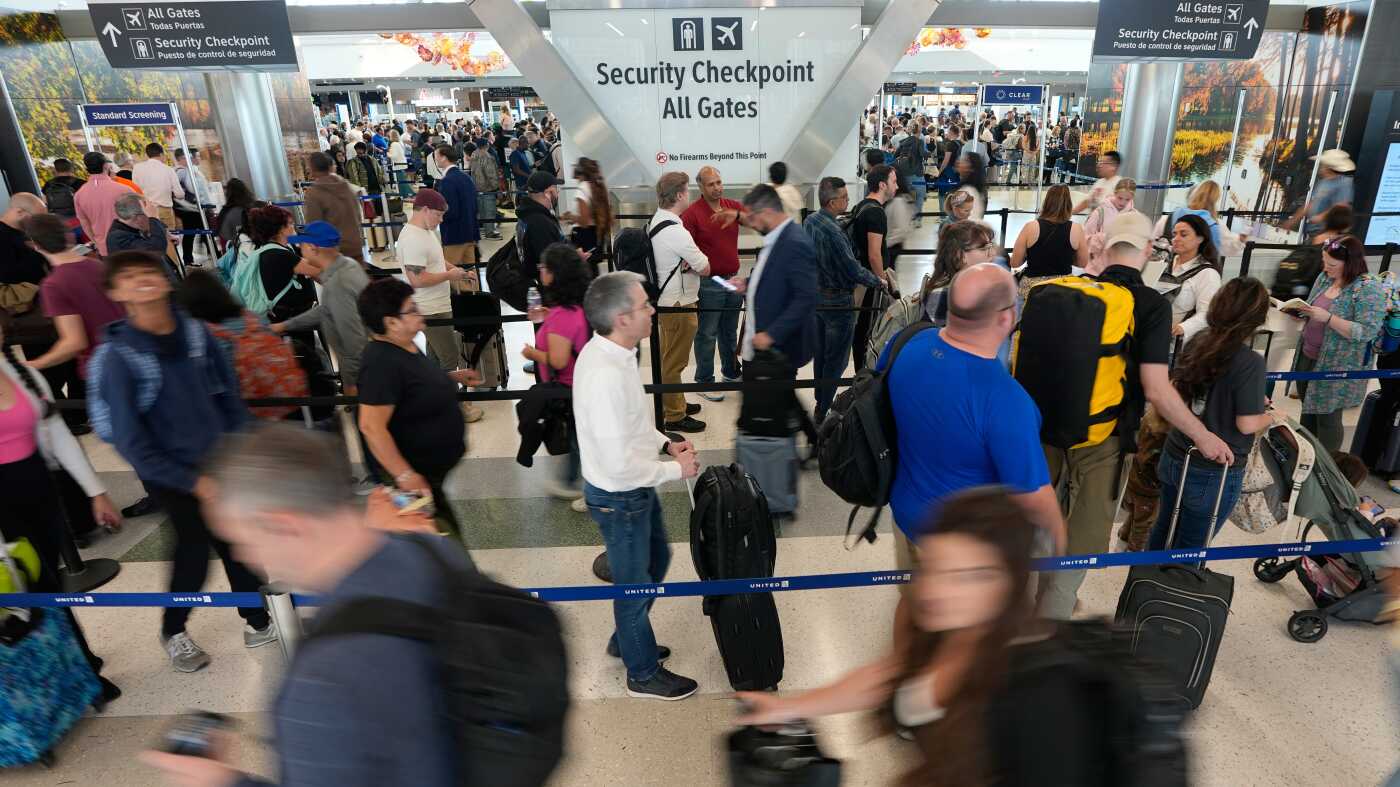
ICE officers could remain at airports after TSA workers are paid

Scathing report claims nation’s oldest labor union ‘betrayed’ MAGA members through ‘shocking’ spending
-

 Sports1 week ago
IOC addresses execution of 19-year-old Iranian wrestler Saleh Mohammadi
-

 Miami, FL4 days ago
Jannik Sinner’s Girlfriend Laila Hasanovic Stuns in Ab-Revealing Post Amid Miami Open
-

 New Mexico1 week ago
Clovis shooting leaves one dead, four injured
-

 Politics1 week ago
Schumer gambit fails as DHS shutdown hits 36 days and airport lines grow
-

 Tennessee7 days ago
Tennessee Police Investigating Alleged Assault Involving ‘Reacher’ Star Alan Ritchson
-

 Minneapolis, MN4 days ago
Boy who shielded classmate during school shooting receives Medal of Honor
-

 Science1 week ago
Record Heat Meets a Major Snow Drought Across the West
-

 South-Carolina1 day ago
South Carolina vs TCU predictions for Elite Eight game in March Madness