Northeast
Pennsylvania House race: 5 former House Republicans say don't support Rep Scott Perry

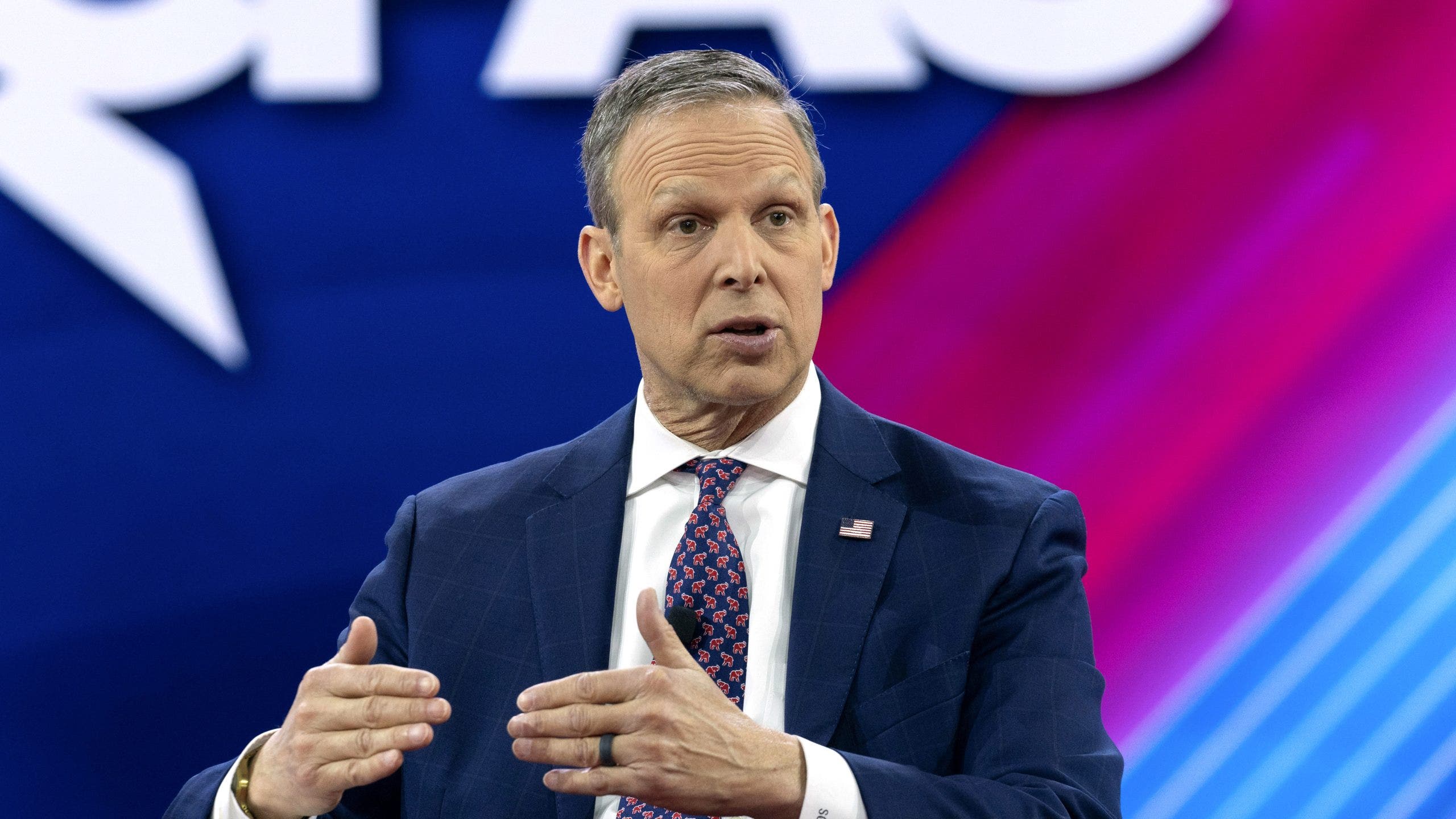
Five former House Republicans penned a letter on Monday urging voters in the battleground state of Pennsylvania not to re-elect Republican Rep. Scott Perry.
Former Republican Reps. Barbara Comstock, of Virginia, Adam Kinzinger, of Illinois, Denver Riggleman, of Virginia, Dave Trott, of Michigan, and Joe Walsh, of Illinois, told fellow Republicans that “they know how difficult it is to vote for a member of the other political party,” but to join them in supporting Perry’s Democratic challenger, Janelle Stelson. Among other concerns, the five mostly condemned Perry’s “brazen self-interest” and “involvement in the plot to overturn the results of the 2020 election.”
Pennsylvania’s 10th District has been represented by Perry, the former chair and current member of the House Freedom Caucus, since 2013. Perry is the only sitting member of Congress whose cellphone was seized by the FBI in its investigation into efforts to overturn the results of the 2020 presidential election, and that has also become a theme in television ads. The race between him and Stelson recently moved from leaning Republican to a toss up, according to the Fox News Power Rankings.
“After playing a direct role in the effort to nullify the will of Pennsylvania’s voters, Perry had his cell phone seized by the FBI and has spent hundreds of thousands of dollars on legal defense fees,” the letter says. “Former White House staffer Cassidy Hutchinson testified under oath that Perry requested a presidential pardon for his actions in the leadup to the deadly January 6th insurrection.”
OBAMA SLAMS PRO-TRUMP MEN AT PHILADELPHIA RALLY; SPRINGSTEEN WARNS GOP NOMINEE IS ‘AN AMERICAN TYRANT’
Rep. Scott Perry speaks during the Conservative Political Action Conference, CPAC 2024, at the National Harbor in Oxon Hill, Maryland, on Feb. 22, 2024. (AP Photo/Jose Luis Magana, File)
The five former House Republicans go on to say Perry’s “lack of remorse for his actions is a slap in the face to every public servant who has made the United States the greatest country in the world. Our nation deserves better than someone who was so easily willing to break his sworn oath to the Constitution for political expediency.”
“At this moment of great consequence in American history, we need leaders who will tell the truth and be willing to work in a bipartisan fashion no matter what party to deliver for Americans,” they wrote, according to the letter obtained by Mediaite. “Janelle Stelson is the candidate in this race who will do just that. Janelle was a Republican for most of her life and she is running on a mainstream platform of cutting taxes for the middle class, securing the border, lowering the cost of living, adhering to the Constitution, and supporting democracy and fair elections.”
Perry’s district has favored Republicans since it was redrawn in 2018, and Trump won it by four percentage points in 2020, according to The Associated Press.
Janelle Stelson, Democratic candidate for Pennsylvania’s 10th District, talks with patrons at the Broad Street Market in Harrisburg on Saturday, Oct. 19, 2024. Stelson is challenging Rep. Scott Perry for the seat. (Tom Williams/CQ-Roll Call, Inc via Getty Images)
HARRIS HECKLED AT PENNSYLVANIA CHURCH, SAYS VOTING FOR HER FULFILLS GOD’S EXPECTATION ‘FOR US TO HELP HIM’
Now, as Perry runs for a seventh term, he faces a vigorous challenge.
Stelson, a former TV news anchor and former Republican, has raised over $1 million more than Perry, forcing top House Republicans to come to his aid as they try to hold their narrow majority. Democrats have outspent Republicans in the race so far, according to AdImpact, which tracks campaign ad spending. They have spent more than $7 million as of last week, compared to more than $4 million spent by Republicans.
Rep. Scott Perry speaks during a news conference on FISA reauthorization at the U.S. Capitol on Feb. 13, 2024. (Al Drago/Bloomberg via Getty Images)
In shifting the contest between Perry and Stelson more toward the Democrat earlier this month, the nonpartisan Cook Political Report surmised that while the “political environment should still favor Perry, his unique vulnerabilities, coupled with Democrats’ spending advantage, moves this race from Lean Republican to Toss Up.”
The letter from the former GOP lawmakers claims Stelson “will work with Republicans and Democrats to find common ground,” while Perry “is consistently rated as one of the least bipartisan members of Congress” and “is routinely the only member of the Pennsylvania delegation – Republican or Democrat – to oppose common sense measures that would improve the lives of his constituents, including legislation to protect firefighters and crack down on human trafficking.” They claim Perry “also turned his back on our brave veterans by being the only Republican or Democrat in the Pennsylvania delegation to vote against legislation to house homeless veterans. He also opposed the bipartisan PACT Act, the largest expansion of VA benefits in history, which provided healthcare and compensation to servicemembers who suffered from toxic burn pit exposure.”
“These are the men and women who risked – and in many cases, gave – their lives to defend our freedom,” the five former House Republicans said.
Fox News’ Remy Numa and The Associated Press contributed to this report.
Read the full article from Here


By PAULA TRACY, InDepthNH.org
CONCORD – While Republican Gov. Kelly Ayotte has said she opposes increasing highway toll rates across the state, the Senate voted Thursday to increase rates for out-of-state license plate holders.
It now goes to the House for consideration.
This would be a $1 increase for those who have out of state plates going through the tolls at Hooksett, Hampton and Bedford for out-of-state plates, a 75 cent hike for those taking Hampton’s Exit 2 and on the Spaulding turnpike at Rochester, and a 50 cent hike for those taking the exit off I-93 to Hooksett.
An analysis in the bill shows that this would increase toll revenue by $53.3 million in fiscal year 2027 and go up each year to generate $81.4 million a year in 2036.
Senate Bill 627 passed on a voice vote with two Republicans, Senators Regina Birdsell of Hampstead and William Gannon of Sandown opposing.
Senator Mark E. McConkey, R-Freedom, moved to take the bill off the table and offered an amendment.
He said the last time there was a systemwide increase to the turnpike toll was 19 years ago.
“I am sure we could all agree the cost of operations…has continued to escalate when revenue is not rising with it,” and he noted that with an enterprise fund, the state can only spend what it takes in.
The state has just completed a 10-year highway plan and there was a $400 million shortfall in projects that could not be paid for under the current income.
McConkey said the measure would not increase tolls for New Hampshire drivers with a state license plate.
“Why don’t we ask our neighbors,” to pay a toll increase. “We are getting the best of all worlds,” by passing the bill, he said, including “protecting our residents” and having resources for improvements to the turnpike system.
Sen. Gannon, R-Sandown, asked McConkey if there are any studies on impacts near the border on businesses.
If implemented, McConkey said the state will be the 27th lowest in per mile cost still. McConkey said the bill would also increase from seven to 14 days the amount of time for those with NH license plates to pay for a toll adding there are other states that also have different rates for out-of-state users.
The Hampton toll cost would go from $2 to $3, while Hooksett and Bedford would rise from $1 to $2 for out-of-state plates.
New Hampshire currently has the lowest rate per mile among states with tolls roads.
The governor said she does not support a toll increase.
“We are not going to put a burden on drivers for a toll increase,” Ayotte said. “Families are struggling.”

Tickets for the 2026 FIFA World Cup are highly coveted. Admission to a game can cost thousands and most matches are already sold out.
Here’s what to know, and how much tickets are selling for.
How to get New Jersey New York FIFA World Cup 2026 tickets
Fans can buy the New Jersey New York Venue Series pass starting at $25,800 per person, for admission to all eight games in New Jersey New York Stadium Stadium.
Alternatively, fans can buy premium admission that are available for upward of $1,000.
For instance, the admission to the France vs Senegal game on June 16 ranges from $2,300 to $3,400.
The closer to the final, the more expensive tickets are. Admission for the Round of 16 match on July 5, costs between $2,800 and $6,000.
Anyone interested in a luxury suite should be ready to pay roughly $200,000 for game at the New Jersey New York Stadium. The silver lining is that the price includes admission for to 24 people.
Premium tickets for the final match are sold out.
How can I buy cheaper FIFA World Cup Tickets?
A Last-Minute Sales Phase for individual tickets opens on April 2 at 11 a.m. ET. Tickets might sell out within minutes, given the high global demand for them. Most of the tickets left are category 1 and 2, the most expensive seats.
Price varies depending on the match. As an example the USA vs Paraguay match has seats available for $1,940 and $2,735, according to The Athletic.
Forty out of the 104 matches are already sold out.
What are the tailgate tickets? What is the FIFA Pavilion?
FIFA is selling Pavilion tickets for roughly $2,000. The sporting organization describes the pavilions as “an exclusive retreat located in our secure perimeter immediately outside the stadium. Featuring beverage service and elevated street food-inspired dining available pre- and post-match.
For the price, you get to tailgate a game three hours before the match and two hours after it finishes. It also includes a ticket to see the game inside the stadium.
Juan Carlos Castillo is a New Jersey-based trending reporter for the USA Today Network. Find him on Twitter at _JCCastillo.

A Pennsylvania man was found guilty of repeatedly raping his daughter’s best friend over a three-year span before fleeing with the teen to Mexico.
On Thursday, March 5, 2026, Kevin Esterly, 53, of Whitehall Township, Pennsylvania, was convicted on all counts of rape, statutory sexual assault, involuntary sexual intercourse and endangering the welfare of children.
Esterly shook his head as the verdict was read but said nothing in the courtroom.
Resources for victims of sexual assault are available through the National Sexual Violence Resources Center and the National Sexual Assault Telephone Hotline at 800-656-4673.
Esterly’s trial began on Tuesday, March 3, after a judge denied his pretrial motion for the charges against him to be dismissed and for the Lehigh County District Attorney to be removed as a prosecutor in the case.
Both Esterly and his victim testified on Wednesday, March 4.
The victim — who is now 24-years-old — told the courtroom that she met Esterly and his family while attending church as a child and became best friends with one of his daughters. Esterly was a youth leader and elder at the church at the time. The victim said Esterly also coached her soccer team.
The victim said she became so close to Esterly’s family that she called his wife “mom” and eventually spent almost every weekend at their home in Lowhill Township, Pennsylvania. She also said she vacationed with them in New York state and Ocean City, Maryland.
The victim said Esterly first sexually assaulted her in August 2015 when she was 13-years-old after he gave her alcohol during a family birthday party.
“I was scared. Frozen in fear,” the woman told the courtroom on Wednesday. “I pretended I was sleeping.”
The woman accused Esterly of sexually assaulting her almost every time she slept over at his home. She told the courtroom she eventually became addicted to alcohol and drugs, which Esterly gave her in exchange for sex. According to the woman, Esterly gave her cocaine and methamphetamine to keep her awake during school because she “would be up with him all night.”
The woman said Esterly continued to sexually assault her until he was confronted by his wife in 2017. Esterly’s wife then threw him out of the house, according to the victim. She said Esterly continued to sexually assault her over the next year.
Esterly was later arrested and then sentenced to prison after federal agents found him with the victim in Playa del Carmen, Mexico, in 2018. She was 16-years-old at the time.
The woman said she moved on and went to college after Esterly’s sentencing though she still struggled with drug addiction. She said she sought counseling in February 2025. She told the courtroom she received a message from Esterly on LinkedIn that same month in which he apologized for “failing you as a person I was supposed to be for you.” At that point Esterly had been released from prison.
The woman said she had not told anyone about her relationship with Esterly up to that point and replied to him, “I live with our secret every day as I promised. I would appreciate an apology.”
The woman told the courtroom that Esterly responded by writing, “I hope one day you can forgive me. Nobody knows I reached out to you. That is the best for both of us.”
On Feb. 21, 2025, Allentown Police received a report of Esterly’s sexual assaults which led to the new charges being filed against him. He was arrested in West Virginia in June 2025 after two police pursuits. He was then extradited to Pennsylvania.
The victim told the courtroom on Wednesday that she kept quiet about Esterly’s abuse for years because she “was afraid to speak,” and felt “dirty and ashamed.”
“I wasn’t ready to tell anyone,” she said. “He was a father figure in my life. I loved him.”
The woman also said she didn’t want to hurt Esterly’s daughter who was her best friend.
When the District Attorney asked her why she was “here today,” she replied by saying, “I want to tell the truth. I want to be set free.”
The woman ended her testimony by saying, “I don’t want to live with this secret anymore.”
After her testimony, Esterly took the stand for 45 minutes, denied all of the accusations against him and accused the woman of lying.
Closing arguments then took place Thursday morning. It then took an hour for the jury of seven women and five men to reach their verdict.

Nebraska’s Running Backs Have an Strong Role Model in Emmett Johnson

10-month-old found safe, North Las Vegas police cancel AMBER Alert

NH Senate Votes To Hike Turnpike Tolls for Out-of-State Vehicles

How much are World Cup tickets? FIFA sells $2,000 tailgate tickets

New Mexico confirms latest measles case at a local jail

Florida High School Football Rankings: Top 25 teams – Oct. 21

Cleary's 21 help Le Moyne down Central Connecticut State 69-64 in OT

How old is Bo Nix? What to know about Oregon quarterback ahead of 2024 NFL Draft

99th annual Pony Swim held in Virginia

Indiana Members Credit Union announced as new anchor tenant at Bottleworks District

Map: 4.9-Magnitude Earthquake Shakes Louisiana

Paxton vows he’s ‘staying in this race’ even if Trump backs Cornyn in Texas GOP clash

Which Kurdish groups is the US rallying to fight Iran?

Man accused of plot to assassinate Trump testifies Iran pressured him, says Biden and Haley were other possible targets

DHS defends McLaughlin against allegations husband’s company profited millions from ad contracts: ‘Baseless’
-

 World1 week ago
Exclusive: DeepSeek withholds latest AI model from US chipmakers including Nvidia, sources say
-

 Massachusetts1 week ago
Mother and daughter injured in Taunton house explosion
-

 Wisconsin4 days ago
Setting sail on iceboats across a frozen lake in Wisconsin
-

 Maryland5 days ago
AM showers Sunday in Maryland
-

 Florida4 days ago
Florida man rescued after being stuck in shoulder-deep mud for days
-

 Denver, CO1 week ago
10 acres charred, 5 injured in Thornton grass fire, evacuation orders lifted
-

 Massachusetts3 days ago
Massachusetts man awaits word from family in Iran after attacks
-

 Oregon6 days ago
2026 OSAA Oregon Wrestling State Championship Results And Brackets – FloWrestling