Northeast
NJ lawmakers urge schools to follow Trump's order against 'radical indoctrination'

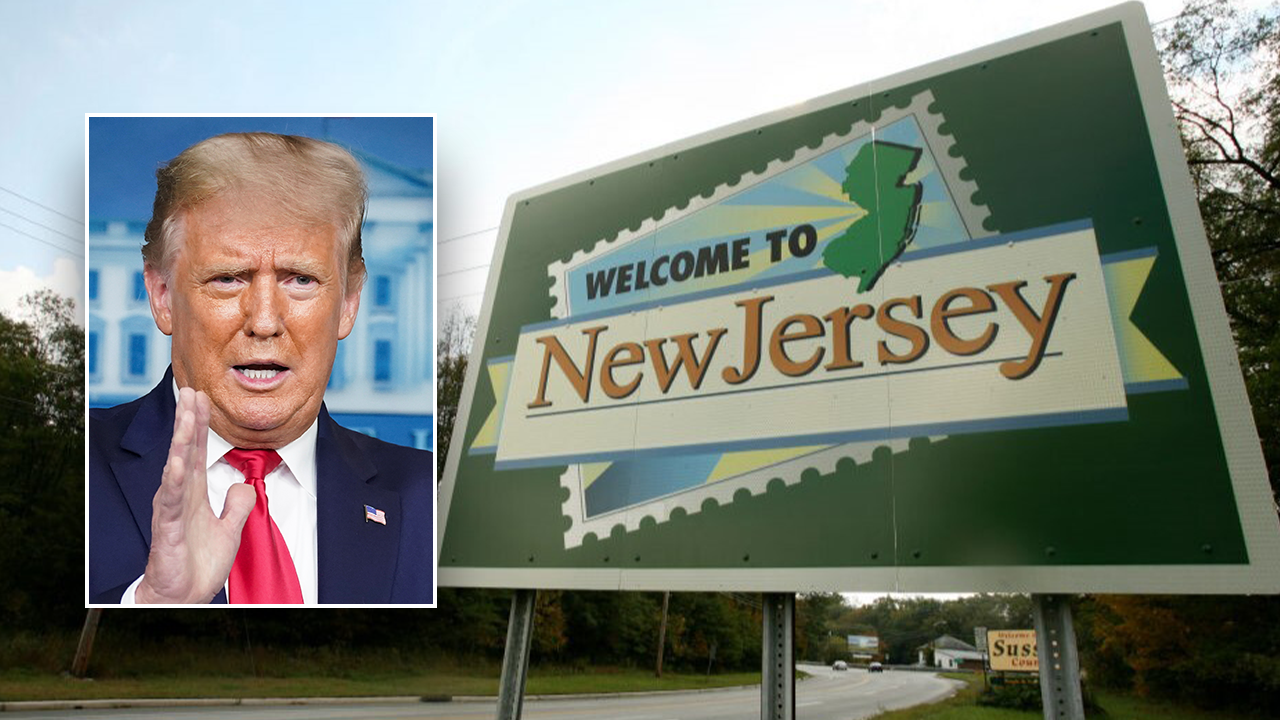
Schools should be following President Donald Trump’s executive order “ending radical indoctrination in K-12,” say two New Jersey lawmakers who put forward a bill to repeal the Garden State’s countervailing law.
Assembs. Gregory McGuckin, R-Brick, and Paul Kanitra, R-Point Pleasant Beach, have put forward bill A-5560, which would repeal the 2021 state law requiring instruction on DEI and topics like unconscious bias, gender identity tolerance and disability tolerance.
Meanwhile, the state’s Democratic attorney general remains party to multi-state legal guidance countering Trump’s order.
“DEI is not appropriate in any part of our children’s curriculum. It is nothing more than rebranded Marxist ideology that destroys people, relationships and communities,” McGuckin said in a statement announcing the repeal effort.
GREEN NEW HEADACHE: NJ DEMS FLEE GOV’S ENERGY MASTER PLAN AS ELECTION APPROACHES
“[I]n schools, [it] wrecks merit-based rewards and an ambition to excel. True diversity, equity and inclusion leads to free associations which foster innovation and progress.”
McGuckin went on to call DEI lessons “garbage” that don’t belong in New Jersey schools.
Kanitra said it “boggles the mind” why “telling students their skin color determines their success or failure is true or helpful.”
“They are either stupid or evil, or maybe brilliant, because the experts pushing this stuff are quite wealthy, I hear,” he said.
Both lawmakers highlighted the decline in state education and test scores since the COVID-era school lock-outs ordered by Gov. Phil Murphy, a Democrat.
McGuckin said students have yet to collectively return to 2019-level proficiency scores.
Attorney General Matthew J. Platkin characterized Trump’s order to end DEI curricula as having little effect on established law and pledged to continue to fight purported federal overreach.
In a statement last week, Platkin said New Jersey’s schools are excelling because of the system’s ability to embrace the state’s diversity.
‘DOGE FEVER’ STATES FROM NJ TO TX ADOPT DOGE INITIATIVES
New Jersey Attorney General Matt Platkin in Trenton (AP)
“No toothless threats from the Trump administration will change that,” he said. “Along with my [AG] colleagues across the country, we are issuing legal guidance to schools so that they can continue to foster diverse, equitable, inclusive, and accessible environments that benefit all students.”
Platkin added he and the other state AGs will continue to fight any effort by the White House to withhold federal funding from schools or special-needs students.
He was backed up by neighboring New York Attorney General Letitia James, who said in a statement that the Trump administration “cannot ban diversity, equity, inclusion, and accessibility efforts with a ‘Dear Colleague’ letter.”
New Jersey’s DEI law, spearheaded by former Gov. Richard Codey — now a Democratic state senator from West Orange — mandated school districts incorporate such instruction beginning in the 2021 school year.
“The instruction shall highlight and promote diversity, including economic diversity, equity, inclusion, tolerance, and belonging in connection with gender and sexual orientation, race and ethnicity, disabilities, and religious tolerance,” the bill reads.
It also “examine[s] the impact that unconscious bias and economic disparities have at both an individual level and on society as a whole; and encourage safe, welcoming, and inclusive environments for all students regardless of race or ethnicity, sexual and gender identities, mental and physical disabilities, and religious beliefs.”
Assemb. Carol Murphy, D-Burlington, said in 2020 it guarantees students will be “accepted and understanding of what each student goes through in life and making sure there is no stigma attached to that student, regardless of what culture… race… sexuality or where they are in life.”
As of Monday afternoon, the repeal effort had gained three additional co-sponsors: Assembs. Gregory Myhre of Barnegat, Brian Rumpf of Little Egg Harbor and Erik Peterson of Readington, all Republicans.
Fox News Digital reached out to Platkin and GOP gubernatorial frontrunner Jack Ciattarelli for additional comment for purposes of this story.
Read the full article from Here


Steve Heinz of Cumberland is a member of the Maine Council of Trout Unlimited (Merrymeeting Bay chapter).
Man’s got to eat.
It’s a simple truth, and in Maine it carries a lot of weight. For generations, people here have hunted, fished and gathered food not just as a pastime, but as a practical part of life. That reality helps explain why Maine voters embraced a constitutional right to food — and why emotions run high when fishing regulations are challenged in court.
A recent lawsuit targeting Maine’s fly-fishing-only regulations has sparked exactly that
reaction. The Maine Council of Trout Unlimited believes this moment calls for clarity and restraint. The management of Maine’s fisheries belongs with professional biologists and the public process they oversee, not in the courtroom.
Trout Unlimited is not an anti-harvest organization, nor a club devoted to elevating one style of angling over another. We are a coldwater conservation organization focused on sustaining healthy, resilient fisheries.
Maine’s reputation as the last great stronghold of wild brook trout did not happen by accident; it is the product of decades of careful management by the Maine Department of Inland Fisheries and Wildlife (MDIFW), guided by science, field experience and public participation.
Fly-fishing-only waters are one of the tools MDIFW uses to protect vulnerable fisheries. They are not about exclusivity. In most cases, fly fishing involves a single hook, results in lower hooking mortality and lends itself to catch-and-release practices. The practical effect is straightforward: more fish survive and more people get a chance to fish.
Maine’s trout waters are fundamentally different from the fertile rivers of the Midwest and Mid-Atlantic states. Our freestone streams are cold, fast and naturally nutrient-poor. Thin soils, granite bedrock and dense forests limit aquatic productivity, meaning brook trout grow more slowly and reproduce in smaller numbers.
A single season of low flows, high water temperatures or habitat disturbance can set a population back for years. In Maine, conservation is not a luxury; it is a biological necessity.
In more fertile southern waters, abundant insects and richer soils allow trout populations to rebound quickly from heavy harvest and environmental stress. Maine’s waters simply do not have that buffer.
Every wild brook trout here is the product of limited resources and fragile conditions. When fish are removed faster than they can be replaced, recovery is slow and uncertain. That reality is why management tools such as fly-fishing-only waters, reduced bag limits and seasonal protections matter so much.
These rules are not about denying access; they are about matching human use to ecological capacity so fisheries remain viable over time. Climate change only raises the stakes, as warmer summers and lower late-season flows increasingly push cold-water fisheries to their limits.
Healthy trout streams also safeguard drinking water, support wildlife and sustain rural economies through guiding and outdoor tourism. Conservation investments ripple far
beyond the streambank.
Lawsuits short-circuit the management system that has served Maine well for decades. Courts are not designed to weigh fisheries science or balance competing uses of a complex public resource. That work is best done through open meetings, public input and adaptive management informed by professionals who spend their careers studying Maine’s waters.
Man’s got to eat. But if we want Maine’s trout fisheries to endure, we also have to manage them wisely. That means trusting science, respecting process and recognizing that
conservation — not confrontation — is what keeps food on the table and fish in the water.

State gas prices slightly declined for the second consecutive week and reached an average of $2.86 per gallon of regular fuel on Monday, down from last week’s price of $2.88 per gallon, according to the U.S. Energy Information Administration.
The average fuel price in state declined about 8 cents since last month. According to the EIA, gas prices across the state in the last year have been as low as $2.86 on Jan. 5, 2026, and as high as $3.11 on Sep. 8, 2025.
A year ago, the average gas price in Massachusetts was 3% higher at $2.95 per gallon.
>> INTERACTIVE: See how your area’s gas prices have changed over the years at data.southcoasttoday.com.
The average gas price in the United States last week was $2.80, making prices in the state about 2.3% higher than the nation’s average. The average national gas price is slightly lower than last week’s average of $2.81 per gallon.
USA TODAY Co. is publishing localized versions of this story on its news sites across the country, generated with data from the U.S. Energy Information Administration. Please leave any feedback or corrections for this story here. This story was written by Ozge Terzioglu. Our News Automation and AI team would like to hear from you. Take this survey and share your thoughts with us.

A broken furnace, medical bill, or car repair could quickly become a financial crisis if it were to happen in any one of over 120,000 New Hampshire households with very little savings. An analysis recently published by the Urban Institute found that nearly one in four New Hampshire households lacked at least $2,000 in non-retirement savings in 2022, representing a basic financial cushion for weathering emergencies. According to the analysis, about 23% of New Hampshire households did not have non-retirement savings, such as money in a checking or savings account, totaling more than $2,000 in 2022. That figure rose to 30% for Granite Staters in rural northern and western New Hampshire, 32% for Manchester residents, and 31% for Granite Staters of color statewide.
The Urban Institute published this analysis in November 2025 using the latest consistently available data for each type of financial well-being measured. A previous version of the analysis, published in 2022, found about 26 percent of New Hampshire households lacked $2,000 in emergency savings in 2019, although the $2,000 threshold was not adjusted for inflation between those two years. The researchers also measured overall wealth, income relative to key expenses, and certain other metrics.
Unpaid debt
Researchers at the Urban Institute also found that about 16% of Granite Staters had some form of debt that was at least 60 days past due in 2023. Two percent of all residents specifically had delinquent student loan debts.
Housing expenses
About 87% of all households with less than $50,000 in annual income, which was about one in four New Hampshire households in 2023, paid more than 30% of their incomes for their housing costs, such as rent or mortgage payments, utilities, property taxes, and insurance costs. For Granite Staters of color, about 96% of households with these lower incomes were cost-burdened, or paying at least 30% of income, by housing costs.
This percentage varied for different areas within the state as well. While about 78% of all residents with lower incomes in Coos, Grafton and Sullivan counties combined were cost-burdened by housing, about 95% of Manchester residents and 91% of Strafford County and northern Rockingham County residents were cost-burdened in this manner.
Utility costs
About one in five New Hampshire households paid more than 10% of household income solely on utility costs, including electricity, water, gas, and heating fuels. While the lowest percentage of households facing these utility costs were near Nashua and a few other relatively urban parts of the state, about 46% of households in Coos, Grafton, and Sullivan counties, and 41% in eastern central New Hampshire encompassing Carroll and Belknap counties, paid more than 10% in utility costs.
Access to emergency savings varies throughout New Hampshire
Savings can be difficult to accumulate for a variety of reasons, and the primary factors include income and expenses. Both lower incomes and higher expenses make saving more difficult, while their opposites enable more opportunities to set money aside for a time of need. Some of the variations in savings across New Hampshire could be rooted in both factors.
The approximately 23% of Granite State households without at least $2,000 in savings during 2022 represents about 129,600 households of the estimated 557,200 in New Hampshire that year. In Coos, Grafton, and Sullivan Counties, which include the two counties (Coos and Sullivan) with the highest poverty rates in the state, about 30% of households lacked that level of savings. Coos County also had a median household income that was only slightly more than half of Rockingham County in southeastern New Hampshire. The cost of buying a house has also increased fastest in rural parts of New Hampshire, although the overall cost is still lower than in southeastern New Hampshire.
In Manchester, where 32% of households did not have at least $2,000 in emergency savings (the highest rate of the measured areas in the state) in 2022, the cost of renting the median two-bedroom apartment increased 31% from 2020 to 2024 to $1,838 per month. Median household income, at about $77,000, was below the statewide median of about $95,600 during the 2019 to 2023 period. Increasing costs, particularly regional housing costs, likely made saving very difficult for households in Manchester and elsewhere, particularly the families that are more likely to see incomes fall short of expenses than ten years ago.
Wealth is a critical factor and difficult to measure
Most common measures of financial well-being are based on income. Income is often measured through surveys and tax returns, and income from employment is also reported by businesses and other employers. As a result, income is more commonly measured than wealth. Income measures the money coming into a household in a given time period, while wealth measures the assets owned by the members of a household.
Wealth provides a form of economic security that promotes resilience, including the ability to weather a job loss or an unexpected expense, such as a car repair or medical costs from an illness. Even a higher income does not provide the security of having a substantial amount of money in a bank account, as that income could change, or new costs could appear, relatively quickly. Wealth provides a financial cushion that can be critical for individuals and families in times of need.
Local data difficult to access
While national measures provide insights into wealth and wealth inequality, which has risen substantially over the last six decades, local data are much harder to collect than data about the income of residents in states and counties. Researchers at the Urban Institute used publicly-available data and collaborated with a major credit bureau, employing anonymized data, to get a sample of about 10 million people nationwide. They also utilized models to understand the likely conditions facing people in less-populated areas and in smaller population groups when the sample sizes themselves were too small to create reliable estimates.
These data and methods allowed the Urban Institute researchers to estimate the percentage of households that had less than $2,000 in their bank accounts, stocks, mutual funds, and other non-retirement assets. However, the data were not granular enough to allow for consistent town- or county-level analyses in New Hampshire. The data were organized by regions of the state (and country) with a total of 100,000 people or more. While data for Manchester can be separated from the rest of the state with this strategy, every other city or town is combined with at least one other community in these data.
Different than other surveys
This methodology is notably different from a commonly-cited national-level survey conducted by the U.S. Federal Reserve Board’s Survey of Household Economics and Decisionmaking, which asks U.S. residents nationwide a series of questions. These questions include asking about the methods the individual would use to pay for an unexpected $400 expense.
The latest survey indicates that 37% of U.S. adults would not have paid for an unexpected $400 expense with cash, savings, or a credit card to be paid off by the end of the month. While that indicates more than one in three U.S. adults do not have the savings to easily cover this expense, 13% said they would be unable to pay it by any means; others indicated they would carry a balance on a credit card, borrow money from a friend, family member, bank, or payday lender, or sell something to help pay for the expense. That suggests many adults would not spend their bank account down to zero, perhaps to preserve some wealth cushion for other unexpected expenses or to avoid fees.
While these survey data offer key insights and annual updates allowing for helpful comparisons over time, the Urban Institute’s methods seek to measure the actual balances in household accounts. The Urban Institute’s data also provide insights into the financial resilience of New Hampshire residents specifically.
Financial situations fragile for many Granite State families
Without $2,000 in savings, a Granite Stater could quickly spend their liquid assets to pay for an unexpected car repair, needed fixes for a house or an appliance, the deductible on their health insurance after an injury or illness but before coverage begins, losing a job, or other factors that could effectively require immediate, unforeseen costs. That would potentially lead to debt that could be difficult to pay off, unpaid bills, or forgone health or housing needs.
Housing, utility, health care, and child care costs have increased across New Hampshire. These rising costs have made building emergency savings increasingly difficult. With nearly one in four New Hampshire households in this fragile situation, small changes in physical or financial well-being, expenses facing families, public policy, or the economy overall could have big impacts on many Granite Staters.
The New Hampshire Fiscal Policy Institute is sharing these articles with the partners in The Granite State News Collaborative. NHFPI is an independent nonprofit organization that explores, develops and promotes public policies that foster economic opportunity and prosperity for all New Hampshire residents. For more information visit nhfpi.org. These articles are being shared by partners in The Granite State News Collaborative. For more information visit collaborativenh.org.

Idaho is in for a streak of clear skies next week

Where to watch Iowa basketball vs. Illinois today: TV channel, time

After Surviving Northwestern, MSU Basketball looks ahead to Indiana

Where to watch Iowa women’s basketball vs. Indiana today, TV, time

Kansas Citians hold vigil, protest for Renee Good to get ‘justice’ while demanding ICE reform

Florida High School Football Rankings: Top 25 teams – Oct. 21

Cleary's 21 help Le Moyne down Central Connecticut State 69-64 in OT

How old is Bo Nix? What to know about Oregon quarterback ahead of 2024 NFL Draft

99th annual Pony Swim held in Virginia

Video: ‘It Didn’t Have to Happen This Way:’ U.Va. Faculty Call for Review of Police Response to Protests

Trump says Venezuela has begun releasing political prisoners ‘in a BIG WAY’

Somali minister says Israel plans to displace Palestinians to Somaliland

Slow-moving prisoner releases in Venezuela enter 3rd day after government announces goodwill effort

Video: Raising a Baby in Altadena’s Ashes

Trump signs order to protect Venezuela oil revenue held in US accounts
-

 Detroit, MI1 week ago
2 hospitalized after shooting on Lodge Freeway in Detroit
-

 Technology5 days ago
Power bank feature creep is out of control
-

 Dallas, TX2 days ago
Anti-ICE protest outside Dallas City Hall follows deadly shooting in Minneapolis
-

 Dallas, TX6 days ago
Defensive coordinator candidates who could improve Cowboys’ brutal secondary in 2026
-

 Delaware2 days ago
MERR responds to dead humpback whale washed up near Bethany Beach
-

 Iowa5 days ago
Pat McAfee praises Audi Crooks, plays hype song for Iowa State star
-

 Health7 days ago
Viral New Year reset routine is helping people adopt healthier habits
-

 Nebraska4 days ago
Oregon State LB transfer Dexter Foster commits to Nebraska