Connect with us

Northeast

New York's Nassau County seeks to ban standing within 15 feet of cops under bill panned as unconstitutional

Published

on

New York's Nassau County seeks to ban standing within 15 feet of cops under bill panned as unconstitutional

Lawmakers in Nassau County, New York, are pushing a measure to make it illegal to stand within 15 feet of police officers or other first responders during an emergency, although critics of the proposal argue that it is unconstitutional.

People who enter the “buffer zone” for first responders during an emergency would face a misdemeanor charge and a $1,000 fine along with the possibility of up to a year behind bars, according to the bill introduced by the county Board of Legislators.

The measure seeks to protect first responders from “threats, harassment, and physical interference,” lawmakers say.

“It is important that first responders are not obstructed during emergency situations and that our frontline heroes are allowed to engage in the lifesaving actions they are trained to perform without distractions,” legislator John Ferretti, a Republican, told the New York Post.

NEW YORK PROPOSAL WOULD BAN POLICE FROM MAKING TRAFFIC STOPS FOR MINOR VIOLATIONS TO PURSUE ‘RACIAL EQUITY’

Advertisement

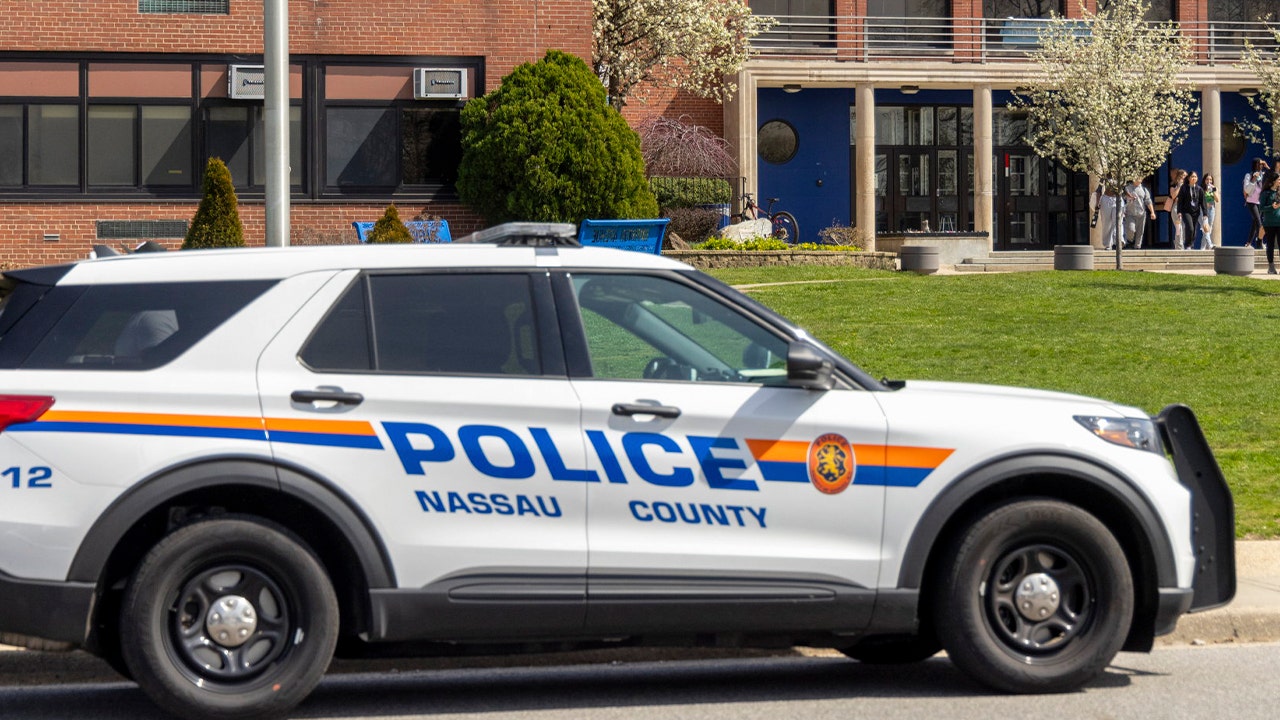
Lawmakers in Nassau County, New York, are pushing a measure to make it illegal to stand within 15 feet of first responders during an emergency. (Howard Schnapp/Newsday RM)

State law already subjects people who interfere with first responders to up to a year in jail, three years of probation or a $1,000 fine.

The new bill was introduced by Republicans but has garnered support from some Democrats, according to the newspaper.

“Our cops and first responders shouldn’t have to fight crowds while they’re saving lives,” Democrat legislator Seth Koslow, who is running for county executive, told the New York Post. “This bill gives them the authority to keep chaos out and do their jobs without interference. It’s backed by both parties — because protecting those who protect us shouldn’t be political.”

The bill was introduced by Republicans but has garnered support from some Democrat legislators, including Seth Koslow. (Getty Images)

Advertisement

Despite the bipartisan support among lawmakers, critics say the bill goes too far and could be abused to curb people’s constitutional rights.

“Floating buffer zones offer yet another way for police to keep their activities hidden from public scrutiny,” New York Civil Liberties Union senior policy counsel Justin Harrison told the New York Post. “Laws that make it harder to monitor the police don’t make anybody safer — in reality, they violate the Constitution, run counter to government transparency principles, and foster distrust in law enforcement.”

Some other states have passed similar laws that were later struck down by the courts.

VIDEO CAPTURES NEW YORK GRANDMOTHER, CHILDREN NARROWLY AVOIDING MANHOLE EXPLOSION

People who enter the “buffer zone” for first responders during an emergency would face a misdemeanor charge and a $1,000 fine along with the possibility of up to a year behind bars. (Getty Images)

Advertisement

Louisiana passed a law last year prohibiting people from being within 25 feet of police after being told to back up. But last month, a federal judge blocked the measure, finding that it violated the 14th Amendment’s due process regulations and could infringe on journalists’ press freedoms guaranteed by the First Amendment that grants them the right to film officers.

Similar laws in Arizona and Indiana have also been blocked by federal judges.

“We expect that Nassau’s law, if passed, will meet the same fate,” Harrison said.

Read the full article from Here

Advertisement
Continue Reading
Click to comment

Leave a Reply

Your email address will not be published. Required fields are marked *

This site uses Akismet to reduce spam. Learn how your comment data is processed.

Pittsburg, PA

Plum Borough parents charged with supplying alcohol for underage drinking party

Published

on

Plum Borough parents charged with supplying alcohol for underage drinking party


Two parents are facing charges after police say more than 60 teenagers were drinking at a large party in their Plum Borough home.

According to court paperwork, Ian and Corrine Dryburgh have been charged with endangering the welfare of children, corruption of minors, and furnishing liquor to minors stemming from the incident that happened at a home in Plum Borough late last month.

Police said that officers went to the home after receiving a tip about a large party involving high school aged children.

Advertisement

When officers arrived at the home, they found numerous teenagers, empty beer cans and empty seltzer cans, and multiple bottles of vodka.

The parents told police that a birthday party for their 17-year-old daughter got out of hand and that some kids has been kicked out, but more came and they didn’t know what to do.

According to the criminal complaint, officers said they had been called to the home two previous times for similar reasons. 

Police said a total of 66 underage kids were at the home.

Court records show that both parents have been cited via summons and preliminary hearings are scheduled for mid-April. 

Advertisement


Source link

Advertisement
Continue Reading

Connecticut

Connecticut to receive $154 million for rural health

Published

on

Connecticut to receive 4 million for rural health


Connecticut is set to receive more than $154 million aimed at improving health care in rural communities.

The funding comes from the Centers for Medicare & Medicaid Services’ Rural Health Transformation Program, according to a community announcement.

The Connecticut Department of Social Services will lead the initiative, partnering with other state agencies to implement projects across four core areas: population health outcomes, workforce, data and technology, and care transformation and stability, according to the announcement.

Advertisement

The program will include several innovative projects, such as a mobile clinic pilot with four primary care and four dental vans, a health workforce pipeline through the Area Health Education Center and UConn Health Center, and community health navigators.

“Rural Connecticut has unique challenges, and its residents deserve the same access to high-quality care and support as anyone who lives anywhere else,” Lamont said. “This investment allows us to tackle those challenges head-on – from expanding mental health services and building a stronger health care workforce to modernizing our technology infrastructure and connecting residents to the services they need. This is about making sure every corner of Connecticut has the opportunity to thrive.”

The program was developed through extensive public engagement, including more than 250 written comments, meetings with health care providers, local government officials and community organizations, as well as in-person and virtual listening sessions held across the state, according to the announcement.

Andrea Barton Reeves, commissioner of the state Department of Social Services, highlighted the program’s long-term vision.

Advertisement

“This program reflects our commitment to building systems that work for rural residents over the long term,” she said in the release. “We are excited and grateful to CMS for this opportunity to make sure that our investments are coordinated, impactful, and built to last.”

The program aims to bring health care closer to rural residents while supporting the workforce that provides care, said Dr. Manisha Juthani, commissioner of the state Department of Public Health.

“Every person in rural Connecticut deserves good health care close to home, and the people who provide that care deserve real support too,” Juthani said. “This funding helps us bring care to where people are and build the healthcare workforce our communities need. When we invest in both, we give everyone a better chance at staying healthy.”

Additional information about the Rural Health Transformation Program, including opportunities for public engagement, will be made available as implementation proceeds.

For more information, visit the Connecticut Department of Social Services website at ct.gov/dss.

Advertisement

This story was created with the assistance of Artificial Intelligence (AI). Journalists were involved in every step of the information gathering, review, editing and publishing process. Learn more at cm.usatoday.com/ethical-conduct.


Source link

Continue Reading

Maine

Rangeley Heritage Trust creates Friends of Western Maine Dark Sky

Published

on

Rangeley Heritage Trust creates Friends of Western Maine Dark Sky


The ‘Friends of Western Maine Dark Sky’ group meets March 3 at the Rangeley Lakes Heritage Trust office in Rangeley. They discussed the formation of the group as well as the process for designating the town as a dark sky community. (Quentin Blais/Staff Writer)

Looking up at the night sky in northern and rural Maine, it is a sight to behold, almost unique in today’s lit-up world. The Rangeley region is one of the last areas in the Northeast largely untouched by light pollution.

It is also a draw for many tourists and stargazers who come to the region for the clear view of the night sky.

A new group called Friends of the Western Maine Dark Sky hopes that by limiting the amount of light pollution, those views will be preserved for generations to come.

Advertisement

The group gathered at the Rangeley Lakes Heritage Trust on March 3 to talk about ways to educate the community on the importance of dark skies to the region.

One of their primary efforts is to try to designate Rangeley as an official Dark Sky community.

The designation will require a few steps. First, an application will be submitted to DarkSky International expressing an interest. Then, the town of Rangeley will need to adopt a new lighting ordinance at the June town meeting.

A new state law taking effect in October will require publicly funded outdoor lighting across the state to be dimmed at night to protect wildlife and dark skies. This includes using warm, yellow-toned bulbs, dimming or turning off nonessential lights and shielding lights so they don’t shine upward into the sky.

The town ordinance would create guidelines similar to the state laws on the kinds of lights used in town, as well as restrict some signs, such as LED message boards. Existing boards would be allowed to remain in place.

Advertisement

“The fact that the existing signage is grandfathered in perhaps bodes well for getting an approval of the town meeting,” said Linda Dexter, Dark Sky community certification coordinator at the Rangeley Lakes Heritage Trust, who is leading the effort. “It’s going to impact businesses in the town … right out of the gate, folks will tend to not vote for it.”

Even if an ordinance passes, change would likely be slow. Most of the group’s efforts will be on community education, such as informing seasonal residents to turn off the lights at their camps while they are gone for the winter. Also, the application may not be approved for up to six months after it is submitted, Dexter said.


Source link

Advertisement
Continue Reading

Trending