New York
Weinstein Accuser Testifies About Coerced Sex for a Second Time


Miriam Haley, a former television production assistant, on Tuesday afternoon took the stand in a Manhattan courtroom for a second time to begin recounting how she said Harvey Weinstein overpowered and sexually assaulted her in his apartment nearly 20 years ago.
Ms. Haley said she initially met Mr. Weinstein, then a powerful Hollywood producer, at a film premiere in London in 2004. She has said she reconnected with him years later at the Cannes Film Festival as she was looking for an opportunity as a production assistant in New York.
Defense lawyers carefully listened on Tuesday as Ms. Haley spoke, a transcript of what she said during Mr. Weinstein’s first trial five years ago on hand, waiting to pounce on any differences in her retelling.
Ms. Haley’s testimony was one of the most highly anticipated and closely watched moments of Mr. Weinstein’s retrial, which began this month.
In 2020, Mr. Weinstein was convicted in New York of rape and a criminal sexual act based on the complaints of two women, one of them Ms. Haley. He was sentenced to 23 years in prison, but his conviction was overturned last year and a new trial was ordered. In the interim, prosecutors added a new indictment.
On Tuesday, Alvin L. Bragg, the Manhattan district attorney, watched as Ms. Haley testified. She was not the first witness to testify for a second time. Ms. Haley’s former roommate told jurors last week about how a “very shaken and distraught and frightened” Ms. Haley hovered around her bedroom door while telling her that Mr. Weinstein had “forcibly put his mouth on her vagina without her consent.”
“I said, ‘Miriam, that sounds like rape,’” the woman, Elizabeth Entin, told the jurors. “‘I think you should call a lawyer.’”
As Ms. Haley began her testimony, a prosecutor, Nicole Blumberg, asked her to identify Mr. Weinstein. In response, she pointed to Mr. Weinstein sitting at the defense table. As she pointed, Mr. Weinstein, facing her with his arm over the back of his wheelchair, looked down at his left lapel.
Ms. Haley began telling her story publicly before the initial trial five years ago. Her accusations surfaced at the dawn of the #MeToo movement, as dozens of women came forward to recount what they said was Mr. Weinstein’s pattern of using his power to coerce women in Hollywood into sexual encounters, propelling the movement and his downfall.
Mr. Weinstein was known throughout his decades-long reign as a producer who could make careers. He was behind award-winning movies like “Pulp Fiction” and “Good Will Hunting,” as well as the reality show “Project Runway,” where Ms. Haley worked briefly as a production assistant.
Mr. Weinstein is also charged with raping Jessica Mann, an aspiring actress who said Mr. Weinstein attacked her in 2013, and Kaja Sokola, a model whom prosecutors say he assaulted in a Manhattan hotel in 2006.
Mr. Weinstein has pleaded not guilty and his lawyers have said that his interactions with all of the women were consensual.
The producer offered his victims scripts and the promise of fame, Shannon Lucey, an assistant district attorney, said in her opening statements — and he “used those dream opportunities as weapons.”
In their opening statements to the jury, Mr. Weinstein’s lawyers said that the women whom prosecutors called victims had entered consensual relationships, because Mr. Weinstein had the key to the doors of fame. Arthur L. Aidala, a defense lawyer, told the jurors that he would help them “watch the whole movie.”
The specifics of the encounters between Ms. Haley and Mr. Weinstein have been laid out in her previous testimony and in prosecutors’ statements.
Ms. Haley, who was raised in Sweden, met Mr. Weinstein at a movie premiere in London in 2004. About two years later, as she was looking for a new position, she saw him at Cannes and asked him if there were any opportunities at the Weinstein Company, his production firm in New York.
While in France, Mr. Weinstein invited her to a hotel for what Ms. Haley believed was a business meeting, she has said. There he commented on her legs, she said, and asked her for a massage.
On Tuesday, Ms. Haley said the interaction had made her feel embarrassed. As she left the hotel, she said, she burst into tears.
“I felt taken aback, I felt humiliated,” she told the jury. “It was a sinking feeling, realizing that he wasn’t taking me seriously at all.”
After Ms. Haley got her post working on “Project Runway,” which was produced by Mr. Weinstein’s company, his advances continued, she has said. She said she had worked on the tail end of a season, about two to three weeks, and had been paid in cash. She did not have authorization to work in the United States, which Mr. Weinstein knew and used against her, according to prosecutors.
Throughout the summer of 2006, as Ms. Haley worked for his company, Mr. Weinstein tried to “elevate” their relationship, Ms. Lucey said, even showing up unannounced on one occasion and aggressively making his way into her apartment to demand that she travel with him to Paris.
Ms. Haley refused, she said on Tuesday, eventually telling him, “I heard about your reputation with women,” in an attempt to get him to leave. Mr. Weinstein departed, she said, seeming “offended” and upset.
After these episodes, Ms. Haley still agreed to travel to a film premiere in Los Angeles. On the day in July 2006 that Mr. Weinstein bought her ticket, he invited her to his apartment in Lower Manhattan, she said.
There, after offering her a drink, he lunged at her, holding her down and pushing her until she fell backward onto a bed, she said. Ms. Haley recalled that she was on her period, which she told Mr. Weinstein, but he pulled the tampon from her body and put his mouth on her genitals.
Ms. Haley’s testimony was scheduled to continue on Wednesday morning.



Welcome to Day 2 of the Metropolitan Diary challenge, part of our celebration of the column’s 50th anniversary. On Day 1, we gave you tips for identifying your New York City story. Today, we’ll help you write it. (Missed Day 1? It’s not too late to start.)
What makes for a good Diary? It’s simply a good story that happens to be set in, and capture, the essential New York-ness of the city. While this isn’t a full writing course, we do have guidance on the kinds of elements that the submissions we publish include. They typically have: a beginning, middle and end; sharp details; catchy dialogue; a bit of surprise; some humor, warmth or emotion. But there is no formula, so flouting these loose rules can be worthwhile.
Don’t worry if you don’t think of yourself as a “writer.” Focus on being a “storyteller.” Pretend you are telling your story to the person who’d most appreciate it, using whatever conversational language or pacing that would hold their attention. Do it out loud if you want, maybe give that person a call and tell them your story (or tell it to them again). Then write it down.
That’s the big picture. For more tips, read on.
Here is an example of a published Diary that we (and readers) really liked, and a few thoughts on why that may help crystallize yours.
Unacceptable
Dear Diary:
I went to a new bagel store in Brooklyn Heights1 with my son.
When it was my turn to order, I asked for a cinnamon raisin bagel with whitefish salad and a slice of red onion.2
The man behind the counter looked up at me.
“I’m sorry,” he said. “I can’t do that.”3
— Richie Powers
One of this item’s best qualities is that it is short and snappy. Only 53 words! Although we will use stories of up to 300 words, many don’t need to be that long and the column doesn’t work if we don’t have a mix of long, medium and short, so we are always looking for stuff like this. Here’s another one!

At Attention
Dear Diary:
It was December 1967. I had just finished basic training at Fort Dix in New Jersey and was traveling to Boston in uniform. For reasons I no longer recall, I stopped in New York City on the way.1
Walking on the Upper East Side2 in a snowstorm, I spied another man in a uniform. He was older, and his cap bore the familiar gold band that identified him as an officer.
I rendered a snappy salute. It was not returned. 3The uniform was unfamiliar, so I guessed he was a foreign officer. Military courtesy still required me to salute.
A little farther down the street, I encountered another officer and offered another salute that went unacknowledged.4 His uniform was strange to me as well.
The third time it happened, the man I saluted ignored me while holding the door for a couple 5on their way into a large apartment building.
I realized I had been saluting doormen.6
— Stephen Salisbury
To get your storytelling muscles going, think through or jot down the answers to some of these questions.
Let’s start with setting the scene.
- When and where in the city did this happen? Is this place well-known?
- Was there anything particular about that point in your life that’s relevant?
- What did you see, hear, smell? Was there something notable about the weather?
Now, let’s move to the middle, the meat of the story.
- Did you have an exchange with someone?
- What details are important to how events unfolded, especially in setting up the ending?
And now, the end.
- What’s the resolution? Is there a punchline?
- Does the story end with a sense of shared humanity or some other warm feeling that lingers? You don’t need to name it. A good description will often allow readers to feel it too.
- Why has this experience stayed with you?
- Lines like “and that’s why I love New York” are almost always unnecessary.
That’s it. Keep your story simple and use the kind of plain language you use in conversation. You are sketching a moment in time. The details are important. Let them move the story along. Have fun and good luck.
Once you’re done, read through what you’ve got. What details are less important and can be left out? (Remember, there is a strict 300-word limit.)
Write your Metropolitan Diary however you like, on paper, on your phone or wherever! When you’re happy with what you’ve written, put your diary entry into the box below, fill out your information and submit it. You might just hear from me about including it in a future column.
This is the official submission form, so make sure to double-check your work before hitting submit.
That’s it! Submit your Metropolitan Diary.
By transmitting your submission, you grant The New York Times Company a perpetual, royalty-free license to use the submission in any medium. They may be edited, and may be republished and adapted in all media. You may reprint your story elsewhere after it appears in The Times.

65.
In or about and between December 2023 and April 2024, both dates being approximate and inclusive, within the Eastern District of New York and elsewhere, the defendants MALIK BEASLEY, also known as “Beas,” “Bease,” “MB” and “5,” WILLIAM BROWN, also known as “Willo,” EDWARD DAVIS, also known as “Ed,” “ED” and “E Davis,” ROBERT GORODETSKY, also known as “Rob,” ERNESTO PLASCENCIA, also known as “Ernie,” “Erny,” “Ernie P” and “Erny P,” and PAOLO ZAMORANO, also known as “PZ,”
together with others, did knowingly and intentionally conspire:
(a)
to conduct one or more financial transactions in and affecting
interstate commerce, which transactions in fact involved the proceeds of specified unlawful activity, to wit: (i) wire fraud, in violation of Title 18, United States Code, Section 1343 and (ii) sports bribery, in violation of Title 18, United States Code, Section 224, knowing that the property involved in the transactions represented the proceeds of some form of unlawful activity, and with the intent to promote the carrying on of the specified unlawful activity, contrary to Title 18, United States Code, Section 1956(a)(1)(A)(i);
(b)
to conduct one or more financial transactions in and affecting interstate commerce, which transactions in fact involved the proceeds of some form of unlawful activity, to wit: (i) wire fraud, in violation of Title 18, United States Code, Section 1343 and (ii) sports bribery, in violation of Title 18, United States Code, Section 224, knowing that the property involved in the transactions represented the proceeds of some form of unlawful activity, and knowing that the transactions were designed in whole and in part to conceal and disguise the
19

How can people possibly afford to live in one of the most expensive cities on the planet? It’s a question New Yorkers hear a lot, often delivered with a mix of awe, pity and confusion.
We surveyed hundreds of New Yorkers about how they spend, splurge and save. We found that many people — rich, poor or somewhere in between — live life as a series of small calculations that add up to one big question: What makes living in New York worth it?
Weixun Hu enjoys what might sound like the ultimate professional perk. New Yorkers pay some of the country’s highest taxes on their income, more than $12,000 on average per person between state and local governments. But Mr. Hu’s income tax this year? $0.
That’s because Mr. Hu, 32, who was born in Guangzhou, China, conducts social development research at an international organization, where most employees are exempt from national income taxes or reimbursed for the cost. His gross and net income are one in the same; he earns roughly $110,000 after his insurance and pension contributions.
Mr. Hu became one of New York City’s 3.1 million foreign-born residents nearly three years ago, after reassignment from a post in Bangkok in the summer of 2023. But he quickly ran into a hurdle: finding an apartment with no credit history, no tax returns and no one to co-sign a lease.
“It sounds very cool that you don’t pay taxes,” Mr. Hu said. “It also creates a lot of problems.”
He discovered that many of his co-workers landed in a handful of pricey residential developments including Stuyvesant Town. Yet renting there felt worlds apart from Thailand’s capital city, where a luxury studio in a high-rise condo with a rooftop infinity pool and premium gym might run $600 per month.
So he found a studio in Long Island City, Queens, where he has in-unit laundry and falls asleep to the sound of waves hitting the shore near Hunters Point South. His employer subsidizes $700 of his $3,900 rent, and utilities and internet cost about $150 monthly.
“It’s much better value compared to renting in Manhattan,” he said.
Saving for Tomorrow
A good deal of young adults in New York City don’t know how to drive, and expect to remain renters for most of their lives. Not Mr. Hu.
He puts away $2,000 or so a month into a high-yield savings account, aspiring to buy a car. His sights are set on a Mazda CX-5. But he expects he’ll need to pay upfront in cash, another consequence of lacking a credit or tax history — and it’ll take about three more years to build up enough.
Eventually, he wants to own a home. “I know most people in New York City don’t care,” he said. “But for me, it’s very important.”
Mr. Hu also supports his parents in their retirement, sending about $3,000 every three months. As their only child, he feels both a sense of guilt for living about 8,000 miles from home — and an obligation to pay them back for their sacrifices.
“People will say, ‘Oh, you’re single. You don’t have a wife. You don’t have kids,’” he said. “‘So all your money is yours.’”
“And I’m like, ‘Excuse me, my parents are still alive.’”
In other ways, though, Mr. Hu fits the profile of an everyday bachelor: He rarely cooks meals at home. “My oven is basically storage space.”
Rather, he searches for affordable deals on Too Good To Go, a popular app where restaurants sell excess food at a discounted price. His No. 1 spot is Chinese Musician in Greenpoint, which offers a three-course meal for $9.
Sometimes, Mr. Hu does the $16 tonkotsu ramen at Nishida Sho-ten on 49th Street for lunch, an $8 lamb over rice meal for dinner from the halal truck in front of Bellevue Hospital or a hot dog for $3.25 from Gray’s Papaya. He’ll swing by the Dollar General in Astoria to stock up on his favorite drink, Coca-Cola Orange Cream.
And he saves up for an upscale dining experience every couple of months. He recently feasted at the Michelin-starred chef Daniel Boulud’s steakhouse, La Tête d’Or, where he spent roughly $300 and ordered what he called the standout filet mignon.
The Lions Over the Knicks
For any sports buff, it’s an incredible time to live in New York City.
But for Mr. Hu, ticket prices to see the Knicks play at Madison Square Garden felt “a little bit off-putting” — and that was even before their championship run. So he started religiously following basketball at Columbia, going to games that often run $10 to $12 on the Morningside Heights campus.
Yankees games, where a 400-level seat might run $45, are a no; he opts to watch the Columbia Lions up close at Robertson Field in Inwood without charge.
He is willing to spend up to about $300 on some singular sports showdowns. He can still recall how Kylian Mbappé flew down the field at MetLife Stadium during a Real Madrid match against Borussia Dortmund last summer.
Typically, though, he elects for low- or no-cost events like this spring’s edition of the Madison Avenue Gallery Walk.
And he regularly joins free lectures at the Asia Society, where he has a complimentary membership through his employer, and at local universities like N.Y.U., where he’s met the minds behind two of his favorite video games, The Elder Scrolls and Monument Valley.
A Sense of Wanderlust
Ever since Mr. Hu can recall, he’s felt a magnetic pull to experience the world. And few things embody such a yearning as aviation.
He sometimes goes to Canarsie to watch planes land at Kennedy International Airport, studying the way pilots pull up the nose of their aircrafts and slow the descent before touching down. He’s even found others who share his passion on walks in the neighborhood.
And traveling draws him even closer to his hobby.
He spent $4,400 on a trip to Guangzhou last June to fly for the first time in an Airbus A380, the only full-length double-deck aircraft in the world. Qatar Airways is one of the few airlines that still has an active fleet — so Mr. Hu arranged his trip by way of Doha.
“Some people treat it as bragging,” he said. “But no, it’s just to admire such an incredible machine that’s very rare to be seen these days.”
“It’s a weird, niche hobby, but I’m happy spending my money on it.”
As a young man living in his seventh country — after Belgium, China, Italy, Poland, Thailand and the United Kingdom — he appreciates that as “a foreigner in this city, you don’t have to worry about whether you stand out.”
He’s relished exploring from Crown Heights to Jackson Heights, taking the train to a random stop and popping into bodegas to chat up the owners. He considers Staten Island — and its Chinese Scholar’s Garden in Snug Harbor where adult admission costs $5 — to be a hidden gem.
And when he boarded the U.S.S. Bataan during a past Fleet Week, he felt obliged to tell a Marine that he was Chinese. “He said: ‘Oh, no worries at all. Everybody can be an American’.”
“To be honest, I still don’t think it’s a value option for the money,” Mr. Hu said of New York City. “But there’s something so unique, and I think it’s that inclusiveness.”
“You don’t need to go to the world,” he said. “The world comes to you.”
We are talking to New Yorkers about how they spend, splurge and save.
-
 Entertainment2 minutes ago
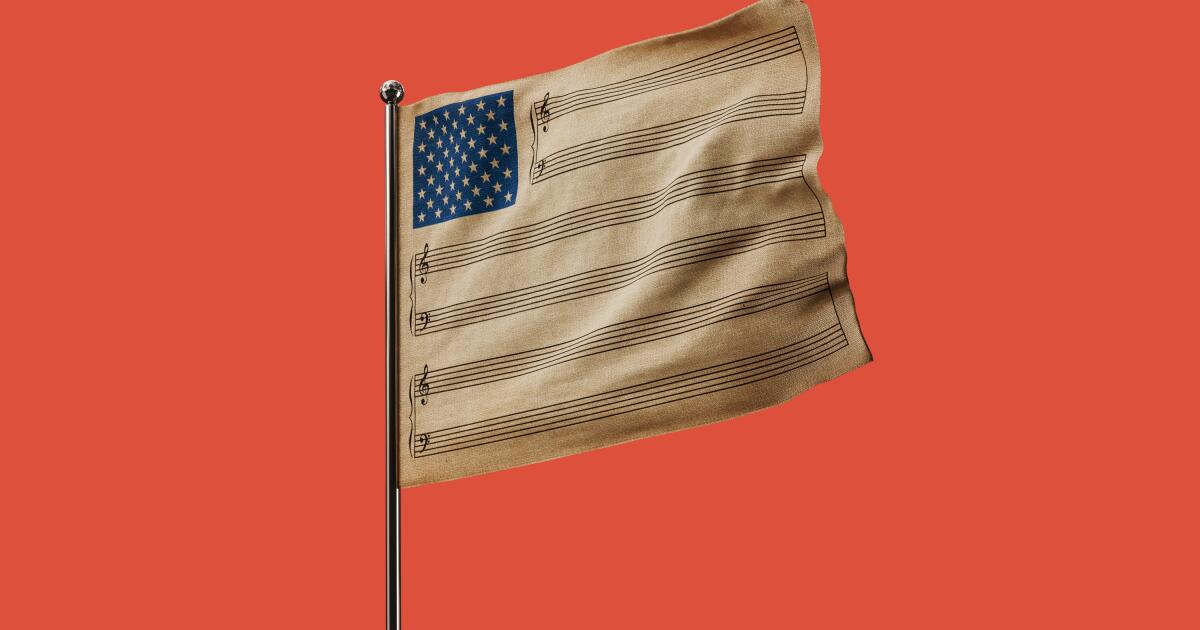
When, unlike our upcoming 250th anniversary, a bicentennial mattered to orchestras
-
 Lifestyle9 minutes ago
DLTA’s former Ace Hotel is reborn as a ‘creative hub’ — and yes, you can still sleep there
-
 Politics12 minutes ago
Trump wants to show off D.C. for the Fourth. His construction is in the way
-
 Science17 minutes ago
Boyle Heights blaze choked L.A. with astronomical soot pollution
-
 Sports24 minutes ago
Lakers announce summer league schedule, roster
-
World32 minutes ago
How the Entry-Exit System is becoming a nightmare for Europe's summer travellers
-

 News57 minutes ago
Newsom’s office responds to SCOTUS ruling on women’s sports as California faces ongoing trans athlete wave
-

 Los Angeles, Ca2 hours ago
Family of boy, 8, killed by falling tree branch at Calabasas park to get $14.6M

