New York
Robert S. Rifkind, Who Defended a Libel Suit by Ariel Sharon, Dies at 88


Robert S. Rifkind, who played a pivotal role in successfully defending Time magazine against a $50 million libel suit filed by Ariel Sharon, the former Israeli general, defense minister and later prime minister, died on March 12 at his home in Manhattan. He was 88.
The cause was complications of myasthenia gravis, a neuromuscular disease, his daughter Amy Rifkind said.
Mr. Sharon’s suit was prompted by a single paragraph in the Feb. 21, 1983, issue of Time. It referred to an Israeli government report on the massacre months earlier by Christian Phalange militiamen of at least 800 and as many as 3,500 civilian refugees, mostly Palestinians, in the Sabra and Shatila refugee camps in Lebanon. The massacre happened after Israel invaded Lebanon and the country’s president-elect, Bashir Gemayel, the Phalange leader, was assassinated.
The article suggested that Mr. Sharon had personally discussed retribution with Mr. Gemayel’s family, and that the Israelis looked the other way when the Phalangists extracted their revenge.
A jury found in 1985 that Time had misrepresented Mr. Sharon’s role in the massacre. But the jury concluded that the magazine’s reporting did not meet the legal threshold for libel in the United States because it did not publish the article with actual malice or a reckless disregard for the facts.
An Israeli commission’s damning conclusions that Israeli forces did not stop the massacre led to Mr. Sharon’s resignation as defense minister. But the commission’s report did not say that Mr. Sharon himself had mentioned revenge to the Gemayel family.
“The case is really not about libel, but a political instrument in the plaintiff’s hands,” Mr. Rifkind, whose law firm, Cravath, Swaine & Moore, represented Time, said while the suit was pending. “A pitched battle in which David, the Israeli war hero, smites Goliath, the American corporate giant, is good political fodder.”
Mr. Sharon, who later became the prime minister of Israel, declared victory, of sorts, because the jury found that Time had acted “negligently and carelessly” in publishing the disputed paragraph. The case cost the magazine millions in legal fees.
“Rifkind was a superb lawyer, who argued many of the motions, and did an admirable job,” U.S. District Court Judge Abraham D. Sofaer, who presided over the case, said this week in an email.
When the lead defense lawyer, Thomas D. Barr, was ill and the Time executive who was monitoring the case was out of the country, and with Mr. Sharon wanting to return to Israel to campaign for office, Mr. Rifkind negotiated a proposed settlement of the lawsuit on the basis of a prepared statement.
“The statement did not include any payment or even an apology,” Judge Sofaer recalled. “It simply said that Time did not intend to convey that Sharon had given permission for the murders. Rifkind had undoubtedly secured a highly favorable result in the case. Sharon was tired of the litigation and gave his political life a higher priority.”
Time, however, confident of a favorable verdict, rejected the proposal. The subsequent finding that the magazine had been negligent — though not malicious — bolstered Mr. Sharon’s case when he sued Time in Israel, where the malice standard did not apply, and won a settlement there.
The case caused a sensation in the United States and the Middle East for its political implications and its impact on the media industry.
Mr. Rifkind figured in several other major cases, including a successful defense of the 1964 Voting Rights Act when he was assistant to the U.S. solicitor general at the time, Thurgood Marshall, a post he held from 1965 to 1968.
Mr. Rifkind argued several cases before the Supreme Court. He was involved in Miranda v. Arizona, the 1966 case that established that police officers must inform suspects of their constitutional rights before questioning. He worked on South Carolina v. Katzenbach, in which the Supreme Court ruled in 1966 that federal intervention to let eligible residents of individual states register and vote was constitutional under the 15th Amendment. (Nicholas Katzenbach was the U.S. attorney general.) And he represented New York City voluntarily, or pro bono, in lawsuits in the 1980s and ’90s challenging the federal decennial census because of what the city said was an undercount.
Mr. Rifkind was also involved in Jewish affairs. He served as president of the American Jewish Committee from 1994 to 1998.
“Bob Rifkind was what all lawyers aspire to be,” said Evan R. Chesler, Cravath’s former presiding partner and chairman. “He was brilliant, had a majestic command of the language and was unfailingly courteous to all those who worked for, with and against him.”
Robert Singer Rifkind was born on Aug. 31, 1936, in Manhattan to Adele (Singer) and Simon H. Rifkind. His father was a federal judge and later a partner in the firm that became known as Paul, Weiss, Rifkind, Wharton & Garrison in 1950, four years after it was founded.
Bob Rifkind graduated from the Loomis School (now the Loomis Chaffee School) in Windsor, Conn., and earned a bachelor’s degree in history from Yale College in 1958 and a juris doctor degree from Harvard University Law School in 1961.
He joined Cravath the next year and, except for his stint with the solicitor general in Washington, remained with the firm until he retired in 2001. He had senior counsel status after retiring as a litigator.
In 1961, he married Arlene Brenner; she died in 2021. In addition to his daughter Amy, he is survived by another daughter, Nina Rifkind, and five grandchildren.
His daughters, both lawyers, invoked their grandfather this week in a letter to Brad Karp, the chairman of Paul, Weiss, in which they publicly criticized the firm’s decision to commit $40 million in pro bono legal services for causes President Trump championed if the White House rescinded an executive order that would have suspended Paul, Weiss’s security clearances and prohibited its lawyers from entering federal buildings.



new video loaded: We Analyzed the Deadly Crash at LaGuardia

By Lazaro Gamio, Coleman Lowndes and James Surdam
March 27, 2026

“I just thought, please don’t let this be how my life ends. I’m not ready to die. When we landed, it was a very rough landing. Like we landed and the plane jolted back up, and that caught a lot of passengers off guard. Everyone kind of like, ‘What’s going on?’ And then you hear the pilot braking, and it was like just this grinding sound.” “Everybody was shocked everywhere. There was — there’s people screaming. The plane just veered off course. I mean, it was just — it all happened so quickly, but it all felt just like a very dire situation.” “Oh, God. Oh my goodness. That’s crazy.” “People were bleeding from their nose, cuts and scrapes. I saw black eyes, all different types of facial contusions, bruising and bleeding. I was sitting by the exit door, and I opened the exit door. There was a sense of camaraderie amongst the survivors. Nobody was pushing, shoving, ‘I got to get out first.’” “The plane actually tipped back as we were leaving, as people were getting off the plane. That was when the nose kind of fell off the front of the plane, and the whole plane kind of went up to what we’d seen in all the pictures of the plane’s nose in the air.” And there was no slide when we got out. A lot of us were jumping off of the airplane wing to get down. And when I got out and I saw that the front of the plane, how destroyed it was, I just was — I was in shock.” “It was only really when I was outside of the plane, looking back at the plane, and I had seen what had happened to the cockpit, and then just like this sense of dread overcame me, where I was just like, wow, a lot of people might have just been pretty badly hurt.” “I’m grateful to the pilots who were so courageous and brave, and acted swiftly, and they saved our lives. And if it wasn’t for them, I wouldn’t be able to come home to my family. I’m forever indebted to them. They’re my heroes.”

new video loaded: Passenger Jet and Fire Truck Crash at LaGuardia Airport, Leaving 2 Dead

By Axel Boada and Monika Cvorak
March 23, 2026

Newsletter: G7 ministers to hold talks on war’s economic fallout
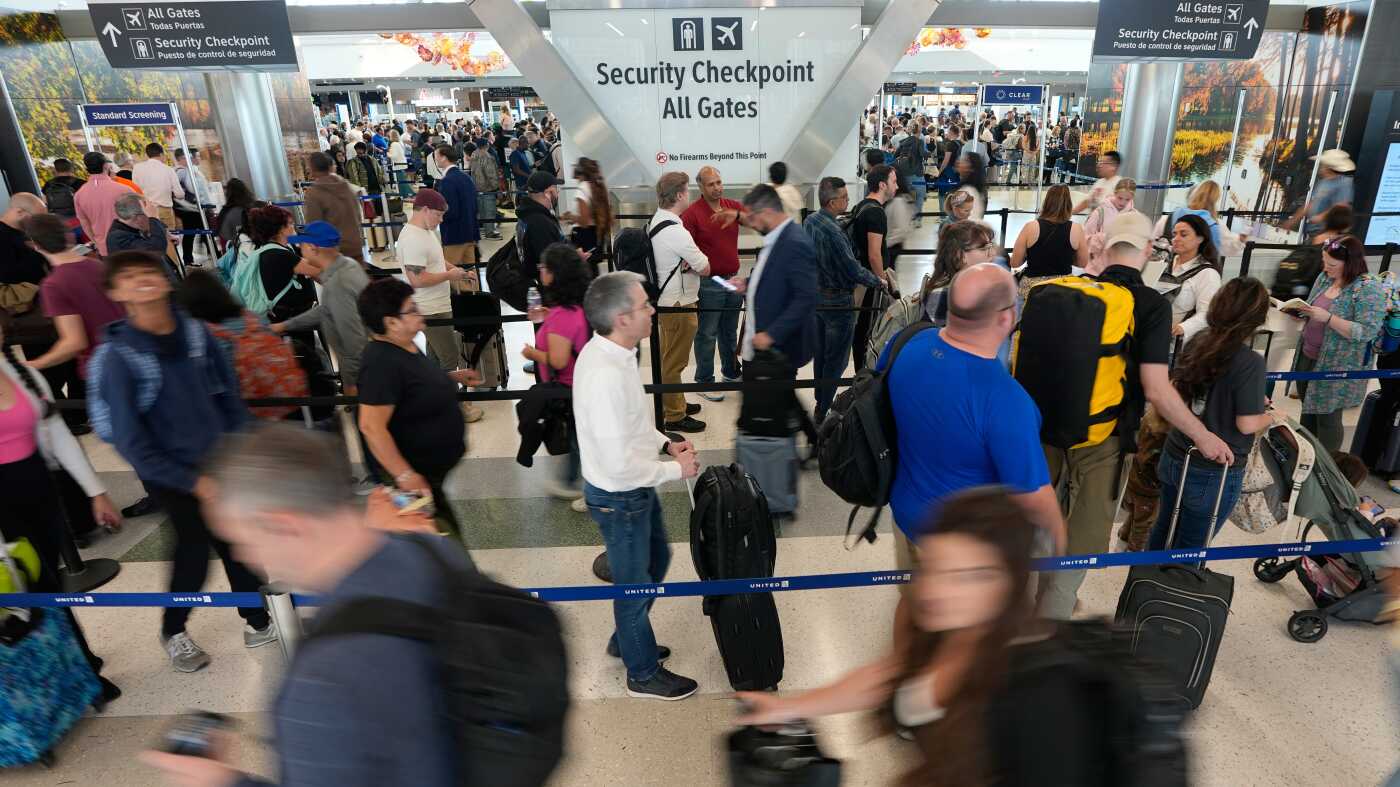
ICE officers could remain at airports after TSA workers are paid

Wolverines make Frozen Four

Bay Area residents hold rally in SF as war with Iran enters 2nd month

Dallas Jenkins says he is the ‘evangelical mascot of the LDS church’ and talks Easter celebrations

Florida High School Football Rankings: Top 25 teams – Oct. 21

How old is Bo Nix? What to know about Oregon quarterback ahead of 2024 NFL Draft

Cleary's 21 help Le Moyne down Central Connecticut State 69-64 in OT

99th annual Pony Swim held in Virginia

Indiana Members Credit Union announced as new anchor tenant at Bottleworks District
Newsletter: G7 ministers to hold talks on war’s economic fallout
ICE officers could remain at airports after TSA workers are paid

Scathing report claims nation’s oldest labor union ‘betrayed’ MAGA members through ‘shocking’ spending

Republican US lawmaker demands Congress vote on any Iran troop deployment

So you went to a No Kings protest. Now what?
-

 Sports1 week ago
IOC addresses execution of 19-year-old Iranian wrestler Saleh Mohammadi
-

 New Mexico1 week ago
Clovis shooting leaves one dead, four injured
-

 Miami, FL4 days ago
Jannik Sinner’s Girlfriend Laila Hasanovic Stuns in Ab-Revealing Post Amid Miami Open
-

 Tennessee6 days ago
Tennessee Police Investigating Alleged Assault Involving ‘Reacher’ Star Alan Ritchson
-

 Minneapolis, MN4 days ago
Boy who shielded classmate during school shooting receives Medal of Honor
-

 Politics1 week ago
Schumer gambit fails as DHS shutdown hits 36 days and airport lines grow
-

 Science1 week ago
Record Heat Meets a Major Snow Drought Across the West
-

 Technology1 week ago
YouTube job scam text: How to spot it fast