New Jersey
Markstrom's Filibuster | REWIND | New Jersey Devils


NewJerseyDevils.com is the official web site of the New Jersey Devils, a member team of the National Hockey League (“NHL”). NHL, the NHL Shield, the word mark and image of the Stanley Cup and NHL Conference logos are registered trademarks of the National Hockey League. All NHL logos and marks and NHL team logos and marks as well as all other proprietary materials depicted herein are the property of the NHL and the respective NHL teams and may not be reproduced without the prior written consent of NHL Enterprises, L.P. Copyright © 1999-2024 New Jersey Devils and the National Hockey League. All Rights Reserved.



Will Venezuela’s oil impact US gas prices?
President Donald Trump said major oil companies will spend billions in Venezuela, but experts say it is unlikely gas prices will change immediately.
We New Jerseyans have a lot to brag about.
From our beautiful shores, iconic musicians, actors and inventors that hail from all over the state and the unique blend of cultures no matter where you go — the Garden State is a place many are proud to represent.
Perhaps our most underrated bragging right is the fact that we don’t ever have to leave our cars at the gas station and reach for that pump because, well, we don’t pump our own gas. We technically aren’t even allowed to.
When the New Jerseyan ventures on a road trip to another state, they might wait in their car a little too long before realizing a gas attendant won’t be there to assist them. So why are we the only place in the country that has this luxury?
When did New Jersey ban pumping your own gas?
For one, New Jersey has a self-service ban at gas stations dating back to 1949 with the Retail Gasoline Dispensing Safety Act, citing safety concerns in relation to fire hazards as one of the main reasons for this ban.
Due to the potential danger from dispensing fuel, the New Jersey state law states “it is in the public interest that gasoline station operators have the control needed over that activity.”
Yet, protecting the people from fire isn’t the sole reason this law exists.
In the late 1940s, an entrepreneur named Irving Reginald opened a massive 24-pump self-service gas station in Hackensack with much lower prices than competitors. In efforts to intimidate Reginald, some competitors enacted a spiteful drive-by shooting at his station, in Sopranos-esque fashion.
When those attempts to stop Reginald were futile, they switched their efforts from continued violence to reforming legislation, and shortly after the Gasoline Retailers Association proposed the self-service ban, which was approved quickly.
‘Jersey Girls Don’t (Want to) Pump Gas’
Regardless of the unpleasant and somewhat vicious origins of the self-service ban, New Jerseyans seem to be content with it.
A 2022 Monmouth University study found that 60 percent of residents are opposed to a pump-your-own gas policy, with 54 percent supporting self-service as long as an attendant is still on duty to assist.
People argue that full-service gas stations lead to higher gas prices due to labor costs, but Oregon, who lifted their self-service ban back in 2018 then again fully in 2023, only saw gas prices decrease by 4,4 cents per gallon during their first ban.
Would self serve gas stations save money in NJ?
Even if the ban was repealed, gas prices wouldn’t go down by more than a few cents because the employment of full-time gas attendants lowers these stations’ insurance costs, since fewer accidents occur with less risk involved.

More than 57 million deadly doses of fentanyl have been seized through the United States in just 30 days, including 46,000 in New Jersey.
The seizures were made in the second phase of Operation Fentanyl Free America, led by the federal Drug Enforcement Administration (DEA).
The second phase of Operation Fentanyl Free America took place between Jan. 12 and Feb. 10 with the seizure of more than 4.7 million fentanyl pills and nearly 2,396 pounds of fentanyl powder. The 30-day enforcement effort led to more than 3,000 arrests across the U.S., and the removal of more than 57 million potentially lethal doses of fentanyl from circulation.
“Families across America are losing loved ones to the fentanyl being pushed by drug cartels that care only about making a profit. The DEA is attacking this threat with unwavering determination to protect our communities,” said DEA New Jersey Field Division Special Agent in Charge Towanda R. Thorne-James in a news release. “Phase II of this operation saw the men and women of DEA in New Jersey seize more than 46,000 fentanyl pills, 18 guns, almost $250,000.00 in drug money, and make 37 arrests. We will continue to work to stop this threat and make saving lives our top priority.”
DEA agents also recovered 147,797 pounds of cocaine, nearly 21,000 pounds of methamphetamine, more than 26 million methamphetamine pills, 1,183 pounds of heroin, 65,000 pounds of illicit marijuana, more than 1,500 firearms, and made more than 3,000 arrests.
The DEA launched the Fentanyl Free America initiative in October. The campaign targets enforcement operations on illicit drug networks, ensuring DEA registrants are working within the closed system of distribution, and increasing public awareness to reduce both the supply and demand of illicit drugs. This was the second targeted enforcement operation under the initiative.
The DEA New York Task Force also removed 60,000 fentanyl pills from circulation following the arrest of a cartel-linked distributor.
For more information on the DEA, visit www.dea.gov.
Email: bwadlow@MyCentralJersey.com
This story was created by reporter Brad Wadlow, bwadlow@usatodayco.com, with the assistance of Artificial Intelligence (AI). Journalists were involved in every step of the information gathering, review, editing and publishing process. Learn more.

Choose APP for breaking news
APP is your source for breaking news
TRENTON — Authorities have identified the Lacey woman who died after authorities said she was shot by a township police officer during a 911 call to her home early Monday morning.
Susanne Clarke, 55, of the Lanoka Harbor section, was killed during an encounter with Lacey Township Police Officer Dallas Gant outside the house on Hemlock Drive in the Lanoka Harbor section, according to the New Jersey Attorney General’s Office of Public Integrity and Accountability.
The initial findings indicate that officers were dispatched to the residence, which is near the intersection of Birch Road, shortly after 2 a.m. on Monday, March 16 following a 911 call for a “medical event.”
About 2:44 a.m., Gant fired his service weapon, striking Clarke. She was pronounced dead at the scene at 3:24 a.m.
A knife was recovered outside the home. The statement did not say whether the woman was brandishing or wielding it.
An obituary for Clarke from the Rezem Funeral Home in East Brunswick described her as a loving mother of two children, a devoted daughter and cherished friend with a passion for animals. She had been working on starting her own dog treat business had just passed an exam to become a licensed optician.
The obituary said she had been born in New Brunswick and spent many years in Chesterfield where she raised her children. She had recently moved to Lacey to enjoy life closer to the beach, the death notice said.
One officer was treated during the incident for injuries that were not life-threatening at a local hospital, authorities said. Several officers who were also on the scene were not injured, according to the Lacey Township Police Department.
The state Attorney General’s Office investigates all deaths that occur during encounters with law enforcement or while they are in custody. These cases must be presented to a grand jury.
Contact Asbury Park Press reporter Erik Larsen at elarsen@gannettnj.com.
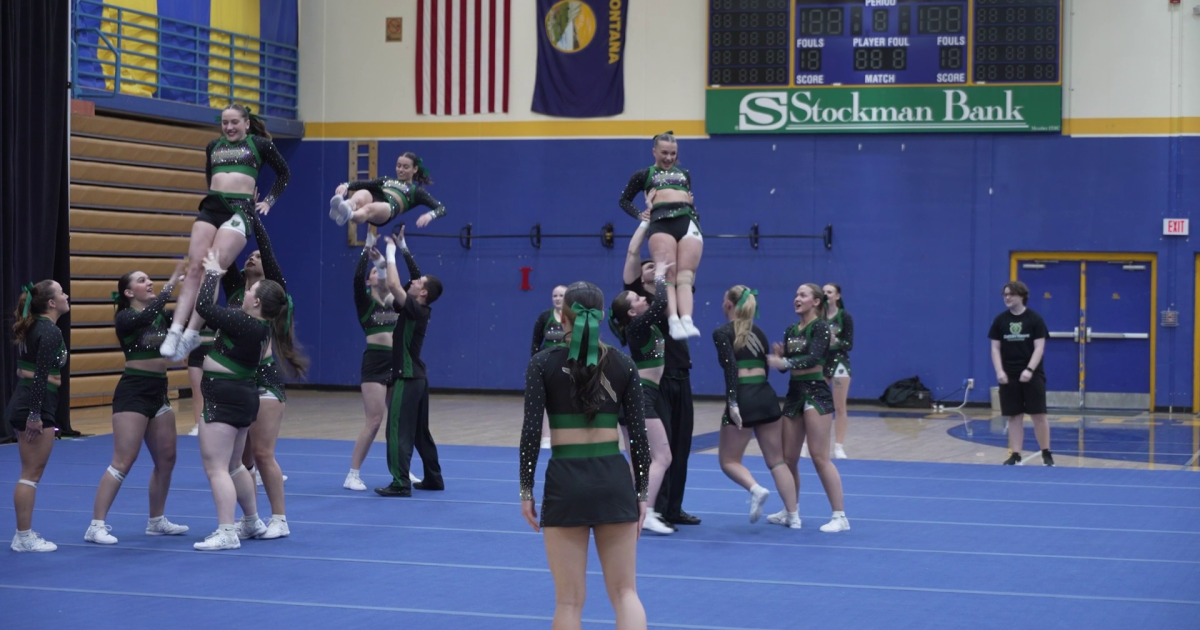
Cheerleaders showcase talent at Cheerfest

Extreme heat continues to strike Southwest US and even Nebraska needs a cold drink

Liberty vs Nevada Prediction, Picks & Odds for Today’s NIT Tournament Game

Fire officials responding after floor collapse at NH wedding venue results in ‘multiple injuries’ – Boston News, Weather, Sports | WHDH 7News

Why you still can’t pump your own gas in New Jersey

Florida High School Football Rankings: Top 25 teams – Oct. 21

How old is Bo Nix? What to know about Oregon quarterback ahead of 2024 NFL Draft

Cleary's 21 help Le Moyne down Central Connecticut State 69-64 in OT

99th annual Pony Swim held in Virginia

Indiana Members Credit Union announced as new anchor tenant at Bottleworks District

Schumer gambit fails as DHS shutdown hits 36 days and airport lines grow

Trump threatens to deploy ICE to airports amid Homeland Security shutdown

Alabama student reportedly fell to his death in Barcelona waters by accident

Read the Ruling in The Times’s Lawsuit Against the Pentagon

NYC Mayor Mamdani’s wife glorified terrorists in online posts, criticized US military: report
-

 Detroit, MI3 days ago
Drummer Brian Pastoria, longtime Detroit music advocate, dies at 68
-

 Oklahoma1 week ago
Family rallies around Oklahoma father after head-on crash
-

 Nebraska1 week ago
Wildfire forces immediate evacuation order for Farnam residents
-

 Georgia5 days ago
How ICE plans for a detention warehouse pushed a Georgia town to fight back | CNN Politics
-

 Alaska6 days ago
Police looking for man considered ‘armed and dangerous’
-

 Southwest1 week ago
Talarico reportedly knew Colbert interview wouldn’t air on TV before he left to film it
-

 Minnesota1 week ago
Many with Minnesota ties make Forbes list of world’s richest people
-
 Science1 week ago
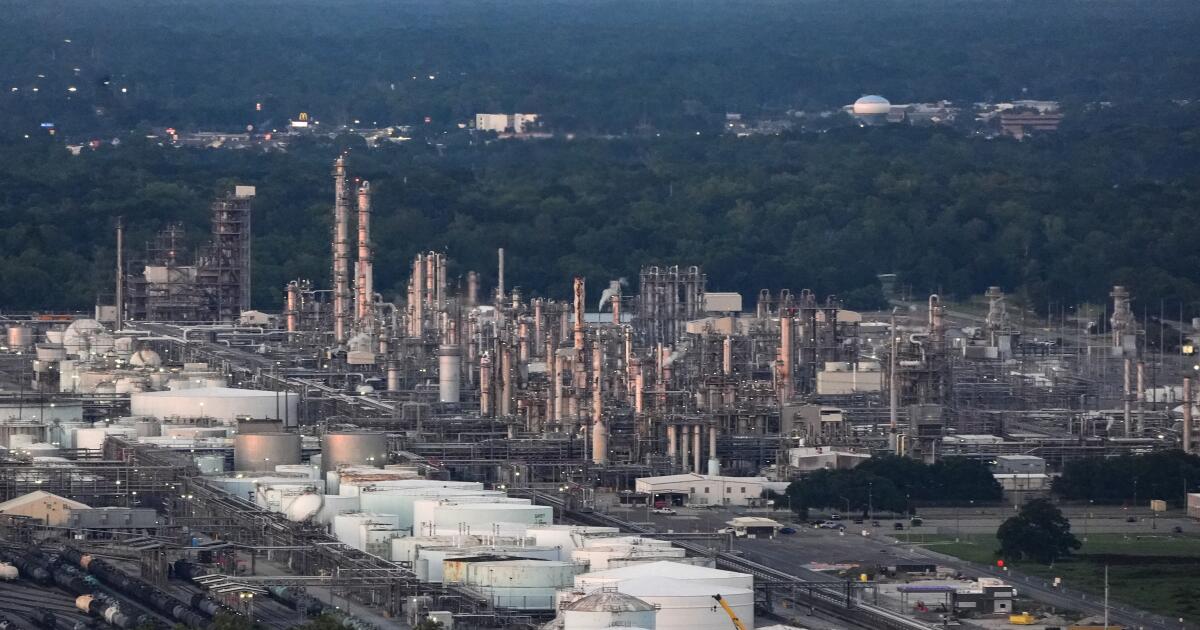
Federal EPA moves to roll back recent limits on ethylene oxide, a carcinogen