New Jersey
Bigger, More Defensive, but Better? The New Jersey Devils’ First Day of 2024 Free Agency


The first day of Free Agency Frenzy is often the most active. In the first hour alone there were 64 contracts handed out worth a total of over $700 million. Many more deals were given out in the afternoon. It is not that there are no decent options on July 2 and beyond, but the Frenzy is, well, a frenzy for a reason. A team has to make their moves quickly. The New Jersey Devils did exactly that. Within that first hour, the Devils signed defenseman Brett Pesce for six seasons with a $5.5 million cap hit and defenseman Brendan Dillon for three seasons with a $4 million cap hit. A little later in the afternoon, they brought back right winger Stefan Noesen for three seasons with a $2.75 million cap hit. The afternoon was rounded out by two signings more or less meant for Utica: center Mike Hardman and returning defenseman Colton White. The signings of Pesce, Dillon, and Noesen certainly help make the Devils a bigger, more defensive, and even physically tougher team. But are they actually better?
Before answering that question, allow me to touch on each of the three major signings. If nothing else, Tom Fitzgerald only overpaid a bit for each but nothing out of the ordinary for unrestricted free agents. From my standpoint, the overpayment is more in term than it is in dollars. Would it have been great if the soon-to-be-34 year old Dillon received two seasons at $4 million per season instead of three? Yes. Would it have been nice if Pesce’s contract was a year or two shorter? Sure. Likewise for Noesen? You bet. But this is part of the cost of doing business. At the least, Pesce’s and Dillon’s deals open up their clauses toward the end of their deals – as well as their salaries. (Aside: Clauses? Yes. Pesce has a full no trade clause that becomes modified in 2027-28. Dillon has a full no trade clause that becomes a 10-team no trade list in 2026-27.) Noesen is a flat $2.75 million per season. Still, the Devils are left with plenty of space – $6.7 million – to take care of their restricted free agents and maybe have room for one more notable signing.
Taking a step back, it was clear that General Manager Tom Fitzgerald felt his team needed to be beefier both in terms of mass and in terms of style of play. This has been reflected with his offseason moves prior to today. Fitzgerald made his Ryan Reeves signing in giving Kurtis MacDermid a raise and term. He moved Kevin Bahl out in part of the deal that brought Jakob Markstrom to New Jersey. Bahl’s replacement was effectively found in Jonathan Kovacevic. Acquired for a fourth round pick in 2026, the large defenseman throws plenty of hits and can be capable as a third-pairing defenseman. Then there was the infamous draft-day deal that dumped of Alexander Holtz and Akira Schmid to Las Vegas for fourth-line winger Paul Cotter, who throws a lot of hits. Also at the 2024 NHL Draft, John Marino was sent to Utah for picks – which opened the door for the Pesce signing. (Not to mention that all of the draft picks were 6’2” or higher, led by 6’7” mammoth Anton Silayev.) With all of that in mind, the Devils signed the 6’3”, 200+ pound Pesce and added veteran hit-machine 6’4”, 225 pound Dillon. The 6’1”, 205 pound Noesen is almost an exception to this approach. Say what you want about the theme and whether Fitzgerald is overcompensating (yes), but Fitzgerald has been consistent with it.
The result is now a blueline where the smallest player is the 6’1” Simon Nemec and the lightest weight may be a competition between Nemec, Luke Hughes, and Nick DeSimone – all of whom are close to 200 as it is. They are indeed bigger. The bottom six now has Cotter and Noesen joining Curtis Lazar, Nathan Bastian, Nolan Foote, MacDermid, Erik Haula, and Ondrej Palat among other potential options from Utica. Again: the team is bigger and should expected to be much, much more physical than in the past. I understand that many of the People Who Matter and the media think that this was a need.
I remain skeptical of this. I will remind you, the Person Who Matters, that the Devils missed the playoffs by 10 points last season. Five wins, in other words. The Devils need to earn at least five more wins (and likely more) if they want to get back to the playoffs and not cause a massive upheaval of the front office. I have yet to see how throwing more hits or being called tough by an analyst or a color commentator equates to goals on the scoreboard and wins in the standings. I will remain unmoved about how much tougher the Devils are. I care a lot more about what wins games and having, say, Ken Daneyko very excited about big body presence is not it.
That said, I think the Devils have improved on paper compared to last season. I can see and agree that Pesce is an upgrade over Marino. He defends rushes aggressively and has been adept at taking care of passes to high danger areas on defense. Those are two things Marino did not do so well and can help the Devils quite a bit right away. If you need a big-minute eating defenseman and/or someone to play against tough competition, Pesce is your guy. It would have been cheaper to try to “fix” Marino to get him back to his 2022-23 form. It seems that management does not think that will work, so getting Pesce makes a lot of sense in this regard. I can see and agree that adding Dillon is a big upgrade over Bahl and Brendan Smith combined. Provided he stays out of the box, he will be a steady presence behind the likes of Dougie Hamilton and Pesce. Training camp will be more about figuring out pairings and even that can be sorted out in the season by Sheldon Keefe and his staff. I can see and agree that the Devils defense has become better in this respect.
I can also add that it has become more crowded. Re-signing Nick DeSimone and acquiring Kovacevic leaves the Devils with five right-shooting defensemen in New Jersey alone. This is not even considering Seamus Casey and (I’m stretching with this as an option) Mikael Diotte. I understand RHDs are usually in demand. They do not need this many. I fear the Devils are going to subject DeSimone to waivers and lose him. Not the worst scenario in the world but why re-sign a guy if the plan is to risk letting someone else take him for free?
Anyway, the defense is better on paper. Does it mean the Devils will give up fewer goals in 2024-25? That comes down to Jakob Markstrom and Jake Allen. Even with the improvements on defense, the pressure will be on them to perform. For the record, I like the actual trade for Markstrom. I may not think he is a long term answer. But given that the free agent class for goalies was whole lot of hopes and prayers, I can understand why he was made to be the guy. Let us hope Dave Rogalski does not undercut either.
What about the offense? As much as I think Noesen can be useful and I roll my eyes at Cotter and MacDermid getting minutes, the team still has two glaring holes up front. First: Who is the fourth line center? Cotter is listed as one but did not play the role with Las Vegas last season. Noesen is absolutely a winger as is Bastian. Lazar is preferred to be a winger as well. For all of the effort placed in adding bottom six players, I am confused that this part of the lineup was missed. No, calling up Justin Dowling or Shane Bowers does not work. We saw this for a hot minute last season and it lasted just about as long. There were many hoping for a Adam Henrique reunion. While he could play above a fourth line, he would fit the need at center. Alas, that ended this evening as he re-signed with Edmonton for two seasons. So would Jesper Boqvist but he’s not big so he does not fit the Fitzgerald theme; and, besides, Florida signed him this evening anyway.
Second: Where is the middle-six winger to help with scoring? Last season’s acquisition of Tyler Toffoli made sense for this. While Toffoli often showed his use when scoring and not much else when he was scoring, I am not missing him in particular. Shout out to Mike Grier for handing him one of the worst contracts of the day, by the way. I am missing who will help with scoring. Alex Holtz was dumped to Las Vegas so he will not get the opportunity. It would be asking a lot of the 31-year old Noesen to repeat his career year of production from last season. Which was still 14 goals and 37 points. I am not convinced that Ondrej Palat can help out much more than the 11 goals and 31 points he provided last season unless he returns to his Tampa Bay form. Cotter? He had 7 goals and 25 points last season. Curtis Lazar? He had 7 goals and 25 points last season too. Yes, Alex Holtz scored more goals than each of those players last season with 16 – and the Devils have not even replaced that.
It may be somewhat moot. A new head coach in Sheldon Keefe and a healthier season from Dougie Hamilton alone may make the power play be powerful for more than two months. That could make up the goals the Devils could have used more of last season. Likewise, healthier seasons from The Big Deal (who played through shoulder surgery but didn’t punch someone so he’s apparently not tough), Timo Meier, and Nico Hischier would help. A more consistent season, production-wise, from Dawson Mercer would help. Still, adding a middle-six scoring winger today would have made this roster more potent. That could be done, although I worry that Vladimir Tarasenko may be a sequel to the Toffoli Experience. No, Arseni Gritsyuk is not the answer; he is still signed with SKA St. Petersburg for this season.
All together, I think the Devils had a fine, good, but not great day. Adding a fourth line center would have filled in the one positional need remaining. Adding a scoring winger would have filled in the one roster need remaining. But it was far from a bad day or a failing day. The team’s defense should see a boost with whom they signed today. The main holes to fill were goaltender and head coach and Fitzgerald took care of both before the NHL Draft. As much as I do not think it matters much, they have a more Islanders like Identity of physical play and I know there are several of the People Who Matter who wanted that. In terms of the books, Fitzgerald still has space to take care of the remaining business with $6.78 million remaining per PuckPedia. That is a positive to be sure of.
What is that business? The restricted free agents to re-sign. On Sunday, June 30, the Devils qualified Dawson Mercer, Nolan Foote, Santeri Hatakka, Adam Beckman, and Nico Daws. All will receive NHL contracts. I would expect Hatakka, Beckman, Daws, and maybe even Foote end up in Utica. This means that the Devils have roughly $6.78 million to retain Mercer. I highly doubt Mercer will command all of that money. This means that Fitzgerald should have some space for call-ups and other moves to make before and during the season. As much as I expect the Devils to be a cap-ceiling team, there is such a thing as being too close. Keefe had to suffer playing with fewer than 18 players because Toronto did not have space to call someone up from the Marlies. Provided Fitzgerald does not make a late-night panic signing like Palat, it could be a calm Summer.
If there is one other aspect to consider, it is that this is the NHL and the moves made by Fitzgerald today are not done in a vacuum. As much as I think the Devils did well but not amazing today, it could have been a whole lot worse. Consider the following:
- Toffoli was given 4 x $6 million by San Jose, Elias Lindholm received 7 x $7.75 million by Boston, and Chandler Stephenson received 7 x $6.25 million from Seattle. Reminders that a lot of stupid money does get handed out on July 1.
- Anaheim did nothing but retain Urho Vaakanainen and Brett Leason to small seven figure deals. They are $6.7 million below the cap floor. I understand they are rebuilding but I wonder what huge deal they are going to eat to reach that one.
- Colorado has $337,500 of cap space and 17 players signed: 10 forwards, 5 defensemen, and 2 goaltenders. The league minimum is $775,000. Everyone should be calling Joe Sakic for a trade.
- Los Angeles decided Warren Foegele was worth $10.5 million over three seasons ($3.5 million cap hit), and Joel Edmundson was worth $15.4 million over four seasons ($3.85 million cap hit).
- Dallas decided to make as many signings as they could. Most were not big deals but they signed Matt Dumba, Ilya Luybushkin, Matt Duchene, Nils Lundkvist, Casey DeSmith, Brendan Smith, Kole Lind, Kyle Capobianco, Sam Steel, and Cam Hughes. Thomas Harley, not just yet but at least there’s $4 million and change to play with. I still do not understand the need to sign Dumba, Luybushkin, and Smith.
- And the biggest loser of the day was easily the National Hockey League. The league announced that Stan Bowman, Al MacIsaac, and Joel Quenneville were allowed to seek employment in the NHL and could be hired as early as July 10. Bowman, MacIsaac, and Quenneville were suspended indefinitely for their roles in covering up a sexual abuser, with Quenneville going as far as to writing a positive evaluation of the abuser. I understand the NHL may not have had the grounds to survive a legal challenge. They should have tried anyway and dare Bowman, MacIsaac, and Quenneville anyway. With this decision, the harsh reality is that someone in this league/sport with the right connections can just sit out 2.5 years for looking the other way when a player was sexually assaulted and then return as if there was no issue. To be blunt, no one should hire any of these three. I repeat for Edmonton: You should not hire any of these three individuals. They should have remained blacklisted. And one cannot even claim the NHL tried to bury this as this came out hours after the initial frenzy. This was absolutely not missed among hockey media either. And it is not missed here in this summary.
As one final non-Devils related note, here is one that Fitzgerald and others should pay attention to. Montreal decided to give Juraj Slafkovsky a contract extension. An eight-season, $60.8 million extension. They are expecting Slafkovsky to grow from his 50-point sophomore season. I think he will. While they play different positions, it can be seen as a guidepost for one future extension. Defenseman Luke Hughes put up 47 points last season. Should Hughes repeat or exceed that, you can expect a similarly large extension being requested. And given. Do not be shocked if you see one for Luke Hughes sooner rather than later as he is entering the final season of his entry level contract.
As a final Devils-related point, I really would like the 2024-25 Devils to be better. Even if it is not how I would have done it, my opinion is just that. The Devils getting the results are more important than me being right. This team has to make the playoffs. The core is still in prime years – but those years are not coming back. If they do not, then Tom Fitzgerald and his staff cannot be in charge anymore. He is betting big on his theme of getting bigger and tougher whether he knows it or not. The defense should be better, but if the offense is not as potent as necessary and the goaltending struggles, then it will be another long season. I want a winning team. You want a winning team. We can only hope Fitzgerald gets it right this time.
This is ultimately my takeaways from the first day of free agency. There will be a few signings of note here and there, but the majority of the big names have been locked up. For the Devils, they can make a few minor deals, give Mercer his new deal, consider a Luke Hughes extension, and then prepare for camp. It has been a super-busy week between the Cup being awarded and today’s free agency period beginning. A little quiet would be nice right about now.
I want to thank Jared and Gerard for focusing on this free agency period as we did prospect profiles. I think it is a good mix to prepare for the offseason. I especially want to thank Jared for helping out with the posts about the Pesce and Noesen signings today. I thank everyone who behaved and participated in our open post for the first day of free agency. Please leave your thoughts about how the Devils did on July 1 in the comments. And, again and as always, I thank you for reading.



I
n November of 2024, I was at my desk in the home office, doing the unremarkable work of spreadsheets and email, when my wife appeared in the hallway outside the bathroom. She did not call out or raise her voice. She made an urgent hand motion, the kind you make when you are trying not to alarm children. Our two sons were in the tub, laughing at something private and momentary, as children do. She pulled me toward the doorway and whispered, “Look.”
Above the bathtub is a skylight. It looks out onto nothing in particular, and at night it shows only darkness. I looked up and saw nothing but the flat blackness of the autumn sky. She kept her eyes fixed on the glass. Only after the moment had passed did she describe what she had seen: a large object, solid, vaguely airplane-shaped, close enough to feel present rather than distant. There were lights, she said, different colors, arranged in a way she could not quite describe. It had been almost directly overhead.
What struck me was not the description itself, but her expression. She was unsettled in a way that did not fit the moment. My wife does not scan the sky, nor is she an aircraft enthusiast. She is not prone to imagining aerial threats where none exist. And she was rattled.
In my twenties, I had spent five years as an Army artillery officer and left the service as a captain. Part of that work involved learning how to identify aircraft — distinguishing fixed-wing from rotary, understanding approach paths, thinking in terms of airspace rather than scenery. I am not an aviation expert, but I am not entirely naïve about what normally flies overhead. Still, that background did not supply a possible answer for what hovered above our skylight.
That faint disorientation lingered after the object was gone, after the children had finished their bath, after the ordinary business of the evening resumed. We were less shaken by what my wife had seen than by the lack of an accessible explanation for it. And it turned out, many of our neighbors had been standing at their windows, too.
WHAT MY WIFE SAW above the skylight that night was apparently not unusual. At least not for where we live. In December 2025, after about a year of queries from ordinary citizens reporting similar sightings across the state, the New Jersey legislature moved toward funding a research center to study unexplained aerial phenomena or UAP (what we used to call UFOs), a decision that passed in both houses without fanfare or confession. No one in a position of authority said they knew what the objects were or claimed to have solved the riddle.
As word spread about the drone sightings over the prior year, New Jersey became something of a laughingstock (don’t worry, we’re used to it). While similar sightings were reported along the East Coast, in parts of Pennsylvania, New York, and Connecticut, the concentration of the chatter came from the Garden State. And when the mystery gained traction on social media and news outlets, a narrative began to emerge that New Jersey residents were in some state of hysteria, caught up in a War of the Worlds-level alien panic based on hearsay and delusions. But the reality on the ground was much different. And what the events ultimately revealed was a perhaps more unsettling truth that has nothing to do with extraterrestrials and is much more mundane: Our government, from the local to federal level, apparently has no coherent system for addressing such queries.
Ryan Graves, a former Navy F/A-18F pilot who testified before Congress on UAP in 2023 and now leads Americans for Safe Aerospace, a pilot safety advocacy group, says a functioning system would require a three-step process around UAP, activated at the local level and escalating as needed to state and then federal entities: detect, identify, and respond. In New Jersey, that loop did not close. “There is really no closed system,” Graves tells me, “that would actually allow us to respond in a manner that would prevent an adversary from causing harm.” The problem, he says, is not the absence of relevant agencies but the absence of coordination among them. “Right now, we essentially have a bunch of arrows pointed in different directions, because no one even knows what the proper processes are.”
The earliest sustained alarm about strange objects in the sky came from municipal offices. In late November 2024, in townships across Morris County, about 30 miles west of New York City, residents began calling their mayors with similar accounts: low-flying aircraft seen at night, returning on successive evenings, sometimes appearing to move in coordinated patterns. These were not sporadic, outlier calls but clusters of complaints arriving through official channels, logged by staff whose job is ordinarily to field questions about snow removal and zoning permits.
The mayors began comparing notes, not because they believed something extraordinary was unfolding, but because they could not answer a question their constituents kept asking, and they weren’t sure who could. They called the county sheriff. They contacted the State Police. They reached out to the governor’s office. The answers, when they came, were procedural and inconclusive: no confirmed operator, no identified launch site, no clear line of authority over the problem.
One of the moments that crystallized the concern arrived as a phone call. Around Thanksgiving 2024, Ryan Herd, then the mayor of Pequannock Township, heard from a constituent who asked him, almost casually, “What’s with all the drones?” Herd wasn’t sure what she meant. Drones were everywhere now — used by wedding videographers, hobbyists, kids in parks. When he asked her to clarify, she didn’t elaborate. She simply said, “Look up.”
“How can you assess a threat profile without knowing what the objects are?”
When I met with Herd at a local coffee shop late last December, he described the moment his concern shifted from curiosity to unease: when he saw the aircraft himself. “You look up, and you’re like, ‘Holy crap,’” he said. “They’re really low — like, going over the houses — and they’re going in a grid pattern. You start seeing patterns that don’t exist normally.” What troubled Herd was the repetition in the aircraft’s movements, the sense that the activity followed a logic no one had explained to him — something his residents were beginning to notice as well.
Several of the mayors who spoke publicly during this period emphasized the same point. Herd told me municipal officials were “getting no answers,” despite repeated outreach to the State Police. Matthew Murello, then-mayor of Washington Township, where I live, some 30 miles southwest of Pequannock, echoed that frustration. Murello, who now serves as vice-mayor, said residents were reporting objects that did not resemble the small hobbyist drones people had grown accustomed to seeing. Whether those assessments were correct was, at that stage, beside the point. The issue was that local officials could neither explain nor dismiss what their residents were describing.
Like Herd, Murello described spotting the objects himself. “They were just above tree height,” he told me, emphasizing how close the aircraft appeared to the ground. Their scale stood out immediately. “They were large,” he said, “and they had the ability to turn and maneuver in odd directions.” He recalled seeing more than one object — “at least two, maybe three” — navigating together at low altitude, not randomly but “in a pattern of some kind.”
He was especially struck by how they moved. “Airplanes fly linearly,” he said. “They don’t turn quickly. They don’t go one direction, stop, and go 90 degrees or 180 degrees the opposite direction.” Murello recalled visually tracking the objects’ path as they moved over Schooley’s Mountain in Long Valley, reached the ridge line, and continued east, circling low near residential streets and the local grade school. They were not adhering to any flight profile he recognized.
Murello, a trained acoustical engineer, had an additional well of expertise to draw on in his analysis. “I may not know what I’m looking at,” Murello told me, “but I know what I’m listening to.” The sound the objects made “wasn’t the normal little whir of even a commercial drone,” he said. “It had a rotor slap.” To Murello, that detail mattered. Hobbyist and commercial mapping drones rely on small blades spinning at high speeds, producing a thin, continuous buzz. Rotor slap, by contrast, is a heavier, rhythmic thumping caused by large blades displacing air, more characteristic of a helicopter than consumer electronics. The distinction gave weight to many of the reports reaching his office, including one from a resident who said a drone hovered over his truck and appeared to be “about the size of the cab — six feet in diameter.”
Bill Chegwidden, then the mayor of nearby Wharton, happened to be in Washington, D.C., during the height of the sightings. He was on Capitol Hill, attending meetings on behalf of Picatinny Charge, a local advocacy organization that promotes the interests of the Picatinny Arsenal, the Army’s primary weapons research facility in the region. He hoped someone there might have answers about the mysterious drones, but his inquiries were fruitless. “You would think somebody knows what was going on,” he told me. They didn’t, or wouldn’t say. He came home with nothing more than his constituents had.
The geography here is relevant. Morris County sits within the crowded airspace of the greater New York metropolitan region, between Newark Liberty International Airport, Teterboro’s private-jet corridor, and several smaller regional airfields. Commercial jets descend overhead on approach paths, helicopters transit between cities, and military and industrial facilities operate nearby. As the reports of unidentified aircraft continued, state and federal agencies began issuing public statements urging calm. Investigations were underway, officials said, and there was “no evidence at this time” that the sightings posed a national security or public safety threat.
Yet those assurances did not resolve the mayors’ underlying concern. While they sought to avoid inflaming the situation, they also wanted to prompt a clearer sense of urgency and a more visible indication that someone at a higher level of government — the Federal Aviation Administration? The Department of Homeland Security? The Department of Defense? — was prepared to own the problem. Reassurance without explanation is a debased currency: It circulates briefly, then collapses.
AS THE REPORTS CONTINUED into early December, Herd drafted a letter addressed to New Jersey Governor Phil Murphy and circulated it among his counterparts in Morris County. The document was concise and cautious. It did not speculate about the mysterious aircraft’s origins or intent. Instead, it focused on the practical bind local officials were facing. Within days, 21 mayors had signed on. “Our efforts to address these concerns have been hindered by the lack of information available to us,” the mayors wrote. “This situation is untenable.”
That so many local officials were willing to attach their names to a single document reflected not a shared theory, but a shared constraint. None of them could tell their constituents who was responsible for determining what was happening overhead, or when an answer might be forthcoming. These were officials from different towns, with different political affiliations and different relationships to the statehouse, all united by circumstance. Each had been left to manage public concern without access to information that would allow them to do so credibly.
Sent on Dec. 8 and subsequently circulated on social media, the letter elevated the mayors’ complaint. Local news outlets began calling them for comment. Regional reporters followed. What had been a series of private exchanges among municipal officials became a matter of public record — a collective acknowledgment that local governments did not know who was in charge of explaining activity in local airspace.
“They’re really low — like, going over the houses — and going in a grid pattern.”
State officials responded by moving to contain the uncertainty. Briefings were scheduled, tip lines were established. In a joint statement released on Dec. 12, the FBI and the Department of Homeland Security declared that many of the reported drones appeared to be “manned aircraft, operating lawfully,” and that there were “no reported or confirmed drone sightings in any restricted airspace.” Still, temporary drone-flight restrictions were imposed over certain sensitive locations. The machinery of governance had begun to turn.
In response to the letter, the governor’s office indicated that a closed-door meeting would be convened to provide clarity. No press would be present. The purpose, the mayors were told, was to share information that could not be conveyed publicly. It all happened quickly. The mayors’ letter was made public on a Monday; by Wednesday, they were in the room. And their ranks had grown. “Within 48 hours,” Herd told me, “you’re going to put together a meeting and you’re going to have a hundred and eightysomething mayors show up. That’s unprecedented.”
The meeting was held at the state’s emergency operations center in Ewing Township. Despite the short notice, the room was full. Herd recalled roughly 185 mayors in attendance, along with senior representatives from the New Jersey State Police, the FBI, the Department of Homeland Security, and the Department of Defense. The briefing was opened by Colonel Patrick Callahan, then the superintendent of the New Jersey State Police, who began by explaining that the governor would not be present. Other speakers followed from what Herd described as “every three-letter organization there.” For municipal officials who had been fielding calls without guidance for weeks, the setting reinforced the sense that whatever could not be said on television might at least be explained privately — that authority, once assembled, would speak plainly.
Herd arrived expecting clarity. “We were told this was the meeting where information would be shared,” he said. What became clear instead was the limit of that promise. Callahan and others acknowledged that they did not know what the objects were, even as they insisted there was no threat.
“How do you know they’re not a danger if you don’t know what it is?” Herd recalled asking. “How can you assess a threat profile without knowing what the objects are? They were saying a bunch of nothing.” The room was tense. The leader of the state was not there. It felt like no one had ownership.
At one point during the briefing, Herd stood up and interrupted. “I said, ‘Excuse me. Mayor Herd here. I got a question,’” he recalled. He asked whether officials had reached out to major technology companies. “Are you saying you’ve contacted Google? Amazon? And you can confirm it has nothing to do with them?” The answer, he said, was yes.
Next, he recalled, he asked whether officials had confirmed with the Department of Defense, Picatinny Arsenal, and the naval weapons station in Monmouth County that the flights were not connected to any authorized operation. He said the answer, again, was yes. “So what you’re telling me,” Herd said he responded, “is that you’ve got confirmation that things are flying over us, and the smartest people in the world are telling us they have no clue what this is.”
In Herd’s telling, he did not wait for a response. “I fucking turned around. I walked out of the room.” Outside the building, he encountered what he described as “every media tent you can imagine.” Reporters had gathered as the mayors met inside. Herd did not pause to collect his thoughts. “I hit every single media tent,” he said. “Every single one.”
In interview after interview, Herd said he emphasized two points: that the governor had not attended the meeting, and that officials inside had offered no explanation beyond reassurances. “They don’t know a fucking thing,” he remembered saying. “And they’re telling us there’s nothing to worry about.”
In the days that followed, public statements from federal agencies struck a different tone. The FBI and DHS determined many of the recent reports from residents were misidentifications — people who’d been spurred by widespread talk of strange sightings to believe that anything in the sky, even planes and helicopters, was a potential UAP. Pentagon spokespeople said military installations had not been threatened. Temporary drone-flight restrictions were framed as precautionary. The language was calming, even dismissive.
In response to queries from me, a spokesperson for Governor Phil Murphy provided a written statement on Dec. 23, 2025, characterizing the drone sightings as “a wake-up call for our region and nation, exposing serious gaps in public safety and the security of our skies.” The statement acknowledged the seriousness of the episode without resolving its cause.
When asked directly whether the State of New Jersey had ever received a definitive explanation from federal authorities, the governor’s office offered a narrower answer. “Nothing definitive other than public statements made by [officials with] the Biden and Trump administrations,” the spokesperson replied by text several hours later.
BEFORE THE INSTITUTIONAL response can be fairly judged, it has to be set against the limits of what domestic airspace monitoring can actually do. In a flight corridor as congested as that in northern New Jersey, small unmanned aircraft are difficult to distinguish. The sensors used to find them — radar, radio frequency monitors, cameras — each have blind spots, and reconciling what they collectively pick up takes time. In complex airspace, getting from a signal on a screen to a confident answer about what the object is and who controls it can take longer than the object stays visible.
Craig Robertson, a retired Army major who spent years working at the Pentagon, tells me that the United States is not short on detection tools, but on coherence. Robertson served in the Asymmetric Warfare Group, a now-defunct unit that embedded with forces across the Army to solve unconventional tactical problems — IEDs, drones, emerging threats that didn’t fit neatly into existing doctrine. He eventually moved into a specialized role assessing counter-Unmanned Aerial Surveillance systems — that is, identifying and combatting the small unmanned aircraft that began proliferating over battlefields in Iraq and Afghanistan during America’s two-decade deployments there.
“The problem with UAS is that they’re low, slow, and small,” Robertson says. “They’re really hard to detect, because when you fine-tune the radar to pick them up, you start picking up birds flying. You pick up trash. The radar sees everything.”
The limits of the DOD’s detection systems become most obvious at night. When the sky goes black, depth disappears. A light that drifts across it looks deliberate, even if it is not. Robertson has seen this before. During deployments overseas, he watched soldiers mistake ordinary air traffic for hostile activity. “At night, you just see something moving,” he says. “It could be a satellite. It could be a star. The reality is, no one knew what they were looking at.”
Robertson, a Morris County resident, is not dismissive of New Jersey’s UAP phenomenon altogether. He is careful to separate statistical likelihood from absolute certainty. “I’ll never say there weren’t drones,” he tells me. But the vast majority, he says, were probably misidentifications. That concession also leaves room for what he has encountered himself. While deployed in Iraq, Robertson says, he was shown a video classified at the highest levels. “They had no idea what it was,” he says. “I looked at it and said, ‘I don’t know what it is, either.’ It wasn’t anything in our technology base. It made no absolute sense.” For him, the lesson was not that the skies were full of mysteries, but that even one unresolved case can be lost in a flood of misidentified aircraft and mistaken sightings.
“Right now, no one really knows what the proper processes are.”
In December 2024, as the sightings intensified, Robertson reached out to the State Police and the FBI in his capacity as a counter-UAS specialist working in the defense industry. He offered to bring in industry experts and to leverage his experience identifying and assessing drone activity. He met directly with Colonel Callahan of the New Jersey State Police and Nelson Delgado, the Acting Special Agent in Charge of the FBI’s Newark Field Office, saying he could help ensure they had both the technical resources and the public messaging they needed. The discussions, he recalls, were initially receptive. Then, he says, they cooled. “Every time I tried to dive deeper, the conversation just went cold,” he tells me. “Like, ‘Hey, we’re just trying to figure this out.’ And then nothing.” He attributes that reaction to a broader institutional posture. “Anything the military does,” he says, “they don’t really owe answers to civilian people. It’s none of [the public’s] business.” That attitude, routine in classified environments, becomes corrosive when applied to domestic airspace, where public trust depends on at least knowing who is responsible for answering the questions.
WHAT LOCAL OFFICIALS in New Jersey encountered in practice was not new. It had already surfaced more formally in Washington, D.C. Long before mayors began fielding calls about low-flying objects, Congress had begun to act on the premise that it had not been fully informed about programs meant to account for anomalous activity in U.S. airspace. The Wall Street Journal reported that for 17 days in late 2023, unidentified drones swarmed over Langley Air Force Base — home to several dozen F-22 Raptors, the Air Force’s premier air-superiority fighter — disrupting training missions and forcing changes to operations, even as authorities still could not explain who was flying them or why. The concern in Congress was not what the objects were, but whether the institutions responsible for tracking them were reporting honestly to civilian oversight authorities.
In July 2023, that question moved into public view during sworn testimony before the U.S. House Committee on Oversight and Government Reform. David Grusch, a former Air Force intelligence officer who had been detailed to the National Geospatial-Intelligence Agency and the National Reconnaissance Office — both Defense Department agencies responsible for satellite imagery and space-based surveillance — testified under oath that certain highly restricted Pentagon programs related to unidentified aerial phenomena had not been fully disclosed to Congress, as required by law.
By the time he testified, Congress had already taken steps that suggest it considered the issue serious. The 2023 National Defense Authorization Act (NDAA) expanded whistleblower protections for intelligence personnel, creating a formal pathway for military or government personnel to report information about unidentified aerial phenomena to inspectors general and to Congress without risking career reprisal. Those statutory protections were the mechanism that allowed Grusch to submit his complaint and later appear in open session.
After Grusch testified publicly in July 2023, Congress attempted to go further. The Senate included the Schumer-Rounds Unidentified Anomalous Phenomena Disclosure Act in the 2024 NDAA, a sweeping proposal that would have required government agencies to inventory, review, and disclose UAP-related records to appropriate congressional oversight bodies, with enforcement mechanisms tied to funding and compliance. In its final form, however, the legislation was substantially stripped by House Republicans during negotiations. The disclosure requirements were weakened, the enforcement provisions removed. The result: Oversight obligations remained on the books, but the financial and legal consequences for noncompliance were left unresolved.
Grusch was not an outlier. He was one of 10 individuals who have testified publicly before Congress on UAP issues since 2023, including senior Pentagon officials, Navy aviators, intelligence officers, aviation regulators, scientists, and journalists. Across 16 appearances, their testimony did not converge on a single explanation for UAP generally, but on a more troubling conclusion: that the U.S. government lacks a transparent system for accounting for anomalous activity in its own airspace.
Domestic airspace sits at the intersection of multiple authorities. The Federal Aviation Administration regulates civilian flight safety. The Department of Homeland Security has limited counter-UAS authority in specific circumstances. The Federal Bureau of Investigation investigates potential criminal activity. The Department of Defense possesses the most sophisticated detection capabilities, but operates under strict legal constraints when activity occurs over U.S. soil. Each agency can describe its role with precision. None can claim ownership when those roles fail to converge. As the events in New Jersey demonstrated, it was not that no one in government was paying attention. It was that everyone was paying attention to a piece of the problem, and no one was responsible for the whole.
This fragmentation is the product of decades of lawmaking designed to prevent overreach: to ensure that military power is not casually exercised at home, that surveillance does not bleed into everyday life, that civilian airspace remains civilian. Those safeguards matter, but without coordination they produce a different risk: a system capable of observing anomalies, issuing reassurances, and yet unable to say who is accountable when those reassurances fail.
This problem is not confined to the spate of New Jersey drone sightings. The pattern has repeated itself around UAP sightings over military bases, airports, and civilian neighborhoods in the United States and Europe: investigations ongoing, no known threat, jurisdiction complex.
In February 2024, at a routine budgetary meeting of the Pennsylvania Emergency Management Agency and state legislators, PEMA Director David “Randy” Padfield was asked about the agency’s role in “protecting the safety of our nuclear power plants in the state, given growing sightings of drones, unmanned aircraft, and other unidentified aerial phenomena.” Specifically, asked state representative Ben Waxman, “What is PEMA’s role in encouraging the reporting and tracking of these unknown objects and potential threats?”
Padfield’s answer was a very genial and thorough summary of governmental insufficiency. He confirmed past reports of UAP that were relayed to PEMA through county 911 calls. He confirmed sharing relevant information with state and local law enforcement. He stated that the tracking of drones, nationwide, is “really under the FAA’s purview,” though he acknowledged that drones “being used for nefarious purposes” would probably not have government-required remote IDs and thus not be trackable by the FAA. He admitted that when it came to countering UAS, that was a whole different discussion at the federal level.
Still, he assured the gathered legislators, “most” of the reported sightings were actually just cases of people seeing stars aligning or activity over military bases — sightings that were “unfounded, or they’re attributable to some other mechanism.”
State representative Jordan Harris interjected: “You said ‘most.’ So what about the un-most?”
That was a harder question for Padfield to answer. “Some of those are undefined,” he began. “They’re hard to be able to understand because we don’t have— we look into everything, but unless there’s pictures… We take all reports and we share it with the appropriate agencies to be able to investigate.”
In Pennsylvania, as in New Jersey, as across the nation, the skies have stayed open. And whatever moves overhead does so without anyone willing to answer for it.


Elberon Memorial Church features stunning displays of stained glass
130-year-old stained glass windows, regarded as some of the finest in the country, are located at Elberon Memorial Church in Long Branch.
Does a bear get rescued in the woods?
One lucky one in Union Township did.
According to a Facebook post by New Jersey State Police, “On April 1, at approximately 1:37 p.m., troopers from Troop “B” Perryville Station responded to an unusual call on I-78 East at milepost 12.2 in Union Township: a lone bear cub spotted in a roadside ditch.”
The cub was found alone, and needed help. The officers stepped in and likely saved his life
“Upon arrival, troopers found the small cub alone and in need of assistance,” the post read. “He was safely secured, transported back to the barracks, and later released to the Department of Environmental Protection for proper care. Thanks to the swift response of the troopers, the cub is now safe and receiving the attention he needs.”
New Jersey
Man arrested in New Jersey after missing woman’s body discovered in Georgia woods, GBI says

A suspect has been charged with the murder of a missing woman whose body was discovered weeks ago in a stretch of Georgia woods.
Authorities say 35-year-old Gainesville resident Loron Spaulding was taken into custody by the U.S. Marshals in New Jersey earlier this week.
According to the Georgia Bureau of Investigation, officers had been searching for 30-year-old Diaja Benson since she was reported missing out of Dawson County on Feb. 20.
On the morning of March 13, agents with the GBI, the Cumming Police Department, the Forsyth County Sheriff’s Office, the Dawson County Sheriff’s Office, and the Georgia Department of Natural Resources found a body of a woman near Lanier 400 Parkway in Cumming. The body was later identified as Benson.
Authorities have not shared any information about how they connected Spaulding with Benson’s death or if the two knew each other.
Spaulding remains in custody in New Jersey, facing a murder charge. He will eventually be extradited to Georgia, at which time he will be booked into the Fulton County Jail.
The investigation into the case remains ongoing. If you have any information that could help, call the GBI’s Regional Investigative Office in Cleveland at (706) 348-4866 or the agency’s tip line at 1-800-597-8477.

UK prosecutors charge 3, including dual Pakistani citizen, in arson attack on Jewish ambulances in London

FBI’s Patel delivers blunt warning to law enforcement attackers: ‘We’re going to put you down’

Study reveals one simple eating habit that may help boost weight loss

Dan Hurley’s wife calls out St John’s fans for rooting against UConn in March Madness

Industrial exoskeletons help workers do more with less strain

Florida High School Football Rankings: Top 25 teams – Oct. 21

How old is Bo Nix? What to know about Oregon quarterback ahead of 2024 NFL Draft

Cleary's 21 help Le Moyne down Central Connecticut State 69-64 in OT

99th annual Pony Swim held in Virginia

Indiana Members Credit Union announced as new anchor tenant at Bottleworks District
FBI’s Patel delivers blunt warning to law enforcement attackers: ‘We’re going to put you down’

Indonesia receives bodies of peacekeepers killed in southern Lebanon
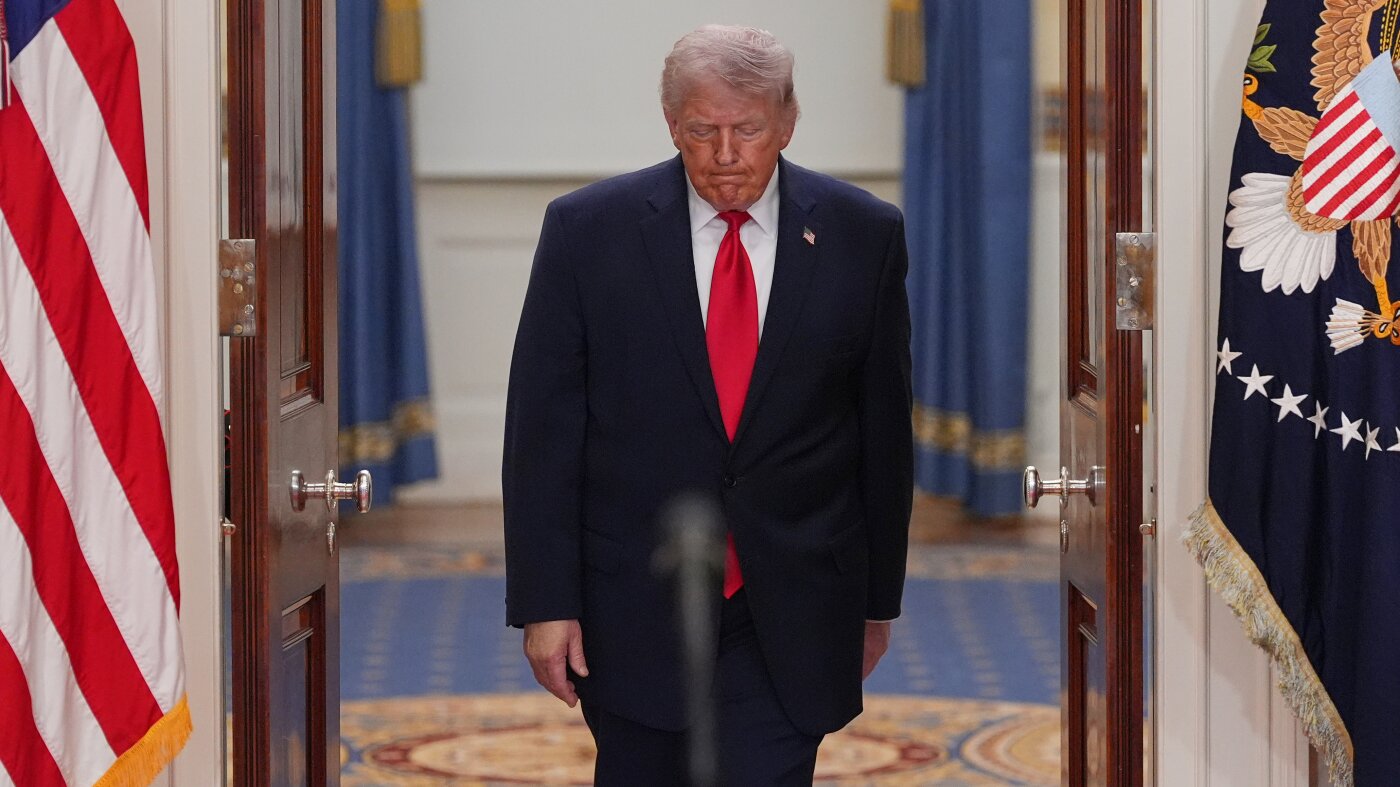
Judge halts Trump effort requiring colleges to show they don’t consider race in admissions

Trump says ‘America needs God’ in Good Friday message touting ‘resurgence of religion’
Fact check: How can a country actually withdraw from NATO?
-

 South-Carolina6 days ago
South Carolina vs TCU predictions for Elite Eight game in March Madness
-

 Miami, FL1 week ago
Jannik Sinner’s Girlfriend Laila Hasanovic Stuns in Ab-Revealing Post Amid Miami Open
-

 Education1 week ago
Video: Transgender Athletes Barred From Women’s Olympic Events
-

 Minneapolis, MN1 week ago
Boy who shielded classmate during school shooting receives Medal of Honor
-

 Vermont6 days ago
Skier dies after fall at Sugarbush Resort
-

 Politics7 days ago
Trump’s Ballroom Design Has Barely Been Scrutinized
-

 Atlanta, GA6 days ago
Fetishist ‘No Kings’ protester in mask drags ‘Trump’ and ‘JD Vance’ behind her wheelchair
-

 Politics1 week ago
WATCH: Senate hearing goes silent after Angel Father confronts top Dem over daughter’s death