New Hampshire
Proposed change to land use law could empower immigration enforcement along NH-Canada border

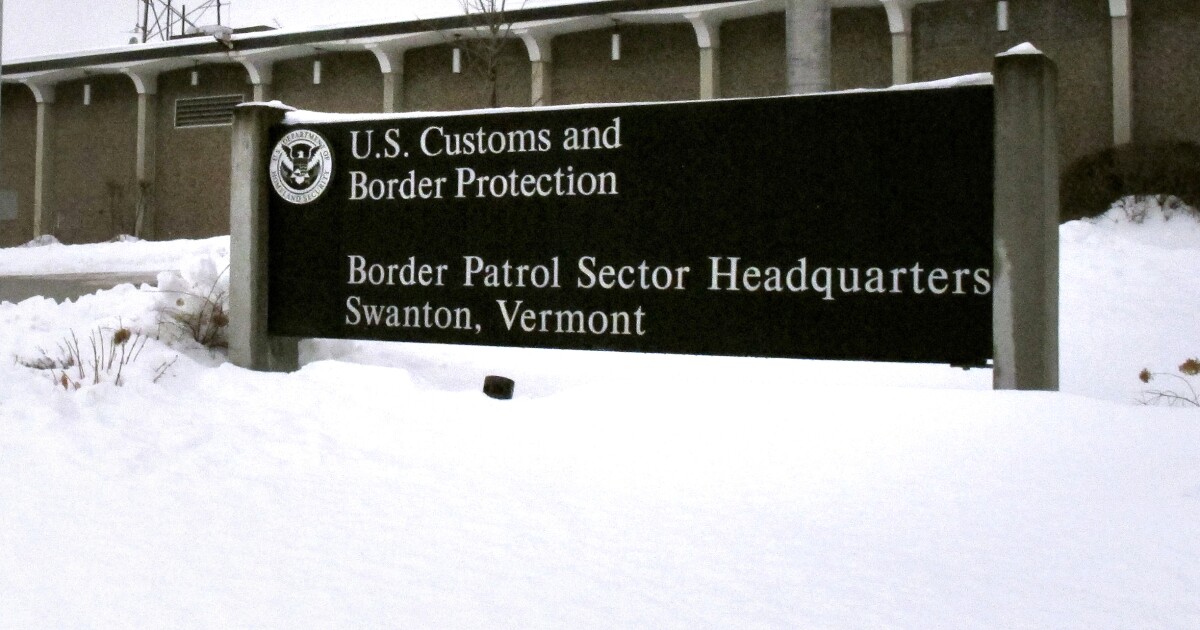
For half a century, New Hampshire’s “current use” law has been a widely used and rarely controversial policy that lets landowners pay less in taxes in exchange for preserving open space, and in some cases, allowing the public to use their land for recreational uses.
But a little noticed proposed change to the statute pushed by the top Senate Republican this year would turn the current use statute into a new, untested immigration enforcement tool.
The bill, sponsored by Senate President Jeb Bradley, would permit landowners — including those who live along the state’s northern border with Canada — to post “no trespassing” signs with exceptions for recreational use. That would clear the way for suspected undocumented migrants to be potentially arrested by local law enforcement — rather than federal border patrol agents — for criminal trespassing.
The legislation was requested by Gov. Chris Sununu and Attorney General John Formella, according to Bradley. And while the proposed change would apply to more than a million acres of land in the state, it was prompted by the concerns of a small handful of residents in the town of Pittsburg who say they have seen migrants illegally entering New Hampshire by crossing a stream that serves as the border between the U.S. and Canada.
This effort to reshape immigration enforcement using a relatively obscure section of land taxation law comes at a time when questions are being raised about the extent of immigration pressures along New Hampshire’s international border. Civil liberties groups have obtained data showing scant interactionsbetween border agents and suspected migrants in New Hampshire in recent months. But State House Republicans have argued the problem is far larger than the numbers suggest, and that it is time for the state to step up its own enforcement efforts.
“In New Hampshire and in 49 other states, we have seen the results of open border policies, not only human trafficking, but the import of illegal substances, in particular fentanyl, flowing across our southern and our northern border,” said Bradley during a recent public hearing on the bill.
The measure would make a technical change to the state’s 50-year old current use law, which allows residents to put 10 or more acres of undeveloped land — including open fields, forest, and agricultural properties — into a special category for assessing property taxes. The program saves landowners money, but also encourages the preservation of open space.
Under the existing program, landowners can receive an additional tax deduction if they allow recreational use on the property by the public.
The bill now in the State House would apply to those landowners who grant the public access to their land: It would permit them to post a sign that reads “No Trespassing except for skiing, snowshoeing, fishing, hunting, hiking or nature observation” without jeopardizing their tax break.
Under that change, suspected migrants who cross the international border onto residential land marked with the new signs could be arrested for criminal trespassing, although it isn’t clear what would distinguish a migrant carrying a backpack and wearing boots from any other hiker who is permitted to walk on the land.
“I believe — and I hope that you, as members of the committee, believe — that protecting our northern border to prevent drug smuggling, human trafficking, and illegal entry into our state is important,” Bradley told members of the Senate Judiciary committee.
Some activists, however, are concerned the measure could lead to racial profiling.
“I look brown,” said Bruno D’Britto, an immigration attorney who leads the New Hampshire Brazilian Council and opposes the bill. “Someone sees me on their property with a backpack, they are going to think I’m crossing the border.”
D’Britto also noted that courts have generally ruled that immigration enforcement is the jurisdiction of the federal government and not the states.
“The states do have their sovereignty under the 10th Amendment, but this goes way beyond what the states can do,” he said. “Immigration has been allocated to the federal government.”

That hasn’t stopped some states, including Texas, from implementing its own immigration policies. There is currently a legal fight between officials in that state and the Biden Administration over the use of razor wire to ward off migrants.
Bradley, in an interview with NHPR, acknowledged the measure could face legal challenges if it becomes law.
“I think it’s the best public policy, and if it’s legally challenged, it’s legally challenged,” he said, adding “the Attorney General’s office will be able to defend it.”
Bradley noted that a lack of perceived action by the federal government gives states like New Hampshire “a legitimate issue in terms of protecting their own sovereignty and the public safety.”
Earlier this month, the head of the regional Border Patrol office in Vermont, Chief Patrol Agent Robert Garcia, said his agents had apprehended 3,310 migrants from 55 different countries since October, more than the previous four fiscal years combined. Those figures, however, were not broken down by state.
While Republicans in New Hampshire frequently describe a migrant “crisis” along the state’s approximately 58-mile border with Canada — a heavily forested and remote stretch of land with relatively few crossing points — data obtained by the ACLU of New Hampshire last month through a lawsuit against U.S. Customs and Border Protection showed just 21 suspected migrants were detained by federal agents in the state in the 15-month period between October 2022 and December 2023.
Residents of a remote road that runs alongside the international boundary in the town of Pittsburg have raised concerns to NHPR about migrants crossing their property. Top officials in the state, including Sununu and U.S. Senator Jeanne Shaheen, visited the area last year to meet with Border Patrol officials and local law enforcement, pledging more resources.
There were two high-profile arrests of suspected migrants in New Hampshire last summer, though it wasn’t clear in court paperwork precisely where the individuals crossed the international boundary. In both cases, the drivers of vehicles transporting the migrants were arrested and charged with human smuggling. No narcotics or guns were seized, according to court paperwork.
Those cases, along with earlier data released by a regional Border Patrol outpost showing a surge in encounters with migrants across parts of upstate New York and Vermont, prompted the state to divert $1.4 million to increased patrols in the region. That money was allocated in the state budget despite concerns from immigration activists that the stepped up law enforcement would inevitably lead to racial profiling. The new effort, called the Northern Border Alliance Task Force, was launched last October. It has yet to release initial data on the program, despite a Dec. 31 deadline to do so.
This isn’t the first time the question of using New Hampshire’s criminal trespassing laws to arrest and detain undocumented people has arisen. In 2005, the Monadnock-region town of New Ipswich found itself in national headlines after local police pursued criminal trespassingcharges against an undocumented construction worker. The man was initially arrested and charged with operating a motor vehicle without a license. But when ICE agents contacted by the town declined to take him into custody, New Ipswich Police Chief Garrett Chamberlain charged Jorge Mora Ramirez with a misdemeanor under New Hampshire’s trespassing law, even though Ramirez was not accused of wrongfully entering private property.
A district court judge ultimately dismissed the case, ruling local law enforcement had overstepped its authority by attempting to enforce federal immigration laws through other means.
Today, more than 3 million acres of land are currently enrolled in current use status, or 52% of the entire land area of the state. Of those protected lands, approximately half of that acreage is also open to the public for recreational use, according to data on the Department of Revenue Administration’s website.
Most of New Hampshire’s border with Canada is controlled by a single entity, Aurora Sustainable Lands, which has a conservation easement in place that prohibits placing ‘No Trespassing’ signs, according to Charles Levesque, president of the Statewide Program of Action to Conserve Our Environment, or SPACE, a group dedicated to protecting open lands through the current use law.
Another large stretch of borderland is controlled and managed by New Hampshire Fish and Game. Along an approximately 70-mile stretch of road in the western corner of the international boundary, where New Hampshire, Vermont and Canada meet, there are numerous parcels owned by private individuals, with some of those lands in current use with the recreational tax enhancement.
Levesque’s group is in favor of the proposed legislation, though not for its potential impact on those specific landowners or on illegal immigration. Rather, he said all landowners statewide who utilize the recreational bonus under current use need clarity on what type of signs they may be able to post, “because now the statute’s rather silent on that.”
But given the wildness of the terrain along the vast majority of the New Hampshire-Canada border, and the challenge in determining who is a legally permitted hiker or birdwatcher on private lands — versus who may be hiking but without proper paperwork to be in the country — it isn’t clear what impact the proposed legislation may ultimately have.
Levesque said he is doubtful the legislation will accomplish what lawmakers are hoping.
“They’re looking for ways to give local law enforcement the authority here,” he said. “And this is what they came up with. I don’t think it will be effective.”


CHARLEVOIX COUNTY, Mich., (WPBN/WGTU) — A Northern Michigan man accused of torching a Charlevoix County farm is now behind bars in New Hampshire.
Investigators said 23-year-old Daniel Fournier is linked to a January fire that caused an estimated $500,000 in damage.
Authorities tracked him to Merrimack, where he was arrested during a traffic stop while allegedly carrying a loaded pistol.
A search of his apartment turned up more firearms, suspected incendiary devices and evidence investigators say ties him to the Michigan arson.
Fournier is fighting extradition and remains jailed pending another court hearing.

Two people are facing charges after they allegedly broke into a New Hampshire home on Tuesday wearing black masks and armed with baseball bats, all while a 12-year-old was inside.
Danville police said they received a call around 9 p.m. Tuesday for a report of a home invasion on Beatrice Street. A 12-year-old was home alone on a video chat with his friend when three people wearing black masks and armed with baseball bats broke through his front door. The 12-year-old’s friend quickly called 911.
According to police, the three people were attempting to locate the child’s father and threatened the father with serious bodily injury.
An officer soon arrived at the scene, set a perimeter, and called in two K9 units.
A search of the area didn’t initially turn up anything, but a K9 track led officers to another nearby home. Police interviewed the resident of the mobile home, identified as Nathan Wilder, who denied any involvement in the home invasion.
As the investigation continued, police learned that the original caller had heard from some other friends that one of the suspects in the home invasion had bragged about being involved. They determined that Nathan Wilder, John Wilder and a juvenile were the three people who had broken into the home.
John Wilder admitted to police that he had broken into the home on Beatrice Street and said that Nathan Wilder and a juvenile had assisted him.
Police were able to locate and seized three baseball bats, two ski masks and a few articles of clothing used in the crime.
John and Nathan Wilder were arrested and the juvenile who was involved was released to a parent.
John Wilder is charged with burglary with a weapon, criminal threat with a deadly weapon and criminal mischief. Nathan Wilder is charged with with burglary with a weapon and criminal threat with a deadly weapon. Both men are currently being held at the Rockingham County Jail awaiting arraignment.

A former New Hampshire state representative was sentenced to more than 33 years in prison for involvement in a child exploitation case — almost double the mandatory minimum.
Stacie Marie Laughton, 42, pleaded guilty to three counts of sexual exploitation of children after soliciting and receiving nude photos of three toddlers from an ex-girlfriend who worked at a daycare.
Lindsay Groves, 41, of Hudson, N.H., was sentenced to almost 22 years in prison earlier this month after pleading guilty to the same charges as well as an additional count of distribution of child pornography.
According to court documents, Groves took the photos of the victims in 2023 at Creative Minds daycare in Tyngsboro, where she was a teacher, during designated bathroom breaks and nap times.
She then sent the photos to Laughton, who requested the images and asked that Grove touch one of the minor’s genitals. In the conversation included in the records, the pair sexualizes the victims.
“Did the girl give you an issue,” Laughton texted after receiving the photos.
“No… the boy didn’t either,” Groves texted back.
In a sentencing memorandum, Laughton’s counsel had argued that she should receive a shorter sentence than Groves and asked for the minimum mandatory sentence, which would have 15 years for each count to be served concurrently.
“Stacie Laughton is a complex 42-year-old woman,” the memo said, noting that she was the first openly transgender woman to be elected to the New Hampshire legislature.
The filing described Laughton’s history of mental health, substance abuse, sexual abuse, and trauma as mitigating factors the judge should consider.
“One of the few consistencies in Ms. Laughton’s life is her challenges with mental health illnesses,” the memo said. “She began receiving mental health treatment at the age of four and has been in and out of extensive treatment programs ever since.”
The death of Laughton’s wife in 2020 and a tumultuous relationship with Groves also added to her mental health struggles, the memo said, stating that the defendant drank every day and had tried heroin for the first time leading up to her arrest.
A doctor quoted in the filing said that Laughton likely had a low IQ, tied in part to her premature birth, as well as “normal sexual interests.”
“This finding shows both how caught up Ms. Laughton was in her relationship with Groves that she participated in activity counter to this and is … an important factor in considering whether Ms. Laughton would be a future threat upon release,” the memo said.
The filing described Laughton’s actions as “horrendous, reprehensible, and shocking,” but said that even though the crimes were “utterly inexcusable,” she should still receive a shorter sentence than her codefendant out of a sense of justice.
However, in their own sentencing memo, federal prosecutors requested Laughton receive 40 years in prison.
“These crimes only came to light when Laughton reported them in an apparent attempt to punish Groves for ending their relationship,” prosecutors wrote. “The defendant, of course, did not disclose her own role in the creation of the imagery.”
“She ultimately admitted that she told Groves to touch one child’s penis, and claimed that she was feeding Groves’s attraction to children,” their memo said.
The prosecutors said that Laughton’s voice was the “more prominent one” in the conversation about exploiting children.
In addition to her prison sentence, Laughton will also serve five years of supervised release.
Massachusetts U.S. Attorney Leah Foley said in a statement that she felt the sentence fit the crime.
“The victims in this case were toddlers – children who were not yet old enough to care for themselves and, in some cases, not even fully verbal. Everyone who learns about the conduct in this case should be outraged,” United States Attorney Leah Foley said in a statement. “The sentences imposed reflect the depravity of the conduct and the seriousness of the crimes. My office will seek the most serious charges and the stiffest sentences for anyone who preys on children.”
-

 New Hampshire5 minutes ago
Charlevoix County farm arson suspect arrested in New Hampshire after January blaze
-

 New Jersey12 minutes ago
Minnesota woman struck by worker while protesting outside of New Jersey ICE facility
-

 New Mexico15 minutes ago
Canyon Venado Fire near Clines Corners grows to 852 acres, I-40 reopened
-

 North Carolina27 minutes ago
Great horned owl kills 1 of NC Wildlife’s famous barn owlets: officials
-

 North Dakota30 minutes ago
NCAA Set to Change Unpopular Football Rule Just in Time for North Dakota State’s FBS Jump
-

 Ohio35 minutes ago
Ohio lawsuit alleges new NCAA rule unfairly denies high school Class of ’22 athletes a 5th season
-

 Oklahoma42 minutes ago
Fire Crews respond to commercial fire in SW Oklahoma City Wednesday afternoon
-

 Oregon45 minutes ago
Liu makes two! 2nd red panda joins Oregon Zoo family

