Northeast
Multiple Secret Service agents put on leave following Trump assassination attempt

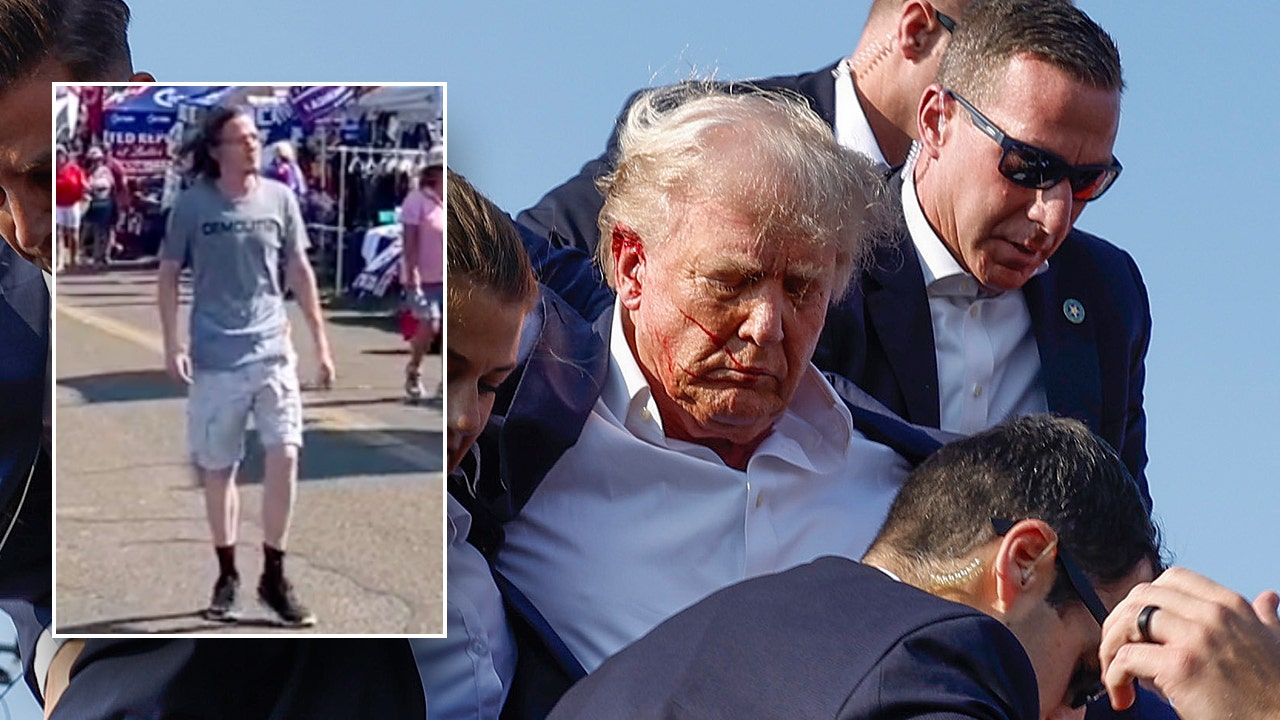
At least five members of the U.S. Secret Service (USSS) have been placed on administrative leave following the July 13 assassination attempt against former President Donald Trump in Butler, Pennsylvania, Fox News has confirmed.
One member of Trump’s personal protective team and four members of the Secret Service’s Pittsburgh Field Office, including the special agent in charge, have been sidelined nearly six weeks after the incident. The five are still employed but are teleworking and are no longer allowed in the field. They cannot do any investigative work.
The news comes after the Secret Service concluded internal interviews to understand how Thomas Matthew Crooks was able to fire several shots from the AGR building in Butler. The Secret Service was not able to conduct the interviews right away because the FBI was interviewing them for a separate criminal investigation, according to a source briefed on both probes.
Separately, Sen. Josh Hawley, R-Mo., on Friday revealed that a Secret Service whistleblower has come forward to claim that officials at Secret Service headquarters encouraged agents in charge of the rally not to request any extra security assets in their formal planning request.
At least five members of the Secret Service have been placed on administrative leave following the July 13 assassination attempt against former President Donald Trump in Butler, Pennsylvania, Fox News has confirmed. (Anna Moneymaker/Getty Images, main, and Iron Clad USA, inset.)
One bullet grazed Trump’s right ear, while firefighter Corey Comperatore was fatally struck. Rally-goers James Copenhaver and David Dutch were also shot and injured.
Former Secret Service Director Kimberly Cheatle resigned less than two weeks after the shooting and after giving her initial testimony about the event before members of Congress. Various lawmakers have called on the Secret Service to make personnel changes and fire employees in the wake of the deadly incident.
Fox News has also learned that the threat to Trump from Iran was communicated internally at the Secret Service prior to the Butler, Pennsylvania, event and the investigation is likely looking into why the Butler event went forward, given the threat.
The Secret Service said in a statement that the agency is committed to investigating the decisions and actions of personnel in relation to the July 13 event.
“The U.S. Secret Service’s mission assurance review is progressing, and we are examining the processes, procedures and factors that led to this operational failure,” Anthony Guglielmi, the USSS chief of communications said in a statement.
“The U.S. Secret Service holds our personnel to the highest professional standards, and any identified and substantiated violations of policy will be investigated by the Office of Professional Responsibility for potential disciplinary action. Given this is a personnel matter, we are not in a position to comment further.”
Former Secret Service Director Kimberly Cheatle testifies before the House Oversight and Accountability Committee about the attempted assassination of former President Donald Trump in Washington on Monday, July 22, 2024. ( AP Photo/Rod Lamkey, Jr.)
The FBI criminal probe and the internal Secret Service review both remain active.
The FBI has previously stated that Crooks accessed the roof of a building by climbing up HVAC equipment and piping. Crooks then traversed multiple rooftops before he found his shooting position on top of a building about 150 yards from where the former president spoke at his rally.
Text messages sent by local law enforcement responsible for monitoring the rally flagged Crooks to colleagues as suspicious at least 90 minutes before he opened fire. Despite this, he was still able to shoot at Trump and the crowd.
House Oversight Committee Chairman Rep. James Comer, R-Ky., welcomed the news that action has been taken on some Secret Service members.
“There must be accountability at the Secret Service for its historic failures that led to the attempted assassination of President Trump,” Comer said.
“Holding negligent employees accountable is the first step. I look forward to the Task Force’s findings of its investigation. We must ensure the Secret Service does not fail again.”
Hawley also welcomed the action taken by the agency, saying it should have happened weeks ago.
“We still need real answers about the attempt on President Trump’s life and accountability for everyone involved,” Hawley said.
Hawley also revealed on Friday whistleblower claims that officials at Secret Service headquarters informally encouraged agents in charge of the Butler rally to not request any extra security assets in their formal planning request as they would be denied because Trump was a former president and not an incumbent president or vice president.
Hawley shared on X a letter he penned to Acting Secret Service Director Ronald Rowe asking for an explanation into who made such a call, if he knew about it and which security assets were left out of the manpower request for the event.
Hawley writes that the assets included counter-sniper teams and counter Sniper Division (CSD) personnel. He writes that counter-snipers were ultimately approved but only a day before the event and that a separate whistleblower claimed previously that CSD personnel would have handcuffed the gunman after he was spotted in the parking lot with a rangefinder.
“Yet you have repeatedly suggested that no security assets had been denied for the Butler event. You must explain this apparent contradiction immediately,” Hawley writes, in part.
Former President Donald Trump pumps his fist as he is rushed offstage during an attempted hit on his life on July 13. (Anna Moneymaker/Getty Images)
Meanwhile, Attorney General Merrick Garland, speaking at an unrelated event, said Friday that he could not comment on any specific suspensions.
“This was a security failure and there is both an internal and external independent investigation,” Garland said. “They will provide lessons learned to prevent such a failure from happening again.”
Sen. Chuck Grassley, R-Iowa, also welcomed news of the agents being put on leave.
“I always say, ‘if heads don’t roll, nothing changes,’” Grassley tells Fox News. “I’m glad the Secret Service has taken a step towards accountability.”
CLICK TO GET THE FOX NEWS APP
Former NYPD inspector Paul Mauro, a Fox News contributor, said that there were serious discrepancies in the planning and operation of the rally.
“Those discrepancies argue more things are not so much mistakes, but instead, institutional rot,” Mauro said. “And what bothers me is that the executives who have been overseeing and not solving the problems that the Secret Service clearly has will likely get off scot-free. And certainly [Homeland Security Secretary] Mayorkas and Cheatle should not be able to ride off into the sunset with their reputations intact.”
Fox News’ Audrey Conklin contributed to this report.
Read the full article from Here


Authorities have identified the girl and her older brother who died in a Vermont river after going missing last week.
Sandro Lala, 25, had jumped into the Lamoille River to save his sister, 11-year-old Yazmin Yupangui, when she fell into the Lamoille River near Arrowhead Mountain Lake in Georgia, Vermont, on Wednesday, according to the Vermont State Police.
Autopsies determined that the siblings, who both lived in Cambridge, Vermont, died in accidental drownings, according to police.
Yazmin’s body was found Thursday by a police underwater recovery team, while Lala’s body was found in Arrowhead Mountain Lake on Saturday morning.
Police had previously said a group of relatives were fishing along the shore when a young girl fell into the water, and a man jumped in to try to rescue her. Neither resurfaced after that, prompting a large search, including multiple agencies, on the water near where Lamoille River empties into the lake.

How can people possibly afford to live in one of the most expensive cities on the planet? It’s a question New Yorkers hear a lot, often delivered with a mix of awe, pity and confusion.
We surveyed hundreds of New Yorkers about how they spend, splurge and save. We found that many people — rich, poor or somewhere in between — live life as a series of small calculations that add up to one big question: What makes living in New York worth it?
Ryan Compton knows a thing or two about gigs. To make it in New York, he has worked as a retail associate inside the Museum of Modern Art’s gift store, a cashier for a downtown taqueria and a paint mixer for Takashi Murakami. He has experienced the paradox of a city both known for its artists and for pricing artists out.
Financial constraints forced Mr. Compton, who is from South Jersey, to move away from New York twice over the course of two decades. He has lived in Baltimore, Chicago and Philadelphia, but remains convinced the resources and people inside New York are unparalleled.
“You never know who you’re going to run into,” he said. “Everyone’s curious about each other.”
Since moving back in 2022, he has whittled down his source of income to a single gig as a security guard at the Metropolitan Museum of Art, where he made $51,000 before taxes last year. It’s his second time at the museum. He first worked there part-time in 2011 before leaving in 2015 to earn his master’s degree in sculpture from the School of the Art Institute of Chicago.
“I know I couldn’t afford graduate school and the cost of living in New York at the same time,” he said.
A third try at New York life has forced Mr. Compton, now 46, to confront the sustainability behind a career as both an interdisciplinary artist and a security guard — even inside one of the most famous museums in the world.
Love at First Sight (With New York)
As an undergraduate student at the Maryland Institute College of Art, Mr. Compton looked forward to spending weekends at his friend’s apartment gallery in the East Village in Manhattan.
A combination of showing face and knowing the right person led to his side project at the time — fashioning 3-d printed stuffed animals with skull faces — which were featured in an issue of Vogue Japan. He even sold a few inside a handmade craft store in Tokyo’s Ginza district for about $1,000.
“I was interested in the contrast between fuzzy-shaped animals and skulls,” he said, later adding, “You know, stuff when you’re a 20-something-year-old being kind of edgy.”
The early moment of success propelled Mr. Compton to chase after opportunities to showcase his work. While supporting himself financially through retail and service jobs, he helped write the artist Roman Ondak’s interactive performance piece at MoMA, “Measuring the Universe;” and worked as a collaborator for “No Souls for Sale,” an experimental project temporarily at Dia Chelsea and later, the Tate Modern in London. Both went unpaid.
“The chance to work in modern art before I was 30 is unheard of,” Mr. Compton said. “It only happens in New York.”
A Slower Pace
Tens of thousands of people flock to the Metropolitan on weekends, and it’s Mr. Compton’s job — one he has found increasingly difficult — to make sure the art is untouched. He believes social media has altered the way visitors engage with the museum. Think more selfies and poses leaned against Hellenistic marble.
The one hour work commute from Parkchester in the East Bronx gives him time to prepare for a long day ahead. He splits a two-bedroom with a co-worker for $1,000 a month and pays $50 in utilities. Heat and water are included in his rent, and his roommate covers the cost of Wi-Fi. He pays $90 each month for his phone bill.
The slower pace of the residential neighborhood matches the stage of life he’s in now. In the last few years, Mr. Compton has slowed down as he has come to terms with the expenses behind his art.
He no longer has free access to fabrication laboratories pegged to his university, and he has opted for the more cost-friendly hobbies of zine-making and book binding. He is, however, eyeing a $1,000 3-d printer. For now, he has settled on $20 a month Photoshop subscription.
The largest constraint tempering Mr. Compton’s spending is his $100,000 student loan debt from graduate school. The window for his deferment period closed, and even with some money he inherited after his mother passed, he says he needs a miracle to finish paying off his loans. “I’m not sure what to do anymore,” he said.
Splurging on Plants and Experimental Harsh Noise Records
Mr. Compton may not have any children, but he is a proud “plant dad.”
His apartment houses $1,000 worth of plants sourced through Facebook groups, pop-ups and by following Brooklyn Horticulture online. He typically pays $30-$50 for medium to large sized plants, but he is constantly on the lookout for deals.
When he isn’t at home with his plants, Mr. Compton treks into Manhattan to do his weekly grocery shopping at Trader Joe’s. He prefers the prices there to local spots in the Bronx and estimates he spends $70 each week.
A cash guzzler of Mr. Compton’s food budget is the $20 a day — an additional $80 a week — he spends at the Metropolitan’s staff cafeteria for breakfast and lunch. When working 12 hour shifts, “I’m not gonna go home and make something to bring the next day,” he said.
On his days off, he seeks out affordable food deals. He frequents Vanessa’s Dumplings in Chinatown for their $8 dumpling special.
When in the mood to treat himself, Mr. Compton rides the train a few more stops out to Ridgewood, Queens and Bushwick, Brooklyn, to visit his favorite record stores like Fringe Records and Nexus Records. An experimental harsh noise aficionado, he spends no less than $100 each visit.
His biggest and most recent splurge was a 10-day trip to Tokyo, Kyoto and Osaka in Japan in February. He was able to cut his $900 round trip ticket to $700 with credit card points. Add in the cost of hotels, meals and souvenirs, he spent close to $5,000 total.
“I wanted to go because my artwork had been to Japan, but I haven’t been to Japan,” he said.
Looking Ahead
Mr. Compton wants to strike a balance between saving and enjoying the life he dreamed of in New York. To help pay off his loans, he considered applying to be an art handler for the Metropolitan, a job with a slight pay bump. But without his present benefit of overtime pay, he’s afraid he would be making less than he does currently.
Over the years, Mr. Compton has found community among other security guards at the Metropolitan, who, like him, are artists. He has also built inroads with notable names at the museum, one being Sheena Wagstaff, the former chairman of modern and contemporary art, who he said took the time to know Mr. Compton not only as a co-worker, but also as an individual, too.
Because of his connections, he feels like he has nowhere else to go. He considered a quieter lifestyle upstate in Westchester or the Catskills, but believes he will make less money outside of the city. And, of course, he would have to leave the place he’s called home for the majority of his adult years.
“I did four other cities, and they weren’t as good or great as I like New York,” he said. “I always end up here.”
We are talking to New Yorkers about how they spend, splurge and save.

Clarity hasn’t exactly defined Jaylen Brown’s career.
There were boos on draft night, but not because people hated that he was picked. It was widely reported that if the Boston Celtics picked Kris Dunn that night, they’d include Dunn in a trade for Jimmy Butler, which is what fans wanted. When Brown was picked, the boos were more for Danny Ainge not making the deal.
In January of 2022, Brown tweeted “the energy is about to shift.” The Celtics went on a nine-game winning streak and everyone pounced on that tweet as something prescient, but Brown himself said it had nothing to do with basketball. He was tweeting about Mercury being in retrograde.
The energy is about to shift
— Jaylen Brown (@FCHWPO) January 31, 2022
Brown is even confused about his own history, like in 2018 when he was moved to the bench. Brown said on a podcast earlier this year that then coach Brad Stevens benched Brown for Gordon Hayward, when Hayward was actually benched too. He claims a fan petition forced the team to reconsider, but it was really a Marcus Smart injury and that petition had barely a dozen signatures.
Now, on his way out of Boston, we can’t even come to a consensus on how good he really is. Did Boston just inexplicably trade a superstar to a rival, or are the Sixers picking up a good player who’s just being paid like a superstar?
We’ve had 10 years to figure him out, and we still can’t do it.
That’s actually a compliment to Brown, who has spent his decade as a pro smashing through perceptions. His early years were spent mainly as a straight-line driver who simply preferred to challenge athleticism with athleticism and see who came out on top. He spent time as a cutter and a corner specialist, leading some to believe that his basketball life would be spent as an elite three-and-D kind of guy who dunked on people on fast breaks.
But every time someone put Brown in a box, he would bust out of it by adding something new to his game. I can speak from personal experience that any conclusions drawn about Brown in the early days were simply opportunities to be embarrassed later. He figured out how to change his pace, how to dribble more effectively, how to create space to launch open jumpers. He learned how to attack double teams, how to facilitate, and yes, how to drive and finish with his left.
If there’s one thing to point to as a hallmark of Brown’s time on the parquet in Boston, it’s that he found room to improve every summer. He found ways to challenge himself, find a limit, and bust through it. Brown has been on a constant quest for self-improvement since he got into the league, and he has been rewarded with accomplishments that will certainly lead to a number retirement and a Hall of Fame induction some day.
Through it all, Brown seemed to simply want more credit for what he was accomplishing. There always seemed to be a “yeah, but” to his big moments. There has always been a mitigating factor or a comparison to make when it was Brown’s turn to step into the spotlight. He’d bristle at questions that framed Jayson Tatum as above him in any way, insisting that they shared the same responsibilities. He was noticeably shocked when he was named Eastern Conference Finals MVP in 2024, noting later that “I don’t never win sh–.”
He carried that on to win Finals MVP and a championship, which normally erases a lot of the criticism of a player, but Brown has never been able to shake the negative comments. Boston’s flameout in the second round against the Knicks in 2025 could easily be attributed to Kristaps Porzingis’ illness and Mitchell Robinson’s return changing the matchups, but Brown took a lot of the blame. Even after this past season’s vast overachievements, Brown is taking it on the chin on the way out the door for how they lost.
The criticisms can be harsh, and they often go overboard, but they aren’t fabricated. He has been prone to fits of trying to do too much; the confidence that has become such a strength has led him astray a little too often. There have been tough turnovers and forced shots mixed in with the great finds and clutch makes. Brown has seemingly been on a lifelong quest to prove people wrong, going back to the teacher who told him she’d visit him in jail. It has, indeed, sometimes gotten the best of him. But it has more often brought out the best in him.
And he has consistently brought his best for the city of Boston. Even the most ardent Brown detractor has to admit that he has changed so many young lives for the better. He has spent countless hours in the community, going well beyond the team-mandated appearances. Brown has been present in the communities who need the most hope, and he’s delivered on a promise to uplift them. While the debate rages about whether Boston’s basketball team will ultimately be better without Brown, the Boston’s communities are unquestionably worse off.
There’s still so much confusion surrounding the Brown trade. Everyone is still trying to parse out why it happened and guess why it happned so frantically. Brown himself still isn’t sure how things took such a hard turn. The only thing that’s clear is that he’s going to play for someone else after ten years in Boston. He leaves just high enough on all-time lists to be called a Celtics legend, but low enough where people will debate it.
We may never settle on a clear definition of what Brown’s time in Boston was, but it brought more success than most teams enjoy. The NBA is full of franchises that would eagerly sign up for the same 10 years Boston just got with Brown, warts and all. For all the ups and downs, successes and failures, and debate around Jaylen Brown in Boston, it should be clear to everyone on his way out of town that he was one of the best to wear a Celtics uniform.
Follow
-

 Vermont1 minute ago
Authorities ID girl who died in Vt. river, older brother who died trying to save her
-

 Virginia8 minutes ago
How Virginia became the world’s data center capital and how it’s going – WTOP News
-
Washington11 minutes ago
Question of the week: What does Santana Moss think of Washington’s WR depth?
-

 Wisconsin16 minutes ago
Wisconsin Supreme Court puts ICE detainers suit on hold pending appeal
-

 West Virginia23 minutes ago
DEP Report: Parkersburg plant had prior fire containment issues
-

 Wyoming26 minutes ago
History of Laramie Jubilee Days: It Started As A One-day Fiddlers Contest And Chariot Race
-

 Crypto31 minutes ago
U.K.’s sanctions on cryptocurrency exchanges signal new focus on illicit digital financing – Compliance Week
-

 Finance38 minutes ago
UK Watchdog Urged to Consider Broader Oversight of AI Financial Firms | PYMNTS.com


