Massachusetts
CT GOP lawmakers come out swinging against idea of border tolls. Do we need to worry?


A group of Connecticut Republican senators Wednesday thrashed the idea that there should ever be border tolls at the state line with Massachusetts.
It’s not quite clear whether there would be a serious proposal for tolls on the Massachusetts border, however, though the issue did create a firestorm of controversy in the Bay State over the past few weeks.
Massachusetts Gov. Maura Healey told the Boston Herald that she pumped the brakes on a proposal offered by Secretary of Transportation Monica Tibbits-Nutty to help alleviate the commonwealth’s revenue shortfalls by installing tolls along the state’s borders. Tibbits-Nutt’s comments drew days of backlash.
For example, New Hampshire Gov. Chris Sununu did not take kindly to the idea of tolling drivers entering Massachusetts at the state border, the Boston Herald reported.
“Looks like Massachusetts has found yet another way to unnecessarily take your money,” Sununu, a Republican, said in a statement to the Herald.
“All the more reason for more Massachusetts residents to make the permanent move to New Hampshire,” Sununu said. “The Live Free or Die state continues to be the place to be.”
In Connecticut, Sen. Republican Leader Stephen Harding, Sen. Henri Martin, ranking senator on the Finance, Revenue and Bonding Committee, Sen. John A. Kissel, R-Enfield, Sen. Lisa Seminara, R-Avon, and Sen. Jeff Gordon, R-Woodstock, joined for a statement also condemning the idea of Massachusetts officials considering putting up border tolls
“Earlier this month, Gov. Lamont was asked if he would be re-introducing tolls in Connecticut. His response was ‘forget it.’ We urge him to also tell Massachusetts to forget this bad border tolls idea,” the senators said.
“It will serve as a tax on Connecticut residents, especially on those who live near the Massachusetts border and who work in Massachusetts. Things are expensive enough for hard-working people and their families. They do not want tolls.”
The GOP team was reacting to a story by Patch that said, “State Sen. Robyn Kennedy, D-Worcester, included an amendment to the Senate Ways and Means Committee budget that might lead to tolls for border-crossers.”
The Herald reported that Tibbits-Nutt’s “unfiltered” comments at a WalkMassachusetts event on a theoretical plan to take tolls from drivers crossing state borders and charge higher excise taxes to pick-up truck owners do not represent the views of Healey or her administration.
“To be clear, I am not proposing tolls at any border. I have spoken to the Secretary and made that clear, and that I have confidence in her leadership moving forward in this important time as we work to ensure a strong and robust state transportation system,” Healey said, the Herald reported.
Battenfeld: Healey delivers rebuke to transportation czar, saying no to new tolls on the border
The Herald also reported that the MassGOP followed Healey’s statement with one, openly wondering who Tibbits-Nutt is referring to when discussing jacked up excise taxes on pick-ups and SUVs before the Governor’s Transportation Funding Task Force .
“Who exactly is this ‘type of person’ Secretary Tibbits-Nutt is addressing? Is it a parent with four children or someone who relies on a truck for work?” MassGOP Chair Amy Carnevale asked.
“The Secretary’s policy initiatives are the antithesis of what’s needed in Massachusetts. A poll came out last week that showed our workforce is leaving the state in droves due to Massachusetts’ unaffordability. Adding more taxes, more tolls, and more penalties for ordinary Massachusetts residents is only going to make Massachusetts less affordable, and add to the mass migration the Commonwealth has been experiencing,” Carnevale said.
The Herald also reported that Massachusetts Fiscal Alliance spokesman Paul Craney said Tibbits-Nutt’s comments during the event were “simply reprehensible.”
“Decisions to raise taxes, fees, or adding tolling should be made by our elected legislature, not announced by an overzealous, unelected bureaucrat before a special interest advocacy organization,” Craney said in a statement. “The people she’s villainizing are just ordinary people trying to go about their everyday lives. Our state government should make life easier for people, not harder.”
The conservative Massachusetts Fiscal Alliance went further, calling on Healey to fire the cabinet official she elevated from an acting position just last October. Tibbits-Nutt had previously served as an Undersecretary for Transportation, but took over the Department of Transportation after the departure of former Transportation Secretary Gina Fiandaca.
“Government should never be used as a weapon against the people. People that view taxation and our government as a weapon to be used against individuals they don’t like are a critical danger to our democracy and people rightly lose confidence in any public official who thinks that way. Governor Maura Healey needs to step up and remove Secretary Tibbits-Nutt from her position before she does real damage to the state,” spokesman Paul Craney said.
Asked if Tibbits-Nutt would like to add to Governor Healey’s statement, a Department of Transportation spokesperson said that her assertions were just part of an on-going conversation about the challenges facing the state and not necessarily representative of policy proposals, the Herald reported.
“At a recent event the Secretary was conveying that we need to have difficult conversations about how to make our transportation system work best for everyone. This task force is in its early stages and no decisions have been made about its potential recommendations. Any proposals would be made in collaboration with the Legislature and other stakeholders and would carefully consider any affordability and competitiveness implications,” the spokesperson said.
The Herald also noted that Tibbits-Nutt said a group tasked with developing recommendations for a long-term, sustainable transportation finance plan was discussing charging drivers at the state border in an effort to support road, rail, and transit systems throughout Massachusetts.
Massachusetts Republican Party Chair Amy Carnevale said Tibbits-Nutt showed the “true nature” of the Healey administration.
“Already grappling with the burden of unaffordability, the prospect of more tolls, increased taxes on Uber and Lyft rides, Amazon deliveries, and payroll taxes only adds to the struggle of Massachusetts residents. No Massachusetts resident wants that. It’s abundantly clear that the Healey-Driscoll administration’s approach to governance is government versus taxpayer,” Carnevale said in a statement.
Reporting by Boston Herald journalists Matthew Medsger and Chris Van Buskirk is included in this story. The Herald is a sister paper to the Hartford Courant.



GLENS FALLS, NY (WRGB) — A Massachusetts man is facing federal charges after prosecutors say he robbed two banks in separate states and tried to evade investigators by switching license plates—before evidence gathered in New York’s Capital Region helped lead authorities to him.
Joseph Sawyer is accused of stealing thousands of dollars from St. Mary’s Bank in New Hampshire and a Chase Bank in New Jersey last month. In both robberies, prosecutors say Sawyer fled in a Honda Odyssey minivan.
Prosecutors say the minivan originally had Massachusetts license plates, but Sawyer swapped them out with stolen New Jersey plates in an attempt to cover his tracks.
After the second robbery, highway cameras in Albany County captured the minivan as it tried to flee the tri-state area, prosecutors said. The FBI later tracked the vehicle to a motel near Glens Falls, where Sawyer was staying.
Prosecutors also say Sawyer’s own family helped identify him through surveillance photos, linking him to the robberies.

Editor’s Note: This is an excerpt from WBUR’s Saturday morning newsletter, The Weekender. If you like what you read and want it in your inbox, sign up here.
Antique hunters from far and wide are about to descend on a little town in Massachusetts for the return of the Brimfield Antique Flea Market.
Brimfield — a western Massachusetts town of less than 4,000 — has hosted New England’s largest outdoor antiques market for more than 60 years. And the upcoming July 14-19 run marks the second of the market’s three yearly runs. The event boasts “thousands” of vendors and attracts more shoppers than organizers can even count, according to Lori Faxon, owner of the Brimfield Antiques Center.
“For those three weeks, we pretty much overtake the town,” Faxon told me.
Over the course of the six-day stretch, there will be more than 20 different antique shows set up on fields in the town for customers to peruse. “Different fields can have more than 400 dealers. Some will have fewer than that. It varies from show to show,” Faxon said. (Faxon is also the owner of two of those field shows: Dealer’s Choice, which is open one day only, and Midway Antiques, which is open for the length of Brimfield’s run.)
As the years have gone on, it’s not just antique housewares and furniture on display. Vintage clothing and jewelry have become hot commodities at the flea market among the younger crowd, Faxon added.
In other words, there are a lot of hidden treasures to discover. But the search can be daunting if you’re a first-time visitor. So I chatted with Faxon to get a few insider tips on navigating the expansive offerings at Brimfield and how to make the most out of your time:
Editor’s note: This conversation has been lightly edited for clarity.
Hanna Ali: Vendors are scattered, usually, over different fields. Where should a visitor start?
Lori Faxon: “When you come to town, it’s important to know where you’re parking because it’s like a mile-long strip. There’s going to be parking signs everywhere you go. You can park at the [First Congregational Church] for $20. As you go in [to Brimfield] you might find other spots that are charging $10, $15. From Wednesday through Sunday, we offer $5 parking at the Dealer’s Choice. So if people’s budgets are tight, that’s always a good option for them. You might want to park your car more on the west end, because a lot of stuff’s going on on that end of town at the beginning of the week, and maybe on the east end later in the week.”
HA: Are there admission fees?
LF: “So some of the shows do charge admission, but generally they only charge admission either their first day or the first few hours they’re open. And there’s plenty of fields every day that are open that don’t charge at all. But if you want to be a part of that excitement of getting onto the field the moment it opens on a paid admission field, then you pay your $5 or $10 admission. It varies between fields. But if your budget’s tight, you don’t have to do that.”
HA: Do you think it’s really worth it to come as early as possible?
LF: “ It depends on why you’re there. We run the Dealer’s Choice and that field, although we do have a retail crowd, it’s on opening day of Brimfield. And the reason it’s so popular is because sometimes those antique dealers will [come to] my show on Tuesday and they may do another show later in the week.
“Say, for example, you’re a camera dealer. And I am a furniture dealer, and I went in and I bought a house full of furniture, and in the back corner there was a box of old cameras. And the guy says, ‘Do you mind just getting rid of those?’ So I say, ‘All right, I’ll take those.’ So when I set up at the show, I’m basically a furniture dealer, but I’ll throw that box of cameras out for 25 bucks. Well, unbeknownst to me, there’s a $2,000 camera in that box. Well, the first camera guy that spots it, he just made himself a cool about 2,000 bucks. And that’s why they’re willing to pay that extra money to go in early — because they want to get to it before someone else does.”
HA: In that case, is it worth it for the average retail shopper to come early?
LF: “If you have specific things in mind and you’re able to come earlier, it’s the better thing to do because you’ll get a better selection. I don’t want to say it’s picked over, because some of the dealers bring out new merchandise throughout the week, but it dwindles as the week goes on and it’s to your advantage to come early. Also, it’s less crowded.”
HA: Are there any food vendors you’d suggest?
LF: ”There’s a ton of food to be had there. Every field has multiple offerings in the food department. We have a woman that’s from Worcester, her name’s Teri, she’s been on my field for years, and she sells the best grilled cheese sandwiches you’ve ever had in your life. They’re to die for. And people come to Brimfield just to eat her grilled cheese sandwich.
“But you know, once again, if the budget’s tight, they can pack a lunch, go back to their car, and enjoy a meal there. They can bring their own drinks and snacks or whatever. But if they have a few extra dollars, there are so many food options to choose from. It’s great.”
HA: Is there anything else people can or should bring?
LF: “Especially in the summer, I tell people to bring drinks, stay hydrated, because we do have issues, especially with the elderly, the heat gets to them a little bit.
“And to wear good walking shoes. These are actual fields, so you don’t want to be wearing your flip-flops. This is a good day to put on a good pair of sneakers, and sometimes there’s a little bit of mud if it’s rained the day before. And also — because I don’t know that there’s anywhere in town that sells sunscreen — bring your sunscreen with you.”
HA: If you’ve got a whole day versus a few hours, or you’re staying in the area for the whole week, what would you recommend doing?
LF: “I would say it really doesn’t matter. Like, deep down, it’s wherever you end up, wherever you park your car, just you basically start hoofing it in one direction. When you reach the end, you turn around, you start in the other direction. If you have a few hours, then you’ll just see what you see. And if you’re there for the whole week, you’ll see more of it. You don’t want to rush it because there’s so much there to see — you could spend a whole day in one booth.”
P.S. — Before you hit the road for Brimfield, check out these tips from two Boston vintage store owners on what sorts of labels and quality markers to keep an eye out for as you search for secondhand treasure.

A vehicle crashed into a hair salon in Danvers, Massachusetts, leaving three people injured on Thursday.
Police said the crash happened shortly before 3:30 p.m. at Beijo Beauty on Newbury Street.
Three people inside the business suffered injuries that are believed to be non-life-threatening, police said. All three were taken by ambulance to local hospitals.
A fire official at the scene said the three patients’ injuries are considered minor. The building was evacuated after the crash.
One customer told NBC10 Boston she stood with an injured person while someone called 911, adding that her own car had been damaged.
“I was done, I was just about to get up. If I had been in my car, I would have gotten really hurt,” she said. “My car got totaled.”
Police did not say whether the driver would face any charges.
The cause of the crash is under investigation.
-

 Detroit, MI5 minutes ago
Metro Detroit weather forecast, July 10, 2026 — 11 p.m. Update
-

 San Francisco, CA15 minutes ago
Classical music series helps reconnect downtown San Francisco community
-

 Dallas, TX20 minutes ago
Dallas police officers, paramedics recall saving woman stuck in a ravine for days;
-

 Boston, MA30 minutes ago
Red Sox win 7th straight game just hours after landing in New York
-
 Denver, CO35 minutes ago
One tree at a time: Denver nonprofit works to close shade gap as heat dome threatens neighborhoods
-

 Seattle, WA42 minutes ago
VIDEO: West Seattle Summer Fest 2026 day 1, evening report
-

 San Diego, CA45 minutes ago
The World’s Number One Wellness Retreat is Right in Our Backyard
-
 Milwaukee, WI50 minutes ago
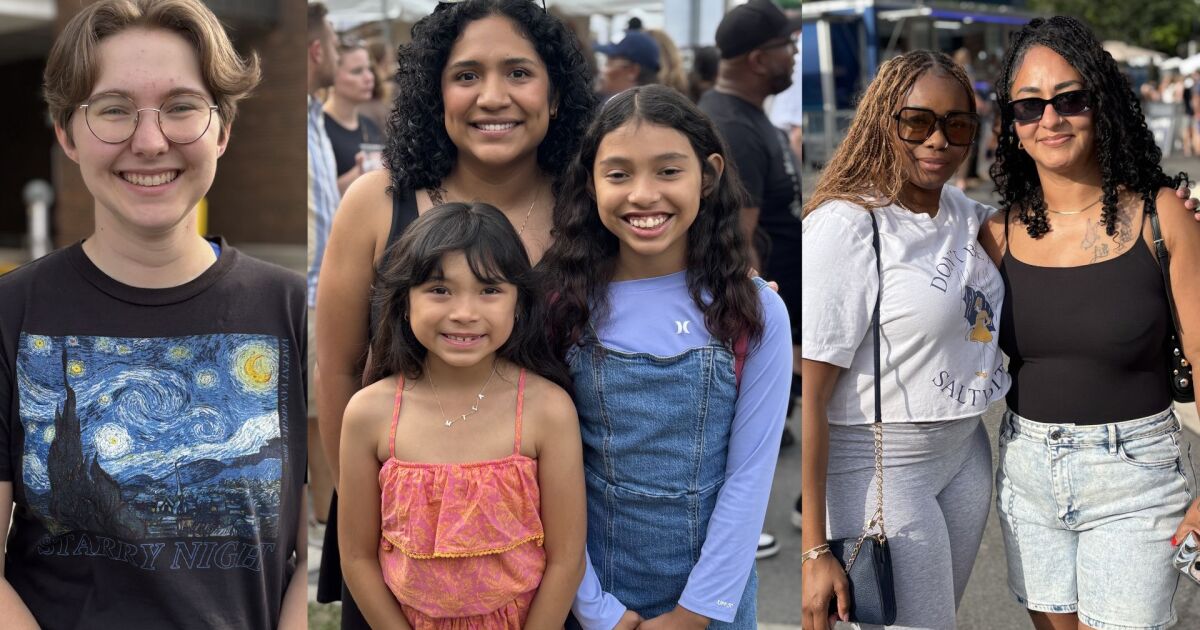
Festivalgoers say Milwaukee’s summer events fill a gap in downtown entertainment

