Massachusetts
A fungus for good: How mushrooms are solving problems in Mass.


Inside the historic Printers Building in downtown Worcester, hundreds of edible mushrooms are proliferating in a former storage room.
Oyster, shiitake and lion’s mane species grow out of sawdust “fruiting” blocks under humidity tents, soon to make their way to people’s plates.
Betting big on the urban mushroom enterprise is the Southeast Asian Coalition of Central Massachusetts. The project, which has received thousands in grant money, aims to combat food insecurity while providing a source of income for the Worcester-based nonprofit that serves Laotian, Cambodian and Vietnamese immigrants and refugees.
Tuyet Tran, the organization’s executive director, is a Vietnam refugee herself. In their native country, her mother was a farmer.
- Read more: A Mass chef’s devotion to mushroom foraging
“I’ve always loved growing things, growing vegetables,” Tran said. “We consider food, especially herbs, as medicine. It comes naturally to us. The idea for the mushrooms really expanded from that notion.”
The coalition’s venture was among two mushroom-centric projects selected in a recent round of grant funding from the Massachusetts Department of Agricultural Resources. The other is at East Boston’s Eastie Farm, an urban agriculture nonprofit working in food security and climate justice.
A volunteer handles comb tooth mushrooms at Eastie Farm.Courtesy
In both cases, the community organizations wanted to bolster their food offerings to the populations they serve, while also turning a profit by selling the rest to local restaurants and farmers markets.
“There is a lot of interest in mushrooms,” said Kannan Thiruvengadam, Eastie Farm’s director. “They’ve always been of interest to people who do foraging and permaculture because it naturally grows in forests, as long as you know what to harvest and how to harvest it.”
Not all mushrooms are edible, and some are actually poisonous. Others are the psychedelic kind that Massachusetts voters rejected on the November 2024 ballot.
A joke among mushrooms foragers, Thiruvengadam laughed, is that “you can taste any mushroom once.”
‘I want it to grow into a social enterprise’
The fungi-growing catalyst for both Eastie Farm and the Southeast Asian Coalition of Central Massachusetts was the same: the COVID pandemic made them want to boost food security efforts in the face of deep social and health inequities laid bare.
In Worcester, Tran said food is an incredibly important part of their mission, particularly because of the prominence of refugee and homeless populations.
They were already well-connected with local farms and seasonal produce, but the organization wanted to provide a self-sustaining, year round offering. Tran herself had been learning about edible mushrooms at home during the pandemic.
“We wanted to grow mushrooms because it’s part of the diet of Asian folks,” she said.

Mushrooms grow out of a sawdust block at the Southeast Asian Coalition of Central Massachusetts in downtown Worcester.Courtesy
The coalition’s website tells visitors, “No, we’re not turning people into zombies and, no, we’re not dabbling in the psychedelic arts. What we’re doing is far more magical: growing nutrient-packed mushrooms to nourish our communities and fight food insecurity.”
Mushrooms are said to have powerful health benefits, including anti-cancer and immune-boosting properties. And because of their ultraviolet light exposure, whether it be sunlight or indoor light, they’re a good source of Vitamin D.
Different mushrooms are known for different benefits. Lion’s mane, for example, is touted for brain health, while reishi is known for anti-stress and relaxation effects.
The endeavor started with a $120,000 grant from the Health Foundation of Central Massachusetts, outfitting an old storage room with water, lights, shelving and growing equipment inside the Portland Street building that houses the Southeast Asian Coalition of Central Massachusetts.
Between September and December, they harvested more than 800 pounds of mushrooms. Tran said it’s been quite a learning process, but a welcome — and fun — one.
“I had no idea how hard it was to grow mushrooms,” she said. “You really have to control the environment. The humidity, the temperature, the water misting.”
The Southeast Asian Coalition of Central Massachusetts is growing mushrooms inside a downtown Worcester building.Courtesy
The mushrooms, which are grown organically, are distributed to families, shelters, senior centers and temples. The goal is to also sell them to local restaurants and farmers markets to make a small profit for the organization.
“We want to be able to sell some, to make some money back, to pay the water and electricity bill,” Tran said. “We can grow a lot. It’s all part of the plan. You start small and move up to higher volume. I want it to grow into a social enterprise.”
Tran hopes a workforce development opportunity will come from it, especially if they get a commercial kitchen for high-volume processing and mushroom drying.
‘Food, farming and education’
At Eastie Farm, $40,000 from the Department of Agricultural Resources will support a build-out of a mushroom production center. It certainly helps that two top staff members are “super excited about mushrooms,” Thiruvengadam said.
Eastie Farm has sites around East Boston where they invite neighbors to grow food together, pick up produce boxes and learn more about the natural environment.
East Boston has the highest percentage of immigrants of any Boston neighborhood. And it’s also one of the most vulnerable communities in the state in terms of pollution and climate change impacts.
Mushrooms pictured at Eastie Farm in East Boston.Courtesy
In 2022, Eastie Farm debuted a zero-emissions, geothermal greenhouse, thought to be the first of its kind in Massachusetts. Climate resilience is at the core of the organization’s mission, Thiruvengadam said.
“What we’re trying to do here is empower ourselves so we can not only prepare for what is to come, but also address the needs of our people today,” he said. “Food, farming and education.”
During COVID, Eastie Farm rented kitchens that were closed and served more than 5,000 hot meals every week at the height of the pandemic.
The nutrient-rich mushrooms will be a piece of the farm’s ongoing food security efforts. They’ll be used in meals and CSA boxes, and likely make their way to restaurants at market-rate price.
“Most of what we do really comes from what we hear in the community and what the youth express to us as interest,” Thiruvengadam said. “The mushroom farm will be a space for young people to learn how things work and what does nature grow. How to process safely, how to cook and consume, how to do new things.”



Massachusetts
Massachusetts bakery that made signature pizza trays for more than 100 years closes for good

A Framingham institution that has been in business for more than a century closed its doors for the final time on Sunday.
Framingham Baking Company, known for its signature pizza trays, has officially shut down permanently. Crowds have been lining up around the block in the shop’s final days, with Sunday serving as their last day in business.
“That’s a wrap! Special thanks to all of our loyal customers! It was a great run. We love you!” Framingham Baking Company posted on Facebook Sunday after selling its final slices of pizza.
Founded in 1917, the bakery on Waverly Street became known for the square pizza slices.
The third-generation owners say they couldn’t find anyone to take over the business.
“We’re closing today after 109 years in business,” owner Joan Thomas said. “My grandparents, my parents, and my siblings – three generations have run this bakery.”
Customers explained why they were willing to wait in long lines to get their hands on some treats one more time.
“So many years of eating this pizza, and the bread, and the cookies. You had to be there for the end,” one woman said.
“My grandfather was a delivery guy for a long time. My first job was riding around with him in the van delivering to all the local restaurants. It’s tough to see it close, but it’s had an amazing run. Here for my last delivery. Bring some pizza home to my family,” another man added.
One customer waiting in line said it wasn’t just pizza the Framingham Baking Company provided, it was memories.
“Brought it to the cousins’ every birthday party, every gathering. Any time there was family there was pizza,” he said.

Here are five ways how you can save some money when food shopping.
Here are five ways how you can save some money when food shopping.
Your household can earn more than $200,000 a year and still be considered part of the “middle class” in Massachusetts, according to a recent study by SmartAsset.
Massachusetts ranks as the top state with the highest income range for households to be considered middle class, based on SmartAsset’s analysis using 2024 income data from the U.S. Census Bureau. The Pew Research Center defines the middle class as households earning roughly two-thirds to twice the national median household income.
According to a 2022 Gallup survey, about half of U.S. adults consider themselves middle class, with 38% identifying as “middle class” and 14% as “upper-middle class.” Higher-income Americans and college graduates were most likely to identify with the “middle class” or “upper-middle class,” while lower-income Americans and those without a college education generally identified as “working class” or “lower class.”
Here’s how much money your household would need to bring in annually to be considered middle class in Massachusetts.
How much money would you need to make to be considered middle class in MA?
In Massachusetts, households would need to earn between $69,900 and $209,656 annually to be considered middle class, according to SmartAsset. The Bay State has the highest income range in the country for middle-class households. The state’s median household income is $104,828.
In Boston, the range is slightly lower. Households need to earn between $65,194 and $195,582 annually to qualify as middle class, giving the city the 19th-highest income range among the 100 largest U.S. cities. Boston’s median household income is $97,791.
How do other New England states compare?
Massachusetts has the highest income range for middle-class households in New England. Here’s what households would have to earn in neighboring states:
- Massachusetts (#1 nationally) – $69,885 to $209,656 annually; median household income of $104,828
- New Hampshire (#6 nationally) – $66,521 to $199,564 annually; median household income of $99,782
- Connecticut (#10 nationally) – $64,033 to $192,098 annually; median household income of $96,049
- Rhode Island (#17 nationally) – $55,669 to $167,008 annually; median household income of $83,504
- Vermont (#19 nationally) – $55,153 to $165,460 annually; median household income of $82,730
- Maine (#30 nationally) – $50,961 to $152,884 annually; median household income of $76,442
Which state has the lowest middle-class income range?
Mississippi ranks last for the income range needed to be considered middle class, according to SmartAsset. Households there would need to earn between $39,418 and $118,254 annually. The state’s median household income is $59,127.
Massachusetts
‘No Kings’ protests draw thousands against the Trump administration who are ‘fed up, pissed off, and also hopeful’ – The Boston Globe

Dropkick Murphys frontman Ken Casey altered the lyrics of some songs to criticize Trump and US Immigration and Customs Enforcement.
“Let’s ship them out of Boston,” he told the crowd, referring to ICE agents and echoing lyrics from “I’m Shipping Up to Boston.” “Are you with us?”
Pressley followed, telling demonstrators the “world is on fire.”
“It is going to take every single one of us doing everything we can to put this fascist, white nationalist fire out,” Pressley said. “The only way to beat a dictator is with defiance.”

The flagship national demonstration was held in Minneapolis, where US citizens Renee Good and Alex Pretti were killed in January during a massive federal immigration crackdown that ended last month.
Bruce Springsteen performed “Streets of Minneapolis,” the protest song released after the killing of Pretti with lyrics describing the city as “aflame” under “King Trump’s private army.”
In Massachusetts, organizers staged 169 demonstrations, said Rahsaan D. Hall, president and chief executive of the Urban League of Eastern Massachusetts and emcee for the Boston Common event.
Saturday’s gatherings marked the third time protesters have mobilized under the “No Kings” banner since the first protest last June. Another round of protests took place in October.
Demonstrators gathered as the US war in Iran entered its second month with oil prices surging and Trump declaring victory is at hand even as thousands of additional American troops head to the Middle East.
Within the GOP, congressional leaders are at odds over funding the US Department of Homeland Security, which has been partially shut down since mid-February and has a new leader, Markwayne Mullin. Trump fired his predecessor, Kristi Noem, earlier this month following controversies over her leadership.
Mihika Gogate, 24, who recently moved to Boston from North Carolina, said she was demonstrating for “absolutely everyone in this world that is suffering at the hands of the decisions of our fascist leader at the moment.”
She carried a sign depicting a Joker playing card featuring Trump with a crown on his head.
“I think, especially now, it’s such a scary time to be an adult in this world,” Gogate said. “It’s not just something that is affecting one of us. It’s affecting all our futures and our current realities.”


In Quincy, demonstrators gathered outside City Hall were encouraged to remain politically active.
“We hate what Donald Trump is doing. I’m tired of being in a state of exhaustion, and he’s bombarding us every day,” said Donna Cunningham, 51, a Quincy resident. “We need events like this to remind ourselves that we’re not alone in our little islands of our homes.”
On Boston Common, Sara Welch filmed the bustle as she walked through the park en route to Cheers. A resident of Hastings, Minn., Welch said she’s in the area for work.
“It means a lot, especially with everything that went on in our state with ICE,” Welch said.
Yet some questioned whether large demonstrations are generating the changes they seek.
Warren May, a demonstrator from Watertown, said the Women’s March held the day after Trump’s first inauguration in 2017 was the last time he participated in such a large protest.
“That was really kind of great and inspiring and wonderful, but look where we are now,” May said. “It’s just gotten worse.”
John Cluverius, who teaches political science at the University of Massachusetts in Lowell, said the mass demonstrations signal to elected Democrats that the opposition to Trump “is real and is tangible.” His popularity has slipped since the last “No Kings” demonstrations in October, he said.
“Being the party out of power has a very isolating effect on both individuals and voters — the sense that they’re out of control of the destiny of the country,” Cluverius said. “There is almost an affirming effect for people to gather in these places and get the sense that even though they’re opposed to so many things that are happening, they’re not alone.”
There are also signs that the protests are pushing elected officials to answer demonstrators’ demands, Cluverius said.
On Friday, Senate Republicans abandoned vows to resist any deal for Department of Homeland Security funding that did not include money for ICE and US Customs and Border Protection, by voting to do just that.
“Senate Democrats … did not defect in any way, and I think that speaks to the fact that these rallies were today,” Cluverius said.
Several exhibitions on Boston Common brought attention to the impact of Trump’s policies.
An installation called “Eyes Wide Open — The Cost of War” featured rows of shoes, backpacks, and toys symbolizing the more than 160 children killed at an Iranian school during the opening day of US-Israeli strikes on Iran.
“We hope that this will cause people to pause and consider the humanitarian impact of this war,” said Ziba Cranmer, 54, who belongs to the Massachusetts chapter of the National Iranian American Council.
An ice sculpture reading “END ICE” was carved by artist Kat Carves.
“It’s a very powerful message,” said Lisa Mahoney, 66, of Beverly.
Most Americans disapprove of Trump’s performance as president, according to YouGov polling on behalf of The Economist, which found this month that his net approval rating is at -18 percentage points.
His deportation agenda, attacks on higher education, and efforts to nationalize elections are deeply unpopular in Massachusetts, which backed his Democratic opponent, Kamala Harris, in the 2024 election.
A February poll by the University of New Hampshire Survey Center found 72 percent of Massachusetts residents disapprove of Trump’s overall job performance, driven largely by fears that he threatens democracy.


Changes to the childhood vaccination schedule paused for now by a federal judge in Boston, new eligibility limits to public safety net programs under Trump’s One Big Beautiful Bill, and research funding cuts have also drawn opposition here.
Sonya Shropshire-Friel of Dover, N.H., said her parents protested during the civil rights movement and were arrested as college students in Elizabeth City, N.C.
“I thought if they can do that, I can show up here today,” she said.
Trump’s rhetoric and the actions of his immigration enforcement agents “really make America unsafe,” Shropshire-Friel said.
“He has made people more inclined to be unkind and cruel toward one another,” she said. “I need to be out here with people who are also fed up, pissed off, and also hopeful.”
Laura Crimaldi can be reached at laura.crimaldi@globe.com. Follow her @lauracrimaldi. Anjali Huynh can be reached at anjali.huynh@globe.com. Aayushi Datta can be reached at aayushi.datta@globe.com.

Tracking every Tennessee Titans pre-NFL draft visit for 2026

Scouting the women’s NCAA Elite 8 contest between Michigan and Texas

Rockslide caught on camera during Southern Utah wedding

Star bartender raised in VT hunts the ‘big shebang’ of a James Beard

Goochland residents sue county over Technology Overlay District approval

Florida High School Football Rankings: Top 25 teams – Oct. 21

How old is Bo Nix? What to know about Oregon quarterback ahead of 2024 NFL Draft

Cleary's 21 help Le Moyne down Central Connecticut State 69-64 in OT

99th annual Pony Swim held in Virginia

Indiana Members Credit Union announced as new anchor tenant at Bottleworks District

Video: Iran to Allow More Oil Ships Through Strait of Hormuz, Trump Says

Dem senator warns deportation could let Virginia woman’s illegal immigrant killer ‘escape accountability’

Newsletter: G7 ministers to hold talks on war’s economic fallout
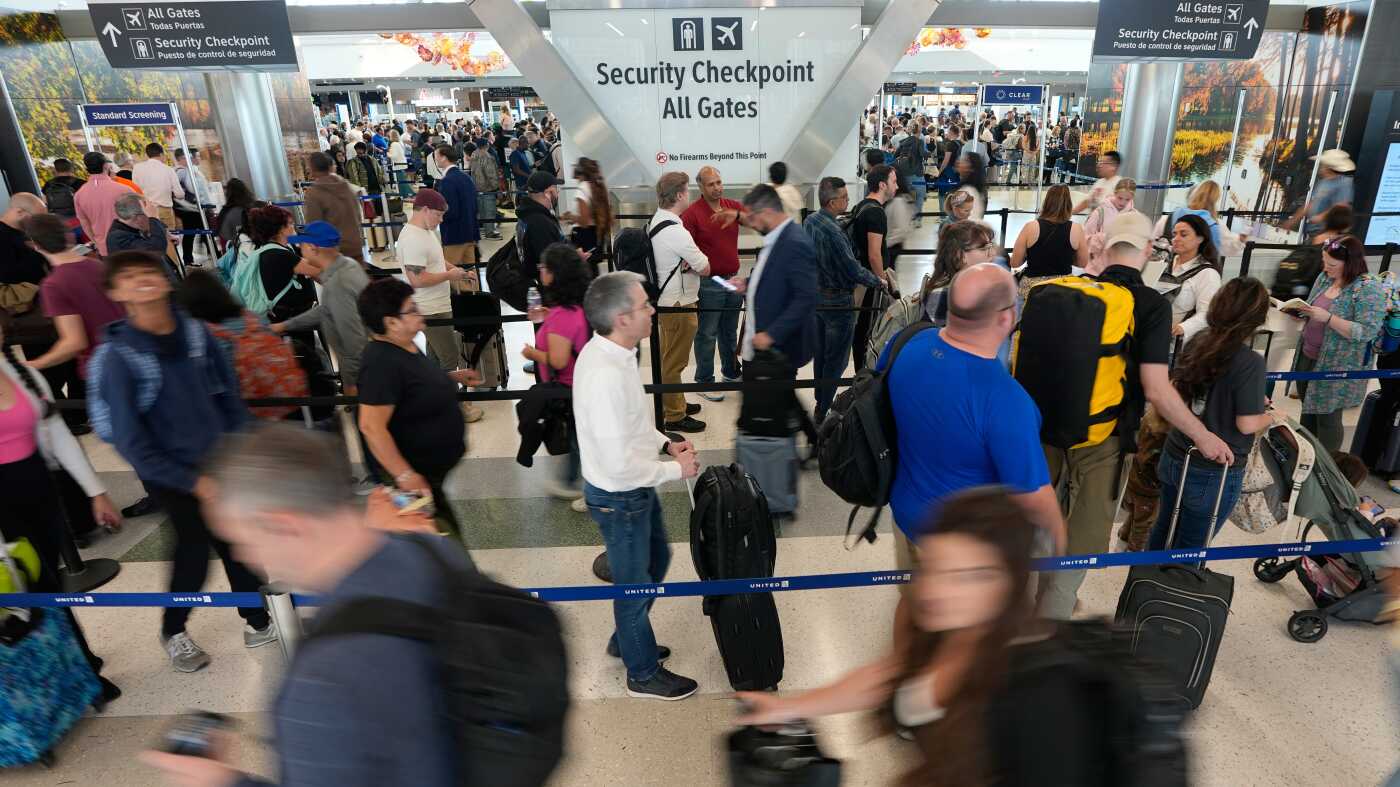
ICE officers could remain at airports after TSA workers are paid

Scathing report claims nation’s oldest labor union ‘betrayed’ MAGA members through ‘shocking’ spending
-

 Sports1 week ago
IOC addresses execution of 19-year-old Iranian wrestler Saleh Mohammadi
-

 Miami, FL4 days ago
Jannik Sinner’s Girlfriend Laila Hasanovic Stuns in Ab-Revealing Post Amid Miami Open
-

 New Mexico1 week ago
Clovis shooting leaves one dead, four injured
-

 Tennessee7 days ago
Tennessee Police Investigating Alleged Assault Involving ‘Reacher’ Star Alan Ritchson
-

 Politics1 week ago
Schumer gambit fails as DHS shutdown hits 36 days and airport lines grow
-

 Minneapolis, MN4 days ago
Boy who shielded classmate during school shooting receives Medal of Honor
-

 Science1 week ago
Record Heat Meets a Major Snow Drought Across the West
-

 Technology1 week ago
YouTube job scam text: How to spot it fast