Lifestyle
Asked to flag 'negative' National Park content, visitors gave their own 2 cents instead


Signs like this one in the Presidio of San Francisco, part of the Golden Gate National Recreation Area, have been going up around the country in response to President Trump’s executive order titled “Restoring Truth and Sanity to American History.”
Chloe Veltman/NPR
hide caption
toggle caption
Chloe Veltman/NPR
Signs installed earlier this month in national parks across the country asking visitors to share feedback on “any signs or other information that are negative about past or living Americans” are eliciting all sorts of reactions. But comments viewed by NPR don’t provide the requested feedback.
Visitors to the Presidio of San Francisco, a National Historic Landmark and former military garrison with a complex history seemed unimpressed by the small black-and-white sign placed on a coffee table at roughly shin-level near the Presidio’s welcome center on a recent morning.

“The point of going to a park is to enjoy nature, not to whistleblow something that casts the American people in a bad light,” said Evan Sutterfield, a San Francisco school teacher enjoying a day out on his summer break.
“I think you need to tell the whole story,” said Russ Harwell, visiting from Charlotte, N.C. “If you’re gonna write it out of history, then you’re doomed to repeat it.”
Linda Mosinian from Milwaukee, Wis. added: “I think this is a waste of time.”
‘Restoring Truth and Sanity to American History’
The signs, which invite people to send comments anonymously using a QR code, phone number, email or web address, have appeared in response to an executive order President Trump issued in March titled “Restoring Truth and Sanity to American History.” It specifically calls for the removal of content from monuments and properties within the Department of the Interior that “inappropriately disparages Americans past or living.”
In a statement to NPR, the Department of the Interior said: “The effort ensures public lands reflect an accurate portrayal of American history and heritage.”

NPR reviewed dozens of comments submitted from June 4 to 12 regarding signs placed in parks across the country. According to The Coalition to Protect America’s Parks, a multi-page PDF containing these comments was leaked by a national park employee who took screenshots of the comments pages on their computer and then shared the PDF with parks advocacy groups.
None of the submitted comments suggest the parks need to change their depictions of people or history.
Some are supportive. “The park rangers and volunteers go above and beyond to tell the full American story,” stated a comment about Catoctin Mountain Park in Maryland.
Others say national parks should reflect even more of the country’s difficult history. “Need more history on how black and indigenous people have been exploited,” one comment stated.
Differing opinions
That’s not to say all visitors are happy about the historical information shared at parks.
Department of the Interior spokesperson J. Elizabeth Peace said after Trump issued the executive order — but before the signs went up — her department had already started receiving feedback from national park visitors via the department’s email address.
Peace said one example relates to Capitol Reef National Park in Utah, where a visitor reported that a souvenir postcard mislabeled a nearby landmark and appeared to copy text from Wikipedia without attribution.
Another came from a visitor concerned about a video on the website of the Washington Monument in Washington, D.C., which inaccurately stated George Washington ended his inaugural oath with a phrase historians widely agree lacks definitive sourcing.

The phrase in question was “So help me God.”
Neither of these comments related to Trump’s executive order about content that, “inappropriately disparages Americans past or living.” But Peace said they were nevertheless useful.
“Both examples provided were reviewed by the National Park Service and appropriate corrective or clarifying action was taken,” Peace said. “These examples underscore the value of public feedback in helping us maintain historical accuracy across our sites and materials.”
Accuracy challenges
Accuracy isn’t a given, because feedback can be submitted through a general website or email address accessible from anywhere in the world.
“What would stop somebody with an agenda from posting fake comments?” said Clara Wooden, a member of the board of The Coalition to Protect America’s National Parks. “People at both ends of the ideological spectrum can game the system without even setting foot in a national park.”
In response to these concerns, the Department of the Interior’s Peace told NPR comments are individually reviewed before being routed to appropriate subject matter experts for further evaluation and validation. “This manual review process helps ensure that the feedback we work with is both relevant and credible,” she said.

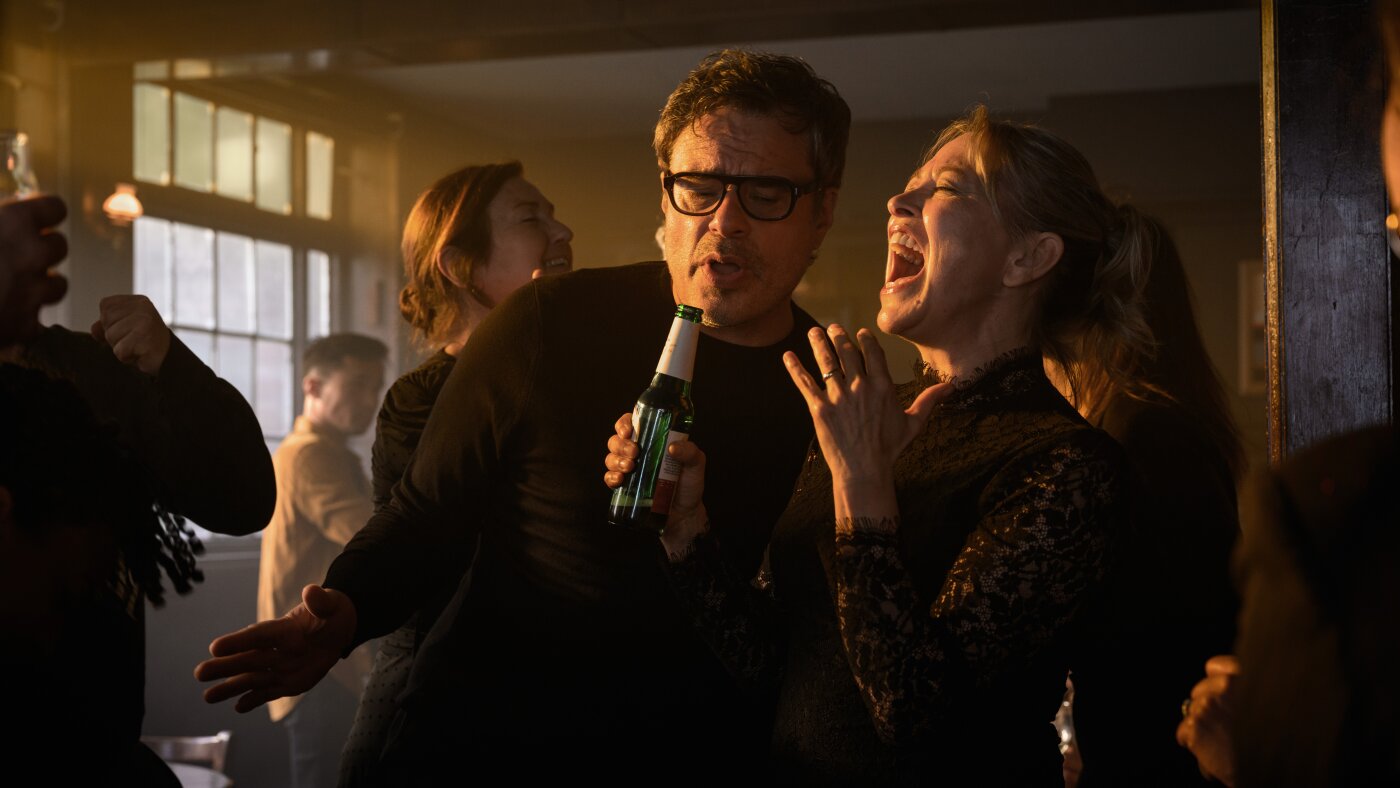
In Alice and Steve, Jemaine Clement and Nicola Walker play long-time friends who turn on each other after he gets involved with her 26-year-old daughter.
Lara Cornell/Disney+
hide caption
toggle caption
Lara Cornell/Disney+
I grew up watching episodic shows on network TV, nearly all of them formulaic but some indelibly great. Then, like everyone else, I moved into the days of what my colleague David Bianculli dubbed Platinum TV, where series like The Sopranos and The Wire and Fleabag aspired to something higher. What both these eras had in common was that their shows were carefully crafted — they had an internal logic, and a tone, that held them together.
In recent years, though, there’s been a proliferation of shows that, possibly obeying some algorithm, care less for coherence than sensation. They lurch among tones, from cuteness to sentimentality to meanness, stirring in random plot twists along the way. Bouncing all over the emotional map, these shows depend on compelling actors and a few memorable scenes to make us overlook their loose construction.
A great example is Alice and Steve, an entertaining but sometimes exasperating six-part British comedy on Hulu about two 50-something best friends who turn on each other after he gets involved with her 26-year-old daughter.


While the premise is juicy, it’s also a tad yucky, and I mainly tuned in because its title characters are played by performers Jemaine Clement from Flight of the Conchords and Nicola Walker, whom I’ve raved up on this show more than once.
The series starts poorly with Steve and Alice going on a cutesy bender after a friend’s funeral. Now, I always hate drunk scenes, which are an invitation to overact. As Clement and Walker bray their lines, we learn that Steve’s a divorced celebrity hair stylist who can’t find a girlfriend while Alice is a clothes designer with a doting younger husband, nicely played by Joel Fry, a sweetie-pie of a teenage son — that’s Tyrese Eaton-Dyce — and, of course, that 26-year-old daughter, Izzy, who has inherited her mother’s willfulness. Played by Yali Topol Margalith, Izzy kickstarts the plot by flirting with Steve. Predictably, he succumbs.

Almost immediately, they think they’re in love. While the weak-willed Steve wants to hide their romance — he knows it’s inappropriate — Izzy just blurts out the facts to her mom. Alice flips. And from hereon out in this series where the women are as alpha as the men are hangdog, Alice drives the action. Betrayed and violently angry, she’ll do whatever it takes to break them up — no matter who gets hurt. Her antics unleash Steve’s own malice. We’re in Beef territory.
At its core, Alice and Steve hinges on the way that platonic friendships are often richer and more powerful than romantic ones. It’s a fascinating subject, which may be why I found the script by Sophie Goodhart so frustrating. I wanted her to dig deeper. While the show’s got some very funny bits — Alice’s sharp-tongued mother is a blast — it’s often annoyingly lax.

If Steve really does the hair of Charli XCX, how come he’s a clueless older guy whose pop culture references are Willie Nelson and Woody Allen? If Izzy truly adores her mother as she claims, why does she keep rubbing her relationship with Steve in her mom’s face? Halfway through, one character nukes the other’s career, but this life-shattering event has no real weight: It’s barely even mentioned for the rest of the series.
That said, Alice and Steve is worth seeing for scenes like the one in which Steve spinelessly sells Izzy out or the lacerating discussion between Alice and her husband when he fully grasps that he adores a woman who views him as a reliable but dull concierge, not a man she likes hanging with. Most touching of all may be the lovely sequence when Alice, wise for once, smooths a romantic crisis between her son and his would-be girlfriend, a pair who are the show’s emblem of hope. For once, we understand why people love her.

While most viewers will find Steve more likable than Alice — the show takes pains not to make him appear predatory or creepy — the role doesn’t give Clement a whole lot to do except play variations on shambolic dread and discomfort. The show gets its galvanizing zing from Walker, a beloved star in England with amazing, luminous eyes. Her Alice is the kind of complicated, volcanic heroine that you don’t see in movies and rarely see on TV, one who shows her apocalyptic rage freely and in many different forms.
At least once in every episode, something would lead me to say, “Man, is this show a mess.” But that wasn’t a deal breaker. I kept watching. After all, life is messy, too.


How to enter your Sporty Spice era.
Getty Images/quantic69/Olga Kurbatova/Anastasiia Zvonary/Photo Illustration by NPR
hide caption
toggle caption
Getty Images/quantic69/Olga Kurbatova/Anastasiia Zvonary/Photo Illustration by NPR
Reality dating and professional sports are not as different as you’d think.
Brittany is in her Sporty Spice era – she watched the NBA playoffs, she’s following World Cup games, and she’s watching the New York Liberty play their WNBA season. These games are daily – and so is the reality dating show Love Island. And she noticed that the two formats are not very different at all. Defector.com staff writer and co-owner Kelsey McKinney came to the same conclusion – so the two of them discuss why these games of athleticism and love can bring us together… and why they get valued differently in our culture.
For more episodes on sports and reality TV, check out:
Get rich or die trying: how sports betting is changing our love of the game
Is this the end of reality TV?
The ugly truth of America’s expensive homes
Support Public Media. Join NPR Plus.
Follow Brittany on Instagram: @bmluse
This episode was produced by Liam McBain. It was edited by Neena Pathak. Our Supervising Producer is Cher Vincent. Our Executive Producer is Barton Girdwood. Our VP of Programming is Yolanda Sangweni.

-
 Politics8 minutes ago
Trump heads to NATO as tensions simmer with Europe
-
 Science15 minutes ago
New FireSat satellites promise faster wildfire detection over California and beyond
-
 Sports18 minutes ago
U.S. hopes of a historic World Cup run on home soil shattered in loss to Belgium
-

 World30 minutes ago
Cuba sees nationwide power blackout for third time in six months
-
 News53 minutes ago
The U.S. men’s run at the World Cup ends with a 4-1 Round of 16 loss to Belgium
-

 Los Angeles, Ca2 hours ago
L.A. man who violently crashed into Border Patrol agents sentenced to 5 years in prison
-

 Detroit, MI3 hours ago
Fans pack Detroit’s Campus Martius for USA-Belgium World Cup match
-

 San Francisco, CA3 hours ago
Terrified passengers film Waymo autonomous vehicle driving into live fireworks in San Francisco

