Northeast
Massachusetts Gov. Healey urges FEMA to reconsider disaster aid request after severe flooding

- Governor Maura Healey is appealing FEMA’s decision to deny Massachusetts’ request for a major disaster declaration following severe flooding last September.
- Healey voiced concerns that FEMA’s assessment of the request overlooked certain costs.
- Extensive damage was caused by the flooding, including destroyed homes and inaccessible roadways.
Gov. Maura Healey is appealing a decision of the Federal Emergency Management Agency to deny the state’s request for a major disaster declaration to support Massachusetts cities and towns battered by severe weather and flooding in September.
Healey said the state has appreciated FEMA’s partnership but is concerned that the federal agency’s assessment of her request failed to include certain identified costs.
“These storms were devastating for our communities. I saw the impacts firsthand – homes and businesses were destroyed, roadways and bridges were inaccessible, and some residents had to be evacuated. Six months later, they are still rebuilding,” Healey said in a letter Monday to President Joe Biden.
EXTENSIVE FLOOD DAMAGE PRODS NEW ENGLAND STATES TO REEVALUATE DAMS, CULVERTS
“The state has done all that we can to support their recovery, but the needs far outpace our available resources.” Healey added.
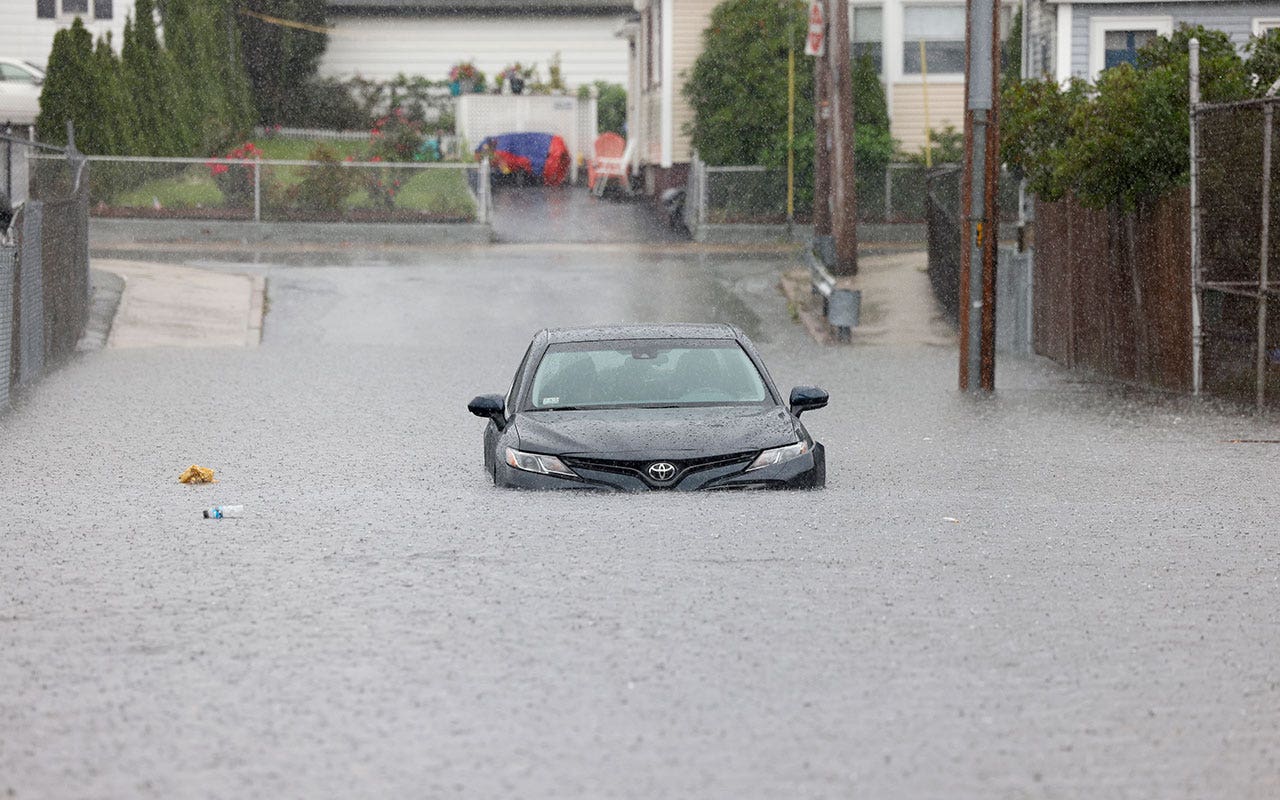
A car is seen submerged in floodwaters in Boston, Massachusetts. Gov. Maura Healey is appealing a decision of the Federal Emergency Management Agency to deny the state’s request for a major disaster declaration to support cities and towns battered by severe weather and flooding last September. (Jessica Rinaldi/The Boston Globe via Getty Images)
In her letter, Healey noted that Springfield experienced what she described as a catastrophic water main break attributed to the failure of a culvert and subsequent erosion related to the rainfall experienced on the evening of Sept. 11.
Healey said the city of Leominster submitted a list of 56 damaged sites, but FEMA only included seven in its validation process.
FLOODING AT MASSACHUSETTS HOSPITAL DISRUPTS FERTILITY TREATMENT SERVICES FOR 200 PATIENTS
Healey urged FEMA to reconsider the state’s request.
“Our communities must know that both their state and federal governments understand the severe challenges and stress they are facing, and that we are here to help,” Healey wrote.
“Their recovery is particularly daunting given the knowledge that the next severe storm could be around the corner, as we continue to see the escalating impacts of climate change,” she added.
Read the full article from Here


A man has been arrested for murder in connection with the death of a Duxbury, Massachusetts woman, months after her body was found in a Connecticut home under suspicious circumstances.
This week, the Connecticut Office of the Chief Medical Examiner determined the cause of death for Janina Brooke Murphy to be blunt force injury of head and the manner, homicide.
On Tuesday, Connecticut State Police arrested 28-year-old Cole Werhan of Burlington, Connecticut and charged him with murder.
Brooke Murphy, as she is referred to by her mother, was found at the bottom of a staircase in March inside the Burlington, Connecticut home where she was living. At the time, Connecticut State Police called the 26-year-old’s death suspicious.
“Another detective got on the phone. He said, ‘I want you to know something. Your daughter didn’t just fall down the stairs. She had wounds all over her,’” Brooke’s mother, Beth Murphy, told WBZ.
Murphy said her daughter and Werhan were dating, and she is determined to seek justice. “It’s confirmed, it wasn’t an accident. So that part, really, that’s tough,” Murphy said.

Murphy described her daughter as kind and artistic.
“So many people said she was my best friend. Like, pretty much everybody said Brooke was my best friend. She had a heart of gold,” Murphy said.
Brooke Murphy’s 27th birthday fell on June 17. Connecticut State Police said they are continuing to actively investigate the circumstances surrounding her death.
Werhan was held on a $5,000,000 cash bond and is scheduled to appear in Torrington Superior Court in Connecticut on Wednesday morning.

Join Girl Scouts of Maine for a sweet summer stop you won’t want to miss!
We’re popping up at local ice cream shops around Maine for our Ice Cream Socials—fun, casual events where families can enjoy a free treat and learn more about Girl Scouts.
Here’s what to expect:
🍦 One FREE kid-sized cone per family when you stop by and connect with us
🌱 Hands-on activity for kids (like a planting activity or fidget spinner craft)
💬 A chance to chat with our team and learn how Girl Scouts builds confidence, friendships, and unforgettable experiences
Whether you’re curious about joining, looking for activities for your child, or just want to enjoy a sweet treat, we’d love to meet you!
✨ Open to all families—no registration required. Just stop by, say hello, and enjoy some ice cream with us.
The Saco Scoop
05:30 PM – 07:30 PM on Tue, 14 Jul 2026

WORCESTER, MA (WGGB/WSHM) – A Massachusetts man has been indicted in connection with the death of a child.
Laura French, spokesperson for the Worcester County District Attorney’s Office, said 35-year-old Steven Stuart of Auburn was indicted by a grand jury on a murder charge. The charge stems from the 2017 death of seven-year-old Jayden Carlson.
Stuart was convicted in September 2015 on a charge of assault and batter on a child causing serious bodily injury in connection with an August 2012 incident involving Carlson, who was two years old at the time. Stuart was sentenced to six to eight years in state prison for that conviction.
French added that Carlson suffered serious, “life-altering injuries and subsequently experienced ongoing medical complications” following the 2012 incident. Carlson died in December 2017 as a result of those injuries.
Stuart has been arraigned on the indictment and is being held without bail. His next court date is scheduled for July 20.
Copyright 2026 Western Mass News (WGGB/WSHM). All rights reserved.
-

 Arizona1 minute ago
Arizona creates task force to crack down on cargo thefts
-

 Arkansas13 minutes ago
Razorbacks’ Guard Darius Acuff Selected No. Overall in 2026 NBA Draft
-

 California16 minutes ago
DOJ charges 10 Southern California defendants in largest federal healthcare fraud crackdown in US history
-

 Colorado21 minutes ago
Erie Town Council approves sale of Colorado mineral rights for major oil and gas development
-

 Connecticut28 minutes ago
Man charged with murder in death of Duxbury, Massachusetts woman in Connecticut home
-

 Delaware31 minutes ago
Vigil held for 2 teens killed in hit-and-run in New Castle County; driver in custody
-

 Florida36 minutes ago
Meet the Florida Democrats running for governor against David Jolly
-
Georgia43 minutes ago
Georgia Lottery Mega Millions, Cash 3 results for June 23, 2026

