Maine
The plan to use hemp to solve Maine’s ‘forever chemicals’ problem hits a major snag


LIMESTONE, Maine — An Aroostook County tribe has found that industrial hemp plants will extract so-called forever chemicals from contaminated soil on land it owns at the former Loring Air Force Base.
There’s one problem: no one can figure out what to do with the hemp.
“There hasn’t been a way to get the PFAS out of the plants without it going back into the environment,” said Mi’kmaq Nation Vice Chief Richard Silliboy.
Finding a way to take per- and polyfluoroalkyl substances, known as PFAS, out of contaminated hemp plants without unintentionally releasing them into the air is the next step in the tribe’s effort to remediate 650 acres of polluted land the U.S. government turned over to it 15 years ago.
Using hemp plants to suck up PFAS from the ground has been touted nationally as a potential fix for the widespread pollution. But the Maine tribe’s experience has revealed a significant obstacle to making it work. Testing will soon be underway to try to find a solution to the roadblock.
PFAS refers to a group of manufactured chemicals often found in household and personal care products that have polluted soil and water at former manufacturing sites. Known to break down slowly, the long-lasting “forever chemicals” have been linked to increased risk of some cancers, issues with hormonal and immune systems, developmental delays in children, and other health issues, according to the Environmental Protection Agency.
The land the federal government gave the Mi’kmaq Nation in 2009 was so contaminated it was designated a federal Superfund site. The Mi’kmaq property used to be a key training area for Loring firefighters, who used a PFAS-laden foam.
The Air Force promised the tribe that it would clean all known toxins prior to the land transfer in 2009, but that did not happen, Silliboy said. The Mi’kmaq have largely been left on their own to clean the PFAS from their land.
Michael Daly, the EPA’s remedial project manager for Loring Air Force Base, said that a portion of the Mi’kmaq land is part of an Air Force study to determine how far foam might have spread from Loring’s airport. Daly directed other questions about clean-up efforts to the Air Force.
Air Force spokespeople have not responded to requests for comment.
Rather than wait for federal investigators, tribal leaders found their own way to begin removing PFAS from soils on their property.
In 2019, Silliboy and Chelli Stanley co-founded Upland Grassroots, an organization dedicated to cleaning up the Mi’kmaq parcel. Stanley, who lives near Hallowell and has a background in community organizing, learned about hemp-based PFAS extraction and contacted Silliboy, who was immediately interested in its potential.
That year, Stanley, Silliboy and other tribal members planted and harvested several small plots of hemp plants on the Loring property. They sent the harvested hemp to the Connecticut Agricultural Experiment Station, a state-run scientific research facility.
Initial data showed that the hemp plants were extracting various forms of PFAS, including perfluorooctanesulfonic acid, or PFOS. In summer 2022 the group planted five larger plots, with four hemp varieties grown in smaller subsections within each plot.
Of the 28 PFAS varieties identified in the soil, 10 were found in the harvested hemp plants, according to the group’s research published earlier this year.
Stanley and the Mi’kmaq Nation want to eventually expand the number and size of hemp plants to test for larger extractions of PFAS. But without a safe method to dispose of the PFAS-laden hemp, the group’s research can only happen on a smaller scale.
“We don’t want to put the hemp in a landfill and have it be somebody else’s problem,” Stanley said.
One of the group’s scientific partners, the University of Virginia, is currently developing and will soon be testing a method to take PFAS out of hemp plants, according to Bryan Berger, a chemical engineering professor.
Berger declined to reveal what method will be tested but said that if successful, he and colleagues could publish results in early 2025.
Hemp, like other plant species containing toxic contaminants, cannot simply be burned, Berger said.
“That ends up creating airborne forms [of PFAS] that can end up in the atmosphere,” Berger said.
Hemp-based research related to PFAS extraction has been limited, as industrial hemp was only approved for agricultural use in 2018, and funding for such studies remains limited. But Berger and tribal partners recently scored a major funding source to expand their efforts and work toward long-term solutions.
Starting in 2025, the Mi’kmaq Nation, Stanley, Berger, the Connecticut Agricultural Experiment Station and Central Aroostook Soil and Water Conservation District will use a four-year, $1.6 million EPA grant to continue hemp planting at Loring and testing potential ways to extract PFAS from harvested hemp.

As part of the grant, the group will also test areas of the Aroostook River, a waterway that the Central Aroostook Soil & Water Conservation District has found to contain PFAS due to irrigation runoff from nearby crop fields. They will study hemp as a potential rotation crop for keeping PFAS from seeping into potatoes and other produce.
The agricultural studies will be a continuation of work that the conservation district has already begun, Berger said. His lab will test approximately 300 to 400 samples of water from the Aroostook River as well as potatoes and other crops to know the extent of PFAS contamination.
With colleagues from the Connecticut station, the group will study how PFAS moves through insect food chains using sample insects from Aroostook.
Berger credited the Mi’kmaq Nation and Stanley’s initial collaboration for being one of the first groups to study PFAS and hemp at the community level and bring attention to its potential.
“As a researcher, I have not seen a lot of people work on this until recently, so they’re way ahead of everybody else,” Berger said. “Our goal really is to help other tribes, farmers and rural communities who have been impacted [by PFAS].”



A woman died Monday after a fire on East Main Street in Fort Kent.
Woman Died after Fire in Fort Kent
Fort Kent Fire and Rescue said “Upon arrival, Chief Pelletier was unable to confirm that all tenants of the apartment building were accounted for.”
Fire at the Front of the Building and Second Floor
Firefighters battled the blaze at the front of the building and another crew attacked the second floor.
First Floor Fire Put Out
The fire on the first floor was quickly extinguished.
Crews Learned Someone was Still in the Building
Crews got information that there was someone inside the building.
ALSO READ: One Person Died & One Injured after Rollover ATV Crash
Woman was Located in the Building and First Responders Tried Resuscitation
“Shortly thereafter, firefighters located a civilian victim and rescued her, unfortunately resuscitation efforts by ASI and Fort Kent firefighters were unsuccessful,” said Chief Pelletier with Fort Kent Fire and Rescue.
Maine Fire Marshal’s Office Investigating the Cause of the Fire
The Maine Fire Marshal’s Office responded to the scene and is investigating the cause of the fire.
MORE NEWS: Woman Shot and Seriously Injured with Gunshot Wound
Name and Age Not Released Pending Family Notification
The woman’s name and age were not released pending notification of the family.
READ MORE: Two Men Fled Crash & One Apprehended after Hitting Pole
Multiple Agencies Responded and Assisted with the Fire
Assisting Fort Kent Fire and Rescue were the Eagle Lake Fire Department, ASI, Fort Kent Public Works and the Red Cross.
LOOK: Are These 16 Classic American Meals Finally Making a Comeback?
From casserole-night favorites to full-on beige-on-beige comfort, these American dinners fell out of fashion — but could they be on their way back?
Gallery Credit: Stephen Lenz
LOOK: 21 Candies From the ’80s That You Probably Haven’t Thought About in Years
How many of these over-the-top ’80s candies — sweet, sour, and sometimes downright ridiculous — do you remember from your childhood?
Gallery Credit: Stephen Lenz

If you’re gluten-free or have celiac disease, you know the feeling: sometimes you just want what everyone else is eating. Wings, fries, pizza, those classic comfort foods that can often feel off-limits. Thankfully, Maine is really starting to show up for the gluten-free community. More restaurants are adding gluten-free options to their menus, and even better, more places are investing in separate fryers to help keep us safe.
One local favorite that deserves a reminder is 104 Main Public House in Topsham. They’ve been serving gluten-free wings, pizza, and fries for quite a while, but it’s worth highlighting again because they do it right. Their menu includes gluten-free wings and gluten-free pizza options, and they are known for accommodating gluten-free diners.
As someone who has personally eaten their wings, I can confidently say they’re delicious and I’ve always felt safe ordering them. Knowing they have a dedicated fryer makes all the difference when you’re navigating celiac disease and trying to enjoy a meal without worrying about cross-contact.
The real question is: are you a ranch or blue cheese person? Do you go for classic BBQ or are you all about the hot wings? Either way, if you’ve been craving crispy, flavorful wings this summer, 104 Main should be at the top of your list.
It’s great to see more Maine restaurants making gluten-free dining easier, and tastier, for all of us.
8 of the Best and Most Cozy Portland, Maine, Cafes
Gallery Credit: Allyssa Marson
12 Things That Absolutely Surprise People When They First Visit Maine
Let’s chat about the things that shock you when you visit the great Pine Tree state.
Gallery Credit: Lizzy Snyder
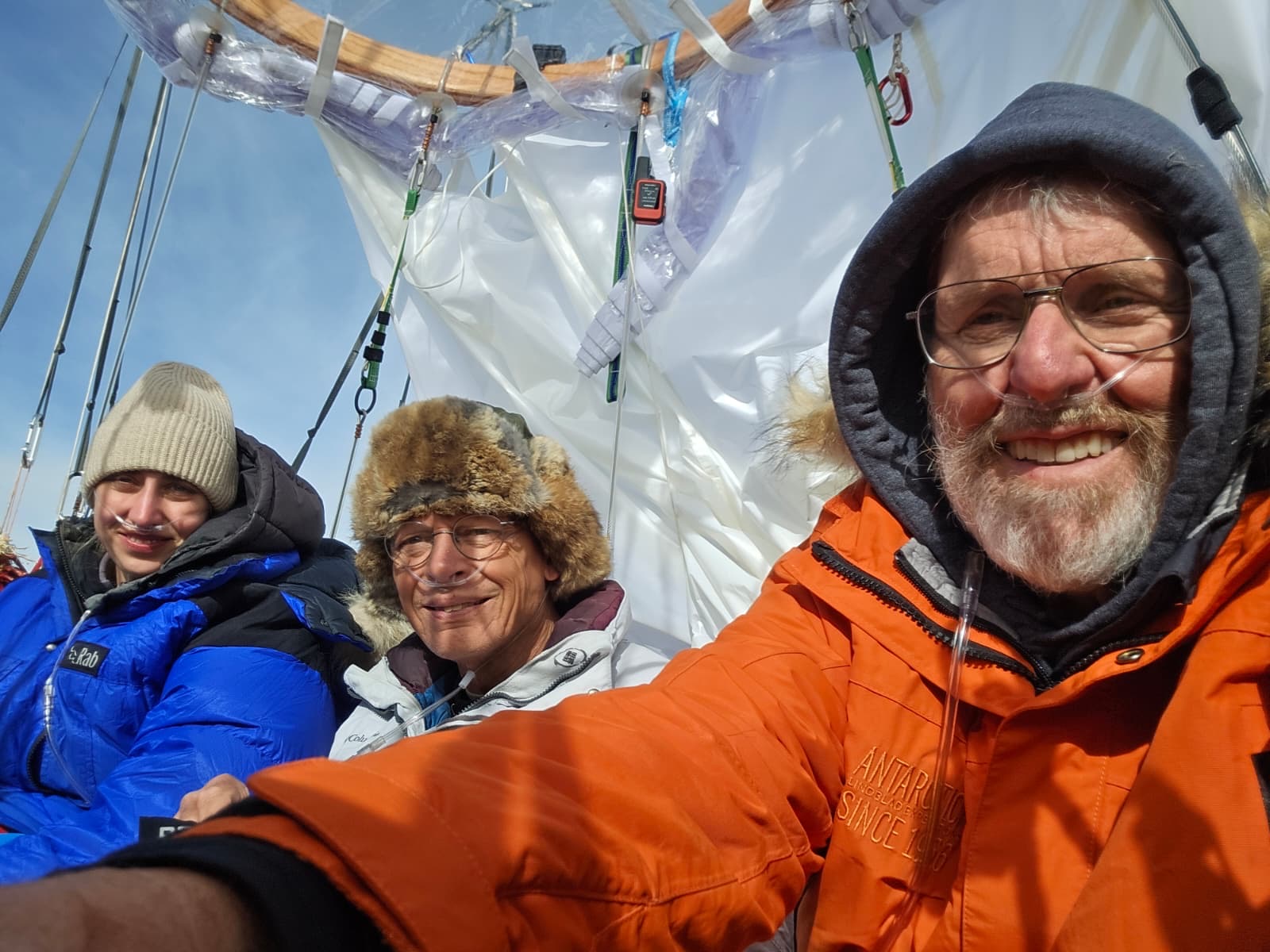
Pilots of the Atlantic Explorer, which lifted off from Presque Isle Thursday in a quest to make the first trans-Atlantic crossing by hydrogen balloon, smile after heading out over the open ocean Friday. From left are Alicia Hempleman-Adams, Bert Padelt and Peter Cuneo. (Courtesy of Peter Cuneo)
Days after Bert Padelt completed a history-making 2,852-mile balloon journey from Maine to Europe across the Atlantic Ocean, the whole experience still felt like a blur.
The closet-sized basket where he and his co-pilots endured torrential rain, snow and freezing temperatures was packed up, its voluminous canopy deflated, but the world record-holding American balloon builder couldn’t believe he had finally accomplished a lifelong dream.
“I kept waking up thinking, did this really happen?” Padelt said in an interview with the Bangor Daily News from Luxembourg, where the Atlantic Explorer landed on June 7. “It’s now starting to sink in, and it has turned out better than I ever thought it would.”
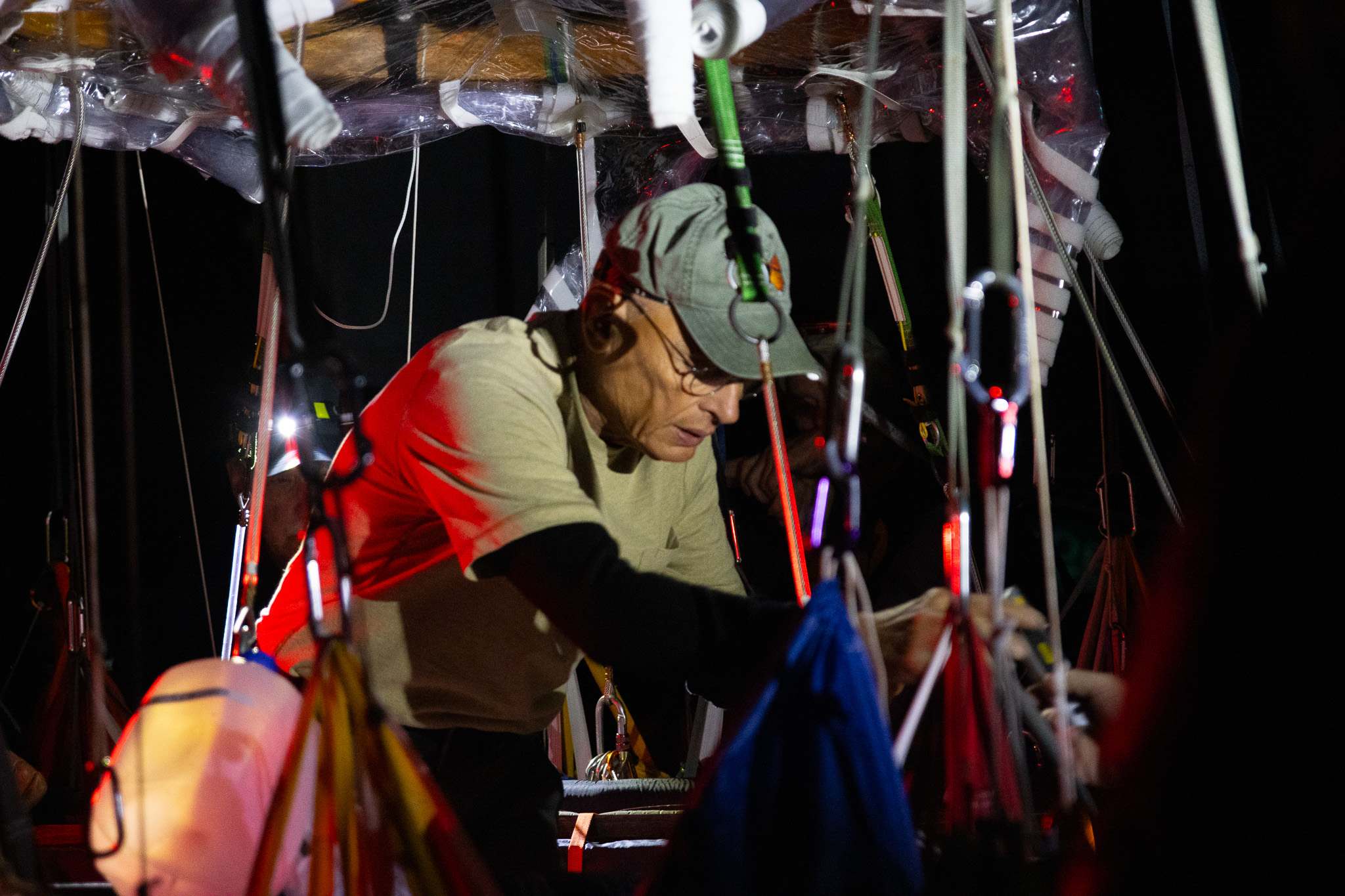
Padelt — who is from Pennsylvania — alongside fellow American Peter Cuneo and British explorer Alicia Hempleman-Adams, are now the first people to cross an ocean in a hydrogen-powered open-basket balloon, and just the 20th team ever to mount a successful trans-Atlantic balloon flight.
The trio spent more than 70 hours in the air after taking off from a Presque Isle field early June 4, traveling as fast as 90 miles an hour and as high as 25,000 feet as they navigated strong winds and a storm above the open ocean. They set down near the city of Diekirch in northeastern Luxembourg on a “very peaceful” morning, a stark contrast to the conditions they had faced earlier.
“It was almost like we were on another flight altogether,” Padelt said. “You could hear birds chirping, roosters crowing, cows mooing. You saw fog in the valleys, which was indicating calm winds. Our final hour in the air was an extremely peaceful, wonderful moment.”
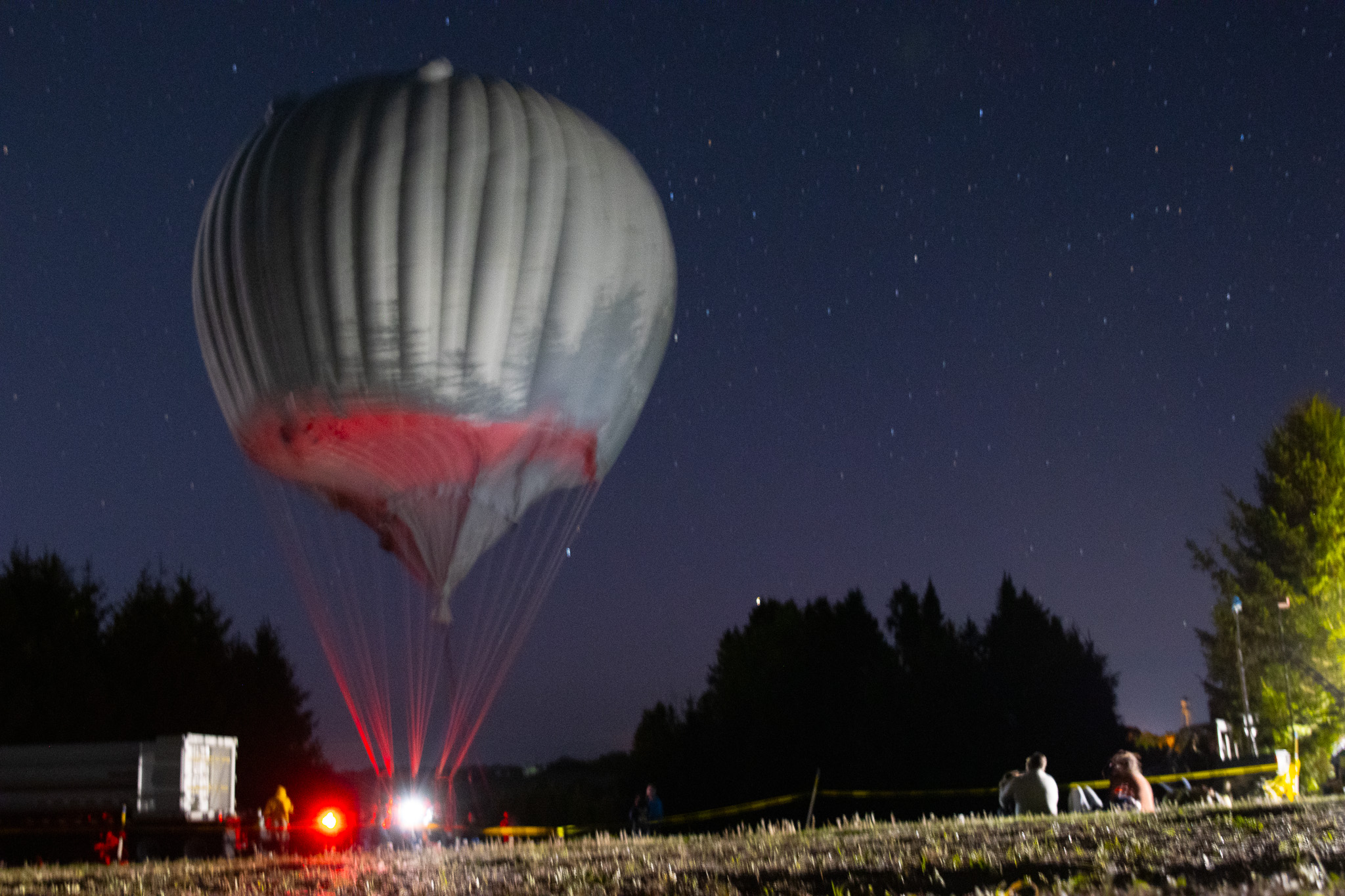
The Atlantic Explorer set off from Presque Isle after hours of delays from high winds. The delay prevented the team from getting ahead of bad weather that would catch up to them later, Padelt speculated.
The first day went well, he said. All their equipment functioned perfectly and the balloon flew well. The team crossed New Brunswick, then Prince Edward Island over the first 12 hours, surpassing where the Atlantic Explorer had been forced down in its previous two attempts due to bad weather and a gas leak.
By that evening, they cleared Cape Breton Island and headed for Newfoundland, the last landmass before the open ocean. A few hours later, Padelt, Cuneo and Hempleman-Adams committed to the crossing and ventured out over the Atlantic.
Atmospheric conditions on the second day meant the team had to drop more ballast — jettisoning sand bags from the basket to gain altitude — than they wanted to.
“We basically knocked off two days of duration [of] ballast,” Padelt said. “But the saving grace is we knew that the speed was going to pick up, so we weren’t all that concerned.”
Then came the storm.
“It was a surprise,” Padelt said. “We knew the weather was there with the hopes that it was going to be south of us.”
With little more than a thin rain cover, the Atlantic Explorer battled heavy precipitation through the night. It rose into the clouds, where temperatures dropped as low as 17 degrees below zero and snow built up on top of the balloon, forcing it to sink. The snow turned to rain and then the process repeated itself.
“This continued probably for about four hours or so,” Padelt said. “But when the sun came up, it was a bright blue sky above us and [the storm] was beyond us.”
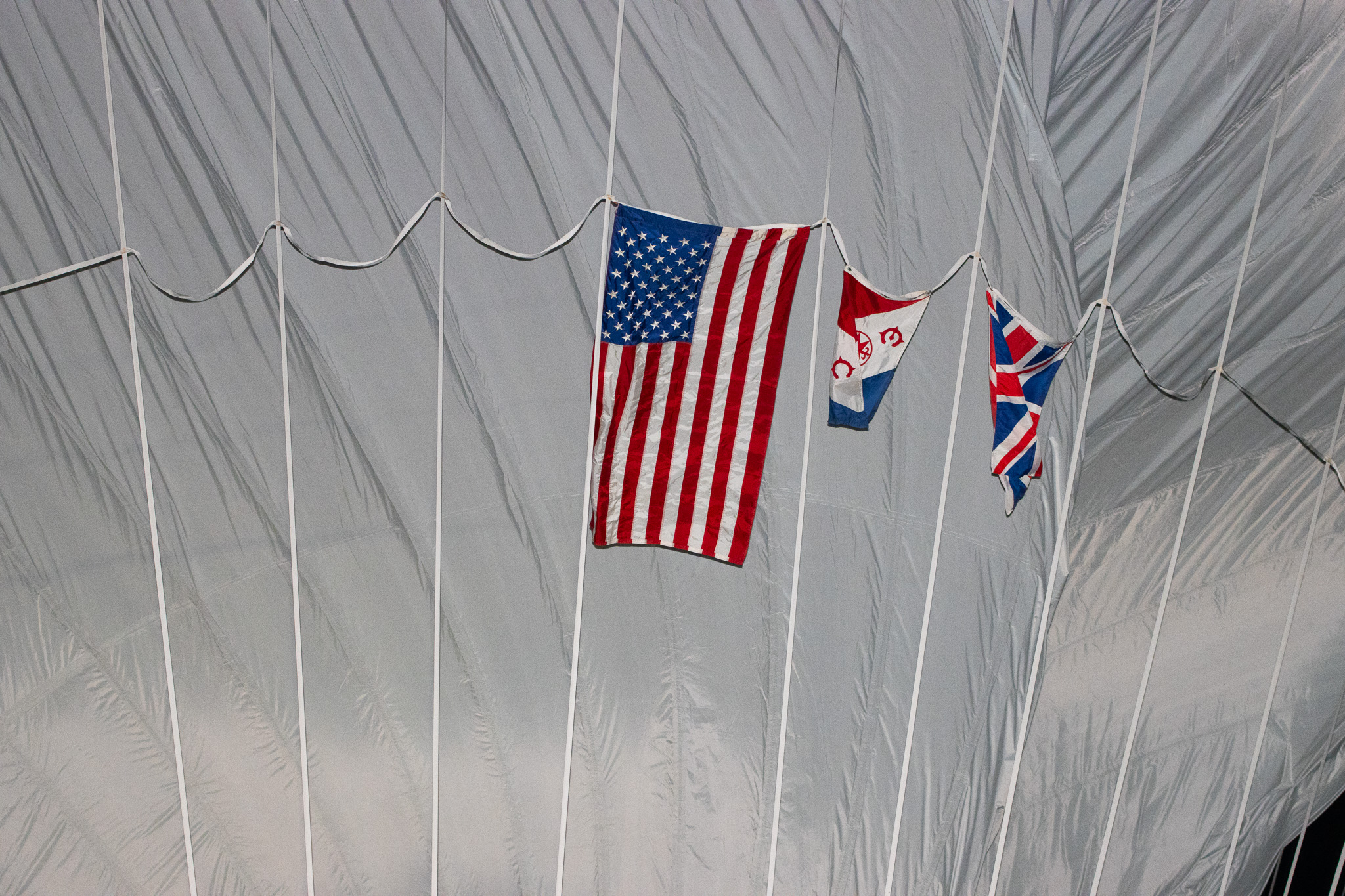
The pilots had projected a successful flight would take four to six days averaging around 35 miles per hour. But as the wind picked up and the sun beat down on the balloon the morning after the storm, the Explorer topped 90 miles per hour. The balloon crossed the open Atlantic Ocean in approximately 37 hours.
They passed over the beaches of Normandy along the French coast on the evening of June 6, the 82nd anniversary of the D-Day invasion, when the Allied forces used hydrogen powered barrage balloons to prevent German aircraft from attacking their position from a low altitude.
They flew inland overnight, crossing into Luxembourg as the sun rose on June 7, and landed in a field.
Besides being the first hydrogen-powered trans-Atlantic trip, the journey set a world distance record for the size and type of balloon. Hempleman-Adams, once the youngest person ever to visit the North Pole, also became the first woman to cross the Atlantic in a gas-powered balloon, and the second to do so in any type of balloon.
The balloon’s chase team reached the site within an hour. That group included Padelt’s wife, Joanie, with whom he built the Atlantic Explorer.
“All the times I’ve been thinking about this flight and how I wanted it to end, I wanted it to end with a stand-up landing with my wife there to see the balloon,” Padelt said. “The odds of that are very slim when you think about how far you’re flying … but as it turned out, it worked. And so when she arrived, there were some strong emotions, for sure.”
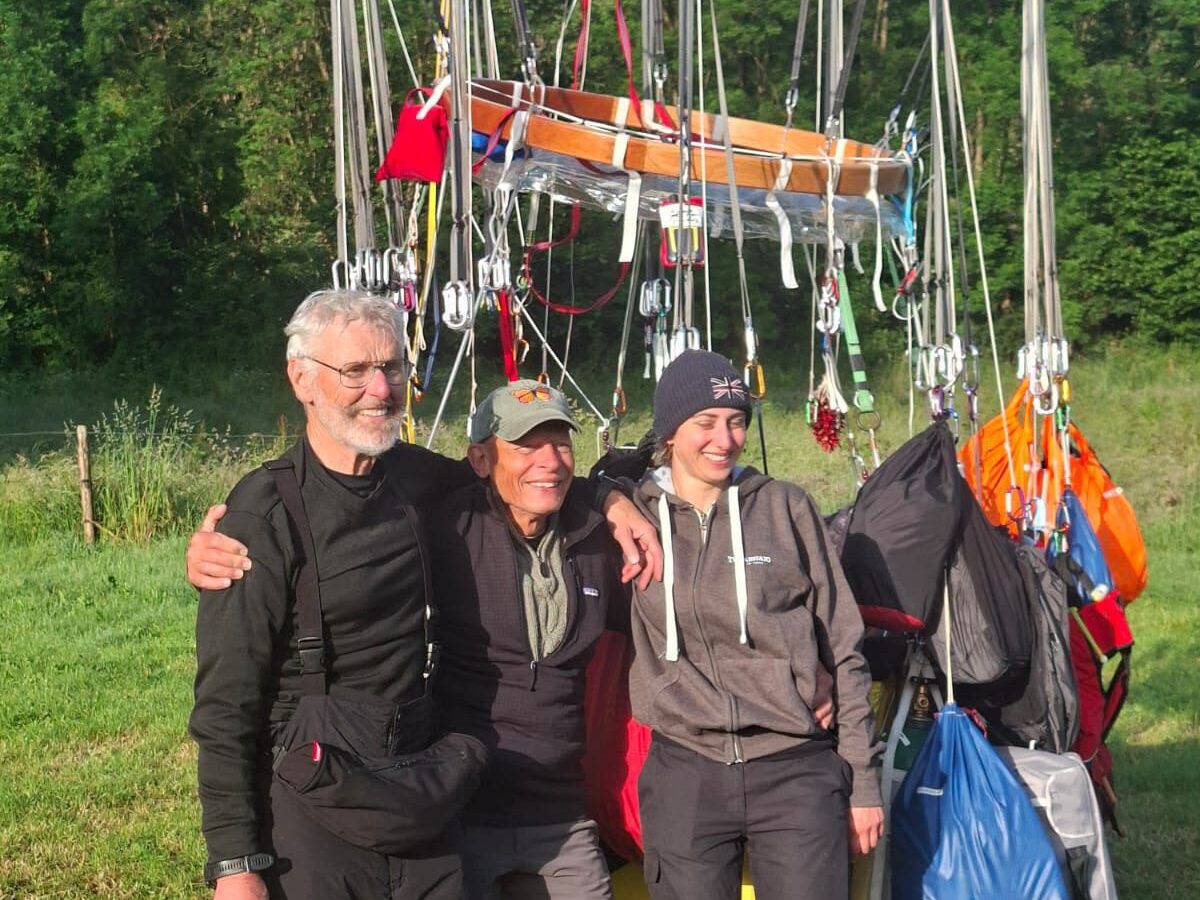
Members of the Cercle Luxembourgeois de l’Aérostation, a nearby balloon club, also arrived to help the crew deflate and pack up the balloon.
As their successful crossing drew attention, the royal family of Luxembourg invited the group to the Palais Grand-Ducal — the country’s royal palace. Padelt, Cuneo and the chase team met with the Grand Duke Henri, whom they presented with one of their final two bags of ballast from the flight.
“He was very, very interested in the flight and how it turned out,” Padelt said. “He was asking quite a few questions and so forth and went to great efforts to welcome us to Luxembourg.”
The crew headed back to the U.S. on Thursday, capping off an adventure Padelt had dreamt of since he was awed by the first trans-Atlantic balloon flight. That balloon, the Double Eagle II, launched from Presque Isle in 1978.
As the Atlantic Explorer took off from the same city last week, hidden in the canopy was a 1978 silver dollar, both a good luck charm and an homage to the Double Eagle II, as a new group of balloonists made history.
“I knew it would be hard. So there were no surprises,” Padelt said. “But the sense of reward afterwards is exactly the feeling I was looking for.”

-
Pittsburg, PA3 minutes ago
2026 Opponent Preview: Pittsburgh Steelers, Week 6
-

 Augusta, GA8 minutes ago
Augusta University welcomes Brent McMillian as new athletic director
-

 Washington, D.C15 minutes ago
TFB’s AgVentures Challenge finalists visit Washington, D.C.
-
 Cleveland, OH17 minutes ago
Hemp-derived THC drinks return to Ohio businesses after judge blocks new law
-

 Austin, TX23 minutes ago
Oregon Baseball Loses Key Talent in Surprising Transfer Portal Move
-

 Alaska32 minutes ago
Small ships go where big ships can’t in Alaska’s wilderness
-

 Arizona38 minutes ago
20 famous ASU alumni, including Jimmy Kimmel and other favorites
-

 Arkansas45 minutes ago
Congressman Steve Womack visits Northwest Arkansas


