Maine
Here's where a fourth-generation lobsterman goes for lobster rolls in Maine


 Alamy
AlamyHeather Strout Thompson has been hauling lobster since traps were wooden. Here are her top lobster rolls in her home state of Maine, from Chipman’s Wharf to Luke’s Lobster.
Hundreds of years ago, lobsters washed up in droves along what’s now Maine’s rocky coast, so plentiful and cheap it was fed to prisoners. Today, tourists from all over come to the US’s north-easternmost state for the meatiest, sweetest lobster in the world, thanks to its freezing cold waters. And the best lobsters naturally make the best lobster rolls.

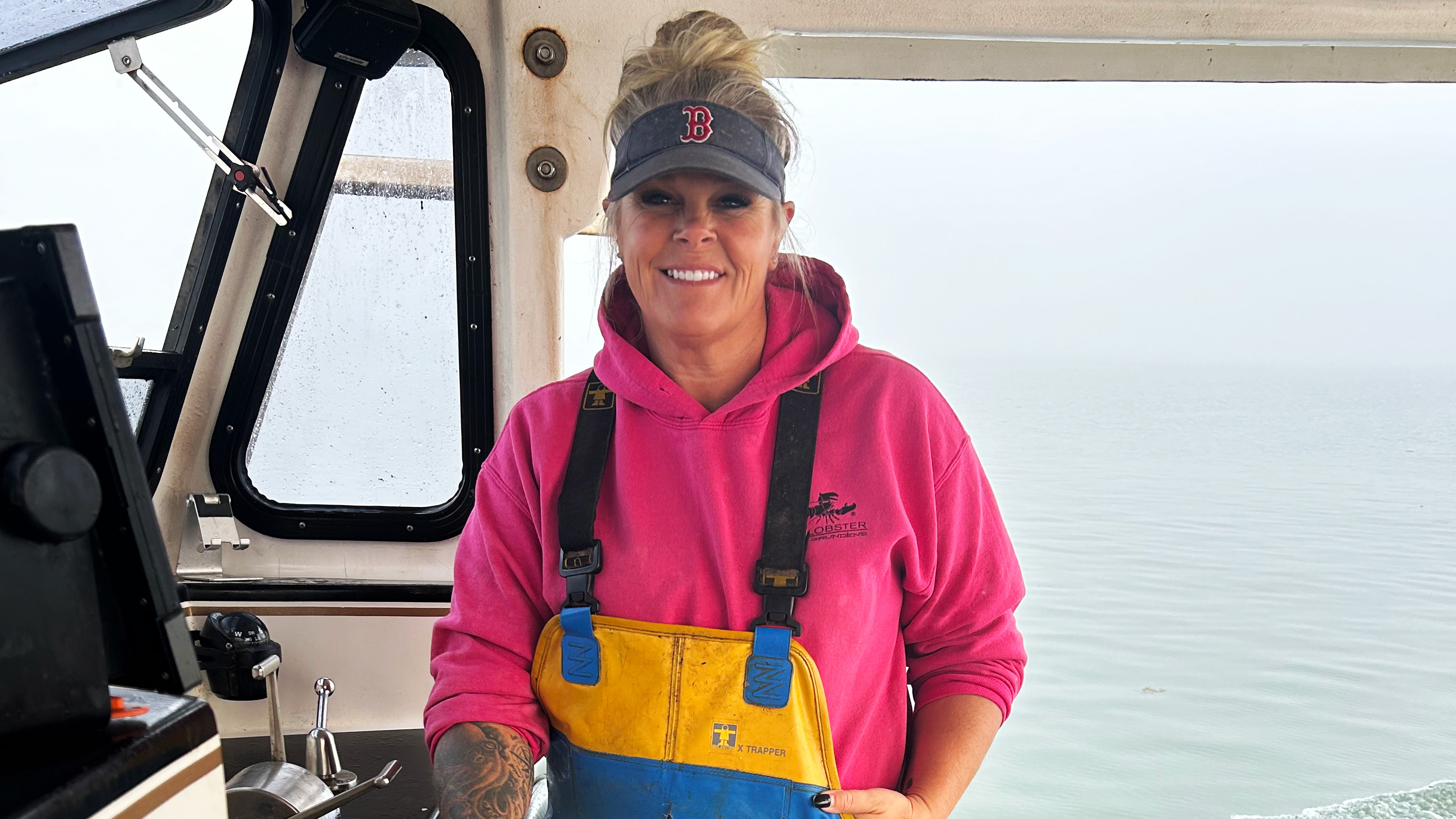
The SpeciaList
Heather Strout Thompson has been hauling lobsters since traps were wooden, starting as a 10-year-old on her dad’s lobster boat in the 1980s. Now, with her sister and niece assisting her as sternmen, she’s captain of the boat she built. Her 36ft Wayne Beal fishing vessel, “Gold Digger”, even finished first in five of Maine’s celebrated Lobster Boat Races.
The lobster roll is a classic and beloved New England sandwich, featuring fat hunks of delicious lobster meat stuffed into a grilled, split-top hot dog bun. To find Maine’s top specimens, we spoke to Heather Strout Thompson, a fourth-generation lobsterman (a gender-neutral term in Maine) from the town of Harrington, who’s among a growing number (now 15%, up from 8% 10 years ago) of females in this male-dominated industry.
“Fishing is in our blood,” says Thompson. “It’s the only thing I’ve ever done, so I’m going to do everything I can to protect it – for my grandchildren and theirs.’”
Thompson says the most tender, succulent lobster comes from the freshest daily catch. So whether you take your lobster roll drenched in melted butter (New England style) or tossed cold in a touch of mayonnaise (the Maine way), you can count on one thing: Thompson’s list of family-owned shacks and restaurants along the Maine coast serve their lobster rolls trap to table, no freezer needed.
Here are Thompson’s favourite lobster rolls in her home state.
 Getty Images
1. The best off the boat: Chipman’s Wharf, Milbridge
From the rooftop restaurant of Chipman’s Wharf, overlooking a working waterfront, a lobster roll has never tasted sweeter, says Thompson.
An industry in peril
The Gulf of Maine is warming faster than 99% of the world’s oceans, and with mounting regulations, the delicacy in Southern Maine is now scarcer by the year. In nearby Connecticut, where the first lobster roll was made in 1929, along with southern New England, the lobster population has declined by 70%, forcing Maine’s multigenerational lobstering families to work even harder to survive.
Visitors can support the industry by eating the best lobster rolls anywhere, straight from the boat.
Forty-four miles east of Acadia National Park on the Narraguagus River, lobster rolls are ordered (hot buttered or cold with light mayo) while patrons watch the boats deliver their catch. One of these boats is driven by owner John Chipman, a third-generation lobsterman, who constructed the restaurant in 2002.
“At Chipman’s they’re all lobstermen, and they’re bringing it up to the restaurant themselves, so you know it’s the freshest,” says Thompson.
Chipman recently had to reconstruct the restaurant’s 106ft wharf after the pilings and the 800 traps on them washed away in January 2024 storm floods that ravaged coastal Maine. But with a few dozen steadfast lobstermen delivering daily, this seasonal family restaurant isn’t letting up anytime soon. And if you prefer making your lobster roll at home, they ship too.
 Alamy
Alamy2. The best for sustainability: Luke’s Lobster, Portland
As a third-generation lobsterman, Luke Holden traded Wall Street investing in his 20s to start a tiny lobster shack with his partner, Ben Connif, in Manhattan’s East Village, sourcing directly from his dad’s Maine lobster processing facility.
Thompson’s tips
• Avoid seasonal crowds; travel in the shoulder season (May, September-October)
• Tracing from trap to table, meet a lobsterman on their lobstering tour.
• Go see a working waterfront (in Portland, Millbridge, Stonington, Monhegan, Friendship, Beals, Southwest Harbor or Vinalhaven).
Luke’s Lobster now has 17 branches in Japan, Singapore and across the US, but there’s only one fully fledged restaurant and it sits at the end of an old fishing pier with one of the best views of Casco Bay in the growing foodie mecca of Portland. The company’s lobsters, which are always bought directly from lobstermen, are kissed with a touch of butter and mayo and topped with Holden’s special seasoning.
Now back in Maine, Holden has his own Maine processing plant and donates a portion of his proceeds to preserve fishing communities and ocean sustainability, using only renewable energy and helping lobstermen reduce their carbon footprint.
“What Luke has done is vital to the future of Maine’s lobster industry,” she adds. “And, because the meat is so fresh, he makes a darn good lobster roll.”
 Getty Images
After an hour-long ferry ride from Boothbay, New Harbor or Port Clyde, a lobster roll is non-negotiable at Fish House at Mohegan Island, a fish house and seafood market owned by harbour master Sherman “Shermie” Stanley. The only place in Maine with exclusive rights to lobstering in the surrounding waters, Monhegan Island is also the state’s sole spot with a winter lobster season, kicking off on 1 October – on Trap Day, the island’s holiday.
Thompson’s tips: how to eat lobster like a local
• A softshell lobster available July-September) may contain less meat, but it’s sweeter and so soft you can rip it with your hands. No shell-cracking tool necessary.
• Skip the celery and tarragon. Let the lobster be the star: serve in a split-top hot dog bun, buttered on the griddle. Top with melted butter, light mayo or both.
• If preparing at home, leave no meat behind, starting with the legs.
That means lots of fresh lobster for the 59 year-round residents willing to tough it out in Maine’s freezing winters 12 miles out to sea – and its many visitors. This breathtakingly beautiful island doubles as an artist colony, drawing famous artists like Rockwell Kent and Jamie Wyeth, who still lives there seasonally.
Thompson suggests pairing your lobster roll with a tasty beer from lobsterman Matt Weber and his wife Mary at their nearby Monhegan Brewery before devouring a fresh lobster roll (mayo and a side of melted butter) at Fish Beach overlooking the harbour: “Their lobster roll is filled with giant satisfying chunks of claw meat.”
Website: www.monheganfishhouse.com
Address: Fish Beach, Monhegan
Phone: 207-594-8368
Instagram: @monheganfishhouse
 Getty Images
4. The best big roll: Taste of Maine, Woolrich
While those with big appetites might also consider buying their roll earlier in the season, there’s a reason to buy in the high season. “In July, you’ll start catching more and more ‘shedders’ and less hardshell lobster. After they bury themselves in the mud and moult (males once a year and females every two years) the lobster shell is softer,” says Thompson. “Some softshell shedders may have less meat, but they have a sweeter flavour and [to get to the meat] you can break them with your fingers like paper.” No lobster tools necessary and less messy too. “The colour is a nice bright orange. We call them pumpkins,” she adds. “The Taste of Maine serves softshell most of the summer. It’s fresh, amazing and packed with meat.”
This family-run restaurant, founded in 1978 and filled with nautical antiques does everything bigger, with live music and comedy, and of course, beautiful water views.
 Alamy
Alamy5. The best of the islands: McLoons Lobster Shack, South Thomaston
Also on the Mid-Coast, another family-owned lobster shack sits at the tip of one of Maine’s prettiest peninsulas on Spruce Head Island. “I love to see lobster shacks when I’m travelling. Most are family-owned-and-operated, and it’s nice to see people supporting local fishermen,” says Thompson.
McLoons belongs to Bree Birns, whose family owns and operates the bustling wharf where lobstermen deliver their catches to one of Maine’s long-standing fishing co-ops. The shack itself is an old lobster storage shed now serving up two rolls: a traditional quarter pounder and the double-sized Rolls Royce (with butter, mayo or both) and plenty of claws – the most tender, flavourful part, says Thompson. “Double the lobster fresh off the boat from another female lobsterman? What’s not to love about that?”
Her recommendation: Take it all in with a side of coleslaw and chips from the outdoor table and chairs made from lobster traps.
 Getty Images
6. The best old-school joint: Harraseeket Lunch & Lobster Company, South Freeport
Located right by the boats at the town landing in South Freeport, Harraseeket Lunch & Lobster Company is another landmark mom-and-pop waterfront shack that has been serving locally sourced lobster since 1970. The small dine-in-dine-out shack with a lobster pound is one of the longest-serving lobster shacks in the state.
“It looks like a hole in the wall but looks can be deceiving. The lobster roll is delicious – and one of the few left that still comes with fries,” says Thompson. With indoor or outdoor dining over harbour views, a lobster pound and the state’s celebrated homemade whoopie pies for dessert, this is classic Maine.
Website: harraseeketlunchandlobster.com
Address: 36 Main Street, South Freeport
Phone: 207-865-3535
BBC Travel‘s The SpeciaList is a series of guides to popular and emerging destinations around the world, as seen through the eyes of local experts and tastemakers.


A Massachusetts photographer was seriously injured when he was stabbed during a wedding reception last month in Raymond, Maine.
Donald Halsing, 26, was hospitalized for five days after the stabbing on May 23. NBC affiliate News Center Maine reported that 26-year-old Andrew Manderson was arrested and charged with elevated aggravated assault.
Still recovering, Halsing told NBC10 Boston the attack came out of nowhere — one moment, he was snapping photos on the dance floor, while the next, he was searching for help as blood spilled onto his camera.
“I was sitting there in that chair thinking, ‘There’s a real possibility I could die here,’” Halsing said. “Immediately, I put my hand on my chest here to try and stop the bleeding, get some pressure on it, and started yelling for help.”
Halsing was working at the reception at the Kingsley Pine Campgrounds. He took his last photo at 9:01 p.m., minutes before the stabbing.
“One of the wedding guests came up to me and started asking questions about our business,” he said.
Halsing said it was nothing out of the ordinary, and he tried to explain his photography business to the inquiring guest through the pulse of the DJ booth and celebrating guests.
“I thought he was going to reach in his back pocket for his phone, and instead, he didn’t pull out his phone — he pulled out a pocket knife and stabbed me,” he said.
Manderson, who faced a judge days later, is a cousin of the bride.
“There was this look in his eyes that he wasn’t quite all there,” Halsing said.
Halsing’s fiancée, Ashley Wall, was feet away as he struggled to stay awake. She has been his photography partner for eight years since they met at Framingham State University, and she was helping him work the wedding.
“People who were around me, they asked, ‘What can we do to help you? What do you need?’ And I said, ‘Please go check on Ashley. Please go check on my fiancée,’” he recalled.
Halsing spent five days in the hospital suffering from two lacerations to his liver, ultimately developing a blood clot in his left leg. But the road to recovery exceeds his physical wounds as he contemplates his mental state when he resumes photography next year.
“I’m also worried about what lingering effects there might be,” he said. “If we get out on the dance floor and I start remembering what happened, I don’t know how I’m going to react.”
Halsing still doesn’t know why he was attacked.
Manderson was released on $50,000 bail and is due back in court in October.
When BDN shines a light, policymakers act. Make a gift to help our reporters keep Maine’s leaders informed. Make a donation now.
This story will be updated.
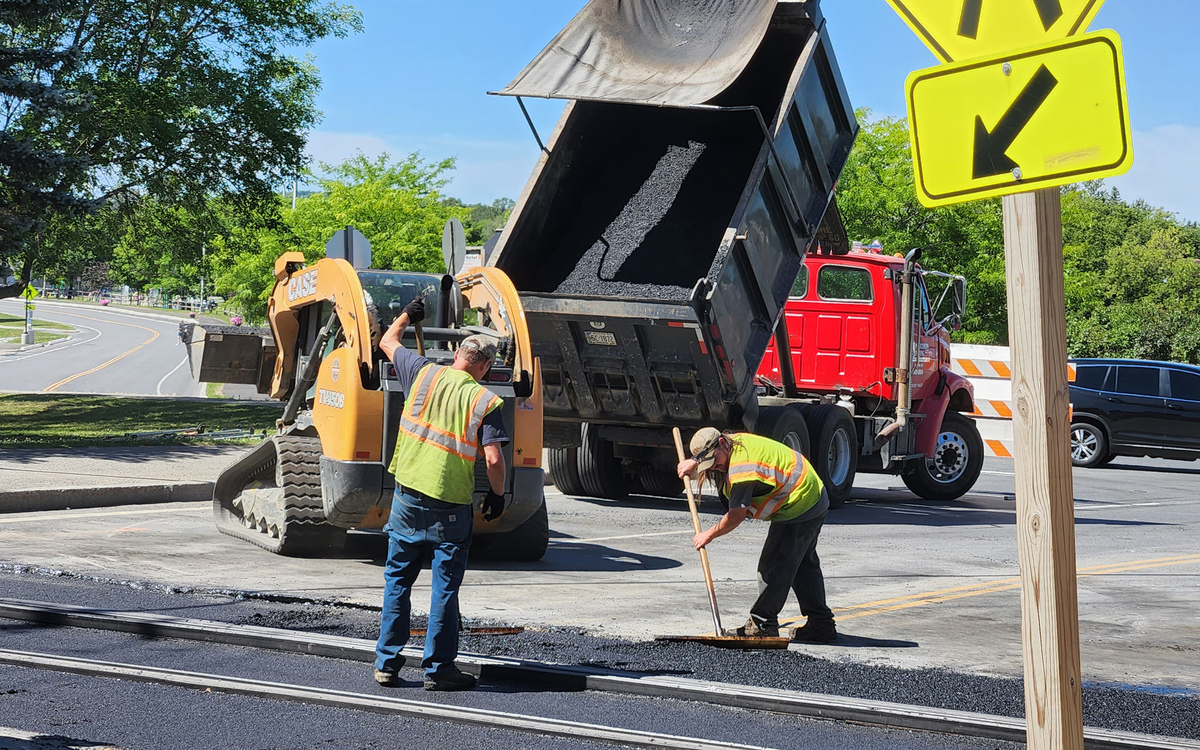
The Maine Department of Transportation is moving to slash up to $400 million in projects from its agenda, a shocking and abrupt cutback that is rattling the state’s construction industry at the start of building season.
Roughly $50 million across six pavement projects have already been delayed, according to a memo exclusively obtained by the Bangor Daily News. The agency plans to cut or delay another $150 million in bridge, highway, intersection and multimodal projects later this month. A further $200 million or more in cuts are planned in the next three-year work plan.
Those figures were outlined by Transportation Commissioner Dale Doughty in the May 18 memo to Gov. Janet Mills that has since circulated widely in the transportation sector, which has been getting drip-by-drip details on the wide scope of the cuts over the past three weeks.
It comes at the beginning of the state’s relatively narrow construction season. Companies have hired workers and ordered materials for projects they expected to begin this summer. The severity of the transportation budget problems was not raised to lawmakers during the 2026 legislative session.
Kelly Flagg, executive director of the Associated General Contractors of Maine, called the shortfall “deeply troubling” in a statement.
“We stand ready to work with policymakers, stakeholders, and industry partners to identify both immediate and long-term solutions,” Flagg said. “Maine cannot afford to fall further behind.”

Insiders saw this first.
This story was broken in Maine Politics Insider, the BDN’s daily premium newsletter for the most ardent political news followers. If you are a new BDN subscriber, you can sign up here. Current subscribers can contact our customer service team to upgrade.
The cuts stem from a structural funding gap of at least $130 million in the state’s current work plan, according to Doughty’s memo. Losses are magnified because state money from the gas tax and other revenue sources is matched by federal funds. Lawmakers have long grappled with politically difficult long-term problems with the state’s transportation budget.
A Mills spokesperson said Wednesday morning that the administration was working on a response to questions from the BDN. The department says it needs roughly $240 million more in state capital funding annually to maintain the existing system, and that anything less than $200 million will erode it over time.
Doughty’s memo the only near-term solution is a series of bonds beginning as soon as possible. Lawmakers would have to return to Augusta to authorize that if one is going to appear on the November ballot.

The BDN Opinion section operates independently and does not set news policies or contribute to reporting or editing articles elsewhere in the newspaper or on bangordailynews.com
Michael Capeci is the former chairman of the Bangor GOP.
Let’s be honest about Maine’s current state.
For many families, the cost of living has become unsustainable. Housing is out of reach for many young people. Energy bills keep rising. Many small businesses are struggling under taxes and regulations that make it harder to grow. Rural hospitals are under strain and despite years of increased state spending, the results are not showing up in people’s daily lives.
Concurrently, Maine continues to lose young workers to other states. That is not a statistic, it is a warning sign.
To me, the question in this Republican primary for governor is not about slogans. It is whether we continue with a political approach that has failed to reverse these trends, or whether we nominate someone with new ideas. I think that someone is Owen McCarthy.
Owen is not a political insider. He is an entrepreneur from Patten, a small town where opportunity is not assumed, it is built. He grew up in a working-class family, became the first in his family to graduate from college graduating from the University of Maine, and founded MedRhythms, a healthcare technology company focused on neurological treatment.
He didn’t just talk about opportunity. He built it. That distinction matters, because Maine’s problem is not a lack of debate it is a lack of results. We have seen the trajectory: higher costs, slower growth, and a steady outmigration of young workers. I believe Owen McCarthy represents a break from that pattern.
His Maine 2040 plan focuses on creating 50,000 new jobs in sectors where Maine has real advantages — maritime and defense, advanced forest products, and life sciences. These are export-driven industries tied directly to Maine’s workforce, geography, and institutions. What sets Owen apart is not only what he proposes, but how he approaches governing.
He prioritizes modernizing permitting so projects do not stall. He supports using technology to reduce costs and increase efficiency. He focuses on making it easier to build, hire, and expand in Maine.
That same practical mindset extends to healthcare. Expanding telehealth, strengthening EMS systems, improving provider flexibility, and shifting toward earlier intervention are not abstract reforms. They are system upgrades designed to improve access while controlling costs.
Maine voters consistently respond to competence. They reward candidates who understand problems and present plans to solve them. I believe they are tired of rhetoric that does not translate into results, and skeptical of politics that prioritizes messaging over execution.
Owen’s approach is grounded in solving the issues that shape daily life — affordability, healthcare access, job creation, and government efficiency. That is not just policy positioning. It is a governing model that speaks directly to voters.
Some will point to his lack of political experience. But I believe Maine’s core problems are not the result of insufficient political experience; they are the result of policies that have failed to deliver measurable improvement. Experience inside a broken system, by itself, is not a solution.
If Republicans want to win, this primary must be taken seriously. From my perspective, it is not about choosing a nominee for governor who can energize the base. It is about selecting someone who can compete in a broader electorate that is frustrated and looking for change.
That requires a candidate who can speak beyond the base, not by abandoning principles, but by demonstrating competence and a credible plan to address Maine’s challenges. I believe Owen McCarthy offers that combination. He represents a shift away from managed decline and toward economic execution.
This is not just another primary. It is a decision about whether Republicans position themselves to win Maine or whether they remain trapped in a cycle of repeating the same strategies and expecting different outcomes.
If Republicans want to compete for Maine’s future, they cannot afford to nominate a candidate who only motivates part of the electorate. They need someone who expands it.
I believe Owen McCarthy is that candidate.
And if the goal is to win Maine, then the choice should be unmistakable
-

 Seattle, WA1 minute ago
Seattle mayor grilled over public safety, affordability, CCTV
-

 San Diego, CA4 minutes ago
Automated license plate readers and public surveillance cameras are coming to Imperial Beach
-

 Milwaukee, WI9 minutes ago
Friends, family gather to remember gunshot victim Pepe Sikisi-Belle Jr.
-

 Atlanta, GA16 minutes ago
As FIFA World Cup nears, some MARTA riders raise safety concerns after recent attacks on transit system
-

 Minneapolis, MN19 minutes ago
Minneapolis leaders split over ShotSpotter contract
-

 Indianapolis, IN24 minutes ago
Work completed on $3 million restoration of fountains at Garfield Park
-

 Pittsburg, PA31 minutes ago
Pittsburgh Regional Transit starting to install new ReadyFare machines
-

 Augusta, GA34 minutes ago
Five Augusta Women’s Tennis Players Honored on PBC All-Academic Team – Augusta University

