Northeast
Long-lost shipwreck resurfaces on Jersey Shore as officials warn against disturbing the ruins

NEWYou can now listen to Fox News articles!
The remnants of a 19th-century shipwreck have emerged from beneath the sands of a New Jersey beach.
The ruins were recently found at Island Beach State Park, a narrow barrier island along the Jersey Shore in Ocean County.
In a Jan. 22 Facebook post, the state park identified the wreck as the Lawrence N. McKenzie, a cargo ship built in 1883.
ARCHAEOLOGISTS RETRIEVE FIRST TREASURE ITEMS FROM $20B ‘HOLY GRAIL’ SHIPWRECK OFF COLOMBIA
The 98.2-foot schooner wrecked off the coast of the Garden State March 21, 1890, en route to New York City from Puerto Rico. Its homeport was Provincetown, Massachusetts.
The ship — and its entire cargo of oranges — was swallowed by the sea, though all eight crew members aboard survived.
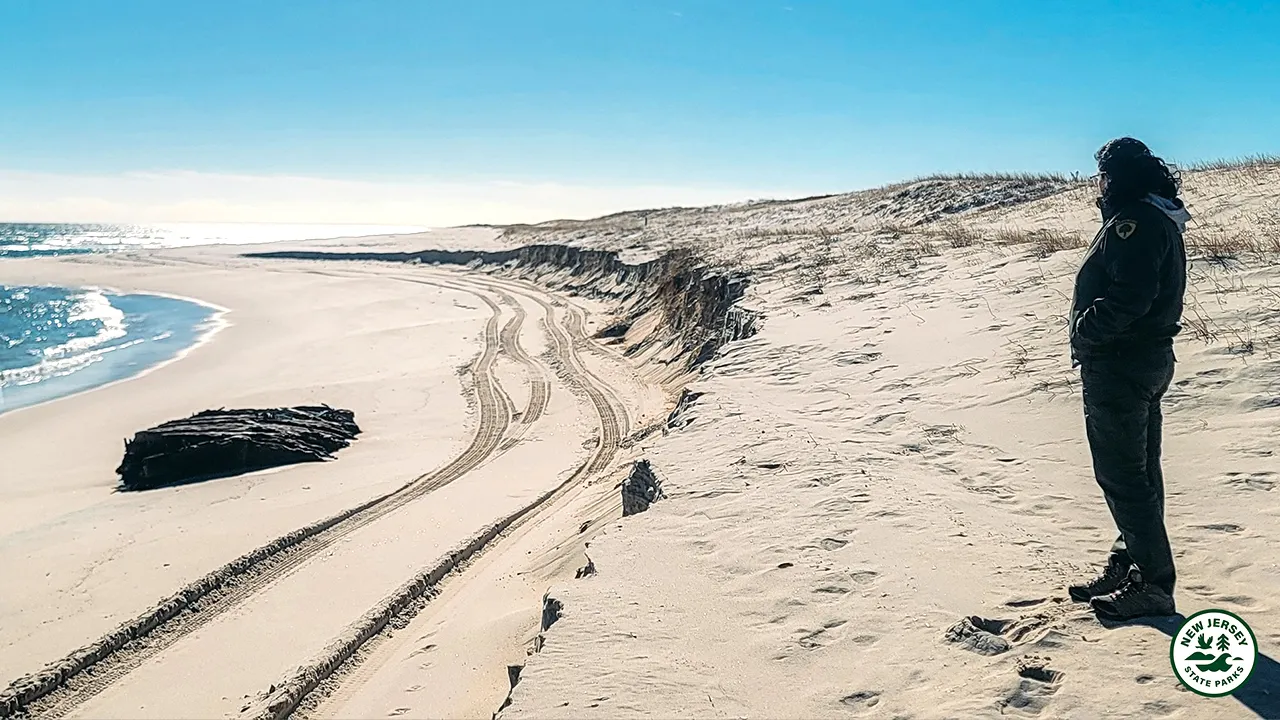
Remnants of the 19th-century schooner Lawrence N. McKenzie have resurfaced at Island Beach State Park along the Jersey Shore. (New Jersey Department of Environmental Protection)
Officials said the wreck was exposed due to rough surf and heavy winds in recent weeks.
TEST YOURSELF WITH OUR LATEST LIFESTYLE QUIZ
Rather than being washed ashore, the shipwreck emerged from beneath the beach due to shifting sand levels over time.
Officials say rough surf and heavy winter winds helped expose the long-buried shipwreck. (New Jersey Department of Environmental Protection)
New Jersey’s coastline is constantly changing.
It’s shaped by wave action that can unearth long-buried artifacts, a spokesperson for New Jersey State Parks told Fox News Digital.
“Several historic shipwrecks have been exposed at Island Beach State Park over the years,” the official said.
“Violators are subject to fines issued by the New Jersey State Park Police.”
“The Lawrence N. McKenzie has surfaced before, but not in more than a decade.”
Beach erosion is especially common during the winter.
The shipwreck surfaced at Island Beach State Park, a narrow barrier island shaped by constant wave action. (Theo Wargo/Getty Images)
The official urged beachgoers not to disturb or touch the ruins of the shipwreck “to help preserve them for future generations.”
CLICK HERE FOR MORE LIFESTYLE STORIES
“Removing natural or historic resources from lands administered by New Jersey State Parks is prohibited under state park code,” the individual also warned.
Violators who disturb exposed shipwrecks may face fines issued by New Jersey State Park Police, officials said. (New Jersey Department of Environmental Protection)
“Violators are subject to fines issued by the New Jersey State Park Police.”
The shipwreck’s exposure is not the only case involving 19th-century remains along the Jersey Shore that has drawn attention in recent months.
In May, researchers announced they had identified mysterious bones that were found on Atlantic County beaches in the 1990s, with additional remains found in Ocean County in 2013.
The bones belonged to Henry Goodsell, the captain of another 19th-century schooner.
Read the full article from Here



Almost exactly one year ago, Graham Platner, who has no political experience, was cherry-picked by out-of-state political activists.
According to a person familiar with the campaign, Daniel Moraff and Leanne Fan, who have made a name for themselves by recruiting populist candidates across the country, traveled to Maine and rented a house near Platner’s home in Sullivan to convince him to run for the US Senate. Throughout the process, Moraff became Platner’s “right-hand man”, the person described, speaking on condition of anonymity for fear of backlash.
But homing in on Platner as a newcomer to oust long-serving Republican Susan Collins came at a cost. The Wall Street Journal recently reported that Moraff asked for an expedited, cheaper background check to be completed in a matter of days. The firm Moraff and his team contracted with also did not do a candidate interview or questionnaire, per the Journal’s report.
The fallout of those decisions happened on a colossal scale. In a midterm year with record spending across the country, the Democratic party had come to pin its hopes on Platner to help clinch Senate control with his meteoric campaign and ability to unite independent and progressive voters alike with a clear, anti-establishment message.
Controversies ensued, bringing with them straight-to-camera videos of Platner explaining and denying various scandals. Finally, an allegation that broke the dam this week: a woman he dated accusing him of sexual assault, of drunkenly forcing her to have sex with him after coming to her house uninvited. Asked in an interview on CNN whether Platner raped her, the woman, Jenny Racicot, replied: “By definition, yes, absolutely.”
His support collapsed. Platner waited days as calls grew for him to withdraw. Then on Wednesday, he released an 11-minute video announcing the end of his campaign that left Maine voters scrambling and betrayed, and the country wondering: how did this happen?
“It feels like some of the first rules of politics may have been broken here,” said Andrew Feldman, a national progressive strategist. “We were seeing rookie mistake after rookie mistake, and now we find ourselves in this situation.”
David Farmer, a Democratic strategist based in Maine, said the vetting process for Platner was tantamount to “malpractice”.
“I’ve had to have these conversations with candidates in the past – where you sit down and you ask them really tough questions,” Farmer said. “What drugs have you used? Have you ever had an affair? You ever cheated on your wife? You ever cheated on anybody? It’s really uncomfortable and probing, and a miserable event for everybody involved.”
The person familiar with the campaign said that Moraff and Fan “fell in love with an aesthetic without knowing the state” that ultimately did a “disservice” to Maine’s working-class voters.
Platner’s campaign did not respond to the Guardian’s request for comment on the methods used to check the former nominee’s background.
A rising star and an early redemption arc
Platner’s early campaign days – after he announced his run in August of last year – saw a rare rush of grassroots excitement as he criss-crossed the state for town halls, with backing from Bernie Sanders and an ad produced by Zohran Mamdani’s 27-year-old media strategist, Morris Katz.
An oyster farmer and marines veteran, Platner issued plain-spoken warnings that Maine’s working class had been hollowed out – healthcare was unaffordable, young people couldn’t buy homes – and said he’d survived only because of the veterans’ benefits he receives from being “blown up” too many times in combat. His searing indictment of the political establishment matched the anti-Washington mood and anger many Democrats felt toward their party’s leaders.
“His tone, his look, his voice, his message captured a frustration with Washington, a frustration with economic injustice,” Farmer noted.
Democratic leaders had someone else in mind: the 78-year-old term‑limited governor Janet Mills. But Mills hadn’t yet announced her run. In the meantime, 41-year-old Platner positioned himself as the gruff local businessman hardened by tours in Iraq and Afghanistan, pushing for generational change. Once Mills entered, he quickly framed her as emblematic of the status quo, arguing that a Chuck Schumer‑backed candidate would mirror Collins‑style “fake moderation”.
The Democratic establishment was skeptical of Platner from the outset, concerned that he brought too much baggage to the race against a seasoned incumbent. But progressives say the party is also to blame for pushing Mills as an alternative. If she had been elected, Mills would have been the oldest freshman in Senate history.
Platner brushed off his earlier scandals: Reddit posts from 2013 to 2021 where – among other things – he called white rural Americans “stupid” and “racist”, questioned why “Black people didn’t tip” and said sexual‑assault survivors should “take some responsibility … and not get so fucked up”. While apologetic, he characterized the posts as side-effects of severe PTSD and disillusionment from combat.
He tried to get ahead of more controversy by revealing a covered-up skull-and-crossbones tattoo that resembled a Totenkopf, a symbol known for its use by the Nazi SS. Platner said it came from a night drinking with military buddies in Croatia 18 years earlier. “I’m not a secret Nazi,” he told the Pod Saves America hosts.
Platner and his allies in Congress argued the uproar was overblown. At the time, Platner told the Guardian that Mainers related to his struggle and didn’t see the posts or tattoo as disqualifying. Many voters also said they could look past his mistakes and viewed his redemption arc as genuine. “If what the voters wanted were people who were grown in vats and had never done or said anything that they might regret their entire lives, we’d have a very different country,” Moraff told the Journal in May.
But inside his campaign, cracks had started to appear. In October, Platner’s political director, Genevieve McDonald, and his finance director both left his team. The latter, Ronald Holmes III, said his “professional standards” no longer “fully aligned with those of the campaign”. McDonald said Platner’s failure to fully disclose the extent of his Reddit posts led to her departure. She went on to question whether Platner really didn’t know the meaning of his tattoo.
Bracing for the worst
There was lingering concern among Maine locals and political operatives that more would come out about Platner’s past. One voter at a town hall in April asked him – point‑blank – if there were examples of sexual misconduct in past relationships that could emerge and endanger his chances. Another said that she was extremely wary about how untested Platner was.
Ultimately, his star continued to outshine the septuagenarian governor’s lackluster campaign. Mills, citing dwindling financial resources, eventually dropped out of the race, giving Platner a glidepath to the nomination.
And then – 10 days before the Democratic primary – reports revealed that Platner’s wife, Amy Gertner, had confided in McDonald about sexually explicit messages he’d sent outside their marriage, disclosures she made in an attempt to get ahead of any opposition research.
In extraordinary fashion, Platner was summoned to Washington DC to answer lawmakers’ questions about the latest controversy. Shortly after the meeting, the New York Times reported that previous partners described “unsettling” and “toxic” behavior. One of the women, Lyndsey Fifield, a conservative operative who dated Platner from 2013 to 2015, alleged he frequently grabbed her by the shoulders, once yanked her out of a taxi by her wrist, and during one argument twisted her arm behind her back, shoved her into a bedroom and held the door shut until she was “calm”. Fifield also cast doubt on Platner’s claim that he was unaware that his tattoo was a Nazi symbol, telling the Times that he referred to it as “my Totenkopf”.
Platner rejected Fifield’s claims and branded them as “politically motivated”.
While some voters were deterred, Platner still ended up clinching more than 70% of the vote in the primary. National Democrats, however, were left to grapple with a catch‑22: what would be an insurmountable scandal? And would it be worse than if Collins, who had helped overturn Roe v Wade and backed several key Trump policies, was re‑elected to a sixth term?
“It’s like a frog being in a pot of boiling water. If you raise the temperature slowly, you don’t know it’s boiling until it’s too late,” said Farmer.
The final straw
When Politico published their story on Monday, outlining Jenny Racicot’s claims that Platner raped her nearly five years ago, the condemnation came hard and fast. Endorsements evaporated and calls for Platner to withdraw were immediate. As he denied the allegations in a lo-fi self tape, it became clear this would be the red line for those who had stood by him until this point.
“The messenger was not the right person to match the inspiring message,” said Adam Green, executive director of the Progressive Change Campaign Committee. “It is really unfortunate for the overall project of trying to challenge corporate power and shake up a broken political system.”
It would be another two days before Platner published another video announcing his decision to end his campaign, claiming the allegations against him were part of a coordinated political attack.
Troy Jackson, who campaigned alongside Platner while running for the Democratic nomination in the Maine gubernatorial race, and is now one of several candidates running to replace him, told MS Now: “Graham told me point-blank that there was nothing in his past that I had to worry about. And he lied to me. And he lied to a lot of us.”
Now, as Democrats battle with the feeling of deja vu from Joe Biden’s withdrawal from the 2024 presidential race, it’s left some unnerved about whether the Maine Senate race is still winnable. “It’s so upsetting because it feels like we’ve been completely bamboozled by a candidate that so many people believe in,” said Feldman.

An Acushnet man and a New Bedford woman are dead, and two others are injured after a crash in Dartmouth, Massachusetts, that left Route 6 completely impassable for a period of time Friday evening.
Police from Dartmouth and Westport responded just after 7:30 p.m. to 911 calls about a crash on Route 6 near the Dartmouth/Westport line, and arrived to find two vehicles were involved, the Bristol County District Attorney’s Office said.
A blue Toyota Camry sustained catastrophic damage in the collision, officials said. The male driver, identified as 34-year-old Tristan Bedient, and his female passenger, 51-year-old Kate Aldrich, were taken to a local hospital where they were pronounced dead shortly after.
Two people in the SAAB suffered non-life-threatening injuries, officials added.
Route 6 was closed westbound at Route 177 and eastbound at Highland Avenue. Police warned drivers to avoid the area, seek alternate routes, and expect significant traffic delays.
The cause of the crash is under investigation by Dartmouth police, Westport police and Massachusetts State Police assigned to the district attorney’s office. Further information was not immediately available.

New Hampshire’s scenic natural landscapes are well-complemented by its rich culture and warm hospitality. The many small towns dotting the state are the best places to experience it all. For example, in Gorham’s downtown, visitors can explore local history while admiring the stunning views of lush White Mountains surrounding the town. The college town of Henniker is the perfect destination to enjoy outdoor adventures like skiing and hiking as well as leisurely strolls along the Contoocook River flowing by the town. Littleton is another riverside destination where even roadside signs encourage friendliness. These nine hospitable towns in New Hampshire are where warm hospitality is part of everyday life.
Gorham
Located in the White Mountains, Gorham is a community hub for residents and travelers alike. Since Gorham is called the “Gateway to the White Mountains,” start your trip with the Androscoggin Valley. This basecamp is where wilderness and hiking collide. Here, you will find the Appalachian Trail (A.T.) Community, blending alpine activities, hiker culture, and hospitality.
For a slower stroll, visit the Gorham Town Common, located in the heart of downtown Gorham. This vibrant community is a natural gathering place for everyone. Sit on the open grassy lawns, as you take in views of the Presidential and Mahoosuc mountain ranges. In this serene area, trees sway in the cool New England breeze, and monuments pay homage to local history.
Main Street has locally owned businesses such as the White Mountain Cafe, the Gorham Public Library, and the Medallion Opera House. Check out a live show and borrow a book for your weeklong (or weekend-long) stay. Then cozy up with a good book and a cup of coffee at the neighboring cafe. From this spot, you will also get unobstructed views of the White Mountains. If you have an urge to hike or climb, Mount Washington offers direct access to the ATV trail networks. It features exposed granite and low tree lines that make everything appear larger than are. It is also a serene spot to escape the crowds.
Litchfield

Litchfield is an idyllic enclave that sits among Derry, Manchester, and Nashua. It offers a rural, country lifestyle with close proximity to the Massachusetts border and major cities. The John Bryant River Access is where kayakers and canoers ride along the Merrimack River. This peaceful riverside setting is also the ideal spot for fishing and paddling.
For some wholesome fun, head over to Mel’s Funway Park, which offers a wide variety of activities, including mini golf, laser tag, go-karts, and bumper boats. While this place is more for families, it brings the kid out in everyone. This park especially looks magical during the holidays, with twinkling holiday light displays.
Visit Mine Falls Park around half an hour away. It is a 325-acre park with miles of hiking and biking trails and scenic views of the canals and surrounding rivers. This area also features open fields, wetlands, and forested areas, bordered by the Nashua River and south of the Mill Pond canal system.
Lancaster
Lancaster has a Mayberry-esque vibe that gives it warmth. This community also rallies support for local businesses. Due to its proximity to the Great North Woods, it is an ideal town to escape the noisy world. This area alone offers year-round outdoor recreation and views of the New England scenery.
Walk along Main Street, which prides itself on supporting local businesses and entrepreneurs. Yet, it looks like a typical New England town from the 19th century with its Victorian architecture and brick buildings. It is a highly walkable space that blends history with a modern aesthetic. Here, you will find delicious spots like the Polish Prince Bakery or the Copper Pig Brewery.
Each year, the Lancaster Fair brings people together. This event, held in the White Mountains, promotes the importance of education. Notable attractions include the Ferris wheel, livestock barns with farm animals, and mountain views in the background.
Along the Upper Connecticut River, this town offers access to the great outdoors. This waterway marks the border between New Hampshire and Vermont, and it features the iconic Mount Orne Covered Bridge. For the best experience, hike or bike through New Hampshire Route 135 between Lancaster and Dalton for views of the river winding through the valley.
Take an autumnal hike at Weeks State Park or go snowmobiling in the winter. Once you get to the top of Mount Prospect, you will take in the 360-degree views of the mountain and the North Country. Climb the stone tower, drive along the scenic road, or tour the house museum. There are also picnic areas for lunching or resting.
Henniker
Henniker is a social community that relies more on family-owned businesses than retail chains. This town embodies a welcoming, tight-knit community that does not shun newcomers or visitors. Pats Peak Ski Area and the Contoocook River are the best spots for skiing, snow tubing, and other winter activities.
Pats Peak is a family-owned ski area that features rustic lodges, scenic slopes, and panoramic views of Southern New Hampshire. The Contookcook River is known for its signature coffee-colored water, deep woodlands, and rocky rapids. Its appearance changes depending on the time of year and where you are. Walk along the Contoocook River Path to relax in the sand or launch your kayak on the shore. Henniker is also home to New England College, a 220-acre campus with brick buildings and modern amenities. This campus is conveniently located 15 minutes away from Concord. Explore the campus on your own or book a tour.
Meanwhile, the historic downtown area offers access to boutiques and stores like Old Number 6 Book Depot. Get lost in this two-story building filled with highly organized and alphabetized books. Here, you will get a selection of affordable books and nice people. The staff also has a friendly, affectionate cat that encourages petting and back scratching.
Mont Vernon
This town offers a tranquil, safe escape from bustling cities and busy tourist attractions. Nestled in Hillsborough County, Mont Vernon offers country living while situated close to Milford and Amherst. Start with a peaceful walk from Upton Road to the forested trails that lead you to the picturesque waterfalls called the “Devil’s Beanpot,” where the Lower and Upper Falls meet.
This area features a 25-foot drop, making it an ideal spot for biking, hiking, swimming, diving, and relaxing on the rocks. This area is close to Mont Vernon Town Forest, a dog-friendly area with hardwood trees, lush greenery, mossy rocks, and rooted paths that offer a peaceful escape for hikers and their furry friends.
Along this 25-foot drop, Purgatory Brook cascades into Purgatory Falls, which sits between Mont Vernon and Lyndeborough, New Hampshire. The trails stretch along the river and lead into a dense forest that features beech, hemlock, and oak. The landscape changes throughout the year, depending on the season. It could look like a wilderness in the spring or a peaceful brook during the summer.
In the fall, the community gathers for Lamson Farm Day, an annual event celebrating the town’s agriculture. Lamson Farms transforms into a community gathering with arts and crafts, hands-on activities, and barbecue chicken. You can also watch historical demonstrations such as black powder rifle demonstrations, shootings, or apple cider pressing.
Littleton
Littleton prides itself as the “Glad Town” of Pollyanna, the 1913 children’s book by Eleanor H. Porter. Their friendliness stems from its walkable Main Street, local culture, and community spaces. Here, you can visit the home of Eleanor H. Porter. Upon arrival, you will be greeted by the bronze statue of the “Glad Girl” on the library lawn.
On the crosswalks of Main Street, you will see “Stop, Look, Wave” signs encouraging you to interact with the locals looking in your direction. Nearby is access to the PRKR Mountain Trails, which feature 25 miles of multi-use community trails that spread throughout the 1,000 acres of North Country terrain. This area offers panoramic views from Linda’s Lookout, including the Presidential Range of the White Mountains.
The Riverwalk & Harmony Park is a tranquil oasis situated behind Main Street. Walk across the 352-foot, open-sided pedestrian covered bridge, offering scenic views of the Ammonoosuc River and the surrounding brick buildings. Along the river, paved and gravel walking trails lead to quiet seating areas and community art spaces.
Chutters is your one-stop shop for nostalgic retro candy and hard-to-find varieties. Try their classic fudge and chocolates. All of their candy is set in a fanciful atmosphere, with friendly, knowledgeable staff. You cannot miss Chutters, with its pink-and-purple storefront along Main Street. This candy store is a must-stop for travelers of all ages. Young and old alike will also enjoy the Little Toy Village & Book Shop, an independent bookstore that welcomes everyone. Upon stepping into this store, you will come across helpful staff, educational books, and toys for all ages. You might even find your favorite classic toy or board game from your childhood.
Stratham
Stratham has community traditions with access to the Seacoast. Stratham Hill Park is known for its iconic tower, which welcomes locals and visitors alike. This area has pavilions, fields, and trails to explore.
The Great Bay Discovery Center at the Great Bay National Estuarine Research Reserve in nearby Greenland is a place to go for hiking, biking, boating, and hunting. At the visitor center, you will explore exhibits about plankton, salt marsh farming, and the estuary on the Bay. It also features incredible views of the Boardwalk and wildlife.
The Annual Stratham Fair at Stratham Hill Park on Route 33 is a time-honored New England country fair that feels intimate and comfortable, unlike the often-crowded Deerfield Fair. It has a mix of live music, carnival rides, petting zoos, and fair food. Run by the Stratham Volunteer Fire Department, it honors the classic traditions of offering Boy Scout lemonade stands, fresh apple cider donuts, and a chicken BBQ.
Make time on your trip to visit the Stratham Historical Society at the George A. and Emma B. Wiggin Memorial Library. This area contains artifacts, including the 1909 original Boston Post Cane. You will also come across old maps of this historic town and antique toll bridge signs.
Keene
Keene is a pleasant town with a diverse mix of locals from across the nation. Speak to people with diverse opinions at Keene State or Antioch University. These distinct campuses both embody this town’s traditional New England culture with their classic brick buildings and lush greenery. Both schools will also lead you to downtown Keene, known as one of the widest Main Streets in the nation. While Antioch University is in a more private, wooded setting, it is just minutes from downtown. Both schools are heavily influenced by New England scenery and the Monadnock Region’s natural beauty.
Explore Main Street, including Central Square and downtown. This area features the famously wide Main Street, lined with boutiques, secret alley murals, and bookstores like The Toadstool Bookshop. This classic spot is welcoming with its floor-to-ceiling book displays, warm lighting, and comfortable seating. It is just as fun to walk around and spot the classic books from your childhood.
Just 15 minutes from downtown is the Madam Sherri Forest. This area features stone ruins from Madam Sherri’s mansion, an opera singer who was famous in the 1920s. Hike along the trails during leaf peeping season. The Farmers Market of Keene is open year-round and has indoor access in the winter. The town has smiles on every corner, especially when you run into locals here. The market itself offers a wide array of dairy products, honey, maple products, fruits, vegetables, and meats.
Antrim
Antrim is a hospitable town that hosts annual community events, offers a walkable layout, and provides access to natural landscapes. Walk from Antrim’s historic downtown area to the Antrim Town Common. This classic green space has winding paths and trees blowing in the wind. Sit and observe the 19th-century architecture and historic homes in this calm area.
The Antrim Town Common offers a restful respite amid your busy travels. It is also the setting for most community events and festivals. Speaking of which, the Home and Harvest Festival is a classic New England town fair that has the vibe of a traditional fair without the crowds. This community-led event marches along Main Street. This stretch of road hosts craft vendors, food tents, and family-friendly activities. The weekend ends with a fireworks show hosted by Atlas Pyrotechnics.
This town also offers views of the Gregg Lake and the Contoocook River. Gregg Lake is a 201-acre lake of tranquil waters set among cabins, dense forests, and pine trees. It flows into the Contoocook River, a slow-moving flatwater surrounded by wetlands and reeds. It eventually transitions into rushing rapids centered on rugged terrain. Divers and hikers often frequent this spot.
End your trip with a stop at Antrim Farmers Market on the grounds of the First Presbyterian Church, set in a traditional New England village. At first glance, it looks like a typical outdoor festival, but it offers so much more. Friendly and smiling vendors sit under pop-up tents, folding tables, and farm stands. There are also local musicians, authors, and artists. This farmers’ market is only open on Thursdays from 4:00 p.m. to 6:30 p.m. from May through September.
With so much to see and do, there are opportunities to explore history, art, and outdoor landmarks while steeped in these rich communities. Anyone who wants to make memories in New Hampshire will never feel alone.
-

 Georgia6 minutes ago
How Georgia football can make sure they are the defining program of the 2020s
-

 Hawaii9 minutes ago
Filipino dignitaries embrace RIMPAC hospitality amid outside protests – Hawaii Tribune-Herald
-

 Idaho14 minutes ago
Follow the clues and find $15,000 in East Idaho's biggest treasure hunt yet
-

 Illinois21 minutes ago
Real estate sales in Peoria, Tazewell, Woodford counties for July 11, 2026
-

 Indiana24 minutes ago
4-vehicle crash shuts down eastbound I-94 in Michigan City, Indiana
-

 Iowa29 minutes ago
‘Best friend,’ teen describes her grandma, Iowa Gov. Kim Reynolds
-

 Kentucky39 minutes ago
11 Amazing Kentucky Day Trips That Are Worth The Drive In 2026
-

 Louisiana44 minutes ago
Louisiana judge admits to misconduct; is suspended without pay for rest of term

