Address Newsletter
Our weekly digest on buying, selling, and design, with expert advice and insider neighborhood knowledge.

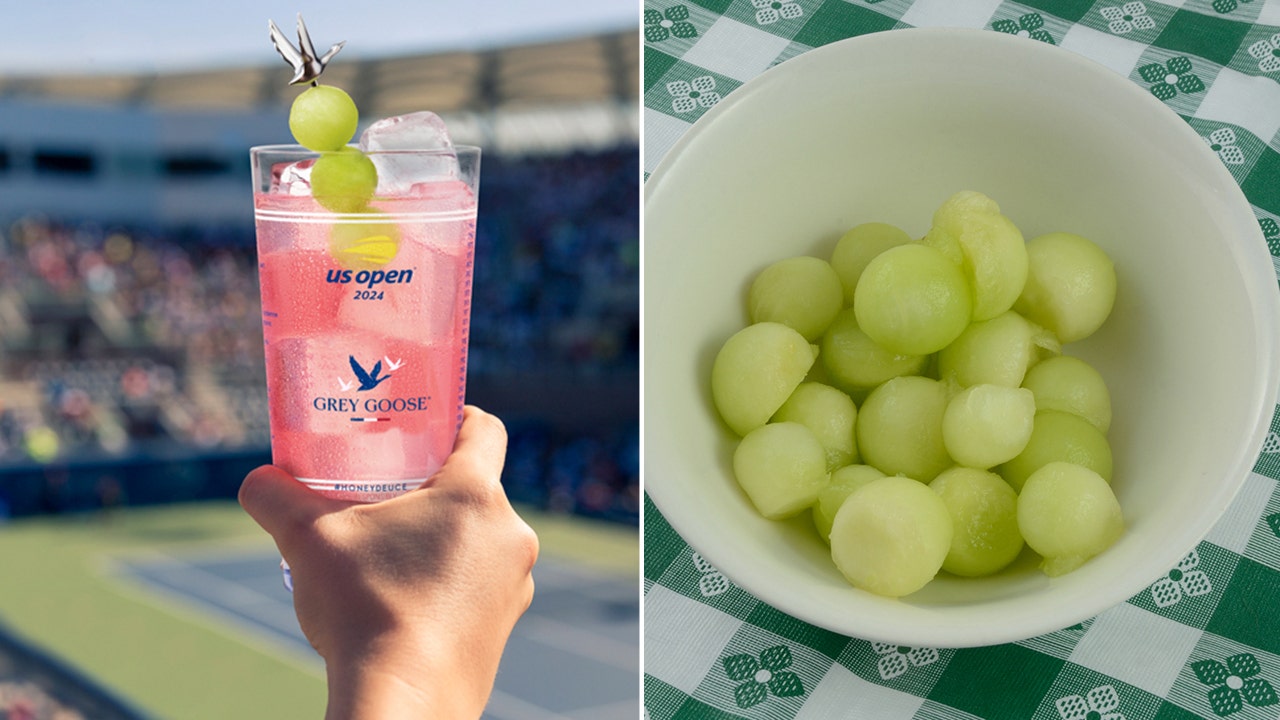
The Honey Deuce cocktail, which made its debut at the U.S. Open in 2006, is arguably as popular today as the tennis tournament itself.
Case in point: An awkward moment occurred during a broadcast this week when a man returning to his seat with two of the cocktails — one of which was presumably for the woman next to him — was beaten to it by another man seated in the row behind him.
But if not for one man’s purchase of honeydew melon balls before a weekend in the Hamptons some years ago, the U.S. Open’s signature cocktail might not have looked as it does today.
TEQUILA IS MORE THAN JUST A SHOT, PLUS OTHER FUN FACTS ABOUT THIS SPIRIT
Fox News Digital spoke with Nick Mautone, a mixologist and hospitality industry consultant who served as brand ambassador for Grey Goose vodka, to discuss the birth of the beverage.
A New York native who lives in Seattle today, Mautone said he was tasked with creating a new cocktail for the U.S. Open when Grey Goose became the official beverage sponsor in 2006.
The Honey Deuce is the signature cocktail of the U.S. Open. It is the brainchild of mixologist Nick Mautone, a New York native, shown at right. (Nathan Congleton/NBC via Getty Images; Nick Mautone)
As Mautone was driving home in the Hamptons, he stopped to pick up some items to create a dessert salad that he intended to make for guests who would be visiting.
On the grocery list were honeydew melon balls.
“Immediately the thunderbolt went off and I said, ‘Holy cow, these look just like tennis balls,’” Mautone recalled to Fox News Digital.
“Holy cow, these look just like tennis balls.”
“So, from that moment on, I knew that that was the garnish, non-negotiable.”
Mautone presented it to the brand team at Grey Goose, who “fell in love” with the garnish; he also spoke to the U.S. Open staff.
NEW JERSEY RESTAURANT BREAKS GUINNESS WORLD RECORD FOR LARGEST TEQUILA, MEZCAL LIBRARY
“The people doing the food service operations were less than thrilled at the idea of making a gazillion honeydew melon balls,” Mautone said.
That is, until they found a company that “makes hundreds of thousands of melon balls every day and ships them fresh to the U.S. Open.”
The U.S. Open’s Honey Deuce is made of Grey Goose vodka, fresh lemonade and a “drizzle” of Chambord black raspberry liqueur. The honeydew melon balls provide the garnish. (Nathan Congleton/NBC via Getty Images)
Mautone played around with “a couple of iterations” of the cocktail at first, including one version that used blackberry liqueur, before settling on the final recipe.
It includes Grey Goose vodka, fresh lemonade, a “drizzle” of Chambord black raspberry liqueur and, of course, the honeydew melon balls.
The goal, Mautone said, was to avoid making “a very complex drink so that the bartenders can actually serve it without getting frustrated.”
“Lo and behold, it’s become a cultural icon.”
He added, “It’s a very simple two- or three-step process for a bartender to make the drink.” He said he was “dead set on a tall drink as well.”
Since the tournament is played in New York in August, Mautone didn’t want “something very spirit-forward because it’s too alcoholic and not pleasant to drink in the summer heat.”
Mautone said he believes patrons were “getting bored with beer and other libations” — so the Honey Deuce came along at the right time.
“Lo and behold, it’s become a cultural icon,” Mautone said.
The inspiration for the Honey Deuce cocktail came from honeydew melon balls, which resemble little tennis balls. (Grey Goose; iStock)
He attributes much of it to “old-school guerrilla marketing,” he said.
“It went viral,” he said.
The cocktail was crafted before Instagram existed and while social media was still in its infancy — so the Honey Deuce didn’t find fame outside of Queens, New York, until much later.
VIRAL ‘FLUFFY COKE’ DRINK TREND TAKES OVER TIKTOK AND IT ONLY REQUIRES 2 INGREDIENTS
“It’s become a cultural phenomenon by virtue of social media, specifically the honeydew melon balls, which I think a lot of people just look at as a genius garnish at a tennis match,” Mautone said.
“So it’s become an Instagram-worthy drink that’s very friendly, very refreshing and inviting.”
The Honey Deuce has been the U.S. Open’s signature cocktail since Grey Goose took over as beverage sponsor in 2006. (Grey Goose)
The Honey Deuce has been in the news recently after its latest price hike, selling for $23.
It sold for $22 at last year’s tournament.
Mautone said he thinks the beverage, which comes with a souvenir cup, is priced appropriately.
“If I was in midtown Manhattan or a great craft cocktail bar in Brooklyn and I ordered a craft cocktail, I’d be paying $18,” he said.
“So, when you say $23, it’s not that much more for the experience you’re getting at, to me, one of the greatest sporting events in the country.”
For more Lifestyle articles, visit www.foxnews.com/lifestyle
Mautone said he plans to attend the U.S. Open.
And when asked if he intended to order a Honey Deuce while he’s there, his answer was emphatic: “Absolutely.”
Read the full article from Here


According to Islands.com, one Connecticut town is getting some well-deserved national attention, and it’s probably not the one you’d expect.
When people think about standout Connecticut destinations, places like Mystic, Greenwich, or New Haven usually dominate the conversation. But this time, the spotlight is on Cheshire, which was recently recognized as one of the best places to live in the state.
The national travel website points to Cheshire’s combination of small-town charm, outdoor recreation, local businesses, and great restaurants as some of the biggest reasons it’s become such a desirable place to call home. It’s also no stranger to high rankings. Cheshire was named the best place to live in New Haven County by Niche in 2025 and has also landed on Money Magazine’s list of the best places to live in America. Its public schools continue to receive high marks as well.
One of Cheshire’s biggest draws is its access to nature. The town is home to scenic orchards, beautiful greenhouses, and is known as Connecticut’s bedding plant capital. During the fall, local farms and orchards become popular destinations for apple picking, fresh cider, and seasonal treats. Outdoor lovers also have easy access to Roaring Brook Falls, Sleeping Giant State Park, and the Farmington Canal Heritage Trail.
Of course, no Connecticut town earns national praise without having some great food. Islands.com highlighted Cheshire’s pizza scene, including Fuoco Apizza and Pop’s Pizza, along with Viron Rondo Osteria for Italian cuisine. Beer lovers can also stop by Counter Weight Brewing, while Sweet Claude’s Ice Cream and Shef’s Bagels round out the town’s lineup of local favorites.
Cheshire may not get the same attention as some of Connecticut’s bigger destinations, but this latest recognition suggests it deserves a spot on your list. Whether you’re looking for a weekend road trip or thinking about putting down roots, this quiet New Haven County town is proving it has a lot more to offer than many people realize.
Connecticut is overflowing with both manmade and natural beauty. In some places, the two intersect to create a magical, almost fictional feel. Here are 7 Connecticut Towns that look like they came straight from a storybook.
Gallery Credit: Lou Milano
Connecticut is full of towns people rush past on the highway without realizing what they’re missing. Everyone knows the big names, but some of the best places in the state are the ones that don’t always make the travel lists. These towns are quieter, full of character, and worth slowing down for at least an afternoon.
Gallery Credit: Lou Milano
I visited the American Mural Project in Winsted, Connecticut for the first time recently, and for those who haven’t seen it, here’s a quick peek at what to expect when you gaze upon the largest indoor collaborative piece of artwork in the world
Gallery Credit: Photos by Large Dave

Troy Jackson, a former state senator, officially launched his bid to take over the Democratic nomination in the Maine Senate race, less than an hour after Platner announced he was suspending his campaign.
“There is a powerful movement of working class people in the state of Maine, and millions more across America who are ready to send a progressive fighter to the Senate,” Jackson wrote last night on X.
“I’ve been fighting for that movement my whole life — and I’m sure as hell not backing down now, when this fight is needed most,” he continued. “I’m in. And we’re going to defeat Susan Collins.”
Jackson, who ran unsuccessfully in the Democratic primary for governor, filed paperwork yesterday to begin the process of replacing Platner. The state Democratic Party voted today to hold a nominating convention later.
While Jackson is a former ally of Platner, he said this afternoon that he did not want an endorsement from him.
“When it came down to a credible allegation of somebody that was sexually assaulted, that was the end. That was the bright-red line,” Jackson said on NBC News’ Meet the Press NOW.

Home Buying
If you’re in the market for a new build, you may be attracted to the modern floor plans, state-of-the-art technology, and resort-style amenities many of them offer. But you might not realize that there are financial benefits to buying new construction.
A recent report from Realtor.com found that buyers of newly built homes save an average of $25,335 over the first 10 years of ownership compared to buyers of 20-year-old homes. Those savings are even greater in Massachusetts, which topped the state-by-state list at savings of $38,927 over 10 years, due to the state’s strict building codes and harsh winters. Neighboring New Hampshire, Maine, Rhode Island, and Vermont rounded out the top five.
But in Greater Boston, where much of the new-home inventory consists of luxury condominiums, buyers still have to balance those long-term savings with higher upfront purchase prices and steep condominium association assessments.
Ryan J. Glass, vice president of Gibson Sotheby’s International Realty in Boston, said that in the first quarter of 2026, luxury full-service buildings citywide averaged approximately $1,698 per square foot, while many of Boston’s historic brownstone neighborhoods generally landed in the $1,200- to $1,500-per-square-foot range. That means that a buyer with a $3 million budget may be looking at 1,750 to 1,800 square feet in a new luxury tower compared to 2,200 to 2,400 square feet in a comparable renovated brownstone, he said.
Ellyn Hartmayer, 60, and her husband, John Hartmayer, 58, looked at more than 75 properties — both new construction and existing — before purchasing a 2,875-square-foot Back Bay condominium for $3.25 million in May. The unit has three bedrooms, three bathrooms, and a private terrace with views of the Charles River Esplanade. It’s located in a 10-unit building that was constructed in 1950. While the couple initially considered buying a new unit in a luxury high-rise because of the modern amenities, they “became increasingly focused on where the best long-term value was,” Ellyn said Hartmayer. After a lengthy search, they found a unique property in the Back Bay that offered everything they wanted: single-level living, extra space for their children to visit, elevator access, garage parking, and private outdoor space.
“The combination of a prime location, square footage, value, and potential ultimately outweighed the appeal of a newer building,” said Ellyn Hartmayer.
In Massachusetts, the median price of a new-build is 46.7 percent more than the median price of an existing home, according to Joel Berner, Realtor.com’s senior economist.
“If you buy a new home in Massachusetts, you’ll recoup savings over time because of the harsh climate and building codes,” Berner said. “But you will have spent so much more upfront that it may or may not actually break even.”

Builder concessions can even the playing field. According to a recent survey by the National Association of Home Builders, 64 percent of builders offered sales incentives, and 37 percent actually cut new-construction prices. Many are offering buydowns on mortgage rates as well.
“If you can only afford a $500,000 existing home, maybe in the new construction space, with the 10-year savings, builder concessions, and a mortgage rate buydown, you can afford $575,000,” said Berner. “Don’t just look at the sticker price. Look at your long-term monthly cash flow, and potentially you might have more wiggle room in your budget for new construction than you thought.”
Glass tells his buyer clients the same thing. “Consider which property is the better value for your budget, as well as the location,” he said. “Sometimes a market is saturated with new construction, so you can get a better deal on it. Other times, new construction is hard to find, and you can’t get as good a deal as you could on existing construction. Keep your options open.”
Some buyers also feel that the higher price of new buildings is justified by things like a concierge, a fitness center, or valet parking, Glass added.
Indeed, a newly built home offers some advantages:
It’s move-in ready. It’s new and has never been lived in. You’ll have new fixtures, new appliances, and you’ll receive a builder’s warranty to protect you, and won’t need major repairs for several years. “Today’s new homes are built better than ever,” said Ryan O’Rourke, division president for luxury homebuilder Toll Brothers in Massachusetts.
It will be built to the latest building code and will be more energy-efficient than an older home.
The insurance will cost less, assuming you don’t purchase on Cape Cod or another coastal area. “New homes have brand-new roofs, electrical systems, plumbing, HVAC equipment, and other major components that are less likely to fail and generate claims,” said Loretta L. Worters, vice president of the Insurance Information Institute. “By contrast, older homes may have aging roofs, outdated wiring, older plumbing systems, or deferred maintenance issues that increase the likelihood of claims and can result in higher premiums.”
Newer homes come with modern floor plans. Older homes can be dark with small rooms, while new construction will reflect current design trends (like open floor plans and kitchens with large islands) and the way people live now.
You can make it your own. Builders usually give buyers the opportunity to customize their new homes, choosing everything from the model and lot it sits on to cabinets, countertops, flooring, and appliances.

Our weekly digest on buying, selling, and design, with expert advice and insider neighborhood knowledge.


Arkansas Storm Team Forecast: Very hot today; isolated showers/t’storms late


Popular California Fast-Casual Chain Mendocino Farms Opens 100th Location in Santa Barbara – edhat


United Way of Southern Colorado raises over $400,000 for Aspen Acres Fire victims:


This Underrated Connecticut Town Is Getting National Recognition as One of the Best Places to Live


Plans advance for Delaware city’s first Chick-fil-A restaurant


Summer Scheming ‘26: Florida State Seminoles


Travel and Leisure listed unique experiences in each state, including GA


Three West Hawaii sex offenders arrested – West Hawaii Today

