Connect with us

Northeast

DAVID MARCUS: Gen Z men are fed up with wokeism. They are ready to bring back Trump

Published

on

DAVID MARCUS: Gen Z men are fed up with wokeism. They are ready to bring back Trump

Join Fox News for access to this content

You have reached your maximum number of articles. Log in or create an account FREE of charge to continue reading.

By entering your email and pushing continue, you are agreeing to Fox News’ Terms of Use and Privacy Policy, which includes our Notice of Financial Incentive.

Please enter a valid email address.

Having trouble? Click here.

NEWYou can now listen to Fox News articles!

Dirty Franks in Philadelphia is the best bar in the world, and it was there that I met two young men, both 29, who work for the Department of Defense as engineers outfitting naval vessels. They are, as the kids say, pretty based, or are sure of themselves.   

Advertisement

The pair of guys asked that I not use their names or pictures, they wouldn’t even tell me who they are voting for, though one of them smiled and said, “You can probably guess.” And I could. 

They were both Zyn users (smoke-free nicotine that comes in pouches) and I asked if they were using it to quit smoking, or just took it up. 

OBAMA SLAMS PRO-TRUMP MEN AT PHILADELPHIA RALLY; SPRINGSTEEN WARNS GOP NOMINEE IS ‘AN AMERICAN TYRANT’

“I smoke now and then,” one said. 

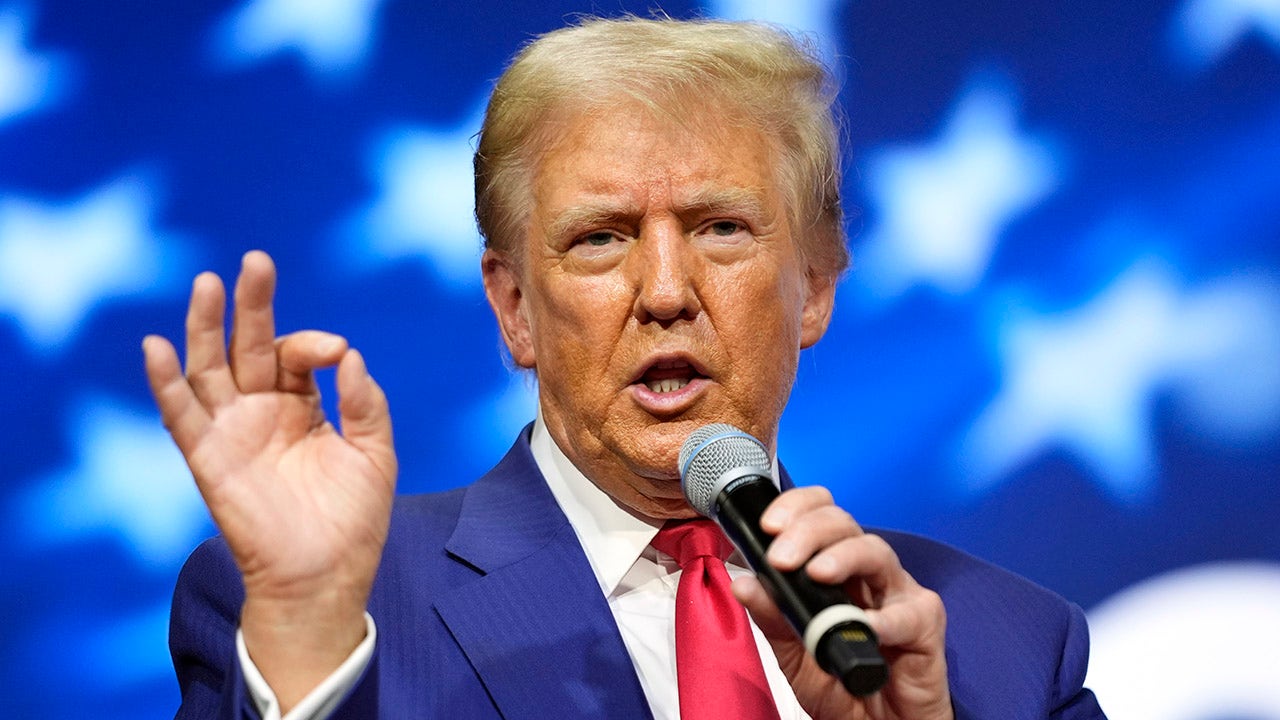
Former President Trump speaks at a campaign town hall at the Greater Philadelphia Expo Center & Fairgrounds, Oct. 14, 2024, in Oaks, Pennsylvania. (AP Photo/Alex Brandon)

Advertisement

“But other people’s cigarettes?” I suggested. 

“Yeah,” they laughed. 

I was curious if they were in a union as DoD employees, “We have some kind of union,” I was told. “Once a year I have to vote whether to keep it, I always vote ‘no,’ but we always keep it.” 

We talked about the state of the country, the things you are or aren’t allowed or supposed to say, and they don’t care about the orthodoxy. 

The more I talked to these guys the more I realized, they aren’t just anti-woke, they are immune to it. As a Gen Xer, the accusation of racism or bigotry still carries an a priori pang, not so for these gents, they just don’t buy it. 

Advertisement

A few hours before, I had met a 27-year-old with a degree from Drexel working at a law firm, and he exuded the same, I don’t know, I want to call it nonchalance, but there’s an unfamiliar swagger to it.  

“One of them is gonna win, at least it will be over,” he told me, adding, “whatever.” 

That final word hung like neon in my mind, “whatever,” the anthem of my generation. 

Vice President Kamala Harris speaks during a CNN Presidential Town Hall at Sun Center Studios on Oct. 23, 2024, in Aston, Pennsylvania. (Andrew Harnik/Getty Images)

About a month ago, I started to notice that men in their 20s are way, way more open to former President Donald Trump than their peers in their 30s and 40s. It is a fascinating phenomenon, and I’m convinced that if Trump wins, it will be on the back of union members and Gen Z men. 

Advertisement

But why is this happening? As the father of a 14-year-old … boy? Teenager? What do I call him now? Anyway, I have some insight.  

When he was 11, he sent a text to me and his mother, also a journalist. It was a picture of a public-school form he had to fill out asking if he was transgender.  

At 11 years old, I even got a column out of it, scooping his mom. 

The point is that America’s young men have been swimming in a sea of madness for their whole lives, and they know it. And the same people who ask them, “Are you absolutely certain what your gender is?” are shocked to discover they don’t find Trump to be particularly abnormal. 

That was the revelation I had that night!  

Advertisement

As the night went easily along, one of the guys at Franks finally said, “can I get a cigarette?” the other chimed in, “me too.” I was more than happy to oblige.  

CLICK HERE FOR MORE FOX NEWS OPINION

And there we were in the chilly Philadelphia fall of red brick and moonlight, three men, smoking and talking about life without filters or guilt. You could see why Trump appeals to them. At the end of the day, he’s one of the boys. 

That final word hung like neon in my mind, “whatever,” the anthem of my generation. 

The next morning, I was smoking a cigarette with a to-go coffee cup outside my hotel and I let out a slight sigh. Because it’s Philly, some guy noted, “Dude, you’re the Ben Affleck meme,” which was a nice first laugh of the day. 

Advertisement

Across the street, I saw a young woman on a stoop, long black hair falling on her knees, head down, she looked sad and lost. I had an instinct to ask if everything was OK, but I knew that would be weird.  

A minute or two later, she stood up, looking fine and happy, and I realized she had just been looking at her phone. But it was amazing how much that pose mimicked the forlorn, almost 19th Century painting, image of her I had imagined. 

Sen. JD Vance delivers remarks during a campaign rally at 2300 Arena on Aug. 6, 2024, in Philadelphia. (Drew Hallowell/Getty Images)

I have no idea if she is voting for Vice President Kamala Harris. The numbers would certainly suggest it, but I’m pretty sure the guys I met the previous night would be canceling out that vote. 

Advertisement

The future of our country is in the hands of these young men and women, who are very different from each other, but also very sincere about who they are, and a reason for hope. 

CLICK HERE TO READ MORE FROM DAVID MARCUS

Read the full article from Here

Continue Reading
Click to comment

Leave a Reply

Your email address will not be published. Required fields are marked *

This site uses Akismet to reduce spam. Learn how your comment data is processed.

Maine

Chanukah’s message shines brightly during Maine’s darkest season | Opinion 

Published

on

Chanukah’s message shines brightly during Maine’s darkest season | Opinion 


Rabbi Levi Wilansky is the director of Chabad of Maine.

Last week, an 88-year-old Army veteran named Ed Bambas went viral.

An Australian TikToker saw the elderly man standing behind a cash register, when Ed shared that he works eight hours a day, five days a week.

It’s not because Ed loves working retail, but because 13 years ago, he lost his pension and life insurance when General Motors went bankrupt. Around the same time, his wife fell gravely ill and he sold their home to pay her medical bills. Seven years ago, Ed’s wife passed away and he is still working full-time at a grocery store — just to survive.

Advertisement

Within days, strangers who watched the video had set up a GoFundMe and raised more than $1.5 million to help this veteran retire with dignity.

Ed’s story shows the power that one person had to spark a major wave of kindness around the world. Through just one short video, a social media influencer unleashed immense generosity from people who just wanted to help a stranger.

This same dynamic is reflected in the menorah, the central symbol of the festival of Chanukah, coming up this year from December 14-22. For each night of the eight-day holiday, we light the menorah, gather with family and friends, and retell the story of the Macabbees.

On the first night, we light the menorah with just one candle. Each subsequent night of the holiday, we add another candle, until all eight lights are kindled on the last night. The second century sage Hillel learned a lesson from this order: that it’s not enough to just spread light. Rather, we must always be increasing in the light we share.

This can be done practically through acts of kindness in the community. To address darkness in its many manifestations — mental illness, poverty, homelessness or the myriad other issues that people in Maine are facing — we cannot just do one good deed and call it a day. Instead, we must begin with one small act of kindness, and then build off that to do more to help the community.

Advertisement

That’s why this year, Chabad of Maine launched Kitchen of Kindness. It’s a non-denominational initiative, bringing together volunteers from across our community to prepare nutritious, high-quality Kosher meals for people facing food insecurity throughout Southern Maine. During this season, when so many gather with family, food support is critical for those struggling.

The Rebbe, Rabbi Menachem M. Schneerson, of righteous memory, once called America a malchut shel chesed — a nation of kindness. Despite the numerous challenges we face, that spirit lives on — especially in Maine. It lives in the stranger who helps you dig out your car after a storm. It lives in the recognition that we’re responsible for one another, especially during our dark winters when isolation can turn dangerous.

This Sunday, December 14, the first night of Chanukah, I invite people of all backgrounds to join us in front of Portland City Hall for a grand menorah lighting. Starting at 4:30 p.m., we’ll have live music, a Giant Gelt Drop, and delicious Chanukah treats. We will also be building a “Can-ora”—a menorah constructed entirely from donated canned goods, all of which will be distributed to people in need. Throughout the rest of Chanukah, Chabad of Maine will light menorahs across Southern Maine, including at the State Capitol.

My hope for this Chanukah is to inspire everyone to spread the light. Whether it’s donating to the “Can-Ora”, volunteering, raising money for a cause you believe in, or simply checking in on a neighbor who might be struggling, we all have a responsibility to increase in goodness and kindness. The story of Ed Bambas, and of the menorah, teaches us that even though the world faces challenges, our capacity to make a difference begins with one act of light.

The Grand Menorah Lighting takes place Sunday, December 14, at 4:30 p.m. in front of City Hall, followed by a community celebration at Portland High School’s Chestnut Street entrance. To learn more about the Kitchen of Kindness or to volunteer, visit ChabadOfMaine.com or email [email protected].

Advertisement


Source link

Continue Reading

Massachusetts

Kitchen countertops linked to Massachusetts man’s deadly diagnosis

Published

on

Kitchen countertops linked to Massachusetts man’s deadly diagnosis


FILE – A man is using a special electric saw to cut a granite counter in a residential kitchen in preparation for installing a new range top. Getty Images

A Massachusetts man has been diagnosed with a life-altering lung disease linked to popular kitchen countertops. 

The Massachusetts Department of Public Health confirmed this week that its first case of silicosis had been diagnosed in a Hispanic man in his 40s who, for the past 14 years, worked for stone countertop fabrication and installation companies. 

Advertisement

What is silicosis? 

Big picture view:

Silicosis is a serious, incurable lung disease caused by inhalation of crystalline silica, which is found naturally in granite and other stones. Silicosis can become progressively disabling and sometimes prove fatal. It almost always results from work-related exposures.

Advertisement

Dig deeper:

Silica dust particles become trapped in lung tissue, causing inflammation and scarring and reducing the lungs’ ability to take in oxygen, according to OSHA. 

Advertisement

Symptoms:

Symptoms of silicosis can include shortness of breath, cough and fatigue. Workers exposed to airborne crystalline silica also are at increased risk for lung cancer, chronic obstructive pulmonary disease (COPD) and kidney disease. 

What they’re saying:

Advertisement

“Silicosis is a devastating, life-altering disease – and one that is also absolutely preventable,” said Public Health Commissioner Robbie Goldstein, MD, PhD. “Massachusetts employers in industries where workers are exposed to silica dust have a responsibility to protect their workforce, including from harmful airborne dust. No worker should have to suffer from a chronic and insidious lung disease or possibly die because of a preventable exposure at work.”

 Tanning beds could triple melanoma risk, new study finds

Advertisement

Countertop disease

Big picture view:

Crystalline silica commonly occurs in nature as the mineral quartz, and is found in granite, sandstone, quartzite, various other rocks and sand. Cutting, grinding, chipping, sanding, drilling and polishing these natural and manufactured stones can release various levels of crystalline silica dust particles that can be inhaled if proper protections aren’t in place.

Advertisement

Dig deeper:

Engineered or manufactured stone, also commonly called quartz, is particularly problematic since it has more crystalline silica than natural stone. 

By the numbers:

Advertisement

For example, the average percent of crystalline silica in engineered stone is at least 90% in quartz and engineered stone, vs. a 10-45% makeup in granite, according to an OSHA hazard alert

What you can do:

Advertisement

Certain engineering controls, such as water spraying systems or remote-controlled tools, can be used to mitigate risk, as well as by wearing proper respiratory protection. 

Silica cases in the U.S.

Big picture view:

Advertisement

Most engineered stone workers with silicosis in the U.S. were exposed to silica at their jobs for over ten years, although some were exposed for less time.

The backstory:

The first reported case of silicosis in the U.S. associated with exposure to silica dust from engineered stone was identified in Texas in 2014, according to the Massachusetts Department of Public Health. Since then, other states have reported hundreds of cases, and dozens of deaths, particularly in California. 

Advertisement

Dig deeper:

In the U.S., most engineered stone workers with silicosis are relatively young, male, and Hispanic/Latino. This largely reflects the demographic composition of this industry’s workforce.

Advertisement

In 2023, over half of workers in this industry were under 45 years old, nearly three-quarters were men, and more than 1 in 3 were Hispanic/Latino, according to the U.S. Census Bureau.

The Source: Information in this article was taken from a Dec. 9, 2025, alert from the Massachusetts Department of Public Health. Background information was taken from OSHA. This story was reported from Detroit. 

HealthMassachusetts
Advertisement


Source link

Continue Reading

New Hampshire

Reduced federal funds to boost broadband in New Hampshire – Valley News

Published

on

Reduced federal funds to boost broadband in New Hampshire – Valley News


Despite some angst that the Trump Administration might vaporize the money, funds are coming to New Hampshire to expand broadband internet access throughout the state, although the amount isn’t what was originally allocated.

The recently announced funding is $18.6 million, significantly less than the original $196.5 million.

The news was, nevertheless, greeted with bipartisan enthusiasm.

“New Hampshire is proud to be No. 1 in the nation for internet connectivity, and this new federal funding we have secured will help us reach our goal of delivering reliable broadband access to everyone in our state,” Republican Gov. Kelly Ayotte said in a statement.

Advertisement

“Having worked on the broadband provisions in the bipartisan infrastructure law, I know how important internet connectivity is for small businesses to grow and compete, for students to learn and thrive and for those in remote areas to access health care,” said Democratic U.S. Sen. Jeanne Shaheen.

The broadband funding is $18.6 million. It comes from the Broadband Equity Access and Deployment Program (BEAD), part of the Infrastructure Investment and Jobs Act of 2021, bipartisan legislation passed and enacted during the President Joe Biden administration.

Originally, the state was slated to get $196.5 million from BEAD for 9,527 locations across the state, especially in rural areas where access to broadband internet can be difficult because of distance, terrain and lack of infrastructure.

With the arrival of Donald Trump in the White House, given his disdain for the Infrastructure Act, he signed an executive order that paused a disbursement of all funds related to the bill, pending a review by his new administration.

Subsequent policy changes from the National Telecommunications and Information Administration (NTIA), an agency within the U.S. Department of Commerce, worried the state’s Democratic congressional delegation that the changes could derail the disbursement of the state’s $191 million in BEAD funds.

Advertisement

“The administration has now removed discretion from state and local communities, instead requiring that BEAD funds be allocated solely to the lowest-cost projects — even if those projects deliver extremely low-quality internet service to rural areas. This change is especially harmful to rural Granite Staters, who may now be limited to slow, weather-dependent internet,” the delegation wrote in August to U.S. Secretary of Commerce Howard Lutnick.

And, indeed, the changes meant that the $191 million originally slated for the Granite State had been trimmed to the newly announced $18.6 million, reducing the new broadband locations from 9,527 to 5,250.

The Trump Administration saw the policy changes as a means to distribute the money in a more cost-effective manner. That was recognized by the administration with the completion of the state’s application process for the funds.

“Congratulations to New Hampshire for getting their BEAD Final Proposal over the finish line,” said U.S. Department of Commerce Assistant Secretary for Communications and Information and NTIA Administrator Arielle Roth. “The state’s commitment to cutting excessive costs and technology diversity resulted in a strong deployment plan that will achieve universal connectivity across the Granite State.” Roth’s statement was provided by the governor’s office.

The state’s approved plan accelerates the timeline for implementation, with the hope that the state will be fully broadband wired by the end of next year.

Advertisement

The state’s proposal for upgrades includes a mix of coax, fiber, and satellite connections provided by Comcast, Consolidated Communications, New Hampshire Electric Co-op, and SpaceX.

Contracts for the work still have to be approved by the governor’s Executive Council.

Congressional Democrats at least seem happy that they got what they could get. And everyone seems to be putting a happy face on the news of the reduced funding.

“Everyone deserves access to high-speed, reliable internet no matter where they live,” said U.S. Sen. Maggie Hassan. “I worked with my colleagues to negotiate and pass the bipartisan infrastructure law to help expand access to reliable internet, and am glad to see our state one step closer to ensuring that everyone has access to broadband. I will continue to push for federal funding that supports Granite state families and small businesses and ensures that communities across our state, including in rural areas, can grow and thrive.”

“Under the bipartisan infrastructure law, Congress worked together to approve critical investments that are making our communities safer, stronger, and more prosperous. Access to high-speed internet is a necessity for every city and town, and it helps businesses compete, ensures students can learn, and allows patients to see a provider. This funding should never have been threatened or delayed, and I’m relieved that it will soon be delivered to New Hampshire,” said 1st District U.S. Rep. Christopher Pappas. “I will continue working to secure resources that modernize our infrastructure and improve Granite Staters’ quality of life.”

Advertisement

“Access to reliable, high-speed internet is not a luxury. It is a lifeline and economic driver for hardworking families, small businesses, farmers, and rural communities across our state,” said 2nd District U.S. Rep. Maggie Goodlander. “I look forward to seeing these federal dollars put to work quickly and effectively to deliver for New Hampshire.”

Ayotte pointed to a recent report that shows New Hampshire is the No. 1 internet connected state in the country.

Reviews.org used census data and reported in October that 95.37% of all households in the Granite State are connected to the internet.

“Expanding broadband will help keep our communities safe, grow our economy, improve access to health care in our rural communities, and more. I thank the Department of Commerce for helping us continue to get more Granite Staters connected,” Ayotte said in her statement.

The state’s broadband application process and oversight are the work of the state Department of Business and Economic Affairs (BEA).

Advertisement

“This investment is critical in reaching the last mile in bringing high-speed service to rural towns, which will support small businesses, enable remote work, and increase access to educational opportunities, healthcare, and other facets of our quality of life,” said Matthew Conserva, program manager of the BEA Office of Broadband Initiatives.

These articles are being shared by partners in The Granite State News Collaborative. For more information visit collaborativenh.org.


Source link

Advertisement
Continue Reading

Trending