Northeast
CNN legal guru says New York Trump prosecutors 'contorted the law,' case was 'unjustified mess'

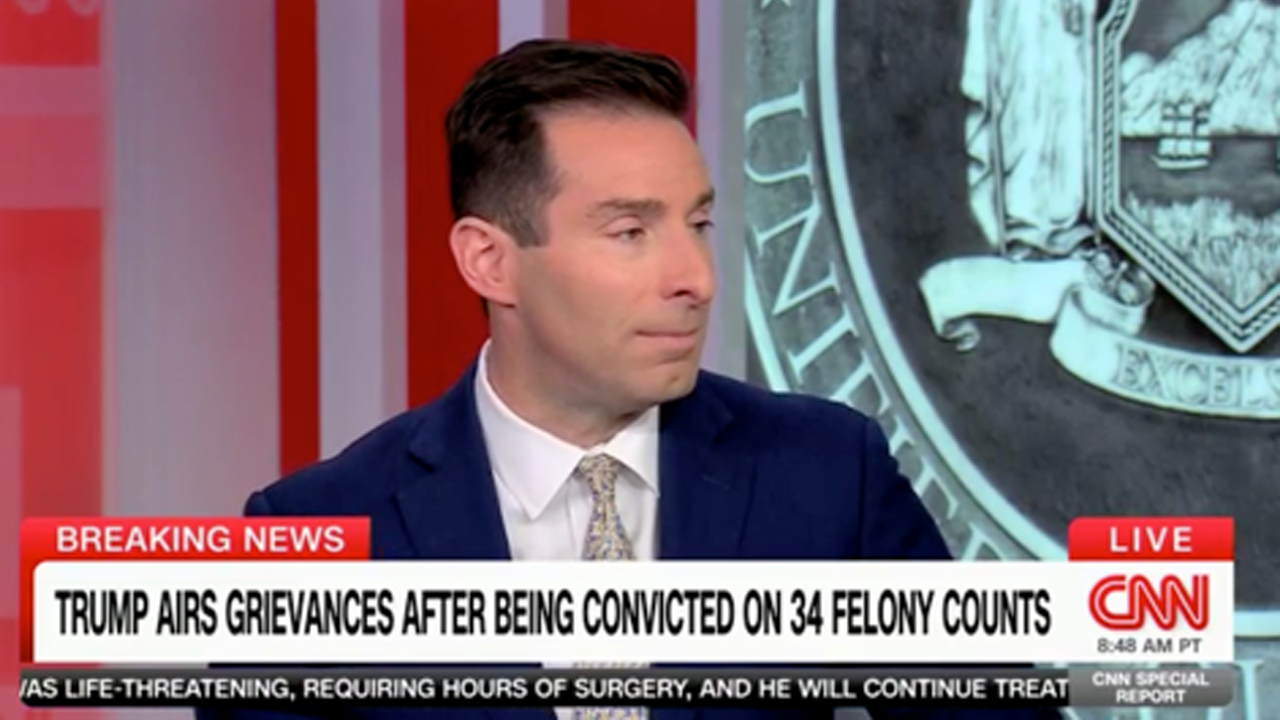
CNN senior legal analyst Elie Honig criticized the New York criminal case against Donald Trump as an “unjustified mess” in a scathing analysis piece, saying prosecutors “contorted the law” to ensnare the former president.
“Prosecutors got their man, for now at least — but they also contorted the law in an unprecedented manner in their quest to snare their prey,” Honig wrote in New York magazine.
A New York jury on Thursday found Trump guilty of 34 felony counts of falsifying business documents brought against him by Democratic Manhattan District Attorney Alvin Bragg. Honig wrote the jury and their verdict “deserve respect” because the 12 New Yorkers are not responsible for the conduct of Bragg and his office, but criticized the “structural infirmity” of the case.
“Both of these things can be true at once: The jury did its job, and this case was an ill-conceived, unjustified mess. Sure, victory is the great deodorant, but a guilty verdict doesn’t make it all pure and right,” Honig wrote.
TRUMP RAILS AGAINST ‘RIGGED’ CONVICTION AS CAMPAIGN RAKES IN DONATIONS AFTER GUILTY VERDICT
Elie Honig wrote that New York v. Trump prosecutors “contorted the law in an unprecedented manner in their quest to snare their prey.”
“Plenty of prosecutors have won plenty of convictions in cases that shouldn’t have been brought in the first place,” he continued. “‘But they won’ is no defense to a strained, convoluted reach unless the goal is to ‘win,’ now, by any means necessary and worry about the credibility of the case and the fallout later.”
Honig then laid out “undeniable facts” about NY v. Trump.
“The judge donated money — a tiny amount, $35, but in plain violation of a rule prohibiting New York judges from making political donations of any kind — to a pro-Biden, anti-Trump political operation, including funds that the judge earmarked for ‘resisting the Republican Party and Donald Trump’s radical right-wing legacy,’” Honig wrote. “Would folks have been just fine with the judge staying on the case if he had donated a couple bucks to ‘Re-elect Donald Trump, MAGA forever!’? Absolutely not.”
The CNN legal guru then noted that Bragg ran for office by “touting his Trump-hunting prowess” in the deeply blue county. Honig, who noted Bragg and Trump attorney Todd Blanche are both his friends and former colleagues, also said Bragg regularly made false claims about Trump on the campaign trail.
“Most importantly, the DA’s charges against Trump push the outer boundaries of the law and due process. That’s not on the jury. That’s on the prosecutors who chose to bring the case and the judge who let it play out as it did,” Honig wrote.
TIM SCOTT CLASHES WITH CNN HOST AFTER TRUMP’S CONVICTION IN NEW YORK: ‘NO, YOU CAN’T CORRECT ME ON THIS’
Former President Trump arrives at Trump Tower in New York City on Thursday after being found guilty on 34 counts of falsifying business records in the first degree. (Felipe Ramales for Fox News Digital)
Honig declared the charges against Trump are “obscure, and nearly entirely unprecedented.”
“In fact, no state prosecutor — in New York, or Wyoming, or anywhere — has ever charged federal election laws as a direct or predicate state crime, against anyone, for anything. None. Ever,” Honig wrote.
The first issue for the DA, according to Honig, was that “nobody cares about a misdemeanor, and it would be laughable to bring the first-ever charge against a former president for a trifling offense that falls within the same technical criminal classification as shoplifting a Snapple and a bag of Cheetos from a bodega.”
The second issue was the statute of limitations on a misdemeanor had long passed, so the DA needed to “inflate the charges” to a low-level felony. To do so, Honig pointed out that Bragg’s office alleged that the falsification of business records was committed “with intent to commit another crime.”
ANTI-TRUMP ATTORNEY YELLS AT CNN CONTRIBUTOR IN FIERCE ARGUMENT OVER TRUMP CONVICTION: ‘YOU’RE LYING!’
Former President Trump arrives at Trump Tower in New York City on Thursday after being found guilty on 34 counts of falsifying business records in the first degree. (Felipe Ramales for Fox News Digital)
“Here, according to prosecutors, the ‘another crime’ is a New York State election-law violation, which in turn incorporates three separate ‘unlawful means’: federal campaign crimes, tax crimes, and falsification of still more documents,” Honig wrote.
Honig said the case should be dubbed the “Frankenstein Case” because it was “cobbled together with ill-fitting parts into an ugly, awkward, but more-or-less functioning contraption that just might ultimately turn on its creator.”
Read the full article from Here


The future of a “campus carry” law in New Hampshire remained in flux Thursday after major disagreements emerged among Republicans in the State House and the defeat of a last-minute push in the House.
Now, the question of whether to allow New Hampshire college students to carry firearms will come down to end-of-year negotiations between the House and the Senate.
In February, the House passed House Bill 1793, a bill to remove firearm restrictions for students and faculty at state colleges and universities. But Senate Republicans, who are divided on the idea, passed a more limited version Thursday: a bill allowing concealed firearms for faculty members only.
Meanwhile, House Republicans failed in a last-minute effort to pass the proposal again by tacking it onto an unrelated bill.
The dizzying series of votes on Thursday left major questions about the viability of the bill. Democrats in both chambers have opposed the idea, arguing it will lead to unmanageable safety risks on campus. Republican Gov. Kelly Ayotte has stayed on the sidelines, saying only public safety is her priority when weighing the topic. And college town police chiefs and university leaders have voiced their own opposition.
Proponents of campus carry in the House say they are disappointed by the Senate-passed compromise and aren’t satisfied with limiting firearms allowances to college faculty.
“Well, they missed the whole point,” said Rep. Sam Farrington, R-Rochester, who has championed the bill, in an interview Thursday. “They kept the title of the bill as the Protecting College Students Act, right? So that tells me that the senators who voted for it didn’t even read the bill.
But Farrington argued the effort is not over, and said they would keep pressuring Senate Republicans to support the broader bill.
“It’s a non-starter right now, but that doesn’t mean that we don’t have time to work together,” he said.
Twists and turns
As originally proposed, HB 1793 would prevent any public institution of higher education from enacting “rules, policies, or similar provisions” that restrict the “possession, carry, storage, or lawful use of firearms or non-lethal weapons on campus.”
That version of the bill, which passed the House, also stated that students would not need a permit or license to possess those firearms. It allowed students aggrieved by a breach of the law to sue an institution and required damages in a successful lawsuit to be at least $10,000.
When the bill arrived at the Senate Judiciary Committee, it attracted fierce pushback. That included Nate Buffington, chief of the Plymouth Police Department; Jack Dalton, the deputy chief of policy in Durham; the presidents of the University of New Hampshire and Plymouth State University; and a number of students and faculty members at the University of New Hampshire. In total, 1,872 people signed in opposition to the bill when it arrived in the Senate, compared to 92 in favor.
Students and faculty said they believed allowing firearms could make them less safe from other students, while law enforcement leaders worried it could hamper their ability to respond to mass shootings and other threats, and that it could cause alcohol-fueled tragedies and increase suicides.
Supporters, meanwhile, said it could allow people to feel safe walking alone on campus at night and argued it would provide students with the same natural right of self-defense as people outside college campuses.
The deluge of testimony appeared to give some Republican senators pause, such as Sen. Bill Gannon, R-Sandown, who said the bill left safety and logistics questions. That concern caused the Judiciary Committee to recommend the proposal be examined by a study committee.
But some Senate Republicans still supported the original bill, and by the time HB 1793 reached the Senate floor on Thursday, a compromise had emerged. In addition to allowing firearms for faculty members, the version that passed Thursday would bar state colleges and universities from preventing students from possessing “non-lethal weapons,” which include pepper spray, mace, stun guns, and TASERs. And it would create a study commission to look into the feasibility of future legislation to allow students to have firearms, including safety concerns and costs to colleges.
Sen. Keith Murphy, R-Manchester, who supported the original bill, said he would “hold his nose” and vote for the compromise.
“I believe, in my heart of hearts, that adults have the right to carry a firearm,” he said. “I believe this right will eventually be recognized by the Legislature.”
In the House, the attempt to pass the full campus carry bill a second time failed, 159-177. Rep. Nicholas Germana, D-Keene, and a history professor at Keene State College, said the idea was riddled with concerns. In Keene, he said, the college does not have armed security and relies on an understaffed Keene Police Department to respond to incidents on campus.
“I believe that we all want the same outcome: the appropriate balance of rights and responsibilities and safety on our campuses,” he said, urging the House to defeat the bill.
Farrington said he had presented an amendment to the Senate Judiciary Committee that he said would have addressed many of the concerns, including allowing colleges to restrict firearms in dorm rooms, require lockboxes, bar alcohol use around firearms, and prohibit firearms at major events such as graduations. “That’s something that we can work on in the next two weeks,” he said.
The House will vote May 21 on whether to accept the Senate’s amendments, reject them, or request a committee of conference. If it does the latter, that committee — which will comprise negotiators from the House and Senate — will have until May 28 to reach a compromise.
Resurrection of campus due process
On Thursday, the House also tacked a college campus “due process” bill onto an unrelated bill, Senate Bill 409, sending the measure to the Senate for the second time.
The Republican-backed amendment would require state universities and colleges to adopt a series of due process requirements for on-campus disciplinary proceedings — including the requirement that those institutions allow alleged victims of sexual assault to be cross-examined.
Those requirements include the right of a defendant to receive an impartial hearing; to be treated as innocent until proven guilty by a preponderance of the evidence; to receive written notice of the allegations at least seven days ahead; to receive a list of witnesses and evidence being used against them; the right to have a verbatim record of the hearing; and the right to appeal a decision to the vice president of student affairs.
The list also includes a defendant’s right “to confront and cross-examine witnesses who provide evidence against them — a point that has driven controversy.
Under the House’s amendment on Thursday, the defendant may not personally cross-examine a witness who is the alleged victim of the behavior being adjudicated. In that case, the bill states that the hearing officer must approve another person to carry out the cross-examination on the defendant’s behalf. The bill allows the defendant to observe the cross-examination of the alleged victim.
The bill would cover proceedings against students, student organizations, and faculty members.
The House added language to SB 409, a bill that would increase the penalty for a driver who fails to stop for a police officer attempting to pull them over from a misdemeanor to a felony.
The final bill, passed Thursday, faces an uphill battle. In February, the Senate rejected an earlier House bill to adopt the due process changes, House Bill 510, and attempted to create a study committee on the issue instead. That bill failed after the Senate and House refused to compromise.
But on Thursday, Rep. Bob Lynn, R-Windham, who has championed the due process legislation, argued that the latest amendment is designed to address the Senate’s concerns.
“I believe that we have addressed every objection that was a substantive objection to the bill,” he said.
Rep. Dave Luneau, D-Hopkinton, countered that the University of New Hampshire and other public colleges and universities in the state already have their own disciplinary proceedings that include due process, and said the bill is not necessary.
Luneau invoked his experience serving on boards at the University of New Hampshire and the New Hampshire Technical Institute. “In the 25 years I’ve been on both those boards, I’ve never heard any complaint about the due process procedures that are used for disciplinary hearings on campus,” he said.
In addition to the due process legislation, the House added another unrelated amendment to SB 409 that would hold governmental units — such as school districts — liable for negligence that results in personal injury or property damage.

A black bear was spotted in the area of Frederick Court in Princeton on Saturday night, according to an alert issued to residents. A bear was also spotted May 15 in the area of Heather Lane between Cherry Valley Road and Great Road. It is unclear whether the latest sighting is the same bear.
Residents are advised not to approach the bear and to remain indoors if they see it.
According to the New Jersey Department of Environmental Protection’s Division of Fish and Wildlife, black bears are common in parts of New Jersey, and they sometimes travel through residential neighborhoods as part of their natural movement patterns.
Residents should not leave food or garbage outdoors because bears can quickly become attracted to human food sources. Bears may eat garbage, pet food, birdseed, and other easily accessible items. Bears that gain access to food in residential neighborhoods may lose their fear of people and repeatedly return to the area. Some nuisance bears eventually must be trapped.
State wildlife officials urged residents in bear-prone areas to take precautions to reduce the chances of attracting bears.
Recommended precautions from the The information was provided by the NJDEP Division of Fish and Wildlife include:
- Use certified bear-resistant garbage containers.
- Store garbage in containers with tight-fitting lids.
- Keep garbage in a secure location until the morning of pickup.
- Do not feed bears.
- Do not approach bears.
- Do not run from bears because running may trigger a chase response.
- Avoid direct eye contact with bears.
- Remain calm and slowly back away if encountering a bear.
- Make noise by yelling, clapping, singing, or using an air horn.
- Make yourself appear larger by waving your arms or lifting a jacket overhead.
- Stay together if you are in a group.
- Make sure the bear has an escape route.
Officials also advised residents to watch for warning behaviors from bears, including huffing sounds, jaw popping, and swatting at the ground, which can indicate the animal feels threatened.
Bears may stand on their hind legs to get a better view or detect scents in the air, which is not always considered threatening behavior.
Residents can report black bear damage or nuisance behavior to the NJDEP’s 24-hour hotline at 1-877-WARN-DEP, or 1-877-927-6337.

HARRISBURG, Pa. (WHP) — On a special episode of Face the State, host Joel D. Smith sits down with Secretary of the Commonwealth Al Schmidt ahead of Tuesday’s primaries.
Then, our panel of political insiders gives their predictions and analysis for some of Pennsylvania’s tightest races.
Watch more Face the State here.
-

 Minnesota44 seconds ago
Crews battling Flanders, Stewart Trail wildfires in northern Minnesota
-

 Mississippi7 minutes ago
Mississippi State’s Roster Rebuild Added Another In-State Piece
-

 Missouri13 minutes ago
Blue Alert issued after suspect accused of shooting at Missouri officers
-

 Montana19 minutes ago
Montana track and field earns six golds Saturday at Big Sky Conference meet
-

 Nebraska25 minutes ago
Photos: Nebraska softball hosts Grand Canyon for game six of NCAA Lincoln Regional
-

 Nevada31 minutes ago
Northern Nevada gardens and backyards: Controlling insects with systemic insecticides – Carson Now
-
New Hampshire37 minutes ago
Campus carry law’s future unclear in New Hampshire – Valley News
-
New Jersey43 minutes ago
Black bear spotted in Princeton ⋆ Princeton, NJ local news %



