


Get the latest Boston sports news
Receive updates on your favorite Boston teams, straight from our newsroom to your inbox.

NEWYou can now listen to Fox News articles!
Federal prosecutors on Tuesday released transcripts of short videos they say were recorded by the gunman responsible for a mass shooting at Brown University and the killing of an MIT professor in Massachusetts.
The U.S. Attorney’s Office for the District of Massachusetts said investigators recovered an electronic device containing the videos when they executed a federal search warrant on Dec. 18, 2025, at a storage facility used by Claudio Manuel Neves Valente, whom authorities described as “the Portuguese national responsible for the senseless murders.”
The videos were recorded in Portuguese and later translated into English, prosecutors said. In the recordings, Neves Valente described the attack as the culmination of long planning.
“It’s done. It was, it was six months, man. Not six months, six semesters. Uh. I had already planned this for a little more,” he said in one video, according to the transcripts.
DISPATCH RECORDS FROM BROWN UNIVERSITY SHOOTING CAPTURE CHAOS OF DEADLY CAMPUS ATTACK
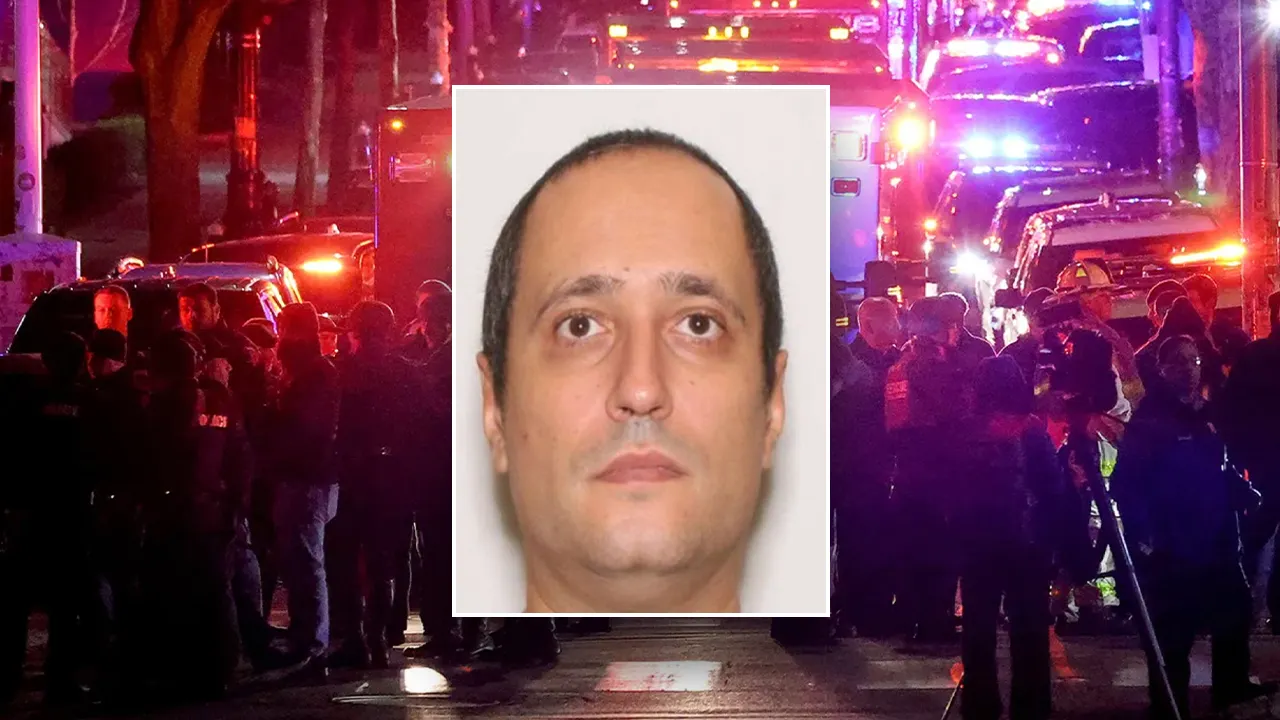
Federal prosecutors in Massachusetts released this image showing the man identified in deadly shootings of Brown University students in Rhode Island and a Massachusetts Institute of Technology professor in Massachusetts. (Justice Department)
Authorities said Neves Valente identified Brown University as his intended target but did not provide a motive for shooting students at Brown or for killing the MIT professor, Nuno Loureiro, 47. Prosecutors said the investigation into a motive will continue.
Two Brown students, Ella Cook, 19, and Muhammad Aziz Umurzokov, 18, were killed in the Dec. 13 shooting on the Providence, Rhode Island, campus, and nine other people were wounded, authorities said. Just two days later, Loureiro, a professor at MIT, was killed in Brookline.
In the transcript, Neves Valente repeatedly refused to express remorse.
BILLIONAIRE TRUSTEES STAY SILENT AS BROWN UNIVERSITY FACES MOUNTING CAMPUS MURDER FALLOUT
READ THE TRANSCRIPTS – APP USERS, CLICK HERE
“So, what has been done now… I’m in a storage space in Salem, I’ve had this here for three years, I think. I still have money. … I am not going to apologize, because during my lifetime no one sincerely apologized to me.” He also rejected that mental illness was to blame, saying: “that’s all bull—- excuses.”
“I am – I am sane,” he said. “I’ve always been, more or less [sane].”
Neves Valente also said President Donald Trump was right to “have called me an animal, which is true.”
“I am an animal, and he is also, but uhm, I have no love–I have no hatred towards America, I also have no hatred at all. This was an issue of… of opportunity.”
BROWN UNIVERSITY HIRES FORMER US ATTORNEY ZACHARY CUNHA AS POSSIBLE CAMPUS SHOOTING LAWSUITS LOOM
Despite its role as Brown University’s highest governing authority with direct power over presidential oversight and long-term strategy, the board of trustees has declined to comment in the wake of the murders that exposed serious lapses in campus security. (Photo by David L. Ryan/The Boston Globe via Getty Images)
MIT PROFESSOR SHOT DEAD IN BROOKLINE HOME, MASSACHUSETTS STATE POLICE LAUNCH HOMICIDE INVESTIGATION
Prosecutors said Neves Valente “showed no remorse” during the recordings and blamed victims for their deaths.
In the transcript, he criticized people’s responses during the shooting, saying, “Because they were kind of stupid.”
He also dismissed how the world would view him after he carried out the mass shooting on the college campus.
“I don’t give a d— about how you judge me or what you think of me,” he said, while also saying, “I also have no interest in being famous.”
Images of Claudio Manuel Neves-Valente displayed on a projector screen at a news briefing in Providence, Rhode Island. The 48-year-old former student and Portuguese national has been identified as the gunman behind a mass shooting that killed two students and wounded nine. (Andrea Margolis/Fox News Digital)
BROWN UNIVERSITY CUSTODIAN TOLD SECURITY SUSPICIOUS MAN WAS ‘CASING’ BUILDING WEEKS BEFORE SHOOTING: REPORT
Throughout the transcript, he focused on the injury he sustained, saying: “As you can see, my eye is kind of f—– up.”
Neves Valente said that he was injured in what he called a “shell round” that “bounced” into his eye.
A split image showing multiple still frames from the surveillance video taken near Brown University of a person of interest before and after a school shooting. (FBI Boston)
An autopsy previously found Neves Valente died by suicide two days before his body was discovered in a storage unit in Salem, New Hampshire.
CLICK HERE TO DOWNLOAD THE FOX NEWS APP
Authorities said Tuesday they do not believe there is any ongoing public safety threat associated with the shootings and that additional updates will be provided.
Fox News Digital’s Michael Ruiz and Andrea Margolis contributed to this report.
Read the full article from Here


Nearly two decades have passed since “The Wire” ended, yet Jamie Hector’s haunting turn as the drug kingpin Marlo Stanfield still resonates. Jay-Z recently referred to the character during a freestyle at the Roots Picnic.
“I respect the fact that artists find time to appreciate another artist in that way,” Mr. Hector said. “I consider the work that we do at the highest level with great art. His is literary. His is over a track, making you feel, and mine was visual.”
Mr. Hector, 50, also a director, producer and children’s book author, has devoted much of his life to the arts as one of television’s most compelling, understated figures, currently seen in Apple TV’s “Cape Fear.”
He splits his time between his family, dramatic roles, his own projects and shepherding the next generation of artists. Mr. Hector spent a recent blistering Thursday in Brooklyn with The New York Times.

Boston Red Sox
Are the Boston Red Sox back?
They’re certainly on the right track.
Boston won its seventh consecutive game Friday night, 6-2, in its series opener against the New York Mets. The victory improved its record to 44-48, which moved the club even closer to .500 on the year.
On top of that, the win was the Red Sox’ 12th in their last 14 games.
Immediately after the final out was recorded, Boston found itself 1.5 games back of the American League’s third wild-card spot.
The win was even sweeter considering the team’s severe issues they experienced in attempting to reach Citi Field.
After they were supposed to have departed Chicago at 9:45 p.m. Eastern Time on Thursday night following their series sweep of the White Sox, the Red Sox’ team plane was grounded until 3 p.m. ET on Friday. Weather delays on Thursday kept them at their gate, and then mechanical problems on Friday prolonged their stay on the tarmac well into the afternoon.
Friday’s game with the Mets was originally scheduled to begin at 7:15 p.m., but was pushed back until 7:50 due to Boston not landing at LaGuardia Airport until shortly after 4:30 p.m.
Starting pitcher Sonny Gray did not travel to New York ahead of time, which some starters do to get settled before their outing.
Nevertheless, the Red Sox de facto ace continued his stretch of utterly dominant pitching.
Gray tossed six innings of one-run ball, struck out three, and walked one on 91 pitches (53 strikes). He added an 11th win to his personal record in what has been an excellent season for the veteran right-hander.
Boston’s bullpen was nails, too — Tyron Guerrero, Garrett Whitlock, and Greg Weissert finished the game off in the final three innings after Gray exited. Weissert allowed New York’s second and final run in the ninth on a solo home run, but that was all she wrote in the runs column.
Offensively, the Red Sox’ bats stayed hot in what has been an unprecedented turnaround by the entire team at the plate.
Masataka Yoshida got things going in the first inning with a two-run double, but Boston was quiet until the seventh when Anthony Seigler broke things open. He hit a two-run homer to extend the lead, his second of the year, and was fired up as he rounded the bases.
After the game, Apple TV’s Heidi Watney asked Seigler how he had so much energy following the travel issues the team encountered earlier in the day. He said the club simply knew they would have to persevere, and they did just that on the diamond.
“I think that’s just how we are. It’s this whole team. It doesn’t just start with one person. I think it’s just everybody in the locker room,” Seigler said. “We were dealt some adversity today, obviously. But it doesn’t matter. We knew we were gonna come out here and handle our business, and we did.”
He even said he felt like he could suit up for another game immediately after the win.
“I mean, I feel like we could go another nine (innings) if we needed to, honestly, with how we’re going,” Seigler said with a smile.
Seigler, who came to Boston in the Caleb Durbin trade in February, has been a total, albeit unlikely, spark plug since joining the team last month. Through 20 games, he’s slashing .292/.378/.477 with an .855 OPS, and has hit at the top of the order.
Wilyer Abreu joined in on the fun with a two-run shot of his own in the ninth to cap the Red Sox’ scoring. He finally got a hold of one after coming within feet of hitting a homer in the fifth inning.
Boston’s offensive surge couldn’t have come at a better time. The front office has yet to decide whether they will be buyers or sellers at next month’s trade deadline; the team’s hot streak could prevent chief baseball officer Craig Breslow from blowing the roster up entering the second half.
The Red Sox are still four games below .500, but capping off the first half of what was a tumultuous start to the season with a win streak and multiple series sweeps could be just what the doctor ordered with the dog days of summer looming.
“We’re just putting great at-bats together, the whole lineup from top to bottom,” Seigler said of what’s gone right lately. “Our starter, Sonny, all of them, they just speak for themselves. And then our bullpen does a great job coming in behind them.
“It’s just fun to be around everybody. We believe in each other. Everything’s contagious. We’re all bringing high energy every day.”

Receive updates on your favorite Boston teams, straight from our newsroom to your inbox.
Get everything you need to know to start your day, delivered right to your inbox every morning.

An oversized poster board tracks the deep cleaning happening across Pittsburgh’s Mount Washington neighborhood. All of the yellow highlights denote the streets already adopted.
“We got all the streets on Grandview [Avenue] and we’re still working on a few on Duquesne.”
It’s the brain of Helen Oldfield, who told KDKA-TV that her recent move from the West Coast left something to be desired at first.
“I was very depressed and shocked by the amount of dirt and litter everywhere,” said Oldfield, creator of the Adopt-A-Block program.
She started volunteering for the large cleanups along Grandview Avenue and loved seeing people rappel down the sides to collect the accumulated trash.
“It’s the iconic street in Pittsburgh. It needs to be clean and look nice, but what about the rest of Mount Washington? When people wandered back through the streets, it was just horrible; it was a mess,” Oldfield said.
It was from that idea that Oldfield’s Adopt-a-Block program was born. Now she’s more than 60 volunteers deep and trying not to just clean but shift attitudes.
“I think a lot of the mess that accumulates up here on Grandview, unfortunately, is due to groups of young people collecting in the evening and just hanging out,” she said. “And it’s a cool place to hang out, so why not? They come with their motorbikes, and they come with their fast cars, and they drink, and they eat fast food, and then they chuck it all over the edge. I don’t believe the trash is due to any local residents or any visitors or sightseers.”
Volunteers Barbara and Paul Franklin say this is part of their life now.
“We’ve been here about a year, and we moved back to Pittsburgh after being away for 37 years, and we noticed there’s just a lot of trash out there,” Paul Franklin said.
The couple is now donning yellow safety vests, using an embroidery hoop to keep the trash bags open, and using grabbers to snag cigarette butts, cans, and even gum wrappers.
“When we do McCardle Roadway on Sunday mornings, I feel really good about that,” Barbara Franklin said.
The volunteers keep on coming, snapping pictures of themselves getting their steps in and making a difference, block by block.
“There is still a long way to go, and we are getting there, and I feel the motivation going here,” said Oldfield.
The Franklins told KDKA-TV that it’s addicting, and now they notice trash everywhere. They hope people will see this story and spread it beyond Mt. Washington.
“We’re proud of this city, we’re proud of this neighborhood, and we want to show it in its best light, and we think we’re helping to do that,” said Paul Franklin.
Oldfield said she hopes to secure some funding to continue supplying her volunteers with much-needed gear. She’s currently receiving some money from the community organization Neighbors on the Mount to purchase the vests and grabbers.
She’s soon applying for grant money in the form of a Neighborhood Economic Development grant and told KDKA-TV that she hopes the city will consider her group for the funds to keep this going.

With the white nationalist group Patriot Front, what you see is not what you get


How ‘The Wire’ Star Jamie Hector Spends a Hot Day in Brooklyn


Burglars ransack Sherman Oaks condo building during fumigation


Metro Detroit weather forecast, July 10, 2026 — 11 p.m. Update


Classical music series helps reconnect downtown San Francisco community


Dallas police officers, paramedics recall saving woman stuck in a ravine for days;


Red Sox win 7th straight game just hours after landing in New York

One tree at a time: Denver nonprofit works to close shade gap as heat dome threatens neighborhoods

