Boston, MA
The Boston Restaurant Trends You Loved (and Hated) in 2024


To wrap up the year, Eater Boston polled both local journalists and readers of this site to get their thoughts on the past year in dining: the good, the bad, and the most exciting things to come in 2025. The results have been collected in the following series of posts. (Check out the full archive here.)
Below, we ask: What was Boston’s most exciting — or most infuriating — local restaurant trend of 2024?
“Restaurants keep getting louder and louder, which I really don’t understand. Sure, if you go to a bar or nightclub, you expect them to be noisy, but if I’m out with friends, loved ones, co-workers, etc. to catch up on things while having a burger or a plate of pasta and can’t even hear what they say, what’s the point of even going out?”
— Marc Hurwitz, founder of Boston’s Hidden Restaurants and Boston Restaurant Talk, food/travel writer for NBC Boston/NECN
“A few years ago, I didn’t think Boston was a particularly good bakery town. We had our standouts, but there wasn’t a strong bakery culture. So it’s exciting to me that now bakeries just keep opening and expanding. I was thrilled to see La Saison will open in Charlestown, and to visit the new Sofra in Allston. And I love that so many specialists are arriving on the scene: Flake Bakery with its pastéis de nata. Valientes Bakery, serving Argentine specialties. French-Asian Niveaux Patisserie. Gluten-free Verveine. Bakey with its babka. And so on. I also think it’s really fun that Flour will open in the Boston Common Concession Pavilion. No knock on Earl of Sandwich, the former tenant, but this feels like a much better representation of this city.”
— Devra First, restaurant critic for the Boston Globe
“I was really excited to see local restauranteurs expanding. I’m thinking about Jamie Bissonette’s two new spots and the recently opened Kaia from Brendan Pelley, plus Baleia from The Coda Group I love seeing local chefs and restaurant groups doing so well.”
— Brian Samuels, Boston food photographer
“I’ll answer both. This has been happening for a couple of years, but for me the most infuriating thing is that almost every restaurant now has to have an Instagrammable “wow” moment. Maybe it’s a dish or a drink with an ornate presentation, or an over-the-top area of the restaurant. I totally get that these things drive diners into restaurants because they build excitement online, but I can’t help but think how annoying the showmanship might be for the staff (especially during a busy service) and designers and whoever else. For the most exciting, I really love that restaurants are embracing non-alcoholic drink programs. Especially with so many non-alcoholic beers and spirits, it’s great to see infusions and cool cocktails that aren’t just sodas.”
— Nathan Tavares, freelance writer and Eater Boston contributor
“Loved: The amount of one-night-only pop-ups, wine or cocktail events, and chef collaboration dinners that restaurants and bars around town hosted this year. It feels special and fun and is a great way to shake things up creatively every once in a while.
Hated: Neon signs in the dining room with souvenir-shop phrases like ‘It’s 5 o’clock somewhere’ or whatever. Is some vendor giving them out for free? I saw them at way too many restaurants this year.”
— Erika Adams, Eater Boston editor
Reader responses
Over 50 people took part in Eater Boston’s dining survey this year (thank you, all!). Below, find readers’ favorite — and least favorite — Boston restaurant trends in 2024:
- “I still don’t like the “forced tipping” that has become the norm from COVID times. While I understand the theory behind it, I hate feeling like a scumbag choosing the 0% when they flip the Square machine (or terminal) around in places that you never tipped at prior to COVID. While COVID may not be dead completely, the closures and overall hardships endured during that time are — so can we stop shaming patrons into tipping please?” — Greg
- “More special events — wine dinners, cocktail tastings, etc., etc. Yes, they’re sometimes more expensive, but they flex the skills of great restaurants, and they add some spice to a weeknight or weekend dining experience. I hope they help out restaurants. Love ‘em.” — Todd
- “Boston TikTok restaurant influencing. Really cool and niche spots that have been doing good business for years are being flooded with hoards of patrons who are seeking a viral experience, rather than a cool or good one.” — Annie
- “Infuriating — every new restaurant seems designed for Instagram pics of the aesthetic, sometimes at the expense of the quality of the food!” — Jesse
- “Glad to see QR codes are on the way out, something about flipping through a paper menu or drink list that just adds to the experience.” — Wes
- “Needlessly putting sea urchin on things. It’s not sourced ethically and the population has been decimated in Maine.” — Suzanne
- “I’m absolutely OVER speakeasies, they’re overplayed. Bring back swanky lounges with good music.” — Nicole
- “‘Everyone wants low-ABV spirits and $14 mocktails!’ No, we don’t. Who are you talking to?” — Rob
- “Can we please stop putting fake truffle flavor in every single menu?” — Jake
- “Love that more restaurants are offering special prix fixe menus!” — Leanne
- “Combined coffee/wine bar concepts! What’s not to love?” — Rupal
- “Can’t make reservations or have to plan too far ahead.” — Thom
- “Everything is run by massive hospitality groups now.” — Liz
- “[Love] upscale versions of Portuguese and Vietnamese food.” — Donna
- “Tepid bottles of water sitting on the table.” — Marjorie
- “Infuriating — covid-era patios going away.” — Juliana
- “Exciting to see orange wine by the glass.” — Emily



Getty
CHARLOTTE, NORTH CAROLINA – NOVEMBER 01: Jayson Tatum #0 of the Boston Celtics reacts in the first quarter during their game against the Charlotte Hornets at Spectrum Center on November 01, 2024 in Charlotte, North Carolina. NOTE TO USER: User expressly acknowledges and agrees that, by downloading and or using this photograph, User is consenting to the terms and conditions of the Getty Images License Agreement. (Photo by Jacob Kupferman/Getty Images)
On Sunday night, the Boston Celtics played the Charlotte Hornets in North Carolina.
The Celtics won by a score of 114-99.
Boston Celtics Star Jayson Tatum Made History

GettyFOXBOROUGH, MASSACHUSETTS – MARCH 26: Jayson Tatum, player of Boston Celtics looks on prior to the international friendly match between Brazil and France at Gillette Stadium on March 26, 2026 in Foxborough, Massachusetts. (Photo by Michael Owens/Getty Images)
Jayson Tatum finished the win with 32 points, five rebounds, eight assists and one block while shooting 12/23 from the field and 5/10 from three-point range in 31 minutes of playing time.
Tatum also made history during the game.
Celtics Stats wrote: “Jayson Tatum scored his 14,000th career point tonight at Charlotte, becoming the ninth player in franchise history to reach that mark.”

GettyBOSTON, MASSACHUSETTS – MARCH 06: Jayson Tatum #0 of the Boston Celtics looks on during the second quarter at TD Garden on March 06, 2026 in Boston, Massachusetts. (Photo by Maddie Meyer/Getty Images)
Tatum is now averaging 20.9 points, 9.1 rebounds, 4.2 assists and 1.1 steals per contest while shooting 39.9% from the field and 32.3% from three-point range in 11 games this season.
Celtics Stats added: “Jayson Tatum recorded a season-high 32 points tonight at Charlotte. It marked his 16th career game with at least 30 points without committing a turnover – the most in franchise history.”

GettyCHARLOTTE, NORTH CAROLINA – NOVEMBER 02: Jayson Tatum #0 of the Boston Celtics dunks against the Charlotte Hornets during the second half of the game at Spectrum Center on November 02, 2024 in Charlotte, North Carolina. (Photo by Grant Halverson/Getty Images)
Celtics After Hornets Victory

GettyDETROIT, MICHIGAN – OCTOBER 26: Jayson Tatum #0 of the Boston Celtics looks on against the Detroit Pistons during the second quarter at Little Caesars Arena on October 26, 2025 in Detroit, Michigan. (Photo by Nic Antaya/Getty Images)
With their win over the Hornets, the Celtics improved to 50-24 in 74 games, which has them as the second seed in the Eastern Conference.
They are in the middle of a three-game winning streak (and have won seven out of their last ten).
On the road, the Celtics have gone 24-13.
Following the Hornets, they will play their next game on Monday night when they visit the Atlanta Hawks at State Farm Arena in Georgia.

GettyBOSTON, MASSACHUSETTS – MARCH 08: Jaylen Brown #7 of the Boston Celtics talks with head coach Joe Mazzulla during the second half against the Los Angeles Lakers at TD Garden on March 08, 2025 in Boston, Massachusetts. The Boston Celtics defeated the Los Angeles Lakers 111-101. (Photo by Elsa/Getty Images)
With Tatum playing like himself, the Celtics will have a real chance to win their second title in three years.
They are coming off a year where they lost to Jalen Brunson and the New York Knicks in the second round of the 2025 NBA playoffs.
Hornets After Boston Loss

GettyCHARLOTTE, NORTH CAROLINA – MARCH 26: (R-L) LaMelo Ball #1 talks with Moussa Diabate #14 of the Charlotte Hornets in the second half against the New York Knicks during their game at Spectrum Center on March 26, 2026 in Charlotte, North Carolina. (Photo by Jacob Kupferman/Getty Images)
The Hornets dropped to 39-36 in 75 games, which has them as the 10th seed in the Eastern Conference.
They are in the middle of a two-game losing skid (but have won seven out of ten).
Ben Stinar Ben Stinar has been covering the NBA for over seven years.
He has written for OnSI, Forbes, Amico Hoops, The Big Lead and had a podcast with former All-Star Jameer Nelson. More about Ben Stinar
More Heavy on Celtics
Loading more stories
Boston, MA
!$+∇√$[+[!LIVESTREAMs!]+] Minnesota Wild vs Boston Bruins Live Free Streams On Tv Channel 2026-03-29
![!$+∇√$[+[!LIVESTREAMs!]+] Minnesota Wild vs Boston Bruins Live Free Streams On Tv Channel 2026-03-29](https://i2.wp.com/encrypted-tbn0.gstatic.com/images?q=tbn%3AANd9GcReQZPBURuIIuh0fPF6YTAqOY-y1_BeWJWzPA&s&ssl=1 "!$+∇√$[+[!LIVESTREAMs!]+] Minnesota Wild vs Boston Bruins Live Free Streams On Tv Channel 2026-03-29")
Minnesota Wild vs Boston Bruins
HERE’S (*WAY TO WATCH*) Minnesota Wild VS Boston Bruins Free LIVE 2026-03-29 Rose Bowl Parade 2026 live: Rose Bowl Parade 2026 look to seize control of thrilling Rose Bowl Parade 2026. Every team in the Rose Bowl Parade 2026 has two wins apiece as we go into the final two game weeks. Rose Bowl Parade 2026 will host Rose Bowl Parade 2026 at Live NHL mAtch Durban’s Kings Park Stadium with the Rose Bowl Parade 2026 a single point ahead of Rose Bowl Parade 2026 in the standings and just one behind leaders Rose Bowl Parade 2026.

Boston Legacy FC vs Utah Royals
Boston Legacy FC vs Utah Royals LIVE GAME: Boston Legacy FC vs Utah Royals look to seize control of thrilling Boston Legacy FC vs Utah Royals. Every team in the Boston Legacy FC vs Utah Royals has two wins apiece as we go into the final two game weeks. Boston Legacy FC vs Utah Royals will host Boston Legacy FC vs Utah Royals at Boston Legacy FC vs Utah Royals Park Stadium with the Boston Legacy FC vs Utah Royals a single point ahead of Boston Legacy FC vs Utah Royals in the standings and just one behind leaders Boston Legacy FC vs Utah Royals.

Minneapolis Parks Equity Plan Ahead of Schedule 2026

HBCU All-Star Experience takes over Indianapolis – Indianapolis Recorder

Wabtec Announces First Quarter 2026 Earnings Release Date – Today in Pittsburgh

Augusta Fire to showcase progress on new Fire Station #3 construction

Washington D.C. Named 2026’s 6th “Healthiest City in America” – The MoCo Show

Florida High School Football Rankings: Top 25 teams – Oct. 21

How old is Bo Nix? What to know about Oregon quarterback ahead of 2024 NFL Draft

Cleary's 21 help Le Moyne down Central Connecticut State 69-64 in OT

99th annual Pony Swim held in Virginia

Indiana Members Credit Union announced as new anchor tenant at Bottleworks District

Video: Iran to Allow More Oil Ships Through Strait of Hormuz, Trump Says

Dem senator warns deportation could let Virginia woman’s illegal immigrant killer ‘escape accountability’

Newsletter: G7 ministers to hold talks on war’s economic fallout
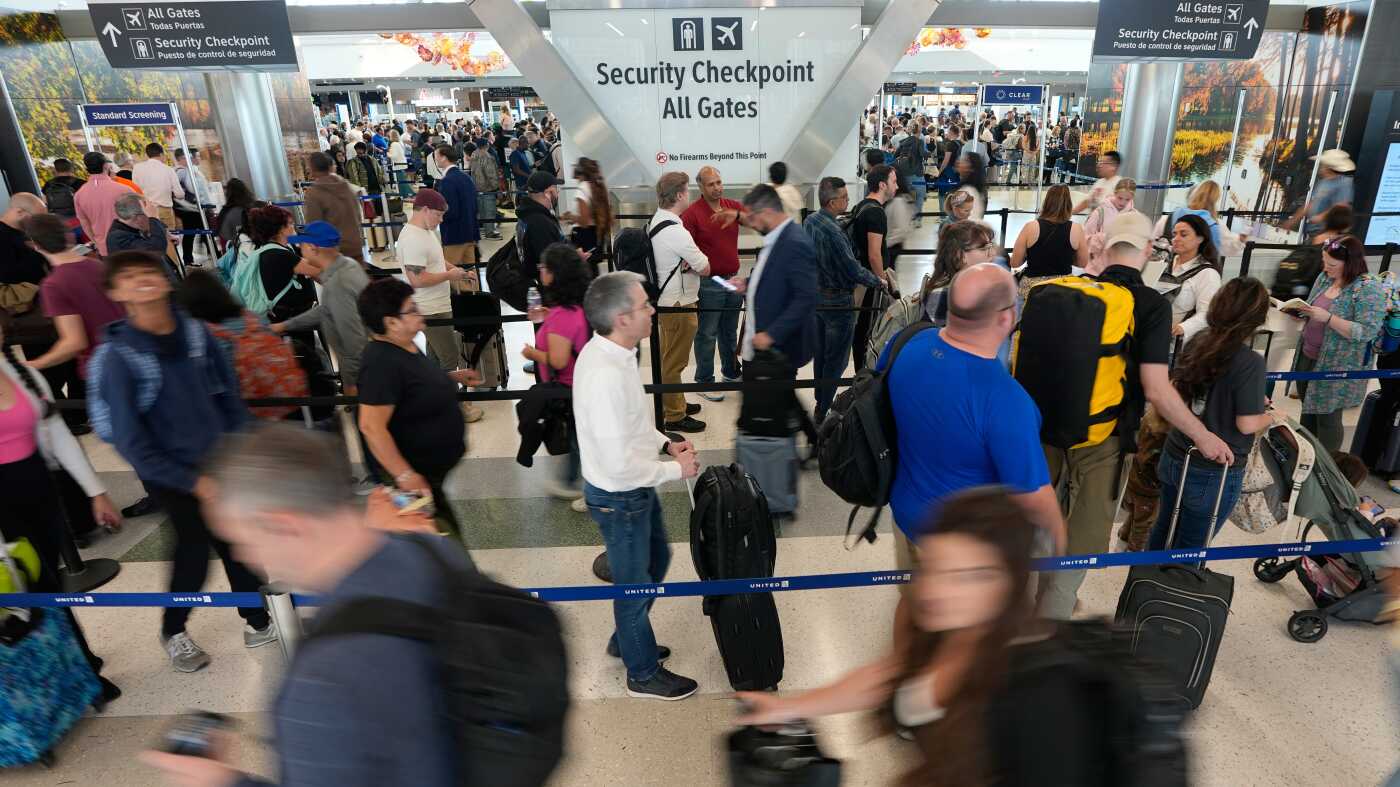
ICE officers could remain at airports after TSA workers are paid

Scathing report claims nation’s oldest labor union ‘betrayed’ MAGA members through ‘shocking’ spending
-

 Sports1 week ago
IOC addresses execution of 19-year-old Iranian wrestler Saleh Mohammadi
-

 Miami, FL4 days ago
Jannik Sinner’s Girlfriend Laila Hasanovic Stuns in Ab-Revealing Post Amid Miami Open
-

 New Mexico1 week ago
Clovis shooting leaves one dead, four injured
-

 Politics1 week ago
Schumer gambit fails as DHS shutdown hits 36 days and airport lines grow
-

 Tennessee7 days ago
Tennessee Police Investigating Alleged Assault Involving ‘Reacher’ Star Alan Ritchson
-

 Minneapolis, MN4 days ago
Boy who shielded classmate during school shooting receives Medal of Honor
-

 Science1 week ago
Record Heat Meets a Major Snow Drought Across the West
-

 Politics1 week ago
Trump gives Iran 48-hour ultimatum to reopen Strait of Hormuz or face strikes on power plants