Boston, MA
Boston tax shift effectively dead in the Senate, little time left before bills go out


Boston’s proposal to shift the burden of its property taxes away from homeowners is effectively dead in the Legislature.
Senate President Karen Spilka, D-Middlesex/Norfolk, said in a statement Monday night that she did not intend to bring the home rule petition back to the floor when the Senate reconvenes on Thursday.
With days left for the city to finalize its property tax rates before January bills go out, this means city officials will not have time to rethink and resubmit a new proposal.
“Many in the Senate believe that this proposal tips the scales too far in one direction, with a stalled economic recovery in Boston as an unfortunate potential outcome,” Spilka said.
“My job as Senate President is to work toward compromise, always; without it we would accomplish nothing. It is also my job to listen to the members of the Senate, and I have heard clearly that there currently is not sufficient support for this proposal,” she continued.
Mayor Michelle Wu unveiled the original tax shift proposal in April in response to declining commercial property values in the wake of the pandemic, as fewer people traveled to the office for work.
To avoid homeowners having to make up for that loss on their taxes, she proposed requesting a higher percentage of the tax levy from commercial owners.
Wu wrote in a letter to senators last week that residential property owners would see about a 10.4% increase on their next tax bill, or a 5.2% annual increase, if the home rule petition is passed. Without it, they would see an estimated 21% hike, or a 10.5% annual increase.
The original home rule petition passed the state House of Representatives but stalled in the Senate, largely due to concerns from the business and real estate communities that it would hurt commercial property owners at a time when they were already struggling.
Wu met with business groups to draft a second, compromise version of the bill, which passed the City Council in October and the House last month.
She pressed for the bill to be put on a fast track for approval so tax rates could be finalized on time, saying in November that it would need to pass by Dec. 4.
But last week, Sen. Nick Collins, D-1st Suffolk, delayed the Senate vote twice, saying Dec. 2 that he wanted to first see the certified tax valuations.
After those numbers were released publicly, he again delayed the vote on Dec. 5, saying he wanted more time for analysis of the numbers.
Collins and others in the Senate and in the business community claimed the Department of Revenue-certified valuations showed that Wu’s initial estimates of the increase in homeowners’ tax bills were overblown.
Even some of the business groups who had worked on the second, compromise bill backed out at the end of last week, saying the tax shift was unnecessary.
On Monday, Collins pushed the Senate vote a third time, repeating the argument that the bill was not needed.
“Estimates by city officials have been far off the mark,” he said, MassLive previously reported.. “We believe it is fair and prudent to allow the time to digest that data and speak to our constituents, stakeholders and colleagues to determine whether this home-rule is necessary.”
Wu has pushed back on these arguments, saying in her letter to senators last week that the average annual tax increase for a single-family home over the past decade has been about 5%, less than half of the estimate for 2025.
But opponents, including Spilka, said the change could hurt the economic viability of the whole state, not just Boston.
The Senate president said in her statement Monday that while senators were aware of affordability issues and the concerns of homeowners, they had helped pass other legislation to help address those challenges, including the $5.1 billion housing bond bill signed into law in August and a major tax relief package that went into effect on Jan. 1, 2024.
Before Spilka declared her intention not to bring up the bill again Monday night, a city spokesperson released a short statement saying they were “waiting for clarity” on whether it would be brought to a vote.
The city did not immediately respond to a request for comment Tuesday morning.



Getty
CHARLOTTE, NORTH CAROLINA – NOVEMBER 01: Jayson Tatum #0 of the Boston Celtics reacts in the first quarter during their game against the Charlotte Hornets at Spectrum Center on November 01, 2024 in Charlotte, North Carolina. NOTE TO USER: User expressly acknowledges and agrees that, by downloading and or using this photograph, User is consenting to the terms and conditions of the Getty Images License Agreement. (Photo by Jacob Kupferman/Getty Images)
On Sunday night, the Boston Celtics played the Charlotte Hornets in North Carolina.
The Celtics won by a score of 114-99.
Boston Celtics Star Jayson Tatum Made History

GettyFOXBOROUGH, MASSACHUSETTS – MARCH 26: Jayson Tatum, player of Boston Celtics looks on prior to the international friendly match between Brazil and France at Gillette Stadium on March 26, 2026 in Foxborough, Massachusetts. (Photo by Michael Owens/Getty Images)
Jayson Tatum finished the win with 32 points, five rebounds, eight assists and one block while shooting 12/23 from the field and 5/10 from three-point range in 31 minutes of playing time.
Tatum also made history during the game.
Celtics Stats wrote: “Jayson Tatum scored his 14,000th career point tonight at Charlotte, becoming the ninth player in franchise history to reach that mark.”

GettyBOSTON, MASSACHUSETTS – MARCH 06: Jayson Tatum #0 of the Boston Celtics looks on during the second quarter at TD Garden on March 06, 2026 in Boston, Massachusetts. (Photo by Maddie Meyer/Getty Images)
Tatum is now averaging 20.9 points, 9.1 rebounds, 4.2 assists and 1.1 steals per contest while shooting 39.9% from the field and 32.3% from three-point range in 11 games this season.
Celtics Stats added: “Jayson Tatum recorded a season-high 32 points tonight at Charlotte. It marked his 16th career game with at least 30 points without committing a turnover – the most in franchise history.”

GettyCHARLOTTE, NORTH CAROLINA – NOVEMBER 02: Jayson Tatum #0 of the Boston Celtics dunks against the Charlotte Hornets during the second half of the game at Spectrum Center on November 02, 2024 in Charlotte, North Carolina. (Photo by Grant Halverson/Getty Images)
Celtics After Hornets Victory

GettyDETROIT, MICHIGAN – OCTOBER 26: Jayson Tatum #0 of the Boston Celtics looks on against the Detroit Pistons during the second quarter at Little Caesars Arena on October 26, 2025 in Detroit, Michigan. (Photo by Nic Antaya/Getty Images)
With their win over the Hornets, the Celtics improved to 50-24 in 74 games, which has them as the second seed in the Eastern Conference.
They are in the middle of a three-game winning streak (and have won seven out of their last ten).
On the road, the Celtics have gone 24-13.
Following the Hornets, they will play their next game on Monday night when they visit the Atlanta Hawks at State Farm Arena in Georgia.

GettyBOSTON, MASSACHUSETTS – MARCH 08: Jaylen Brown #7 of the Boston Celtics talks with head coach Joe Mazzulla during the second half against the Los Angeles Lakers at TD Garden on March 08, 2025 in Boston, Massachusetts. The Boston Celtics defeated the Los Angeles Lakers 111-101. (Photo by Elsa/Getty Images)
With Tatum playing like himself, the Celtics will have a real chance to win their second title in three years.
They are coming off a year where they lost to Jalen Brunson and the New York Knicks in the second round of the 2025 NBA playoffs.
Hornets After Boston Loss

GettyCHARLOTTE, NORTH CAROLINA – MARCH 26: (R-L) LaMelo Ball #1 talks with Moussa Diabate #14 of the Charlotte Hornets in the second half against the New York Knicks during their game at Spectrum Center on March 26, 2026 in Charlotte, North Carolina. (Photo by Jacob Kupferman/Getty Images)
The Hornets dropped to 39-36 in 75 games, which has them as the 10th seed in the Eastern Conference.
They are in the middle of a two-game losing skid (but have won seven out of ten).
Ben Stinar Ben Stinar has been covering the NBA for over seven years.
He has written for OnSI, Forbes, Amico Hoops, The Big Lead and had a podcast with former All-Star Jameer Nelson. More about Ben Stinar
More Heavy on Celtics
Loading more stories
Boston, MA
!$+∇√$[+[!LIVESTREAMs!]+] Minnesota Wild vs Boston Bruins Live Free Streams On Tv Channel 2026-03-29
![!$+∇√$[+[!LIVESTREAMs!]+] Minnesota Wild vs Boston Bruins Live Free Streams On Tv Channel 2026-03-29](https://i2.wp.com/encrypted-tbn0.gstatic.com/images?q=tbn%3AANd9GcReQZPBURuIIuh0fPF6YTAqOY-y1_BeWJWzPA&s&ssl=1 "!$+∇√$[+[!LIVESTREAMs!]+] Minnesota Wild vs Boston Bruins Live Free Streams On Tv Channel 2026-03-29")
Minnesota Wild vs Boston Bruins
HERE’S (*WAY TO WATCH*) Minnesota Wild VS Boston Bruins Free LIVE 2026-03-29 Rose Bowl Parade 2026 live: Rose Bowl Parade 2026 look to seize control of thrilling Rose Bowl Parade 2026. Every team in the Rose Bowl Parade 2026 has two wins apiece as we go into the final two game weeks. Rose Bowl Parade 2026 will host Rose Bowl Parade 2026 at Live NHL mAtch Durban’s Kings Park Stadium with the Rose Bowl Parade 2026 a single point ahead of Rose Bowl Parade 2026 in the standings and just one behind leaders Rose Bowl Parade 2026.

Boston Legacy FC vs Utah Royals
Boston Legacy FC vs Utah Royals LIVE GAME: Boston Legacy FC vs Utah Royals look to seize control of thrilling Boston Legacy FC vs Utah Royals. Every team in the Boston Legacy FC vs Utah Royals has two wins apiece as we go into the final two game weeks. Boston Legacy FC vs Utah Royals will host Boston Legacy FC vs Utah Royals at Boston Legacy FC vs Utah Royals Park Stadium with the Boston Legacy FC vs Utah Royals a single point ahead of Boston Legacy FC vs Utah Royals in the standings and just one behind leaders Boston Legacy FC vs Utah Royals.

Scouting the women’s NCAA Elite 8 contest between Michigan and Texas

Rockslide caught on camera during Southern Utah wedding

Star bartender raised in VT hunts the ‘big shebang’ of a James Beard

Goochland residents sue county over Technology Overlay District approval

Rivian secures direct-sales win in Washington

Florida High School Football Rankings: Top 25 teams – Oct. 21

How old is Bo Nix? What to know about Oregon quarterback ahead of 2024 NFL Draft

Cleary's 21 help Le Moyne down Central Connecticut State 69-64 in OT

99th annual Pony Swim held in Virginia

Indiana Members Credit Union announced as new anchor tenant at Bottleworks District

Video: Iran to Allow More Oil Ships Through Strait of Hormuz, Trump Says

Dem senator warns deportation could let Virginia woman’s illegal immigrant killer ‘escape accountability’

Newsletter: G7 ministers to hold talks on war’s economic fallout
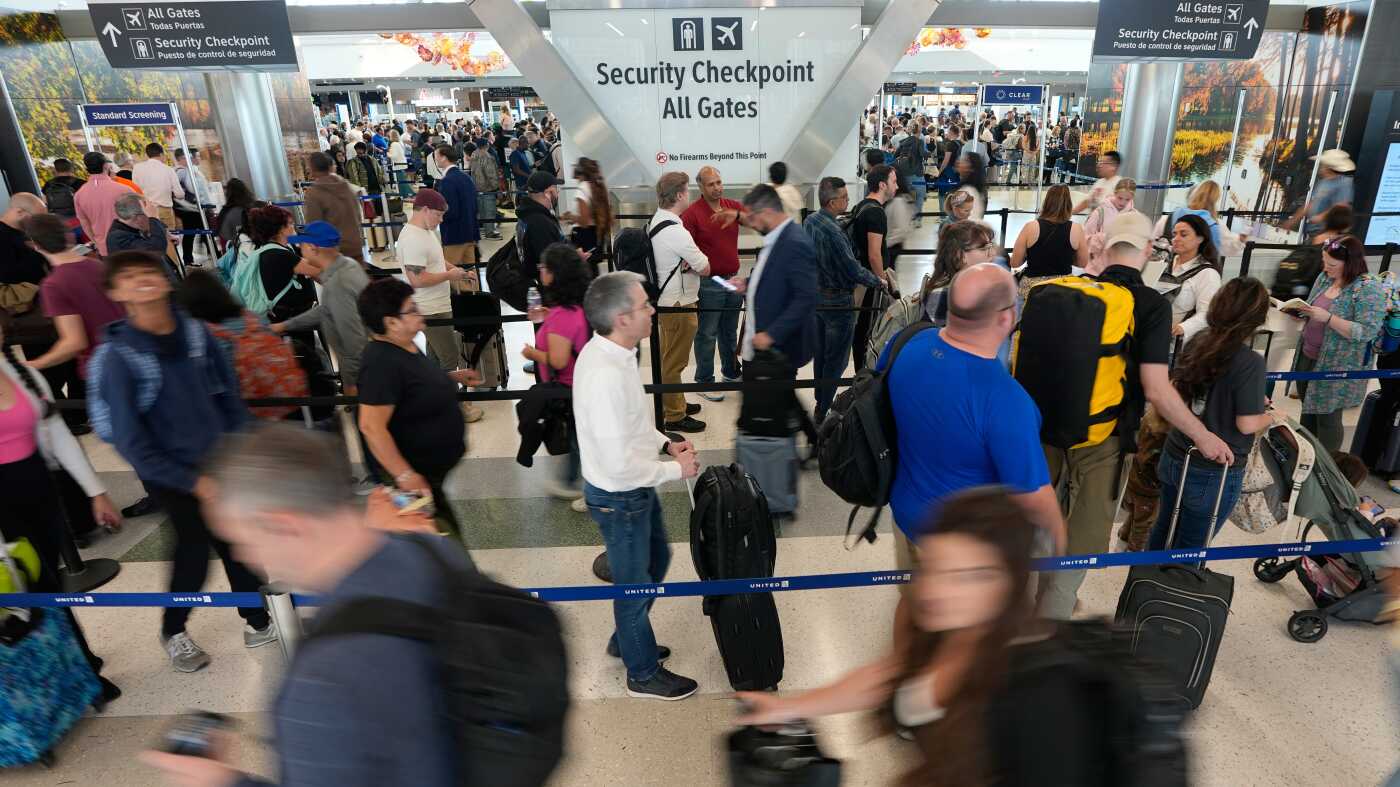
ICE officers could remain at airports after TSA workers are paid

Scathing report claims nation’s oldest labor union ‘betrayed’ MAGA members through ‘shocking’ spending
-

 Sports1 week ago
IOC addresses execution of 19-year-old Iranian wrestler Saleh Mohammadi
-

 Miami, FL4 days ago
Jannik Sinner’s Girlfriend Laila Hasanovic Stuns in Ab-Revealing Post Amid Miami Open
-

 New Mexico1 week ago
Clovis shooting leaves one dead, four injured
-

 Tennessee7 days ago
Tennessee Police Investigating Alleged Assault Involving ‘Reacher’ Star Alan Ritchson
-

 Minneapolis, MN4 days ago
Boy who shielded classmate during school shooting receives Medal of Honor
-

 Politics1 week ago
Schumer gambit fails as DHS shutdown hits 36 days and airport lines grow
-

 Science1 week ago
Record Heat Meets a Major Snow Drought Across the West
-

 Technology1 week ago
YouTube job scam text: How to spot it fast