Connect with us

Northeast

Adnan Syed of 'Serial' podcast fame has Maryland murder conviction upheld as court rules in ex's slaying

Published

on

Adnan Syed of 'Serial' podcast fame has Maryland murder conviction upheld as court rules in ex's slaying

Join Fox News for access to this content

Plus special access to select articles and other premium content with your account – free of charge.

By entering your email and pushing continue, you are agreeing to Fox News’ Terms of Use and Privacy Policy, which includes our Notice of Financial Incentive.

Please enter a valid email address.

Having trouble? Click here.

Maryland’s Supreme Court reinstated Adnan Syed’s murder conviction Friday, ruling the 2022 court hearing that freed the accused killer violated the rights of his alleged victim’s family.

The 4-3 ruling came nearly a year after the court heard arguments in October in the case that gained notoriety from the hit 2014 true-crime podcast “Serial.” 

Advertisement

Syed was convicted in 2000 of killing high school ex-girlfriend Hae Min Lee after she was found strangled to death in an unmarked grave, and he was initially sentenced to life in prison, plus 30 years.

In September 2022, a Baltimore court overturned Syed’s conviction after city prosecutors found flaws in their evidence after Syed had served 22 years behind bars.

ADNAN SYED ASKS MARYLAND COURT TO RECONSIDER MURDER CONVICTION RULING

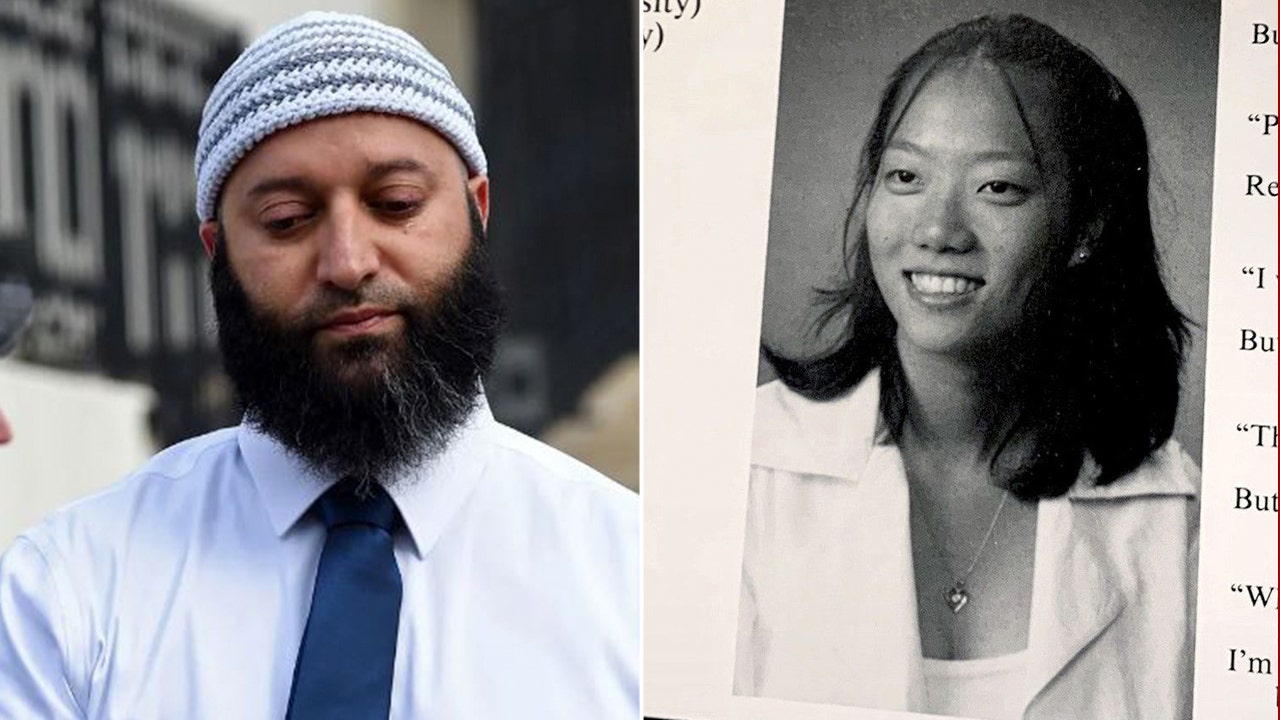
Adnan Syed gets emotional as he speaks to reporters outside the Robert C. Murphy Courts of Appeal building after a hearing Feb. 2, 2023, in Annapolis, Md. (Barbara Haddock Taylor/The Baltimore Sun via AP, File)

The panel of seven judges wrote in its ruling that Lee’s family had a right to participate in the 2022 hearing, saying that the victim’s brother Young Lee, was not given reasonable notice and, therefore, not treated with “dignity, respect and sensitivity.”

Advertisement

“In an effort to remedy what they perceived to be an injustice to Mr. Syed, the prosecutor and the circuit court worked an injustice against Mr. Lee,” the justices wrote in their decision. 

SIGN UP TO GET TRUE CRIME NEWSLETTER

The panel said Syed, who was 17 when he was arrested and is now 43, can remain free as the case heads to a new lower court judge to determine again whether his conviction can be tossed out. 

The Lee family must be given notice of the new hearing “sufficient to provide Mr. Lee with a reasonable opportunity to attend such a hearing in person” and speak out if he chooses.

FORMER BALTIMORE PROSECUTOR ATTENDS BARBECUE HELD IN HER HONOR WHILE ON HOME DETENTION

Advertisement

Adnan Syed was convicted and sentenced to life in prison in 2000 for the 1999 murder of Hae Min Lee when he was 17 years old. (AP Photo/Courtesy of Yusuf Syed)

David Sanford, an attorney who represents Lee’s family, told The Associated Press the higher court’s ruling “acknowledges what Hae Min Lee’s family has argued: Crime victims have a right to be heard in court.”

But Syed’s lawyer, Erica Suter, argued that the state did meet its obligation and invited Young Lee to participate in the hearing via video conference.

FOLLOW THE FOX TRUE CRIME TEAM ON X

The ruling is the latest twist in Syed’s long legal battle. In 2019, a court ruled 4-3 to deny the accused killer another trial. A lower court had ordered a retrial in 2015 on the grounds Syed’s attorney, Cristina Gutierrez, didn’t contact an alibi witness and therefore did not provide effective counsel, according to the AP.

Advertisement

The U.S. Supreme Court declined to review the court’s decision.

ADNAN SYED CHARGES DROPPED AS BALTIMORE PROSECUTORS ABANDON CASE AGAINST ‘SERIAL’ PODCAST SUBJECT

A tribute to Hae Min Lee, Class of 1999, in a Woodlawn High School yearbook. Lee was abducted and killed in 1999, and classmate Adnan Syed was convicted of her murder in 2000.  (Getty Images)

Prosecutors chose to vacate Syed’s sentence in 2022 after reviewing evidence in his case under a Maryland law that targeted “juvenile lifers” because he was under 18 when Hae Min Lee’s body was found.

GET REAL TIME UPDATES DIRECTLY ON THE TRUE CRIME HUB

Advertisement

They said they used “advanced DNA” testing to determine that Syed was not responsible for Hae’s murder and pointed to other potential suspects, including one who had allegedly threatened Hae and another linked to an address where her car was later discovered. 

“The state no longer has confidence in the integrity of the conviction,” prosecutors said at the time. 

Syed has maintained his innocence, often expressing concern for the victim’s family, according to the AP.


Read the full article from Here

Advertisement
Continue Reading
Click to comment

Leave a Reply

Your email address will not be published. Required fields are marked *

This site uses Akismet to reduce spam. Learn how your comment data is processed.

Pittsburg, PA

A year after Pittsburgh’s deadly derecho, structural damage and personal trauma linger

Published

on

A year after Pittsburgh’s deadly derecho, structural damage and personal trauma linger


Source link

Continue Reading

Connecticut

2 babies relinquished under CT safe haven law in April

Published

on

2 babies relinquished under CT safe haven law in April


In April, two babies were relinquished at Connecticut hospitals under the state’s Safe Havens Act, according to the state Department of Children and Families. The babies were surrendered to Yale New Haven Hospital and Connecticut Children’s at the University of Connecticut Health Center, DCF said. 

The Safe Havens Act, which was enacted 25 years ago, allows a parent to give up their infant to hospital emergency room staff anonymously and without the threat of prosecution. DCF then places the baby in a preapproved adoptive home.

At a Wednesday press conference, Lt. Gov. Susan Bysiewicz said the Safe Havens Act has had “an incredible impact” and called it “life-saving.” 

“Those women who find themselves in a situation where they deliver a baby and they cannot or they do not want to raise that baby, they may feel incredibly isolated and challenged and judged, and they may feel they have nowhere to turn,” Bysiewicz said.

Advertisement

Under the law, a baby may be surrendered at a designated location by a parent, relative or advocate for the child, and the parent has 30 days to change their mind and begin working with DCF to see if reunification is possible. There are 37 medical centers in Connecticut — 25 of them hospitals — that allow babies to be surrendered 24 hours a day.

Pam Sawyer, a former state representative who spearheaded the law’s passage, said she intended it to be “so simple it could be shared in the school bus.”

But two babies relinquished in the same month — though these are the only two babies relinquished so far this year — marks a spike from the usual trend. Since the law went into effect, a total of 60 babies have been relinquished. And in 2025, just one baby was surrendered the whole year. 

Co-chair of the General Assembly’s Committee on Children, Sen. Ceci Maher, D-Wilton, outlined a number of issues that could lead a parent to give up their baby, such as inadequate housing or financial instability. 

The Committee on Children advanced a bill this session that would establish a task force to study the voluntary surrender of infants — including considerations for the best way to provide such a program without perpetuating “racial, ethnic, health, economic and socioeconomic disparities” among parents looking to surrender.

Advertisement

The bill passed the state Senate on April 15 and awaits a vote in the House.

Some lawmakers and advocates have suggested adding another option for parents considering giving up a baby — temperature-controlled chambers known as “baby boxes” that are installed within the exterior walls of a surrender location to allow parents to relinquish the infant anonymously.

Once a baby is left in the box device, alerts are sent to staff and to 911 dispatch centers. The boxes are designed with bassinets, and equipped with electricity, air conditioning and heating, but they’re not federally regulated. Lori Bruce, a researcher and bioethicist at Yale University, pointed this out during her testimony at a public hearing on the legislation Feb. 17.

“Even our hairdryers, even tongue depressors, all sorts of much more basic tools require regulation,” Bruce said. 

The boxes are intended to be anonymous, but that’s not always possible when they are installed at places like firehouses, which have cameras all around the building. 

Advertisement

Bruce said the boxes also remove the opportunity for any face-to-face interaction between the parent and a public service worker who might offer access to resources like crisis counseling — or simply ask if they are okay.

Baby boxes have been installed in 20 states so far, according to Safe Haven Baby Boxes.

Sawyer said she is in favor of the baby boxes, but only after more research.

“I love the idea, but I don’t know that they’re quite there yet,” she said. “My view still is that it’s advocacy and teaching” that will help those who need the Safe Havens Act the most.

Advertisement


Source link

Continue Reading

Maine

Report: Barney Frank, liberal icon and former lawmaker, enters hospice in Maine

Published

on

Report: Barney Frank, liberal icon and former lawmaker, enters hospice in Maine


In this June 29, 2014, file photo, former Massachusetts congressman Barney Frank, right, waves while riding with his husband James Ready, left, during the 44th annual San Francisco Gay Pride parade in San Francisco. (Eric Risberg/Associated Press)

Barney Frank, a champion of liberal causes who spent more than 30 years representing Massachusetts in the U.S. House of Representatives, has entered hospice care at his home in Ogunquit as he deals with congestive heart failure, according to Politico.

Frank, 86, represented Massachusetts’ 4th Congressional District from 1981 to 2013, and was the first member of Congress to voluntarily come out as gay, in 1987.

An advocate for civil rights and affordable housing, Frank is also known for sponsoring sweeping financial regulation reforms in the Dodd-Frank Act of 2010.

Advertisement

He moved to Ogunquit with his husband, Jim Ready, after retiring from Congress.

According to Politico, Frank is supporting Gov. Janet Mills over political newcomer Graham Platner in Maine’s Democratic primary for U.S. Senate.

“I worry a little bit about the tendency on the Democratic side to fall for the flavor of the month,” he told the outlet. “There is this flirtation or this attraction of people who are new and who are very good at articulating a response to the anger, but without talking about what you do about it.”

Advertisement

Rachel covers state government and politics for the Portland Press Herald. It’s her third beat at the paper after stints covering City Hall and education. Prior to her arrival at the Press Herald in…
More by Rachel Ohm

Advertisement


Source link

Continue Reading
Advertisement

Trending