Connect with us

Northeast

2.9 magnitude earthquake strikes New Jersey

Published

on

2.9 magnitude earthquake strikes New Jersey

A small 2.9 magnitude earthquake rattled New Jersey on Saturday morning, just three weeks after a more forceful 4.8 quake hit the Garden State and surrounding regions. 

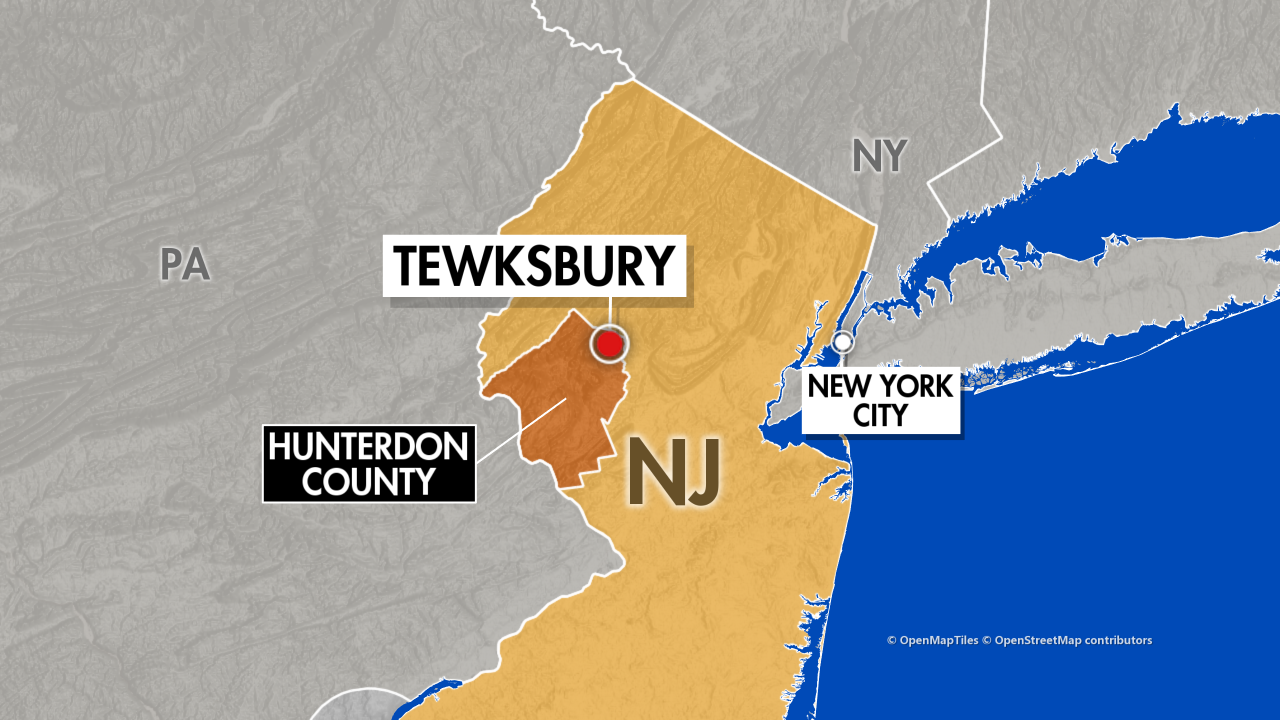
The natural phenomenon hit near Tewksbury this morning at around 9:49 a.m., according to the U.S. Geological Survey. Tewksbury is located in Hunterdon County, which is about 35 miles west of New York City. 

It is unclear if the seismic activity was an aftershock from the April 5 earthquake. That event was centered near Whitehouse Station, which is about five miles south of Tewksbury, and was felt from Washington D.C. to Maine, according to the USGS.

IS THE EAST COAST ON THE BRINK OF A MAJOR EARTHQUAKE — AND ARE WE PREPARED?

Advertisement

A small 2.9 magnitude earthquake rattled New Jersey Saturday morning, just three weeks after a more forceful 4.8 quake hit the Garden State and surrounding regions. 

Ashley Papa, a Fox News Digital editor living in New Jersey, says she felt Saturday’s quake rock her home.

“I was in the kitchen with my toddler and all of a sudden we started feeling the house shake pretty strongly and we heard that same rumbling sound from the day of the [April 5] earthquake,” Papa said. 

More than 130 aftershocks have been recorded in the region since the April 5 rattler, which was estimated to have been felt by more than 42 million people in 14 states.

“I’d have to say it was the strongest aftershock since that day except this time I knew what I was feeling, unlike that Friday when I had no idea what was going on,” Papa said.

Advertisement

Two employees of Bourbon Street Wine and Sprits hold back shelves full of liquor in New Jersey during the April 5 earthquake. (Chris Beardly)

4.8 MAGNITUDE EARTHQUAKE STRIKES NEW JERSEY, SHAKING BUILDINGS IN SURROUNDING STATES

“I think we’re all just in shock that this is still going on. I figured we would never feel anything like this again for another hundred years and here we are about a month later still feeling strong aftershocks, it just makes us wonder what is going on? And of course, our dog is terrified and will likely never be the same again.”

Earthquakes are rare along the East Coast, with the most powerful one in the last 100 years hitting in August 2011, clocking 5.8 on the Richter scale. It was centered in Virginia and felt from Washington, D.C. to Boston.

The recent quakes follow a 1.7 magnitude earthquake in New York City on Jan. 2. 

Advertisement

People walk through lower Manhattan moments after New York City and parts of New Jersey experienced a 4.8 magnitude earthquake on April 05, 2024  (Earthquake East Coast)

Professor John Ebel, a seismologist in the Department of Earth and Environmental Sciences at Boston College, told Fox News Digital recently that a quake above 5.0 on the Richter scale generally strikes once every 120 years. 

“The question is, can we have something bigger? And in my opinion, yes we can,” he said. “We can’t predict earthquakes, and we don’t know when the next one is going to occur, but we do have a low, not insignificant probability of a damaging earthquake at some point.”

Ebel said that the April 5 earthquake has left seismologists baffled since it didn’t occur on the Ramapo Fault zone, highlighting just how hard it is to predict the phenomenon from occurring. 

Advertisement

The Ramapo Fault zone is a series of small fault lines that runs through New York, New Jersey and Pennsylvania. Spanning more than 185 miles, it was formed about 200 million years ago.

Read the full article from Here

Advertisement
Continue Reading
Click to comment

Leave a Reply

Your email address will not be published. Required fields are marked *

This site uses Akismet to reduce spam. Learn how your comment data is processed.

Boston, MA

Boston’s new city council president talks about election and upcoming term

Published

on

Boston’s new city council president talks about election and upcoming term


The Boston City Council is setting out on a new two-year term with a new council president at the helm.

City Councilor Liz Breadon, who represents District 9, won the gavel on a 7-6 contested vote, cobbling together her candidacy just hours before the council was set to vote.

“An opportunity presented itself and I took it,” Breadon said. “We’re in a very critical time, given politics, and I really feel that in this moment, we need to set steady leadership, and really to bring the council together.”

The process apparently including backroom conversations and late-night meetings as City Councilors Gabriella Coletta Zapata and Brian Worrell both pushed to become the next council president.

Advertisement

Breadon spoke on why support waned for her two colleagues.

“I think they had support that was moving,” said Breadon. “It was moving back and forward, it hadn’t solidified solidly in one place. There’s a lot of uncertainty in the moment.”

Political commentator Sue O’Connell talks about the last-minute maneuvering before the upset vote and what it says about Mayor Michelle Wu’s influence.

Some speculated that Mayor Michelle Wu’s administration was lobbying for a compromise candidate after Coletta Zapata dropped out of the race. Breadon disputes the mayor’s involvement.

“I would say not,” said Breadon. “I wasn’t in conversation with the mayor about any of this.”

Advertisement

Beyond the election, Breadon took a look ahead to how she will lead the body. Controversy has been known to crop up at City Hall, most recently when former District 7 Councilor Tania Fernandes Anderson pleaded guilty to federal corruption charges tied to a kickback scheme involving taxpayer dollars.

Breadon said it’s critical to stay calm and allow the facts to come out in those situations.

“I feel that it’s very important to be very deliberative in how we handle these things and not to sort of shoot from the hip and have a knee-jerk reaction to what’s happening,” said Breadon.

Tune in Sunday at 9:30 am for our extended @Issue Sitdown with Breadon, when we dig deeper into how her candidacy came together, the priorities she’ll pursue in the role and which colleagues she’ll place in key council positions.

Advertisement


Source link

Continue Reading

Pittsburg, PA

O’Connor vows Pittsburgh won’t cooperate with ICE

Published

on

O’Connor vows Pittsburgh won’t cooperate with ICE


Days after a U.S. Immigration and Customs Enforcement Officer fatally shot a woman in Minneapolis, Pittsburgh Mayor Corey O’Connor reaffirmed that he will not cooperate with ICE.

Former Mayor Ed Gainey had taken the same position.

“My stance never changed,” O’Connor told TribLive on Friday. “We’re not going to cooperate.”

O’Connor said the same thing on the campaign trail, promising his administration would not partner with ICE.

Advertisement

“My priority is to turn the city around and help it grow,” O’Connor said. “For us, it’s got to be focusing on public safety in the city of Pittsburgh.”

President Donald Trump has sent a surge of federal officers into Minneapolis, where tensions have escalated sharply.

O’Connor said he had spoken this week with Cleveland Mayor Justin Bibb, who heads the Democratic Mayors Association. The group has condemned ICE’s actions in the wake of Wednesday’s fatal encounter in Minneapolis, where an ICE officer shot and killed 37-year-old Nicole Macklin Good, a U.S. citizen described as a poet and mother.

“Mayors are on the ground every day working to keep our communities safe,” the association said in a statement Thursday. “If Trump were serious about public safety, he would work with our cities, not against them. If he were serious, he would stop spreading propaganda and lies, and end the fear, the force, and the federal overreach.”

Minneapolis Mayor Jacob Frey has come out strongly against the Trump administration and ICE, penning an op-ed piece for the New York Times with the headline, “I’m the Mayor of Minneapolis. Trump Is Lying to You.”

Advertisement

Homeland Security Secretary Kristi Noem said an ICE officer shot Good in self-defense. Noem described the incident as “domestic terrorism” carried out against ICE officers and claimed Good tried to “run them over and rammed them with her vehicle.”

The circumstances of the incident are in dispute.

In December, ICE agents were involved in a scuffle in Pittsburgh’s Mount Washington neighborhood as they arrested a Latino man.

According to neighbors, two unmarked vehicles sandwiched a white Tacoma in the 400 block of Norton Street, broke the driver’s side window, pulled a man from the vehicle and got into a physical altercation. Pepper spray was deployed and seemed to get in the eyes of both the man being detained and at least one immigration agent.

At least some of the officers on the scene in that incident belong to ICE.

Advertisement

They targeted the man, Darwin Alexander Davila-Perez, a Nicaraguan national, for claiming to be a U.S. citizen while trying to buy a gun, according to court papers.


Source link

Continue Reading

Connecticut

New Connecticut economic data: “It takes job seekers longer”

Published

on

New Connecticut economic data: “It takes job seekers longer”


The U.S. economy added fewer jobs than expected in December, capping what economists say was the weakest year for job creation since 2009, aside from 2020.

Data from October shows about 73,000 job openings in Connecticut, according to the Connecticut Business and Industry Association. The state’s unemployment rate stands at about 4%, which is historically low.

Here is the topline information from Connecticut’s October and November jobs report released this week, according to the state’s Labor Department (data was delayed due to the government shutdown):

  • Overall, Connecticut job growth is +1,800 from November 2024 to November 2025.
  • Private sector payrolls were up 1,900 in November after a 900 decline in October.
  • Health Care & Social Assistance is up 1,700 in November and recovered September losses.
  • Construction is at the highest level since August 2008, a trend expected to continue with infrastructure and housing initiatives.
  • Retail continues a slow downward trajectory. The sector was up 200 jobs in November, not enough to offset September and October losses.
  • Initial unemployment claims are just under 30,000, slightly higher than last year at this time when they were around 25,000.

In a press release, Connecticut Department of Labor Commissioner Danté Bartolomeo said: “After several years of strong job growth that created a job seekers’ market, the economy is now more competitive—it takes job seekers longer to find employment than it has in the recent past.”

Experts say the experience of finding a job can be very different for job seekers.

Advertisement

Dustin Nord, director of the CBIA Foundation for Economic Growth and Opportunity, said the state may be seeing what economists call frictional unemployment.

“We’re not seeing huge changes in hiring and quits,” Nord said, adding that it’s possible people who are losing positions are not necessarily seeing positions open in the field that they’re losing their job from.

Although unemployment remains relatively low, Nord said recent trends raise concerns about the direction of the labor market.

“There’s not that many people on the sidelines, but I’d say the trends are definitely not moving in the right direction,” Nord said.

Connecticut faces longer‑term workforce challenges. The state’s labor force has declined by about 19,600 people since January, according to the new data.

Advertisement

“Federal immigration policies may impact these numbers. Connecticut employers rely on an immigrant workforce to offset retirements in Connecticut’s aging workforce and the state’s low birthrate; 23% of Connecticut workers are born outside of the U.S.,” the state’s Department of Labor said.

Connecticut’s labor force participation rate of 64% is higher than the national rate of 62.5%, the Department of Labor said.

The CBIA said since the COVID‑19 pandemic, Connecticut’s labor force has grown just 0.2%, compared with 4.3% growth nationwide.

That gap is occurring even as wages rise. Average weekly earnings in Connecticut are up 5.4% since November 2024, outpacing inflation.

Still, the CBIA says those gains reinforce the need to address affordability across the state.

Advertisement

“If we take the right steps, especially over the next six months, to try to find ways to make it more affordable,” Nord said. “I think there’s no reason we can’t continue to see, at least steady economic activity in the state.”

Nord said those steps include addressing costs tied to housing, energy and childcare.

Overall, the data suggests Connecticut’s job growth has been largely stagnant. Looking ahead, what happens in 2026 will depend both on state‑level policy decisions and broader national economic trends.

Patrick Flaherty, director of research at the Connecticut Department of Labor, said in a review of the data that recent numbers suggest the pace of growth could continue, but at a slower rate.

“The November increase suggests modest job growth that Connecticut’s labor market has shown could continue into 2026, although at a slower pace, as long as the nation avoids a downturn,” Flaherty said.

Advertisement

See the state report here. Read the CBIA’s analysis here.


Source link

Continue Reading

Trending