News
Why Trump Suddenly Declared Victory Over the Houthi Militia


When he approved a campaign to reopen shipping in the Red Sea by bombing the Houthi militant group into submission, President Trump wanted to see results within 30 days of the initial strikes two months ago.
By Day 31, Mr. Trump, ever leery of drawn-out military entanglements in the Middle East, demanded a progress report, according to administration officials.
But the results were not there. The United States had not even established air superiority over the Houthis. Instead, what was emerging after 30 days of a stepped-up campaign against the Yemeni group was another expensive but inconclusive American military engagement in the region.
The Houthis shot down several American MQ-9 Reaper drones and continued to fire at naval ships in the Red Sea, including an American aircraft carrier. And the U.S. strikes burned through weapons and munitions at a rate of about $1 billion in the first month alone.
It did not help that two $67 million F/A-18 Super Hornets from America’s flagship aircraft carrier tasked with conducting strikes against the Houthis accidentally tumbled off the carrier into the sea.
By then, Mr. Trump had had enough.
Steve Witkoff, his Middle East envoy, who was already in Omani-mediated nuclear talks with Iran, reported that Omani officials had suggested what could be a perfect offramp for Mr. Trump on the separate issue of the Houthis, according to American and Arab officials. The United States would halt the bombing campaign and the militia would no longer target American ships in the Red Sea, but without any agreement to stop disrupting shipping that the group deemed helpful to Israel.
U.S. Central Command officials received a sudden order from the White House on May 5 to “pause” offensive operations.
Announcing the cessation of hostilities, the president sounded almost admiring about the militant Islamist group, despite vowing earlier that it would be “completely annihilated.”
“We hit them very hard and they had a great ability to withstand punishment,” Mr. Trump said. “You could say there was a lot of bravery there.” He added that “they gave us their word that they wouldn’t be shooting at ships anymore, and we honor that.”
Whether that proves to be true remains to be seen. The Houthis fired a ballistic missile at Israel on Friday, triggering air raid sirens that drove people off beaches in Tel Aviv. The missile was intercepted by Israeli air defenses.
The sudden declaration of victory over the Houthis demonstrates how some members of the president’s national security team underestimated a group known for its resilience. Gen. Michael E. Kurilla, the head of Central Command, had pressed for a forceful campaign, which the defense secretary and the national security adviser initially supported, according to several officials with knowledge of the discussions. But the Houthis reinforced many of their bunkers and weapons depots throughout the intense bombing.
Significantly, the men also misjudged their boss’s tolerance for military conflict in the region, which he is visiting this week, with stops in Saudi Arabia, Qatar and the United Arab Emirates. Mr. Trump has never bought into long-running military entanglements in the Middle East, and spent his first term trying to bring troops home from Syria, Afghanistan and Iraq.
What’s more, Mr. Trump’s new chairman of the Joint Chiefs of Staff, Gen. Dan Caine, was concerned that an extended campaign against the Houthis would drain military resources away from the Asia-Pacific region. His predecessor, Gen. Charles Q. Brown Jr., shared that view before he was fired in February.
By May 5, Mr. Trump was ready to move on, according to interviews with more than a dozen current and former officials with knowledge of the discussions in the president’s national security circle. They spoke on the condition of anonymity to describe the internal discussions.
“We honor their commitment and their word,” Mr. Trump said in remarks at the White House on Wednesday.
A White House spokeswoman, Anna Kelly, said in a statement to The New York Times that “President Trump successfully delivered a cease-fire, which is another good deal for America and our security.” She added that the U.S. military had carried out more than 1,100 strikes, killing hundreds of Houthi fighters and destroying their weapons and equipment.
The chief Pentagon spokesman, Sean Parnell, said the operation was always meant to be limited. “Every aspect of the campaign was coordinated at the highest levels of civilian and military leadership,” he said in an emailed statement.
A former senior official familiar with the conversations about Yemen defended Michael Waltz, Mr. Trump’s former national security adviser, saying he took a coordinating role and was not pushing for any policy beyond wanting to see the president’s goal fulfilled.
General Kurilla had been gunning for the Houthis since November 2023, when the group began attacking ships passing through the Red Sea as a way to target Israel for its invasion of Gaza.
But President Joseph R. Biden Jr. thought that engaging the Houthis in a forceful campaign would elevate their status on the global stage. Instead, he authorized more limited strikes against the group. But that failed to stop the Houthis.
Now General Kurilla had a new commander in chief.
He proposed an eight- to 10-month campaign in which Air Force and Navy warplanes would take out Houthi air defense systems. Then, he said, U.S. forces would mount targeted assassinations modeled on Israel’s recent operation against Hezbollah, three U.S. officials said.
Saudi officials backed General Kurilla’s plan and provided a target list of 12 Houthi senior leaders whose deaths, they said, would cripple the movement. But the United Arab Emirates, another powerful U.S. ally in the region, was not so sure. The Houthis had weathered years of bombings by the Saudis and the Emiratis.
By early March, Mr. Trump had signed off on part of General Kurilla’s plan — airstrikes against Houthi air defense systems and strikes against the group’s leaders. Defense Secretary Pete Hegseth named the campaign Operation Rough Rider.
At some point, General Kurilla’s eight- to 10-month campaign was given just 30 days to show results.
In those first 30 days, the Houthis shot down seven American MQ-9 drones (around $30 million each), hampering Central Command’s ability to track and strike the militant group. Several American F-16s and an F-35 fighter jet were nearly struck by Houthi air defenses, making real the possibility of American casualties, multiple U.S. officials said.
That possibility became reality when two pilots and a flight deck crew member were injured in the two episodes involving the F/A-18 Super Hornets, which fell into the Red Sea from the aircraft carrier Harry S. Truman within 10 days of each other.
Meanwhile, several members of Mr. Trump’s national security team were battling disclosures that Mr. Hegseth had endangered the lives of U.S. pilots by putting operational plans about the strikes in a chat on the Signal app. Mr. Waltz had started the chat and inadvertently included a journalist.
American strikes had hit more than 1,000 targets, including multiple command and control facilities, air defense systems, advanced weapons manufacturing facilities and advanced weapons storage locations, the Pentagon reported. In addition, more than a dozen senior Houthi leaders had been killed, the military said.
But the cost of the operation was staggering. The Pentagon had deployed two aircraft carriers, additional B-2 bombers and fighter jets, as well as Patriot and THAAD air defenses, to the Middle East, officials acknowledged privately. By the end of the first 30 days of the campaign, the cost had exceeded $1 billion, the officials said.
So many precision munitions were being used, especially advanced long-range ones, that some Pentagon contingency planners were growing increasingly concerned about overall stocks and the implications for any situation in which the United States might have to ward off an attempted invasion of Taiwan by China.
And through it all, the Houthis were still shooting at vessels and drones, fortifying their bunkers and moving weapons stockpiles underground.
The White House began pressing Central Command for metrics of success in the campaign. The command responded by providing data showing the number of munitions dropped. The intelligence community said that there was “some degradation” of Houthi capability, but argued that the group could easily reconstitute, officials said.
Senior national security officials considered two pathways. They could ramp up operations for up to another month and then conduct “freedom of navigation” exercises in the Red Sea using two carrier groups, the Carl Vinson and the Truman. If the Houthis did not fire on the ships, the Trump administration would declare victory.
Or, officials said, the campaign could be extended to give Yemeni government forces time to restart a drive to push the Houthis out of the capital and key ports.
In late April, Mr. Hegseth organized a video call with Saudi and Emirati officials and senior officials from the State Department and the White House in an effort to come up with a sustainable way forward and an achievable state for the campaign that they could present to the president.
The group was not able to reach a consensus, U.S. officials said.
Now joining the discussions on the Houthi operation was General Caine, Mr. Trump’s new Joint Chiefs chairman, who was skeptical of an extended campaign. General Caine, aides said, was concerned about supply of assets he thought were needed for the Pacific region.
Also skeptical of a longer campaign were Vice President JD Vance; the director of national intelligence, Tulsi Gabbard; Secretary of State Marco Rubio; and Mr. Trump’s chief of staff, Susie Wiles. Mr. Hegseth, people with knowledge of the discussions said, went back and forth, arguing both sides.
But Mr. Trump had become the most important skeptic.
On April 28, the Truman was forced to make a hard turn at sea to avoid incoming Houthi fire, several U.S. officials said. The move contributed to the loss of one of the Super Hornets, which was being towed at the time and fell overboard. That same day, dozens of people were killed in a U.S. attack that hit a migrant facility controlled by the Houthis, according to the group and aid officials.
Then on May 4, a Houthi ballistic missile evaded Israel’s aerial defenses and struck near Ben-Gurion International Airport outside Tel Aviv.
On Tuesday, two pilots aboard another Super Hornet, again on the Truman, were forced to eject after their fighter jet failed to catch the steel cable on the carrier deck, sending the plane into the Red Sea.
By then, Mr. Trump had decided to declare the operation a success.
Houthi officials and their supporters swiftly declared victory, too, spreading a social media hashtag that read “Yemen defeats America.”
Ismaeel Naar contributed reporting from Dubai, United Arab Emirates.



News
Ukraine latest / Limits of military might / Can major powers regain dominance? : Sources & Methods

A view taken on June 24 shows a heavily damaged multi-story apartment building following a recent attack, which local Russian-installed officials called a Ukrainian drone strike, in the town of Gorlivka in the Donetsk region, Russian-controlled Ukraine, amid the ongoing Russian-Ukrainian conflict.
AFP via Getty Images
hide caption
toggle caption
AFP via Getty Images
Four years in and Ukraine is still giving Russia a run for its money. Four months in and Iran shows no sign of bowing to U.S. demands.
What do Russia’s fight with Ukraine and the U.S. war with Iran tell us about the limits of military might?
Host Mary Louise Kelly speaks with NPR’s Ukraine Correspondent Joanna Kakissis about the overnight attack in Kyiv, which comes on the heels of Ukraine’s drone assaults in Moscow. NPR National Security Correspondent Greg Myre joins them to talk about what the conflicts in Ukraine
and Iran say about military might and whether major powers can regain dominance.
Email the show at sourcesandmethods@npr.org
NPR+ supporters hear every episode without sponsor messages and unlock access to our complete archive. Sign up at plus.npr.org.
News
Newsom’s office responds to SCOTUS ruling on women’s sports as California faces ongoing trans athlete wave

Linda McMahon slams Democrats for dismissing women’s sports concerns
Education Secretary Linda McMahon discusses the Supreme Court’s ruling upholding transgender sports bans, emphasizing the need to protect women’s sports. McMahon highlights the impact on female athletes, addressing concerns about fairness, lost opportunities, and safety in locker rooms. She criticizes Democrats for their dismissal of these issues, reaffirming the Trump administration’s commitment to defending women’s rights under Title IX.
California Gov. Gavin Newsom’s office has responded after the U.S. Supreme Court made a historic ruling on trans athletes in women’s sports on Tuesday.
The court ruled 6-3 to uphold state laws that protect women’s sports from biological male trans athletes. California is one of 23 states in the country that don’t have laws to protect women’s sports, and since 2014, has had a law in place to protect the rights of males to compete against females.
A spokesperson for Newsom’s office said the Supreme Court ruling will not impact California’s current setup.
SUPREME COURT MAKES RULING ON TRANS ATHLETES IN WOMEN’S SPORTS
California Gov. Gavin Newsom speaks during a press conference in Hayward, California, on March 2, where he criticized President Donald Trump’s decision to strike Iran. (Tayfun Coskun/Anadolu via Getty Images)
“The Supreme Court’s decision does not affect California’s laws. The state remains committed to ensuring every Californian, including the LGBTQ community, is met with dignity and respect,” the spokesperson told Fox News Digital.
A source within Newsom’s office provided Fox News Digital a bulleted list titled “As a Governor, Governor Newsom has the strongest record in the country on protecting and expanding transgender rights.”
The list included several bragging points, including “making it easier to update gender markers on official documents,” and “appointed multiple trans judges.”
The list concludes by pointing out, “California is one of 22 states that have laws requiring transgender students to participate in sports consistent with their gender identity. California passed this law in 2013 (AB 1266) and it was signed into law by Governor Jerry Brown.”
Newsom’s state was ravaged by a trans athlete national media crisis in May, for the second year in a row and third time in total in one year, as prominent trans athlete AB Hernandez competed in girls’ sports.
Hernandez won two track and field state titles for the second straight year. Ahead of the first round of the state tournament in early May, “Save Girls Sports” protesters led by former NCAA women’s soccer player Sophia Lorey scheduled a press conference near the competition grounds.
AB HERNANDEZ ADVANCES IN CALIFORNIA STATE CHAMPIONSHIP AS SAVE GIRLS’ SPORTS ACTIVISTS RALLY NEARBY
A source within Newsom’s office previously addressed the press conference in the days leading up to the event in a statement provided to Fox News Digital, prompting controversy and criticism from locals.
“The Governor has said discussions on this issue should be guided by fairness, dignity, and respect. He rejects the right wing’s cynical attempt to weaponize this debate as an excuse to vilify individual kids. The Governor’s position is simple: stand with all kids and stand up to bullies,” the statement read.
The governor faced mass backlash from activists across the country for his office’s statement. The controversy only exploded the very next week when it was revealed the California Interscholastic Federation (CIF) re-implemented a pilot program that bumped every girl who finished behind the trans athlete up by one spot on the podium. The change resulted in now-infamous imagery of Hernandez sharing podium spots with the female second-place finishers.
President Donald Trump’s Department of Justice is engaged in Title IX lawsuits against education agencies in California for its policies that allow trans athletes in girls’ high school sports. The lawsuit was officially launched in July after Hernandez won two state finals in triple jump and high jump, and won second place in long jump, at last year’s championships.
Newsom previously declared that he believed males competing in girls’ sports is “deeply unfair” during an episode of his podcast with the late Charlie Kirk in March 2025.
Then in July 2025, Newsom spoke about the issue in an interview on the “Shawn Ryan Show” saying he has been “amazingly frustrated by it” and that he regularly encounters parents who are angry about the state’s policies at his children’s soccer games.
“Every parent coming up says, ‘It’s so unfair.’ Like ‘Whoa,’ like everywhere I went, progressively-minded people, not bigots, that are champions of trans policy like I am, but didn’t like the sports. They were like ‘come on man, you got to figure this out,’” Newsom said.
Newsom added that his allies in the LGBTQ caucus were “furious” with him after he made his initial comments in March while speaking to Kirk, and even recalled an alleged conversation with President Donald Trump about it.
CLICK HERE TO DOWNLOAD THE FOX NEWS APP
“Trump is having the time of his life, and I assure you he is because we’ve had conversations on this topic,” Newsom said.
“And now he’s suing and threatening us, and they’re just, and you know, I’m the poster child,” Newsom added. “But I do think we have to address that issue.”

Why are there so many Greeks in Tarpon Springs, Fla.? Because in the early 1900s, Greek sponge divers came from the Dodecanese islands and revolutionized the sponge industry on Florida’s gulf coast.
What explains the pockets of Portuguese and Cape Verdeans in New Bedford, Mass.? In the 1800s, winds pushed whaling boats east to the Azores and Cape Verde, where experienced whalers joined the crews.
There’s the Basque population in Boise, Idaho, whose ancestors traded a mountainous region between France and Spain for the American West in the hopes of finding gold but later turned to sheep herding. There are the families of Yemeni immigrants hired by Ford Motor Company to build cars in Detroit, and the Vietnamese refugees who were resettled near New Orleans and Houston, where they could carry on shrimping.
These stories are everywhere on this map of American ancestry, which shows how people described their backgrounds to the Census Bureau. There are nearly 200 unique identities represented; blend them — as 340 million Americans do — and we arrive at a jumbled, overlapping, story-filled infinity.
Much of what we see is a history of immigration. Over 250 years, the country has absorbed more than 100 million people. We can trace the pressures that pushed and pulled them here — and the policies that welcomed certain groups while keeping others out — through the patterns in where their descendants live today.
Now, a larger share of the country was born abroad than ever before, and the Trump administration’s sweeping immigration bans echo exclusionist policies enacted in response to similar demographic conditions a century ago.
Those policies defined Americans for generations. Recent efforts to limit immigration will likewise affect how future Americans understand their heritage and themselves.
How we got here
In the late 1700s, the area that would become the present-day United States was already diverse. At least 1.5 million Native people, and possibly many more, were living across the territory. They were joined by about three million Europeans and enslaved Africans living in both the English colonies and the French and Spanish territories.
From colonial times, immigration was an important contributor to population growth. It accelerated as the new country’s territory expanded west and immigrants arrived to settle it. From 1820 to 1860, more than five million people came, through a mostly open door.
With the advent of the steamship, the cost of passage plummeted, and companies offered special immigrant fares that were often coupled with rail tickets to the interior of the country. Once a community of immigrants was established somewhere, it tended to grow.
After 1840, immigration from Western Europe began to rise quickly as political instability in Germany and the famine in Ireland drove people to leave. Asian immigrants, drawn by the discovery of gold in California in 1848, were recruited to work on farms and railroads.
Later in the 19th century, pogroms across Eastern Europe and the aftermath of Italian reunification drove a surge of migration to the United States. From 1880 to 1920, 24 million immigrants arrived. They went almost everywhere except the South, where the land-owning elite already had cheap labor from the formerly enslaved and poor tenant farmers.
Cities swelled. In 1910, according to the Ellis Island National Museum of Immigration, three-quarters of the residents of Boston, Chicago, Cleveland, Detroit and New York City were immigrants or children of immigrants.
1850
2 million total immigrants
The 1850 census did not include data on the birthplace of enslaved people.
1910
14 million total immigrants
1970
9 million total immigrants
2024
50 million total immigrants
Many rural areas in the Midwest had a similar share of immigrants in 1910, but newcomers to the cities tended to be from novel sources like Russia or Italy. That meant there were more languages, more cuisines and more workers. It also meant there were more crowds, more slums and more people behaving in unfamiliar ways — fodder to drive views that the new immigrants were unassimilable and that policies were needed to keep them out.
The first federal law to severely limit immigration had come much earlier, in 1882, when practically all Chinese people were barred from entering the country. More restrictions followed, and eventually animosity toward new immigrants led to the passage of laws in the 1920s creating a quota system tied to nationality.
Western Europeans were given generous quotas and Southern and Eastern Europeans much smaller ones. For the rest of the Eastern Hemisphere, the quotas were set to almost nothing. Ships raced through the night to reach New York Harbor, all trying to be first to dock at Ellis Island.
There weren’t quotas for countries in the Americas and the Caribbean, but there were other restrictions. Mexicans faced mass deportation campaigns in the 1930s and 1950s, even as millions were recruited as temporary workers to fill agricultural jobs across the Southwest.
Over the next 40 years, these rules drove the foreign-born population in the United States to its lowest levels. Children of immigrants replaced immigrants, blending into American society while retaining their own cultural traditions.
Then, alongside the civil rights movement of the 1960s, activists and lawmakers who saw the national quota system as racist pushed to replace it with one based on employment and family ties.
Another decades-long wave of immigration followed, this time from different parts of the world.
Chart data is unavailable.
Share of immigrants in the United States by region of birth
The new rules allowed people to sponsor their family members and relatives, and they gave preference to workers with advanced degrees and specialized skills. The family visas, in particular, led to an unforeseen boom in immigration.
An expanded refugee program also brought more immigrants, many from Southeast Asia who were displaced by Cold War conflicts.
For the first time, immigrants from the Western Hemisphere faced limits on their numbers. Similar to the European workers who arrived earlier in the century, many chose to settle in the United States permanently instead of risking returning to their home countries between periods of working in the United States. Millions who couldn’t get visas turned to entering illegally.
The most recent immigration wave, during the Biden administration, was different still: The number of visas for immigrants remained steady, while migrants from Central America arrived at the southwest border in large numbers to seek asylum. Desperate conditions in Cuba, Haiti and Venezuela, as well as wars in Afghanistan, Ukraine and elsewhere led hundreds of thousands of people to flee to the United States — many of them drawn to established communities of immigrants from their countries.
Where we are today
The lines of American ancestry today are not neatly drawn, and groups overlap and spill into one another. Some people don’t answer the census questions about their origins at all. For others, it’s complicated. Descendents of enslaved people, for example, may identify themselves as African American because they are unable to trace their roots to a specific place.
Many areas have truly mixed populations, with people of several different ancestries nearly equally represented.
Take this area just southwest of Houston, for example:
Nigerian, Jordanian, Mexican, Vietnamese, African American, Salvadoran, Iraqi, German, English, Irish and Chinese people are all among the top groups in these neighborhoods.
Every city has its own distinct pattern, visualized in the the patchwork of gold, green and blue in Los Angeles, the stark reds, blues and yellows of Chicago, a purple Minneapolis, a green Honolulu:
Who comes next?
If the patterns in these maps reflect the immigration policies of at least a century ago, we can expect them to shift and change again as a result of contemporary decisions about who makes up the American mosaic.
No comprehensive immigration legislation has passed Congress since the 1980s. After a surge of immigration during the Biden administration, in which an estimated eight million people entered the country over three years, demographic experts now estimate that the United States could reach net-zero or negative immigration sometime soon. That is in part because of the Trump administration’s aggressive actions to speed deportations of people who are in the country illegally and to limit pathways to legal immigration.
At the same time, the factors that pull immigrants to the United States remain strong. And, unlike 100 years ago, the country now faces a declining population and work force. The tension between the need for new workers and resurgent nativist politics will influence who comes, who settles and who is counted among the ancestors of future generations.
About the data
The ancestry maps in this article and the related interactive map draw from seven tables of race, ethnicity and ancestry data that the Census Bureau published as part of the American Community Survey estimates for 2019-2024.
The census ancestry and origin data are estimates based on a sample of the population and include margins of error that can be large for small population groups. We used the estimates published by the Census Bureau without adjustment.
In the survey, respondents are asked questions about their race and whether they are of Hispanic or Latino origin. Each of those questions allows respondents to list their national origins. An additional question asks about their ancestries. People can claim multiple ancestries or origins and appear in multiple categories.
Some groups appear in multiple tables. For example, people can select “white” as their race and list “German” as a specific origin. Separately, anyone can also choose “German” in response to the survey’s ancestry question. For such groups, we used the table with the higher value for the country as a whole. In a small number of cases, similar ancestries were grouped together.
Colors for each census tract are blended based on the adjusted number of people who reported being of each race and ancestry in the tract, for each group above a minimum threshold.
In charts of the immigrant population, counts come from Census Bureau research publications, the 2000 census and the American Community Survey. Those counts include only foreign-born residents and exclude any descendants born in the United States.
-

 Finance6 minutes ago
New questions about Trump’s taxes after financial disclosure release
-

 Fitness9 minutes ago
Our Editors Found the Best Fitness Deals—Save Nearly 50% on Home Gym Equipment
-

 Movie Reviews21 minutes ago
Film Review: “looky loo: PART II” – MediaMikes
-

 World24 minutes ago
US Resumes Dollar Transfers to Iraq, NYT Reports
-

 Health54 minutes ago
She Ate High-Protein Ice Cream Daily and Lost 193 Lbs—Her Keys to Success
-
 Lifestyle1 hour ago
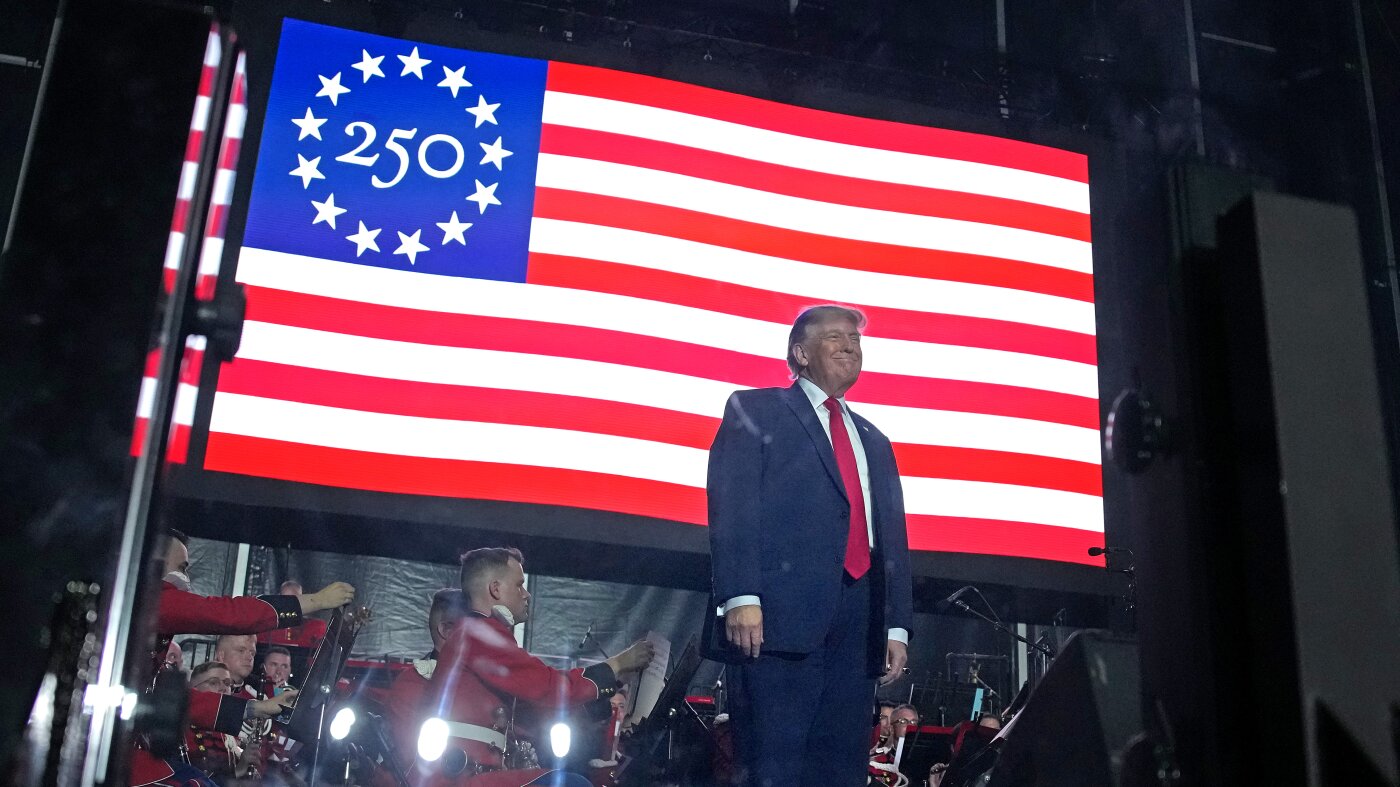
House Democrats accuse Trump of ‘hijacking’ America’s 250th birthday for his own gain
-

 Technology1 hour ago
Tesla driver faces manslaughter charges over Texas crash that killed a woman inside her home
-

 World1 hour ago
Six Kurdish fighters killed in IRGC ambush as clashes spread across western Iran

