News
Trump’s Tariffs by Whim Keep Allies and Markets Off Balance


When the White House finally released the text of Mr. Trump’s orders on Thursday evening, it appeared that some of the tariffs — those covered in the U.S.-Mexico-Canada trade agreement that Mr. Trump negotiated and celebrated in his first term — were indeed permanently suspended. Other tariffs were merely paused.
Most everyone involved was confused, which may well have been the point.
As Mr. Trump hands down tariff determinations and then pulls them back for a month or so, world leaders call to plead their case, a bit like vassal states appealing to a larger power. Chief executives put in calls as well, making it clear that Mr. Trump is the one you need to deal with if you are bringing in car parts from Canada or chips from China.
And the president responds, as if he is granting reprieves, though not pardons. If, in a usual presidency, tariffs are debated by layers of experts and aides, their potential impact weighed with care, in the Trump White House the determinations are part whim, part weave, part pique. Explanations for what triggered the imposition of tariffs shift, and decisions to delay or suspend them are not accompanied by detailed rationales. Mr. Trump himself says he makes the call based on his latest conversations.
“This was a short-term deal,” he told reporters in the Oval Office on Thursday afternoon, when asked about his calls the previous day with top executives of American car makers. “They came back to me yesterday. They said, ‘Could we have some help on the tariffs because of the speed?’ And I said, ‘Look, I’m going to do it, but that’s it.’ They’ll come back to me after the second. April 2.”
He quickly added: “I don’t want to hear from you after April 2.”
Whether he will hold firm is once again an open question. It may depend on the markets, or whether more industry pronouncements come like the one Target’s chief executive, Brian Cornell, made this week, before the latest tariff shift. The retail chain leader said customers looking for avocados and lettuce and other staples would “likely see price increases over the next couple days.”



By David E. Sanger, Nikolay Nikolov, Alexandra Ostasiewicz, Gilad Thaler, Coleman Lowndes, Jon Miller, David Seekamp, Rafaela Balster, Jordan Gantz and Stephanie Swart
April 15, 2026

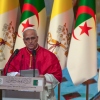
Pope Leo XIV addresses the Algerian community in the Basilica of Our Lady of Africa, in Algiers on Monday. Religious experts say President Trump’s attacks on the pope are a break from how previous popes interacted with American presidents.
Alberto Pizzoli/AFP via Getty Images
hide caption
toggle caption
Alberto Pizzoli/AFP via Getty Images
The ongoing war of words between President Trump and Pope Leo XIV is unparalleled in modern history. It’s not new for popes to speak out on political issues, historians of religion say, but Trump’s insults toward the pope are without precedent.
The direct nature of Pope Leo’s responses as well as him being the first American pope are also playing a role in how the exchange is being interpreted by the public.
The recent back and forth started with Leo’s calling for peace in response to the war in Iran, and continued with him warning of the “delusion of omnipotence” and writing that “God does not bless any conflict.”
It escalated this past weekend when Trump accused Leo of being “WEAK on Crime, and terrible for Foreign Policy,” a potential response to Catholic leaders’ calling for more humanity in the Trump administration’s immigration policies. Trump also claimed Leo was in favor of Iran having nuclear weapons. Trump continued his attacks Tuesday night with another social media post, saying, “Will someone please tell Pope Leo that Iran has killed at least 42,000 innocent, completely unarmed, protesters in the last two months.”
“I have no fear of neither the Trump administration nor of speaking out loudly about the message in the Gospel,” Leo told reporters on Monday at the start of an 11-day Africa tour.
Vice President Vance, who is Catholic, also weighed in on the controversy on Tuesday night, saying the pope should “be careful when he talks about matters of theology.”
“What we saw … is an unprecedented, unhinged attack by the president of the United States on the pope,” said Christopher White, associate director of the Initiative on Catholic Social Thought and Public Life at Georgetown University. “It was clearly meant to intimidate the pope,” but, he added, “the pope’s response shows he is undeterred by the president’s broadside and won’t be distracted from his efforts to push for peace.”
The charged nature of the exchange is new, but many popes have been known for their political critiques. Here’s a brief overview of times when modern popes spoke out on politics, and how Pope Leo is different.
Popes have had political opinions before, but the response was diplomatic

Pope Paul VI talking to President Lyndon Johnson during a special audience at the Vatican City, Rome, on Dec. 23, 1967. Pope Paul famously said: “No more war, war never again.”
Keystone/Getty Images/Hulton Archive
hide caption
toggle caption
Keystone/Getty Images/Hulton Archive
Modern popes have never shied away from voicing political opinions, sometimes running contrary to world leaders.
“When the pope speaks, it’s not that he’s taking sides. He’s really pointing out the objective moral law,” said Michele Dillon, a professor of sociology at the University of New Hampshire whose research focuses on the Catholic Church.
But prior interactions were much more diplomatic.
In 1965, Pope Paul VI was the first pope to speak before the United Nations, urging an end to the Vietnam War and famously saying, “No more war, war never again.” Paul VI pushed President Lyndon Johnson to “increase even more your noble effort” to negotiate for peace in Vietnam in 1967. Later that year, Johnson released a cordial statement after meeting the pope, saying “I deeply appreciate the full and free manner” of the pope’s opinions.
In 1979, Pope John Paul II spoke before the United Nations, focusing on human rights and peace. He advocated an end to conflicts in the Middle East, with a “just settlement of the Palestinian question” and the “territorial integrity of Lebanon.” John Paul II visited President Jimmy Carter in the White House, where they talked about the Philippines, China, Europe, South Korea, and the Middle East, according to Carter’s notes.
John Paul II, a Polish pope, was also involved in less-public political influence. He supported Polish opposition to the Soviet Union and has been credited with helping to bring down the Berlin Wall in 1989. Later, in 2003, he spoke against the U.S. invasion of Iraq and also sent representatives to Washington and Baghdad to make appeals to avoid the war. Those appeals were ignored, but he correctly predicted decades of unrest in the Middle East, according to White.

Pope John Paul II and President Jimmy Carter in October 1979.
AFP/via Getty Images
hide caption
toggle caption
AFP/via Getty Images
John Paul II also voiced opinions on social issues with presidents — disagreeing with Bill Clinton on abortion and pushing George W. Bush to reject stem cell research — but neither president escalated the situation and both remained respectful.
More recently, in 2013, Pope Francis called an impromptu vigil to plead for peace in the civil war in Syria and wrote to Russian President Vladimir Putin to oppose military intervention there. Francis responded to a chemical attack that left some 70 people dead in Syria in 2017, saying he was “horrified,” and he appealed “to the conscience of those who have political responsibility” to end the violence.
In 2015, Francis released a document saying the church accepted the scientific consensus on climate change and urged world leaders to act.
“Many of the world’s leading climate activists have said that no one has done more to shape public opinion on [climate change] than Pope Francis,” White said.
Francis was also a tireless advocate for peace in Gaza, and would call Gaza’s Church of the Holy Family nightly during the war between Hamas and Israel.
Francis also went head to head with Trump in 2016 before Trump’s first election. When Francis visited the U.S.-Mexico border, he said a person “who thinks only about building walls, wherever they may be, and not building bridges, is not Christian.” Trump called the pope’s comments “disgraceful,” but he quickly smoothed over the situation and called Francis a “wonderful guy.”
Popes have been reluctant to name names before now
Popes have historically been hesitant to name the person their criticism is directed at outright. A hotly contested example is Pope Pius XII’s decision to not directly name and denounce Adolf Hitler during World War II.
Pope Francis also faced criticism for his ambiguous references to Russia’s invasion of Ukraine.
This makes Leo’s directness all the more relevant, according to White, who is also the author of Pope Leo XIV: Inside the Conclave and the Dawn of a New Papacy. Leo referring to Trump by name, though still a rare occurrence, was a “new tact” for the papacy, he said.
“There’s just kind of a reflex on the Vatican’s behalf to want to be perceived as neutral as possible in a conflict,” he said. Leo, however, “appealed to [Trump] directly and in a sense, pointed the finger to say: ‘You started this war, you have the power to end this war.’”
The pope does not want to get involved in a political back and forth, said Dillon, the UNH professor, but his job is to preach the Catholic teachings.
“That’s the last thing any pope wants to do, because they do want to be a pope for the universal church and for all people,” Dillon said. “A pope of peace.”
The Trump administration is frequently invoking religion
Another reason for Leo’s outspokenness may be the Trump administration’s continued religious rhetoric and imagery, experts said.
On Sunday, Trump shared an AI-generated image that depicts him as a Jesus-like figure, wearing a white robe and red sash and laying his hands on a sick, bedridden man as light appeared to radiate from his hands. The post was later deleted and Trump claimed the image was of him as a doctor.
Robert Orsi, a professor of religious studies and history at Northwestern University, said he was alarmed by the post’s connotations. He called the whole exchange with Leo “unprecedented,” and “never in U.S. history has this happened.”
On Wednesday, Trump shared a post on social media with an image of him being embraced by Jesus. Trump told reporters last week that he believes God supports the U.S. military action in Iran because “God is good and God wants to see people taken care of.” Last year, the White House posted an image of Trump as the pope.
“We have an administration, not just a president, but an administration that is speaking out in more overtly religious terms than even somebody like Jimmy Carter,” said Margaret Thompson, a professor of history and political science at Syracuse University. Carter was an evangelical Christian.
Dillon, the UNH professor, said that because of this, Leo may have felt a duty to personally reference and respond to Trump’s attacks, because he recognizes that “appeasement has a moral price.”
Jesuit priest and author James Martin told Morning Edition that “pretty much every Catholic I spoke to, from progressive Catholics to traditional Catholics, were appalled,” at Trump’s words toward the pope. “The pope is, you know, the representative of the whole church. So it’s an attack on the church.”
How Pope Leo is viewed, being an American pope

Pope Leo XIV leads a mass at the basilica of St. Augustine in Annaba on the second day of an 11-day apostolic journey to Africa, on Tuesday.
Alberto Pizzoli/AFP via Getty Images
hide caption
toggle caption
Alberto Pizzoli/AFP via Getty Images
Pope Leo is the first American pope, but he does not think of himself as just an American. “He’s the Holy Father for everyone,” said Peter Martin, a former U.S. diplomat accredited to the Holy See.
Still, that doesn’t stop people from looking at the saga from an American angle.
Dillon said the fact that the pope is American could allow him to have greater influence. Americans may have seen popes such as Francis, who were “pointed in their criticism of a great power like America,” as just “anti-America,” she said.
“But if you have a pope who was born and raised in Chicago and really a true out-and-out American criticizing in pointed terms, I actually think that carries more weight,” Dillon said.
In early April, Leo appealed to the American people “to seek ways to communicate. Perhaps with congressmen, with authorities, saying that we don’t want war, we want peace.”
“It doesn’t get more American than that,” White said. “I mean, I don’t think there’s any precedent for a pope saying, ‘call your congressman.’”

Rachel Reyes, holds a photo of her son, Ruben Ray Martinez, a U.S. citizen who was shot and killed by an Immigration and Customs Enforcement agent during a traffic encounter in Texas.
Brenda Bazán for NPR
hide caption
toggle caption
Brenda Bazán for NPR
When Rachel Reyes thinks back to her son’s final days, she remembers how excited he was for the year ahead.
Ruben Ray Martinez had just turned 23. Reyes said her son planned to enroll in trade school to become a mechanic. He felt ready to move out of his family’s home in San Antonio and had found an apartment he liked, she added.
But on March 15, 2025, Martinez, a U.S. citizen, was shot and killed by an Immigration and Customs Enforcement agent during a traffic encounter in Texas. He’s considered the first of at least six people to have been killed by immigration agents since the start of President Trump’s second term, according to The Trace, an outlet focused on covering gun violence.
“He would speak with enthusiasm, like he was looking forward to doing things. He thought he’d have more time,” she said. “We all thought he would have more time.”
Martinez’s death came nearly a year before immigration agents fatally shot Renee Macklin Good and Alex Pretti in separate incidents in Minneapolis. And during that time, Martinez’s mother and the public didn’t know that the officer who killed Martinez worked for ICE.
That only came to light following a public records request by American Oversight, a watchdog group, that sought documents related to ICE’s use of force. Among the records was an ICE incident report that said Martinez accelerated his car and struck a federal agent, prompting another officer to fire defensive shots.
But videos released separately last month suggest a different version of events: Footage from police body cameras appear to show federal agents standing in front of Martinez’s car as it slowly moves. It’s unclear from the videos reviewed by NPR whether the vehicle hit an agent.
Reyes told NPR that she felt betrayed by law enforcement, whom she says she always had a deep respect for. She added that losing her son was already devastating and the recent revelations about ICE’s involvement have made grieving more painful.
“It’s like a constant state of unrest,” she said. “There was no peace and I still don’t have peace.”

Reyes holds a photo of Martinez. From the way that he cared for his siblings and nephew, she believed that Martinez would have made a great father someday.
Brenda Bazán for NPR
hide caption
toggle caption
Brenda Bazán for NPR
‘I heard Ruben say, ‘I’m sorry,’ and then he slumped backward’
Martinez was only supposed to be away from home for one night.
He told his mom that he planned to meet up with a friend and promised to be home the next day, according to Reyes.
“ He was all happy with his backpack getting ready to go,” she said. “And then, the next time I see him brought home, he’s in his urn.”
Martinez and his friend Joshua Orta drove down to South Padre Island, a popular spring break destination in south Texas. Just after midnight, the two approached a busy intersection where a car wreck had occurred earlier that evening. Officers from multiple agencies were on the scene to help manage traffic, including South Padre Island Police, the Texas Parks and Wildlife Department and Homeland Security Investigations, which operates under ICE.
The next moments were caught on videos from officers’ body cameras that were released by the Texas Department of Public Safety (DPS) last month.
Footage from one body camera shows an officer signaling to Martinez to pull over. That officer, Texas Game Warden Juan Rosendo, later said in a police report released by DPS that he spotted an open bottle of alcohol in the car.
In a second body camera, an officer can later be heard saying “keep going.” Martinez starts to drive straight. As he gets closer to the crash site, an officer can be heard yelling, “Stop” and “Hold him.”
Moments later, Martinez’s car appears to have come to a full stop, according to footage from a third body camera. Two officers then approach the front of the vehicle — one of whom attempts to open the car door, the video shows. As this happens, Martinez’s car appears to slowly move forward and to the left. Then, three shots ring out in quick succession. The entire sequence of events lasts less than 30 seconds.
The second body camera shows the shooter pulling Martinez’s body out of the car and onto the ground. Martinez is handcuffed and over a minute later, receives medical attention.

Rachel Reyes holds a jacket that was retrieved from her son’s car after his death.
Brenda Bazán for NPR
hide caption
toggle caption
Brenda Bazán for NPR
According to police reports, the agent who opened fire was Homeland Security Investigations Supervisory Special Agent Jack Stevens. In a written statement to investigators, Stevens said he did so as an act of self-defense, claiming that he saw his fellow agent, Hector Sosa, “fall onto the hood of the vehicle.”
How Sosa came into contact with Martinez’s vehicle is unclear from the videos reviewed by NPR. Sosa, in his written statement to investigators, said he was treated for an unspecified knee injury.
Later that night, Orta, who witnessed the shooting from the passenger seat, was taken into questioning. In a video released by DPS, Orta said Martinez was confused because multiple officers were yelling instructions. Martinez was also worried about getting in trouble for driving while intoxicated, according to Orta.
“He was literally just like … panicky,” he told investigators. “He didn’t know what to do, like he definitely didn’t want to go to jail. But as far as running over an officer and endangering, he [wouldn’t] do that.”
Orta went on to say that the car was “barely moving” when he saw an “officer kind of like get on the hood.” He added that Martinez “didn’t necessarily hit him, but like, it kind of like, you know what I mean, caught his feet.”
Orta died in February in an unrelated car crash. In a written statement provided to Reyes’ lawyer before his death and then shared with NPR, Orta wrote “Ruben did not hit anyone,” adding that an agent approached the front of the car and slapped the hood.
He wrote, “Without giving any warning, commands, or opportunity to comply, the agent fired multiple shots at Ruben from an extremely close distance — no more than two feet. I heard Ruben say, ‘I’m sorry,’ and then he slumped backward.”
‘An unwillingness to admit mistakes”
The day after the shooting, a Texas Ranger came to Reyes’ home to tell her that Martinez had been fatally shot by an officer. He did not mention that the officer worked for ICE, she said.
Reyes recalled being in shock and confused at the news because her son was not an aggressive person, she said. Far from it, Martinez was shy and laidback, she added.
“It never made sense to me,” she said. “Ruben wouldn’t use his car to hurt anyone, ever.”
In late February, a grand jury in Texas declined to bring charges against Stevens. In a statement to NPR, ICE’s acting director Todd Lyons said, “We stand by the grand jury’s unanimous decision that found no criminality. This incident was investigated from every possible angle by an independent body, and it cleared our officer.”

Since then, Democratic U.S. Reps. Robert Garcia of California and Greg Casar of Texas have called for an independent investigation into the shooting and why ICE did not disclose its involvement sooner.
Reyes’ attorney, Charles Stam, told NPR that his team is also exploring legal options, adding that he believes federal agents escalated the situation by standing in front of Martinez’s car. “ I think what we’ve seen is an unwillingness to admit mistakes,” he said.
According to the Department of Homeland Security, immigration agents have the right to use deadly force when there’s “reasonable belief that the subject of such force poses an imminent threat.” But its policy advises agents to “avoid intentionally and unreasonably placing themselves in positions in which they have no alternative to using deadly force.”
“Sometimes there needs to be the deadly use of force. That’s something that should be undertaken with solemnity,” Stam said. “And if it’s done, there should be an investigation and people should be held accountable for their actions. We’ve seen none of that here.”

A photo of Martinez lies on a jacket that was retrieved from his car after his death.
Brenda Bazán for NPR
hide caption
toggle caption
Brenda Bazán for NPR
Shy, goofy and loved feeding stray cats
Martinez was quiet when he first met someone — but really, he was goofy and thoughtful, Reyes said. Her son loved feeding stray cats and had a knack for fixing things, especially cars.
From the way that he cared for his siblings and nephew, Reyes believed that Martinez would have made a great father someday. “ He would always make sure to tell them that he loved them every time they left, and he was always playing around with them and joking around,” she said. “He was really good to them.”
For Reyes, it’s been strange to go through the day without hearing his laughter from across the hall or smelling French toast and eggs, which Martinez was learning to perfect.
“ I could always tell when he got started because I could smell the burnt eggs,” she said. “He would FaceTime me in the kitchen like, ‘How do you make your eggs so fluffy?’”
It was especially tough last month — which marked Martinez’s 24th birthday and the anniversary of his death. Reyes used to take her son to a nice restaurant to celebrate his birthday. Although she planned to stay home this year, her family encouraged her to keep the tradition going.
Reyes said it was nice to be at dinner with loved ones, but it wasn’t the same. “It’s just an obvious difference without him here,” Reyes said.
Still, like always, she saved a seat for her son.

Woman injured in police shooting in East Village
Williams: I didn’t like playing in Milwaukee. I didn’t …

Elder turns in another strong start, three Atlanta homers lead Braves past Marlins 6-3

Charges: Man stole car, fatally ran over owner after dragging him down the street

A Shooting in Indianapolis Kills a Man

Florida High School Football Rankings: Top 25 teams – Oct. 21

How old is Bo Nix? What to know about Oregon quarterback ahead of 2024 NFL Draft

Cleary's 21 help Le Moyne down Central Connecticut State 69-64 in OT

99th annual Pony Swim held in Virginia

Indiana Members Credit Union announced as new anchor tenant at Bottleworks District

Video: What the Iran War Means for China

Melania Trump challenges Congress to make her foster care executive order permanent law: ‘Their birthright’

Brazil’s police open a probe into presidential candidate Flavio Bolsonaro
Popes have spoken out on politics before. But with Trump and Pope Leo it’s different

Spanberger signs gun bills, makes a proposed gun ban even harsher
-

 Ohio2 days ago
‘Little Rascals’ star Bug Hall arrested in Ohio
-

 Georgia1 week ago
Georgia House Special Runoff Election 2026 Live Results
-

 Arkansas6 days ago
Arkansas TV meteorologist Melinda Mayo retires after nearly four decades on air
-

 Pennsylvania1 week ago
Parents charged after toddler injured by wolf at Pennsylvania zoo
-
 Milwaukee, WI1 week ago
Potawatomi Casino Hotel evacuated after fire breaks out in rooftop HVAC system
-

 Culture1 week ago
Can You Name These Novels Based on Their Characters?
-

 Austin, TX1 week ago
ABC Kite Fest Returns to Austin for Annual Celebration – Austin Today
-

 Pittsburg, PA1 week ago
Primanti Bros. closes Monroeville and North Versailles locations